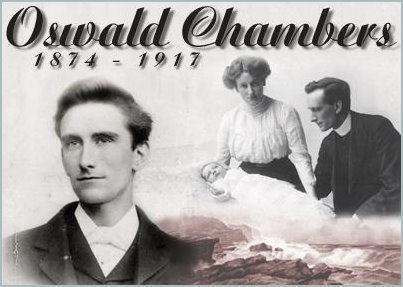
My Utmost for His Highest

December 10th

The offering of the natural

Abraham had two sons, the one by a bondmaid, the other by a freewoman. Gal. 4:22.

Paul is not dealing with sin in this chapter of Galatians, but with the relation of the natural to the spiritual. The natural must be turned into the spiritual by sacrifice, otherwise a tremendous divorce will be produced in the actual life. Why should God ordain the natural to be sacrificed? God did not. It is not God’s order, but His permissive will. God’s order was that the natural should be transformed into the spiritual by obedience; it is sin that made it necessary for the natural to be sacrificed.
Abraham had to offer up Ishmael before he offered up Isaac. Some of us are trying to offer up spiritual sacrifices to God before we have sacrificed the natural. The only way in which we can offer a spiritual sacrifice to God is by presenting our bodies a living sacrifice. Sanctification means more than deliverance from sin, it means the deliberate commitment of myself whom God has saved, to God, and I do not care what it costs.
If we do not sacrifice the natural to the spiritual, the natural life will mock at the life of the Son of God in us and produce a continual swither. This is always the result of an undisciplined spiritual nature. We go wrong because we stubbornly refuse to discipline ourselves, physically, morally or mentally. ‘I wasn’t disciplined when I was a child.’ You must discipline yourself now. If you do not, you will ruin the whole of your personal life for God.
God is not with our natural life while we pamper it; but when we put it out in the desert and resolutely keep it under, then God will be with it; and He will open up wells and oases, and fulfil all His promises for the natural.

Streams in the Desert

December 10

“If I am in distress, it is in the interests of your comfort, which is effective as it nerves you to endure the same sufferings as I suffered myself. Hence my hope for you is well-founded, since I know that as you share the sufferings you share the comfort also.” (2 Cor. 1:6, 7.)

ARE there not some in your circle to whom you naturally betake yourself in times of trial and sorrow? They always seem to speak the right word, to give the very counsel you are longing for; you do not realize, how ever the cost which they had to pay ere they became so skillful in binding up the gaping wounds and drying tears. But if you were to investigate their past history you would find that they have suffered more than most. They have watched the slow untwisting of some silver cord on which the lamp of life hung. They have seen the golden bowl of joy dashed to their feet, and its contents spilt. They have stood by ebbing tides, and drooping gourds, and noon sunsets; but all this has been necessary to make them the nurses, the physicians, the priests of men. The boxes that come from foreign climes are clumsy enough; but they contain spices which scent the air with the fragrance of the Orient. So suffering is rough and hard to bear; but it hides beneath it discipline, education, possibilities, which not only leave us nobler, but perfect us to help others. Do not fret, or set your teeth, or wait doggedly for the suffering to pass; but get out of it all you can, both for yourself and for your service to your generation, according to the will of God.—Selected.

Once I heard a song of sweetness,
  As it cleft the morning air,
Sounding in its blest completeness,
  Like a tender, pleading prayer;
And I sought to find the singer,
  Whence the wondrous song was borne;
And I found a bird, sore wounded,
  Pinioned by a cruel thorn.

I have seen a soul in sadness,
  While its wings with pain were furl’d,
Giving hope, and cheer and gladness
  That should bless a weeping world;
And I knew that life of sweetness,
  Was of pain and sorrow borne,
And a stricken soul was singing,
  With its heart against a thorn.

Ye are told of One who loved you,
  Of a Saviour crucified,
Ye are told of nails that pinioned,
  And a spear that pierced His side;
Ye are told of cruel scourging,
  Of a Saviour bearing scorn,
And He died for your salvation,
  With His brow against a thorn.

Ye “are not above the Master.”
  Will you breathe a sweet refrain?
And His grace will be sufficient,
  When your heart is pierced with pain.
Will you live to bless His loved ones,
  Tho’ your life be bruised and torn,
Like the bird that sang so sweetly,
  With its heart against a thorn?

—Selected.

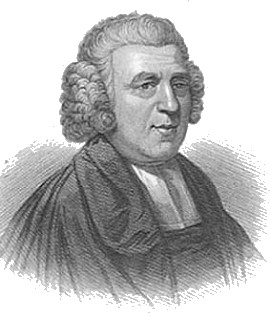
365 days with Newton

10 DECEMBER (PREACHED 1770)

Caution in speaking of experiences

‘And as they came down from the mountain, he charged them that they should tell no man what things they had seen, till the Son of man were risen from the dead. And they kept that saying with themselves, questioning one with another what the rising from the dead should mean.’ Mark 9:9–10
SUGGESTED FURTHER READING: Mark 9:33–37

One reason for secrecy is on account of their fellow disciples, lest they should be grieved and discouraged, as they probably would have been, for they, as well as we, had a mixture of self and were often contending who should be the greatest. I have found such an evil in my heart, that when persons on whom I could depend have been speaking of comforts and manifestations beyond the line of my experience, I have felt for the time an anger and enmity against them, and a repining of spirit against the Lord. Besides, I knew not but they would have absolutely disbelieved the relation. It was perhaps upon one or both these accounts, that when St Paul had been caught up into the third heavens, he kept it a secret in his own breast for fourteen years, and it would probably have died with him, if he had not seen his duty to mention it for the sake of the Corinthians. We have cause to be glad that their conduct made it necessary for him to relate it. From whence I would observe in general that there is a wisdom and caution to be used in speaking of our experiences—perhaps not all things, nor to all persons. We should endeavour to suit what we tell them of ourselves to what we judge is their state and attainment, lest we discourage when we would comfort and offend when we would instruct. So there are depths of Satan in a way of temptation which are not so fit to be told to young converts, unless we know they are led something in the same way.

FOR MEDITATION: ‘But take heed lest by any means this liberty of yours become a stumbling block to them that are weak’ (1 Corinthians 8:9).

SERMON SERIES: ON THE TRANSFIGURATION, NO. 13 [2/4]

My Utmost for His Highest

December 9th

The offence of the natural

And they that are Christ’s have crucified the flesh with the affections and lusts. Gal. 5:24.

The natural life is not sinful; we must be apostatized from sin, have nothing to do with sin in any shape or form. Sin belongs to hell and the devil; I, as a child of God, belong to heaven and God. It is not a question of giving up sin, but of giving up my right to myself, my natural independence and self-assertiveness, and this is where the battle has to be fought. It is the things that are right and noble and good from the natural standpoint that keep us back from God’s best. To discern that natural virtues antagonize surrender to God, is to bring our soul into the centre of its greatest battle. Very few of us debate with the sordid and evil and wrong, but we do debate with the good. It is the good that hates the best, and the higher up you get in the scale of the natural virtues, the more intense is the opposition to Jesus Christ. “They that are Christ’s have crucified the flesh”—it is going to cost the natural in you everything, not something. Jesus said—“If any man will be My disciple, let him deny himself” i.e., his right to himself, and a man has to realize Who Jesus Christ is before he will do it. Beware of refusing to go to the funeral of your own independence.
The natural life is not spiritual, and it can only be made spiritual by sacrifice. If we do not resolutely sacrifice the natural, the supernatural can never become natural in us. There is no royal road there; each of us has it entirely in his own hands. It is not a question of praying, but of performing.

Streams in the Desert

December 9

“For this our light and transitory burden of suffering is achieving for us a weight of glory.” (2 Cor. 4:17.) (Weymouth.)

IS achieving for us,” mark. The question is repeatedly asked—Why is the life of man drenched with so much blood, and blistered with so many tears? The answer is to be found in the word “achieving”; these things are achieving for us something precious. They are teaching us not only the way to victory, but better still the laws of victory. There is a compensation in every sorrow, and the sorrow is working out the compensation. It is the cry of the dear old hymn:

“Nearer my God to Thee, nearer to Thee,
E’en tho’ it be a cross that raiseth me.”

Joy sometimes needs pain to give it birth. Fanny Crosby could never have written her beautiful hymn, “I shall see Him face to face,” were it not for the fact that she had never looked upon the green fields nor the evening sunset nor the kindly twinkle in her mother’s eye. It was the loss of her own vision that helped her to gain her remarkable spiritual discernment.
It is the tree that suffers that is capable of polish. When the woodman wants some curved lines of beauty in the grain he cuts down some maple that has been gashed by the axe and twisted by the storm. In this way he secures the knots and the hardness that take the gloss.
It is comforting to know that sorrow tarries only for the night; it takes its leave in the morning. A thunderstorm is very brief when put alongside the long summer day. “Weeping may endure for the night but joy cometh in the morning.”
—Songs in the Night.

“There is a peace that cometh after sorrow,
  Of hope surrendered, not of hope fulfilled;
A peace that looketh not upon tomorrow,
  But calmly on a tempest that it stilled.

“A peace that lives not now in joy’s excesses,
  Nor in the happy life of love secure;
But in the unerring strength the heart possesses,
  Of conflicts won while learning to endure.

“A peace there is, in sacrifice secluded,
  A life subdued, from will and passion free;
’Tis not the peace that over Eden brooded,
  But that which triumphed in Gethsemane.”

Stephen Boyd Blog

Belfast-born Hollywood and International Star from 1950-1970's Fan Tribute Page

Abundant Joy

Digging Deep Into The Word

Not My Life

The Bible as clear as possible

Seek Grow Love

Growing Throughout the Year

Smoodock's Blog

Question Authority

PleaseGrace

A bit on daily needs and provisions

Three Strands Lutheran Parish

"A cord of three strands is not easily broken." Ecclesiastes 4:12

1love1god.com

Romans 5:8

The Rev. Jimmy Abbott

read, watch, listen

BEARING CHRIST CRUCIFIED AND RISEN

To know Christ and Him crucified

Considering the Bible

Scripture Musings

rolliwrites.wordpress.com/

The Official Home of Rolli - Author, Cartoonist and Songwriter

Pure Glory

The heavens are telling the glory of God; and the firmament proclaims His handiwork. Psalms 19:1

The daily addict

The daily life of an addict in recovery

The Christian Tech-Nerd

-Reviews, Advice & News For All Things Tech and Gadget Related-

Thinking Through Scripture

to help you walk with Jesus in faith, hope, and love.

A disciple's study

This is my personal collection of thoughts and writings, mainly from much smarter people than I, which challenge me in my discipleship walk. Don't rush by these thoughts, but ponder them.

Author Scott Austin Tirrell

Maker of fine handcrafted novels!

In Pursuit of My First Love

Returning to the First Love