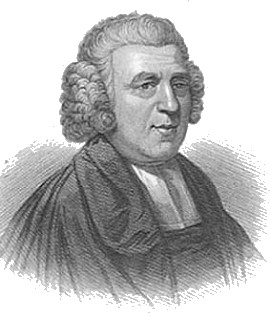
365 days with Newton

17 OCTOBER (PREACHED 1770)

A steady, habitual exercise of grace

‘And it came to pass, as they departed from him, Peter said unto Jesus, Master, it is good for us to be here: and let us make three tabernacles; one for thee, and one for Moses, and one for Elias: not knowing what he said.’ Luke 9:33
SUGGESTED FURTHER READING: 1 Kings 3:5–14, 28

Peter was afraid, surprised and confused, so that he forgot himself and spoke without thought and, as it were, without being aware of what he said. Perhaps this is one reason why perceptible manifestations are so sparingly vouchsafed, considering the weakness of our animal frame; they would too much engage and swallow up our thoughts, indispose for the services of common life, and deprive us of the power of sedately using our judgements. Several observations may be made upon this passage applicable to our general use and especially to young converts. Peter here seems to judge, talk, feel and mistake, as many since his time have done in what is called their first love. We may note therefore that the growth and attainment of a Christian is not to be estimated by perceptive comforts and manifestation. Peter was warm hearted and lively; he was happy for the season, and if he had been at leisure could have told a wonderful story of his experience. Yet at this time he knew but little experimentally either of himself or his Saviour, in comparison of what he knew afterwards. Some poor souls are apt to be discouraged when they see others comfortable and taken up upon the mount, and ready to say, ‘O that I was so’—but there is a difference between pleasant frames and a steady, habitual exercise of grace.
FOR MEDITATION: [‘to a favourite tune of Mrs Newton’s—in Arne’s Opera of Eliza’, Liverpool 1763].
When my Saviour, my Shepherd is near,
By these changes I often pass through,
How quickly my sorrows depart!
I am taught my own weakness to know;
New beauties around me appear,
I am taught what my Shepherd can do,
New spirits enliven my heart:
And how much to his mercy I owe:
But alas! what a change do I find,
It is he who supports me through all,
When my Shepherd withdraws from my sight?
When I faint he revives me again;
My fears all return to my mind,
He attends to my prayer when I call,
My day is soon changed into night.
And bids me no longer complain.

SERMON SERIES: ON THE TRANSFIGURATION, NO. 7 [2/5], LUKE 9:33

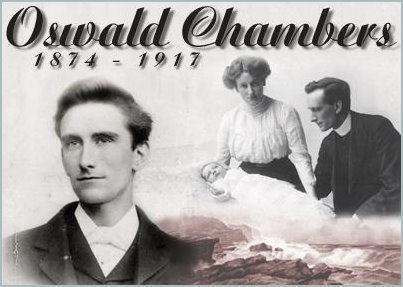
My Utmost for His Highest

October 16th

The key to the Master’s orders

Pray ye therefore the Lord of the harvest, that He will send forth labourers into His harvest. Matthew 9:38.

The key to the missionary problem is in the hand of God, and that key is prayer, not work, that is, not work as the word is popularly understood to-day, because that may mean the evasion of concentration on God. The key to the missionary problem is not the key of common sense, nor the medical key, nor the key of civilization or education or even evangelization. The key is prayer. “Pray ye therefore the Lord of the harvest.” Naturally, prayer is not practical, it is absurd; we have to realize that prayer is stupid from the ordinary commonsense point of view.
There are no nations in Jesus Christ’s outlook, but the world. How many of us pray without respect of persons, and with respect to only one Person, Jesus Christ? He owns the harvest that is produced by distress and conviction of sin, and this is the harvest we have to pray that labourers may be thrust out to reap. We are taken up with active work while people all round are ripe to harvest, and we do not reap one of them, but waste our Lord’s time in over-energized activities. Suppose the crisis comes in your father’s life, in your brother’s life, are you there as a labourer to reap the harvest for Jesus Christ? ‘Oh, but I have a special work to do!’ No Christian has a special work to do. A Christian is called to be Jesus Christ’s own, one who is not above his Master, one who does not dictate to Jesus Christ what he intends to do. Our Lord calls to no special work: He calls to Himself. “Pray ye therefore the Lord of the harvest,” and He will engineer circumstances and thrust you out.

Streams in the Desert

October 16

“Let us lay aside every weight, and the sin which doth so easily beset us, and let us run with patience the race that is set before us.” (Heb. 12:1.)

THERE are weights which are not sins in themselves, but which become distractions and stumbling blocks in our Christian progress. One of the worst of these is despondency. The heavy heart is indeed a weight that will surely drag us down in our holiness and usefulness.
The failure of Israel to enter the land of promise began in murmuring, or, as the text in Numbers literally puts it, “as it were murmured.” Just a faint desire to complain and be discontented. This led on until it blossomed and ripened into rebellion and ruin. Let us give ourselves no liberty ever to doubt God or His love and faithfulness to us in everything and forever.

We can set our will against doubt just as we do against any other sin; and as we stand firm and refuse to doubt, the Holy Spirit will come to our aid and give us the faith of God and crown us with victory.

It is very easy to fall into the habit of doubting, fretting, and wondering if God has forsaken us and if after all our hopes are to end in failure. Let us refuse to be discouraged. Let us refuse to be unhappy. Let us “count it all joy” when we cannot feel one emotion of happiness. Let us rejoice by faith, by resolution, by reckoning, and we shall surely find that God will make the reckoning real.—Selected.

The devil has two master tricks. One is to get us discouraged; then for a time at least we can be of no service to others, and so are defeated. The other is to make us doubt, thus breaking the faith link by which we are bound to our Father. Look out! Do not be tricked either way.—G. E. M.

Gladness! I like to cultivate the spirit of gladness! It puts the soul so in tune again, and keeps it in tune, so that Satan is shy of touching it—the chords of the soul become too warm, or too full of heavenly electricity, for his infernal fingers, and he goes off somewhere else! Satan is always very shy of meddling with me when my heart is full of gladness and joy in the Holy Ghost.

My plan is to shun the spirit of sadness as I would Satan; but, alas! I am not always successful. Like the devil himself it meets me on the highway of usefulness, looks me so fully in my face, till my poor soul changes color!

Sadness discolors everything; it leaves all objects charmless; it involves future prospects in darkness; it deprives the soul of all its aspirations, enchains all its powers, and produces a mental paralysis!

An old believer remarked, that cheerfulness in religion makes all its services come off with delight; and that we are never carried forward so swiftly in the ways of duty as when borne on the wings of delight; adding, that Melancholy clips such wings; or, to alter the figure, takes off our chariot wheels in duty, and makes them, like those of the Egyptians, drag heavily.

365 days with Newton

16 OCTOBER (PREACHED 1770)

A taste for heavenly things

‘And it came to pass, as they departed from him, Peter said unto Jesus, Master, it is good for us to be here: and let us make three tabernacles; one for thee, and one for Moses, and one for Elias: not knowing what he said.’ Luke 9:33
SUGGESTED FURTHER READING: Mark 9:2–13

Peter’s desire was from a good principle. Grace had changed his heart and given him a taste for heavenly things. He loved his Saviour, and when he saw him transfigured and had a specimen of the glory of heaven in the appearance of Moses and Elijah, he would willingly have bid the world adieu. He wanted to build tabernacles. His motive was right, but his proposal was wrong, and proceeded from ignorance and fear—not knowing what he said, for he was afraid, as is added by Mark [9:6].
His proposal was inconsistent with the design of Christ’s coming. He had been offended at the mention of his cross before (Matthew 16:22). Now he seems quite to forget it. But Peter’s soul and all his hopes depended upon his Master’s not staying there, but returning to his state of humiliation. This is the appointed, both for Head and members, to enter into glory through sufferings. He knew but little of the state of glorified spirits when he thought of tabernacles for Moses and Elijah. It is so with us. We are apt to form low and earthly notions of heavenly things—indeed we can form no others, having no ideas but what we have received by our senses. When we strive to go beyond this, we are soon lost. Peter was ignorant of the design of his own calling. He was not to live upon the mount but to be a fisher of men, to do and to suffer for Christ and to glorify God in the world.

FOR MEDITATION: There is no school like the school of the cross. There men are made wise unto salvation, wise to win souls. In a crucified Saviour are hidden all the treasures of wisdom and knowledge. And the tongue of the truly learned, that can speak a word in season to them that are weary, is not acquired like Greek and Latin by reading great books—but by self-knowledge and soul exercises. To learn navigation by the fireside will never make a man an expert mariner. He must do his business in great waters. And practice will bring him into many situations of which general theory could give him no conception.
John Newton to John Ryland jnr, 26 March 1791

SERMON SERIES: ON THE TRANSFIGURATION, NO. 7 [1/5], LUKE 9:33

My Utmost for His Highest

October 15th

The key to the missionary message

And He is the propitiation for our sins: and not for ours only, but also for the sins of the whole world. 1 John 2:2.

The key to the missionary message is the propitiation of Christ Jesus. Take any phase of Christ’s work—the healing phase, the saving and sanctifying phase; there is nothing limitless about those. “The Lamb of God, which taketh away the sin of the world!”—that is limitless. The missionary message is the limitless significance of Jesus Christ as the propitiation for our sins, and a missionary is one who is soaked in that revelation.
The key to the missionary message is the remissionary aspect of Christ’s life, not His kindness and His goodness, and His revealing of the Fatherhood of God; the great limitless significance is that He is the propitiation for our sins. The missionary message is not patriotic, it is irrespective of nations and of individuals, it is for the whole world. When the Holy Ghost comes in He does not consider my predilections, He brings me into union with the Lord Jesus.
A missionary is one who is wedded to the charter of his Lord and Master; he has not to proclaim his own point of view, but to proclaim the Lamb of God. It is easier to belong to a coterie which tells what Jesus Christ has done for me, easier to become a devotee to Divine healing, or to a special type of sanctification, or to the baptism of the Holy Ghost. Paul did not say—‘Woe is unto me, if I do not preach what Christ has done for me,’ but—“Woe is unto me, if I preach not the gospel!” This is the Gospel—“The Lamb of God, which taketh away the sin of the world!”

Stephen Boyd Blog

Belfast-born Hollywood and International Star from 1950-1970's Fan Tribute Page

Abundant Joy

Digging Deep Into The Word

Not My Life

The Bible as clear as possible

Seek Grow Love

Growing Throughout the Year

Smoodock's Blog

Question Authority

PleaseGrace

A bit on daily needs and provisions

Three Strands Lutheran Parish

"A cord of three strands is not easily broken." Ecclesiastes 4:12

1love1god.com

Romans 5:8

The Rev. Jimmy Abbott

read, watch, listen

BEARING CHRIST CRUCIFIED AND RISEN

To know Christ and Him crucified

Considering the Bible

Scripture Musings

rolliwrites.wordpress.com/

The Official Home of Rolli - Author, Cartoonist and Songwriter

Pure Glory

The heavens are telling the glory of God; and the firmament proclaims His handiwork. Psalms 19:1

The daily addict

The daily life of an addict in recovery

The Christian Tech-Nerd

-Reviews, Advice & News For All Things Tech and Gadget Related-

Thinking Through Scripture

to help you walk with Jesus in faith, hope, and love.

A disciple's study

This is my personal collection of thoughts and writings, mainly from much smarter people than I, which challenge me in my discipleship walk. Don't rush by these thoughts, but ponder them.

Author Scott Austin Tirrell

Maker of fine handcrafted novels!

In Pursuit of My First Love

Returning to the First Love