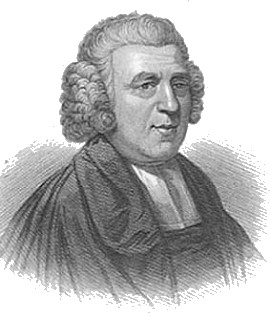
365 days with Newton

9 OCTOBER (PREACHED 1770)

Asleep on duty

‘But Peter and they that were with him were heavy with sleep …’ Luke 9:32
SUGGESTED FURTHER READING: Matthew 26:36–46

They were heavy with sleep. If this had not been recorded we should have little expected that, on such an affecting and extraordinary occasion, the disciples should be overpowered with sleep. These same persons were afterwards chosen to be witnesses of his agony, and then they slept again. Though they loved their Lord, yet they could not watch with him when he took them to be spectators of his glory and of his sufferings. We may consider this as a proof of their infirmity. The flesh is weak. Perhaps they were weary with their journey and in want of rest. The natural imperfections of our frame, and which are not sinful as we usually understand the word, greatly indispose and hinder us from the due improvement of our spiritual opportunities. It is the case with many. Their love to the ordinances and a desire to obtain some glimpse of the Lord, makes them glad to appear in his courts, and perhaps they come from a considerable distance. But when there, they are heavy to sleep. If this is mourned over, and striven against, people should not be so distressed for it, as if they had committed a sin. Yet it is a cause of humiliation. It is the fruit and effect of that sin which has defiled and enfeebled us in every part. We did not come thus, heavy, languid and stupid, out of the hands of our Maker at first. But now the believer finds the body a clog and an impediment in his best opportunities of waiting upon the Lord.

FOR MEDITATION: Alas! the many instances I can recollect in which I dallied and trifled with dangerous temptations, so that if thy mercy had not watched over me when I was sleeping in the midst of my enemies, they had surely prevailed and triumphed over me.
Annotated Letters to a Wife, 4 August 1794

SERMON SERIES: ON THE TRANSFIGURATION, NO. 6 [1/3], LUKE 9:32–33

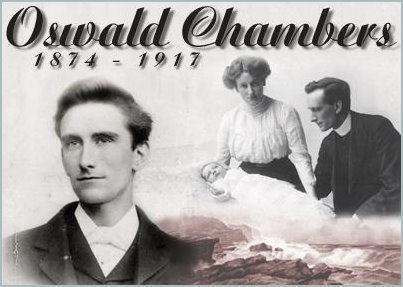
My Utmost for His Highest

October 8th

The exclusiveness of Christ

Come unto Me. Matthew 11:28.

Is it not humiliating to be told that we must come to Jesus! Think of the things we will not come to Jesus Christ about. If you want to know how real you are, test yourself by these words—“Come unto Me.” In every degree in which you are not real, you will dispute rather than come, you will quibble rather than come, you will go through sorrow rather than come; you will do anything rather than come the last lap of unutterable foolishness—“Just as I am.” As long as you have the tiniest bit of spiritual impertinence, it will always reveal itself in the fact that you are expecting God to tell you to do a big thing, and all He is telling you to do is to “come.”
“Come unto Me.” When you hear those words you will know that something must happen in you before you can come. The Holy Spirit will show you what you have to do, anything at all that will put the axe at the root of the thing which is preventing you from getting through. You will never get further until you are willing to do that one thing. The Holy Spirit will locate the one impregnable thing in you, but He cannot budge it unless you are willing to let Him.
How often have you come to God with your requests and gone away with the feeling—“Oh well, I have done it this time!’ And yet you go away with nothing, whilst all the time God has stood with outstretched hands not only to take you, but for you to take Him. Think of the invincible, unconquerable, unwearying patience of Jesus—“Come unto Me.”

Streams in the Desert

October 8

“Do not begin to be anxious.” (Phil. 4:6, P. B. V.)

NOT a few Christians live in a state of unbroken anxiety, and others fret and fume terribly. To be perfectly at peace amid the hurly-burly of daily life is a secret worth knowing. What is the use of worrying? It never made anybody strong; never helped anybody to do God’s will; never made a way of escape for anyone out of perplexity. Worry spoils lives which would otherwise be useful and beautiful. Restlessness, anxiety, and care are absolutely forbidden by our Lord, who said: “Take no thought,” that is, no anxious thought, “saying what shall we eat, or what shall we drink, or wherewithal shall we be clothed?” He does not mean that we are not to take forethought and that our life is to be without plan or method; but that we are not to worry about these things. People know you live in the realm of anxious care by the lines on your face, the tones of your voice, the minor key in your life, and the lack of joy in your spirit. Scale the heights of a life abandoned to God, then you will look down on the clouds beneath your feet.
—Rev. Darlow Sargeant.
It is always weakness to be fretting and worrying, questioning and mistrusting. Can we gain anything by it? Do we not unfit ourselves for action, and unhinge our minds for wise decision? We are sinking by our struggles when we might float by faith.
Oh, for grace to be quiet! Oh, to be still and know that Jehovah is God! The Holy One of Israel must defend and deliver His own. We may be sure that every word of His will stand, though the mountains should depart. He deserves to be confided in. Come, my soul, return unto thy rest, and lean thy head upon the bosom of the Lord Jesus.—Selected.

“Peace thy inmost soul shall fill
Lying still!”

365 days with Newton

8 OCTOBER

The Lord takes notice

‘And the LORD said, Because the cry of Sodom and Gomorrah is great, and because their sin is very grievous; I will go down now and see whether they have done altogether according to the cry of it, which is come unto me; and if not, I will know.’ Genesis 18:20–21
SUGGESTED FURTHER READING: Numbers 12:1–15

The Lord takes notice of these things. He comes down to see. He has a book of remembrance for his people—so likewise for sinners. There is an awful account kept against them. And he makes his coming down known: to some in a way of providence, visiting them with such rebukes as they may read their sin in their punishment; to some by the power of his convincing Spirit, impressing them with fears which they cannot always shake off, which seize them not only under hearing, but perhaps in the midst of their frantic mirth, or however, find them out when they are by themselves and make them feel that he is angry with them. But let it be remembered that the Lord once came down upon the account of sin, not to destroy, but to save. Let us not speak wholly of the cry of sin, but attend likewise to the cry of the Saviour’s blood. We are not yet in the case of Sodom—there is a respite, there is forgiveness. Sin has abounded, but grace much more abounds [Romans 5:20]. A free salvation is published. Believe—and though your sins have been as scarlet they shall be white as snow [Isaiah 1:18].

FOR MEDITATION: Some of you are like Abraham. The Lord reveals to you how he will deal with impenitent sinners, but you have fled to Jesus and are accepted. It is your part to intercede like Abraham for others—to mourn for sin and to stand in the breach while there is yet hope.
To others like Lot, the Lord has sent a gracious warning. O be thankful, and make good use of the mercy; flee to the hope set before you; have no more fellowship with the wicked—whether they will hear or forbear, do you be mindful of yourselves. And then fear not—he has not called you to disappoint the hopes he has raised in you.

SERMON SERIES: GENESIS, NO. 39 [3/3], GENESIS 18:20–21

My Utmost for His Highest

October 7th

Reconciliation

For He hath made Him to be sin for us, who knew no sin; that we might be made the righteousness of God in Him. 2 Cor. 5:21.

Sin is a fundamental relationship; it is not wrong doing, it is wrong being, deliberate and emphatic independence of God. The Christian religion bases everything on the positive, radical nature of sin. Other religions deal with sins; the Bible alone deals with sin. The first thing Jesus Christ faced in men was the heredity of sin, and it is because we have ignored this in our presentation of the Gospel that the message of the Gospel has lost its sting and its blasting power.
The revelation of the Bible is not that Jesus Christ took upon Himself our fleshly sins, but that He took upon Himself the heredity of sin which no man can touch. God made His own Son to be sin that He might make the sinner a saint. All through the Bible it is revealed that Our Lord bore the sin of the world by identification, not by sympathy. He deliberately took upon His own shoulders, and bore in His own Person, the whole massed sin of the human race—“He hath made Him to be sin for us, who knew no sin,” and by so doing He put the whole human race on the basis of Redemption. Jesus Christ rehabilitated the human race; He put it back to where God designed it to be, and anyone can enter into union with God on the ground of what Our Lord has done on the Cross.
A man cannot redeem himself; Redemption is God’s ‘bit,’ it is absolutely finished and complete; its reference to individual men is a question of their individual action. A distinction must always be made between the revelation of Redemption and the conscious experience of salvation in a man’s life.

Stephen Boyd Blog

Belfast-born Hollywood and International Star from 1950-1970's Fan Tribute Page

Abundant Joy

Digging Deep Into The Word

Not My Life

The Bible as clear as possible

Seek Grow Love

Growing Throughout the Year

Smoodock's Blog

Question Authority

PleaseGrace

A bit on daily needs and provisions

Three Strands Lutheran Parish

"A cord of three strands is not easily broken." Ecclesiastes 4:12

1love1god.com

Romans 5:8

The Rev. Jimmy Abbott

read, watch, listen

BEARING CHRIST CRUCIFIED AND RISEN

To know Christ and Him crucified

Considering the Bible

Scripture Musings

rolliwrites.wordpress.com/

The Official Home of Rolli - Author, Cartoonist and Songwriter

Pure Glory

The heavens are telling the glory of God; and the firmament proclaims His handiwork. Psalms 19:1

The daily addict

The daily life of an addict in recovery

The Christian Tech-Nerd

-Reviews, Advice & News For All Things Tech and Gadget Related-

Thinking Through Scripture

to help you walk with Jesus in faith, hope, and love.

A disciple's study

This is my personal collection of thoughts and writings, mainly from much smarter people than I, which challenge me in my discipleship walk. Don't rush by these thoughts, but ponder them.

Author Scott Austin Tirrell

Maker of fine handcrafted novels!

In Pursuit of My First Love

Returning to the First Love