

My Utmost for His Highest

October 1st

The sphere of exaltation

Jesus leadeth them up into a high mountain apart by themselves. Mark 9:2.

We have all had times on the mount, when we have seen things from God’s standpoint and have wanted to stay there; but God will never allow us to stay there. The test of our spiritual life is the power to descend; if we have power to rise only, something is wrong. It is a great thing to be on the mount with God, but a man only gets there in order that afterwards he may get down among the devil-possessed and lift them up. We are not built for the mountains and the dawns and aesthetic affinities, those are for moments of inspiration, that is all. We are built for the valley, for the ordinary stuff we are in, and that is where we have to prove our mettle. Spiritual selfishness always wants repeated moments on the mount. We feel we could talk like angels and live like angels, if only we could stay on the mount. The times of exaltation are exceptional, they have their meaning in our life with God, but we must beware lest our spiritual selfishness wants to make them the only time.
We are apt to think that everything that happens is to be turned into useful teaching, it is to be turned into something better than teaching, viz., into character. The mount is not meant to teach us anything, it is meant to make us something. There is a great snare in asking—‘What is the use of it?’ In spiritual matters we can never calculate on that line. The moments on the mountain top are rare moments, and they are meant for something in God’s purpose.
Streams in the Desert

October 1

“It is good for me that I have been afflicted.” (Psalm 119:71.)

IT is a remarkable circumstance that the most brilliant colors of plants are to be seen on the highest mountains, in spots that are most exposed to the wildest weather. The brightest lichens and mosses, the loveliest gems of wild flowers, abound far up on the bleak, storm-scalped peak.
One of the richest displays of organic coloring I ever beheld was near the summit of Mount Chenebettaz, a hill about 10,000 feet high, immediately above the great St. Bernard Hospice. The whole face of an extensive rock was covered with a most vivid yellow lichen which shone in the sunshine like the golden battlement of an enchanted castle.
There, in that lofty region, amid the most frowning desolation, exposed to the fiercest tempest of the sky, this lichen exhibited a glory of color such as it never showed in the sheltered valley. I have two specimens of the same lichen before me while I write these lines, one from the great St. Bernard, and the other from the wall of a Scottish castle, deeply embossed among sycamore trees; and the difference in point of form and coloring between them is most striking.
The specimen nurtured amid the wild storms of the mountain peak is of a lovely primrose hue, and is smooth in texture and complete in outline, while the specimen nurtured amid the soft airs and the delicate showers of the lowland valley is of a dim rusty hue, and is scurfy in texture, and broken in outline.
And is it not so with the Christian who is afflicted, tempesttossed, and not comforted? Till the storms and vicissitudes of God’s providence beat upon him again and again, his character appears marred and clouded; but trials clear away the obscurity, perfect the outlines of his disposition, and give brightness and blessing to his life.

Amidst my list of blessings infinite
Stands this the foremost, that my heart has bled;
For all I bless Thee, most for the severe.
—Hugh Macmillan.

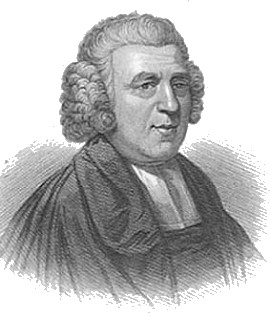
365 days with Newton

1 OCTOBER (PREACHED NEW YEAR’S MORNING, 1770)

O look to Jesus

‘I protest by your rejoicing which I have in Christ Jesus our Lord, I die daily.’ 1 Corinthians 15:31
SUGGESTED FURTHER READING: Psalm 33:1–22

The advantages of dying daily:
(i) it has an immediate tendency to maintain in our souls a constant reverence of God, which is the spring and life of all true obedience. If you daily resign yourself to him as if you were going immediately into his presence, and do so sincerely, it will have an habitual effect upon the frame of your mind.
(ii) it teaches that moderation in all earthly things which becomes our profession [of faith]. From whence come our eager pursuits, our anxious fears, our liftings up and our castings down, our anger, impatience, disputes and jars? Alas, are not these plain proofs [that as] yet we are but little acquainted with this heavenly art of dying daily? Yea, may we not all take shame and say, ‘Teach us so to number our days’ [Psalm 90:12]?
(iii) it will animate to a faithful and diligent discharge of present duty. What thy hand finds to do, do it now, and do it with all thy might [Ecclesiastes 9:10].
(iv) it will prepare us for dying comfortably. This many desire. I will not limit the Lord, but in the way of means, we can hardly expect to die comfortably unless we endeavour to die daily.
I am afraid some of you understand but little of this subject. Yet die you must. And will you be thoughtless about it? If you had but a journey or a voyage before you, you would be often enquiring about it, asking questions, making provision. And can you be careless about your last journey?

FOR MEDITATION: I am now far advancing in my seventy-fourth year, and should be thankful for whatever the Lord sends to remind me that I cannot be long here.… I see little here worth living for, but my Christian profession and my ministry. I hope to be willing to live my appointed time; and I hope and pray that when the Lord shall call me hence, he will make me willing to go. Without him I can do nothing. Without the promised support of his grace, I am neither fit to die nor fit to live. I am to yield all up to him, and to say, ‘What and when and how thou wilt.’
John Newton to Mrs Barbara Wilberforce, 28 November 1798

SERMON: 1 CORINTHIANS 15:31 [6/6]

My Utmost for His Highest

September 30th

The commission of the call

Who now rejoice in my sufferings for you, and fill up that which is behind of the afflictions of Christ in my flesh for His body’s sake. Col. 1:24.

We make calls out of our own spiritual consecration, but when we get right with God He brushes all these aside, and rivets us with a pain that is terrific to one thing we never dreamed of, and for one radiant, flashing moment we see what He is after, and we say—“Here am I, send me.”
This call has nothing to do with personal sanctification, but with being made broken bread and poured-out wine. God can never make us wine if we object to the fingers He uses to crush us with. If God would only use His own fingers, and make me broken bread and poured-out wine in a special way! But when He uses someone whom we dislike, or some set of circumstances to which we said we would never submit, and makes those the crushers, we object. We must never choose the scene of our own martyrdom. If ever we are going to be made into wine, we will have to be crushed; you cannot drink grapes. Grapes become wine only when they have been squeezed.
I wonder what kind of finger and thumb God has been using to squeeze you, and you have been like a marble and escaped? You are not ripe yet, and if God had squeezed you, the wine would have been remarkably bitter. To be a sacramental personality means that the elements of the natural life are presenced by God as they are broken providentially in His service. We have to be adjusted to God before we can be broken bread in His hands. Keep right with God and let Him do what He likes, and you will find that He is producing the kind of bread and wine that will benefit His other children.

Streams in the Desert

September 30

“As an eagle stirreth up her nest, fluttereth over her young, spreadeth abroad her wings, taketh them, beareth them on her wings: so the Lord alone did lead him, and there was no strange God with him.” (Deut. 32:11, 12.)

OUR Almighty Parent delights to conduct the tender nestlings of His care to the very edge of the precipice, and even to thrust them off into the steeps of air, that they may learn their possession of unrealized power of flight, to be forever a luxury; and if, in the attempt, they be exposed to unwonted peril, He is prepared to swoop beneath them, and to bear them upward on His mighty pinions. When God brings any of His children into a position of unparalleled difficulty, they may always count upon Him to deliver them.—The Song of Victory.
“When God puts a burden upon you He puts His own arm underneath.”
There is a little plant, small and stunted, growing under the shade of a broad-spreading oak; and this little plant values the shade which covers it, and greatly does it esteem the quiet rest which its noble friend affords. But a blessing is designed for this little plant.
Once upon a time there comes along the woodman, and with his sharp axe he fells the oak. The plant weeps and cries, “My shelter is departed; every rough wind will blow upon me, and every storm will seek to uproot me!”
“No, no,” saith the angel of that flower; “now will the sun get at thee; now will the shower fall on thee in more copious abundance than before; now thy stunted form shall spring up into loveliness, and thy flower, which could never have expanded itself to perfection shall now laugh in the sunshine, and men shall say, ‘How greatly hath that plant increased! How glorious hath become its beauty, through the removal of that which was its shade and its delight!’ ”
See you not, then, that God may take away your comforts and your privileges, to make you the better Christians? Why, the Lord always trains His soldiers, not by letting them lie on feather-beds, but by turning them out, and using them to forced marches and hard service. He makes them ford through streams, and swim through rivers, and climb mountains, and walk many a long march with heavy knapsacks of sorrow on their backs. This is the way in which He makes them soldiers—not by dressing them up in fine uniforms, to swagger at the barrack gates, and to be fine gentlemen in the eyes of the loungers in the park. God knows that soldiers are only to be made in battle; they are not to be grown in peaceful times. We may grow the stuff of which soldiers are made; but warriors are really educated by the smell of powder, in the midst of whizzing bullets and roaring cannonades, not in soft and peaceful times. Well, Christian, may not this account for it all? Is not thy Lord bringing out thy graces and making them grow? Is He not developing in you the qualities of the soldier by throwing you into the heat of battle, and should you not use every appliance to come off conqueror?—Spurgeon.

Stephen Boyd Blog

Belfast-born Hollywood and International Star from 1950-1970's Fan Tribute Page

Abundant Joy

Digging Deep Into The Word

Not My Life

The Bible as clear as possible

Seek Grow Love

Growing Throughout the Year

Smoodock's Blog

Question Authority

PleaseGrace

A bit on daily needs and provisions

Three Strands Lutheran Parish

"A cord of three strands is not easily broken." Ecclesiastes 4:12

1love1god.com

Romans 5:8

The Rev. Jimmy Abbott

read, watch, listen

BEARING CHRIST CRUCIFIED AND RISEN

To know Christ and Him crucified

Considering the Bible

Scripture Musings

rolliwrites.wordpress.com/

The Official Home of Rolli - Author, Cartoonist and Songwriter

Pure Glory

The heavens are telling the glory of God; and the firmament proclaims His handiwork. Psalms 19:1

The daily addict

The daily life of an addict in recovery

The Christian Tech-Nerd

-Reviews, Advice & News For All Things Tech and Gadget Related-

Thinking Through Scripture

to help you walk with Jesus in faith, hope, and love.

A disciple's study

This is my personal collection of thoughts and writings, mainly from much smarter people than I, which challenge me in my discipleship walk. Don't rush by these thoughts, but ponder them.

Author Scott Austin Tirrell

Maker of fine handcrafted novels!

In Pursuit of My First Love

Returning to the First Love