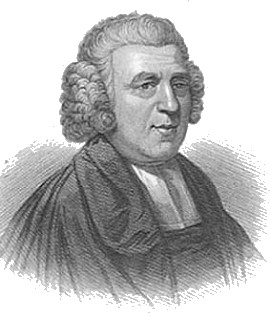
365 days with Newton

10 SEPTEMBER

The blood of the everlasting covenant

‘Now the God of peace, that brought again from the dead our Lord Jesus, that great shepherd of the sheep, through the blood of the everlasting covenant, make you perfect in every good work to do his will, working in you that which is well pleasing in his sight, through Jesus Christ; to whom be glory for ever and ever. Amen.’ Hebrews 13:20–21
SUGGESTED FURTHER READING: Hebrews 9:11–28

The manner—by the blood of the everlasting covenant. This covenant is the ‘covenant of grace,’ that better covenant of which Jesus is the Mediator. When the covenant of works was rendered useless, a new one is provided in which the Lord undertakes to do all (see 8:10). And this is everlasting and not that of Sinai. And the blessings are not temporal but everlasting blessings. The blood is the blood of Jesus, whereby the covenant is confirmed and valid. This blood is the foundation of all God’s dealings in a way of mercy. All the blessing shall be bestowed, because it is a covenant of blood. This blood is the sinner’s encouragement; it is, like the rainbow, a token of peace. Let us not fear to draw nigh, for though we are unworthy, we have the blood speaking for us. Herein is the apostle’s meaning. The value and efficacy of the blood was complete. Thereby the whole will of God was fully accomplished—the types and ceremonies of the old covenant fulfilled, a perfect atonement made for sin, and Christ having in and by his death done all. In virtue of his blood he is released from the grave, declared to be the Son of God and Saviour of men with power, and, as such, solemnly received and seated at the right hand of the Majesty on high.

FOR MEDITATION: These truths speak to his people:
(i) love: O how should we think of him.
(ii) security: He ever lives to plead for and protect his own.
(iii) gratitude: What shall we render! How shall we praise.

Let us love and sing and wonder,
He has quenched Mount Sinai’s flame:
Let us praise the Saviour’s name!
He has washed us with his blood,
He has hushed the Law’s loud thunder,
He has brought us nigh to GOD.

SERMON SERIES: HEBREWS 13:20–21, NO. 3 [2/2]

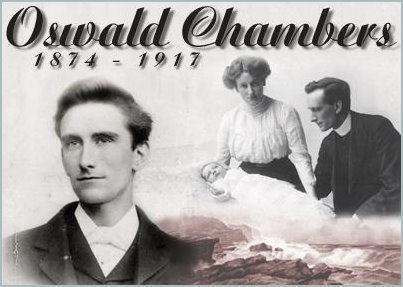
My Utmost for His Highest

September 9th

Do it yourself

Determinedly Discipline other Things.

Bringing into captivity every thought to the obedience of Christ. 2 Cor. 10:5.
This is another aspect of the strenuous nature of sainthood. Paul says—“I take every project prisoner to make it obey Christ.” (Moffatt.) How much Christian work there is to-day which has never been disciplined, but has simply sprung into being by impulse! In Our Lord’s life every project was disciplined to the will of His Father. There was not a movement of an impulse of His own will as distinct from His Father’s—“The Son can do nothing of Himself.” Then take ourselves—a vivid religious experience, and every project born of impulse put into action immediately, instead of being imprisoned and disciplined to obey Christ.
This is a day when practical work is over-emphasized, and the saints who are bringing every project into captivity are criticized and told that they are not in earnest for God or for souls. True earnestness is found in obeying God, not in the inclination to serve Him that is born of undisciplined human nature. It is inconceivable, but true nevertheless, that saints are not bringing every project into captivity, but are doing work for God at the instigation of their own human nature which has not been spiritualized by determined discipline.
We are apt to forget that a man is not only committed to Jesus Christ for salvation; he is committed to Jesus Christ’s view of God, of the world, of sin and of the devil, and this will mean that he must recognize the responsibility of being transformed by the renewing of his mind.

Streams in the Desert

September 9

“Not much earth.” (Matt. 13:5.)

SHALLOW! It would seem from the teaching of this parable that we have something to do with the soil. The fruitful seed fell into “good and honest hearts.” I suppose the shallow people are the soil without much earth—those who have no real purpose, are moved by a tender appeal, a good sermon, a pathetic melody, and at first it looks as if they would amount to something; but not much earth—no depth, no deep, honest purpose, no earnest desire to know duty in order to do it. Let us look after the soil of our hearts.
When a Roman soldier was told by his guide that if he insisted on taking a certain journey it would probably be fatal, he answered, “It is necessary for me to go; it is not necessary for me to live.”
This was depth. When we are convicted something like that we shall come to something. The shallow nature lives in its impulses, its impressions, its intuitions, its instincts, and very largely its surroundings. The profound character looks beyond all these, and moves steadily on, sailing past all storms and clouds into the clear sunshine which is always on the other side, and waiting for the afterwards which always brings the reversion of sorrow, seeming defeat and failure.
When God has deepened us, then He can give us His deeper truths, His profoundest secrets, and His mightier trusts. Lord, lead me into the depths of Thy life and save me from a shallow experience!

On to broader fields of holy vision;
On to loftier heights of faith and love;
Onward, upward, apprehending wholly,
All for which He calls thee from above.
—A. B. Simpson.

365 days with Newton

9 SEPTEMBER

Because he lives.…

‘Now the God of peace, that brought again from the dead our Lord Jesus, that great shepherd of the sheep, through the blood of the everlasting covenant, make you perfect in every good work to do his will, working in you that which is well pleasing in his sight, through Jesus Christ; to whom be glory for ever and ever. Amen.’ Hebrews 13:20–21
SUGGESTED FURTHER READING: 1 John 1:5–2:2

The act ascribed to the God of peace: brought him from the dead. This does not mean merely his resurrection by power, but his restoration and exaltation by authority, as Philippians 2:9 [Wherefore God also hath highly exalted him, and given him a name which is above every name]. These are two affecting thoughts of his people, that:
(i) he was dead. Such was his love he willingly died for his sheep. And they remember how he died—not in peace with his friends about him, but upon the cross.
(ii) he is alive. Hereby their justification is confirmed; they have a pledge of their own resurrection; they have an Advocate and Protector, and because he lives they shall live also.
To sinners I would hint:
(i) he is now exalted—therefore not to be trifled with. See that ye refuse not him that speaketh from heaven [Hebrews 12:25].
(ii) he is exalted to save. There is forgiveness with him. He can pardon and sanctify the vilest. To faith in his name, all things are easy.

FOR MEDITATION: When believers look unto Jesus, the representative of his people, as rising from the grave on their behalf, they are enlightened and strengthened and comforted. They find his promise, because I live you shall live also [John 14:19], sweetly and wonderfully fulfilled in their souls. What is your hope with respect to your present and final acceptance before God? Is it founded on what Jesus did and suffered in the flesh, and in the glorious testimony God gave to his obedience in raising him from the dead? This is the only plea which the Scripture affords or which will be accepted in the great day.
Church Catechism, Lecture 22, 12 January 1766

SERMON SERIES: HEBREWS 13:20–21, NO. 3 [1/2]

My Utmost for His Highest

September 8th

Do it yourself

Determinedly Demolish some Things.

Casting down imaginations and every high thing that exalteth itself against the knowledge of God. 2 Cor. 10:5.
Deliverance from sin is not deliverance from human nature. There are things in human nature, such as prejudices, which the saint has to destroy by neglect; and other things which have to be destroyed by violence, i.e., by the Divine strength imparted by God’s Spirit. There are some things over which we are not to fight, but to stand still in and see the salvation of God; but every theory or conception which erects itself as a rampart against the knowledge of God is to be determinedly demolished by drawing on God’s power, not by fleshly endeavour or compromise (v. 4).
It is only when God has altered our disposition and we have entered into the experience of sanctification that the fight begins. The warfare is not against sin; we can never fight against sin: Jesus Christ deals with sin in Redemption. The conflict is along the line of turning our natural life into a spiritual life, and this is never done easily, nor does God intend it to be done easily. It is done only by a series of moral choices. God does not make us holy in the sense of character; He makes us holy in the sense of innocence, and we have to turn that innocence into holy character by a series of moral choices. These choices are continually in antagonism to the entrenchments of our natural life, the things which erect themselves as ramparts against the knowledge of God. We can either go back and make ourselves of no account in the Kingdom of God, or we can determinedly demolish these things and let Jesus bring another son to glory.

Stephen Boyd Blog

Belfast-born Hollywood and International Star from 1950-1970's Fan Tribute Page

Abundant Joy

Digging Deep Into The Word

Not My Life

The Bible as clear as possible

Seek Grow Love

Growing Throughout the Year

Smoodock's Blog

Question Authority

PleaseGrace

A bit on daily needs and provisions

Three Strands Lutheran Parish

"A cord of three strands is not easily broken." Ecclesiastes 4:12

1love1god.com

Romans 5:8

The Rev. Jimmy Abbott

read, watch, listen

BEARING CHRIST CRUCIFIED AND RISEN

To know Christ and Him crucified

Considering the Bible

Scripture Musings

rolliwrites.wordpress.com/

The Official Home of Rolli - Author, Cartoonist and Songwriter

Pure Glory

The heavens are telling the glory of God; and the firmament proclaims His handiwork. Psalms 19:1

The daily addict

The daily life of an addict in recovery

The Christian Tech-Nerd

-Reviews, Advice & News For All Things Tech and Gadget Related-

Thinking Through Scripture

to help you walk with Jesus in faith, hope, and love.

A disciple's study

This is my personal collection of thoughts and writings, mainly from much smarter people than I, which challenge me in my discipleship walk. Don't rush by these thoughts, but ponder them.

Author Scott Austin Tirrell

Maker of fine handcrafted novels!

In Pursuit of My First Love

Returning to the First Love