Does the Bible say that an increase in technology is a sign of the end times?

ANSWER

Many people over the years have proposed that there would be an increase in technology as the end times approach. Among those espousing this view were renowned scientists Isaac Newton and Francis Bacon. On the frontispiece of Bacon’s Instauratio Magna, ships of learning were depicted passing by the limits of human knowledge, with a quote in Latin from Daniel 12:4. In more recent times, this belief has been supported in books like Future Shock by Alvin Toffler and The Bible Code by Michael Drosnin.

In Future Shock, first published in 1970, Toffler described the results of the rapid advancement of technology he had observed in the 1950s and 1960s. As technology brought ever faster changes in society, certain people were left on the sidelines, unable to cope with the speed of change. That stress and disorientation in people was dubbed “future shock.” Toffler did not attempt to use the Bible in his work, but the concept of future shock was alluded to in works like Hal Lindsey’s Late Great Planet Earth, which was also published in 1970. Mr. Lindsey has made frequent mention of Daniel 12:4 as a prophecy of this rapid technological advance.

The Bible Code was based on the work of Eliahu Rips and others, who proposed that the history of all mankind was encoded in the text of the Torah and could be found by the process of “equidistant letter sequencing” or ELS. This concept was first proposed by Rabbi Bachya ben Asher in the 13th century, a man who is recognized as introducing the use of Kabbalah (Jewish mysticism) into the study of the Torah. According to this theory, the Hebrew word for “computer” is encoded in Daniel 12:4, thus giving apparent confirmation that technology would indeed have exponential advances with the advent of computers.

With this background information, we are still left with the question, “Does the Bible say that an increase in technology is a sign of the end times?” The short answer is “No.” Working backwards through the previous information, the concept of ELS has been heavily debated in both academic and religious circles. Intriguing discoveries have been made, but the methods by which they appear are suspect at best. The concept proposed by Rabbi ben Asher is related more to divination than to Bible study, and God condemns any method of discerning hidden knowledge (Deuteronomy 18:10,14).

But, as Toffler observed, there certainly has been an exponential increase of technology, and it appears to be gaining ground even more quickly. So what does the Bible have to say on this matter? Let’s take a look at the text in question, Daniel 12:4, “But thou, O Daniel, shut up the words, and seal the book, even to the time of the end: many shall run to and fro, and knowledge shall be increased.” Daniel was told that the meaning of his prophecy would be sealed until the time of its fulfillment was near. The majority of Bible scholars through the ages have understood the last two phrases to reference the prophecy itself. Jamieson, Fausset, and Brown’s critical commentary (published 1871) identified the meaning as scrutinizing every page to discover God’s purposes in the events foretold. John Darby translated the passage “many shall diligently investigate,” and Samuel Tregelles rendered it “many shall scrutinize the book from end to end.” Matthew Henry’s Commentary (c. 1700) said, “Then this hidden treasure shall be opened, and many shall search into it, and dig for the knowledge of it, as for silver. They shall run to and fro, to enquire out copies of it, shall collate them, and see that they be true and authentic. They shall read it over and over, shall meditate upon it, and run it over in their minds.”

Many passages of Scripture refer to what will happen at the end of the age, but no other passage seems to deal with increasing knowledge or technology as a sign for us. A greater sign is the advancement of the gospel which Jesus spoke of in Matthew 24:14 and which He commanded us to proclaim in Matthew 28:19-20. God’s goal for mankind isn’t to advance as far as we can or to know all we can discover, but rather that all should come to repentance (2 Peter 3:9).


My Utmost for His Highest

September 2nd

The sacrament of sacrifice

He that believeth in Me, … out of him shall flow.… John 7:38.

Jesus did not say—‘he that believeth in Me shall realize the blessing of the fullness of God,’ but—‘he that believeth in Me, out of him shall escape everything he receives.’ Our Lord’s teaching is always anti-self-realization. His purpose is not the development of a man; His purpose is to make a man exactly like Himself, and the characteristic of the Son of God is self-expenditure. If we believe in Jesus, it is not what we gain, but what He pours through us that counts. It is not that God makes us beautifully rounded grapes, but that He squeezes the sweetness out of us. Spiritually, we cannot measure our life by success, but only by what God pours through us, and we cannot measure that at all.
When Mary of Bethany broke the box of precious ointment and poured it on Jesus’ head, it was an act for which no one else saw any occasion; the disciples said it was a waste. But Jesus commended Mary for her extravagant act of devotion, and said that wherever His gospel was preached “this also that she hath done shall be spoken of for a memorial of her.” Our Lord is carried beyond Himself with joy when He sees any of us doing what Mary did, not being set on this or that economy, but being abandoned to Him. God spilt the life of His Son that the world might be saved; are we prepared to spill out our lives for Him?
“He that believeth in Me out of him shall flow rivers of living water,” that is, hundreds of other lives will be continually refreshed. It is time now to break the life, to cease craving for satisfaction, and to spill the thing out. Our Lord is asking who of us will do it for Him?

Streams in the Desert

September 2

“Unto you it is given … to suffer.” (Phil. 1:29.)

GOD keeps a costly school. Many of its lessons are spelled out through tears. Richard Baxter said, “O God, I thank Thee for a bodily discipline or eight and fifty years”; and he is not the only man who has turned a trouble into triumph.
This school of our Heavenly Father will soon close for us; the term time is shortening every day. Let us not shrink from a hard lesson or wince under any rod of chastisement. The richer will be the crown, and the sweeter will be Heaven, if we endure cheerfully to the end and graduate in glory.—Theodore L. Cuyler.
The finest china in the world is burned at least three times, some of it more than three times. Dresden china is always burned three times. Why does it go through that intense fire? Once ought to be enough; twice ought to be enough. No, three times are necessary to burn that china so that the gold and the crimson are brought out more beautiful and then fastened there to stay.
We are fashioned after the same principle in human life. Our trials are burned into us once, twice, thrice; and by God’s grace these beautiful colors are there and they are there to stay forever.—Cortland Myers.

Earth’s fairest flowers grow not on sunny plain,
But where some vast upheaval rent in twain
The smiling land … .
After the whirlwind’s devastating blast,
After the molten fire and ashen pall,
God’s still small voice breathes healing over all.
From riven rocks and fern-clad chasms deep,
Flow living waters as from hearts that weep,
There in the afterglow soft dews distill
And angels tend God’s plants when night falls still,
And the Beloved passing by that way
Will gather lilies at the break of day.
—J. H. D.

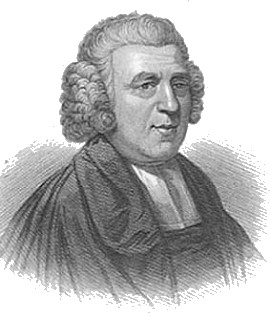
365 days with Newton

2 SEPTEMBER

The effect of peace

‘Behold, for peace I had great bitterness: but thou hast in love to my soul delivered it from the pit of corruption: for thou hast cast all my sins behind thy back.’ Isaiah 38:17
SUGGESTED FURTHER READING: Isaiah 38:1–22

[Contd from 1/2] Another instance [of being at their wits’ end] is Hezekiah in this chapter. He had feared the Lord from his youth and been an instrument of great public service, yet perhaps he never thoroughly knew himself till this sickness. We see something of a self-righteous spirit in his prayer—see verse 3. He speaks more of what he had done for the Lord than of what the Lord had done for him. But this sickness cured him. It was accompanied with sharp exercises of mind which gave him a deeper sense of sin and showed him greater abominations in his heart than he was aware of. See how he speaks—verses 13–14. And thus he was taught to speak of gospel grace. He no more says, ‘See how I have walked’, but, ‘See how gracious the Lord has been to me, in love to my soul …’ This passage is similar to Psalms 40 and 41. When the Lord delivers his people from the pit, and sets their feet upon a rock, it puts a new song in their mouths. They love to look back and to speak of his mercy. And these things are written to encourage others who are yet in distress. The Lord’s arm is not shortened—he is able to save you likewise.
FOR MEDITATION:
They often murmured by the way,
The way was right their hearts to prove,
Because they judged by sight;
To make God’s glory known;
But were at length constrained to say,
And show his wisdom, power and love,
The Lord had led them right.
Engaged to save his own.

         Just so the true believer’s path
         Through many dangers lies;
         Though dark to sense, ’tis right to faith,
         And leads us to the skies.

SERMON: ISAIAH 38:17 [2/2]

How would it impact the Christian faith if it was discovered that aliens exist?

ANSWER

First, let it be said, we do not believe that aliens exist. The Bible gives us no reason to believe that there is life elsewhere in the universe; in fact, the Bible gives us several key reasons why there cannot be. However, that has not stopped theologians, astronomers, and science fiction fans and writers through the years from contemplating the “what ifs” long and hard. The debates have narrowed down where the problems would arise, if the existence and discovery of extraterrestrial life could be proved.

Those who contemplate the existence of aliens and the impact their existence would have on the Christian faith commonly discuss the identity and work of Jesus. God sent His only begotten Son, God incarnate, to save mankind and redeem creation. Does that redemption include life on other planets? Or would God have manifested Himself on those other planets, as well (in the manner of Aslan in Narnia)? Does “only begotten” mean “only physical representation”? Or is it more limited, referring only to the human species?

Another consideration: would an otherworldly, sentient, advanced life form sin and need redemption in the same way we do? Human life is in the blood (Leviticus 17:11). Where is the life of these hypothetical aliens? And what would have to be sacrificed to save them? Could the shedding of Jesus’ human blood save silicon-based glass creatures whose sin was melting and reforming themselves into unnatural shapes?

Another topic of discussion concerning the existence of aliens and Christianity is what it means to be made in the “image of God.” Since God has no physical body, we take this to mean a reflection of God’s non-physical aspects—rationality, morality, and sociability. Would aliens, if they exist, embody the same characteristics?

One issue rarely broached is the impact of young earth creationism on the discovery of alien life. It is conceivable, if highly unlikely, that the geological pyrotechnics that took place during the global flood could have spewed a bacteria- or lichen-tainted stone all the way to Mars where it found shelter in a misty canyon. But any life form more complicated or farther out would be much harder to harmonize with a literal reading of Genesis 1. Could demons have taken trees and shrubs and rodents and bugs to another planet with an environment similar to Earth’s? Possibly. But without the Spirit’s blessing of life, it’s unlikely any of it would have survived. Parallel creations? Maybe. The Bible does not mention them.

Considering what we know about space and life and the world as the Bible portrays it, we already have an explanation for so-called alien activity on Earth. Reports of “close encounters” describe the ethereal, transient, deceptive, and malevolent. Accounts also record that encounters with supposed aliens can be stopped by a real, authentic call to Jesus. Everything points to the activity of demons, not extraterrestrials. In fact, it is plausible that the “powerful delusion” spoken of in 2 Thessalonians 2:11 will involve an alien-abduction theory to explain away the rapture.

The “discovery” of alien life would have no effect on genuine Christianity. The Bible stands as written, no matter what secular theories are advanced or discoveries are claimed. The Bible says the earth and mankind are unique in God’s creation. God created the earth even before He created the sun, moon, or stars (Genesis 1). Yes, there are strange and inexplicable things that take place. There is no reason, though, to attribute these phenomena to aliens or UFOs. If there is a discernable cause to these events, it is spiritual or, more specifically, demonic in origin. In the final analysis, all conjecturing about what would happen to our faith if aliens were proved to be real is interesting but unhelpful; it should never be allowed to descend into the “foolish and stupid arguments” that we are warned against (2 Timothy 2:23).

Stephen Boyd Blog

Belfast-born Hollywood and International Star from 1950-1970's Fan Tribute Page

Abundant Joy

Digging Deep Into The Word

Not My Life

The Bible as clear as possible

Seek Grow Love

Growing Throughout the Year

Smoodock's Blog

Question Authority

PleaseGrace

A bit on daily needs and provisions

Three Strands Lutheran Parish

"A cord of three strands is not easily broken." Ecclesiastes 4:12

1love1god.com

Romans 5:8

The Rev. Jimmy Abbott

read, watch, listen

BEARING CHRIST CRUCIFIED AND RISEN

To know Christ and Him crucified

Considering the Bible

Scripture Musings

rolliwrites.wordpress.com/

The Official Home of Rolli - Author, Cartoonist and Songwriter

Pure Glory

The heavens are telling the glory of God; and the firmament proclaims His handiwork. Psalms 19:1

The daily addict

The daily life of an addict in recovery

The Christian Tech-Nerd

-Reviews, Advice & News For All Things Tech and Gadget Related-

Thinking Through Scripture

to help you walk with Jesus in faith, hope, and love.

A disciple's study

This is my personal collection of thoughts and writings, mainly from much smarter people than I, which challenge me in my discipleship walk. Don't rush by these thoughts, but ponder them.

Author Scott Austin Tirrell

Maker of fine handcrafted novels!

In Pursuit of My First Love

Returning to the First Love