
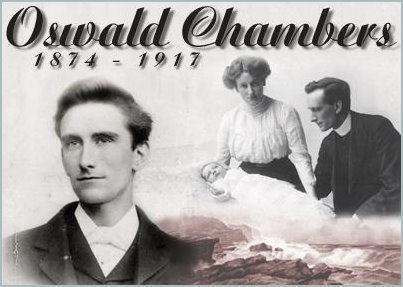
My Utmost for His Highest

August 28th

What’s the good of prayer?

Lord, teach us to pray. Luke 11:1.

It is not part of the life of a natural man to pray. We hear it said that a man will suffer in his life if he does not pray; I question it. What will suffer is the life of the Son of God in him, which is nourished, not by food, but by prayer. When a man is born from above, the life of the Son of God is born in him, and he can either starve that life or nourish it. Prayer is the way the life of God is nourished. Our ordinary views of prayer are not found in the New Testament. We look upon prayer as a means of getting things for ourselves; the Bible idea of prayer is that we may get to know God Himself.
“Ask and ye shall receive.” We grouse before God, we are apologetic or apathetic, but we ask very few things. Yet what a splendid audacity a childlike child has! Our Lord says—“Except ye become as little children.” Ask, and God will do. Give Jesus Christ a chance, give Him elbow room, and no man will ever do this unless he is at his wits’ end. When a man is at his wits’ end it is not a cowardly thing to pray, it is the only way he can get into touch with Reality. Be yourself before God and present your problems, the things you know you have come to your wits’ end over. As long as you are self-sufficient, you do not need to ask God for anything.
It is not so true that “prayer changes things” as that prayer changes me and I change things. God has so constituted things that prayer on the basis of Redemption alters the way in which a man looks at things. Prayer is not a question of altering things externally, but of working wonders in a man’s disposition.
Streams in the Desert

August 28

“There he proved them.” (Exod. 15:25.)

ISTOOD once in the test room of a great steel mill. All around me were little partitions and compartments. Steel had been tested to the limit, and marked with figures that showed its breaking point. Some pieces had been twisted until they broke, and the strength of torsion was marked on them. Some had been stretched to the breaking point and their tensile strength indicated. Some had been compressed to the crushing point, and also marked. The master of the steel mill knew just what these pieces of steel would stand under strain. He knew just what they would bear if placed in the great ship, building, or bridge. He knew this because his testing room revealed it.
It is often so with God’s children. God does not want us to be like vases of glass or porcelain. He would have us like these toughened pieces of steel, able to bear twisting and crushing to the uttermost without collapse.
He wants us to be, not hothouse plants, but storm-beaten oaks; not sand dunes driven with every gust of wind, but granite rocks withstanding the fiercest storms. To make us such He must needs bring us into His testing room of suffering. Many of us need no other argument than our own experiences to prove that suffering is indeed God’s testing room of faith.
—J. H. McC.
It is very easy for us to speak and theorize about faith, but God often casts us into crucibles to try our gold, and to separate it from the dross and alloy. Oh, happy are we if the hurricanes that ripple life’s unquiet sea have the effect of making Jesus more precious. Better the storm with Christ than smooth waters without Him.—Macduff.

What if God could not manage to ripen your life without suffering?

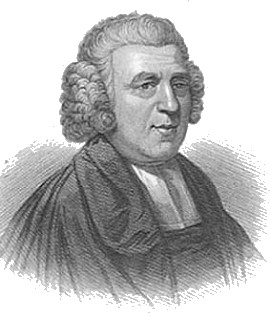
365 days with Newton

28 AUGUST

Honour your parents

‘Children, obey your parents in the Lord: for this is right. Honour thy father and mother; (which is the first commandment with promise;) that it may be well with thee, and that thou mayest live long on the earth.’ Ephesians 6:1–3
SUGGESTED FURTHER READING: Genesis 46:26–47:12

Reverence or honour. It might be hoped that a sense of obligation might make children love their parents, yet this is not always the case, and where there is not a total want of love, there is often a great want of respect. But what shall we say of those who despise their parents, can make a jest of their infirmities and, instead of submitting as they ought, to bear with their temperaments, fly as it were in their faces. I must say, as I said before—it is a sad sign, a presumptuous contempt of God, which, unless they are partakers of his mercy by faith in Christ, will expose them to his curse both here and hereafter. When parents are old and in the decline of life, it is the duty of their children to behave to them with the greatest tenderness and care—patiently to bear with their infirmities and, if necessary and so far as in their power, to provide for them. It is to be feared there is wickedness in many hearts secretly to wish their deaths, to look upon them as a burden, especially if on the one hand they have money to leave behind them, or on the other they contribute more or less to their maintenance. All sharp language and unkind behaviour to them at such a time is not only a breach of the command but barbarous, base and ungrateful. May nothing of this be found amongst us, especially amongst those who profess to fear God. I hope such will always … study how to make the little remainder of their parents’ lives as comfortable as may be. The pains and infirmities of old age are hard enough to bear, without this addition of unkindness from those who are most obliged to them.

FOR MEDITATION: I hope often to pray that this child and all your children may be taught of God, and that if he is pleased to prolong their lives, they may grow up like olive branches around your table, may be an honour and a comfort to their parents, and when their parents shall be removed to a better world, their children may fully supply their places as members of his true church, and instruments in his hand of much good and usefulness in civil life!
John Newton to William Wilberforce, 21 December 1802

[on the birth of Robert Isaac]

SERMON SERIES: RELATIVE DUTIES, NO. 3 [3/5], EPHESIANS 6:1–3

My Utmost for His Highest

August 27th

Theology alive

Walk while ye have the light, lest darkness come upon you. John 12:35.

Beware of not acting upon what you see in your moments on the mount with God. If you do not obey the light, it will turn into darkness. “If therefore the light that is in thee be darkness, how great is that darkness!” The second you waive the question of sanctification or any other thing upon which God gave you light, you begin to get dry rot in your spiritual life. Continually bring the truth out into actuality; work it out in every domain, or the very light you have will prove a curse.
The most difficult person to deal with is the one who has the smug satisfaction of an experience to which he can refer back, but who is not working it out in practical life. If you say you are sanctified, show it. The experience must be so genuine that it is shown in the life. Beware of any belief that makes you self-indulgent; it came from the pit, no matter how beautiful it sounds.
Theology must work itself out in the most practical relationships. “Except your righteousness shall exceed the righteousness of the scribes and Pharisees, …” said Our Lord, i.e., you must be more moral than the most moral being you know. You may know all about the doctrine of sanctification, but are you running it out into the practical issues of your life? Every bit of our life, physical, moral and spiritual, is to be judged by the standard of the Atonement.

Streams in the Desert

August 27

“And he took him aside from the multitude.” (Mark 7:33.)

PAUL not only stood the tests in Christian activity, but in the solitude of captivity. You may stand the strain of the most intense labor, coupled with severe suffering, and yet break down utterly when laid aside from all religious activities; when forced into close confinement in some prison house.
That noble bird, soaring the highest above the clouds and enduring the longest flights, sinks into despair when in a cage where it is forced to beat its helpless wings against its prison bars. You have seen the great eagle languish in its narrow cell with bowed head and drooping wings. What a picture of the sorrow of inactivity.
Paul in prison. That was another side of life. Do you want to see how he takes it? I see him looking out over the top of his prison wall and over the heads of his enemies. I see him write a document and sign his name—not the prisoner of Festus, nor of Caesar; not the victim of the Sanhedrin; but the—“prisoner of the Lord.” He saw only the hand of God in it all. To him the prison becomes a palace. Its corridors ring with shouts of triumphant praise and joy.
Restrained from the missionary work he loved so well, he now built a new pulpit—a new witness stand—and from that place of bondage come some of the sweetest and most helpful ministries of Christian liberty. What precious messages of light come from those dark shadows of captivity.
Think of the long train of imprisoned saints who have followed in Paul’s wake. For twelve long years Bunyan’s lips were silenced in Bedford jail. It was there that he did the greatest and best work of his life. There he wrote the book that has been read next to the Bible. He says, “I was at home in prison and I sat me down and wrote, and wrote, for joy did make me write.”
The wonderful dream of that long night has lighted the pathway of millions of weary pilgrims. That sweet-spirited French lady, Madam Guyon, lay long between prison walls. Like some caged birds that sing the sweeter for their confinement, the music of her soul has gone out far beyond the dungeon walls and scattered the desolation of many drooping hearts.
Oh, the heavenly consolation that has poured forth from places of solitude!—S. C. Rees.

“Taken aside by Jesus,
  To feel the touch of His hand;
To rest for a while in the shadow
  Of the Rock in a weary land.

“Taken aside by Jesus,
  In the loneliness dark and drear,
Where no other comfort may reach me,
  Than His voice to my heart so dear.

“Taken aside by Jesus,
  To be quite alone with Him,
To hear His wonderful tones of love
  ’Mid the silence and shadows dim.

“Taken aside by Jesus,
  Shall I shrink from the desert place;
When I hear as I never heard before,
  And see Him ‘face to face’?”

Stephen Boyd Blog

Belfast-born Hollywood and International Star from 1950-1970's Fan Tribute Page

Abundant Joy

Digging Deep Into The Word

Not My Life

The Bible as clear as possible

Seek Grow Love

Growing Throughout the Year

Smoodock's Blog

Question Authority

PleaseGrace

A bit on daily needs and provisions

Three Strands Lutheran Parish

"A cord of three strands is not easily broken." Ecclesiastes 4:12

1love1god.com

Romans 5:8

The Rev. Jimmy Abbott

read, watch, listen

BEARING CHRIST CRUCIFIED AND RISEN

To know Christ and Him crucified

Considering the Bible

Scripture Musings

rolliwrites.wordpress.com/

The Official Home of Rolli - Author, Cartoonist and Songwriter

Pure Glory

The heavens are telling the glory of God; and the firmament proclaims His handiwork. Psalms 19:1

The daily addict

The daily life of an addict in recovery

The Christian Tech-Nerd

-Reviews, Advice & News For All Things Tech and Gadget Related-

Thinking Through Scripture

to help you walk with Jesus in faith, hope, and love.

A disciple's study

This is my personal collection of thoughts and writings, mainly from much smarter people than I, which challenge me in my discipleship walk. Don't rush by these thoughts, but ponder them.

Author Scott Austin Tirrell

Maker of fine handcrafted novels!

In Pursuit of My First Love

Returning to the First Love