… nevertheless he would not drink thereof but poured it out unto the Lord. 2 Samuel 23:16.
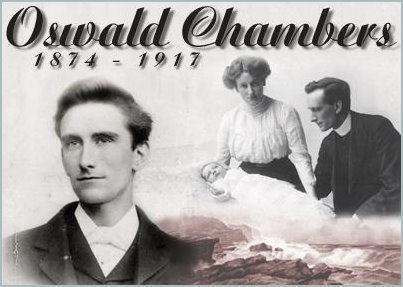
What has been like water from the well of Bethlehem to you recently—love, friendship, spiritual blessing? Then at the peril of your soul, you take it to satisfy yourself. If you do, you cannot pour it out before the Lord. You can never sanctify to God that with which you long to satisfy yourself. If you satisfy yourself with a blessing from God, it will corrupt you; you must sacrifice it, pour it out, do with it what common sense says is an absurd waste. How am I to pour out unto the Lord natural love or spiritual blessing? In one way only—in the determination of my mind. There are certain acts of other people which one could never accept if one did not know God, because it is not within human power to repay them. But immediately I say—‘This is too great and worthy for me, it is not meant for a human being at all, I must pour it out unto the Lord’; then these things pour out in rivers of living water all around. Until I do pour these things out before the Lord, they endanger those I love as well as myself because they will turn to lust. We can be lustful in things which are not sordid and vile. Love has to get to its transfiguration point of being poured out unto the Lord. If you have become bitter and sour, it is because when God gave you a blessing you clutched it for yourself; whereas if you had poured it out unto the Lord, you would have been the sweetest person out of heaven. If you are always taking blessings to yourself and never learn to pour out anything unto the Lord, other people do not get their horizon enlarged through you.
STRAINING, driving effort does not accomplish the work God gives man to do. Only God Himself, who always works without strain, and who never overworks, can do the work that He assigns to His children. When they restfully trust Him to do it, it will be well done and completely done. The way to let Him do His work through us is to partake of Christ so fully, by faith, that He more than fills our life. A man who had learned this secret once said: “I came to Jesus and I drank, and I do not think that I shall ever be thirsty again. I have taken for my motto, ‘Not overwork, but overflow’; and already it has made all the difference in my life.” There is no effort in overflow. It is quietly irresistible. It is the normal life of omnipotent and ceaseless accomplishment into which Christ invites us today and always.—Sunday School Times.
Be all at rest, my soul, O blessed secret, Of the true life that glorifies thy Lord: Not always doth the busiest soul best serve Him, But he that resteth on His faithful Word. Be all at rest, let not your heart be rippled, For tiny wavelets mar the image fair, Which the still pool reflects of heaven’s glory— And thus the image He would have thee bear. Be all at rest, my soul, for rest is service, To the still heart God doth His secrets tell; Thus shalt thou learn to wait, and watch, and. Labor, Strengthened to bear, since Christ in thee doth dwell. For what is service but the life of Jesus, Lived through a vessel of earth’s fragile clay, Loving and giving and poured forth for others, A living sacrifice from day to day.
Be all at rest, so shalt thou be an answer To those who question, “Who is God and where?” For God is rest, and where He dwells is stillness, And they who dwell in Him, His rest shall share. And what shall meet the deep unrest around thee, But the calm peace of God that filled His breast? For still a living Voice calls to the weary, From Him who said, “Come unto Me and rest.” —Freda Hanbury Allen. “In resurrection stillness there is resurrection power.”
‘Now the God of peace, that brought again from the dead our Lord Jesus, that great shepherd of the sheep, through the blood of the everlasting covenant, make you perfect in every good work to do his will, working in you that which is well pleasing in his sight, through Jesus Christ; to whom be glory for ever and ever. Amen.’ Hebrews 13:20–21 SUGGESTED FURTHER READING: John 4:4–14
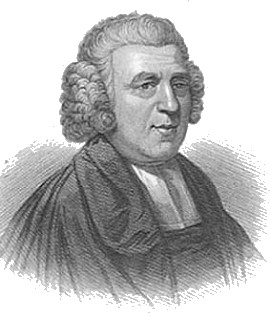
There is an analogy between the works and the Word of God. If we consider the creation, the vastness of the whole and the unsuitableness and violation of the several parts strike us with an impression of his immensity and his manifold wisdom. At the same time his hand is seen and acknowledged by an attentive mind in the smallest of his works. The more we examine them, the more we discover of the finger of God. Not only the glory of the sun, but the structure of a plant or an insect bear the impression of divine power and wisdom which may well fill us with astonishment and reverence. So his wisdom is displayed not only in the whole compass and connection of the Scripture, but there is a fullness and a beauty often in a single text, which the application of our utmost industry to the end of our lives, could not fully discover if we were to attend to nothing else. It is our duty and great advantage to aim at a comprehensive knowledge of the whole. At the same time he has favoured us with many summaries of the gospel doctrine, which in a few verses, sometimes in a few words, comprise the substance of all that we are taught more largely elsewhere—as it were, in miniature. This is a condescension to our weakness and should be a spur to our meditation. Of this kind is the prayer in my text, which shows us not only the fullness of the Apostle’s heart, but the fullness of the Scripture phrase. A close examination of these two verses might lead us to speak of everything relative to the faith, experience and practice of a Christian, and furnish a minister with subjects to the end of his life. I do not mean to treat it in such an extensive view, but neither shall I be able to confine what I may offer from it within the compass of a single sermon. I may say this is one of the wells of salvation; may the Lord open it for us, enable us to drink of the water of life freely.
FOR MEDITATION: ‘… Christ; In whom are hid all the treasures of wisdom and knowledge’ (Colossians 2:2–3).
Death raises many questions: When will it happen? What will it be like? What is the soul’s destiny? Chuck Swindoll addresses that last question in Growing Deep in the Christian Life:
When the believer dies, the body goes into the grave; the soul and spirit go immediately to be with the Lord Jesus awaiting the body’s resurrection, when they’re joined together to be forever with the Lord in eternal bliss.1
Sadly, many fear their souls will have to wait indefinitely for heaven. “Soul sleep”—the belief that the soul rests after death in an unconscious state, or ceases to exist, until the final resurrection—finds its roots in the common “sleeping” metaphor for bodily death. Although this metaphor appears in Scripture, a thorough study shows that the metaphor of sleep refers only to the earthly body’s inanimate state after death, not to the soul.
Scripture assures believers of their souls’ destiny at death:
Therefore, being always of good courage, and knowing that while we are at home in the body we are absent from the Lord—for we walk by faith, not by sight—we are of good courage, I say, and prefer rather to be absent from the body and to be at home with the Lord. (2 Corinthians 5:6–8, emphasis added)
For to me, to live is Christ and to die is gain. But if I am to live on in the flesh, this will mean fruitful labor for me; and I do not know which to choose. But I am hard-pressed from both directions, having the desire to depart and be with Christ, for that is very much better; yet to remain on in the flesh is more necessary for your sake. (Philippians 1:21–24)
And Jesus, crying out with a loud voice, said, “Father, into Your hands I commit My Spirit.” Having said this, He breathed His last. (Luke 23:46)
Jesus, as God’s Son, knew He would be spiritually present in the Father’s “hands” at the very moment of His death, not asleep in the grave.
Other biblical events make clear there is no soul sleep for believers but rather a conscious, immediate presence with God after death:
The stoning of Stephen (Acts 7:54–59) The transfiguration (Matthew 17:1–8; Mark 9:1–8; Luke 9:28–36) Rachel’s soul departing when she died (Genesis 35:18) Two more passages bear further discussion. First, John 11:23–27:
Jesus said to her, “Your brother will rise again.” Martha said to him, “I know that he will rise again in the resurrection on the last day.” Jesus said to her, “I am the resurrection and the life; he who believes in Me will live even if he dies, and everyone who lives and believes in Me will never die. Do you believe this?” She said to Him, “Yes, Lord; I have believed that You are the Christ, the Son of God, even He who comes into the world.”
Notice Jesus corrected Martha’s belief that her brother would only “live” in the resurrection. In contrast, Jesus revealed that believers will live even if they die, and in fact, they will never die in the way that our bodies do.
The second passage comes from Peter’s pen:
For Christ also died for sins once for all, the just for the unjust, so that He might bring us to God, having been put to death in the flesh, but made alive in the spirit. (1 Peter 3:18)
Believers, at the moment of salvation, are “crucified with Christ,” and yet they live (Galatians 2:20). When the earthly body of the believer dies, he or she lives on spiritually. Through faith in Christ, believers have been made alive in the spirit just as Jesus lives in the spirit. We who profess Christ are not destined for soul sleep or the grave!
We can resolve many of the interpretation conflicts that surround the issue of death by simply keeping the earthly physical body’s inanimate state after death completely separate from the soul’s spiritual life and location apart from the body.
One key scriptural event that supports this, but is sometimes misunderstood, is Jesus’s exchange with the thief on the cross. Jesus tells the thief dying next to Him that their spirits would be together, alive, and conscious on that day. Yet some argue the punctuation is misplaced in Luke 23:42–43. Instead of, “Truly I say to you, today you shall be with Me in Paradise,” they argue Jesus really said, “Truly I say to you today, you shall be with Me in Paradise.” But Scripture includes no other instance of Jesus saying, “I say to you today.” This adds to the likelihood that, as every English translation indicates, Jesus was emphasizing that today was the time He and the thief would be together in paradise. And even Jesus’s statement, “Father, into Your hands I commit My spirit,” points to His being spiritually in God’s presence immediately upon death.
Another scriptural event that is sometimes misinterpreted is Saul’s visit to the medium of Endor. Some believe that Saul summoned the spirit of Samuel, that Samuel’s spirit ascended from the ground, and that Samuel was angry because his sleep had been disturbed. However, sleep is not mentioned in the passage. The text only says, “Why have you disturbed me by bringing me up?” (1 Samuel 28:15). Further, as Thomas Constable noted, “This passage does not say that the witch brought up Samuel from the dead. God revealed Samuel to Saul.”2
We don’t know exactly where Samuel was before he was disturbed, but we do know he told Saul that the king and his sons would be with the prophet the very next day (28:19). This wouldn’t be very meaningful if their souls were just going to be sleeping after they died. Rather, it’s more likely Samuel meant they would all be conscious of their spirits meeting one another the next day.
In Luke 16:19–31, Lazarus and the rich man were in “Abraham’s bosom” and “Hades” after their deaths. But some readers conclude that those “waiting places” indicate that our souls will wait for heaven in similar places. Actually, this story, told by Jesus himself, teaches that the soul is not sleeping but alive and conscious after death and before bodily resurrection. Incidentally, this is the only time the phrase “Abraham’s bosom” appears in the Bible. “Abraham’s bosom” was an expression referring to the “paradise” Jesus anticipated following His death.
Some wonder if we will recognize our loved ones in heaven or if our spirits will be without form like a ghost or a wispy cloud, but these passages suggest we will have a bodily form. The Bible doesn’t give us details, but several passages suggest we will have recognizable intermediate bodies.
Lewis Sperry Chafer refers to 2 Corinthians 5:1–5 when he explains “the concept of an intermediate body between death and resurrection”:
At the present time believers are in an “earthly tent” (v. 1), but they long for their “heavenly dwelling” (v. 2). References to believers after death but before resurrection all seem to suggest that they have a body, as in the case of Lazarus (Luke 16:19–25). When Moses and Elijah met with Christ on the Mount of Transfiguration, they were represented as having bodies (Matt. 17:1–3; Mark 9:4; Luke 9:30). In Revelation 6:9–11 [and 7:13–17] the martyred dead . . . are represented as wearing robes and being before the throne of God. Though full revelation was not given in Scripture concerning the exact characteristics of these bodies, apparently they will not be suited for eternity for they will be replaced by resurrection bodies.3
This conscious, intermediate state is not an intermediate cleansing place between heaven and earth, like purgatory, a concept that is never found in the Bible and contradicts the gospel. Rather, it’s a temporary body, intermediate between the time of our death and the resurrection, which will take place when Jesus returns.
Scripture not only assures us of our souls’ destiny; God’s Word also offers insight on the future of our earthly, physical bodies, which will be resurrected at the Rapture. Paul wrote that we “wait eagerly for . . . the redemption of our bodies. For in this hope we were saved” (Romans 8:23–24 NIV). Unfortunately, many who believe in soul sleep have confused the resurrection of our earthly bodies and spiritual life after death. Regarding the earthly body and its significance after death, Scripture says, “It has not appeared as yet what we will be. We know that when He appears, we will be like Him, because we will see Him just as He is” (1 John 3:2). The exact details of that will remain a mystery; however, we know that we will be physically resurrected at the Rapture (John 5:29; Acts 24:15; 1 Thessalonians 4:13–18). We also know that our resurrected bodies will be different in some ways than our current bodies (1 Corinthians 15:45–49) and suited for eternity.
We can learn about our resurrected bodies by considering Jesus’s body after His resurrection. We know that Jesus ate and drank, that the disciples could touch Him, and that He had flesh and bones yet could move at will without physical limitations. “See my hands and my feet, that it is I Myself; touch Me and see, for a spirit does not have flesh and bones as you see that I have” (Luke 24:39). If Jesus’s resurrected body could do all these things, our resurrected bodies likely will too.
Fears and questions about death are natural, but the Bible offers peace. Believers can take courage in the knowledge that the rest God provides for us after death is so much better than any so-called “soul sleep.” While death is sorrowful and painful, for those who know Christ, the time beyond death carries with it marvelous hope. For Christians, death means we will finally, immediately be face-to-face with our Father.
This is my personal collection of thoughts and writings, mainly from much smarter people than I, which challenge me in my discipleship walk. Don't rush by these thoughts, but ponder them.


 Milo
Milo 