Streams in the Desert

August 19

“As sorrowful, yet always rejoicing.” (2 Cor. 6:10.)

SORROW was beautiful, but her beauty was the beauty of the moonlight shining through the leafy branches of the trees in the wood, and making little pools of silver here and there on the soft green moss below.
When Sorrow sang, her notes were like the low sweet call of nightingale, and in her eyes was the unexpectant gaze of one who has ceased to look for coming gladness. She could weep in tender sympathy with those who weep, but to rejoice with those who rejoice was unknown to her.
Joy was beautiful, too, but his was the radiant beauty of the summer morning. His eyes still held the glad laughter of childhood, and his hair had the glint of the sunshine’s kiss. When Joy sang his voice soared upward as the lark’s, and his step was the step of a conqueror who has never known defeat. He could rejoice with all who rejoice, but to weep with those who weep was unknown to him.
“But we can never be united,” said Sorrow wistfully.
“No, never.” And Joy’s eyes shadowed as he spoke. “My path lies through the sunlit meadows, the sweetest roses bloom for my gathering, and the blackbirds and thrushes await my coming to pour forth their most joyous lays.”
“My path,” said Sorrow, turning slowly away, “leads through the darkening woods, with moon-flowers only shall my hands be filled. Yet the sweetest of all earth-songs—the love song of the night—shall be mine; farewell, Joy, farewell.”
Even as she spoke they became conscious of a form standing beside them; dimly seen, but of a Kingly Presence, and a great and holy awe stole over them as they sank on their knees before Him.
“I see Him as the King of Joy,” whispered Sorrow, “for on His Head are many crowns, and the nailprints in His hands and feet are the scars of a great victory. Before Him all my sorrow is melting away into deathless love and gladness, and I give myself to Him forever.”
“Nay, Sorrow,” said Joy softly, “but I see Him as the King of Sorrow, and the crown on His head is a crown of thorns, and the nailprints in His hands and feet are the scars of a great agony. I, too, give myself to Him forever, for sorrow with Him must be sweeter than any joy that I have known.”
“Then we are one in Him,” they cried in gladness, “for none but He could unite Joy and Sorrow.”
Hand in hand they passed out into the world to follow Him through storm and sunshine, in the bleakness of winter cold and the warmth of summer gladness, “as sorrowful yet always rejoicing.”

“Should Sorrow lay her hand upon thy shoulder,
And walk with thee in silence on life’s way,
While Joy, thy bright companion once, grown colder,
Becomes to thee more distant day by day?
Shrink not from the companionship of Sorrow,
She is the messenger of God to thee;
And thou wilt thank Him in His great tomorrow—
For what thou knowest not now, thou then shalt see;
She is God’s angel, clad in weeds of night,
With ‘whom we walk by faith and not by sight.’ ”
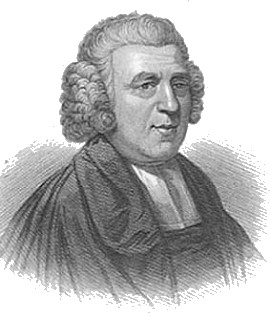
365 days with Newton

19 AUGUST

True justifying faith

‘And he brought him forth abroad, and said, Look now toward heaven, and tell the stars, if thou be able to number them: and he said unto him, So shall thy seed be. And he believed in the LORD; and he counted it to him for righteousness.’ Genesis 15:5–6
SUGGESTED FURTHER READING: Romans 3:21–31

Answerable to Abraham’s faith is the way of justification now, by faith in the same object, and upon the same ground. The object is Christ. No other name is given, no other name is desired or regarded by those who are truly convinced of sin. He is appointed of God and proposed to them and set before them as wisdom, righteousness, and so forth. The Holy Spirit who has convinced them of sin, convinces them of righteousness, the necessity of it—that it is not in themselves and that it is in Jesus.
The ground (or warrant) is the promise, and that under no less outward discouragements than Abraham had to encounter. The guilt of sin, the power of corruption, the stress of temptation, the delay of comfort—by these things the soul is sometimes startled and put almost to a stand. But faith prevails and reasons, as Abraham, ‘God has promised and is able also to perform—therefore I will hope against hope’ [Romans 4:18].
We conclude then that a venturing upon Jesus from the invitation of gospel promises is true, justifying faith. To such, his righteousness is accounted as their own, and, notwithstanding all their fears and infirmities, they are accepted in the beloved; their state is safe. O blessed are ye of the Lord that are seeking salvation in this way. But this faith in the lowest degree, if but as a grain of mustard seed, will have fruits: love, desire, obedience. Though in many things they come short, they will be pressing forward.

FOR MEDITATION: Two sorts of persons then are in a dangerous state:
(i) they who seek salvation by the works of the law. If they can be saved in their present way, Christ has died in vain.
(ii) they who talk of faith and are utterly destitute of its fruits, who have a form without the power. This is the proper description of a corpse. So James says the faith of such is dead [James 2:26].

SERMON SERIES: GENESIS, NO. 31 [2/2], GENESIS 15:5–6

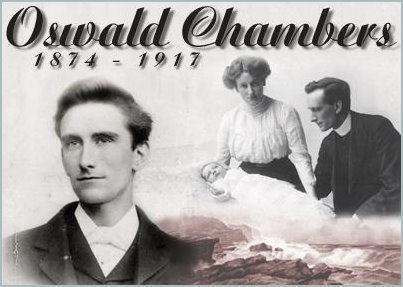
My Utmost for His Highest

August 18th

Have you ever been expressionless with sorrow?

And when he heard this, he was very sorrowful: for he was very rich. Luke 18:23.

The rich young ruler went away expressionless with sorrow; he had not a word to say. He had no doubt as to what Jesus said, no debate as to what it meant, and it produced in him a sorrow that had not any words. Have you ever been there? Has God’s word come to you about something you are very rich in—temperament, personal affinity, relationships of heart and mind? Then you have often been expressionless with sorrow. The Lord will not go after you, He will not plead, but every time He meets you on that point He will simply repeat—“If you mean what you say, those are the conditions.’
“Sell all that thou hast”—undress yourself morally before God of everything that might be a possession until you are a mere conscious human being, and then give God that. That is where the battle is fought—in the domain of the will before God. Are you more devoted to your idea of what Jesus wants than to Himself? If so, you are likely to hear one of His hard sayings that will produce sorrow in you. What Jesus says is hard, it is only easy when it is heard by those who have His disposition. Beware of allowing anything to soften a hard word of Jesus Christ’s.
I can be so rich in poverty, so rich in the consciousness that I am nobody, that I shall never be a disciple of Jesus; and I can be so rich in the consciousness that I am somebody—that I shall never be a disciple. Am I willing to be destitute of the sense that I am destitute? This is where discouragement comes in. Discouragement is disenchanted self-love, and self-love may be love of my devotion to Jesus.

Streams in the Desert

August 18

“Alone.” (Deut. 32:12.)

“The hill was steep, but cheered along the way
By converse sweet, I mounted on the thought
That so it might be till the height was reached;
But suddenly a narrow winding path
Appeared, and then the Master said, ‘My child,
Here thou wilt safest walk with Me alone.’

“I trembled, yet my heart’s deep trust replied,
‘So be it, Lord.’ He took my feeble hand
In His, accepting thus my will to yield Him
All, and to find all in Him.
One long, dark moment,
And no friend I saw, save Jesus only.

“But oh! so tenderly He led me on
And up, and spoke to me such words of cheer,
Such secret whisperings of His wondrous love,
That soon I told Him all my grief and fear,
And leaned on His strong arm confidingly.

“And then I found my footsteps quickened,
And light ineffable, the rugged way
Illumined, such light as only can be seen
In close companionship with God.

“A little while, and we shall meet again
The loved and lost; but in the rapturous joy
Of greetings, such as here we cannot know,
And happy song, and heavenly embraces,
And tender recollections rushing back
Of pilgrim life, methinks one memory
More dear and sacred than the rest, shall rise,

“And we who gather in the golden streets,
Shall oft be stirred to speak with grateful love
Of that dark day when Jesus bade us climb
Some narrow steep, leaning on Him alone.”

“There is no high hill but beside some deep valley. There is no birth without a pang.”—Dan Crawford.

365 days with Newton

18 AUGUST

Accounted righteous

‘And he brought him forth abroad, and said, Look now toward heaven, and tell the stars, if thou be able to number them: and he said unto him, So shall thy seed be. And he believed in the LORD; and he counted it to him for righteousness.’ Genesis 15:5–6
SUGGESTED FURTHER READING: Luke 19:1–9

Two things affirmed of Abraham:
(i) he believed in the Lord. The Lord had before given him the promise—of a child and a numerous seed—on which Abraham rested, not without some solicitude when the accomplishment was so long delayed. The Lord now confirmed his hope; he bid him look at the stars and said, So shall thy seed be.
(ii) it was accounted to him for righteousness. He was dealt with upon the footing of a sinner who had nothing of his own to plead and was justified by a righteousness accounted, or imputed, to him.
The question is, what was imputed to him for righteousness? Or, in what was his believing or his faith so imputed? We are assured that the seed emphatically promised to Abraham was Christ, or the Messiah, who was to be born of his family according to the flesh (Galatians 3). And we are assured that he so understood, for our Lord says, Abraham rejoiced to see my day [John 8:56]. The promise of numerous children of Abraham—compared to the stars—was not merely applicable to the posterity which should spring from his loins, but especially respected the company of believers who should partake of Abraham’s faith. Thus Zacchaeus was a son of Abraham by believing [Luke 19:9], and the woman of Canaan, though a Gentile and not a Jew by birth, proved to be one of the lost sheep of the house of Israel [Matthew 15:24]. The Jews, though they boasted that Abraham was their father [John 8:39], were strangers to the true commonwealth of Israel. And John the Baptist told them that God was able to raise up children to Abraham in their room, from the very stones [Matthew 3:9].
FOR MEDITATION:
When a guilty sinner sees him,
Soon this sight from anguish frees him,
While he looks his soul is healed;
And imparts a pardon sealed.

SERMON SERIES: GENESIS, NO. 31 [1/2], GENESIS 15:5–6

Stephen Boyd Blog

Belfast-born Hollywood and International Star from 1950-1970's Fan Tribute Page

Abundant Joy

Digging Deep Into The Word

Not My Life

The Bible as clear as possible

Seek Grow Love

Growing Throughout the Year

Smoodock's Blog

Question Authority

PleaseGrace

A bit on daily needs and provisions

Three Strands Lutheran Parish

"A cord of three strands is not easily broken." Ecclesiastes 4:12

1love1god.com

Romans 5:8

The Rev. Jimmy Abbott

read, watch, listen

BEARING CHRIST CRUCIFIED AND RISEN

To know Christ and Him crucified

Considering the Bible

Scripture Musings

rolliwrites.wordpress.com/

The Official Home of Rolli - Author, Cartoonist and Songwriter

Pure Glory

The heavens are telling the glory of God; and the firmament proclaims His handiwork. Psalms 19:1

The daily addict

The daily life of an addict in recovery

The Christian Tech-Nerd

-Reviews, Advice & News For All Things Tech and Gadget Related-

Thinking Through Scripture

to help you walk with Jesus in faith, hope, and love.

A disciple's study

This is my personal collection of thoughts and writings, mainly from much smarter people than I, which challenge me in my discipleship walk. Don't rush by these thoughts, but ponder them.

Author Scott Austin Tirrell

Maker of fine handcrafted novels!

In Pursuit of My First Love

Returning to the First Love