God’s Providential Use of Nations

As informed Bible students have observed so many times in the past, the providential activity of God is beyond human analysis. I sometimes refer to it as a provable-nonprovable proposition.

This is what I mean: the Lord’s providential operations are certain; for, in principle, Bible examples demonstrating such are very clear. The experiences of Joseph are sufficient within themselves to establish this point (see Genesis 45:5-9; 50:20).

It is equally certain, however, that providential actions are veiled from human perception at the time they are transpiring (Ruth 2:3; Esther 4:14). Paul, in referring to the conversion of Onesimus, could not be sure whether providence figured into the glorious event or not (Philemon 15). He suspected that it did, but he could not positively affirm it.

One aspect of Jehovah’s providence is his international operation. He is “ruler over the nations” (Psalm 22:28), and civil powers rise and fall at his behest (Daniel 2:21; 4:35). The general rule seems to be, “righteousness exalts a nation” (Proverbs 14:34), but “nations that forget God” are consigned to Sheol, i.e., the region of the wicked dead (Psalms 9:17).

Let us note several categories of this mysterious process of national providence.

The Use of Righteous Nations
The Lord can use a righteous nation to overthrow a wicked one. This certainly was the case in Israel’s early history when God led his people into Canaan and commanded them to destroy the tribes of that land (Deuteronomy 20:16-17). The ultimate potential redemption of humanity was at the root of this moral surgery. The failure of the nation to carry out completely the instructions was a source of severe hardship in the years that followed.

The Use of Wicked Nations
Jehovah may use an evil nation to chastise a relatively better one. There is no question but that the nations of Assyria and Babylon were far worse than both Israel and Judah, yet the Lord employed both of these pagan powers to punish his people who gradually (and sometimes more than gradually) were drifting into apostasy.

The Assyrians came marching against the northern kingdom of Israel under Tiglath-pileser (2 Kings 15:29; 16:7-9), and then twelve years later under Shalmaneser and Sargon. The capital city of Samaria was under siege for three years. It subsequently fell, and over twenty-seven thousand Jews were taken to Assyria as captives. All of this was because “they obeyed not the voice of Jehovah their God” (2 Kings 18:9-12).

A little more than a century later, Judah fell as well. Through the prophet Jeremiah, Jehovah pledged that he would send his “servant,” Nebuchadnezzar, against Judah, bringing desolation upon the land, and most of the people would be taken captive into Babylon.

This punishment was “because you have not heard my words” (Jeremiah 25:8ff). It is estimated that some seventy thousand Hebrews were transported into the pagan king’s land. The prophet Habakkuk disputed with God about the use of a heathen king to chastise his own people; but the Lord assured him such was necessary, and Nebuchadnezzar would be dealt with in due time (Habakkuk 1:5-11; cf. Jeremiah 25:12ff).

When the Jewish nation reached the zenith of its rebellion, even to the extent of murdering its long-awaited Messiah, God determined to send the Roman armies (called “his armies”) to destroy many of the Jews and burn their city (see Matthew 22:7). According to the Jewish historian, Josephus, more than a million Hebrews were slain and thousands more were sold into slavery.

The Lord had instructed Jewish Christians to “flee” the city (Matthew 24:15ff). What do you suppose would have been the fate of these children of God had they insisted they were patriots and therefore had the right to defend their Hebrew kinsmen and their homes against the evil empire of Rome?

Does the Principle Still Prevail?
Now here is the intriguing question: is God still working internationally—raising up and overthrowing powers, consistent with his ultimate will for mankind? Paul argues that he is.

The apostle contends that God “made of one [literally, out of one male] every nation of men to dwell on all the face of the earth, having determined their appointed seasons, and the bounds of their habitations” (Acts 17:26). The providential purpose in this international orchestration is revealed in v. 27.

How, then, does one know which nations to favor and which to condemn? He doesn’t! That is God’s affair. He acts consistent with his own sovereignty and purpose (regardless of whether we understand the reasons or not), and no one is wise enough to question him (see Daniel 4:35; Romans 11:33-35).

The Christian’s duty is to love the Lord, do his will, serve his kinsmen in Christ, work for the conversion of the lost, and conduct his attitude and life so as to facilitate his enemies’ salvation, if at all possible. Unfortunately these are biblical truths which all too many appear to have forgotten—if indeed they ever understood them.

My Utmost for His Highest

August 13th

Quench not the Spirit

Quench not the spirit. 1 Thess. 5:19.

The voice of the Spirit is as gentle as a zephyr, so gentle that unless you are living in perfect communion with God, you never hear it. The checks of the Spirit come in the most extraordinarily gentle ways, and if you are not sensitive enough to detect His voice you will quench it, and your personal spiritual life will be impaired. His checks always come as a still small voice, so small that no one but the saint notices them.
Beware if in personal testimony you have to hark back and say—‘Once, so many years ago, I was saved.’ If you are walking in the light, there is no harking back, the past is transfused into the present wonder of communion with God. If you get out of the light you become a sentimental Christian and live on memories, your testimony has a hard, metallic note. Beware of trying to patch up a present refusal to walk in the light by recalling past experiences when you did walk in the light. Whenever the Spirit checks, call a halt and get the thing right, or you will go on grieving Him without knowing it.
Suppose God has brought you up to a crisis and you nearly go through but not quite, He will engineer the crisis again, but it will not be so keen as it was before. There will be less discernment of God and more humiliation at not having obeyed; and if you go on grieving the Spirit, there will come a time when that crisis cannot be repeated, you have grieved Him away. But if you go through the crisis, there will be the psalm of praise to God. Never sympathize with the thing that is stabbing God all the time. God has to hurt the thing that must go.

Streams in the Desert

August 13

“If the clouds be full of rain, they empty themselves upon the earth.” (Eccles. 11:3.)

WHY, then, do we dread the clouds which now darken our sky? True, for a while they hide the sun, but the sun is not quenched; he will be out again before long. Meanwhile those black clouds are filled with rain; and the blacker they are, the more likely they will yield plentiful showers.
How can we have rain without clouds? Our troubles have always brought us blessings, and they always will. They are the dark chariots of bright grace. These clouds will empty themselves before long, and every tender herb will be gladder for the shower. Our God may drench us with grief, but He will refresh us with mercy. Our Lord’s love-letters often come to us in black-edged envelopes. His wagons rumble, but they are loaded with benefits. His rod blossoms with sweet flowers and nourishing fruits. Let us not worry about the clouds, but sing because May flowers are brought to us through the April clouds and showers.
O Lord, the clouds are the dust of Thy feet! How near Thou art in the cloudy and dark day! Love beholds Thee, and is glad. Faith sees the clouds emptying themselves and making the little hills rejoice on every side.—C. H. Spurgeon.

“What seems so dark to thy dim sight
May be a shadow, seen aright
Making some brightness doubly bright.

“The flash that struck thy tree—no more
To shelter thee—lets heaven’s blue floor
Shine where it never shone before.

“The cry wrung from thy spirit’s pain
May echo on some far-off plain,
And guide a wanderer home again.”

“The blue of heaven is larger than the clouds.”

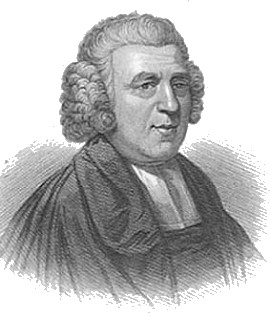
365 days with Newton

13 AUGUST

Helplessness stirs us to prayer

‘O send out thy light and thy truth: let them lead me; let them bring me unto thy holy hill, and to thy tabernacles.’ Psalm 43:3
SUGGESTED FURTHER READING: Psalm 61:1–8

A conviction of helplessness and insufficiency is implied. When an awakened sinner has seen the world to be what indeed it is and has obtained some apprehensions of heavenly things, still it is at a distance and much darkness lies upon the way to obtain. Only in this the soul is satisfied and certain: that it has no strength and wisdom of its own whereby to escape deserved evil or to obtain the desired good. It stands in need of assistance and this stirs it up to prayer, even the prayer of my text, for there is likewise implied some beginnings of knowledge that our help is in the name of the Lord—that if he does it not, it can never be done. We are not brought to this at once. When we first begin to open our eyes, we are very prone to seek deliverance by our own arm, by confessions, resolutions and outside services. We begin to attempt a reformation, to set about a new life and perhaps go on so very quietly for a while. Our great enemy loves to see us busied in building a house upon the sand and may suffer us to carry it on to a good height, for he knows that he is able with one puff of temptation to blow it down again. Then when we think it strong, he is suffered to come to try our work and soon it falls before him. After many such disappointments, we at last see how poor and helpless we are and cry to the Lord, O send forth thy light and thy truth.

FOR MEDITATION: The resolutions I made seem to be still good and the means of peace and happiness, but I fear I have broken every one. I am willing to think I stand till I am really fallen, and then, by presuming to rise by my own strength, I lie grovelling long before I can be persuaded of my insufficiency. I would endeavour to guard more against this error for the future and make it a particular point of my prayers … so I may more fully than ever feel the reality and necessity of his assistance; and that when I say that I can do nothing good without him, can forbear nothing evil without him, nor hope for any peace or pardon without him, I may speak entirely from my heart and that this absolute dependence upon him only, may be the ruling principle of my life. Amen.
Diary, 1 February 1752

SERMON: PSALM 43:3 [3/5]

My Utmost for His Highest

August 12th

The theology of rest

Why are ye fearful, O ye of little faith? Matthew 8:26.

When we are in fear we can do nothing less than pray to God, but Our Lord has a right to expect that those who name His Name should have an understanding confidence in Him. God expects His children to be so confident in Him that in any crisis they are the reliable ones. Our trust is in God up to a certain point, then we go back to the elementary panic prayers of those who do not know God. We get to our wits’ end, showing that we have not the slightest confidence in Him and His government of the world; He seems to be asleep, and we see nothing but breakers ahead.
“O ye of little faith!” What a pang must have shot through the disciples—‘Missed it again!’ And what a pang will go through us when we suddenly realize that we might have produced downright joy in the heart of Jesus by remaining absolutely confident in Him, no matter what was ahead.
There are stages in life when there is no storm, no crisis, when we do our human best; it is when a crisis arises that we instantly reveal upon whom we rely. If we have been learning to worship God and to trust Him, the crisis will reveal that we will go to the breakingpoint and not break in our confidence in Him.
We have been talking a great deal about sanctification—what is it all going to amount to? It should work out into rest in God which means oneness with God, a oneness which will make us not only blameless in His sight but a deep joy to Him.

Stephen Boyd Blog

Belfast-born Hollywood and International Star from 1950-1970's Fan Tribute Page

Abundant Joy

Digging Deep Into The Word

Not My Life

The Bible as clear as possible

Seek Grow Love

Growing Throughout the Year

Smoodock's Blog

Question Authority

PleaseGrace

A bit on daily needs and provisions

Three Strands Lutheran Parish

"A cord of three strands is not easily broken." Ecclesiastes 4:12

1love1god.com

Romans 5:8

The Rev. Jimmy Abbott

read, watch, listen

BEARING CHRIST CRUCIFIED AND RISEN

To know Christ and Him crucified

Considering the Bible

Scripture Musings

rolliwrites.wordpress.com/

The Official Home of Rolli - Author, Cartoonist and Songwriter

Pure Glory

The heavens are telling the glory of God; and the firmament proclaims His handiwork. Psalms 19:1

The daily addict

The daily life of an addict in recovery

The Christian Tech-Nerd

-Reviews, Advice & News For All Things Tech and Gadget Related-

Thinking Through Scripture

to help you walk with Jesus in faith, hope, and love.

A disciple's study

This is my personal collection of thoughts and writings, mainly from much smarter people than I, which challenge me in my discipleship walk. Don't rush by these thoughts, but ponder them.

Author Scott Austin Tirrell

Maker of fine handcrafted novels!

In Pursuit of My First Love

Returning to the First Love