What is the significance of Jesus saying, “I am with you always even to the end of the age” (Matthew 28:20)?

ANSWER

The final verses of Matthew 28 contain what we refer to as the Great Commission. Jesus gave believers their mission—to make disciples—as they live under His authority and as His representatives on earth. This mission will continue to the end of the age. Christians have the assurance that God is with us, no matter what happens, even “to the very end of the age” (Matthew 28:20).

As Jesus’ time on earth neared its end, He often told His disciples of what was to come, including what would happen at the end of the age. The “end of the age” or “the end of the world” (KJV) means the end of this present era and the commencement of the next dispensation. At the end of the church age, the end-times events will occur, God will judge the wicked, and Christ will return again to establish His kingdom (Matthew 24).

Jesus had told His disciples that He would be killed but would rise again (Matthew 16:21). He intentionally gave them specific ways to recognize that the end was near (Matthew 24:4–14). Although Jesus did not give the disciples all the details of the end of the age, knowing they would not fully understand, His warnings came with assurances that would sustain them. Each time He warned them or gave them a command, He also gave them hope. For example, when He forewarned His followers that they would have trouble in this world, He also assured them, saying, “‘Take heart. I have overcome the world’” (John 16:33). Jesus’ warnings and commands to His own are never found apart from His assurances.

Before Jesus ascended into heaven, He instructed His disciples, “All authority in heaven and on earth has been given to me. Therefore go and make disciples of all nations, baptizing them in the name of the Father and of the Son and of the Holy Spirit, and teaching them to obey everything I have commanded you. And surely I am with you always, to the very end of the age” (Matthew 28:19–20). This promise that He would be with His disciples even to the end of the age still holds true for believers today. We are not yet to the end of the age.

In His promise to be with His disciples always, even to the end of the age, Jesus did not mean He would physically be with them. God is with us always through His Spirit. Before Jesus ascended into heaven, He promised His disciples that He would send the Advocate, the Holy Spirit, to them (John 14:26). Since Pentecost, the Holy Spirit indwells all believers from the moment they are saved. He guards and guarantees our salvation (Ephesians 1:13; 4:30), leads us into righteousness (Galatians 5:16–18), reminds us of what is true (John 14:26), and gives us godly wisdom (1 Corinthians 2:10–11). Through the Holy Spirit, we have assurance that God is in control and that He is with us always, even to the end of the age.

Just as God promised Joshua that He would never leave him or forsake him (Deuteronomy 31:6), so Jesus told His disciples, “I am with you always, even to the end of the age” (NKJV). This promise sustains us as we seek to make disciples and live as God’s representatives on earth, no matter what trials or difficulties come our way.

My Utmost for His Highest

August 10th

The sacrament of the saint

Let them that suffer according to the will of God, commit the keeping of their souls to Him in well-doing. 1 Peter 4:19.

To choose to suffer means that there is something wrong; to choose God’s will even if it means suffering is a very different thing. No healthy saint ever chooses suffering; he chooses God’s will, as Jesus did, whether it means suffering or not. No saint dare interfere with the discipline of suffering in another saint.
The saint who satisfies the heart of Jesus will make other saints strong and mature for God. The people who do us good are never those who sympathize with us, they always hinder, because sympathy enervates. No one understands a saint but the saint who is nearest to the Saviour. If we accept the sympathy of a saint, the reflex feeling is—‘Well, God is dealing hardly with me.’ That is why Jesus said self-pity was of the devil (see Matt. 16:23). Be merciful to God’s reputation. It is easy to blacken God’s character because God never answers back, He never vindicates Himself. Beware of the thought that Jesus needed sympathy in His earthly life; He refused sympathy from man because He knew far too wisely that no one on earth understood what He was after. He took sympathy from His Father only, and from the angels in heaven. (Cf. Luke 15:10.)
Notice God’s unutterable waste of saints. According to the judgment of the world, God plants His saints in the most useless places. We say—‘God intends me to be here because I am so useful.’ God puts His saints where they will glorify Him, and we are no judges at all of where that is.

Streams in the Desert

August 10

“When he had heard therefore that he was sick, he abode two days still in the same place where he was.” (John 11:6.)

IN the forefront of this marvelous chapter stands the affirmation, “Jesus loved Martha, and her sister, and Lazarus,” as if to teach us that at the very heart and foundation of all God’s dealings with us, however dark and mysterious they may be, we must dare to believe in and assert the infinite, unmerited, and unchanging love of God. Love permits pain. The sisters never doubted that He would speed at all hazards and stay their brother from death, but, “When he had heard therefore that he was sick, he abode two days still in the same place where he was.”
What a startling “therefore”! He abstained from going, not because He did not love them, but because He did love them. His love alone kept Him back from hasting at once to the dear and stricken home. Anything less than infinite love must have rushed instantly to the relief of those loved and troubled hearts, to stay their grief and to have the luxury of wiping and stanching their tears and causing sorrow and sighing to flee away. Divine love could alone hold back the impetuosity of the Savior’s tender-heartedness until the Angel of Pain had done her work.
Who can estimate how much we owe to suffering and pain? But for them we should have little scope for many of the chief virtues of the Christian life. Where were faith, without trial to test it; or patience, with nothing to bear; or experience, without tribulation to develop it?—Selected.

“Loved! then the way will not be drear;
For One we know is ever near,
Proving it to our hearts so clear
  That we are loved.

“Loved when our sky is clouded o’er,
And days of sorrow press us sore;
Still we will trust Him evermore,
  For we are loved.

“Time, that affects all things below,
Can never change the love He’ll show;
The heart of Christ with love will flow,
  And we are loved.”

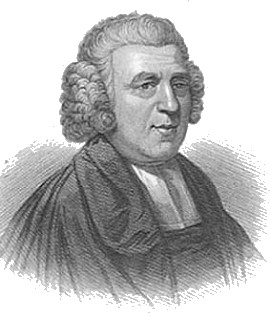
365 days with Newton

10 AUGUST

All upon the wing!

‘But thou, O LORD, art a shield for me; the glory and the lifter up of mine head.’ Psalm 3:3
SUGGESTED FURTHER READING: Psalm 42:1–11

The Lord … our shield. This is a glorious word, yet some other things are wanting to give us full comfort in it. The soul will desire:
(i) his presence and the light of his countenance: if it be so, why go I mourning?
(ii) power over sin: I cannot rejoice in my portion while I feel so many things in me contrary to thy will.
(iii) a lively spirit for his service: I am a debtor not to the flesh to live after the flesh. O give me so to feel my privileges, that I may be all upon the wing to show forth thy praise.
These and the like are petitions surely agreeable to his will. And it is a proof of sincerity not to rest satisfied with any comforts or experiences we have received, but to thirst after a fuller accomplishment of what he has bid us hope for. Too many fall sadly short here. They have been in distress for sin and the Lord has given them a hope in his mercy. They believe he has accepted them, and, by degrees, set down easy and contented, though there is little liveliness in their spirits, much amiss in their tempers, and a prevalent cleaving to the world in their conversation. Though their profession is known by little more than an outward attendance upon ordinances, they satisfy themselves with looking back to past times, when they think it was better with them, and rest in a doctrinal notion of his unchangeableness and the sure perseverance of his people. This is a bad sign. If such are the children of God, they may expect something to rouse them from their security.

FOR MEDITATION: Alas, I teach others but cannot teach myself. Thou knowest a want of taste for thy Scripture is one of my chief burdens. How often it is to me as a sealed book, How often do I read it as a mere task. How defective am I in searching into this inestimable mine and how seldom is it the medium of real intercourse between thee and my soul. O send forth thy light and shine upon thy truth that I may not only judge but taste it to be more sweet and desirable than my necessary food.
Diary, 16 October 1775

SERMON SERIES: GENESIS, NO. 30 [2/2], GENESIS 15:2

My Utmost for His Highest

August 9th

Prayer in the Father’s hearing

Father, I thank Thee that thou hast heard Me. John 11:41.

When the Son of God prays, He has only one consciousness, and that consciousness is of His Father. God always hears the prayers of His Son, and if the Son of God is formed in me the Father will always hear my prayers. I have to see that the Son of God is manifested in my mortal flesh. “Your body is the temple of the Holy Ghost,” the ‘Bethlehem’ of the Son of God. Is the Son of God getting His chance in me? Is the direct simplicity of the life of God’s Son being worked out exactly as it was worked out in His historic life? When I come in contact with the occurrences of life as an ordinary human being, is the prayer of God’s Eternal Son to His Father being prayed in me? “In that day ye shall ask in My name.…” What day? The day when the Holy Ghost has come to me and made me effectually one with my Lord.
Is the Lord Jesus Christ being abundantly satisfied in your life or have you got a spiritual ‘strut’ on? Never let common sense obtrude and push the Son of God on one side. Common sense is a gift which God gave to human nature; but common sense is not the gift of His Son. Supernatural sense is the gift of His Son; never enthrone common sense. The Son detects the Father; common sense never yet detected the Father and never will. Our ordinary wits never worship God unless they are transfigured by the indwelling Son of God. We have to see that this mortal flesh is kept in perfect subjection to Him and that He works through it moment by moment. Are we living in such human dependence upon Jesus Christ that His life is being “manifested in our mortal flesh”?

Stephen Boyd Blog

Belfast-born Hollywood and International Star from 1950-1970's Fan Tribute Page

Abundant Joy

Digging Deep Into The Word

Not My Life

The Bible as clear as possible

Seek Grow Love

Growing Throughout the Year

Smoodock's Blog

Question Authority

PleaseGrace

A bit on daily needs and provisions

Three Strands Lutheran Parish

"A cord of three strands is not easily broken." Ecclesiastes 4:12

1love1god.com

Romans 5:8

The Rev. Jimmy Abbott

read, watch, listen

BEARING CHRIST CRUCIFIED AND RISEN

To know Christ and Him crucified

Considering the Bible

Scripture Musings

rolliwrites.wordpress.com/

The Official Home of Rolli - Author, Cartoonist and Songwriter

Pure Glory

The heavens are telling the glory of God; and the firmament proclaims His handiwork. Psalms 19:1

The daily addict

The daily life of an addict in recovery

The Christian Tech-Nerd

-Reviews, Advice & News For All Things Tech and Gadget Related-

Thinking Through Scripture

to help you walk with Jesus in faith, hope, and love.

A disciple's study

This is my personal collection of thoughts and writings, mainly from much smarter people than I, which challenge me in my discipleship walk. Don't rush by these thoughts, but ponder them.

Author Scott Austin Tirrell

Maker of fine handcrafted novels!

In Pursuit of My First Love

Returning to the First Love