
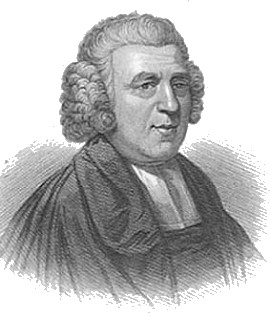
365 days with Newton

30 JUNE (PREACHED ON THANKSGIVING DAY, 29 JULY 1784)

A great and underserved mercy

‘Rejoice with trembling.’ Psalm 2:11
SUGGESTED FURTHER READING: Isaiah 2:1–5

Rejoice that during the war we were favoured with peace at home. I have nothing to say either of the grounds of the war or the terms of the peace in a political view. I believe sin kindled the war and mercy gave us peace. But that when we were gradually drawn into a war with so many formidable powers, we should be preserved in peace, guarded by the providence of God, and that no attempts should be permitted to be formed, or at least to succeed against these kingdoms, is, in my view, a great and undeserved mercy. Especially as the effects of the war, so far as we felt them or suffered by them abroad, had no visible influence to bring us to humiliation and repentance, but rather, as a nation, the increase of dissipation and wickedness and contempt of God kept pace with the increase of our distresses and dangers. We count it a successful war when the enemy’s fleets and armies are destroyed and when islands and provinces are added to our dominion. But no increase of riches or domain can make war properly successful. No conquest can be worth the lives that are sacrificed to obtain them. All the wealth of both the Indies would be a poor equivalent for the havoc and slaughter of the last war. It will be found so at last. Let us rejoice then that this horrid evil is suspended. Nor is it a prevention of the loss of lives only. The death of one person often deeply affects many persons. The parent has perhaps lost a child, by the same stroke a child is deprived of a parent, the wife becomes a widow. The griefs, the woes, the pressures, that have been brought upon individuals and families by the late war, cannot be fully conceived. If there are any hearts so hard and unfeeling as to rejoice in public calamity, if their private wealth is increased by it, yet I hope we can sincerely rejoice that God has sheathed the devouring sword and made wars cease to the ends of the earth.

FOR MEDITATION: Rejoice that we are still favoured with religious liberty and gospel light. God has not taken his mercy and truth from us. He is still carrying on his work, increasing the number of faithful ministers and, thereby, as we hope, adding to the number of his people and of those for whose sakes we are preserved from utter desolation.

SERMON: PSALM 2:11 [2/3] [END OF AMERICAN WAR OF INDEPENDENCE]

My Utmost for His Highest

June 29th

Direction of discipline

And if thy right hand offend thee cut it off and cast it from thee: for it is profitable for thee that one of thy members should perish, and not that thy whole body should be cast into hell. Matthew 5:30.

Jesus did not say that everyone must cut off the right hand, but—‘If your right hand offends you in your walk with Me, cut it off.’ There are many things that are perfectly legitimate, but if you are going to concentrate on God you cannot do them. Your right hand is one of the best things you have, but Jesus says if it hinders you in following His precepts, cut it off. This line of discipline is the sternest one that ever struck mankind.
When God alters a man by regeneration, the characteristic of the life to begin with is that it is maimed. There are a hundred and one things you dare not do, things that to you and in the eyes of the world that knows you are as your right hand and your eye, and the unspiritual person says—‘Whatever is wrong in that? How absurd you are!’ There never has been a saint yet who did not have to live a maimed life to start with. But it is better to enter into life maimed and lovely in God’s sight than to be lovely in man’s sight and lame in God’s. In the beginning Jesus Christ by His Spirit has to check you from doing a great many things that may be perfectly right for everyone else but not right for you. See that you do not use your limitations to criticize someone else.
It is a maimed life to begin with, but in v. 48 Jesus gives the picture of a perfectly full-orbed life—“Ye shall be perfect, as your heavenly Father is perfect.”

Streams in the Desert

June 29

“There we saw the giants.” (Num. 13:33.)

YES, they saw the giants, but Caleb and Joshua saw God! Those who doubt say, “We be not able to go up.” Those who believe say, “Let us go up at once and possess it, for we are well able.”
Giants stand for great difficulties; and giants are stalking everywhere. They are in our families, in our churches, in our social life, in our own hearts; and we must overcome them or they will eat us up, as these men of old said of the giants of Canaan.
The men of faith said, “They are bread for us; we will eat them up.” In other words, “We will be stronger by overcoming them than if there had been no giants to overcome.”
Now the fact is, unless we have the overcoming faith we shall be eaten up, consumed by the giants in our path. Let us have the spirit of faith that these men of faith had, and see God, and He will take care of the difficulties.—Selected.
It is when we are in the way of duty that we find giants. It was when Israel was going forward that the giants appeared. When they turned back into the wilderness they found none.
There is a prevalent idea that the power of God in a human life should lift us above all trials and conflicts. The fact is, the power of God always brings a conflict and a struggle. One would have thought that on his great missionary journey to Rome, Paul would have been carried by some mighty providence above the power of storms and tempests and enemies. But, on the contrary, it was one long, hard fight with persecuting Jews, with wild tempests, with venomous vipers and all the powers of earth and hell, and at last he was saved, as it seemed, by the narrowest margin, and had to swim ashore at Malta on a piece of wreckage and barely escape a watery grave.
Was that like a God of infinite power? Yes, just like Him. And so Paul tells us that when he took the Lord Jesus Christ as the life of his body, a severe conflict immediately came; indeed, a conflict that never ended, a pressure that was persistent, but out of which he always emerged victorious through the strength of Jesus Christ.
The language in which he describes this is most graphic. “We are troubled on every side, yet not distressed; perplexed, but not in despair; persecuted, but not forsaken; cast down, but not destroyed, always bearing about in the body the dying of the Lord Jesus, that the life also of Jesus might be manifested in our body.”
What a ceaseless, strenuous struggle! It is impossible to express in English the forcible language of the original. There are five pictures in succession. In the first, the idea is crowding enemies pressing in from every side, and yet not crushing him because the police of heaven cleared the way just wide enough for him to get through. The literal translation would be, “We are crowded on every side, but not crushed.”
The second picture is that of one whose way seems utterly closed and yet he has pressed through; there is light enough to show him the next step. The Revised Version translates it, “Perplexed but not unto despair.” Rotherham still more literally renders it, “Without a way, but not without a by-way.”
The third figure is that of an enemy in hot pursuit while the divine Defender still stands by, and he is not left alone. Again we adopt the fine rendering of Rotherham, “Pursued but not abandoned.”
The fourth figure is still more vivid and dramatic. The enemy has overtaken him, has struck him, has knocked him down. But it is not a fatal blow; he is able to rise again. It might be translated, “Overthrown but not overcome.”
Once more the figure advances, and now it seems to be even death itself, “Always bearing about in the body the dying of the Lord Jesus.” But he does not die, for “the life also of Jesus” now comes to his aid and he lives in the life of another until his life work is done.
The reason so many fail in this experience of divine healing is because they expect to have it all without a struggle, and when the conflict comes and the battle wages long, they become discouraged and surrender. God has nothing worth having that is easy. There are no cheap goods in the heavenly market. Our redemption cost all that God had to give, and everything worth having is expensive. Hard places are the very school of faith and character, and if we are to rise over mere human strength and prove the power of life divine in these mortal bodies, it must be through a process of conflict that may well be called the birth travail of a new life. It is the old figure of the bush that burned, but was not consumed, or of the Vision in the house of the Interpreter of the flame that would not expire, notwithstanding the fact that the demon ceaselessly poured water on it, because in the background stood an angel ever pouring oil and keeping the flame aglow.
No, dear suffering child of God, you cannot fail if only you dare to believe, to stand fast and refuse to be overcome.—Tract.

365 days with Newton

29 JUNE (PREACHED ON THANKSGIVING DAY, 29 JULY 1784)

Reverent joy: his greatness, our unworthiness

‘Rejoice with trembling.’ Psalm 2:11
SUGGESTED FURTHER READING: Psalm 2:1–12

This psalm is a prophecy of the establishment of the Redeemer’s kingdom in defiance of all the opposition raised against it. God had declared the decree and therefore the heathens and people, the Jews and Gentiles, kings and rulers, raged against it—as without just cause, so without effect. The Redeemer is seated in heaven and has his enemies in derision. Their resistance is to no purpose and, if persisted in, can only issue in their own ruin. They are therefore in mercy exhorted to submit and humble themselves before him. This, if they rightly know the nature of his kingdom, is their interest and would be their happiness. His subjects have good ground for joy—but a joy tempered with reverence. They may well rejoice, for he is able and engaged to bless those who put their trust in him. At the same time his greatness and their unworthiness, the dangers and snares they are exposed to, the evil within them and the enemies around them, are suited to inspire an awe and a jealousy. They are exhorted to rejoice, but with trembling. I think these words may be accommodated to enforce that temper of mind which becomes us all on the present occasion, when we professedly meet to offer our thanks to him who has the supreme government of all things, for putting an end to the late calamitous war. We have reason to rejoice and we have still reason to tremble.

FOR MEDITATION: Oh that our great men and statesmen rightly considered that the Lord reigneth—that they would seek wisdom from him to plan their enterprises and depend upon his blessing for their success. The finest spun schemes of men on earth may be compared to a spider’s web. One unforeseen contingence is sufficient to derange and sweep them away. Many proofs we have had in the course of this unhappy war that no human counsels or prospects can stand against the Lord. It is not Britannia, as our boasting song pretends, but the Lord who rules the waves, and them who sail upon them.169
John Newton to William Wilberforce, 30 March 1796

SERMON: PSALM 2:11 [1/3] [END OF AMERICAN WAR OF INDEPENDENCE]

My Utmost for His Highest

June 28th

Apprehended by God

If that I may apprehend that for which also I am apprehended. Phil. 3:12.

Never choose to be a worker; but when once God has put His call on you, woe be to you if you turn to the right hand or to the left. We are not here to work for God because we have chosen to do so, but because God has apprehended us. There is never any thought of—‘Oh well, I am not fitted for this.’ What you are to preach is determined by God, not by your own natural inclinations. Keep your soul steadfastly related to God, and remember that you are called not to bear testimony only, but to preach the gospel. Every Christian must testify, but when it comes to the call to preach, there must be the agonizing grip of God’s hand on you. Your life is in the grip of God for that one thing. How many of us are held like that?
Never water down the word of God; preach it in its undiluted sternness. There must be unflinching loyalty to the word of God; but when you come to personal dealing with your fellow men, remember who you are—not a special being made up in heaven, but a sinner saved by grace.
“I count not myself to have apprehended: but this one thing I do …”

Stephen Boyd Blog

Belfast-born Hollywood and International Star from 1950-1970's Fan Tribute Page

Abundant Joy

Digging Deep Into The Word

Not My Life

The Bible as clear as possible

Seek Grow Love

Growing Throughout the Year

Smoodock's Blog

Question Authority

PleaseGrace

A bit on daily needs and provisions

Three Strands Lutheran Parish

"A cord of three strands is not easily broken." Ecclesiastes 4:12

1love1god.com

Romans 5:8

The Rev. Jimmy Abbott

read, watch, listen

BEARING CHRIST CRUCIFIED AND RISEN

To know Christ and Him crucified

Considering the Bible

Scripture Musings

rolliwrites.wordpress.com/

The Official Home of Rolli - Author, Cartoonist and Songwriter

Pure Glory

The heavens are telling the glory of God; and the firmament proclaims His handiwork. Psalms 19:1

The daily addict

The daily life of an addict in recovery

The Christian Tech-Nerd

-Reviews, Advice & News For All Things Tech and Gadget Related-

Thinking Through Scripture

to help you walk with Jesus in faith, hope, and love.

A disciple's study

This is my personal collection of thoughts and writings, mainly from much smarter people than I, which challenge me in my discipleship walk. Don't rush by these thoughts, but ponder them.

Author Scott Austin Tirrell

Maker of fine handcrafted novels!

In Pursuit of My First Love

Returning to the First Love