‘The voice of him that crieth in the wilderness, Prepare ye the way of the LORD, make straight in the desert a highway for our God.’ Isaiah 40:3 SUGGESTED FURTHER READING: Luke 1:57–80
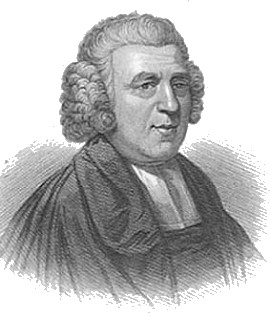
The general style of the prophets is poetical. Simplicity is the grand, inimitable characteristic of the whole Bible. But the magnificence and variety of imagery, which constitute the life and spirit of poetry, evidently distinguishes the style of the Psalms, Isaiah, and the other poetical books, from that of the historical parts in our common version. The various rules and properties of Hebrew poetry are not, at this distance of time, certainly known. But the present Bishop of London, in his lectures on this subject, and in the discourse prefixed to his translation of Isaiah, has fully demonstrated one property. It usually consists of parallel expressions in which the same thought for substance is repeated in a different manner. I may open the book anywhere, almost, to explain my meaning—as chapters 59, 55 and Psalm 114. The knowledge of this peculiarity may often save us the trouble of enquiring minutely into the meaning of every single word, when one plain and comprehensive sense arises if the whole passage be taken together. Thus in this place, though it be true that John the Baptist was long retired in the wilderness and began to preach in the wilderness of Judea, yet the word does not entirely foretell that circumstance. The expressions are parallel. The prophet, rapt into future times, hears a voice proclaiming the Messiah’s approach. And this is the majestic language: In the wilderness prepare ye the way of the Lord. Make straight in the desert a highway for our God. The wilderness and the desert are the same, as likewise in chapter 35, where the happy, the sudden, the unexpected, effects of his appearance, are described.
FOR MEDITATION: Now to see with the eye of faith the glory of the Redeemer in his appearance, to see power divine preparing the way before him, to enter into the gracious and wonderful design of his salvation, to acknowledge, admire and adore him as the Lord, humbly to claim him as our God, affords a pleasure very different from that which the finest music, however well adapted to the words, can possibly give.
In the Matter of Determination. Abide in Me. John 15:4.
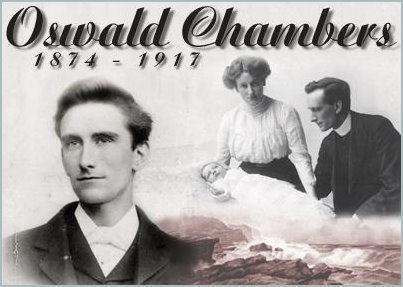
The Spirit of Jesus is put into me by the Atonement, then I have to construct with patience the way of thinking that is exactly in accordance with my Lord. God will not make me think like Jesus, I have to do it myself; I have to bring every thought into captivity to the obedience of Christ. “Abide in Me”—in intellectual matters, in money matters, in every one of the matters that make human life what it is. It is not a bandbox life. Am I preventing God from doing things in my circumstances because I say it will hinder my communion with Him? That is an impertinence. It does not matter what my circumstances are, I can be as sure of abiding in Jesus in them as in a prayer meeting. I have not to change and arrange my circumstances myself. With Our Lord the inner abiding was unsullied; He was at home with God wherever His body was placed. He never chose His own circumstances, but was meek towards His Father’s dispensations for Him. Think of the amazing leisure of Our Lord’s Life! We keep God at excitement point, there is none of the serenity of the life hid with Christ in God about us. Think of the things that take you out of abiding in Christ—‘Yes, Lord, just a minute, I have got this to do; Yes, I will abide when once this is finished; when this week is over, it will be all right, I will abide then.’ Get a move on; begin to abide now. In the initial stages it is a continual effort until it becomes so much the law of life that you abide in Him unconsciously. Determine to abide in Jesus wherever you are placed.
“I have prayed that your own faith may not fail.” (Luke 22:32.)
CHRISTIAN, take good care of thy faith, for recollect that faith is the only means whereby thou canst obtain blessings. Prayer cannot draw down answers from God’s throne except it be the earnest prayer of the man who believes. Faith is the telegraphic wire which links earth to Heaven, on which God’s messages of love fly so fast that before we call He answers, and while we are yet speaking He hears us. But if that telegraphic wire of faith be snapped, how can we obtain the promise? Am I in trouble? I can obtain help for trouble by faith. Am I beaten about by the enemy? My soul on her dear Refuge leans by faith. But take faith away, then in vain I call to God. There is no other road betwixt my soul and Heaven. Blockade the road, and how can I communicate with the Great King? Faith links me with Divinity. Faith clothes me with the power of Jehovah. Faith insures every attribute of God in my defense. It helps me to defy the hosts of hell. It makes me march triumphant over the necks of my enemies. But without faith how can I receive anything from the Lord? Oh, then, Christian, watch well thy faith. “If thou canst believe, all things are possible to him that believeth.” —C. H. Spurgeon. We boast of being so practical a people that we want to have a surer thing than faith. But did not Paul say that the promise was by FAITH that it might be SURE? (Romans 4:16.)—Dan Crawford.
‘It is good that a man should both hope and quietly wait for the salvation of the LORD.’ Lamentations 3:26 SUGGESTED FURTHER READING: Isaiah 54:1–7
The truth of it is good. The word good may be understood in several senses. First, it is reasonable, considering: (i) the greatness of this salvation, which is such that you must allow, if the Lord was to suffer you to go on beset with tears and temptations to the last hour of life, if he showed you mercy at last you would have the utmost reason to praise him. You will say, ‘Oh, if I knew this’; but it is reasonable to wait, though you know it not at present, that you may know it hereafter. (ii) that as a sinner you have no right to make terms. What an inconsistence is it, at one time to confess the Lord might justly send you to hell, and yet perhaps the next hour repine because he makes you wait a while for the blessing. (iii) that this is, as I have observed, the Lord’s usual way. Search the Scripture: you will find it so. Ask his people who set about before you: they will tell you the same. Why should you expect he will change his methods for you? You want to be sure you are right and yet you are discouraged because you are led in that very path in which you see the footsteps of the flock before. Secondly, it is profitable. (i) It makes our waiting more pleasant to wait quietly and to maintain a hope upon the general promise, whereas to give way to another spirit lets in a storm upon the soul and opens a door to the worst temptations. (ii) It is profitable to others, for they have the same exercises—if by your complaints you bring up an evil report of the good land, you lay a snare in the way of seekers and tempt the world to speak evil of your profession. Thirdly, it is safe. It is good because those who thus hope and wait shall never be disappointed or ashamed. See such promises as Isaiah 54:7–8.
FOR MEDITATION: ‘I waited patiently for the LORD; and he inclined unto me, and heard my cry’ (Psalm 40:1).
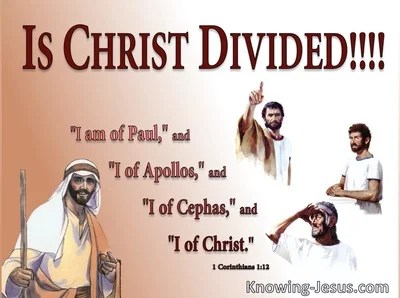
Context Unity in the Church …My brothers, some from Chloe’s household have informed me that there are quarrels among you. What I mean is this: Individuals among you are saying, “I follow Paul,” “I follow Apollos,” “I follow Cephas,” or “I follow Christ.” Is Christ divided? Was Paul crucified for you? Were you baptized into the name of Paul?… 1 Corinthians 1:12
Barnes’ Notes on the Bible Now this I say – This is what I mean; or, I give this as an instance of the contentions to which Irefer. That every one of you saith – That you are divided into different factions, and ranged under different leaders. The word translated “that” ὅτι hoti might be translated here, “because,” or “since,” as giving a reason for his affirming 1 Corinthians 1:11 that there were contentions there. “Now I say that there are contentions, because you are ranged under different leaders,” etc. – Calvin.
I am of Paul – It has been doubted whether Paul meant to affirm that the parties had actually taken the names which he here specifies, or whether he uses these names as illustrations, or suppositions, to show the absurdity of their ranging themselves under different leaders. Many of the ancient interpreters supposed that Paul was unwilling to specify the real names of the false teachers and leaders of the parties, and that he used these names simply by way of illustration. This opinion was grounded chiefly on what he says in 1 Corinthians 4:6, “And these things, brethren, I have ‘in a figure’ transferred to myself and to Apollos for your sakes,” etc. But in this place Paul is not referring so particularly to the factions or parties existing in the church, as he is to the necessity of modesty and humility; and in order to enforce this, he refers to himself and Apollos to show that even those most highly favored should have a low estimate of their importance, since all their success depends on God; see 1 Corinthians 3:4-6.
It can scarcely be doubted that Paul here meant to say that there were parties existing in the church at Corinth, who were called by the names of himself, of Apollos, of Cephas, and of Christ. This is the natural construction; and this was evidently the information which he had received by those who were of the family of Chloe. Why the parties were ranged under these leaders, however, can be only a matter of conjecture. Lightfoot suggests that the church at Corinth was composed partly of Jews and partly of Gentiles; see Acts 18. The Gentile converts, he supposes, would range themselves under Paul and Apollos as their leaders; and the Jewish under Peter and Christ. Paul was the apostle to the Gentiles, and Peter particularly the apostle to the Jews Galatians 2:7; and this circumstance might give rise to the division. Apollos succeeded Paul in Achaia, and labored successfully there; see Acts 18:27-28. These two original parties might be again sub-divided. A part of those who adhered to Paul and Apollos might regard Saul with chief veneration, as being the founder of the church as the instrument of their conversion, as the chief apostle, as signally pure in his doctrine and manner; and a part might regard Apollos as the instrument of their conversion, and as being distinguished for eloquence. It is evident that the main reason why Apollos was regarded as the head of a faction was on account of his extraordinary eloquence, and it is probable that his followers might seek particularly to imitate him in the graces of popular elocution.
And I of Cephas, Peter; – compare John 1:42. He was regarded particularly as the apostle to the Jews; Galatians 2:7. He had his own speciality of views in teaching, and it is probable that his teaching was not regarded as entirely harmonious with that of Paul; see Galatians 2:11-17. Paul had everywhere among the Gentiles taught that it was not necessary to observe the ceremonial laws of Moses; and, it is probable, that Peter was regarded by the Jews as the advocate of the contrary doctrine. Whether Peter had been at Corinth is unknown. If not, they had heard of his name, and character; and those who had come from Judea had probably reported him as teaching a doctrine on the subject of the observance of Jewish ceremonies unlike that of Paul.
And I of Christ – Why this sect professed to be the followers of Christ, is not certainly known. It probably arose from one of the two following causes:
(1) Either that they had been in Judea and had seen the Lord Jesus, and thus regarded themselves as particularly favored and distinguished: or,
(2) More probably because they refused to call themselves by any inferior leader, and wished to regard Christ alone as their head, and possibly prided themselves on the belief that they were more conformed to him than the other sects.
This is my personal collection of thoughts and writings, mainly from much smarter people than I, which challenge me in my discipleship walk. Don't rush by these thoughts, but ponder them.

 Milo
Milo 