
Streams in the Desert

June 26

“For what if some did not believe? shall their unbelief make the faith of God without effect?” (Rom. 3:3.)

I THINK that I can trace every scrap of sorrow in my life to simple unbelief. How could I be anything but quite happy if I believed always that all the past is forgiven, and all the present furnished with power, and all the future bright with hope because of the same abiding facts which do not change with my mood, do not stumble because I totter and stagger at the promise through unbelief, but stand firm and clear with their peaks of pearl cleaving the air of Eternity, and the bases of their hills rooted unfathomably in the Rock of God. Mont Blanc does not become a phantom or a mist because a climber grows dizzy on its side.—James Smetham.
Is it any wonder that, when we stagger at any promise of God through unbelief, we do not receive it? Not that faith merits an answer, or in any way earns it, or works it out; but God has made believing a condition of receiving, and the Giver has a sovereign right to choose His own terms of gift.
—Rev. Samuel Hart.
Unbelief says, “How can such and such things be?” It is full of “hows”; but faith has one great answer to the ten thousand “hows,” and that answer is—GOD!—C. H. M.
No praying man or woman accomplishes so much with so little expenditure of time as when he or she is praying.
If there should arise, it has been said—and the words are surely true to the thought of our Lord Jesus Christ in all His teaching on prayer—if there should arise ONE UTTERLY BELIEVING MAN, the history of the world might be changed.
Will YOU not be that one in the providence and guidance of God our Father?—A. E. McAdam.
Prayer without faith degenerates into objectless routine, or soulless hypocrisy. Prayer with faith brings Omnipotence to back our petitions. Better not pray unless and until your whole being responds to the efficacy of your supplication. When the true prayer is breathed, earth and heaven, the past and the future, say Amen. And Christ prayed such prayers.—P. C. M.
“Nothing lies beyond the reach of prayer except that which lies outside the will of God.”
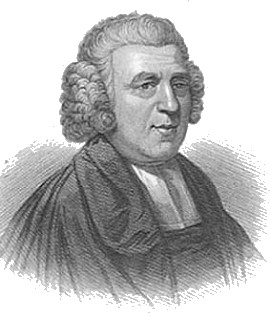
365 days with Newton

26 JUNE (PREACHED 23 JUNE 1776)

A Shepherd’s heart

‘Brethren, pray for us.’ 1 Thessalonians 5:25
SUGGESTED FURTHER READING: Isaiah 49:8–23

We are, we must be, sharply tried by the cases of our hearers.
With respect to the congregations at large, I must have a heart like a stone if I could look seriously round this congregation without being affected. To see so many who are stumbling in the broad day, still under the power of sin, after long enjoying such uncommon advantages as the Lord has been pleased to favour this town with. To see them from week to week, from year to year, still careless and hardening under the means of grace.… often I shrink at the thought lest I am unfaithful. I fear I am not faithful, earnest or importunate enough, though I seem not to know how to be more so. I am a debtor to all, I bear a love to every soul that hears me.
But there are among you a number who not only hear but profess the truth; to these I bear a more immediate relation. I am more acquainted with them, I feel more for them. I may say without boasting, the Lord has given me, at least in a little measure, the heart of a shepherd. I feel for the distresses of many. As I am much among the people, I know a good deal of their personal and their family troubles. My heart sinks at the trials of some here before me and of others whose afflictions detain them at home. Perhaps no one in the parish knows so much of these things as I do. And I could relate cases which would, I am persuaded, draw tears from many eyes. I know likewise something of the spiritual distresses of those whom I endeavour to comfort but cannot.

FOR MEDITATION: My time and thoughts much engrossed today by an affecting and critical dispensation at Orchard Side [William Cowper attempted suicide]. I was sent for in the morning early and returned astonished and grieved. Could hardly attend to anything else.
Diary, 2 January 1773

The first temptation the enemy assaulted him with was to offer up himself as Abraham his son. He verily thought he ought to do it. We were obliged to watch with him night and day. I, my dear wife and Mrs Unwin with whom he lived, left him not an hour for seven years.
John Newton’s Funeral Sermon for William Cowper, May 1800

SERMON: 1 THESSALONIANS 5:25 [4/6]

My Utmost for His Highest

June 25th

Receiving one’s self in the fires of sorrow

What shall I say? Father, save me from this hour? But for this cause came I unto this hour. Father, glorify Thy name. John 12:27–29 (R.V.).

My attitude as a saint to sorrow and difficulty is not to ask that they may be prevented, but to ask that I may preserve the self God created me to be through every fire of sorrow. Our Lord received Himself in the fire of sorrow, He was saved not from the hour, but out of the hour.
We say that there ought to be no sorrow, but there is sorrow, and we have to receive ourselves in its fires. If we try and evade sorrow, refuse to lay our account with it, we are foolish. Sorrow is one of the biggest facts in life; it is no use saying sorrow ought not to be. Sin and sorrow and suffering are, and it is not for us to say that God has made a mistake in allowing them.
Sorrow burns up a great amount of shallowness, but it does not always make a man better. Suffering either gives me my self or it destroys my self. You cannot receive your self in success, you lose your head; you cannot receive your self in monotony, you grouse. The way to find your self is in the fires of sorrow. Why it should be so is another matter, but that it is so is true in the Scriptures and in human experience. You always know the man who has been through the fires of sorrow and received himself, you are certain you can go to him in trouble and find that he has ample leisure for you. If a man has not been through the fires of sorrow, he is apt to be contemptuous, he has no time for you. If you receive yourself in the fires of sorrow, God will make you nourishment for other people.

Streams in the Desert

June 25

“Speak unto the children of Israel, that they go forward.” (Exod. 14:15.)

IMAGINE, O child of God, if you can that triumphal march! The excited children restrained from ejaculations of wonder by the perpetual hush of their parents; the most uncontrollable excitement of the women as they found themselves suddenly saved from a fate worse than death; while the men followed or accompanied them ashamed or confounded that they had ever mistrusted God or murmured against Moses; and as you see those mighty walls of water piled by the outstretched hand of the Eternal, in response to the faith of a single man, learn what God will do for His own.

Dread not any result of implicit obedience to His command; fear not the angry waters which, in their proud insolence, forbid your progress. Above the voices of many waters, the mighty breakers of the sea, “the Lord sitteth King for ever.”

A storm is only as the outskirts of His robe, the symptom of His advent, the environment of His presence.

Dare to trust Him; dare to follow Him! And discover that the very forces which barred your progress and threatened your life, at His bidding become the materials of which an avenue is made to liberty.—F. B. Meyer.

Have you come to the Red Sea place in your life,
Where, in spite of all you can do,
There is no way out, there is no way back,
There is no other way but through?
Then wait on the Lord with a trust serene
Till the night of your fear is gone;
He will send the wind, He will heap the floods,
When He says to your soul, “Go on.”

And His hand will lead you through—clear through—
Ere the watery walls roll down,
No foe can reach you, no wave can touch,
No mightiest sea can drown;
The tossing billows may rear their crests,
Their foam at your feet may break,
But over their bed you shall walk dry shod
In the path that your Lord will make.

In the morning watch, ’neath the lifted cloud,
You shall see but the Lord alone,
When He leads you on from the place of the sea
To a land that you have not known;
And your fears shall pass as your foes have passed,
You shall be no more afraid;
You shall sing His praise in a better place,
A place that His hand has made.
—Annie Johnson Flint.

365 days with Newton

25 JUNE (PREACHED 23 JUNE 1776)

The trials of a minister

‘Brethren, pray for us.’ 1 Thessalonians 5:25
SUGGESTED FURTHER READING: 2 Timothy 4:1–8

We are tried in private. I should be happy indeed, if I always felt the comforts of those truths which I trust at times comfort many of you when I set them forth here. But if any of you know what it is to groan under the power of unbelief and indwelling sin, deadness in prayer and even unwillingness to pray, coldness and confusion in reading the Scripture, be assured that preaching with some earnestness and apparent pleasure, at times, does by no means secure us from these groanings. One of my greatest trials is the difference between what I may seem to be in public, and what I feel myself to be in private, which has made me often ready to compare myself to a player on a stage. We are tried in the pulpit: a consciousness of the weakness and unskilfulness of our best attempts, the evils that beset us in our most solemn services, a conviction how far we fall short ourselves of what we propose to you, and sometimes a straitness and dryness of spirit when we must speak, though we know not what we can say. If private believers are not in a frame of mind to speak they may keep silence, but ministers are like post horses—when the hour comes, they must set out, whatever disadvantages attend the journey.

FOR MEDITATION: The afternoon service approaches. Do thou give me wisdom and a blessing. There is great cause for humiliation and prayer amongst us. In vain shall I try to teach their hearts, unless thou art pleased to work.
Diary, Sunday 23 June 1776

[immediately prior to preaching this sermon]

Ah, my Lord, I seem to be something when among my fellow creatures, but am nothing in thy sight—a poor heartless worm. I had words to speak at the Great House, but to myself—words without feeling. I am beset with evils, which, like the canker upon a tree, keep me low. O Lord, put forth thy power—blow with thy wind, dissolve the ice and cause the waters to flow.161
Diary, 4 June 1776

SERMON: 1 THESSALONIANS 5:25 [3/6]

Stephen Boyd Blog

Belfast-born Hollywood and International Star from 1950-1970's Fan Tribute Page

Abundant Joy

Digging Deep Into The Word

Not My Life

The Bible as clear as possible

Seek Grow Love

Growing Throughout the Year

Smoodock's Blog

Question Authority

PleaseGrace

A bit on daily needs and provisions

Three Strands Lutheran Parish

"A cord of three strands is not easily broken." Ecclesiastes 4:12

1love1god.com

Romans 5:8

The Rev. Jimmy Abbott

read, watch, listen

BEARING CHRIST CRUCIFIED AND RISEN

To know Christ and Him crucified

Considering the Bible

Scripture Musings

rolliwrites.wordpress.com/

The Official Home of Rolli - Author, Cartoonist and Songwriter

Pure Glory

The heavens are telling the glory of God; and the firmament proclaims His handiwork. Psalms 19:1

The daily addict

The daily life of an addict in recovery

The Christian Tech-Nerd

-Reviews, Advice & News For All Things Tech and Gadget Related-

Thinking Through Scripture

to help you walk with Jesus in faith, hope, and love.

A disciple's study

This is my personal collection of thoughts and writings, mainly from much smarter people than I, which challenge me in my discipleship walk. Don't rush by these thoughts, but ponder them.

Author Scott Austin Tirrell

Maker of fine handcrafted novels!

In Pursuit of My First Love

Returning to the First Love