





Greater Love has no man/ woman… to lay down their lives for their friends. Thank God His love is Greater still.
Greater Love has no man/ woman… to lay down their lives for their friends. Thank God His love is Greater still.

June 23rd
Acquaintance with grief
A Man of sorrows and acquainted with grief. Isaiah 53:3.
We are not acquainted with grief in the way in which Our Lord was acquainted with it; we endure it, we get through it, but we do not become intimate with it. At the beginning of life we do not reconcile ourselves to the fact of sin. We take a rational view of life and say that a man by controlling his instincts, and by educating himself, can produce a life which will slowly evolve into the life of God. But as we go on, we find the presence of something which we have not taken into consideration, viz., sin, and it upsets all our calculations. Sin has made the basis of things wild and not rational. We have to recognize that sin is a fact, not a defect; sin is red-handed mutiny against God. Either God or sin must die in my life. The New Testament brings us right down to this one issue. If sin rules in me, God’s life in me will be killed; if God rules in me, sin in me will be killed. There is no possible ultimate but that. The climax of sin is that it crucified Jesus Christ, and what was true in the history of God on earth will be true in your history and in mine. In our mental outlook we have to reconcile ourselves to the fact of sin as the only explanation as to why Jesus Christ came, and the explanation of the grief and sorrow in life.

June 23
“When Peter was come down out of the ship, he walked on the water, to go to Jesus. But when he saw the wind boisterous, he was afraid; and beginning to sink, he cried, saying, Lord, save me.” (Matt. 14:29, 30.)
PETER had a little faith in the midst of his doubts, says Bunyan; and so with crying and coming he was brought to Christ.
But here you see that sight was a hindrance; the waves were none of his business when once he had set out; all Peter had any concern with, was the pathway of light that came gleaming across the darkness from where Christ stood. If it was tenfold Egypt beyond that, Peter had no call to look and see.
When the Lord shall call to you over the waters, “Come,” step gladly forth. Look not for a moment away from Him.
Not by measuring the waves can you prevail; not by gauging the wind will you grow strong; to scan the danger may be to fall before it; to pause at the difficulties, is to have them break above your head. Lift up your eyes unto the hills, and go forward—there is no other way.
“Dost thou fear to launch away?
  Faith lets go to swim!
Never will He let thee go;
’Tis by trusting thou shalt know
  Fellowship with Him.”
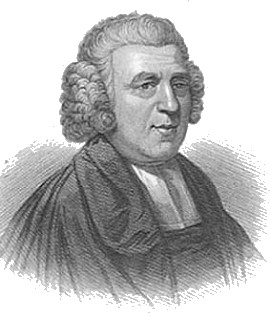
23 JUNE (PREACHED 23 JUNE 1776)
Pray for your ministers
‘Brethren, pray for us.’ 1 Thessalonians 5:25
SUGGESTED FURTHER READING: 1 Thessalonians 5:12–28
The Apostle, though eminent in grace and experience, often entreats the prayers of the Lord’s people. His dependence was upon the Lord himself, but he knew he who has promised to do great things has said, I will be enquired of to do them, and therefore expected success in proportion as prayer should be engaged. Good reason then have succeeding ministers to make the like request. If you pray for us, you will strengthen our hands and thereby draw down blessings upon yourselves. This entreaty can only be effectually complied with by those whose hearts are in some measure alive and earnest for gospel causes. To pray for ministers, the people must be able to love them principally and chiefly as his ministers. If they have a just sense of the importance of the gospel message, they will love and pray for the messengers. This kindness they owe to them all. Stated ministers, if they really value their people’s prayers, will endeavour to deserve a personal and special affection. Next to the supports and comforts they receive immediately from the Lord, they find their chief consolation in the affections of their people and the most interesting proof of this is their prayers. There are those who will sometimes plead and dispute and almost fight for their minister and labour to set him above others. But they are the best friends who strive most earnestly in prayer for them.
FOR MEDITATION: [for the New Year sermon 1778]
O Thou, at whose almighty word
As when of old, the water flowed
The glorious light from darkness sprung!
Forth from the rock at thy command;
Thy quickening influence afford,
Moses in vain had waved the rod,
And clothe with power the preacher’s tongue.
Without thy wonder-working hand.
Though ’tis thy truth he hopes to speak,
Now, while we hear thy word of grace,
He cannot give the hearing ear;
Let self and pride before it fall;
’Tis thine, the stubborn heart to break,
And rocky hearts dissolve apace,
And make the careless sinner fear.
In streams of sorrow at thy call.
SERMON: 1 THESSALONIANS 5:25 [1/6]

And these shall be reunited with there physical bodies they lived in while upon this earth and because of the evil deeds they did throughout their lives by their own willful choices and evil desires shall be thrown alive into the lake that burns with fire and brimstone where they Shall / Will be tormented [ purhaps in their thoughts /consciences], day and night in the very presence of the Holy Angels Forever. think of all those Murderers such as the Bundys of this world of which there are still many roaming the earth committing unspeakable evil to other human beings. the list of the lost and their crimes are many according to the final judgement of Revelation, Man often changes Gods laws or softens them and even in our own days legalizes what God clearly has taught as being wrong and evil in His Sight, but in the end God will be the Judge of all judges whoever sat upon seats of earthly thrones making judgements over others wether for Good or evil. on hindsight i often think to myself that Murderers should never have been born into the earth knowing the evil they would inflict on other human beings, but sadly we dont have that authority or foreknowledge unlike God does, even so as Jesus has already spoken of the likes of Judas , he will wish /desire that he were Never Born at all.
And these will go away into eternal punishment…
The absolute idea of eternity, in regard to the punishment of hell (comp. Matthew 25:41), is not to be got rid of either by a popular toning down of the force of αἰώνιος (Paulus), or by appealing (de Wette, Schleiermacher, Oetinger) to the figurative character of the term fire and the supposed incompatibility between the idea of eternity and such a thing as evil and its punishment, any more than by the theory that the whole representation is intended simply by way of warning (according to which view it is not meant thereby to throw light upon the eternal nature of things, but only to portray the κρίσις, i.e. the cessation of the conflict between good and evil by the extinction of the latter); but is to be regarded as exegetically established in the present passage (comp. Matthew 3:12, Matthew 18:8)
The original word translated here as “punishment” means torment, or suffering inflicted for crime.
In all these places it denotes anguish, suffering, punishment. It does not mean simply a “state or condition,” but absolute, positive suffering;
into everlasting punishment—or, as in Mt 25:41, “everlasting fire, prepared for the devil and his angels.” Compare Mt 13:42; 2Th 1:9, &c. This is said to be “prepared for the devil and his angels,” because they were “first in transgression.” But both have one doom, because one unholy character.
He said, “Go your way, Daniel, for the words are shut up and sealed until the time of the end. Daniel 12:9
But go your way till the end. And you shall rest and shall stand in your allotted place at the end of the days.” Daniel 12:13
the extreme end of the present period,—i.e., reckoned from Daniel’s standpoint, the period ending with the fall of Antiochus,—when the resurrection of Daniel 12:2 will take place, and the age of never-ending blessedness (Daniel 12:3) will begin.
Daniel was now ninety years of age, at least, and so could not expect to live much longer: and the angel here tells him, that after his life was ended, he should rest in peace with the righteous, namely, with respect to his soul; (compare Isaiah 57:2; Revelation 14:13;) and that at the resurrection, foretold Daniel 12:2, of this chapter, he should obtain a share of that inheritance which is reserved for the faithful servants of God, and which shall be actually conferred upon them at the conclusion of the times here specified, Daniel 12:12. Observe, reader, our time and days, yea, and all time and days, will soon have an end, and we must every one of us stand in our lot at the end of the days. In the judgment of the great day we must have our allotment according to what we were, and what we did, in the body, and we must stand for ever in that lot. It was a comfort to Daniel, and it is a comfort to all the saints, that whatever their lot is in the days of time, they shall have a happy lot in the end of the days. And it ought to be the great care and concern of every one of us, to secure a happy lot at that period; and then we may well be content with our present lot, whatever it may be, welcoming the will of God, in all things and at all times.
For thou shalt rest – Rest now; and perhaps the meaning is, shalt enjoy a long season of repose before the consummation shall occur. In Daniel 12:2, he had spoken of those who “sleep in the dust of the earth;” and the allusion here would seem to be the same as applied to Daniel. The period referred to was far distant. Important events were to intervene. The affairs of the world were to move on for ages before the “end”‘ should come. There would be scenes of revolution, commotion, and tumult – momentous changes before that consummation would be reached. But during that long interval Daniel would “rest.” He would quietly and calmly “sleep in the dust of the earth” – in the grave. He would be agitated by none of these troubles – disturbed by none of these changes, for he would peacefully slumber in the hope of being awaked in the resurrection. This also is such language as would be employed by one who believed in the doctrine of the resurrection, and who meant to say that he with whom he was conversing would repose in the tomb while the affairs of the world would move on in the long period that would intervene between the time when he was then speaking and the “end” or consummation of all things – the final resurrection. I do not see that it is possible to explain the language on any other supposition than this. The word rendered “shalt rest” – תנוּח tânûach – would be well applied to the rest in the grave. So it is used in Job 3:13, “Then had I been at rest;” Job 3:17, “There the weary be at rest.”
And stand in thy lot – In thy place. The language is derived from the lot or portion which falls to one – as when a lot is cast, or anything is determined by lot. Compare Judges 1:3; Isaiah 57:6; Psalm 125:3; Psalm 16:5. Gesenius (Lexicon) renders this, “And arise to thy lot in the end of days; i. e., in the Messiah’s kingdom.” Compare Revelation 20:6. The meaning is, that he need have no apprehension for himself as to the future. That was not now indeed disclosed to him; and the subject was left in designed obscurity. He would “rest,” perhaps a long time, in the grave. But in the far-distant future he would occupy ills appropriate place; he would rise from his rest; he would appear again on the stage of action; he would have the lot and rank which properly belonged to him. What idea this would convey to the mind of Daniel it is impossible now to determine, for he gives no statement on that point; but it is clear that it is such language as would be appropriately used by one who believed in the doctrine of the resurrection of the dead, and who meant to direct the mind onward to those far-distant and glorious scenes when the dead would all arise, and when each one of the righteous would stand up in his appropriate place or lot.
Belfast-born Hollywood and International Star from 1950-1970's Fan Tribute Page
Digging Deep Into The Word
The Bible as clear as possible
Growing Throughout the Year
Question Authority
A bit on daily needs and provisions
"A cord of three strands is not easily broken." Ecclesiastes 4:12
Romans 5:8
read, watch, listen
To know Christ and Him crucified
Scripture Musings
The Official Home of Rolli - Author, Cartoonist and Songwriter
The heavens are telling the glory of God; and the firmament proclaims His handiwork. Psalms 19:1
The daily life of an addict in recovery
-Reviews, Advice & News For All Things Tech and Gadget Related-
to help you walk with Jesus in faith, hope, and love.
This is my personal collection of thoughts and writings, mainly from much smarter people than I, which challenge me in my discipleship walk. Don't rush by these thoughts, but ponder them.
Maker of fine handcrafted novels!
Returning to the First Love

