
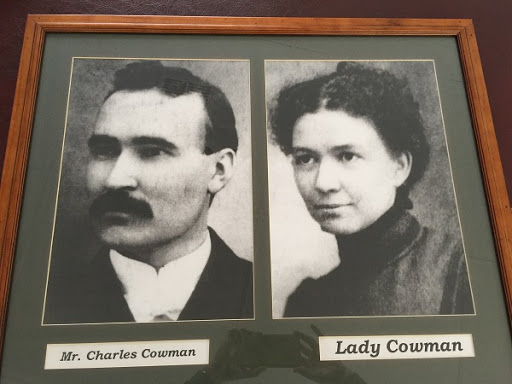
Streams in the Desert

May 22

“He worketh.” (Psalm 37:5.)

THE translation that we find in Young of “Commit thy way unto the Lord; trust also in him; and he shall bring it to pass,” reads: “Roll upon Jehovah thy way; trust upon him: and he worketh.”
It calls our attention to the immediate action of God when we truly commit, or roll out of our hands into His, the burden of whatever kind it may be; a way of sorrow, of difficulty, of physical need, or of anxiety for the conversion of some dear one.
“He worketh.” When? Now. We are so in danger of postponing our expectation of His acceptance of the trust, and His undertaking to accomplish what we ask Him to do, instead of saying as we commit, “He worketh.” “He worketh” even now; and praise Him that it is so.
The very expectancy enables the Holy Spirit to do the very thing we have rolled upon Him. It is out of our reach. We are not trying to do it any more. “He worketh!”
Let us take the comfort out of it and not put our hands on it again. Oh, what a relief it brings! He is really working on the difficulty.
But someone may say, “I see no results.” Never mind. “He worketh,” if you have rolled it over and are looking to Jesus to do it. Faith may be tested, but “He worketh”; the Word is sure!—V. H. F.

“I will cry unto God most high; unto God that performeth all things for me.” (Psalm 57:2.)
The beautiful old translation says, “He shall perform the cause which I have in hand.” Does not that make it very real to us today? Just the very thing that “I have in hand”—my own particular bit of work today, this cause that I cannot manage, this thing that I undertook in miscalculation of my own powers—this is what I may ask Him to do “for me,” and rest assured that He will perform it. “The wise and their works are in the hands of God.”—Havergal.

The Lord will go through with His covenant engagements. Whatever He takes in hand He will accomplish; hence past mercies are guarantees for the future and admirable reasons for continuing to cry unto Him.—C. H. Spurgeon.
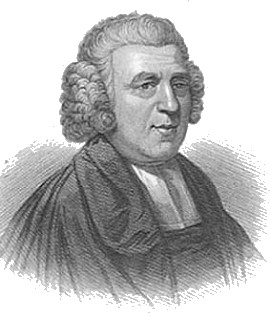
365 days with Newton

22 MAY

Called to leave

‘Now the LORD had said unto Abram, Get thee out of thy country, and from thy kindred, and from thy father’s house, unto a land that I will show thee.’ Genesis 12:1
SUGGESTED FURTHER READING: Matthew 10:32–39

The Lord called Abraham to leave his father’s house. By this is signified the effect of a gracious call: it will suffer a person no longer to remain in the love and practices of a wicked world, but to separate in these things from their nearest and dearest friends if they walk not in the Lord’s ways—not literally to forsake their houses, but to hold no more communion with them in sin. This is the first visible effect of his call. A change appears in their conversation and conduct. He gives them a sight of the evil and danger of sin, and of his own glory, and thus he makes them willing in the day of his power [Psalm 110:3]. It was doubtless a trial to Abraham’s natural affections to forsake his family, and many of his people have no less trial while they live with them. When a person’s foes begin to be of their own household, when parents or children, the wife of the bosom, or a friend who is as one’s own soul, shall employ all their influence, persuasions, promises, threats, kindness, unkindness, pity and surly turns, to persuade the soul whom the Lord has called, to disobey his call, this is very hard to flesh and blood.
Abraham knew not particulars, but he might be well assured that as the Lord called him he should gain by the exchange. He knew not wither he went, but he knew whom he followed, and therefore he consulted not with flesh and blood. Do you likewise. The Lord whom you serve is able to make you amends.… Go you forth at his command, live upon him for today, trust in him for tomorrow.…
FOR MEDITATION:
His call we obey
No strength of our own,
Like Abram of old,
Or goodness we claim,
Not knowing our way,
Yet since we have known
But faith makes us bold;
The Saviour’s great name;
For though we are strangers
In this our strong tower
We have a good Guide,
For safety we hide,
And trust in all dangers,
The LORD is our power,
The LORD will provide.

SERMON SERIES: GENESIS, NO. 22 [3/3], GENESIS 12:1ff.

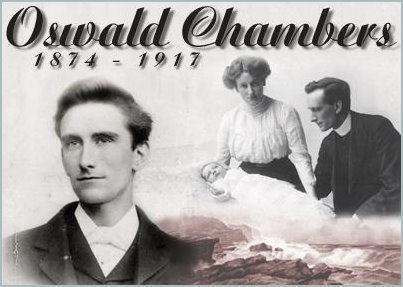
My Utmost for His Highest

May 21st

Divine reasonings of faith

But seek ye first the kingdom of God, and His righteousness; and all these things shall be added unto you. Matthew 6:33.

Immediately we look at these words of Jesus, we find them the most revolutionary statement human ears ever listened to. “Seek ye first the kingdom of God.” We argue in exactly the opposite way, even the most spiritually-minded of us—‘But I must live; I must make so much money; I must be clothed; I must be fed.’ The great concern of our lives is not the kingdom of God, but how we are to fit ourselves to live. Jesus reverses the order: Get rightly related to God first, maintain that as the great care of your life, and never put the concern of your care on the other things.
“Take no thought for your life …” Our Lord points out the utter unreasonableness from His standpoint of being so anxious over the means of living. Jesus is not saying that the man who takes thought for nothing is blessed—that man is a fool. Jesus taught that a disciple has to make his relationship to God the dominating concentration of his life, and to be carefully careless about everything else in comparison to that. Jesus is saying—Don’t make the ruling factor of your life what you shall eat and what you shall drink, but be concentrated absolutely on God. Some people are careless over what they eat and drink, and they suffer for it; they are careless about what they wear, and they look as they have no business to look; they are careless about their earthly affairs, and God holds them responsible. Jesus is saying that the great care of the life is to put the relationship to God first, and everything else second.
It is one of the severest disciplines of the Christian life to allow the Holy Spirit to bring us into harmony with the teaching of Jesus in these verses.

Streams in the Desert

May 21

“I call to remembrance my song in the night.”
(Psalm 77:6.)

I HAVE read somewhere of a little bird that will never sing the melody his master wishes while his cage is full of light. He learns a snatch of this, a bar of that, but never an entire song of its own until the cage is covered and the morning beams shut out.
A good many people never learn to sing until the darkling shadows fall. The fabled nightingale carols with his breast against a thorn. It was in the night that the song of the angels was heard. It was at midnight that the cry came, “Behold, the bridegroom cometh; go ye out to meet him.”
Indeed it is extremely doubtful if a soul can really know the love of God in its richness and in its comforting, satisfying completeness until the skies are black and lowering.
Light comes out of darkness, morning out of the womb of the night.
James Creelman, in one of his letters, describes his trip through the Balkan States in search of Natalie, the exiled Queen of Serbia.
“In that memorable journey,” he says, “I learned for the first time that the world’s supply of attar of roses comes from the Balkan Mountains. And the thing that interested me most,” he goes on, “is that the roses must be gathered in the darkest hours. The pickers start out at one o’clock and finish picking them at two.
“At first it seemed to me a relic of superstition; but I investigated the picturesque mystery, and learned that actual scientific tests had proven that fully forty per cent of the fragrance of roses disappeared in the light of day.”
And in human life and human culture that is not a playful, fanciful conceit; it is a real veritable fact.—Malcolm J. McLeod.

365 days with Newton

21 MAY

The God of glory

‘The God of glory appeared unto our father Abraham, when he was in Mesopotamia.’ Acts 7:2
SUGGESTED FURTHER READING: Acts 7:1–8

When Abraham was in a state of ignorance, and probably an idolater, God revealed himself unto him (Acts 7:2) as the God of glory. Thus the work begins in all his people. If not idolaters in the gross sense, yet in a spiritual sense we are all idolaters—self-worshippers, lovers of the world, lovers of pleasure more than of God, and this is idolatry. The Lord finds his people when they seek him not—indeed they seek him, and sometimes for a long space and under many discouragements before they know him to their comfort, but he begins with them before they can seek him at all. This is universally true whatever advantages they may have of outward means, yet till he speaks to their hearts they know him not, nor have any true desire after him. The Lord begins by revealing himself to the soul as the God of glory. When the Lord appeared, then Abraham saw the vanity of idols. Even the notions we have of God by nature, are so unsuitable to the representation he has made of himself by his Word and Spirit, that while we pretend to worship him, we may be said to worship an idol. If we do not apprehend him as the God of glory, glorious in holiness, justice and truth, we worship not the true God but an imagination of our own hearts. Many, if they would examine their own hearts, might be convinced they have in a manner thought him such a one as themselves; they deny his most essential attributes, or they could not presume on his favour while they live in their sins.

FOR MEDITATION: In those early days there was no written word. But now we have the Scriptures complete we are not to expect to hear a voice or see a glory with our bodily eyes. He makes himself known by his Word and Spirit. And this, though a silent way and unperceived by others, is accompanied with no less certain evidences of his presence and power than if he was to speak in thunder and appear to us in the awful manner he did to Israel at Mount Sinai. Such an outward display of majesty might indeed overawe the carnal heart for a season, but would not change it. The glory of God can only be seen to good purpose by the eyes of the mind (2 Corinthians 4).

SERMON SERIES: GENESIS, NO. 22 [2/3], GENESIS 12:1ff.

Stephen Boyd Blog

Belfast-born Hollywood and International Star from 1950-1970's Fan Tribute Page

Abundant Joy

Digging Deep Into The Word

Not My Life

The Bible as clear as possible

Seek Grow Love

Growing Throughout the Year

Smoodock's Blog

Question Authority

PleaseGrace

A bit on daily needs and provisions

Three Strands Lutheran Parish

"A cord of three strands is not easily broken." Ecclesiastes 4:12

1love1god.com

Romans 5:8

The Rev. Jimmy Abbott

read, watch, listen

BEARING CHRIST CRUCIFIED AND RISEN

To know Christ and Him crucified

Considering the Bible

Scripture Musings

rolliwrites.wordpress.com/

The Official Home of Rolli - Author, Cartoonist and Songwriter

Pure Glory

The heavens are telling the glory of God; and the firmament proclaims His handiwork. Psalms 19:1

The daily addict

The daily life of an addict in recovery

The Christian Tech-Nerd

-Reviews, Advice & News For All Things Tech and Gadget Related-

Thinking Through Scripture

to help you walk with Jesus in faith, hope, and love.

A disciple's study

This is my personal collection of thoughts and writings, mainly from much smarter people than I, which challenge me in my discipleship walk. Don't rush by these thoughts, but ponder them.

Author Scott Austin Tirrell

Maker of fine handcrafted novels!

In Pursuit of My First Love

Returning to the First Love