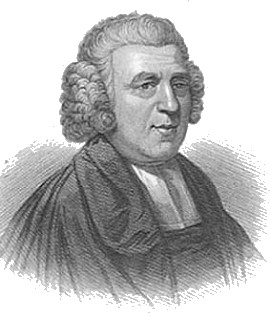
John Charles Ryle

From his earliest years John Charles Ryle seemed destined for great things. Born in Macclesfield in 1816, the son of a wealthy banker, he later excelled at Eton College and at Oxford University, where he gained a first class degree.

His mind was set on a career in politics, but God had greater plans for him. In 1837, the Holy Spirit came upon him in saving power as he was listening in church to the reading of Ephesians 2:8-9.

The words arrested him and, enabled by the Spirit’s gift of faith, he responded immediately to God’s mercy. Later, he testified that he had been ‘on the high road to hell’, but God, in his sovereign grace, had rescued and redirected him heavenwards.

Painful experience

His primary Christian convictions, clearly Evangelical and Protestant, were soon formed and began to mould his life. Some four years later, however, both they and his faith were sorely tried.

In June 1841 his father became bankrupt. Ryle was devastated. ‘We got up one summer’s morning’, he wrote, ‘with all the world before us as usual, and went to bed that same night completely and entirely ruined’.

Reflecting later upon this painful experience, he wrote: ‘If I had not been ruined, I should never had been a clergyman, never have preached a sermon, or written a tract or book’. The Lord used this unhappy event to turn his thoughts away from politics to the work of the gospel and, almost immediately, to ordination in December 1841.

Marriage and loss

He began his ministry in the parish of Fawley, in Hampshire. He had never learned to preach, but here, by a process of trial and error, he taught himself to compose sermons noted for their simplicity, clarity and directness.

After two years in Fawley and a shorter time in Winchester, Ryle ministered for two longer periods in the Suffolk parishes of Helmingham and Stradbroke. His ministry was greatly blessed and his reputation, as a preacher and a pastor, grew.

It was while he was in Suffolk that Ryle met with further trials. His first wife gave birth to a daughter in 1845 but died a year later. Married again in 1850, his second wife bore him another daughter and three sons. Her death ten years later and other family bereavements over this period caused him deep distress.

The next year, however, in Henrietta Clowes, God graciously provided a suitable wife for him and an understanding mother for his children. It was a happy twenty-eight-year marriage, so happy that Henrietta’s death brought an enduring sense of loss to her husband.

Ten years later in 1899 he recorded: ‘Life has never been the same thing, or the world the same place, since my wife died’. Through such providential gains and losses, however, God enriched the pastoral ministry of his servant.

Love of souls

He had been Vicar of Stradbroke for nineteen years when he was invited to become the first bishop of Liverpool. Ryle loved the people of Stradbroke and he found it hard to think of leaving them; but his response to this invitation was almost immediate.

As he later put it: ‘I thought it was a clear, plain call of duty’. Evangelicals rejoiced at the news but liberals and ritualists were less happy. His consecration took place on 11 June 1880. Thus, to Liverpool he went for twenty years, until the Lord took him to heaven.

The new bishop, it seemed, had thoughts of raising ministers’ stipends, establishing a pension fund for them, and building churches, all worthy objectives. But he soon made plain his priorities. He believed that the church’s chief work was to preach the gospel.

In 1881, therefore, he argued that the first need was not for buildings, but for men with God’s grace and the love of souls in their hearts. He was not against erecting a cathedral sometime, but made it plain that his prime concern was to ‘provide for preaching the gospel to souls now entirely neglected, whom no cathedral would touch’.

Writings

Ryle constantly strove to secure well-trained preachers for his diocese. He himself was a powerful preacher in widespread demand. In his book The Upper Room, his paper on ‘Simplicity in Preaching’ lays down principles from which all preachers today may gain much benefit.

Ryle appeared to be in his element when he was proclaiming the gospel. Such ministry made its impact, wherever he went. After hearing him preach on one occasion in 1885, his close clergy friend, Richard Hobson, remarked that the gospel was proclaimed ‘with a freshness and power that sent us on our way rejoicing’.

Ryle’s influence, however, was not confined to his preaching. He read widely and possessed a large library of his own, which he donated to his diocese (sadly, it was destroyed in an air raid on Liverpool during the Second World War).

From his reading flowed his writing, which proved to be widely influential in his own day, and increasingly so after his death. He wrote between two and three hundred tracts, which were translated into other languages and widely read to the eternal benefit of countless people.

Many of his books are still being reprinted today. Over the years, his Expository Thoughts on the Gospels have helped Christians, young and old, to come to a greater understanding of their Saviour’s person and work. His Five English Reformers and Five Christian Leaders of the 18th Century still humble and stir their readers to pray for more men like them today.

Holiness

Other books by Ryle include Knots Untied containing what he called ‘plain statements on disputed points in religion from the standpoint of an Evangelical churchman’. His opening statement on Evangelical religion made it clear that one of its leading features is the absolute supremacy it assigned to Holy Scripture ‘as the only rule of faith and practice, the only test of truth, the only judge of controversy’.

As always, this view of Scripture guided him in writing Practical Religion and Holiness, two books on the Christian life. The latter, possibly his most influential book, was written partly to offset the teaching of the so-called Higher Life movement, which originated in North America and led to the beginning of the Keswick Convention in 1875. Ryle was unhappy about this teaching and expounded his view of biblical holiness in his book’s first three chapters, which are still worthy of careful study.

Power of doctrine

Another contributory factor in Ryle’s influence was the power of his doctrine, which was staunchly Bible-based. He believed that such glorious doctrine should not be timidly announced but openly and fearlessly proclaimed. ‘It is doctrine’, he declared, ‘which gives power to every successful mission, whether at home or abroad. It is doctrine … clear, ringing doctrine which, like the rams’ horns at Jericho, casts down the opposition of the devil and sin’.

Probably, however, the chief reason for Ryle’s massive influence was that, in addition to his striking appearance and many personal gifts, he was (as Marcus Loane his biographer put it) ‘a born leader of men and a humble servant of God’. His leadership was God-given for a crucial time when liberalism and ritualism were threatening to engulf the church.

But Ryle knew that something more than leadership was required to overcome this threat. At his 1897 diocesan conference, he urged his hearers that the great need of the day was for ‘an outpouring of the Holy Spirit … more of the Real Presence of the Holy Ghost’, adding ‘for this let us pray and besiege the throne of grace continually’.

Passion for God’s glory

In 1900 the time came for him to address his farewell letter to the people of his diocese. ‘I shall never forget you’, he wrote; ‘I had ventured to hope that I might be allowed to end my days near the Mersey and to die in harness. But God’s thoughts are not as our thoughts, and he has gradually taught me by failing health that the huge population of this diocese requires a younger and stronger bishop … In a little time we shall all meet again; many I hope on the King’s right hand and few on the left. Till that time comes … I remain your affectionate bishop and lasting friend’.

On 10 June 1900, at the age of 84, he fell asleep in Jesus. His body was subsequently laid to rest, alongside his wife’s, in the graveyard of All Saints’ Church, Childwall. His successor, Dr F. J. Chavasse, described him as ‘a man of granite with the heart of a child’.

Richard Hobson, who knew him well, remembered him as ‘bold as a lion … yet tender, even to those who could not see anything good in him or in his work as a bishop’.

How then should we remember Bishop Ryle on this hundredth anniversary of his death? As a gifted preacher, writer, pastor and leader? Yes indeed, all these and more. He was manifestly a humble Christian with compassion for the lost, zeal for the building up of the church of Christ, and a passion for the glory of God. Truly, in sum, he was a gentle, spiritual giant. O for more like him!
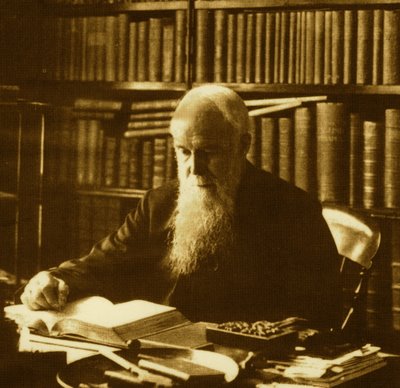
J. C. Ryle — ‘the Prince of Tract-writers’

Alan Munden
Early in his ministry in Exbury the Rev. J. C. Ryle distributed tracts published
by the Religious Tract Society. He bought them in bulk in Southampton and
distributed them to his parishioners. On leaving the parish he circulated his
first tract “A minister’s parting words to the inhabitants of Exbury”. In 1844
soon after his appointment to Helmingham in Suffolk he published his first
sermon. It was a tract addressed to his parishioners and entitled “I have
somewhat to say unto thee” (Luke 7:40). Ten years later it was included in the
t h i rd volume of Home Tru t h s (1854). The writing, publication and
distribution of this tract marked the beginning of Ryle’s career as one of the
leading tract-writers of the nineteenth century. In this activity he was most
productive during the years 1849-59 and from 1864. By 1897 it was calculated
that more than twelve million of his tracts had been sold and in addition some
had been translated into twelve other languages. Over the years large numbers
of tracts were published—for example, 130,000 copies of “Do you pray?” and
110,000 copies of “Living or dead?” In a single year 80,000 copies were sold
of “What do we owe to the Reformation?” Ryle urged his readers not to
destroy his tracts, but to read them. ‘Give it a fair reading. Do not put it on the
fire. Do not tear it in pieces.’ However, they were not all avidly read for some
of them were found in the ditches around Helmingham, having been dumped
undelivered by his young distributors!
Initially most of Ry l e ’s tracts were composed for his parishioners in
Helmingham and Stradbroke and many were sermons that had been addressed
to his rural congregations, but not all of his tracts had previously been
delivered as sermons, and were ever subsequently included in a book. Some
tracts were topical and related to a specific occasion, for example the bridge
disaster in Great Yarmouth in May 1845 and the cholera outbreak in 1866.
From the late 1860s Ryle was involved with matters of national importance
like disestablishment, opposition to the growth of ritualism and to the reform
of convocation, and so the writer of devotional and practical Christianity
turned his attention to these more controversial matters. After becoming the
first Bishop of Liverpool in 1880 some of Ryle’s episcopal addresses and Churchman

sermons were published as The Upper Room (1888). But unless his sermons
were published as tracts many never appeared as such or were ever included in
a book. The only collection of his sermons was published a few months before
his death as The Christian Race and other Sermons (1900). These twenty-four
addresses were a selection from nearly sixty years of Ryle’s preaching ministry,
the earliest of which on “The compassion of Jesus” was preached at Exbury in

  1. As a bishop, his episcopal charges and addresses to the Liverpool
    diocesan conference were published posthumously in 1903.
    It had long been the custom of evangelical clergy to repeat their sermons. In
    December 1806 members of the Eclectic Society discussed the reuse of their
    addresses. The Rev. Basil Woodd confessed, ‘I make one new one a week, and
    preach one old one…I have found much ease and pleasure in preaching my old
    sermons.’ Ryle’s sermon, “Unsearchable riches” was published in Holiness in
  2. He had preached it twice in May 1879 in London and Winchester and
    many times before. Ryle admitted, ‘I have preached this very sermon (in
    divisions and substance) no less than twenty-five times in the last twenty-one
    years, and in almost every part of England, and generally speaking, to large
    Evangelical congregations.’This means that the sermon must have originally
    been composed in 1858 and it would seem that this was not an isolated
    instance. For example, “Let any man come” had been preached in 1878 in St.
    Paul’s and at Chester cathedral. Incidentally, this sermon (published as “If any
    man” in December 1878) was used to raise funds for the restoration of
    Stradbroke church. By 1871 most of the church, apart from the chancel, had
    been restored and a further £500 was still required. In a note with the tract
    Ryle explained that ‘Before the connection of the present vicar of Stradbroke
    with his parish is ended, he is anxious to leave every part of his church in such
    complete order, that no fair excuse may be left to any succeeding vicar for
    introducing ornaments or fittings of an unprotestant character. He wishes, in
    short, to leave his church a complete pattern of what the House of God ought
    to be in the Reformed Church of England’.
    A distinguishing characteristic of Ryle’s tracts was that they were biblical,
    Evangelical and Protestant. They were a clear exposition of Reformed theology
    and were simple in style and challenging in content. Invariably there were two
    or three main points that were intended to evoke a response. They had
    arresting titles such as “Are you regenerate?” (1851) “Do you pray?”(1852)

and “Do you want a friend?” (1855). Sometimes the occasion and the place in
which the sermon was delivered is recorded. A number of tracts consisted of
one or two pages, but others like “Assurance” (1849) and “How readest
thou?” (1852) were substantial pieces of work. Today many of the tracts are
still republished and are known in the collective trilogy Knots Untied, Old
Paths, and Practical Religion and in a fourth volume, Holiness. However
Ryle’s first published volume did not consist of collections of his tracts, but of
one hundred Spiritual Songs (1849) which, like the later Expository Thoughts,
were intended to be used for devotional reading and to assist those who were
visiting the sick. In 1871 two volumes of commentary were published by
William Hunt as Simple readings on the Gospels arranged in daily portions, for
the use of families and schools. The subtitle was “Compiled from the works of
the Rev. J. C. Ryle BA, the Rev. Albert Barnes and other expository writers”.
This publication anticipated subsequent selections of Ryle’s published work.
Often Ryle’s tracts went through several editions before they were included in
a book and while the substance remained unchanged, only the introduction
was different. A number of tracts had slightly modified titles. Originally
“Living or dead?” (1848) became “Alive or dead?” and finally “Dead or
alive?” When two or more introductory texts were used, an identical tract
could be found under a different title, and with Ryle’s address “Idolatry”
(1851) on Isaiah 2:18 it was also published under the text 1 Corinthians 10:14.
Sometimes a longer tract was sub-divided and republished as a series of smaller
tracts. The series of eighty tracts, “Thoughts for heads and hearts” (1861)
consisted of extracts ‘with alterations and additions’ from longer tracts. “How
readest thou?” (1852) was issued as five separates—“Needful knowledge”,
“What are we to believe?”, “How do you use your Bible?”, “Have you an
appetite?” and “How to meet death”. The tract “Are you forgiven?” (1849)
was issued as five separates—“Guilty, guilty”, “Free salvation”, “Gospel
treasures”, “Pardoned people” and “Privileges”. It is difficult, too, to identify
the precise content of the ‘original’ text. For example, “How do you
do?”(1875) published by Drummond in 1904 includes a reference to ‘An
American lay preacher [D. L. Moody]’ who carried ‘the attention of myriads
by storm’ and ‘his preaching at Islington and the Opera House, were scenes
which no one anticipated, and no one seems able to explain’.6 However this
section is omitted from the same tract when it was published in Practical
Religion as “Self inquiry”.

Although the Rev. E. C. Hawtrey, Provost of Eton College, and one-time tutor
of Ryle, did not agree with the theology of the tracts, he admitted that ‘None
but an Eton boy could write such English’. However Canon A. M. W.
Christopher, Rector of St Aldate’s, Oxford, encouraged the use of Ryle’s tracts.
Let me earnestly recommend the free use of Mr. Ryle’s tracts. Do not
simply use those directed against ritualistic or Romish errors. Give the
people gospel tracts as well. Give them, for example, that well-guarded
Scripture tract on Assurance. Then do all that you can to promote the
reading in families of Mr. Ryle’s Expository Thoughts on the Gospels. If
they are read, the Spirit of God will bless them, and they will lay hold of
the hearts of many.
In England the philanthropist, George Moore, gave away about 2,500 copies
of Ryle’s Expository Thoughts; in Sydney they were distributed by Bishop
Frederic Barker and during the Crimean War, Capt. Hedley Vicars gave away
copies of Ryle’s tracts and hymn books to the troops.
The usual sequence was that Ryle preached a sermon or published a tract and
then it was included in a book or books. Of all of his publications Home
Truths was the most significant. It represented the essence of Ryle’s Reformed
theology and which remained unaltered throughout his ministry. From 1851 to
1871 William Hunt published the original eight-volume edition. At least twelve
of the tracts had first appeared in a series as “A question for 18…” and eight
were written as Christmas or New Year addresses. Of the seventy-five tracts in
Home Truths sixty-one reappeared in Ryle’s works during his lifetime. Of the
seventy-nine chapters in Knots Untied, Old Paths, Practical Religion and
Holiness, forty-eight had originally been published in Home Truths. Many of
the tracts were repeatedly published. “Are you an heir?” (1852) appeared in
Home Truths, Coming Events and Present Duties and Practical Religion;
“What is the church?” (1852) was published in Home Truths, Knots Untied
and Principles for Churchmen; “Assurance” (1849) in Home Truths, Practical
Religion and The Christian Race; “Heirs of God” (1852) in Home Truths,
Coming Events and Present Duties and Practical Religion. In his preface to
Coming Events and Present Duties, Ryle said that the ‘seven sermons [were]
delivered on public occasions, at various intervals during the last twenty years,
and afterwards published in the form of tracts’,9 in fact all of the sermons had

appeared in Home Truths from 1849 to 1858. In 1891—and forty years after
it first appeared—volume one of Home Truths was reprinted as Consider–
Papers on important subjects and in the following year volume two of Home
Truths appeared as A New Birth–Papers on important subjects. At the
beginning of the twentieth-century Home Truths was republished in seven
volumes by Charles J. Thynne and the Drummond edition of Home Truths
included six tracts that had not been published elsewhere.
With Ryle’s Expository Thoughts on the Gospels the sequence was the reverse
of the production of Home Truths. Mark’s gospel was published in monthly
parts and selections from the gospels were published as individual tracts
‘extracted, with additions and alterations from Expository Thoughts’. By the
1890s the Expository Tracts consisted of ninety-six, eight page tracts and by
1916 there were 198 such tracts. In the case of John’s gospel extracts were
published as two small books—Short Expository Readings on the Gospel of St
John (1882) and Bethany on John 11 (1898). It is unclear whether Ryle was
directly responsible for the publication of the extracts and the process may
have been due more to the business acumen of his publisher William Hunt. He
shared Ryle’s evangelical convictions and was a fellow-member of the Ipswich
branch of the Church Association.
In the 1820s Edward Hunt of Ipswich began the printing firm bearing his name
and from 1847 the company traded as Hunt and Son and six years later simply
as William Hunt. In 1864 Hunt went into partnership with William MacIntosh
as William Hunt & Company of London. After their association dissolved
Hunt retained premises in London and Ipswich. In 1883 Hunt went bankrupt
through the dishonesty of two of his clerks and from his failure to sell the
surplus stock of Ryle’s works, but Hunt’s name continued to be used on Ryle’s
publications. Ryle’s next publisher was Charles J. Thynne as the ‘successors to
William Hunt & Co.’ of London; by the National Protestant Union (Charles
Murray) and from the late 1890s and into the early twentieth century by
Drummond’s Tract Depot of Stirling, Scotland. After Drummond, many of
Ryle’s collected works have been republished, and numerous individual tracts
have been reprinted as booklets and as articles in newspapers and magazines
or increasingly on the Internet.
Some of Ryle’s historical biographies were first delivered as lectures or articles

and were later included within collections—The Christian Leaders of the Last
Century (1868) appeared firstin The Family Treasury, 1866-67 and Bishops
and Clergy of Other Days (1868) was later expanded as Facts and Men (1882)
and then reprinted as Light from Old Times (1890). The lecture on George
Whitefield, which was originally given in London and subsequently
‘remoulded and enlarged’, was the only biography to be included in Home
Truths. Similarly a lecture on John Hooper delivered in Gloucester and then
Cheltenham, was enlarged and first published in Bishops and Clergy of Other
Days. Holiness first appeared in 1877 as a series of seven chapters (two of
which had already been published in Home Truths) to counteract the Holiness
teaching of Keswick and two years later an enlarged edition (which included a
further eight items from Home Truths). From 1865 to 1890 Ryle attended the
annual Church Congresses and spoke at twelve of them. Two of his addresses
were subsequently published as separates and were included in Principles for
Churchmen (1884). In this work, together with Church Reform (1870) and
Disestablishment Papers (1885), Ryle called for radical changes to the Church
of England.
Always Ryle was most forthright when he defended Evangelicalism and set out
his principles in “Evangelical Religion” (1867). He said, ‘I am not ashamed of
my opinions…I know no system of religion which is better.’10 His position is
well illustrated in Knots Untied and Old Paths both of which were subtitled
‘plain statements…from the standpoint of an Evangelical churchman’. From its
commencement in 1865 Ryle was a keen supporter of the Church Association
and attended and often spoke at the annual meetings and three years later he
became a vice-president. He said that ‘I know of no better organisation than
that of the Church Association’ and it provided ‘an admirable centre of union’
for Evangelicals.11 He frequently spoke at national and regional meetings and
four of the papers he delivered were published as Church Association Tracts,
two in Knots Untied and three in Facts and Men. On becoming the Bishop of
Liverpool he discontinued his membership of the Association.
Although it is almost impossible to calculate precisely how many tracts Ryle
composed it is possible to give some indication. His entry in Crockford’s
Clerical Directory of 1880 refers to ‘about 120 tracts at 1d and 2d [that were]
published between 1845 and 1871 by W. Hunt’. In the Catalogue of
Publications published by Drummond’s Tract Depot in 1916, 125 booklets and

542 tracts were listed. However, for the reasons given above, many of these
were tracts that had been sub-divided. From the evidence it would seem that
during the thirty-five years 1844-79, Ryle produced about 200 individual
tracts. After he became a bishop he produced fewer new tracts, but continued
to oversee the republication of the earlier tracts and further editions of his
collected works.
In his sermon preached at the memorial service to Ryle on 17 June 1900,
Richard Hobson referred to Ryle’s tracts and publications. ‘A great man has
just fallen in Israel, in the decease of the dear bishop. Yes, he was great through
the abounding grace of God. He was great in stature; great in mental power;
great in spirituality; great as a preacher and expositor of God’s most holy
Word; great in hospitality; great in winning souls to God; great as a writer of
gospel tracts; great as an author of works which will long live; great as a
bishop of the Reformed Evangelical Protestant Church of England, of which he
was a noble defender; great as the first Bishop of Liverpool.’12
ALAN MUNDEN is on the staff of Jesmond Parish Church, Newcastle upon
Tyne.
ENDNOTES

  1. G. R. Balleine, A History of the Evangelical Party in the Church of England
    (London, 1908) p. 272.
  2. J. C. Ryle, “Where are your sins?” Home Truths, Vol. 7 (London, 1859), p.10.
  3. J. H. Pratt (ed.), The Thought of the Evangelical Leaders [1856] (Edinburgh, 1978),
    p. 390.
  4. J. C. Ryle, “Unsearchable riches,” (London, 1879), Preface.
  5. J. C. Ryle, “Let any man come,” (London, 1878), printed on the inside of the cover.
  6. J. C. Ryle, “How do you do?” (Stirling, 1904), pp.148, 149.
  7. The Report of the Conference of the Church Association, 26-27 November, 1867,
    p. 69.
  8. Ibid., p. 69.
  9. J. C. Ryle, Coming Events and Present Duties (London, 1879) p. v.
  10. J. C. Ryle, Practical Religion (London, 1897) pp. vi, vii.
  11. Church Association Monthly Intelligencer, 1 May 1876, pp. 109, 111.
  12. R. Hobson, What God hath Wrought (London, 1909), pp. 327-8.

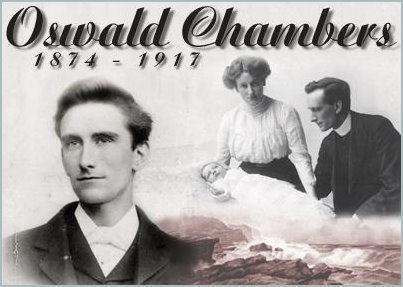
My Utmost for His Highest

May 15th

The habit of rising to the occasion

That ye may know what is the hope of His calling … Eph. 1:18.

Remember what you are saved for—that the Son of God might be manifested in your mortal flesh. Bend the whole energy of your powers to realize your election as a child of God; rise to the occasion every time.
You cannot do anything for your salvation, but you must do something to manifest it, you must work out what God has worked in. Are you working it out with your tongue, and your brain and your nerves? If you are still the same miserable crosspatch, set on your own way, then it is a lie to say that God has saved and sanctified you.
God is the Master Engineer, He allows the difficulties to come in order to see if you can vault over them properly—“By my God have I leaped over a wall.” God will never shield you from any of the requirements of a son or daughter of His. Peter says—“Think it not strange concerning the fiery trial which is to try you.” Rise to the occasion; do the thing. It does not matter how it hurts as long as it gives God the chance to manifest Himself in your mortal flesh.
May God not find the whine in us any more, but may He find us full of spiritual pluck and athleticism, ready to face anything He brings. We have to exercise ourselves in order that the Son of God may be manifested in our mortal flesh. God never has museums. The only aim of the life is that the Son of God may be manifested, and all dictation to God vanishes. Our Lord never dictated to His Father, and we are not here to dictate to God; we are here to submit to His will so that He may work through us what He wants. When we realize this, He will make us broken bread and poured-out wine to feed and nourish others.

Streams in the Desert

May 15

“Men see not the bright light which is in the clouds.”
(Job 37:21)

THE world owes much of its beauty to cloudland. The unchanging blue of the Italian sky hardly compensates for the changefulness and glory of the clouds. Earth would become a wilderness apart from their ministry. There are clouds in human, life, shadowing, refreshing, and sometimes draping it in blackness of night; but there is never a cloud without its bright light. “I do set my bow in the cloud!”

If we could see the clouds from the other side where they lie in billowy glory, bathed in the light they intercept, like heaped ranges of Alps, we should be amazed at their splendid magnificence.

We look at their under side; but who shall describe the bright light that bathes their summits and searches their valleys and is reflected from every pinnacle of their expanse? Is not every drop drinking in health-giving qualities, which it will carry to the earth?

O child of God! If you could see your sorrows and troubles from the other side; if instead of looking up at them from earth, you would look down on them from the heavenly places where you sit with Christ; if you knew how they are reflecting in prismatic beauty before the gaze of Heaven, the bright light of Christ’s face, you would be content that they should cast their deep shadows over the mountain slopes of existence. Only remember that clouds are always moving and passing before God’s cleansing wind.” Selected.

“I cannot know why suddenly the storm
Should rage so fiercely round me in its wrath;
But this I know—God watches all my path,
  And I can trust.

“I may not draw aside the mystic veil
That hides the unknown future from my sight,
Nor know if for me waits the dark or light;
  But I can trust.

“I have no power to look across the tide,
To see while here the land beyond the river;
But this I know—shall be God’s forever;
  So I can trust.”

365 days with Newton

15 MAY (PREACHED 1770)

The grand topics of heaven

‘And, behold, there talked with him two men, which were Moses and Elijah: who appeared in glory, and spake of his decease which he should accomplish at Jerusalem.’ Luke 9:30, 31
SUGGESTED FURTHER READING: Luke 9:28–36

If we had only heard that Moses and Elijah came down to converse with Jesus, we should have felt some desire or wish to know the subject of their conference. Here we are told, and it is worthy our notice. They spake not of such trifling incidents as the world accounts great, not of the rise and fall of kingdoms. Their conversation turned entirely upon him, his sufferings and the glorious event of his undertaking. These are the grand topics of heaven and heaven-born souls. Alas for poor mortals, to many of whom the Redeemer’s sufferings and glories, which is the delightful theme and song of angels, is tasteless, tedious and offensive. They spake of his decease or his departure—his Exodus—it is the word by which we call the book that relates the departure of Israel from Egypt and may be understood of:
(i) his departure out of life, in agonies and sufferings. This was foretold by Moses and the prophets; this was now confirmed by Moses and Elijah. It was an interesting subject to them. They were redeemed by that price which he was soon to pay. They saw more clearly the dignity of his person and the value of his redemption than we can do in this imprisoned state. We may believe they did not speak of it in that cold and careless manner which we often do.
(ii) his departure out of the world. When having completed his purpose, he would return victorious to heaven. As he had his sufferings in view, so likewise his glory.

FOR MEDITATION: Let us learn to imitate the glorified saints and talk more of Jesus, what he has done and what he is doing where he is. Let us aspire to be with them that we may know more and praise better. We are too much tied to the things of sense, too willing and well satisfied to live at a distance from our home. Our willingness to wait the Lord’s time for our dismission should be an act of submission and resignation to his will—and not because we are pleased with the world. Salvation—a good hope that you shall join the heavenly host.

SERMON SERIES: ON THE TRANSFIGURATION, NO. 5 [3/3], LUKE 9:30–31

Stephen Boyd Blog

Belfast-born Hollywood and International Star from 1950-1970's Fan Tribute Page

Abundant Joy

Digging Deep Into The Word

Not My Life

The Bible as clear as possible

Seek Grow Love

Growing Throughout the Year

Smoodock's Blog

Question Authority

PleaseGrace

A bit on daily needs and provisions

Three Strands Lutheran Parish

"A cord of three strands is not easily broken." Ecclesiastes 4:12

1love1god.com

Romans 5:8

The Rev. Jimmy Abbott

read, watch, listen

BEARING CHRIST CRUCIFIED AND RISEN

To know Christ and Him crucified

Considering the Bible

Scripture Musings

rolliwrites.wordpress.com/

The Official Home of Rolli - Author, Cartoonist and Songwriter

Pure Glory

The heavens are telling the glory of God; and the firmament proclaims His handiwork. Psalms 19:1

The daily addict

The daily life of an addict in recovery

The Christian Tech-Nerd

-Reviews, Advice & News For All Things Tech and Gadget Related-

Thinking Through Scripture

to help you walk with Jesus in faith, hope, and love.

A disciple's study

This is my personal collection of thoughts and writings, mainly from much smarter people than I, which challenge me in my discipleship walk. Don't rush by these thoughts, but ponder them.

Author Scott Austin Tirrell

Maker of fine handcrafted novels!

In Pursuit of My First Love

Returning to the First Love