“I even reckon all things as pure loss because of the priceless privilege of knowing Christ Jesus my Lord” (Phil. 3:8.) (Weymouth.)
SHINING is always costly. Light comes only at the cost of that which produces it. An unlit candle does no shining. Burning must come before shining. We cannot be of great use to others without cost to ourselves. Burning suggests suffering. We shrink from pain.
We are apt to feel that we are doing the greatest good in the world when we are strong, and able for active duty, and when the heart and hands are full of kindly service.
When we are called aside and can only suffer; when we are sick; when we are consumed with pain; when all our activities have been dropped, we feel that we are no longer of use, that we are not doing anything.
But, if we are patient and submissive, it is almost certain that we are a greater blessing to the world in our time of suffering and pain than we were in the days when we thought we were doing the most of our work. We are burning now, and shining because we are burning.—Evening Thoughts.
“The glory of tomorrow is rooted in the drudgery of today.”
Many want the glory without the cross, the shining without the burning, but crucifixion comes before coronation.
Have you heard the tale of the aloe plant, Away in the sunny clime? By humble growth of a hundred years It reaches its blooming time; And then a wondrous bud at its crown Breaks into a thousand flowers; This floral queen, in its blooming seen, Is the pride of the tropical bowers, But the plant to the flower is sacrifice, For it blooms but once, and it dies.
Have you further heard of the aloe plant, That grows in the sunny clime; How every one of its thousand flowers, As they drop in the blooming time, Is an infant plant that fastens its roots In the place where it falls on the ground, And as fast as they drop from the dying stem, Grow lively and lovely around? By dying, it liveth a thousand-fold In the young that spring from the death of the old.
Have you heard the tale of the pelican, The Arabs’ Gimel el Bahr, That lives in the African solitudes, Where the birds that live lonely are? Have you heard how it loves its tender young, And cares and toils for their good, It brings them water from mountain far, And fishes the seas for their food. In famine it feeds them—what love can devise! The blood of its bosom—and, feeding chem, dies.
Have you heard this tale—the best of them all— The tale of the Holy and True, He dies, but His life, in untold souls Lives on in the world anew; His seed prevails, and is filling the earth, As the stars fill the sky above. He taught us to yield up the love of life, For the sake of the life of love. His death is our life, His loss is our gain; The joy for the tear, the peace for the pain. —Selected.
‘Although my house be not so with God; yet he hath made with me an everlasting covenant, ordered in all things, and sure: for this is all my salvation, and all my desire, although he make it not to grow.’ 2 Samuel 23:5 SUGGESTED FURTHER READING: Jeremiah 31:31–34
Yet he hath made. As every believer has an although, so likewise a yet to balance it. Many are the comforts provided for the children of God, but none like the consideration of this covenant. Observe the parts: (i) a covenant: an engagement in which the great God condescends to bind himself to performance. (ii) everlasting: from everlasting in its glorious contrivance, to everlasting in its blessed effects. (iii) ordered: prepared, disposed. The Lord foresaw whatever would be wanted and has provided accordingly. A fullness of grace, a supply for every want, is treasured up in this blessed covenant, and in a way wonderfully suited for the encouragement and consolation of unworthy sinners. (iv) sure: not suspended upon uncertain conditions, but established with and in Christ, confirmed by promises, by oath and by blood. FOR MEDITATION:
Encouraged by thy word Thy thoughts, thou only wise! Of promise to the poor; Our thoughts and ways transcend, Behold, a beggar, LORD, Far as the arched skies Waits at thy mercy’s door! Above the earth extend: No hand, no heart, O LORD, but thine, Such pleas as mine men would not bear, Can help or pity wants like mine. But God receives a beggar’s prayer.
They will put you out of the synagogues. Indeed, the hour is coming when whoever kills you will think he is offering service to God.
Whosoever killeth you – This refers principally to the Jews. It is also true of the Gentiles, that in their persecution of Christians they supposed they were rendering acceptable service to their gods.
God’s service – The Jews who persecuted the apostles regarded them as blasphemers, and as seeking to overthrow the temple service, and the system of religion which God had established. Thus, they supposed they were rendering service to God in putting. them to death, Acts 6:13-14; Acts 21:28-31. Sinners, especially hypocrites, often cloak enormous crimes under the pretence of great zeal for religion. Men often suppose, or profess to suppose, that they are rendering God service when they persecute others; and, under the pretence of great zeal for truth and purity, evince all possible bigotry, pride, malice, and uncharitableness. The people of God have suffered most from those who have been conscientious persecutors; and some of the most malignant foes which true Christians have ever had have been in the church, and have been professed ministers of the gospel, persecuting them under pretence of great zeal for the cause of purity and religion. It is no evidence of piety that a man is full of zeal against those whom he supposes to be heretics; and it is one of the best proofs that a man knows nothing of the religion of Jesus when he is eminent for self-conceit in his own views of orthodoxy, and firmly fixed in the opinion that all who differ from him and his sect must of course be wrong.
Gill’s Exposition of the Entire Bible They shall put you out of the synagogues,…. The Jews had made a law already, that he that confessed that Jesus was the Messiah, should be cast out of their synagogues; and they had put it in execution upon the blind man Christ restored to sight, for his profession of faith in him; which struck such a terror upon the people, that even many of the chief rulers who believed that Jesus was the true Messiah, durst not confess him, because of this law; for it was what they could not bear the thoughts of, to be deemed and treated as heretics and apostates, and the vilest of wretches: for this putting out of the synagogue, was not the lesser excommunication, which was called “Niddui”, and was a “separation” from a particular synagogue for a while; but the greater excommunication, either by “Cherem”, or “Shammatha”; when a person was cut out from the whole body of the Jewish church, called often the synagogue, or congregation of the people; and was devoted and consigned to utter destruction, which was the height of their ecclesiastical power, their rage and malice could carry them to; and this the apostles were to expect; nay, not only this, but to have their lives taken away by ruffians, under a pretence of zeal for the service of God, and interest of religion: yea, the time cometh, that whosoever killeth you, will think that he doth God service. For this is not to be understood of their being delivered up into the hands of civil magistrates, and of their being tried, judged, condemned, and put to death by their orders, but of their being murdered by a set of men called “zealots”; who, in imitation of Phinehas, as they pretended, took upon them, whenever they found any person guilty of a capital crime, as idolatry, blasphemy, &c. or what they judged so, to fall upon him at once, and without any more ado kill him; nor were they accountable to any court of judicature for such an action, and which was reckoned laudable and praiseworthy: in this way, and by the hands of such miscreants, Stephen the protomartyr lost his life; for though they had him before a council, and suborned witnesses against him, yet when in his own defence he said what these “zealots” interpreted blasphemy, they ran upon him at once, and cast him out of the city, and stoned him to death; and without any leave or authority from the sanhedrim, as appears: and these men were accounted good men, zealous, (y) “with a zeal for God”, his honour and glory; and valued themselves much upon such butcheries and inhumanity, and thought, as our Lord here says, that they “did God service”; or as the Syriac renders it, , “offered a sacrifice to God”, and so the Arabic and Ethiopic: and indeed this is a rule the Jews (z), and which they form upon the instance and example of Phinehas;
“that whoever sheds the blood of wicked men, (and such they reckoned the apostles and followers of Christ to be,) , “it is all one as if he offered a sacrifice”;”
they looked upon this to be a sacrifice acceptable and well pleasing to God: so the Apostle Paul, in his unregenerate state, thought he ought to do many things contrary to the name of Christ: and that he was doing God service, when he prosecuted the church, and gave his voice with these ruffians, to put the saints to death.
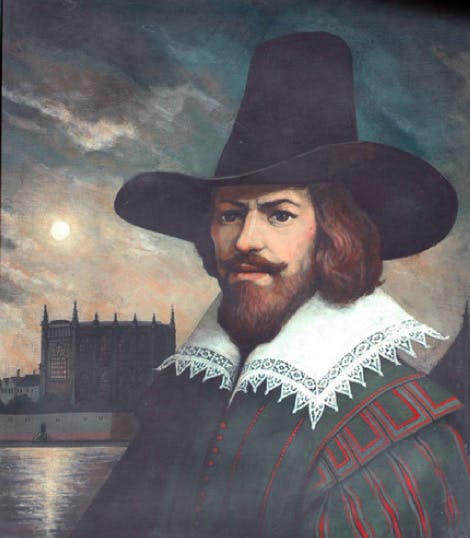
The British holiday, celebrated with fireworks and bonfires, commemorates the failed Gunpowder Plot of 1605. JESSE GREENSPAN
Observed in the United Kingdom every year on November 5, Guy Fawkes Day—also called Bonfire Night or Fireworks Night—commemorates a failed assassination attempt from over 400 years ago. On November 5, 1605, Guy Fawkes and a group of radical English Catholics tried to assassinate King James I by blowing up Parliament’s House of Lords. The plot went awry and all of the conspirators were executed. Soon after, Britons began to celebrate Fawkes’ demise and the survival of their king by burning effigies, lighting bonfires and setting off fireworks—a tradition which has continued to this day.
Background to the Gunpowder Plot Catholicism in England was heavily repressed under Queen Elizabeth I, particularly after the pope excommunicated her in 1570. During her reign, dozens of priests were put to death, and Catholics could not even legally celebrate Mass or be married according to their own rites. As a result, many Catholics had high hopes when King James I took the throne upon Elizabeth’s death in 1603. James’ wife, Anne, is believed to have previously converted to Catholicism, and his mother, Mary Queen of Scots, was Elizabeth’s Catholic arch-rival prior to being executed. There were even rumors, inspired by his diplomatic overtures to the pope, that James himself would become Catholic.
It soon became clear, however, that James did not support religious tolerance for Catholics. In 1604 he publicly condemned Catholicism as a superstition, ordered all Catholic priests to leave England and expressed concern that the number of Catholics was increasing. He also largely continued with the repressive policies of his predecessor, such as fines for those refusing to attend Protestant services.
English Catholics had organized several failed conspiracies against Elizabeth, and these continued under James. In 1603 a few priests and laymen hatched the so-called Bye Plot to kidnap James, only to be turned in by fellow Catholics. Another related conspiracy that year, known as the Main Plot, sought to kill James and install his cousin on the throne. Then, in May 1604, a handful of Catholic dissidents—Guy Fawkes, Robert Catesby, Tom Wintour, Jack Wright and Thomas Percy—met at the Duck and Drake inn in London, where Catesby proposed a plan to blow up the Houses of Parliament with gunpowder. Afterwards, all five men purportedly swore an oath of secrecy upon a prayer book.
The Gunpowder Plot Is Hatched—Then Foiled Eight other conspirators would later join what became known as the Gunpowder Plot. But although Catesby was the ringleader, Fawkes has garnered most of the publicity over the past 400-plus years. Born in 1570 in York, England, Fawkes spent about a decade fighting for Spain against Protestant rebels in the Spanish-controlled Netherlands. He also personally petitioned the king of Spain for help in starting an English rebellion against James. According to writings in the Spanish archives, Fawkes believed the English king was a heretic who would drive out his Catholic subjects. Fawkes also apparently expressed strong anti-Scottish prejudices.
By 1605 Fawkes was calling himself Guido rather than Guy. He also used the alias John Johnson while serving as caretaker of a cellar—located just below the House of Lords—that the plotters had leased in order to stockpile gunpowder. Under the plan, Fawkes would light a fuse on November 5, 1605, during the opening of a new session of Parliament. James, his eldest son, the House of Lords and the House of Commons would all be blown sky-high. In the meantime, as Fawkes escaped by boat across the River Thames, his fellow conspirators would start an uprising in the English Midlands, kidnap James’ daughter Elizabeth, install her as a puppet queen and eventually marry her off to a Catholic, thereby restoring the Catholic monarchy.
On October 26, an anonymous letter advising a Catholic sympathizer to avoid the State Opening of Parliament alerted the authorities to the existence of a plot. To this day, no one knows for sure who wrote the letter. Some historians have even suggested that it was fabricated and that the authorities already knew of the Gunpowder Plot, only letting it progress as an excuse to further crack down on Catholicism. Either way, a search party found Fawkes skulking in his cellar around midnight on November 4, with matches in his pocket and 36 barrels of gunpowder stacked next to him. For Fawkes, the plot’s failure could be blamed on “the devil and not God.” He was taken to the Tower of London and tortured upon the special order of King James. Soon after, his co-conspirators were likewise arrested, except for four, including Catesby, who died in a shootout with English troops.
Fawkes and his surviving co-conspirators were all found guilty of high treason and sentenced to death in January 1606 by hanging, drawing and quartering. A Jesuit priest was also executed a few months later for his alleged involvement, even as new laws banned Catholics from voting in elections, practicing law or serving in the military. In fact, Catholics were not fully emancipated in England until the 19th century.
Guy Fawkes Day Becomes a Holiday After the plot was revealed, Londoners began lighting celebratory bonfires, and in January 1606 an act of Parliament designated November 5 as a day of thanksgiving. Guy Fawkes Day festivities soon spread as far as the American colonies, where they became known as Pope Day. In keeping with the anti-Catholic sentiment of the time, British subjects on both sides of the Atlantic would burn an effigy of the pope. That tradition completely died out in the United States by the 19th century, whereas in Britain Guy Fawkes Day became a time to get together with friends and family, set off fireworks, light bonfires, attend parades and burn effigies of Fawkes. Children traditionally wheeled around their effigies demanding a “penny for the Guy” (a similar custom to Halloween trick-or-treating) and imploring crowds to “remember, remember the fifth of November.”
Guy Fawkes himself, meanwhile, has undergone something of a makeover. Once known as a notorious traitor, he is now portrayed in some circles as a revolutionary hero, largely due to the influence of the 1980s graphic novel “V for Vendetta” and the 2005 movie of the same name, which depicted a protagonist who wore a Guy Fawkes mask while battling a future fascist government in Britain. Guy Fawkes masks even cropped up at Occupy Wall Street protests in New York City and elsewhere. “Every generation reinvents Guy Fawkes to suit their needs,” explained historian William B. Robison of Southeastern Louisiana University. “But Fawkes was just one of the flunkies. It really should be Robert Catesby Day.”
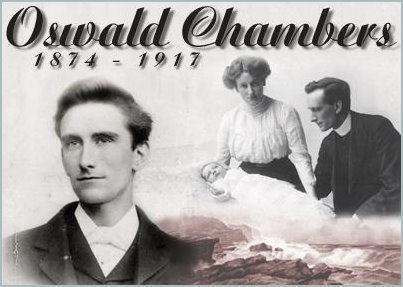
Many of us suffer from the morbid tendency to be instant “out of season.” The season does not refer to time, but to us. “Be instant in season, out of season,” whether we feel like it or not. If we do only what we feel inclined to do, some of us would do nothing for ever and ever. There are unemployables in the spiritual domain, spiritually decrepit people, who refuse to do anything unless they are supernaturally inspired. The proof that we are rightly related to God is that we do our best whether we feel inspired or not. One of the great snares of the Christian worker is to make a fetish of his rare moments. When the spirit of God gives you a time of inspiration and insight, you say—‘Now I will always be like this for God.’ No, you will not, God will take care you are not. Those times are the gift of God entirely. You cannot give them to yourself when you choose. If you say you will only be at your best, you become an intolerable drag on God; you will never do anything unless God keeps you consciously inspired. If you make a god of your best moments, you will find that God will fade out of your life and never come back until you do the duty that lies nearest, and have learned not to make a fetish of your rare moments.
This is my personal collection of thoughts and writings, mainly from much smarter people than I, which challenge me in my discipleship walk. Don't rush by these thoughts, but ponder them.

 Milo
Milo 