
OBITUARY

Rev. Lawrence Oscar Richards, PhD.

September 25, 1931 – October 16, 2016

Lawrence O. Richards (1931-2016) was the most prominent and prolific Christian education writer in evangelical circles during the last half of the Twentieth Century”, according to a biographical article on the Talbot Theological Seminary website. A graduate of University of Michigan, BA; Dallas Theological Seminary, ThM; and a dual program at Garrett Theological Seminary and Northwestern University, PhD, Larry authored over 200 books, years of Sunday school curriculum—preschool through adult, and pioneered methodologies in Christian education and church leadership. He wrote commentaries on every book in the Bible, a Bible Dictionary, Bible handbook, an expository dictionary which provides both Greek and Hebrew word studies on most key words in both the Old and New Testaments, wrote a number of specialty Bibles including best sellers The Adventure Bible, (NIV & NIRV) and The Teen Study Bible, (NIV & NKJV) which he did with his wife, Sue. His books are published in over 30 languages.

He was a brilliant teacher, speaker and preacher. He was a humble and good man who loved God, his wife, children, and dogs. He was preceded in death by his son Paul Richards, and survived by his wife Sue, son Timothy, two daughters Joy and Sarah and grandchildren Matthew and Meghan. He is missed deeply by all who knew him and many who only knew him through his writing.

His memorial service will be Nov. 12 at 3, at North Raleigh United Methodist Church. In lieu of flowers, please make a donation to The Wounded Warrior Project. Larry spent 4 years in the Navy during the Korean War and continued to have a heart for our veterans. Since Veterans Day is Nov. 11, it is a perfect time to remember our vets.

Arrangements by Mitchell Funeral Home, Raleigh, North Carolina

Simon W

07/04/2025

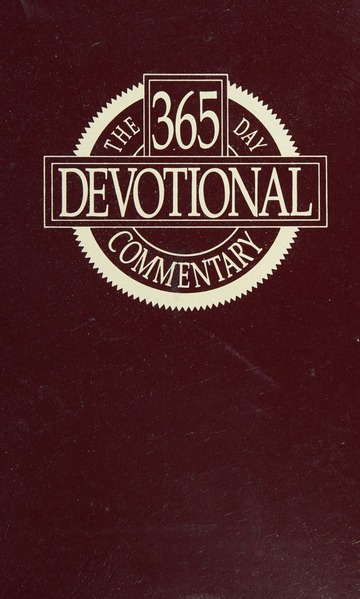
After clearing out my garage today July 4th 2025, I rediscovered my copy of The Daily Devotional Commentary. And this evening, sat at my dining table here in Derbyshire, United Kingdom, the words of Dr Richards are still as relevant and powerful as the day they were written. Thankful for his perseverance to run the race for which He was called. Every blessing in Christ Jesus.

Cyndi Braun

04/23/2024

I send my condolences. It is now 2024 and Mr. Richards books are still touching lives. I am in Oregon and I was going through our church library and found a book written by him. He probably knew Uncle Henry Hollman who was a professor of theology at Talbot. I thank the Lord for those who loved and was faithful to His Word.

Pamela C.

03/02/2025

Hello Richards family. Spending time in Dr. Richards’ 365 Devotional Commentary today. His work continues to bless many people. Hope all is well.

Larry Cockerham

01/30/2022

Dear Mrs. Richards, I was getting ready in my morning sermon to quote Dr. Richard’s from his intro to Second Peter Chapter Two, when on the adjacent page there was an illustration concerning his daughter, Joy. Since I also have a daughter that is afflicted and in a group home, I turned to see the date of The 365-Day Devotional Commentary. To my dismay, it was dated 1990. Since Joy was 28 at the time of the writing, she would now be close to 60 years old. I then checked the internet and found this obituary of Dr. Richards. Our daughter is now 43 and in a group home in Demopolis, AL. I hope Joy is okay, and I was so sorry to hear about Dr. Richards. I have used his works for many years as I’ve been preaching for over 40 years myself and I am now 72. Our going home time is ever nearer now than ever before and I know we’re all looking forward to seeing our families together whole again in heaven and enjoying eternity forever (Rev. Larry W. Cockerham).

Lawrence O. Richards (1931-2016) was the most prominent and prolific Christian education writer in evangelical circles during the last half of the Twentieth Century. He has written major works on overall philosophy of Christian education, church renewal, children’s ministry, youth ministry, leadership, ministry of the laity, small groups, spirituality and Bible teaching. A relational understanding of the church serves as a substructure to many of his innovative concepts of ministry.

Biography

Education and Writings

Lawrence (Larry) O. Richards was born September 25, 1931, in Milan, Michigan. His home environment was a positive one, with both parents providing ample affirmation. His father was an elder in the local Presbyterian church, and his mother often verbalized her faith in the home. Richards grew up in the religious education programs of his church, but after junior high school did not give much attention to his religious formation.

From 1949 through 1951, Richards attended Antioch College in Ohio. He had no clear direction and hence left college and served in the Navy from 1951-1955. He was stationed in New York City and, during this time, converted to Christ under the ministry of Donald Grey Barnhouse, one of the great Bible teachers of that era. He described his conversion as a conversion not from unbelief to belief, but rather a conversion to basic biblical Christianity (Downs, 1982, p. 115).

Following this experience Richards became an avid Bible student and formed some of his most basic theological convictions. After his Navy stint he resumed his academic studies at the University of Michigan where, in 1958, he received a B. A. in philosophy. He graduated magna cum laude and was elected to Phi Beta Kappa. During his Michigan years he married Marla Hafner, and they now have three children, Paul, Joy, and Timothy.

His biblical curiosity was far from satisfied when Richards entered Dallas Theological Seminary, whose Th.M. curriculum required four years of Greek and three years of Hebrew, and provided a theological framework taught from a mildly Reformed and decidedly Dispensational viewpoint. His initial interest in Greek studies was turned to Christian education by Dr. Howard Hendricks, who challenged him that knowing biblical content was not sufficient if he could not communicate it adequately. Richards’s study of principles for communicating the Bible progressed through his academic and personal study and formed the basis for many of his future Christian education works. In 1962 Richards was ordained by the non-denominational Grace Bible Church of Dallas, Texas.

After graduating summa cum laude from Dallas Theological Seminary, Richards moved to Wheaton, Illinois, where from 1962-1965 he was an editor of children’s church materials for Scripture Press Publications, a large curriculum house servicing evangelical churches. He was also an Associate Pastor in charge of Christian education at a local church and taught a large Bible class. During this time Richards began to be disillusioned by the educational program of the church, even to the point of taking his children out of Sunday School.

From 1965-1972 Richards was an Assistant Professor of Christian Education in the Wheaton College Graduate School where he also taught New Testament and Old Testament courses. During this time he was also enrolled in Ph.D. studies at the joint program offered by Garrett-Evangelical Theological Seminary and Northwestern University in Evanston, Illinois. His doctoral studies were in Religious Education and Social Psychology, with an emphasis in research methodologies in education, social psychology, and anthropology. He graduated in 1972, having written a dissertation on the relationship between the home and church educational programs entitled “Pre-evaluation Research on a Home/Church Christian Education Program” (1972). This research provided some of the foundations for his Sunday School PLUS curriculum.

In the summer of 1967, Richards and some of his fellow faculty members of the Wheaton Graduate School Christian Education department went to the school’s summer camp to conduct a seminar entitled “Trends in Education.” It turned out to be a revolutionary turning point in Richards’s career when the results of the seminar were published in the National Association of Evangelicals periodical United Evangelical Action and later in his first book, A New Face for the Church (1970). These works thrust him into the national evangelical spotlight and identified him as an advocate of renewal in the church. Richards (1979) would later write of this renewal movement:

Theologically, the past ten years have been a quiet but deep rethinking of the nature of the church. Stimulated by the attack in the 60’s on the Church as an institution, there has been a growing belief that we must define our educational mission in terms of the nature of the Church as Family and Body. Socialization, not a “schooling” education is the critical task…. Both theological and behavioral science input affirms the importance of the transforming community as the true educator of the Christian. “Talking about the faith” is clearly inadequate; community in every dimension of human potential, is increasingly seen to be the issue. (pp. 29, 31)

In 1972, Richards moved to Phoenix, Arizona, where he embarked upon a career of full-time writing and speaking, in which he remains involved. During the Phoenix years he directed an internship program for seminary students and spent five years developing and testing his Sunday School PLUS curriculum. He also served as an elder at Our Heritage Wesleyan Church in Scottsdale, Arizona, and frequently spoke at conventions as well as conducted seminars and Schools of Ministry at midwestern and western universities. Richards has taught courses at Princeton Theological Seminary, Talbot School of Theology, and in other places in the United States and around the world. He also designed and wrote the courses for a degree completion program offered at the College of Biblical Studies in Houston, Texas.

Richards is the author of some 200 works, some of which have been translated into 24 languages, making him the most prolific of 20th century evangelical Christian educators and probably the most influential evangelical Christian education theorist (Benson, 1984, p. 64). Some of his major works are being reprinted 20 or more years after their original publication date. Richards’s writing career divides into two primary sections. From roughly the mid-60s to the mid-80s of the 20th century, he wrote his major Christian education theoretical works, interspersed with teacher training guidebooks, parenting materials, biblical curriculum, and Bible study guides. From approximately the mid-80s to the present, Richards’s writing has focused more on writing devotional books, Christian life enrichment books, Bible study aids, and study Bibles.

Richards believes that, first and foremost, Christian education is a theological discipline, even though he will buttress his ideas with social science and educational theory insight. This emphasis on the primacy of being biblical and theological aided him in communicating his insights and making them palatable to his largely evangelical audience. For Richards ecclesiology is the most important theological topic, knowing that if the church could function according to a biblical pattern it would function in a renewed pattern. He writes:

Our choice of socialization as an appropriate approximation of the educational strategy to be adopted by Christian education, then, is rooted not in the social sciences, but in theology. It is because of the nature of the Christian faith, and the nature of the church itself, that we focus on modeling as the key method. (Richards, 1975, p. 81)

A couple of Richards’s Christian education theory works deserve special recognition. His Creative Bible Teaching (1970) was one of his earliest book reflecting more traditional evangelical Christian education concerns, namely communicating biblical content effectively. Its “Hook-Book-Look-Took” format for Bible teaching provides a solid template for effective communication of the Bible. It is particularly important because this format became the approach of almost all of the evangelical Sunday school curriculum publishers. A Theology of Christian Education (1975) is Richards’s most important theoretical work. In it he provides the seed ideas that are developed in depth in many of his other major Christian education theory books. Two central ideas dominate the substructure for this book: 1) faith-as-life is a lived-out reality, not simply concepts to be affirmed; and 2) the church is to function as an organism more than an organization based in the biblical concepts of the body of Christ and the family of God. He concludes that a modeling method of faith transmission in Christian community and the home (akin to socialization and social learning theory) is superior to the schooling model (cognitive processing) that was so prevalent in evangelicalism then and today. Both of these works are still in print.

Richards currently resides in Raleigh, N.C., where he and is wife are active members of the North Raleigh United Methodist Church. He serves as general editor for the 20 some volumes in the Bible Smart series (Nelson), of which he wrote the lead volume, The Bible, and also Moses, the Man and his Mission (2008). His Essential Guide to the Bible, to be published by Guideposts, is due for 2009 publication.One of Richards most exciting projects has been the revision of the NIV Teen Study Bible, which he developed with his wife Sue. This Bible which has been used by over three million teens, has been thoroughly revised for today’s young people and was released in July of 2008.

In 2006 and 2007 Richards wrote a series of six novels on The Invisible War, which traces the conflict between angels and demons from Creation to History’s end. The third volume in that series, the Blind Prophet, will be published by Tate Publishers in late 2008 or early 2009, with the other volumes to follow. Richards currently communicates through a weblog, which tracks and evaluates contemporary occult activities from a biblical perspective.

Addendum: Lawrence O. Richards passed away on Sunday, October 16, 2016. 

The 365-Day Devotional Commentary

John

INTRODUCTION
John is the fourth and last-written of the New Testament’s portraits of Jesus Christ. Most believe it was composed between A.D. 70 and 100 by John, son of Zebedee, one of Jesus’ 12 disciples. This is the most theological of the Gospels. It grew out of the need of second and third-generation Christians for an authoritative answer to the questions about Christ’s nature which then troubled the church. John said of his work, “These things are written that you may believe that Jesus is the Christ, the Son of God” (20:31).
Unlike the other Gospels, which follow a chronological sequence, John related separate incidents and teachings which help us better understand Jesus’ universal mission. Much of what John shared is not found, or is only briefly mentioned, in Matthew, Mark, and Luke. Through John’s clear portrayal of Jesus and His teaching, we do come to a much deeper appreciation of Jesus and what it means to have faith in Him.

THE LIVING WORD
John 1:1–18

“No one has ever seen God, but God the only Son, who is at the Father’s side, has made Him known” (John 1:18).

John introduced the ultimate mystery. God had somehow taken on human nature and become flesh.

Background
The Word. In both Testaments “word” is a pivotal and complex concept. The Greek logos appears over 300 times in the New Testament, with a variety of meanings. Jesus’ identification as the “Word” has great theological significance. As the Word, Jesus is the expression of God’s person and character in the world: the One who reveals the Father. And as the Word, Jesus is also the powerful, active presence of God in the world: the One with ultimate authority over all natural and supernatural forces, able through infusions of grace not only to make alive but also to transform the inner nature of human beings to fit them for fellowship with God.
While theologians tend to wax eloquent over the philosophical implications of logos, as we read John’s Gospel we can have a simpler, more direct meaning in mind. Jesus, the Word of God, is the One through whom we hear God’s voice. He is the One in whom we meet God, and welcome God into our lives.

Overview
The “Word”—the Creator and source of our life—preexisted with and as God (1:1–5). John the Baptist announced His coming (vv. 6–9), yet when He arrived His own people rejected Him (vv. 10–11). But all who do receive Him become children of God (vv. 12–14). He is the source of grace, the Son who, being God, reveals the Father to mankind (vv. 15–18).

Understanding the Text
“In the beginning was the Word” John 1:1–2. Like the first verses of Genesis, John 1:1–2 catapult us back beyond the origins of time, into the mystery of God Himself.
Christians have affirmed the New Testament’s teaching that the One God of the Old Testament exists in three Persons: God the Father, the Son, and the Holy Spirit. John launched his Gospel with a powerful statement that the Man Jesus is God the Son, the eternal Word through whom God has always expressed Himself (see DEVOTIONAL).

“In Him was life” John 1:3–5. In John’s Gospel “life” sometimes indicates biological vitality, but more often indicates spiritual life. John often described the life he spoke of as “eternal.” The life available to us in Christ has a supernatural quality and power, as well as endless extent. It is this eternal life which Christ offers that shines in our world as a bright light. Like a beacon to a lost traveler, the light shining in Jesus offers all men hope. Not only hope for life after death, but hope for a rich and meaningful life here and now.

“The darkness has not understood it” John 1:5. The specific intent of the Greek verb, katelaben, has been much debated. Is it simply saying that men in darkness haven’t realized the nature of the shining light? Or does the word mean “overcome,” as in other passages in John? (6:17; 8:3–4; 12:35) Soon John would develop his theme of a basic conflict between good and evil, darkness and light. The world of men is not just ignorant of the character of the light, but hostile to it!
An invisible war rages on Planet Earth. God and Satan are in perpetual conflict, and knowingly or not every human being takes sides. The light shed by the Son’s offer of eternal life makes the issues of the war more clear, and challenges everyone to take sides.
How good to know that no matter how hostile men and women may be, they can never overcome Christ’s light.

“A man who was sent from God” John 1:6–9. Luke told the Baptist’s background; John emphasized his mission. The fact that he was “sent from God” established his authority. His mission was summed up in the word “witness” (v. 8). Throughout this Gospel John would assemble evidence that established Jesus as the Son of God. The Baptist was the first witness, identifying Jesus for the Jewish men and women of the first century.
Today too God sends men and women to witness of His Son. While Jesus Himself is the light, you and I must give testimony about the benefits of coming to Him for eternal life.

“The right to become children of God” John 1:10–13. These verses, like much of John’s writing, are packed full of information. The “world” in verse 10 is first earth itself as the environment for life, and second a sinful social order which refused to acknowledge the Creator. While Jesus’ own people and nation would not receive Him, He continues to hold out the divine offer of eternal life to individuals. Those who do receive Him are given the right to become sons of God.
The verses clarify two issues. First, are all human beings God’s children? While all human beings are His creations, and objects of His love, John reminds us that not all are spiritually related to God. Only the special gift of eternal life in Christ changes our nature, so that we become God’s tekna; His “born ones” who by spiritual rebirth share His divine nature.
Second, what does it mean to “believe”? John began his explanation by equating “believe” with “receive.” New life in Christ is offered as a gift. Just as one who reaches out and takes a gift shows by his accepting it that he believes in the reality of the gift and the trustworthiness of the person who offers it, so in receiving Christ as Saviour, we demonstrate belief in the gift and in the trustworthiness of God the Giver.
How simple it is. We hear the Gospel’s Good News, our heart welcomes Christ, and in a grand supernatural transaction we are forgiven and flooded with new life. We become God’s children, born anew by an act of God Himself.

“Grace and truth came through Jesus Christ” John 1:15–17. The Law of Moses established a standard of righteousness for humankind. Jesus revealed God’s gracious attitude toward all mankind. Looking at the Law we see what we should be, and feel ashamed. Looking at Jesus, we realize God loves us despite our sins, and rejoice.

“God the only Son” John 1:18. The essence of Deity is unseen because our eyes cannot detect Him. So God took on a form that we could see.
“Only” here has the essential meaning of “unique.” Jesus is the Son of God in a way that we can never be, for He preexisted time itself. We become God’s children. Jesus is and has always been God’s only Son.

DEVOTIONAL
No Greater Love
(John 1:1–2)
“Three gods! You’ve got three gods!”
That misunderstanding of Christian faith is common in both Muslim and Jewish circles. And yet Christians claim, “No. We have one God, the God of the Old Testament, who is shown in the New Testament to exist in three Persons.”
It’s nonsense to many, of course. And yet as we read John’s first verses, we see that this is just what the Bible teaches. The Word, a few verses later on identified as the Son incarnate, Jesus Christ, was there in the beginning. He was with God. And He was God.
Many attempts have been made to find an analogy that will help us better grasp the mystery of the Trinity: the Three-in- Oneness of Scripture’s one God. All fall short. The Trinity remains a mystery. Perhaps the best suggestion though was made in the fourth century of our era by Saint Augustine. Augustine argued that God must be a Trinity, for God is love. Before the Creation of the world, God must have had someone to love, and some way to convey love. It follows, Augustine taught, that there must be Three within the oneness of God: a Father to love, a Son to be the object of that love, and a Holy Spirit to convey and express love.
What a thought. Before God created, God was a Person who loved. Because He existed as a Trinity, God has always been able to express that love fully within His own being. And yet God’s love is so great that it overflowed beyond His own self. In love God created the world and populated it with persons in His own image. In love God gave those persons freedom of choice. And, in love, God sacrificed the Son He loved to preserve all who believe from the disastrous and eternal consequences of the choices they have made.
The Gospel of John is not only the Gospel of belief and faith, as most empha-size. John is the Gospel of unimaginable love.

Personal Application
Considering who Jesus is can deepen your love for Him.

Quotable
“Alexander, Caesar, Charlemagne, and myself founded empires; but on what foundation did we rest the creations of our genius? Upon force. Jesus Christ founded an empire upon love; and at this hour millions of men would die for Him.”—Napoleon Bonaparte

The 365-Day Devotional Commentary

MOSES’ FAREWELL
Deuteronomy 31–34

“I am now a hundred and twenty years old and I am no longer able to lead you” (Deut. 31:2).

Each of us leaves a heritage behind when we reach the end of our lives. Moses left a glorious heritage: a generation prepared for victory, a Law for Israel to live by, and the memory of the God who keeps His promises.

Overview
God would be with Israel’s new leader, Joshua (31:1–8). The Law was to be read to all Israel every seventh year (vv. 9–13), but God predicted future rebellion (vv. 14–30). Moses taught them a unique song, in the form of a judicial indictment, to encourage obedience (32:1–47). Just before his death (vv. 48–52), Moses blessed the tribes of Israel (33:1–29). An unknown author later added Moses’ epitaph (34:1–12).

Understanding the Text

“I am now a hundred and twenty years old” Deut. 31:2. In Egypt, 110 was the symbolic age of wise men. Like Moses, those who base their lives on relationship with God are wiser than this world’s wisest.
It’s fascinating to remember that Moses was 80 when he was first called to serve God. The last third of Moses’ life was the most productive spiritually. Old age isn’t the end for any of us, though persons who found great satisfaction in their jobs often feel this way. The time we once devoted to work can now be devoted to serving God and others.

“The LORD your God goes with you” Deut. 31:3–8. Moses presented Joshua as Israel’s new leader and reminded the people that it was the Lord who had won past victories and who “goes before you.”
It’s only natural for us to depend on human leaders. But such dependence is misplaced. God, not Moses, was the key to past triumphs. Let’s respect our leaders, but let’s depend only on the Lord.

“Moses wrote down this Law and gave it to the priests” Deut. 31:9–13. It seems likely that what Moses delivered to the priests was the bulk of the Book of Deuteronomy. This book was to be read to the whole nation—“men, women and children, and the aliens living in your towns.” The reading was to be done at the Feast of Tabernacles every seventh year, “as long as you live in the land.”
All have a right to know and to understand what God says to us in the Scriptures.

“I know what they are disposed to do” Deut. 31:14–29. Despite commanding that the Law be faithfully and regularly taught to Israel, God told Moses that dark days were ahead. Israel would “soon” turn to idolatry and “break the covenant I made with them.”
God knew “what they are disposed to do, even before I bring them into the land” (v. 21). The Hebrew word, yeser, (“purpose”) here means a tendency, impulse, or disposition. The revelation of this tendency may come as a surprise, for under Joshua the Israelites obeyed God. In fact, their behavior was exemplary. But God, who knows the heart, saw the inner tendency toward sin despite outward obedience.
You and I need to be sensitive to our hearts. That tendency toward sin still exists within us. We can be in great danger even when there is no sign of faltering in our outward behavior. Jesus once explained His criticism of certain Pharisees who were extremely strict in their approach to God’s Law: “These people honor Me with their lips,” He said, “but their hearts are far from Me” (Mark 7:6). Only wholehearted love for God can guard us against our tendency toward sin.

“Moses recited the words of this song” Deut. 31:30–32:47. The Israelites were expected to memorize this lengthy “song,” or poem. In cultures where reading and writing are less common, memorization of extremely long poems, legends, treaties, etc., is quite common.
This fascinating poem follows what is known today as the “RIB pattern.” The Hebrew word, rib, means a controversy or a legal suit. The song was in effect God’s indictment of Israel for breaking the covenant with Him as Sovereign.
What is striking is that the poem then went on to add material that is not found in ancient secular indictments! God assured Israel that though “they are a nation without sense” He would indeed have compassion on them (vv. 26–38). God would deliver Israel once again and free them from their enemies (vv. 39–43).
The rib pattern of the poem shows its ancient origin, for it fits comfortably into the culture existing in Moses’ day. But the variation from that pattern is most important to us. Those who angered secular rulers perished. The statement which expressed the punishment due to covenant-breakers ended the indictment. But even when we sin and deserve judgment, punishment is not God’s last word. His last word to us as to Israel is one of grace. We too can be restored.
We too can come back, and once again worship our God as a forgiven people.

“This is the blessing that Moses . . . pronounced” Deut. 33:1–29. The final blessing pronounced by a dying father was viewed as a will in the ancient Near East, and was legally binding. The blessing of Moses, Israel’s spiritual father, contained elements of prophecy. The poetic blessings in these chapters are sometimes obscure but are based on traits of the tribal patriarchs and on God’s revelation concerning their future. The blessings contain prayers, predictions, praise, and commands. The emphasis of each blessing is shown below.

Reuben
A prayer for survival.
Judah
A prediction of victory.
Levi
A prayer for blessing, a call to faithfulness.
Benjamin
A promise of safety.
Ephraim
A promise of preeminence.
Manasseh
A prediction of strength.
Zebulun
A prediction of wealth.
Issachar
A prediction of wealth.
Gad
A promise of land.
Dan
A prediction of energy.
Napthali
A promise of blessing.
Asher
A prayer for strength and security.

The range of blessings predicted again shows that God desires the very best for His people. Yet, as this magnificent psalm of blessing concludes, we need to remember that the most important gift God can give is already ours—Himself. As Moses said, “the Eternal God is your refuge, and underneath are the everlasting arms.”

GOD’S INDICTMENT OF ISRAEL
A statement of God’s character
(vv. 1–4)
Implied accusation of Israel
(vv. 5–6)
Recalling God’s acts for Israel
(vv. 7–14)
Specific charges against Israel
(vv. 15–18)
The sentence
(vv. 19–25)

DEVOTIONAL
Moses’ Epitaph
(Deut. 34)
One of the unusual privileges I’ve had is to serve as chaplain to my family. Though ordained, I’ve not pastored a church. So most of the weddings I’ve performed, and all of the funerals, have been for family.
To date I’ve buried my mother, my dad, a stepmother, an uncle, and an aunt. Each time I’ve thought back over their lives, I’ve found something that made that person special. Each one of my relatives was very different from the others. But in each life God had done something beautiful. Something to remember that honored Him, and made the memory of our loved one more precious.
Then, after Moses’ death, an unknown editor added an epitaph. He described the words God spoke to Moses (vv. 1–4), and the grief felt by Israel (vv. 5–8). He added a word about Joshua to show that life goes on (v. 9). And then he concluded with an epitaph intended to show what was special about Moses. “Since then, no prophet has risen in Israel like Moses, whom the LORD knew face to face, who did all those miraculous signs and wonders the LORD sent him to do in Egypt” (vv. 10–11).
Moses was special. And he deserved this epitaph as well as our awed respect. But what moves me most has been to realize, as one by one the members of my own family die, that every one of us is special.
When God enters a life, He takes at least one trait of ours and makes us beautiful.

Personal Application
What trait of yours will your family members remember with greatest joy?

Quotable
“Enjoy your life without comparing it with that of others.”—Marques De Condorcet

The 365-Day Devotional Commentary

CHOOSING GOD
Deuteronomy 29–30

“I set before you today life and prosperity, death and destruction” (Deut. 30:15).

The most significant choice any human being can make is the choice between life and death; between loving and serving God, and ignoring Him.

Definition of Key Terms
Covenant. The Hebrew brit is a flexible term used of a variety of legally binding agreements. Between nations a brit is a treaty. Between individuals it can be a contract. God even used one familiar covenant form to confirm His promises to Abraham.
In ancient times brit was also used to describe the formal relationship between a ruler and his subjects. This passage of Deuteronomy follows the format used in the second millenniumB.C to state just such a relationship. It is in this “constitutional” sense that “covenant” is typically used in Deuteronomy, and especially here.
These two chapters are in essence a review of Deuteronomy 1–28. Israel had heard Moses’ lengthy explanation of the relationship God, as King, intended to have with His people. Now, perhaps a few days later, Moses briefly reviewed the covenant that would serve as Israel’s national constitution, and called on the people to commit themselves to it and to God.

Overview
Moses summarized God’s covenant with Israel. He reviewed God’s saving work (29:1–9) and His call to covenant relationship (vv. 10–15). Moses warned of curses on rebels (vv. 16–29) but stated God’s intention to ultimately restore Israel (30:1–10). In view of this, Moses called for a firm commitment to the Lord (vv. 11–20).

Understanding the Text
“Your eyes have seen all that the LORD did” Deut. 29:2–9. Israel’s relationship with God was initiated by saving acts. When the people were helpless, slaves in a foreign land, God performed “miraculous signs and great wonders” to free them. The most powerful motive the Israelites can have to commit themselves to God is to remember what He has already done for them.
It’s the same with you and me. God doesn’t ask for blind faith or commitment to the unknown. The God who calls for our commitment has acted in Jesus to save us from the power and the penalty of sin. We know His love through Jesus’ death for us, and His power through Jesus’ resurrection. Is it really safe to commit ourselves completely to God? In view of all He has done for us, we can answer with full assurance—yes!

“You are standing today in the presence of the LORD your God” Deut. 29:10–15. Hundreds of years earlier God had made a promise to Abraham, Isaac, and Jacob to be their God and the God of their children. He had confirmed the initial promise to Abraham in a legally binding covenant-making ceremony (cf. Gen. 15:8–16). This early covenant was still in force, stretching on through the centuries, giving each generation of Israelites a special relationship with God.
The Covenant of Law, proposed at Sinai, was God’s way of showing the Israelites how each generation could experience the blessings of relationship with the God who was already committed to them.
The issue facing the Israelites who stood before Moses in that “today” was simple. Would they commit themselves to the God who was already committed to them?
The issue is very much the same for us today. God has executed His New Covenant of love in Jesus. Christ’s death on the cross and His resurrection are proof of God’s irrevocable commitment to you and me. The only question left, which each of us must face in our own “today,” is, will we commit ourselves fully to Him?

“I will be safe, even though I persist in going my own way” Deut. 29:16–29. I was converted while in the Navy. I started a noon Bible study and began to put up Bible verses on the bulletin board near the office coffeepot. These stimulated a number of conversations and some debate. One of the big arguments my friends had against my new faith was, “Hey, if you’re saved, you go to heaven no matter what, right? Then you can do whatever you want, and it’s OK? That just can’t be right.”
I tried to explain that a person who knows Jesus loves God. It is love for God, not fear of Him, that keeps Christians from sinning. My cynical Navy buddies just couldn’t accept that. If they knew they could get away with doing whatever they wanted to do, everyone figured he’d overdose on sin.
I suspect that, while my answer was right, I might deal with the question a little differently today. Perhaps as Moses dealt with Israel. We can’t look at all God has done for us and decide that it means, “I will be safe, even though I persist in going my own way.” Going our own way is never safe. It is a prescription for disaster.
For Israel, failure to commit to the God of the Covenant meant calamity. The land would become a burning waste; the people would stagger because of disease and foreign enemies. For us, a similar failure means life on a spiritual desert, with no sense of God’s presence, no experience of divine guidance, no comfort or assurance, and the likelihood that our choices too will lead to disaster.

“Even if you have been banished . . . the LORD your God will gather you and bring you back” Deut. 30:1–10. A survey of Bible history shows that many generations of Israelites did turn from God to idolatry. The disasters Moses predicted happened, including exile from the Promised Land. But, as Moses made plain, God remained committed to His people. Disobedient generations experienced disaster, but their disobedience did not void God’s promises to Abraham.
You and I can sin. But the door is always open for us to return to God. We can claim the promise made to Israel so long ago. “When you and your children return to the LORD your God and obey Him with all your heart . . . then the LORD your God will restore your fortunes” (vv. 2–3).

DEVOTIONAL
“I Do”
(Deut. 30:11–20)
Perhaps the best analogy to the commitment God asks us to make to Him is the wedding ceremony. The wedding comes as the culmination of months (or better, years) of gradually coming to know another person. In time friendship blossoms into love, or initial attraction deepens into appreciation. Then each person realizes, “I want to spend my life with this individual!” Then the two plan a wedding—a ceremony to announce to one and all that two people have decided to cleave only to each other, for better or for worse, in sickness and in health, till death do them part.
Yet it’s fascinating. That ceremony, the culmination of so many young women’s dreams, isn’t an end but a beginning. It is the beginning of a lifetime of acting on the decision that the ceremony marked. It is the start of a lifetime of making choices shaped by the fact that at a particular point in time, two people stood side by side and committed themselves to one another. For then. And forever.
It’s just this kind of ceremony that is in view in Deuteronomy 30. Moses calls on the new generation to make a life-shaping decision. Moses calls on Israel to make a commitment to God, to choose life with Him, and then to carry out that commitment the rest of their lives.
As Moses says, the life this commitment calls for “is not too difficult for you or beyond your reach.” That life is spelled out in the word God has given us, a near word, in our mouths and in our hearts. Make and keep this commitment, Moses promised, and “you will live and increase, and the LORD your God will bless you.” Hold back or turn away, and “you will certainly be destroyed.”
We Christians need to realize that our initial relationship with Jesus is intended to grow and deepen to the point at which we too realize, “I want to commit my life to this Person who loves me.” That realization may come in church, in response to a pastor’s call. It may happen in the privacy of your own room, reading devotional literature like this book. When the realization does come, then you too have a decision to make. Will I commit myself fully to God, realizing that this decision will shape my choices for the rest of my life?
Perhaps Moses himself gives us the most compelling reason to make that commitment now. “This day,” he says, “I call heaven and earth as witnesses against you that I have set before you life and death, blessings and curses. Now choose life, so that you and your children may live and that you may love the LORD your God, listen to His voice, and hold fast to Him. For the LORD is your life, and He will give you many years in the land He swore to give to your fathers, Abraham, Isaac and Jacob” (vv. 19–20).

Personal Application
If you have not made a specific commitment to love and obey God, why not make it now?

Quotable
“Most high, glorious God, enlighten the darkness of my heart and give me, Lord, a correct faith, a certain hope, a perfect charity, sense, and knowledge, so that I may carry out your holy and true command.”—Francis of Assisi

The 365-Day Devotional Commentary

DISOBEYING GOD
Deuteronomy 27–28

“Cursed is the man who does not uphold the words of this Law by carrying them out” (Deut. 27:26).

A basic principle of the Law Covenant is that obedience brings blessing; disobedience, punishment. How important it is that we understand the tragic consequences of our failure to obey God.

Overview
Moses and the elders gave instructions for building an altar when they entered the Promised Land (27:1–8). Directions were given for giving blessings and curses from Mount Ebal (vv. 9–26). Blessings for obedience (28:1–14) and curses for disobedience (vv. 15–68) were given.

Understanding the Text
“Build there an altar to the LORD” Deut. 27:1–8. This command is the last of the covenant stipulations stating what the people must do. The laws in chapters 21–26 list practices to be followed faithfully by future generations. This chapter calls for a ceremony to be performed once: a ceremony in which God impressed on Israel the utter necessity of obedience. By that ceremony the people of Israel indicated their complete acceptance of God’s Law and the consequences of disobedience.
The altar and sacrifices made on it confirmed the official acceptance of God’s Laws by that generation.
You and I need to be sure that our
children understand the consequences of wrongdoing. When we have spelled out consequences, we have a clear basis on which to punish and correct.

Remains of a massive altar have been found by archeologists on Mount Ebal. The illustration shows how the altar looked when it was first constructed.

“Cursed is the man” Deut. 27:9–26. Twelve violations sum up laws contained not only in Deuteronomy but also in earlier books of Moses. The chart on this page lists parallel passages.
The people were to shout “Amen!” to the recitation of each of these curses. There could be no confusion. Israel knew the Law and accepted responsibility for obeying it.

“If you fully obey” Deut. 28:1–14. The blessings promised to Israel for obedience focus on security and prosperity within the Promised Land. The Christian has no similar commitment from God. Rather we’re told that God has “blessed us in the heavenly realms with every spiritual blessing in Christ” (Eph. 1:3).
Spiritual blessings assure us of God’s loving presence in our lives, and that “in all things God works for the good of those who love Him, who have been called according to His purpose” (Rom. 8:28).

“If you do not obey” Deut. 28:15–68. Three groups of curses are found here. Verses 15–46 warn that if Israel disobeys, the nation will experience poverty rather than prosperity. Verses 47–57 warn that if Israel disobeys, the nation will live under constant threat of foreign invasion. Verses 58–68 warn that persistent disobedience will result in Israel being torn from her land and hurled among the nations. There God’s people will find no rest, but only “an anxious mind, eyes weary with longing, and a despairing heart.”
As many have pointed out, this chapter previews what actually did happen to Israel. First the Assyrians and Babylonians scattered God’s people. Later Rome crushed those who had regathered in the Holy Land. Only today is there a sign of a regathering of scattered Israel in her ancient homeland.
When the prophets shouted out their warnings to rebellious Israel, they based many of their predictions on the divine program revealed in this critical Old Testament chapter. The fulfilled predictions of disaster remind us that no one can sin safely. God, directly or through the natural consequences following our actions, will punish sin.

CAUSE FOR CURSING
The sin
Deut. 27
Parallel Passages
Make idol
27:15
Deut. 4:16; 5:8; Ex. 20:23; Lev. 19:4; 26:1
Dishonor parents
27:16
Deut. 21:18–21; Ex. 21:15; Lev. 20:9
Move landmark
27:17
Deut. 19:14
Lead astray
27:18
Lev. 19:14
Withhold justice
27:19
Deut. 10:18; 24:17; Ex. 22:21; Lev. 19:33
Sex sin
27:20
Deut. 22:30; Lev. 18:6–8
Bestiality
27:21
Ex. 22:19; Lev. 18:23
Incest
27:22–23
Lev. 18:9–17; 20:14, 17
Murder
27:24–25
Ex. 21:12, 29; 23:7

DEVOTIONAL
The “Now” Generation
(Deut. 28:15–68)
A recent article in the St. Petersburg newspaper stated that while it takes an average of 8 to 10 years to experience the full destructive power of alcohol abuse, the person who starts taking crack cocaine will find his life ruined in six to eight months! Yet according to the paper, crack is epidemic in St. Petersburg, attracting users from every strata of society.
I’m not really surprised. We Americans have increasingly become a nation of people who demand instant gratification. We want our pleasures now. Tragically, few seem concerned whether getting them involves doing right or wrong, or whether the pleasures we demand will help or harm us in the long run.
Somehow, to many people, only the present seems important. The future, shaped by the consequences of present choices, seems too unreal to consider at all.
Perhaps this is why Deuteronomy gives four times as much space spelling out consequences of disobedience as describing blessings the obedient can expect. People have always tried desperately to ignore the future. We are not the first to pretend that sin is irrelevant and that today’s choices will carry no consequences over into tomorrow.
I suspect that some would be a little upset with God for spending so much time painting such a dark picture. But actually, this passage reminds me of how gracious God is. He understands our human tendency to choose pleasure without considering tomorrow. By spelling out the dark consequences of wrong choices in terrible detail, God compels us to face reality.
No one can sin safely. No one can sin impudently. No one can escape the consequences of his acts for long.

Personal Application
Live a righteous life today, and tomorrow will take care of itself.

Quotable
“The wages of sin is death—thank God I quit before payday.”—Reamer Loomis

Stephen Boyd Blog

Belfast-born Hollywood and International Star from 1950-1970's Fan Tribute Page

Abundant Joy

Digging Deep Into The Word

Not My Life

The Bible as clear as possible

Seek Grow Love

Growing Throughout the Year

Smoodock's Blog

Question Authority

PleaseGrace

A bit on daily needs and provisions

Three Strands Lutheran Parish

"A cord of three strands is not easily broken." Ecclesiastes 4:12

1love1god.com

Romans 5:8

The Rev. Jimmy Abbott

read, watch, listen

BEARING CHRIST CRUCIFIED AND RISEN

To know Christ and Him crucified

Considering the Bible

Scripture Musings

rolliwrites.wordpress.com/

The Official Home of Rolli - Author, Cartoonist and Songwriter

Pure Glory

The heavens are telling the glory of God; and the firmament proclaims His handiwork. Psalms 19:1

The daily addict

The daily life of an addict in recovery

The Christian Tech-Nerd

-Reviews, Advice & News For All Things Tech and Gadget Related-

Thinking Through Scripture

to help you walk with Jesus in faith, hope, and love.

A disciple's study

This is my personal collection of thoughts and writings, mainly from much smarter people than I, which challenge me in my discipleship walk. Don't rush by these thoughts, but ponder them.

Author Scott Austin Tirrell

Maker of fine handcrafted novels!

In Pursuit of My First Love

Returning to the First Love