“According to your faith be it unto you.” (Matt. 9:29)
PRAYING through” might be defined as praying one’s way into full faith, emerging while yet praying into the assurance that one has been accepted and heard, so that one becomes actually aware of receiving, by firmest anticipation and in advance of the event, the thing for which he asks. Let us remember that no earthly circumstances can hinder the fulfillment of His Word if we look steadfastly at the immutability of that Word and not at the uncertainty of this ever-changing world. God would have us believe His Word without other confirmation, and then He is ready to give us “according to our faith.”
When once His Word is past,
When He hath said, ‘I will,’ (Heb. 13:5)
The thing shall come at last;
God keeps His promise still.” (2 Cor. 1:20)
The prayer of the Pentecostal age was like a cheque to be paid in coin over the counter.—Sir R. Anderson.
‘Howbeit for this cause I obtained mercy, that in me first Jesus Christ might show forth all longsuffering, for a pattern to them which should hereafter believe on him to life everlasting.’ 1 Timothy 1:16 SUGGESTED FURTHER READING: 3 John 1–14
The Lord in showing mercy to Paul had a farther view than to himself. He designed him to stand as a pattern how he would deal with others. Had all the apostles and ministers been like Nathaniel, they might have preached the gospel, but could not have been such striking instances of its power, as Paul and those who, like him, have been stopped and changed in the height of open rebellion. The words in me first should rather be in me the chief—the expression is the same as in the former verse—a pattern of patience to sinners should be taken from a chief sinner. But how is it he says, I obtained mercy because I did it ignorantly? It should seem then that he was not the chief—his ignorance and unbelief were some excuse. But surely the Apostle could not mean to lessen his faults—this ignorance was wilful, his unbelief obstinacy, he had means of being informed. It can only mean that he did not act against the conviction of his conscience that Jesus was the Christ. This makes a great difference between common sinners and apostates; those who have felt the power of the Word of God, and afterwards absolutely renounce the gospel are in a deplorable condition indeed. This Paul who is a pattern of longsuffering to others, tells us that it is impossible to renew them to repentance. Ignorance and unbelief when the means of grace are afforded is an aggravation of sin rather [than] an excuse. However, the case of Paul is left to assure us that the state of such is not yet desperate. I likewise sinned with a high hand and against great advantages and warnings, yet I stand here this day to tell other sinners there is forgiveness with him.
FOR MEDITATION: How wonderful the mercy I then received, how wonderful the mercies that led to it. What rich various accumulated mercies have followed it. And yet, alas, what a poor unprofitable servant I am still. O Lord, poor as I am, I am thine; thou hast chosen, called, accepted me and made me willing and desirous to devote myself to thee. Confirm thine own good work and keep me near to thyself. Diary, 21 March 1773
St Columb’s Cathedral in the walled city of Derry, Northern Ireland, is the cathedral church and episcopal see of the Church of Ireland’s Diocese of Derry and Raphoe. It is also the parish church of Templemore. It is dedicated to Saint Columba, the Irish monk who established a Christian settlement in the area before being exiled from Ireland and introducing Christianity to Scotland and northern England. Built after the Reformation in Ireland, St Columb’s is the first Anglican cathedral to have been built in the British Isles after the Reformation and was the first non-Roman Catholic cathedral to be built in Western Europe.
Lough Swilly in Ireland is a glacial fjord or sea inlet lying between the western side of the Inishowen Peninsula and the Fanad Peninsula, in County Donegal. Along with Carlingford Lough and Killary Harbour it is one of three glacial fjords in Ireland.
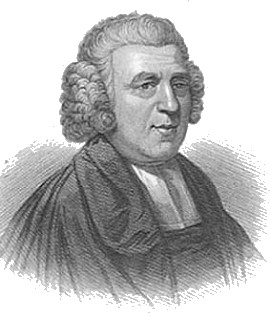
John Newton was born in Wapping, London. He was sent away to school which proved to be an unhappy experience for him. By the age of eleven he was serving on his father’s ship sailing to the Mediterranean. Later he was press ganged onto HMS Harwich eventually being exchanged for a merchant seaman. He resumed life in the maritime trade working on the West African coast buying slaves. For a time he was ‘enslaved’ himself and forced to work on a plantation.
In 1747 he was rescued and returned to England on a ship called the Greyhound. The ‘Greyhound’ traded in gold, ivory, beeswax and dyer’s wood (an ingredient used in the dying industry). In 1748, once again on board the ‘Greyhound’ on its way across the Atlantic from Brazil back to Liverpool, Newton and most of the rest of the crew survived a terrible storm at sea which lasted from March 10 until April 8. During this ordeal he prayed, for the first time since childhood, to be saved. Commentators believe that this ‘re-awakening of his faith’ ultimately led to his evangelism.
The ship sustained severe storm damage over a two week period and was blown further off course towards the north of Ireland. Almost miraculously the storm abated long enough for them to put down anchor in Lough Swilly where they had no choice but to wait for the vessel to be made sea worthy.
Before very long John Newton was to experience yet another brush with death. He was invited by the Lord Mayor of Londonderry to be his guest at a shooting party during which his own fowling piece accidentally discharged destroying his hat and not his head. This second near-death experience convinced Newton that God was watching over him and during the remainder of his time in Londonderry while he waited for the ‘Greyhound’ to be repaired he is said to have prayed twice daily in St Columb’s Cathedral, which may even have inspired him to write one of the most popular hymns in the English language – ‘Amazing Grace’.
This is my personal collection of thoughts and writings, mainly from much smarter people than I, which challenge me in my discipleship walk. Don't rush by these thoughts, but ponder them.