
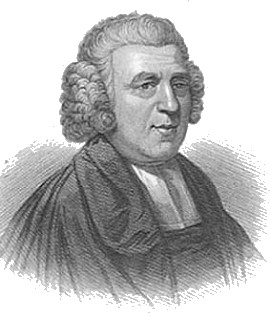
365 days with Newton

11 MARCH (PREACHED 1770)

Keeping a balance

‘And it came to pass about an eight days after these sayings, he took Peter and John and James, and went up into a mountain to pray.’ Luke 9:28
SUGGESTED FURTHER READING: 2 Corinthians 12:1–10

These three disciples were appointed witnesses of his passion. They saw him in his agony, and therefore he first gave them a view of his glory. If their joy was now great, their sorrow after was proportionable. It seems the Lord generally keeps a balance in the experiences of his people. They who have the strongest comforts have the sharpest conflicts; they who have the strongest trials have the most powerful supports. Thus, as in the gathering of the manna, they that have much have nothing over, they that have little have no lack. If he gives great enlargement and consolation, he will send something to keep us humble and low; if he calls to great temptations, he will give cordials that we be not swallowed up and overmuch sorrow.
Perhaps he distinguished these three that by his example he might sanctify and authorize our Christian friendships. If we love the Lord Jesus, we are bound to love all his people and to love them with a pure heart fervently. But with respect to relationships we are not bound to treat them all alike, nor is it possible in the present state of things to do so. A suitableness in temperament, in way of life, and many occasions of connection in the course of his providence, lead us into greater nearness of affection with some than with others. And our practice herein, while we keep within Scripture bounds and do not set up our friends as idols, is unanswerably justified by the conduct our Lord observed himself. Thus he graciously suited himself to our circumstances in all respects.
Let me close with entreating each of you to consider whether you are yet in the number of Christ’s disciples—if not as one of the three, or one of the twelve, yet a sincere follower.

FOR MEDITATION: ‘Blessed be God, even the Father of our Lord Jesus Christ, the Father of mercies, and the God of all comfort; Who comforteth us in all our tribulation, that we may be able to comfort them which are in any trouble, by the comfort wherewith we ourselves are comforted of God. For as the sufferings of Christ abound in us, so our consolation also aboundeth by Christ’ (2 Corinthians 1:3–5).

SERMON SERIES: ON THE TRANSFIGURATION, NO. 1 [4/4]
Streams in the Desert

March 10

“The just shall live by faith.” (Heb. 10:38.)

SEEMINGS and feelings are often substituted for faith. Pleasurable emotions and deep satisfying experiences are part of the Christian life, but they are not all of it. Trials, conflicts, battles and testings lie along the way, and are not to be counted as misfortunes, but rather as part of our necessary discipline.
In all these varying experiences we are to reckon on Christ as dwelling in the heart, regardless of our feelings if we are walking obediently before Him. Here is where many get into trouble; they try to walk by feeling rather than faith.
One of the saints tells us that it seemed as though God had withdrawn Himself from her. His mercy seemed clean gone. For six weeks her desolation lasted, and then the Heavenly Lover seemed to say:
“Catherine, thou hast looked for Me without in the world of sense, but all the while I have been within waiting for thee; meet Me in the inner chamber of thy spirit, for I am there.”
Distinguish between the fact of God’s presence, and the emotion of the fact. It is a happy thing when the soul seems desolate and deserted, if our faith can say, “I see Thee not. I feel Thee not, but Thou art certainly and graciously here, where I am as I am.” Say it again and again: “Thou art here: though the bush does not seem to burn with fire, it does burn. I will take the shoes from off my feet, for the place on which I stand is holy ground.”—London Christian.
Believe God’s word and power more than you believe your own feelings and experiences. Your Rock is Christ, and it is not the Rock which ebbs and flows, but your sea.
—Samuel Rutherford.
Keep your eye steadily fixed on the infinite grandeur of Christ’s finished work and righteousness. Look to Jesus and believe, look to Jesus and live! Nay, more; as you look to him, hoist your sails and buffet manfully the sea of life. Do not remain in the haven of distrust, or sleeping on your shadows in inactive repose, or suffering your frames and feelings to pitch and toss on one another like vessels idly moored in a harbor. The religious life is not a brooding over emotions, grazing the keel of faith in the shallows, or dragging the anchor of hope through the oozy tide mud as if afraid of encountering the healthy breeze. Away! With your canvas spread to the gale, trusting in Him, who rules the raging of the waters. The safety of the tinted bird is to be on the wing. If its haunt be near the ground—if it fly low—it exposes itself to the fowler’s net or snare. If we remain grovelling on the low ground of feeling and emotion, we shall find ourselves entangled in a thousand meshes of doubt and despondency, temptation and unbelief. “But surely in vain the net is spread in the sight of THAT WHICH HATH A WING” (marginal reading Prov. 1:17). Hope thou in God.—J. R. Macduff.

When I cannot enjoy the faith of assurance, I live by the faith of adherence.—Matthew Henry.

Streams in the Desert

March 9

“Look from the top.” (Song of Solomon 4:8.)
CRUSHING weights give the Christian wings. It seems like a contradiction in terms, but it is a blessed truth. David out of some bitter experience cried: “Oh, that I had wings like a dove! Then would I fly away, and be at rest” (Psa. 55:6). But before he finished this meditation he seems to have realized that his wish for wings was a realizable one. For he says, “Cast thy burden upon Jehovah, and he will sustain thee.”
The word “burden” is translated in the Bible margin, “what he (Jehovah) hath given thee.” The saints’ burdens are God-given; they lead him to “wait upon Jehovah,” and when that is done, in the magic of trust, the “burden” is metamorphosed into a pair of wings, and the weighted one “mounts up with wings as eagles.”—Sunday School Times.

One day when walking down the street,
On business bent, while thinking hard
About the “hundred cares” which seemed
Like thunder clouds about to break
In torrents, Self-pity said to me:
“You poor, poor thing, you have too much
To do. Your life is far too hard.
This heavy load will crush you soon.”
A swift response of sympathy
Welled up within. The burning sun
Seemed more intense. The dust and noise
Of puffing motors flying past
With rasping blast of blowing horn
Incensed still more the whining nerves,
The fabled last back-breaking straw
To weary, troubled, fretting mind.
“Ah, yes, ‘twill break and crush my life;
I cannot bear this constant strain
Of endless, aggravating car’s;
They are too great for such as I.”
So thus my heart condoled itself,
“Enjoying misery,” when lo!
A “still small voice” distinctly said,
“’Twas sent to lift you—not to crush.”
I saw at once my great mistake.
My place was not beneath the load
But on the top! God meant it not
That I should carry it. He sent
It here to carry me. Full well
He knew my incapacity
Before the plan was made. He saw
A child of His in need of grace
And power to serve; a puny twig
Requiring sun and rain to grow;
An undeveloped chrysalis;
A weak soul lacking faith in God.
He could not help but see all this
And more. And then, with tender thought
He placed it where it had to grow—
Or die. To lie and cringe beneath
One’s load means death, but life and power
Await all those who dare to rise above.
Our burdens are our wings; on them
We soar to higher realms of grace;
Without them we must roam for aye
On planes of undeveloped faith,
(For faith grows but by exercise
In circumstance impossible).

Oh, paradox of Heaven. The load
We think will crush was sent to lift us
Up to God! Then, soul of mine,
Climb up! for naught can e’er be crushed
Save what is underneath the weight.
How may we climb! By what ascent
Shall we surmount the carping cares
Of life! Within His word is found
The key which opes His secret stairs;
Alone with Christ, secluded there,
We mount our loads, and rest in Him.

—Miss Mary Butterfield.

Streams in the Desert

March 8

“Do as thou hast said, that thy name may be magnified forever.” (1 Chron. 17:23, 24.)

THIS is a most blessed phase of true prayer. Many a time we ask for things which are not absolutely promised. We are not sure therefore until we have persevered for some time whether our petitions are in the line of God’s purpose or no. There are other occasions, and in the life of David this was one, when we are fully persuaded that what we ask is according to God’s will. We feel led to take up and plead some promise from the page of Scripture, under the special impression that it contains a message for us. At such times, in confident faith, we say, “Do as Thou hast said.” There is hardly any position more utterly beautiful, strong, or safe, than to put the finger upon some promise of the Divine word, and claim it. There need be no anguish, or struggle, or wrestling; we simply present the check and ask for cash, produce the promise, and claim its fulfillment; nor can there be any doubt as to the issue. It would give much interest to prayer, if we were more definite. It is far better to claim a few things specifically than a score vaguely.—F. B. Meyer.
Every promise of Scripture is a writing of God, which may be pleaded before Him with this reasonable request: “Do as Thou hast said.” The Creator will not cheat His creature who depends upon His truth; and far more, the Heavenly Father will not break His word to His own child.
“Remember the word unto thy servant, on which thou hast caused me to hope,” is most prevalent pleading. It is a double argument: it is Thy Word. Wilt Thou not keep it? Why hast thou spoken of it, if Thou wilt not make it good. Thou hast caused me to hope in it, wilt Thou disappoint the hope which Thou has Thyself begotten in me?—C. H. Spurgeon.
“Being absolutely certain that whatever promise he is bound by, he is able also to make good.” (Rom. 4:21, Weymouth’s Translation.)
It is the everlasting faithfulness of God that makes a Bible promise “exceeding great and precious.” Human promises are often worthless. Many a broken promise has left a broken heart. But since the world was made, God has never broken a single promise made to one of His trusting children.
Oh, it is sad for a poor Christian to stand at the door of the promise, in the dark night of affliction, afraid to draw the latch, whereas he should then come boldly for shelter as a child into his father’s house.—Gurnal.
Every promise is built upon four pillars: God’s justice and holiness, which will not suffer Him to deceive; His grace or goodness, which will not suffer Him to forget; His truth, which will not suffer Him to change, which makes Him able to accomplish.—Selected.

Streams in the Desert

March 7

“We are troubled on every side.” (2 Cor. 7:5.)

WHY should God have to lead us thus, and allow the pressure to be so hard and constant? Well, in the first place, it shows His all-sufficient strength and grace much better than if we were exempt from pressure and trial. “The treasure is in earthen vessels, that the excellency of the power may be of God, and not of us.”
It makes us more conscious of our dependence upon Him. God is constantly trying to teach us our dependence, and to hold us absolutely in His hand and hanging upon His care.
This was the place where Jesus Himself stood and where He wants us to stand, not with self-constituted strength, but with a hand ever leaning upon His, and a trust that dare not take one step alone. It teaches us trust.
There is no way of learning faith except by trial. It is God’s school of faith, and it is far better for us to learn to trust God than to enjoy life.
The lesson of faith once learned, is an everlasting acquisition and an eternal fortune made; and without trust even riches will leave us poor.—Days of Heaven upon Earth.

“Why must I weep when others sing?
‘To test the deeps of suffering’.
Why must I work while others rest?
‘To spend my strength at God’s request.’
Why must I lose while others gain?
‘To understand defeat’s sharp pain.’
Why must this lot of life be mine
When that which fairer seems is thine?
‘Because God knows what plans for me
Shall blossom in eternity.’ ”

Stephen Boyd Blog

Belfast-born Hollywood and International Star from 1950-1970's Fan Tribute Page

Abundant Joy

Digging Deep Into The Word

Not My Life

The Bible as clear as possible

Seek Grow Love

Growing Throughout the Year

Smoodock's Blog

Question Authority

PleaseGrace

A bit on daily needs and provisions

Three Strands Lutheran Parish

"A cord of three strands is not easily broken." Ecclesiastes 4:12

1love1god.com

Romans 5:8

The Rev. Jimmy Abbott

read, watch, listen

BEARING CHRIST CRUCIFIED AND RISEN

To know Christ and Him crucified

Considering the Bible

Scripture Musings

rolliwrites.wordpress.com/

The Official Home of Rolli - Author, Cartoonist and Songwriter

Pure Glory

The heavens are telling the glory of God; and the firmament proclaims His handiwork. Psalms 19:1

The daily addict

The daily life of an addict in recovery

The Christian Tech-Nerd

-Reviews, Advice & News For All Things Tech and Gadget Related-

Thinking Through Scripture

to help you walk with Jesus in faith, hope, and love.

A disciple's study

This is my personal collection of thoughts and writings, mainly from much smarter people than I, which challenge me in my discipleship walk. Don't rush by these thoughts, but ponder them.

Author Scott Austin Tirrell

Maker of fine handcrafted novels!

In Pursuit of My First Love

Returning to the First Love