Joel 3:14 says, “Multitudes, multitudes, in the valley of decision! For the day of the LORD is near in the valley of decision.” Many evangelists have drawn from this passage to challenge audiences to “make a decision” for Christ. Others view this valley of decision as a time of judgment when the Lord decides the fate of the nations. Which is it? An invitation or a prophecy of doom?
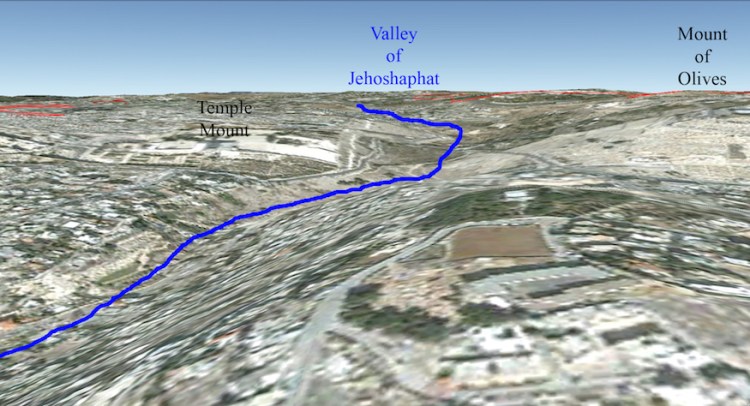
The context of Joel 3 clarifies that this is a time when God judges the earth. Verse 2 says, “I will gather all the nations and bring them down to the Valley of Jehoshaphat. And I will enter into judgment with them there, on behalf of my people and my heritage Israel.” The Valley of Jehoshaphat is the same as the “valley of decision.” Jehoshaphat means “Yahweh judges”; the “decision” being made in the valley is God’s, not the multitudes’. The literal, geographical location of this valley is likely the Kidron Valley on the east side of Jerusalem.
The focus of Joel 3 is on the future Day of the Lord. This time will include a gathering of the nations (verse 2), a judgment on wickedness (verse 13), and astronomical signs (verse 15). Joel’s prophecy of the valley of decision finds its counterpart in Jesus’ Olivet Discourse and the judgment of the sheep and the goats (Matthew 25:31-46).
Immediately following the prophecy of judgment, Joel transitions to a description of the Lord’s millennial reign, a literal 1,000-year time period that follows the tribulation. During the millennium Christ rules as king from Jerusalem. Some interpreters argue the millennium is figurative, yet many passages, including Joel 3:18-21, describe this time in great detail. Further, Revelation 20:1-7 refers to “1,000 years” six times. It seems that God desires us to know that the millennial kingdom is a literal time period.
Ultimately, the “valley of decision” in Joel 3:14 is not about humans choosing whether or not to follow Christ; it is God handing down His decision of judgment at the end of the tribulation. Wickedness will be dealt with decisively, swiftly and justly. Praise the Lord for His promise to make all things right one day and to be “a refuge for his people” (Joel 3:16).
“For behold, in those days and at that time, when I restore the fortunes of Judah and Jerusalem, I will gather all the nations and bring them down to the Valley of Jehoshaphat. And I will enter into judgment with them there, on behalf of my people and my heritage Israel, because they have scattered them among the nations and have divided up my land, and have cast lots for my people, and have traded a boy for a prostitute, and have sold a girl for wine and have drunk it.
“What are you to me, O Tyre and Sidon, and all the regions of Philistia? Are you paying me back for something? If you are paying me back, I will return your payment on your own head swiftly and speedily. For you have taken my silver and my gold, and have carried my rich treasures into your temples. You have sold the people of Judah and Jerusalem to the Greeks in order to remove them far from their own border. Behold, I will stir them up from the place to which you have sold them, and I will return your payment on your own head. I will sell your sons and your daughters into the hand of the people of Judah, and they will sell them to the Sabeans, to a nation far away, for the LORD has spoken.”
Proclaim this among the nations: Consecrate for war; stir up the mighty men. Let all the men of war draw near; let them come up. Beat your plowshares into swords, and your pruning hooks into spears; let the weak say, “I am a warrior.”
Hasten and come, all you surrounding nations, and gather yourselves there. Bring down your warriors, O LORD. Let the nations stir themselves up and come up to the Valley of Jehoshaphat; for there I will sit to judge all the surrounding nations.
Put in the sickle, for the harvest is ripe. Go in, tread, for the winepress is full. The vats overflow, for their evil is great.
Multitudes, multitudes, in the valley of decision! For the day of the LORD is near in the valley of decision. The sun and the moon are darkened, and the stars withdraw their shining.
The LORD roars from Zion, and utters his voice from Jerusalem, and the heavens and the earth quake. But the LORD is a refuge to his people, a stronghold to the people of Israel.
The Glorious Future of Judah
“So you shall know that I am the LORD your God, who dwells in Zion, my holy mountain. And Jerusalem shall be holy, and strangers shall never again pass through it.
“And in that day the mountains shall drip sweet wine, and the hills shall flow with milk, and all the streambeds of Judah shall flow with water; and a fountain shall come forth from the house of the LORD and water the Valley of Shittim.
“Egypt shall become a desolation and Edom a desolate wilderness, for the violence done to the people of Judah, because they have shed innocent blood in their land. But Judah shall be inhabited forever, and Jerusalem to all generations. I will avenge their blood, blood I have not avenged, for the LORD dwells in Zion.”
“Praise Him for His acts of power; praise Him for His surpassing greatness” (Ps. 150:2).
How great a contribution the Psalms make to our lives. In reading them we are led to praise the Lord.
Overview Four psalms of David lift us from a desperate sense of need (Pss. 142–143) to confidence in God as our deliverer (Ps. 144) and then to praise (Ps. 145). The psalter ends (Pss. 146–150) with five beautiful praise psalms, each beginning and ending with the Hebrew shout, Hallelujah! which means “Praise the LORD!”
Understanding the Text Psalm 142: In Desperate Need. The setting is the cave in which David hid from Saul’s pursuing army. Troubled and discouraged, David cried out to God for rescue.
“Before Him I tell my trouble” Ps. 142:1–5. One of the most important lessons we learn from the Book of Psalms is that, like David, you and I can “pour out our complaints” to the Lord. We can tell Him every trouble, share every dark and distressed emotion. When no one else is concerned about us, we have in God One who truly cares. God doesn’t want you or me to clutch our fears or our pain to us. God wants us to share that fear or pain with Him, knowing that He will listen and does care.
“You are my refuge” Ps. 142:5–7. Sharing our fears or pain with the Lord reminds us of who God is. He not only listens, He is able to help! Our enemies may be too strong for us, but they are not too strong for the Lord. Our appeal is directed to the one Being in the universe who is able to help! We come to the Lord with our fears and our pain. We come away in peace, with a renewed sense of hope. At last we can see ahead to a time when “the righteous will gather about me because of Your goodness to me.”
Psalm 143: In Deep Distress. Once again fears drove David to the Lord. Again he was helped. He meditated on God’s past works, and ultimately reached a clear understanding of how he must deal with his trials. (See DEVOTIONAL.)
Psalm 144: My Deliverer! God answered David’s prayers and rescued him from his enemies. Here David celebrated the Lord as his deliverer.
“Praise be to the LORD, my rock” Ps. 144:1–4. Wonder of wonders, God had again stooped to deliver a mere mortal, and David was awed by the fact. Echoing Psalm 8, David cried, “What is man that You care for him?” We sense the joy David felt as he piled image on image, celebrating his loving God as my rock, my fortress, my stronghold, my deliverer, my shield. It is amazing that God should be all this for any human being. It is overwhelming that He should be all this for me!
“Part Your heavens, O LORD, and come down” Ps. 144:5–11. These verses are not so much an appeal for God to act as they are celebration of a deliverance already experienced. In a sense David was reliving the rescue that lifted him from despair to joy.
“Then” Ps. 144:12–15. The outcome of deliverance is peace and prosperity. No wonder David cried, “Blessed are the people whose God is the LORD.” God saves us from all our troubles, and He intends to bless.
Psalm 145: Praise His Name. This is an acrostic psalm: each line begins with a different letter of the Hebrew alphabet. We might name it, “Praising God from A through Z,” as each letter brings to mind a different reason to praise the Lord.
Psalm 146: Praise the God of Jacob. This first of the five Hallelujah psalms that close the psalter focuses our attention on who Israel’s God is, and what He does.
“Praise the LORD, O my soul” Ps. 146:1–4. God is praised as our only real source of help and deliverance.
“The God of Jacob” Ps. 146:5–9. The name is rooted in history: this is the God who bound Himself by covenant oath to be the God of Israel. We celebrate Him, for this God is the Maker of all, faithful forever, sustainer of the oppressed, who frees the prisoner, heals the infirm, loves the righteous, watches over the alien, sustains the helpless, and frustrates the ways of the wicked. All the psalmist knows about this God of Jacob thrills him, and moves him to sing praises!
“The LORD reigns forever” Ps. 146:10. This is the capstone. The One we know and celebrate is Sovereign in this universe. In Him we are safe and secure. Praise the Lord.
Psalm 147: Praise the Sustainer. The Hallelujah Chorus continues with praise to God for maintaining the universe He created, and caring for all who put their trust in His unfailing love.
Psalm 148: Praise Him, All Creation. Nature does more than reveal God’s wisdom and power. All the splendor of Creation joins Israel in exalting God’s name, and thus offers praise.
Psalm 149: Praise Him, All Saints. God’s people, whom He created and whom He crowned with salvation, rejoice in the Lord and offer Him praise.
“In the assembly of the saints” Ps. 149:1–8. God’s people have two callings, each of which are aspects of worship. First, God’s people are called to sing His praises, and rejoice in the One who takes such delight in them (vv. 1–5). Second, God’s people are to take a stand on this earth against evil (vv. 6–9). While in Old Testament times Israel literally went to war against pagan peoples in their land, today we are to be engaged in spiritual warfare, doing all we can to uphold righteousness and do justice in our society.
Psalm 150: Praise the Lord. The final, jubilant psalm in this great Old Testament book pictures a people who gather before the Lord (v. 1) to praise His works and character (v. 2) with every resource they possessed (vv. 3–5), until all living things join in with shouts of joy (v. 6).
DEVOTIONAL What Can I Do? (Ps. 143) No one likes to feel helpless. Almost any situation seems bearable if there is only something, anything, that we can do that might improve it. Despair and depression usually flood in only when we realize that we are helpless, unable to affect our situation, totally at the mercy of our circumstances. I think David felt much like this when he penned Psalm 143. He cried out to God for mercy and relief (v. 1). He realized he had no right to expect God’s help (v. 2). Yet his desperate situation filled him with dismay (vv. 3–4). David recalled what God had done and reaffirmed his trust in the Lord (vv. 5–8). But like you and me, David also seemed to cry out, “What can I do?” The answer is simple and clear. We see it in David’s words, “Show me the way I should go,” and, “Teach me to do Your will” (vv. 8b, 10). We may be helpless to better our situations. But there is still something we can do! Each day, each hour, as we wait for God to deliver us, we can concentrate our attention on doing God’s will for that day, for that hour. What we can always do, no matter how helpless we may be to alter our situations, is to live each moment as servants of the Lord, ready always to respond as His “good Spirit” reveals an opportunity to serve Him. What a sense of relief comes over us as we make David’s discovery. We are not helpless after all. There is something we can do. The most important thing of all. We can do God’s will.
Personal Application When you can’t change your situation, make it your priority simply to do each hour, each day, what God wills.
Quotable “God is looking for people through whom He can bless the world. Say definitely: Here am I; I will give my life to this calling. Cultivate your faith in the simple truth: God hears prayer; God will do what I ask. “Give yourself to others as completely as you give yourself to God. Open your eyes to sense the needs of a perishing world. Take up your position in Christ and in the power which His name and life and Spirit give you. And go on practicing definite prayer and intercession.”—Andrew Murray
“I praise You because I am fearfully and wonderfully made; Your works are wonderful, I know that full well” (Ps. 139:14).
Praise and worship grow out of God’s revelation of Himself to us. The more we know of what God has done and is doing, the more we respond to Him in worship.
Overview The many and varied works of God for His people stimulate praise. The Lord is praised for works on behalf of Israel (Pss. 135–136). In contrast, the Babylonian captives were unable to sing the songs of Zion (Ps. 137). David praised God for the Lord’s work in shaping his life (Pss. 138–139) and in preserving him from enemies (Pss. 140–141).
Understanding the Text Psalm 135: God Has Chosen Jacob. That choice, expressed in history by the Lord’s defeat of Israel’s enemies, moved the psalmist to call God’s people to praise.
“Israel . . . His treasured possession” Ps. 135:1–7. The psalmist began by expressing his wonder that God should have chosen the Hebrew people to be His own. As the entire Old Testament testifies, this was a sovereign choice, not based on Israel’s merits. God, “who does whatever pleases Him,” selected Israel simply because He wanted to. How good to know that God’s choice of you and me is also an expression of His free will. God loves us because He wants to, not because we deserve to be loved.
“He struck down the firstborn of Egypt” Ps. 135:8–21. God’s love counts. He, unlike the foolish pagan’s idols, is able to act for us in the real world. No wonder Israel was moved to praise! God wrested Israel from slavery, struck down many nations, and gave His people their land as an inheritance.
Psalm 136: His Love Endures. A mere six syllables in Hebrew compose the joyful response of the people as a worship leader chanted praise to God for His many wonderful works. We can capture that response in six English words: “for His love has no end!”
Psalm 137: No Song to Sing. In Babylon, far from the inheritance promised by God, Israel was unable to sing songs of praise.
The preceding and following psalms show us that praise grows out of God’s self-revelation. As we know Him through His works, our hearts respond. In Babylon, far from their ancient homeland, the Jewish people felt crushed and isolated from God. Only when God acted again, to crush their oppressors and restore them to the Holy Land, would songs of joy again spring from their lips. The psalm reminds us it is only when we see God at work, in history and in our present lives, that we know real joy. Jesus put it this way: “Ask and you will receive, and your joy will be complete” (John 16:24). Christ did not imply that receiving the thing we pray for will bring joy. His point was that in the answer to prayer we will sense God at work, and this—God active in our lives-gives us joy.
Psalm 138: His Purpose for Me. Each believer is also a work of God’s hands, shaped for a purpose. We find joy, and are moved to worship as we trust Him to work in and through us.
“Exalted above all things” Ps. 138:1–3. David called us to focus thoughts of God on His “name” and His “Word.” When we do, we learn to trust His qualities of love and faithfulness.
“When they hear” Ps. 138:4–5. The word uttered in the name of the Lord should stimulate even the kings of the earth to praise.
“You preserve my life” Ps. 138:6–8. David had a personal reason for praise. He had experienced God’s love and faithfulness as the Lord preserved him in many troubles. What David understood, and we need to appreciate, is that each of us is important to God. His love has led Him to make our lives meaningful by linking it to His eternal plan. We may not have a large part. We may not even know now what His purpose in us is. Yet God does have a purpose to fulfill in your life and mine. To Him, we do count! We can say with David, “The LORD will fulfill His purpose for me; Your love, O LORD, endures forever—do not abandon the works of Your hands.”
Psalm 139: You Know Me. In one of the most significant of his psalms, David probed the nature of his relationship with God, and traced that relationship back to the Lord’s creation of his “inmost being.” (See DEVOTIONAL.)
“You know me” Ps. 139:1–12. David was untroubled by the paradox of a transcendent God who is also imminent. He acknowledged God as One who fills the entire universe, yet saw the Lord as constantly, pervasively present with His servants. God was near, observing every act of David, conscious of his every thought. God is transcendent, far above the highest heaven. Yet God is also totally present in the saint’s here and now, giving each of us His undivided attention.
“You created my inmost being” Ps. 139:13–16. David extended his wonder at God’s concern for the individual to the past and the future. God has been with us, superintending our development from the womb. Furthermore God’s care reaches on into the future: to “all the days ordained for me,” which were written in God’s book before even one of our days came to be. How clearly this psalm teaches the significance of individual life: a significance underlined by God’s careful attention to the individual from conception, through his fetal stage, into his childhood and beyond, encompassing every day of the individual’s existence. God knows, even if many today deny, that life begins in the womb and extends on into eternity. How precious you are to God! And how precious the unborn.
“How precious to me are Your thoughts, O God” Ps. 139:17–24. David responded to the love he sensed in God’s care with a desire to please the Lord. He wanted to understand the Lord’s thoughts, to hate those who hated God, and to be cleansed of “any offensive way.” God does know us, even when we try to hide from Him. And when we consciously open our hearts, and become totally honest with God and ourselves, He tests our hearts, cleansing us from “offensive” ways.
Psalm 140: Justice for the Poor. David called on God to rescue him, sure that among His works is protecting the believer from men of violence, and securing justice for the poor.
Psalm 141: My Refuge. David sought help from God, first to live a righteous life, and then to be delivered from evildoers he expected God to judge.
DEVOTIONAL Darkness As Light (Ps. 139) I heard the story many years ago from a mom who used preschool lessons that I wrote. Her little girl came into the house, complaining, “I wish he’d leave me alone.” Mom went outside, but found no one there. A little later the three-year-old returned. “I wish he’d leave me alone.” Again Mom looked, but no one was there. When it happened a third time, Mom sat down with her daughter and asked: “Who?” The answer was: Jesus! The three-year-old’s Sunday School lesson was “Jesus Always Sees Me.” The little girl had wanted to pick some forbidden flowers, and wished that Jesus would leave her alone so she could do it without being seen! Sometimes we feel a little like that little girl. The idea that God is with us constantly, observing every act, aware of every thought, seems burdensome. David, however, had a different perspective. We can never hide from God, for even darkness is light to the Lord. But David did not want to be hidden! The fact is that life itself is darkness to us! Only a God to whom darkness is as light can guide us safely from conception to eternity. Even more, David realized that God is bending close to express His love, not to catch us in some sinful act. He stays close to guard us, and to guide us into His best. When we sense Him near and realize that what we feel is love we, with David, will invite Him, “Search me, O God, and know my heart; test me and know my anxious thoughts. See if there is any offensive way in me, and lead me in the way everlasting.”
Personal Application God knows us perfectly and loves us completely. We have no need to hide from Him.
Quotable “In two ways the presence of God is an antidote against sin: first, because God sees us, and, secondly, because we see God.”—Ignatius of Loyola
“I rejoiced with those who said to me, ’Let us go to the house of the LORD.’ Our feet are standing in your gates, O Jerusalem” (Ps. 122:1–2).
How do we feel when Sunday comes, and we approach the church where we worship? This group of psalms reminds us that worship is to be a joyful occasion, rich in meaning for the believer.
Jerusalem lies high in the mountains of central Palestine. From the time of David and Solomon, represented in this sketch, Jerusalem was unique—a site God chose through David as the one site on earth where a temple might be built, and sacrifices offered to the Lord.
Overview These 15 “songs of ascents,” on a variety of themes, were probably chanted by Hebrew pilgrims as they approached Jerusalem to attend one of the Old Testament’s annual worship festivals.
Understanding the Text Psalm 120: The Homesick Soul. The first psalm of ascents pictures a burdened believer, far from his spiritual homeland. This land of strife is not his home: his homeland is a land of peace (shalom: well-being).
“I call on the LORD” Ps. 120:1–7. At stated times during the year each Hebrew was called to turn in his heart, if not possible to return physically, to Jerusalem, to join the believing community in worship at the temple of the Lord. This psalm pictures a person living among the ungodly, who realized afresh at this time of year that he was a man of peace, who lived among those who were for war. How important for us to return to our roots, and with the community of faith look to and call on the Lord.
Psalm 121: Looking to God. There is no help in the hills on which the pagans worship. Our help comes from the Lord.
“The LORD watches over you” Ps. 121:5. What can we expect from the God who watches over us at all times? Simply that He will “keep you from all harm—He will watch over your life.”
Psalm 122: Joy in Jerusalem. Arrival at Jerusalem, where God’s people worshiped, was a cause of celebration.
Psalm 123: Dependence on God. God’s people look to Him for mercy as a slave, dependent on another’s kindness, looks expectantly to his or her master.
“Have mercy on us, O LORD” Ps. 123:1–4. Mercy is a much-admired quality in the Old Testament. It is compassion and concern for a helpless person’s plight, which finds expression in reaching out with help. The person who needs mercy is completely dependent on the willingness of another to help. How wonderful that as we depend on God, He does reach out to help us.
Psalm 124: God, Our Help. Only because God is on Israel’s side has this people survived. So all Israel praises the Maker of heaven and earth, who has proven to be His people’s help.
“If the LORD had not been on our side” Ps. 124:1–8. Modern nations have claimed to have God on their side. In World War I the belt buckles of German soldiers proclaimed, “Gott Mit Uns,” and U.S. currency announces, “In God We Trust.” Yet only Israel had a valid basis for making this claim, for God’s covenant promises were made to this people alone, not to modern nations. Even then, God was with His people to deliver them only when they were faithful to their own covenant responsibilities. You and I as individuals do experience God’s grace. And we can determine to be faithful to the God who has been so good to us.
Psalm 125: A Song of Trust. God does good to those who are good. We can trust in Him, for He alone can never be moved.
Psalm 126: Great Things! Israel’s restoration to her homeland after the Babylonian Captivity is just one of the “great things” the Lord had done for His chosen people.
“Those who sow in tears will reap with songs of joy” Ps. 126:1–6. Looking back, the psalmist could see that Israel’s Captivity was a prelude to blessing. As you and I look back on the difficult times in our lives, we too will be able to sense the good hand of God at work.
Psalm 127: Our Heritage. The children God gives us are our “house,” a heritage from the Lord who does not build houses but families.
“Sons are a heritage from the LORD” Ps. 127:1–5. The attitude of the Jewish people toward children is best expressed in this simple psalm which views them as a gift from God, and suggests that “the more, the merrier!”
Psalm 128: Fear of the Lord. The blessings of reverence toward God are celebrated here. We rejoice in the Lord. And we rejoice in His good gifts to us.
“May the LORD bless you” Ps. 128:1–6. Fear of the Lord, that Old Testament respect for God that motivates obedience, is the path of blessing for all of us. In most cases the blessing will be obvious: long life, prosperity, a large and happy family. These are the things that the Jews of biblical times wished for one another as they gathered for worship. Peace and prosperity. Not all of us who walk in God’s way have this experience on earth. But every one of us who knows and serves the Lord is assured peace and prosperity in those “days of your life” which stretch on and on forever in eternity.
Psalm 129: Peace and Prosperity. Against the background of past troubles, the blessings of peace and prosperity seem doubly important.
Psalm 130: Redemption’s Song. The man who stands amazed at God’s willingness to forgive understands both his own sinfulness, and the extent of God’s “unfailing love” and “full redemption.” (See DEVOTIONAL.)
Psalm 131: Childlike Faith. David pictured faith as a young child, nestling against its mother, and contrasted this attitude with an arrogance which challenged God’s Word.
Psalm 132: God’s Covenant Oath. God’s promise to David assured Israel of her destiny.
“The LORD swore an oath” Ps. 132:1–13. Jerusalem, the city of David, was ruled by an unbroken line of his Descendants. And one of his Descendants would yet be placed on Judah’s throne, there to rule “forever and ever.” In addition, God had chosen Zion as the location for His temple. So Israel’s future was secure. God had said:
“This is My resting place forever and ever; here I will sit enthroned, for I have desired it— I will bless her with abundant provisions; her poor will I satisfy with food. I will clothe her priests with salvation, and her saints will ever sing for joy” (vv. 13–16).
You and I too face a future that is totally secure. We can celebrate, for in Christ God’s oath to David was fulfilled, and a new promise made to every person who puts his or her trust in the Lord.
Psalm 133: In Praise of Unity. Worship brings God’s people together as a family. The oil “poured on the head, running down on the beard,” speaks of celebration and happiness. We too find joy when we experience our unity with brothers and sisters in the family of God.
Psalm 134: In Praise of Ministry. What a privilege and joy to be servants of the Lord.
DEVOTIONAL “What Do You Mean, Nineteenth?” (Ps. 130) Donald Grey Barnhouse used to picture a believer, burdened with a sense of guilt, appealing to God for forgiveness. The believer was ashamed, for he knew that he had committed the same sin many times before. “O Lord,” he begged, “please forgive me again. I know I don’t deserve it, as this is the nineteenth time I’ve committed this sin this month. But please, Lord, forgive me this nineteenth time.” And, Dr. Barnhouse would say, the Lord looked up in surprise. “What do you mean, nineteenth?” The point this great old expositor of God’s Word was making is stated clearly in Psalm 130:3–4. “If You, O LORD, kept a record of sins, O LORD, who could stand? But with You there is forgiveness.” God keeps no record of our sins! When we confess, He forgives, and then our sins are gone. What a blessing! Our past no longer is a weight we must carry with us always. Our past is gone, and we can look ahead with renewed hope. Through forgiveness we have been cleansed! Tomorrow will be different, and through Christ we will win victory over sins that in the past meant defeat.
Personal Application Don’t let a sense of shame keep you from enjoying God’s forgiveness.
Quotable Mother to Son Well, son, I’ll tell you: Life for me ain’t been no crystal stair. It’s had tacks in it, And splinters, And boards torn up, And places with no carpet on the floor— Bare. But all the time I’se been a-climbin’ on, And reachin’ landin’s, And turnin’ corners, And sometimes goin’ in the dark Where there ain’t been no light. So boy, don’t you turn back. Don’t you set down on the steps ’Cause you finds it’s kinder hard. Don’t you fall now— For I’se still goin’, honey, I’se still climbin’, And life for me ain’t been no crystal stair. -Langston Hughes
This is my personal collection of thoughts and writings, mainly from much smarter people than I, which challenge me in my discipleship walk. Don't rush by these thoughts, but ponder them.


 Milo
Milo 