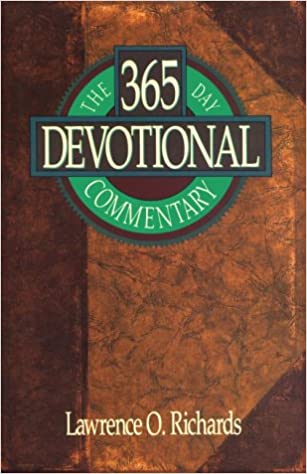
The 365 Day Devotional Commentary

NOVEMBER 3

Reading 307

GOD’S WORKMANSHIP Ephesians 2

“Like the rest, we were by nature objects of wrath. But because of His great love for us, God, who is rich in mercy, made us alive with Christ” (Eph. 2:3–5).Considering what God had to work with, He’s done an amazing job!

Overview

God selected sinful, spiritually dead human beings as materials for His church (2:1–3). He gave us life and called us to good works, that His grace might be displayed (vv. 4–10). United now, Jew and Gentile form one building, with Christ the Cornerstone (vv. 11–22).

Understanding the Text

“Dead in your transgressions and sins” Eph. 2:1–3. “Death” is one of the most awesome and complex of biblical concepts. We understand biological death, and to a certain extent spiritual death is modeled on it. As the dead body cannot sense or respond to the material world, the dead spirit cannot sense or respond to God. But spiritual death moves beyond this to imply corruption. As the physical body decays, so the spiritually dead become infested with all sorts of corruption. The spiritually dead “followed the ways of this world and of the ruler of the kingdom of the air [Satan].” The rotten flesh of the spiritually dead gasps and heaves in the grip of “the cravings of our sinful nature,” whose desires and thoughts the lost blindly follow. Paul’s graphic portrait is horrible, and we may well draw back. But Paul wanted us to understand that this is the raw material from which God constructs His church! This mass of corruption is what God intends to use to display His glory and the beauty of His holiness. It’s not nice. But it is important for us to be totally honest with ourselves and with God. Paul drew this portrait, and he said, “This was you.” He went on. “All of us also lived among them at one time, gratifying the cravings of our sinful nature.” Thank God this is what we were, not what we are! And thank God that He saw fit to make me His own anyway. I once worked with a man, not a Christian, who had chosen to marry a woman who had been a prostitute. I remember one of my coworkers telling me, “She’d do anything for Jim. He always treats her like a lady.” We Christians are not to deny our past. We’re to remember, and to realize that in spite of what we were, God has loved us and made us His own. And He always treats us “like a lady.” What a motivation to do anything for Him! “Because of His great love for us” Eph. 2:4–7. The old song rightly says, “I’m not what I wanta’ be, I’m not what I will be, but thank God I’m not what I was.” Paul has reminded us of what we were. Now he tells us what we are, and will be. What we are is persons who have been given the gift of life. He has “made us alive with Christ.” The Gospel message brought us to life, raised us up, and even seated us with Him in the heavenly realms! This last image is one of power. God, seated on heaven’s throne, is Sovereign over all. In Christ we are not only alive, but conquerors. Never forget who you were. But never imagine you are still the same old man or woman. Addiction, depression, depravity, despair, low self-esteem, inconsistency, lack of self-discipline—whatever troubled you, was an expression of the old life that had established a grip on your personality. Now you have been raised with Christ to a vital, new life capable of breaking out of any bondage. Don’t look back. Look ahead, and realize that God has destined you to display “the incomparable riches of His grace.” “By grace you have been saved, through faith—and this not from yourselves, it is the gift of God” Eph. 2:8–9. Many debate whether the gift of God here is the faith, the salvation, or the grace. In a sense, it makes no difference. Paul simply wants us to understand that our life in Christ is a miracle. We didn’t earn it; God gave it. The TV last night reported on “sweat equity,” a new approach to home ownership. People who have no money for a down payment on a new home can contribute labor, while the bank or government finances materials. The work they put in on building their own homes is their “sweat equity.” Well, verses 8–9 state that you and I don’t even have “sweat equity” in our salvation. We had no cash for the down payment. And there was not a single thing we could do to contribute to the work. God did it all, so that for all eternity you and I will stand as trophies of His grace, saved through no merit of our own. “We are God’s workmanship, created in Christ Jesus to do good works” Eph. 2:10. Good works can’t contribute to our salvation. But good works are an outcome of salvation. We have been given life to glorify God. And one way we glorify God is by performing good works. What are “good works”? The Greek word here is agathois, which means “useful, helpful.” God has saved us and set us on a path filled with opportunities to be helpful to others, and useful in accomplishing His own purposes. Again we sense the contrast between what we were, and what we are. Corrupted by sin, we could do nothing for God, for ourselves, or for others. Made alive by God in Christ, we are different. And we make a difference! Never put yourself down. God has prepared useful works for you to do. “In Christ Jesus you who were once far away” Eph. 2:11–13. Paul directed these remarks to Gentiles, who were isolated from the promises and covenants given to Israel. Christ, however, has changed their situations as well as changed them! In Christ God brings believers to Himself, and to each other. The image of a living temple helps us here. A building is a construction: formed by fitting different kinds of material together. The cement foundation is laid, a wood frame is put up, plywood sheeting and plaster board are added. God’s church is also a construction, and this too requires that different kinds of material be fitted together. What God has done in Christ is to draw all believers to Himself, and thus draw us into intimate relationship with each other as well. If you or I isolate ourselves from any of God’s other building materials, some beautiful aspect of His living temple may be marred. “He put to death their hostility” Eph. 2:14–18. In New Testament times the Old Testament Law was a “barrier” between Gentile and Jew. And that barrier did create hostility: anti-Semitism led to frequent riots in ancient cities, and ancient Jews did look with contempt on Gentile neighbors. Then Jesus died, and made Law irrelevant. Jew and Gentile alike approached God by faith, and through faith each had direct access to God the Father. Suddenly it became clear that the church is one, and that out of the two hostile groups God formed “one new man” which was called to live at peace. How we need to learn that lesson today. Whatever there may be in any society that creates barriers, and arouses hostility, is irrelevant now. Blackness and whiteness are irrelevant now. Each approach God through faith in Christ, and from the two God is at work forming His “one new man.” Think of any groups who have inherited a tradition of hostility, and the Christ of the Gospel cries, “Peace.” Christ has brought you near to God through faith, and in bringing you near God He has brought you near each other. Let’s realize what God is doing in His church. And let’s make peace. “In Him the whole building is joined together and rises to become a holy temple in the Lord” Eph. 2:19–22. Whatever may divide us, Christ brings us together. Whatever fears or suspicions arouse hostility, Christ brings peace. And we must let Him. For the “holy temple in the Lord” that Jesus is building today rises only as we, His people, are “joined together.” Don’t let the partisan divide you. Don’t let the strident preacher of doctrinal distinctives isolate you from brothers and sisters whose faith is one with you, but whose beliefs may differ. And don’t let race, or age, or social status, or education, or wealth or poverty, drive you apart. Reach out for others, and hand-in-hand be built, “together to become a dwelling in which God lives by His Spirit.”

DEVOTIONAL

Were, Are, and Will Be(Eph. 2:11–22)

Christianity is a faith of contrasts. Often the contrast we emphasize lies between past and future. We were lost sinners. But we will be raised in Christ’s own image. The “were” and “will be” of Christianity are exciting. But Ephesians 2 reminds us that there should also be a contrast right now, between what we “were” and what we “are.” Being a follower of Jesus is to make a dramatic difference in our present. What we “are” is to stand out as clearly as what we “will be” against what we “were”! Here in Ephesians the “were” and “are” contrast is seen in our relationships. Human beings by nature are separate from Christ and, as strangers and aliens, are isolated from His people. In fact, sinful human beings find all sorts of reasons to separate themselves from others. We turn away from others because of race, of looks, of clothing, of customs, of wealth, of language. And we look down on others, supposing ourselves better than they. This is a “were” dimension of human beings separated from Jesus Christ. How different those who know Jesus are to be. The cross has reconciled us to God, and brought us near to Him. And, in Christ, God has brought us near to all humanity, and especially those of the household of faith. We “are” one now with all believers. One in the Spirit. And by God’s grace, one in love, one in caring, one in honoring and respecting each other. We “are” being “built together to become a dwelling in which God lives by His Spirit.” When you and I ignore those things that divide mere human beings, and because of Jesus reach out to others who are different from us, the contrast of what we “are” with what we “were” gives vivid witness to our relationship with Jesus Christ.

Personal Application

Real love for those who are different is evidence of God’s work within.

Quotable

“And they’ll know we are Christians by our love, by our love. Yes, they’ll know we are Christians by our love.”—Peter Scholtes

The 365 Day Devotional Commentary

Ephesians

NOVEMBER 2

Reading 306

THE TRUE CHURCH Ephesians 1

“You also were included in Christ when you heard the Word of truth, the Gospel of your salvation. Having believed, you were marked in Him with a seal, the promised Holy Spirit” (Eph. 1:13).Christ’s church is people, not buildings.

Background

Ephesus.

When Paul wrote his letter the harbor of the aging city of Ephesus was nearly filled with silt, and its boast as the “landing place” of Asia was empty indeed. Yet Ephesus had one claim to fame. It was the site of the magnificent temple of Artemis (Diana), four times the size of the Parthenon of Athens, and held in reverence throughout “Asia and the world” (Acts 19:27). Tourists and worshipers flocked to Ephesus to visit the splendid shrine, which also served as a bank in which cities and kings deposited funds—and from which they drew loans. Innkeepers, restauranteers, and tradesmen depended on the tourist trade that made pagan religion such an economic success in Ephesus. So to the believers in this city founded on institutional religion, Paul wrote a letter conveying a vastly different vision. The church of Christ is a body, not a building. It is constructed of living, breathing human beings, not marble. And its vitality is seen not in the cash it contributes to a city’s economy, but in the love and purity that shine through its members’ lives. In reading Ephesians we too are called to catch Paul’s vision of Christ’s church. Beside that vision even our greatest cathedrals fade to insignificance, as we realize that the building which thrills our God is the reconstruction of our lives to bear the image of His Son. TEMPLE OF ARTEMIS

Overview

Paul greeted the saints (1:1–2) and then reviewed the role in their salvation of the Father (vv. 3–6), Son (vv. 7–13a), and Holy Spirit (vv. 13b-14). Paul praised God (vv. 15–16) and prayed for the Ephesians (vv. 17–19), as he exalted Jesus, the Head of His church (vv. 20–23).

Understanding the Text

“To the saints in Ephesus” Eph. 1:1–2. The word “saints” means “holy ones” or “set apart ones.” In the Old Testament, the Jerusalem temple and all utensils used in the service of God were holy, set apart to the Lord. Paul commonly greeted believers as saints. Here there is even more meaning, for Paul was about to display the great truth that today we ourselves are temple and utensil in one. God doesn’t look for beauty in church buildings. He looks for beauty in church members. “Praise be to the God and Father of our Lord” Eph. 1:3–6. The Ephesians looked back in history and spoke of a meteorite that fell from the heavens, and was shaped into the form of the idol that stood in their temple. Paul looked back beyond history, into the very origins of the universe. There he saw God the Father, the Architect of our salvation, drawing up plans for the living church! Like any architect would, the Father specified the materials that would go into His construction: He “chose us in Him before the Creation of the world.” God also specified how the materials would be worked: He chose us “to be holy and blameless in His sight,” to be “adopted as His sons.” The beauty to be displayed in our worked and polished lives will reflect through eternity “to the praise of His glorious grace” (see DEVOTIONAL). People wondered at the great temple that graced Ephesus: at its design, at its pillars of marble, at its columns carved in the Doric style. Paul wants us to wonder at the church which God the Father Himself designed, carefully specifying its materials and defining just how they would be shaped to glorify Him. Always remember, you and I have been chosen by God to display His grace and wisdom. Let’s gladly dedicate our lives to exhibit the beauty of holiness. “In Him we have redemption through His blood” Eph. 1:7–13a. If God the Father was the Architect of our salvation, Christ was the Builder. He was the One who slipped into history as a Babe, grew up in dusty Palestine, taught amid noisy crowds, and bled on Calvary’s cross. In that great act you and I have “redemption through His blood, the forgiveness of sins, in accordance with the riches of God’s grace.” That awful work complete, Christ today has a right to stand back and look at the building He has erected. And He has the right to expect us to be to “the praise of His glory.” We are a costly building indeed, and Jesus has a right to expect us to be beautiful. “Marked in Him with a seal, the promised Holy Spirit” Eph. 1:13b-14. The Holy Spirit has moved into the building that the Father planned and the Son built. In New Testament times a “seal” was often placed on goods to be shipped or on a completed product, as a mark of ownership. That which bore the seal was protected, its future guaranteed. The owner would take full possession in his own time. You and I, Christ’s living church, have in the Holy Spirit the mark of divine ownership. The Spirit is the sure guarantee of our future in God. And the Spirit in us enables us to live, today, to “the praise of His glory.” “I keep asking that the God of our Lord Jesus Christ” Eph. 1:15–19a. Paul praised God for the Ephesians, living stones in the church built by God. And he offered a very specific prayer. One way to build our own prayer lives, and to direct our intercession for others, is to model our prayers on those found in Scripture. Here we see a prayer Paul offered with the intention of strengthening Christ’s church. What did Paul ask? That we might know God better (v. 17). That we might look beyond appearances, to see the church as God does—a people transformed to display His glory, unspeakably precious to Him (v. 18). That we might sense and experience the working of “His incomparably great power for us who believe” (v. 19a). I suppose it’s all right to pray for that addition to a new Sunday School wing. Or the funds to go on the radio. But if we want our church to truly be the church, the things Paul prayed for here are vastly more important. “Far above all rule and authority” Eph. 1:19b-23. If we measure the church by the members of the body seen here on earth, we might well be discouraged. We’re weak. We’re undisciplined. We squint desperately with our spiritual eyes, and our spiritual ears are dull. But the church isn’t to be measured by its members. We’re to measure by the Head. We’re to see Christ, exalted above every “rule and authority, power and dominion.” We’re to acknowledge Him as our living Head, respond to His guidance. And in His name, conquer.

DEVOTIONAL

Predestination and Praise(Eph. 1:3–14)

Twin themes are repeated three times in these 12 verses, which tell the story of the construction of God’s living temple, the church. The first of these themes is predestination: the idea that God marked out ahead of time those who would serve as living stones in His glorious temple. Paul said the Father “chose us in Him before the Creation” (v. 4). That “in love He predestined us to be adopted as His sons” (vv. 4–5). And that “in Him [Christ] we were also chosen, having been predestined according to the plan of Him who works out everything in conformity with the purpose of His will” (v. 11). Some resent this emphasis, and some fear it. But if we look at it in the framework of Paul’s imagery, as he pictured God the great Architect planning construction of the church and specifying materials, there’s nothing sinister here. And there is nothing that contradicts the broadest application of the Gospel. As one preacher succinctly put it, ” ’Whosoever will’ is elect. ’Whosoever won’t,’ ain’t.” What’s usually lost in the debate over predestination is the other theme that is restated three times here. God the Father planned our adoption as sons “to the praise of His glorious grace” (v. 6). He drew us to Christ that we “might be for the praise of His glory” (v. 12). And His Spirit marks us as God’s own possession—“to the praise of His glory” (v. 14). You and I can’t resolve the long debate over predestination. We probably shouldn’t even try. But as living stones in a building that God intends to reflect His beauty, we can make sure that we live “to the praise of His glory.” I’m satisfied to let God resolve the paradox of predestination and free will. All I’m really concerned about is, is God satisfied with me?

Personal Application

Glorifying God beats debating predestination any day!

Quotable

“The church of Christ is not an institution; it is a new life with Christ and in Christ, guided by the Holy Spirit.”—Sergius Bulgakov

The 365 Day Devotional Commentary

Ephesians

INTRODUCTION

Paul’s letter to the Ephesians was written during his two-year imprisonment in Rome, about A.D. 61. It shares Paul’s vision of a Christian community united by love and a common purpose under the headship of Christ. Each believer, linked to Jesus by faith, is linked to every other believer as cells in a living organism. By living together in love, the whole body and its individual members grow to spiritual maturity. This is both one of the most theological and most practical of Paul’s letters. It exalts Jesus as Head of the living church, and it exhorts each of us to “live a life of love” in all our personal relationships. Ephesians also includes a number of moving prayers, and passages which many view as elements in the liturgy of the early church.

OUTLINE OF CONTENTS

I.God’s Living ChurchEph. 1–2
II.The Church as Body and FamilyEph. 3:1–4:16
III.The Christian’s Life of LoveEph. 4:17–6:24

The 365 Day Devotional Commentary

NOVEMBER 1

Reading 305

CHRISTIAN FREEDOM Galatians 5–6

“It is for freedom that Christ has set us free. Stand firm, then, and do not let yourselves be burdened again by a yoke of slavery” (Gal. 5:1).The Christian is freed from the Law in order to become righteous through Christ.

Overview

Law and grace are conflicting principles (5:1–12). Christians are freed from the Law in order to live a life of love, led by God’s transforming Spirit (vv. 13–25). We must be committed to doing good (6:1–10), as God’s new creations (vv. 11–18).

Understanding the Text

“It is for freedom that Christ has set us free” Gal. 5:1. The Judaizers argued that by rejecting Mosaic Law, Paul rejected righteousness. And this could not be of God! Casting off the Law must lead to licentiousness: man uncaged would have no reason not to sin! Galatians 5 and 6 give Paul’s response. There are two ways to handle the beast in man. The approach of Law was to cage the beast, though it eagerly tried to break out. The approach of grace is to change the beast! Removing the bars is safe if the man’s nature can be transformed. This, Paul tells us, is exactly what God has done! Through Christ God has given us a new nature that can be controlled by the Spirit of God. As we yield to the Spirit, we live righteous lives and we experience a gradual transformation. Christian freedom is no license to live according to our sinful nature. Christian freedom is stepping out beyond the bars, to live a life of love in the Holy Spirit’s power. So freedom from Mosaic Law does not imply a retreat from righteousness. Through grace God has done what Law was never able to do. He has changed us within, and by making us righteous He enables us to live good and holy lives. Don’t be afraid of freedom. Trust Jesus, respond to the Holy Spirit, and use your freedom to live a life of love. “Christ will be of no value to you at all” Gal. 5:2–6. Paul was looking here at the Christian life, not at salvation. If any Christian turns to legalism, represented here by circumcision, and struggles to live a good life by self-effort, his union with Jesus “will be of no value.” Paul made his position very clear by going on. The Galatians who decided to follow the Judaizers and were circumcised alienated themselves from Christ. They fell “away from grace.” What do these frightening verses mean? It’s as if a man with a power lawnmower decided to push the mower back and forth over his yard without ever starting it. He would work harder at mowing than if the motor was on, and would get absolutely nothing done! Paul was saying that when we rely on self-effort, guided by Law, to live the Christian life, Christ, though present within us, is “turned off.” We work so hard. And we get nothing done at all! Don’t fall away from grace. Fall back on it! Rely completely on Jesus, for “the only thing that counts is faith expressing itself through love.” “Rather, serve one another in love” Gal. 5:12–15. We Christians truly are free. Free to indulge the sinful nature. Free to serve one another in love. Each choice has consequences, of course. But this does not disguise the stunning fact that God now stands back and says, “You choose.” Maybe before, you and I had excuses. We blamed our parents, our poverty, our bad luck, or our temptations for our failures. When Christ made us free, however, all those things became irrelevant. Never mind the poor self-image. Never mind your weaknesses. All those things are in the past. In Christ you and I can choose to live a life of love! “Live by the Spirit, and you will not gratify the desires of the sinful nature” Gal. 5:16–18. The reason that we are truly free isn’t that our past has been changed, or our present feelings have changed. We may still feel inadequate, unsure, hesitant, afraid. We are free because God has given us His Holy Spirit. The Spirit of God within enables us. Freedom doesn’t mean life without conflict. It does mean the possibility of life without defeat! Our weaknesses need not drag us down, our past no longer cripples us. The Holy Spirit is on our side in the war against the desires of our sinful nature. We no longer look to Law, and struggle. We look to the Holy Spirit, trust in Him, and do what is right. “Those who live like this will not inherit the kingdom of God” Gal. 5:19–21. Paul listed activities that characterized man’s sinful nature. Those marked by them are, if we paraphrase, “on the road to hell.” There’s an implied warning to Christians here. In Colossians 1:13 Paul says that believers have been rescued from the kingdom of Satan, and transferred to the kingdom of the Son He loves. We believers have already inherited the kingdom. We live and breathe its richly scented air, and in our spirit we walk with the angels as we talk with God. But never suppose that believers who choose to gratify the desires of the sinful nature will possess this inheritance now! We really can choose between living by the sinful nature and by the Spirit. But we can’t choose the consequences. Those are fixed. And the consequence of the wrong choice is a present life choked with petty miseries. “The fruit of the Spirit” Gal. 5:22–24. We can’t choose the consequences that follow our decision to serve one another in love either. God has already chosen them. What if we make this choice, and live in the power of the Spirit? Then God fills us to overflowing with love, joy, peace, patience, kindness, goodness, faithfulness, gentleness, and self-control. Have you ever noticed that along the banks of a stream the vegetation is always abundant and luxurious? This is what the Bible says about us. As the Holy Spirit flows freely in our lives, a rich and beautiful character grows. We are filled with love, with joy, with peace. In every relationship we exhibit that patience, kindness, goodness, faithfulness, gentleness, and self-control that mark us as God’s own. There is no way, however much we plow and harrow, or cultivate and hoe our character, to produce this crop by ourselves. This crop is produced only by God the Holy Spirit, and only in those who live by Him (see DEVOTIONAL). “Against such things there is no law” Gal. 5:23. The Judaizers insisted that man needs the Law in order to affirm righteousness. Paul has given several answers. (1) Law and grace are opposing principles: you must choose one or the other. (2) Law can be summed up in the call to love one’s neighbor: Christ has freed us to serve one another in love, so Law is no longer necessary. (3) Law cannot release us from bondage to our sinful nature: the Spirit can and so, if we are led by Him, Law is irrelevant. Now Paul made a final point. Laws are passed against sinful acts. No one would think of passing a law against love, joy, kindness, goodness, or patience. It follows then that Law is irrelevant to Christians who live by the Spirit. What need is there for Law in a heart where love, kindness, and goodness reign? Commit yourself to Jesus, actively love others, and trust the Spirit to express Himself through you. Do this, and you need not worry about the Law. “You who are spiritual should restore him” Gal. 6:1–5. What a joy to realize that we aren’t expected to step out into this risky world of freedom alone. God has given us brothers and sisters to walk in the Spirit with us—to restore us when we fall, to hold us up when the load becomes too heavy. There’s a beautiful interplay between verses 2 and 5 in the Greek. The burden we help others bear is a bare, a heavy load. The load we are to carry on our own is a phortion, the normal load for which we were designed. How wonderful that with the aid of God’s Spirit we are now not only able to meet life successfully, but even to help others for whom the burden is too great. “A man reaps what he sows” Gal. 6:7–9. Again Paul expressed a basic truth. We can now choose our way of life. But God has chosen the consequences. Let’s follow the path that leads to abundant life! “What large letters” Gal. 6:11–18. Letters in New Testament times were typically dictated to secretaries, who wrote down the words. The author might pen a few words at the end, as Paul did here. Some see in the “large letters” a suggestion of the eye trouble Paul mentioned in 2 Corinthians 12. Others take it as emphatic: see, I’m underlining this! What did Paul underline? His decisive rejection of the legalistic approach to the Christian life represented by the Judaizers, and his own changeless focus on Christ and His cross. Those who wanted the Galatians to cut their bodies as a sign of submission to Law should go the whole way, and castrate themselves! To impose Law on the Christian Gospel of grace would make the Gospel impotent and void of power. What counts is that we are new creations in Christ. And because of that renewal, we are free!

DEVOTIONAL

In Step with the Spirit(Gal. 5:12–26)

It’s such a dazzling prospect! To be free to serve one another in love. To be free from the crushing demands of our sinful nature. To be free to experience love, joy, peace, patience—all those things Paul said the Holy Spirit produces in the believer. But how disappointed many Christians are as they catch a vision of what can be—and tremble to realize that as far as they are concerned, it is not. How disappointing to want the kind of life Paul described here, fail to find it, and never realize why. I suspect for many of us the reason why is given in the little phrase in verse 25: “Keep in step with the Spirit.” If you were in the army, you might hear a sergeant shouting it at you. “Keep in step, Recruit! Move it!” Some folks interpret a legalistic life as a life of trying, and the Spirit-filled life as a life of resting. They wait for the Holy Spirit to direct them. And, all too often, if they don’t feel the Spirit moving, they just sit. Paul said, “Keep in step with the Spirit.” Don’t sit down. Don’t wait for the Spirit to tap you on the shoulder and point. Move it! Paul told the same thing in other ways. We’re to “use” our freedom to serve one another (v. 13). Right there we have the Spirit’s marching orders. We don’t need to wait for further instructions. We simply need to get out and start serving! “The only thing that counts,” Paul said earlier, “is faith expressing itself through love” (v. 6). Again we see the same emphasis. Faith must express itself. Faith is active. It moves! Faith doesn’t sit around waiting. God has work for us to do, and if we really trust God to work in us, we naturally get up and get at it! It seems so simple. And yet so many of us miss it. Do you believe God’s Spirit lives in you? Do you believe He is able to work through you? Then show your faith by stepping out to serve others in love, and in the serving you will experience the Spirit’s power. And in the serving you will find your own character transformed.

Personal Application

God’s Spirit is at work in the world today. Keep in step with Him.

Quotable

“Every time we say, ‘I believe in the Holy Spirit,’ we mean that we believe there is a living God able and willing to enter human personality and change it.”—J.B. Phillips

The 365 Day Devotional Commentary

OCTOBER 31

Reading 304

FAITH AND LAW Galatians 3–4

“If a law had been given that could impart life, then righteousness would certainly have come by the law. But the Scripture declares that the whole world is a prisoner of sin, so that what was promised, being given through faith in Jesus Christ, might be given to those who believe” (Gal. 3:21–22).Faith and law live at opposite ends of town.

Overview

The Galatians’ own experience (3:1–5) and Abraham’s example demonstrate that salvation is by faith and not Law (vv. 6–14). Law never abrogated promise as the key to God’s dealings with man (vv. 15–25), and in Christ believers become sons of God (v. 26–4:7). The Galatians’ perplexing return to “religion” (vv. 8–20) was abandonment of freedom for spiritual slavery (vv. 21–31).

Understanding the Text

“You foolish Galatians!” Gal. 3:1–5 The word Paul used here does not mean mentally deficient. It means inept! These folks had normal intelligence and plenty of evidence, but for some inexplicable reason they didn’t put two and two together! Don’t think that the Bible is as “hard to understand” as some claim. The Bible isn’t a puzzle that people have to struggle to solve. It is a clear, unmistakable revelation of God’s will, purposes, and gifts. Only if we fail to apply ourselves to study, or to think about what we read, will we find ourselves in the position of those “foolish Galatians.” “Before your very eyes” Gal. 3:1–5. Paul listed three facts that should have enabled the Galatians to see through the Judaizers’ false gospel. First, Christ has been “clearly portrayed as crucified.” Paul stripped the Gospel of inessentials, and focused on Jesus. Failure of the Judaizers to give Christ the same place in their system should have alerted the Galatians at once. This is still the test of any teaching. What place does Jesus crucified have? If there is no central role for the Saviour on a cross, then the teaching is false. Second, the Galatians’ own experience should have alerted them. They were given the Spirit when they believed—not for keeping the Law. Why, when their initial experience with God was rooted in faith, would they expect Him to change now? Politicians seeking reelection used to argue against “changing horses in midstream.” Paul does too. If faith has got you this far, why get off faith and try a different mount now? Third, God’s present work among the Galatians was in response to faith, not to their obedience to Law. God works among us today through faith, not through legalism. What Paul was really doing is expressing shock and amazement. Yet throughout church history there have always been those who try to remake Christianity into a religion of works and Law rather than of faith and grace. Don’t be surprised when you come across it today. But don’t be taken in, no matter how pious its proponents may seem. Believing, or observing?

The GospelLegalism
Faith (Abraham)Law (Curse)
3:6–93:10–14
Faith (Covenant)Law (Transgression)
3:15–183:19–22
Faith (Sonship)Law (Slavery)
3:23–294:1–7

Paul contrasted his Gospel of a grace that comes through faith with the Judaizer’s demand for a return to Law. In a carefully reasoned argument Paul showed why Gospel and Mosaic Law are contrary to each other, and why the Galatians must opt for the Gospel of a salvation won and experienced by faith alone. “Consider Abraham” Gal. 3:6–9. From the very beginning God has related to men by faith. Abraham, the father and prototype of the chosen race, was justified by faith. Those in his line must have a relationship with God which rests on faith. Paul quoted Old Testament references to Gentile salvation (v. 8) to show that God always intended to bring Gentiles into Abraham’s family line. Since Gentiles can’t go back and be born again as Jews, this could only be done through a faith like Abraham’s own. God did make Israel His chosen people. But even as He selected Abraham, He was thinking of you and me! “Cursed is everyone who does not continue to do everything” Gal. 3:10–14. Faith is inclusive, and brings everyone with Abraham into relationship with God. Law is exclusive. It rules everyone out! Take a balloon, blow it up, and use a felt-tipped pen to write on it the 633 precepts of Old Testament Law identified by the rabbis. Then take a pin, and prick just one of those precepts. You’ve not broken just one commandment, you’ve broken the whole thing! This is the point of Deuteronomy 27:26, which Paul quoted here. Keep the Law, and yes, you’ll be blessed. But break even one command, just once, and you come under the Law’s curse! If you turn to legalism, you must accept the Law’s obligation to keep it perfectly. All the time. How glad we can be that Christ “redeemed us from the curse of the Law.” Jesus paid the price that frees us from the penalty Law-breaking entailed. And He also freed us from legalism, which continues to curse mankind with its demand for perfection. “Law, introduced 430 years later” Gal. 3:15–19. God’s promise to Abraham was made centuries before Moses gave the Law to Israel. That promise was confirmed by covenant: a legally binding instrument. Adding the Law didn’t invalidate the covenant, or nullify the promise. To suppose that Law replaced faith as God’s way of relating to His own is to suppose that God doesn’t keep His Word! The Law, which casts a searchlight on our sins, makes us realize how desperately we need the salvation that God makes available through faith. “But God is One” Gal. 3:20–21. There’s a beautiful truth here. Moses served as a mediator in giving the Law, for he stood between God and mankind, representing both. But this wasn’t good enough for God. So in Christ God Himself became the Mediator. Through Jesus we deal directly with God, and are welcomed into His presence. “No longer under the supervision of the Law” Gal. 3:23–25. All English transcriptions obscure what was a powerful image in the first century. The Law, Paul said, was a paidagogos. This was a slave employed by wealthy Greeks as a “child-attendant” who supervised underage children. While underage, even though a child might be heir to the family estate, he had to obey the orders of his attendant. Law was just such a paidagogos for Israel before Jesus came. The Jews were “locked up” by the Law, not as prisoners, but so they would be kept out of trouble! While the Law was unable to keep Israel from sinning, it did keep that people together and preserve their identity until Jesus, the Seed of Abraham through whom the promises to all humanity would be kept, arrived. Paul’s point was that, now that Jesus had come, we no longer need to be locked up! We can be set free! For, brought into intimate relationship with God through Christ, we can now be trusted to live truly godly lives! One reason Christians sometimes feel a need for restrictive laws is that we recognize and fear our potential for sin. But God wants you and me to recognize the potential we now have in Christ to live dynamic, godly lives! When we rebuild the cage of Law, we don’t lock up our old nature. We lock up the new self God wants us to become. “Until Christ is formed in you” Gal. 4:8–20. American Indians used to wind infants tightly in cloths, and strap them to a carrying board. But when the children grew, they were released. Only release from the binding wraps of legalism can enable us to grow—and Christ to grow in us. “The women represent two covenants” Gal. 4:24–25. Paul’s extended analogy continues to the way of Christ with a religion of works and Law. The correspondences here are:

Hagar, the bondwomanSarah, the free
Ishmael, a natural birthIsaac, a supernatural birth
The Old CovenantThe New Covenant
Earthly JerusalemHeavenly Jerusalem
JudaismChristianity

The point of the analogy remains the same. Christ brings us freedom. And it is freedom that we must claim.

DEVOTIONAL

Sons of God(Gal. 3:26–4:7)

Jewish, Greek, and Roman cultures all marked a specific time when a child entered fully into adult responsibility. The Jews fixed the time at age 12, the Greeks at 18, and the Romans permitted the father to fix the time. Even in Rome though, the formal ceremony in which the child became an adult, was marked by a sacred family festival, the Liberalia. The father presented his son and acknowledged heir with the toga virilis, and the proud son put off the clothing that had marked him as a mere child. How moving the ceremony was: the father proudly embracing his son, the boy both triumphant and a little frightened at his new responsibilities. A minor child, in the eyes of the law, was no different than a slave. He made no significant decisions. He had no freedom. But with formal acceptance as an adult, all that changed. He was now responsible. He was now free. To Paul, salvation is God’s Liberalia. It is a joyous festival of freedom. It is the moment when God puts His arms around us, acknowledging us as His sons and heirs. And, in place of the Law, God puts around our shoulders the cloak of His Holy Spirit, the toga virilis which we wear constantly as a symbol not only of our freedom, but of our allegiance to our Father above. No longer limited by law to a slavelike existence, we are ushered into a freedom that demands we take responsibility for our choices. A freedom that means that as an adult member of the family of God whatever we choose to do will bring honor to the family name. Don’t be afraid of the freedom God has given you. Rejoice in it! And use it, to bring honor to Him.

Personal Application

Don’t fear freedom. Use it to serve God.

Quotable

“There are two freedoms—the false, where a man is free to do what he likes; the true, where a man is free to do what he ought.”—Charles Kingsley

Stephen Boyd Blog

Belfast-born Hollywood and International Star from 1950-1970's Fan Tribute Page

Abundant Joy

Digging Deep Into The Word

Not My Life

The Bible as clear as possible

Seek Grow Love

Growing Throughout the Year

Smoodock's Blog

Question Authority

PleaseGrace

A bit on daily needs and provisions

Three Strands Lutheran Parish

"A cord of three strands is not easily broken." Ecclesiastes 4:12

1love1god.com

Romans 5:8

The Rev. Jimmy Abbott

read, watch, listen

BEARING CHRIST CRUCIFIED AND RISEN

To know Christ and Him crucified

Considering the Bible

Scripture Musings

rolliwrites.wordpress.com/

The Official Home of Rolli - Author, Cartoonist and Songwriter

Pure Glory

The heavens are telling the glory of God; and the firmament proclaims His handiwork. Psalms 19:1

The daily addict

The daily life of an addict in recovery

The Christian Tech-Nerd

-Reviews, Advice & News For All Things Tech and Gadget Related-

Thinking Through Scripture

to help you walk with Jesus in faith, hope, and love.

A disciple's study

This is my personal collection of thoughts and writings, mainly from much smarter people than I, which challenge me in my discipleship walk. Don't rush by these thoughts, but ponder them.

Author Scott Austin Tirrell

Maker of fine handcrafted novels!

In Pursuit of My First Love

Returning to the First Love