
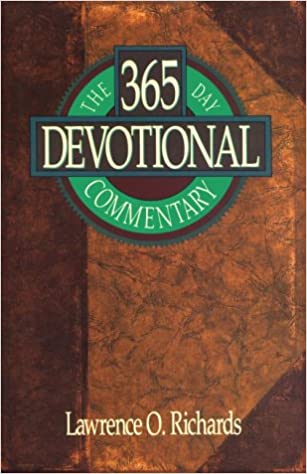
The 365 Day Devotional Commentary

JULY 18

Reading 199

PRAYER AND KINGDOM Matthew 6–7

“Your Father, who sees what is done in secret, will reward you” (Matt. 6:6).Prayer is an expression of intimate relationship with God. Here Jesus invites us to explore what prayer is—and what it can mean to you and me.

Definition of Key Terms

Hypocrite.

The Greek word means “one acting a part,” a character in a play. Some 16 of the 27 uses of this word in the New Testament are found in Matthew, which characterizes the hypocrite as a person (1) whose actions are intended to impress observers (6:1–3, 16–18), (2) whose focus is on the trappings rather than the heart issues of religion (15:1–21), and (3) whose spiritual-sounding talk hides corrupt motives. In Matthew 6 the hypocrite stands in contrast with the person of faith, whose relationship with God is “in secret.” Father. In these two chapters God is identified as “your Father” or “our Father” 10 times! The Old Testament speaks of God as Father, but in the sense of founder of Israel and Israel’s religion (cf. Deut. 32:6). God cared for His people “as a father” would (1:31; Ps. 103:13), but the Old Testament stops short of suggesting an actual father/child relationship between God and believers. Here Christ introduced a new and stunning view of relationship with God. God is the Father of those who come to Him by Jesus Christ. What does this new relationship mean to you and me? It means that we can trust God as Father (1) to reward us (Matt. 6:4, 6, 18), (2) to fully understand our needs (vv. 8, 32), (3) to forgive our sins and failures (v. 14), and (4) to give us good gifts when we ask Him (7:11). Some of us have had human fathers who betrayed our trust. God is the ideal Father, whose every act is motivated by love. How beautifully these two chapters display God’s unfailing Father-love.

Overview

Kingdom citizens have an “in-secret” relationship with God (6:1–5), knowing how (vv. 6–8) and what (vv. 9–15) to pray. Such prayer has nothing to do with outward show (vv. 16–18). With our attention on heaven (vv. 19–24) and our trust in God as Father, we are freed to concentrate on kingdom living (vv. 25–34). Because relationship with God is “in secret,” we do not judge others (7:1–6), we consciously depend on our Father (vv. 7–12), and we choose His “narrow gate” (vv. 13–14). As we do, God’s power is exhibited in our good lives (vv. 15–23) and obedience (vv. 24–29).

Understanding the Text

“Your Father, who sees what is done in secret” Matt. 6:1–6. Matthew 6 repeats the phrase “in secret” four times, and twice emphasizes the fact that God is “unseen.” Why? Because Jesus wants us to understand our relationship with God as a deeply personal and intimate relationship, a bonding of our hearts to Him. Religion is not a matter of outward show. Too many people attend church and make a show of being religious without having a personal, in-secret relationship with the Lord. Christ wants us to understand that in His kingdom, relationship with God must be real and personal, not like the “playacting” of the hypocrite, who does what he does to impress other human beings. This emphasis in Matthew reminds us that we need to take time to nurture our in-secret relationship with the Lord. We need to “go into your room, close the door and pray to your Father, who is unseen.” When we do nourish this relationship with the Lord, we can be sure that our “Father, who sees what is done in secret, will reward you.” “When you pray” Matt. 6:7–13. Jesus did not give His disciples what we call the Lord’s Prayer to be repeated together when they gathered in church. He taught it as a model showing how each of us is to pray “in secret.” This does not mean, of course, that we should not use it in church. What it does mean is that we need to explore the pattern prayer to discern what it teaches you and me about developing a deeper “in-secret” relationship with our God. The challenge to explore the meaning is clear in Christ’s contrast between it and pagans, who “babble” on and think that they will be heard “because of their many words” (v. 7). God wants us to understand the nature of prayer, and to make our prayer meaningful (see DEVOTIONAL). “If you forgive men when they sin against you” Matt. 6:14–15. Some have been troubled by Jesus saying that God will forgive us “if you forgive men when they sin against you,” but will not if we fail to forgive. Isn’t the Gospel the Good News that God forgives our sins, not because of what we do, but because Jesus has died for us? (cf. Eph. 1:7; 4:32; Col. 1:14) The conflict is apparent rather than real. The epistles describe a theological reality. Forgiveness is assured to all who truly trust in Christ. Here Jesus described a psychological reality. Forgiveness is experienced only by the forgiving. Forgiveness is like a coin. A coin has two sides, heads and tails. It is impossible to have just one side of a coin. Forgiveness is like this. Its two sides are accepting and extending. We cannot grasp just one side of this coin. A humble person, who is aware of his own and others’ frailties, will accept God’s forgiveness. That attitude of humility which frees us to experience forgiveness is the very attitude that enables us to have compassion on others and to forgive them. God does not not forgive the unforgiving because He is unwilling. Our own unforgiving attitude toward others keeps us from experiencing the forgiveness our Father is eager for us to know. “When you fast, do not look somber” Matt. 6:16–18. Many Pharisees fasted twice a week as a religious duty. These were not 24-hour fasts, but 12-hour fasts, from dawn to dusk. Jesus did not criticize the practice of fasting. What He did criticize was those who advertised their fasts by putting streaks of dirt on their faces. What we do for God must be done for God. Whatever we do “to show men” is tainted. “Do not worry about your life” Matt. 6:25–34. Jesus never suggested that it’s wrong to be concerned about basic needs. He simply said it’s unnecessary. The pagan is gripped by anxiety because he faces an uncertain tomorrow. The Christian, who has a personal relationship with God as his Father, relies on One who not only knows, but also controls tomorrow. When we appreciate how much God loves us, we no longer feel pressure to “run after” even the necessities of life. This frees us to set right priorities, and “seek first His kingdom and His righteousness”. What a joy to worry about nothing except pleasing Jesus! “Do not judge, or you too will be judged” Matt. 7:1–6. Here “judge” is not “to evaluate,” but rather “to condemn” or “to be critical of.” Because each Christian’s relationship with God is “in secret,” we have no basis for judging the motives or convictions of others, or even their failings and weaknesses. If we want to be critical, we are to be critical of ourselves! There’s a difference between this warning and Paul’s call for the church to discipline sinners (1 Cor. 5:1–12). When a professing believer persists in behavior that the Bible clearly identifies as sin, we are to agree with Scripture and discipline. In this case we do not judge, but agree with the judgment of the Word of God. What Jesus was talking about in Matthew is a spirit of criticism, or an arrogance that leads us to assume we have a right to judge the hearts of others. We do not. Just as the real nature of our own relationship with God is an “in-secret” kind of thing, so is the real nature of the relationship of others. Those who would live successfully in Christ’s present kingdom must guard against that spirit of criticism and pride. “Ask and it will be given to you” Matt. 7:7–12. Each of these images of prayer suggests persistence. Each also conveys a promise. Ask, it will be given. Seek, you will find. Knock, the door will be opened. What encourages us to be actively involved in prayer, and to claim these promises, is the certainty that God is our Father. As our Father, He is eager to give us good gifts. “By their fruit you will recognize them” Matt. 7:15–23. Throughout Scripture, fruit is a symbol of God’s transforming work within believers (cf. Isa. 5:1–7; John 15:1–11; Gal. 5:22–23). While our relationship with God is “in secret,” the product of that relationship is highly visible! Yet here Jesus spoke of recognizing false prophets by their bitter fruit. He did not suggest we go about pinching the fruit of believers to see how good it is! Perhaps the reason is that good fruit takes time to ripen. The Christian’s life will produce good fruit—but it will take time for that fruit to mature. Let’s give others—and ourselves—the time needed for God’s fruit to ripen rather than demand immediate evidence of His work in our lives. “Everyone who hears these words of Mine and puts them into practice” Matt. 7:24–29. The clearest evidence of a vital relationship with God is that we hear God’s words—and put them into practice. The person who truly loves Jesus will keep His commandments.

DEVOTIONAL

How to Pray (Matt. 6:5–13)

Anyone who plans to build a house would be wise to look at the blueprint first. In the same way, anyone who seeks to develop his or her “in-secret” relationship with God would be wise to study Jesus’ “Lord’s Prayer” carefully. It reveals the basic attitudes with which you and I are to come to God in prayer. Note how each petition teaches. “Hallowed be Your name.” We acknowledge God as He has revealed Himself. We express our respect for God, knowing Him to be living and active, sure that He is able to act in our lives. “Your kingdom come.” We acknowledge God as rightful King over all, and take our place as His subjects. We make a conscious choice to live as citizens of His kingdom, inviting it to come fully into our lives as well as into the world at large. “Your will be done.” We submit to God, choosing to obey His revealed Word, yet aware that we must also be sensitive to any personal guidance He may give us through His Holy Spirit. “On earth as it is in heaven.” We expect God’s will for us to have an impact on what we do here on earth. We do not compartmentalize the “sacred” and “secular,” but constantly look for ways to honor God in our work, our play, our everyday relationships with others. “Give us today our daily bread.” We trust God so much that we are secure in what He gives us each day, without being driven to pile up treasures on earth against tomorrow. We see each new day as an opportunity for some fresh experience of God’s goodness to us. “Forgive us our debts.” We humble ourselves before God. We are deeply aware of our faults and failings, yet we rejoice that we are loved anyway. Further humbled by God’s forgiving love, we have compassion on those who hurt or harm us. We take such hurts as an opportunity to demonstrate the reality of God’s mercy by freely forgiving others. “Lead us not into temptation.” We rest in God. We know that He delivers us from evil and, while we seek no confrontation with the evil one, we know that should tests come, God will be present to deliver us. When we approach “in-secret” prayer infused with these deep convictions, our personal relationship with the Lord is sure to deepen and grow.

Personal Application

Begin your prayer time with the Lord’s Prayer, aware of the faith and dependence it expresses.

Quotable

MEDITATION ON THE Lord’S PRAYER Lord, I cannot say “Our” . . . if my religion has no room for other people and their needs. Lord, I cannot say “Father” . . . if I fail to resemble You in the way I live my daily life. Lord, I cannot say “Who art in Heaven” . . . if my attention is focused only on earthly things. Lord, I cannot say “Hallowed be Thy name” . . . if I who am called by Your name am not holy. Lord, I cannot say “Thy Kingdom come” . . . if I fail to acknowledge Your sovereignty in my life. Lord, I cannot say, “On earth as it is in Heaven” . . . unless I am truly ready to serve You here and now. Lord, I cannot say “Give us this day our daily bread” . . . without doing an honest day’s work, and without considering the needs of those less fortunate. Lord, I cannot say “Forgive us our debts as we forgive our debtors” . . . if I harbor a grudge against my brother or sister. Lord, I cannot say “Lead us not into temptation” . . . if I deliberately choose to remain in a situation where I am likely to be tempted. Lord, I cannot say “Deliver us from evil” . . . if I am not prepared to take a stand against injustice in my society. Lord, I cannot say “Thine is the Kingdom, the Power, and the Glory” . . . if I do not submit to Christ as King, if I fail to trust You to act in my life, or if in pride I seek my own glory. Lord, I cannot say “Amen” . . . unless I can honestly say, “Come what may, this is my prayer.” -Adapted from “Lamplighter,” Speedway Christian Church, Indianapolis, Indiana

The 365 Day Devotional Commentary

JULY 17

Reading 198

RIGHTEOUS KINGDOM Matthew 5

“Do not think that I have come to abolish the Law or the Prophets; I have not come to abolish them but to fulfill them” (Matt. 5:17).

Jesus spoke as King, with absolute authority in His kingdom. And Jesus spoke as God, not abolishing, but reinterpreting the meaning of biblical words whose implications had long been lost. As we listen closely, familiar Scriptures become fresh and new for us as well.

Background

Kingdom.

In the ancient world a “kingdom” was the area ruled by a king. The definition is less simple than it seems. The ancient kingdom was not defined so much by territory, or by the language of the inhabitants, as by the ruler. Wherever a king’s will was supreme, that was his kingdom. Wherever a king was free to act, and the populace obeyed, that was his kingdom. Scripture presents God as King of the universe, in the sense that His will is sovereign. Yet many in this overarching kingdom of God are in rebellion. And so the fullest meaning of kingdom is not presently achieved in our universe. The Old Testament particularly, but the New as well, speaks of a coming time when Christ will rule a kingdom that extends over the entire earth. Then the rebellious will be judged, and all will submit to His will. Then the universal kingdom and earthly kingdom will be one, and will be complete. Scripture, however, also presents Jesus as King of a present spiritual kingdom. This kingdom exists alongside and within the present rebellious universal kingdom of God. Wherever human beings bow to Christ as Lord, and do His will, there the kingdom of Jesus has come. And there Christ, our King, acts in power to guide and protect His own. We need to understand the nature of Christ’s present kingdom, for the major thrust of what is known as the “Sermon on the Mount,” reported in Matthew 5–7, is to teach us how to live as its citizens. These words are spoken to us, just as vital and filled with power as when Christ first uttered them nearly 2,000 years ago. As we take them to heart and apply them to our lives, we submit to Christ our King, and experience His blessed kingdom now.

Overview

Jesus announced blessings for citizens of His kingdom (5:1–12). He expects citizens of His kingdom to do good deeds (vv. 13–16), for He requires a righteousness that surpasses that of even the zealous Pharisees (vv. 17–20). Christ looked behind the acts the Law regulated to call for purity of heart (vv. 21–42) and that crowning expression of kingdom righteousness: a love like the Heavenly Father’s for one’s enemies (vv. 43–48).

Understanding the Text

“Blessed are the poor in spirit” Matt. 5:1–12.

King Herod established many new cities during his 40-year reign. Each time he enlisted citizens by promising them many special benefits, including citizenship, a reduction of taxes, land, etc. This was a common practice in the Roman Empire during the age of Augustus, when many new cities were established. But it is hard to imagine a ruler calling for citizens, and announcing that in his kingdom recruits will receive poverty of spirit, meekness, mourning, hunger, and thirst, and even persecution. Yet these are the blessings Jesus offers those who claim the citizenship He described. What’s more, King Jesus said that the poor in spirit, the meek, and mourning are blessed! He does not offer a change of condition, but blessing in and through settings that repel citizens of this world. The Beatitudes will remain a mystery unless we realize that Jesus is speaking of the basic attitudes and values that produce spiritual fruit. It is not the person who claims to “have it made” spiritually who finds the kingdom, but the individual who recognizes how poor he is (v. 3). It is not the person who is satisfied with what the world offers, but the person who mourns and looks beyond its glitter, who finds comfort (v. 4). It is not the person who is arrogant, but the meek, who responds to God’s voice, who inherits the earth (v. 5). It is not those who are satisfied with their own righteousness, but those who hunger and thirst for a righteousness they do not have who will be satisfied (v. 6). To experience life in Jesus’ kingdom, we need to reject the values and attitudes of this world and adopt the values portrayed here by our Lord.

The Beautitudes: Matthew 5:3–10

Jesus’ ValuesCountervalues
BLESSED ARE THOSE WHO . . .BLESSED ARE THOSE WHO ARE . . .
(v. 3) are poor in spiritself-confident
competent
self-reliant
(v. 4) mournpleasure-seeking
hedonistic
“the beautiful people”
(v. 5) are meekproud
powerful
important
(v. 6) hunger for righteousnesssatisfied
“well adjusted”
practical
(v. 7) are mercifulself-righteous
“able to take care of themselves”
(v. 8) are pure in heart“adult”
sophisticated
broad-minded
(v. 9) are peacemakeerscompetitive
aggressive
(v. 10) are persecuted becuase of righteousnessadaptable
popular
“don’t rock the boat”

“Let your light shine before men” Matt. 5:13–16. In biblical times every home had its lamp burning all night. The lamp did not give much light, but it testified to the fact that the house was inhabited. These lamps, small oil-filled bowls, were set high on pottery stands. Jesus told His hearers that citizens in His kingdom are to be like lamps, lights in the world. The good deeds performed by Jesus’ people are to testify to the fact that this world, however dark it may be, still is inhabited by the King. When the good deeds of Christ’s people are seen, men will grasp the source and praise “your Father in heaven.” Don’t let anyone deny the role of good deeds in the Christian life. A Christian who does not perform good deeds is as useless to God and others as a lamp hidden under a bowl. “I have not come to abolish them but to fulfill them” Matt. 5:17–20. Many have puzzled over Jesus’ statement that He came to fulfill the Law and the Prophets. Christ speaks here as a Jew, dedicated as other rabbis of the first century to a single task: to explain the true meaning of God’s words, and thus to “fulfill” them. Yet Christ immediately sets Himself apart from other teachers. The Pharisees were zealous in keeping both the written and oral law. But in explaining the real meaning of God’s Word, Christ was about to reveal a righteousness that “surpassed” any righteousness the Pharisees imagined they possessed through keeping the commandments. As citizens of Jesus’ kingdom, you and I are called to live a righteous life. But we must avoid the error of the Pharisees. We must not mistake true righteousness, or suppose that because we do certain things and refrain from others that we have reached spiritual heights. What we do is important, yes. But God is most concerned with what we are. “You have heard that it was said . . . ’Do not murder’ Matt. 5:21–26. This is the first of six illustrations Jesus used to explain surpassing righteousness. All had heard the Old Testament Law that legislated against murder. The act of killing was wrong. But Jesus went on to explain that God is not just concerned with murder. He noted the anger that flared up and led to murder! The truly righteous person is not one who just refrains from murder. He or she is one who does not respond to others with anger. In this and in the following illustrations Jesus emphasized God’s concern with the heart. Keeping the law about not murdering makes no one righteous. The truly righteous man is the one who does not become angry! Actually, this kind of perfect righteousness is beyond us all. That’s why we must become citizens of Jesus’ kingdom. Only Christ’s work in our hearts can transform us into the persons God calls us to be. “Leave your gift there in front of the altar” Matt. 5:23–24. Is worshiping God important? Yes! But Jesus underlined the importance of the pure heart by saying that if we remember anyone has something against us, we are to go get that straightened out even if it means putting off worship! But what’s most important is the phrase, “If . . . your brother has something against you.” We’re not only responsible for our own anger, but for our brother’s! If we’ve done anything to cause another to be upset, we must resolve that issue immediately, in order to preserve our brother from an anger that is inappropriate in the kingdom of God. It perhaps seems too much! It seems hard enough to care for our own relationship with God. And the fact is, it is too much. But it is what our King expects. As we obey, He will do in us and in our relationships what we could never do alone. This is the glory of living in Christ’s kingdom. Jesus is Lord. And He can do in us and in others what we could never do by ourselves. “Anyone who looks at a woman lustfully” Matt. 5:27–30. Again we see the shift in emphasis. Adultery is using another person as a sex object. Lust is viewing another person as a sex object. Christ wants us to realize that both the act and attitude are sinful. Righteousness calls for us to view all human beings as persons of worth and value. We are to serve others, not use them. Again Jesus calls us to view the Law as a revelation of the heart of God—and a revelation of the kind of person those who live in Jesus’ kingdom will become as the King uses His power to transform them. “Anyone who divorces his wife” Matt. 5:31–32. This follows the pattern of the others. The Law permitted divorce, but Christ returned to God’s ideal. While divorce might not be adultery technically, it is a violation of the covenant loyalty spouses owe to one another. This is not a “no divorce” law, any more than the “no anger” and “no lust” principles are intended to be laws on the books of Christ’s kingdom. It, like the others, is a reminder that what man needs is not rules to follow, but an inward renewal that makes us truly righteous. Only the truly righteous will find freedom from anger, freedom from lust, and freedom from the desire to divorce. In Jesus’ kingdom alone, through the power of the King, a righteous life is possible. “Do not swear at all” Matt. 5:33–37. It was common in first-century Judaism to make a distinction between binding and nonbinding promises. For instance, a person who swore by the temple altar was not bound by his oath, but if he swore by the gold on the altar, he was bound to fulfill his oath. Jesus cut through the deceit involved and said, “Let your ’Yes’ be ’Yes.’ ” Be the kind of person whose simple word is his or her bond. “Do not resist an evil person” Matt. 5:38–42. The “eye for an eye” principle in the Old Testament established limits on the retribution a person might demand. If someone injured you and cost you the sight of an eye, you could not, for instance, justify taking his life. All you could claim was taking the sight of an eye. Jesus now said, don’t relate to others by what’s “fair” at all! Rather than trying to get back at others who harm you, do good to them! The passage has no direct application to the issue of pacifism. Rather, it applies directly to Jesus’ challenge of values and attitudes, and describes the “surpassing righteousness” expected of those of us in Jesus’ kingdom. We don’t demand retribution. We do good, even to those who harm us. The person who has learned to love even his or her enemies is a person who has lived long in the kingdom of Christ and a person who has known His transforming touch.

DEVOTIONAL

Love Your WHOM?(Matt. 5:21–48)

Jesus at first seems such a demanding King. In this portion of His Sermon on the Mount Jesus made it clear that He expects citizens of His kingdom to do more than keep laws. He expects us to be the kind of people who never even want to break them! In a series of illustrations He explained that His citizens aren’t to get angry, much less strike out at another. We citizens aren’t to lust, much less commit adultery. We’re not to want a divorce, to plan to deceive, or even to want revenge when injured (vv. 21–42). But then Jesus topped it off. Citizens of His kingdom are to “love your enemies and pray for those who persecute you” (v. 44). He explained that God is the kind of Person who “causes His sun to rise on the evil and the good, and sends rain on the righteous and the unrighteous” (v. 45). And we are to be “sons of your Father in heaven.” It’s really simple. We can sum up everything Jesus asks in a single phrase. “Just be like God.” This would be impossible if it weren’t for one thing. Jesus said, “Sons of your Father in heaven.” You see, everyone in Jesus’ kingdom is also family. Through faith in Christ we enter a unique “your Father” relationship with God Himself. And God establishes a unique relationship with us. In Peter’s words, God shares with us “His own indestructible heredity” (1 Peter 1:23, ºF). Because God has poured His own life into us, it’s not unreasonable at all to expect us to display a family resemblance. I remember discovering as a teenager why I had the habit of cocking my head to one side when I rode in the car. Sitting in the backseat one day, I noticed that my dad held his head the same way, due to an old injury. From childhood I had been imitating him, without ever realizing it. God isn’t interested in the way we hold our heads. But He does want us to watch Him intently, see how He relates to us and to others, and so gradually become more and more like Him within. As we live as faithful citizens of Jesus’ present kingdom, this is just what happens. We find to our amazement that we not only do good, we are becoming good! Transformed from within by the power of the King, we increasingly resemble our righteous and perfect God.

Personal Application

We are not to be satisfied with doing good, but must ask the King to help us be good.

Quotable

Make me, O Lord, Thy Spinning Wheel complete. Thy Holy Word my Distaff make for me. Make mine Affections thy Swift Flyers neat And make my Soul Thy holy Spool to be. My Conversation make to be Thy Reel And Reel the yarn thereon spun of Thy Wheel. Make me Thy Loom then, knit therein this Twine: And make Thy Holy Spirit, Lord, wind quills: Then weave the Web Thyself. The yarn is fine. Thine Ordinances make my Fulling Mills. Then dye the same in Heavenly Colours Choice. All pinked with Varnished Flowers of Paradise. Then clothe therewith mine Understanding, Will, Affections, Judgment, Conscience, Memory, My Words and Actions, that their shine may fill My ways with glory and Thee glorify. Then mine apparel shall display before Ye That I am Clothed in Holy robes for glory. -Edward Taylor

The 365 Day Devotional Commentary

JULY 16

Reading 197

THE KING’S PREPARATION Matthew 3–4

“Jesus was led by the Spirit into the desert to be tempted by the devil” (Matt. 4:1).Before Jesus began to preach, John the Baptist prepared Judea for His appearance. And God did a preparatory work in Christ’s own life!

Biography: John the Baptist

John was Jesus’ cousin, about six months older than Christ. He had been filled by the Spirit from his birth, being readied for his mission (Luke 1:14–17). We don’t know how long John lived a hermit’s life in the Judean wilderness (Matt. 3:4). But when Jesus was about 30, John appeared on the banks of the Jordan and began to preach. John’s appearance excited the Jewish population. Burdened by heavy taxes and ruled by an increasingly brutal Herod, there was an intense yearning for the Messiah to appear, a yearning attested in many first-century sources. John, austere and ascetic, burning with passion for God and holiness, seemed a likely candidate. His announcement that “the kingdom of heaven is near” stirred Jewish yearning into bright expectation. John persistently denied that he was the Messiah (John 1:19–28). Instead he called for his listeners to confess their sins, repent, and prepare themselves spiritually for the true Messiah, whom God had revealed to him was even then living among them. Matthew quotes from Isaiah 40 to define John’s role. That passage launched the second half of the mighty Old Testament prophecy; a half in which the dominant theme shifts from judgment to joy. John’s mission of preparation was to ready the people spiritually, for in a brief moment “the glory of the Lord [would] be revealed, and all mankind together will see it” (Isa. 40:5). I suspect that when John denied being Messiah, many turned away. “Nothing but a messenger,” they may well have thought. Yet this messenger readied hearts for Jesus, and thus for endless joy. There is no greater ministry any of us can have than John’s. We cannot meet the deepest needs of others. But we can introduce them to Him who can meet every one.

Overview

John predicted Messiah’s appearance, and preached baptism as a sign of repentance (3:1–12). Christ was baptized to identify Himself with John’s righteous message (vv. 13–17). The Spirit then led Jesus into the wilderness, where He overcame temptation and demonstrated His commitment to God (4:1–11). Thus prepared, Jesus began to preach (vv. 12–17), called His first disciples (vv. 18–22), and demonstrated His God-given authority by miracles of healing (vv. 23–25).

Understanding the Text

“John the Baptist came, preaching . . . and saying, ’Repent’ Matt. 3:1–6. It’s clear from Matthew and especially from Luke that John’s preaching, like that of the Old Testament prophets, focused on the personal and social sins that marred society. John preached against materialism and selfishness (Luke 3:11), and against such widespread sins as overcharging (v. 13) and extortion (v. 14). Those who confessed their sins were warned to “produce fruit in keeping with repentance” (Matt. 3:8). John’s emphasis is important. In the first century the Jews took a bath in a mikvah in order to be ritually pure for worship. In contrast John called for an inner change of heart and mind (repentance), which is to produce a pure and holy life. Repentance has always been a part of the Christian Gospel. Not “repentance” as being sorry for sin, or an effort at self-reform. In Scripture repentance is a change of heart and mind about God that bears fruit in a holy life. Without repentance there is no salvation, simply because whenever Jesus enters a life by faith, He does just such a transforming work in the human heart. “Do this to fulfill all righteousness” Matt. 3:15. Many have debated why Jesus wanted to be baptized. John, His cousin, who knew Him well, was embarrassed to baptize Jesus even before he knew that Jesus was the Messiah. John’s baptism was for repentance—and John knew Jesus as a godly Jew who had no need to repent. As a young sailor I went with my church youth group to a Billy Graham meeting in Madison Square Garden. When Billy called for those in the great hall who would dedicate their lives to the Lord to stand, the others in my youth group all stood. I remained seated. I had already dedicated myself to God, and it didn’t seem right to just “go through the motions.” The Lord knew where I stood with Him, and I was satisfied with that. If I had understood these verses in Matthew better, I would have stood with them. Why? Because I would have realized that Jesus was baptized not because He needed to be, but in order to identify Himself with John’s message! It was right for Jesus to take a stand with John. Just as it would have been right for me to identify myself with Billy’s call to commitment. It’s an important principle for us to apply. We too need to be identified with what is right, and what is righteous. We too need to be willing to take a public stand. John’s Gospel tells us that it was only as Christ stood in the water beside His cousin, and the Spirit descended on Him as a dove, that John realized who Jesus is—the Messiah he had been commissioned to announce. “Jesus was led by the Spirit into the desert to be tempted” Matt. 4:1. This verse emphasizes the importance of the temptation in preparing Jesus for His mission. The Spirit of God specifically led Christ into the wilderness “to be tempted.” Why was the temptation so important in Jesus’ life? Because soon He would begin to preach, presenting not only the kingdom, but Himself as King. And as King, Christ must be Victor—not merely over the puny powers of nature or Satan, but over the pull of His human nature. Adam and Eve were unable to resist temptation, and all mankind fell. Christ now had to triumph over temptation, and in triumphing qualify Himself to lift all mankind up again. Our temptations seem insignificant beside His: no cosmic issues are at stake. Yet Jesus’ temptation does put ours in a special light. Temptations are not “bad.” Nor are they intended to trip us up. God permits us to be tested, and sometimes even brings tests our way, in order that we might triumph over them. Each test passed victoriously strengthens us for the productive life God intends us to lead. “Man does not live on bread alone” Matt. 4:2–4. Medical science has shown that after 30 to 40 days of fasting, hunger, which disappears the second or third day, returns. All the body’s stored resources have been used, and the return of hunger is a sign that the body must have food again. Jesus had fasted 40 days and “was hungry” when Satan approached our Lord and challenged Him to turn stones into bread. After all, as Satan suggested, that would be a minor miracle for the Son of God to perform! Jesus answered by quoting a passage in Deuteronomy: “Man does not live on bread alone.” Perhaps the most important word here is “man.” Think about it. Jesus did not respond to temptation by calling on His resources as Son of God, but instead met each one as “man.” If Christ had met temptation by drawing on His deity, there would be no help for us in His example. But since Jesus met temptation as a man, using no more resources than are available to any human being, you and I have hope! We too can overcome our temptations. We can follow Jesus’ example, draw on the resources He used, and triumph! (See DEVOTIONAL.) This first temptation was directed against Jesus’ physical nature. He was hungry. He wanted bread. Why not make bread? Christ quoted Deuteronomy 8:3, which calls on man to live by the Word of God. The point of Christ’s response is this: human beings are physical creatures. But we are more than animals. We have a spiritual nature that is to control the physical. God’s will, not our physical needs or desires, is to govern our choices. Today many people argue that if you want something, take it. If you feel an urge for sex, satisfy it. After all, it’s “natural.” Yes, it’s natural for animals to satisfy their desires. But because we are more than animals, it is not “natural” for man to be driven by physical hungers. We are spiritual beings, and what is right and natural for us is to be driven by the living Word of our God. “Throw Yourself down” Matt. 4:5–7. This temptation is a subtle one. Understanding it hinges on the nature of the “if” Satan used in speaking to Jesus. Christ had been led by the Spirit into the wilderness. He had fasted 40 days, and was hungry and weak. And then, when He was weakest, Satan appeared! It would only be natural if Jesus, acting by choice in His humanity, had felt doubt. You or I surely would have. “God,” we might have cried out, “if You really love me, why are You doing this to me now!” Satan picked up on this doubt, and said, “If You are the Son of God.” This is not the “if” we use in place of “since.” It is the “if” of uncertainty. Satan was trying to nurture any kernel of doubt that might exist in Christ’s human heart. And then Satan suggested a way to find out. “Jump off the pinnacle of the temple, and the Bible promises angels will catch You before You land. Then You’ll know You have a special relationship with God.” Again Jesus quoted Deuteronomy, this time 6:16. Human beings are not to test God. They are to trust Him. God has shown His love throughout history, and has no need to prove it again to His own. This is one temptation we are particularly susceptible to. When troubles come, we feel panic and uncertainty. We begin to doubt, and to wonder if God is with us or not. Jesus reminds us that the way to triumph in such situations is not to demand God prove His presence, but simply to trust the love He has demonstrated so clearly. For us, that ultimate demonstration is in Christ’s death and resurrection. Surely He who has given His own Son to redeem us will never leave or forsake His own. The “pinnacle” was the corner of one of the great walls that surrounded the temple court, and fell off into the Kidron Valley far below. Jesus would not have been observed leaping into the valley. The test Satan proposed was not intended as a shortcut to popularity, but as reassurance of God’s love. See Matthew 4:5–7. “All this I will give You” Matt. 4:8–10. Satan’s third temptation was also subtle. He offered Christ immediate authority over all this world’s kingdoms. Why would this be a temptation? Surely the Creator of the world could hardly be bribed with what He already possessed, and would one day claim. I suspect that Satan’s appeal was to Jesus’ compassion. The world of that day as today reeked with injustice, and was deluged in the tears of human tragedy. Think of all the wars that would have been avoided were Jesus to rule today. Think of the sick who would be healed, the injustices corrected. It would surely be a good thing for Jesus to rule: good as far as you and I are concerned. Jesus responded by refusing to pay the price. God, not Satan, is to be worshiped. God’s will is to be our ultimate authority, and we are to bow to Him in all things. Even something “good” could not deter Jesus from obedience to the will of God. Even when that will would lead Him to a cross. All too often we Christians are tempted by opportunities to do good. We may rush in, sure that God is pleased because our motives are so pure. But even the opportunity to do good can be one of Satan’s traps. Like Jesus, we are to determine God’s will for us, and to choose that will, even when God’s will keeps us from doing something that seems good. I am far more tempted by opportunities to do good than to do evil. Recently I was invited to spend a number of weeks in South Africa, where some of my books seem to be making an impact on the church. Everything I could learn about the invitation marked it as an opportunity to do good, and I wanted to accept. Yet I was unsure, and after asking a number of friends to pray, finally decided that the Lord didn’t want me to accept the invitation at that time. What a hard thing, this turning down opportunities to do good. I suspect many of us, already overloaded with church duties, find it hard to resist the invitation to do one more thing. We need to make it a habit not to say yes lightly. We need to remember that we are to live our lives as Jesus did, by the will of God. And that sometimes God has other priorities for us than a “good” that may keep us overactive, even if we are active “for Him.” “From that time on Jesus began to preach” Matt. 4:12–17. With His victory won and His authority over inner, human frailties demonstrated, Jesus began His public ministry. He returned to Galilee, and made Capernaum the headquarters of His mission. It’s significant that the personal, inner issues were settled before public ministry began. God wants to do an inner work in our lives too, to qualify us for ministry with others “Preaching the Good News . . . and healing every disease and sickness” Matt. 4:23–25. The miracles Jesus performed did authenticate His claim to be sent from God. But we need to note something important about those miracles. Jesus performed no miracle to ease His own hardships—not even the miracle of turning stones into bread. His miracles were performed for the benefit of others, and most frequently took the form of healing the sick and restoring the injured. There’s something appropriate about this kind of miracle. Jesus came offering inner healing to a lost humanity. And to demonstrate God’s compassion, He healed their bodies as well. It is still appropriate that those who share the Gospel with others have an equal concern for the social and physical ills that cause human beings so much pain. We demonstrate God’s compassion today when we minister not just to men’s souls, but to material needs as well.

DEVOTIONAL

Overcoming Temptation(Matt. 4:1–11)

I memorized the Bible verse. I quoted it to myself over and over again. I thought it surely would give me victory over the particular temptation that had me so defeated. But quote as much as I would, no victory came. I was just as vulnerable with my Bible verse as without it. I suspect many of us have had this experience. We see Jesus recalling verses from the Old Testament and quoting them to Satan. Jesus was victorious. Why aren’t we when we do the same thing? The answer lies in the distinction between magic and faith. Magic is using an object or chant in a desperate attempt to ward off evil or control circumstances. Faith is a quiet confidence that what God says is true enough to act on. I had been using my Bible verse as a magic talisman, waving it desperately to repel temptation. But when we look at Matthew 4, we see that Jesus used Scripture in quite another way. He went into the Word, found a principle or truth, and said in effect, “I will now live by this truth.” Jesus saw the Word of God as truth, and determined to act on that truth. It was this exercise of faith that gave Him victory over His temptations. And it is just such an exercise of faith that will give us victory when we are tempted today. Yes, let’s look for the key to our victory in the Word of God. But let’s not use the Bible in a pagan, magical way. Let’s take God at His Word, act on what He says, and let God use our faith to give us the victory in Him.

Personal Application

Find victory by following Christ’s example and living the Word of God.

Quotable

“The Bible tells only two temptation stories, the temptation of the first man and the temptation of Christ, that is, the temptation which led to man’s fall, and the temptation which led to Satan’s failure. All other temptations in human history have to do with these two stories of temptation. Either we are tempted in Adam or we are tempted in Christ. Either the Adam in me is tempted—in which case I fall. Or the Christ in us is tempted—in which case Satan is bound to fall.”—Dietrich Bonhoeffer

The 365 Day Devotional Commentary

Matthew

JULY 15

Reading 196

LINEAGE OF THE KING Matthew 1–2

“Where is the One who has been born King of the Jews? We saw His star inthe east, and have come to worship Him” (Matt. 2:2).Matthew invites us to look beyond the scenes of history’s most crucial birth. What he shows us is that Jesus had His origins in God’s eternal plan, and that the Babe of Bethlehem embodies that plan’s fulfillment.

Overview

Jesus’ genealogy established His descent from Abraham and David (1:1–17). His virgin birth fulfilled Isaiah’s prophecy (vv. 18–25). Other events (2:1–23) prove that Jesus is indeed the Messiah predicted by the Old Testament prophets.

Understanding the Text

“A record of the genealogy of Jesus Christ the Son of David, the Son of Abraham” Matt. 1:1. The Greek phrase, “a record of the genealogy,” is found in the Septuagint only in Genesis 1 and 5. This indicates Matthew intended this phrase to mean “record of the origins.” Thus the first verse launches us immediately into the central issue of the New Testament. Who is Jesus? What is His role in God’s plan, and in our lives? Matthew’s answer is given in this two-chapter introduction, which demonstrates that Jesus is the “Anointed One” predicted in the Old Testament. That term, “Messiah” in Old Testament Hebrew and “Christ” in New Testament Greek, is Jesus’ title. It means that He is the One through whom all God’s promises will be fulfilled. As the “Son of David” Jesus fulfilled the promise God gave David that a descendant of his would sit on Israel’s throne, and rule a universal kingdom (cf. 2 Sam. 7:12–16; Isa. 9:6–7). Additional quotes from the prophets in these two chapters are from Old Testament passages that underline the theme of Messiah’s rule (Jer. 23; Hosea 11; Micah 5). (See DEVOTIONAL.) As “Son of Abraham” Jesus fulfilled the promise given the father of the Jewish race. He is the “Seed,” through whom the entire human race would be blessed (Gen. 12:1–3; cf. Gal. 3:16). Thus Matthew’s very first words alert us. Jesus is the focus of all Scripture. He is the essence—the substance and the spirit of its message. He is both Lord and Saviour. Our response to Jesus determines our destiny. “The father of” Matt. 1:2–17. Like other ancient genealogies, this one is organized to accomplish a specific purpose. While it is stylized, and does not include every ancestor, it is rooted in historical information that was available to Matthew in Old Testament documents and genealogical records maintained at the Jerusalem temple. Even as late as theA.D 90s, after the temple had been destroyed, when the Emperor Domitian ordered all descendants of David killed, the remaining few were located by referring to Jewish genealogical records. The church historian Eusebius tells us that when the last two appeared before the Emperor, he looked at their calloused hands and let them live. What threat could mere farmers offer, whatever their line? How fascinating. Jesus, born of poor parents, growing up in obscurity, working with His hands at the carpenter’s trade, would likely have made just as slight an impression on the Roman ruler. How difficult for us to judge greatness and humility if we look only at outward appearances. Jesus, the Son of God, the destined Ruler of the universe, King of an eternal kingdom, lived the most humble of lives, and died the most abject of deaths. As we read on in this Gospel we will see it over and over again. Jesus was a King, but a Servant-King. And as our King, Jesus calls us to a servant lifestyle like His own. “Whose mother was Rahab” Matt. 1:5. Hebrew genealogies characteristically mentioned only male ancestors. Matthew departed from this pattern, and included four women, three of whom were Gentiles, and the fourth of whom he noted had been married to a Gentile (Bathsheba, who “had been Uriah’s [a Hittite’s] wife”). Furthermore, with the exception of Ruth, the women were hardly models of morality! Tamar, Rahab, and Bathsheba had all engaged in adultery, even though by the first century they were highly regarded by the Jewish people. What point was Matthew making? We can perhaps suggest several. Perhaps Matthew was telling us that in the new era Christ introduced, women would have an increasingly important role alongside men. Very possibly Matthew was reminding us that Jesus has come to be the Saviour of the world, not just of the Jewish people. God introduced Gentile blood into the Saviour’s line as a grand reminder that He values every human life, and sent His Son to redeem us all. And, perhaps, these particular women are there to remind us that human flaws do not cut us off from being recipients of God’s grace. In fact, it is our flaws that led God to send His Son, that in a single grand redemptive act Jesus might cleanse not only our sins, but also those of the generations that preceded His birth. “Joseph her husband was a righteous man” Matt. 1:18–25. Joseph is one of the most admirable characters in Scripture. Following Jewish custom, he had sealed the betrothal contract that was the first but binding stage in marriage. Many assume that Joseph was an older man, and that after the betrothal Mary stayed with her parents until she was old enough to conclude the marriage and move into Joseph’s home. When Joseph learned that Mary was pregnant, he showed unusual compassion. Despite his feelings of hurt and betrayal, he “did not want to expose her to public disgrace.” Explaining this, Matthew called Joseph a “righteous” man. Why, in view of the fact that the Law’s penalty for adultery is stoning, would this suggest righteousness? Some might feel it would have been more “righteous” to demand Mary be punished to the full extent of the Law! The answer lies in the fact that “righteousness” in the Old Testament is conformity to God’s heart as well as His Law. Even Saul realized that grace better displays righteousness than strict legality, for he once cried out to David, “You are more righteous than I. . . . You have treated me well, but I have treated you badly” (1 Sam. 24:17). Joseph took this principle to heart, and though he thought Mary had treated him badly, he determined to treat her well. Thus in a spiritual sense as well as the physical, Joseph was truly a “son of David” (Matt. 1:20). The New Testament tells us little about Joseph beyond this. But how much these few words convey. He was a man like his ancestor, who had a heart for God and deep compassion for others. No matter how little known beyond our circle of family and friends you or I may be, we are spiritually great if Matthew’s word about Joseph is true of us as well. “The virgin will be with child” Matt. 1:20–25. The Hebrew term ’almah means “young woman,” and while it is typically used of young unmarried women, it lacks the technical force of “virgin.” However, there is no question about the Greek word Matthew chose here: parthenos. This is a young woman who has never had sexual relations with a man. When the angel that appeared to Joseph in a dream quoted Isaiah 7:14 he definitively interpreted the prophet’s meaning: it was Mary (a virgin) who bore Jesus as her Son. The message, that Mary was pregnant by the Holy Spirit, was accepted by Joseph, as it has been by Christians throughout history. The name, “Immanuel,” explains the implications. The Child conceived by the Holy Spirit is Himself God: God, come to be “with us,” not simply as a presence, but as one of us. Why the name “Jesus”? The name means “deliverer” or “saviour,” and expresses the purpose of His coming. God became one of us in order to “save His people from their sins.” Some who claim to be Christians do deny the Virgin Birth. Yet if Jesus was not both God and man, united through a miracle in Mary’s womb, He was merely a man. And no mere man, doomed to struggle with his own sins, would be free to save us from ours. Without the Virgin Birth there is no biblical Christianity. With it, our destiny is secure. For with it, the Jesus on whom we rely is God, and as God He guarantees the salvation He won for us on Calvary. “Where is the One who has been born King of the Jews?” Matt. 2:1–8 The familiar story of the magi, a name given a philosopher class in Persia, is told in order to further define who Jesus is. Alerted by the appearance of an unusual star, the magi traveled to Judea to honor One born to be King. Their arrival caused consternation, and Herod demanded to know where such a Person might be born. The answer was found in Micah 5:2: the promised Ruler was to be born in Bethlehem. Herod’s claim that if the Child were identified he would “go and worship Him” was a revealing lie! It was a lie, because the aging Herod, destined to live only a few more months, intended to kill the Infant. The determined king, who had ordered the execution of his own sons when he thought they threatened his throne, could not bear the thought of anyone but him ruling his domain. The phrase “go and worship” was revealing, because the word “worship” helps us realize that scholarly Jews in the first century understood the Old Testament to teach that the Messiah would be God as well as man (cf. Micah 5:4). It’s never enough to know who Jesus is. Those who acknowledge His supernatural birth, but fail to commit themselves to Him as Saviour, are very like Herod. They too are unwilling to acknowledge Jesus’ right to the throne—this time the throne of their lives. Yet because of who Jesus is, we are to gladly bow, worshiping and welcoming Him, not only as Saviour but also as our Lord. “They were overjoyed” Matt. 2:9–12. The magi serve as a positive model of response to Jesus, even as Herod serves as a negative model. These foreign visitors came joyfully to the house where the little family lived. There they worshiped the Babe, and “opened their treasures and presented Him with gifts.” The gifts recorded are the traditional gifts given to royalty-gold, incense, and myrrh. More significant, however, is the pattern we see here. They worshiped Jesus. They then opened their treasures. And then presented Him with gifts. Too often we human beings worship our treasures. Money, or the things money can buy, become the focus of our lives. When we worship wealth we have no room for Jesus, or for others. We hug our treasures close to us, unwilling to part with them for any cause. Worshiping Jesus frees us from materialism. Our “treasures” lose their grip on our hearts, and as we discover the joy of serving Christ, we willingly present our material treasures to Him as gifts. “Take the Child and His mother and escape to Egypt” Matt. 2:13–17. Though the wise men never returned to direct the demented Herod to Jesus, Herod determined to see Him killed. To be sure he destroyed one Child, Herod ordered all male children under two in the neighborhood of Bethlehem killed. The act underlines the cruelty of Herod, and also the futility of such cruelty. God had spoken to Joseph again in a dream and, no doubt using the gifts brought by the magi to finance the journey, Mary and Joseph escaped with the Christ Child to Egypt. Matthew quoted here from Jeremiah 31:15, picturing the anguish of those who lost their children in Herod’s purge. Yet Matthew 2:16–17 reminds us of a great truth. Even as the people of Jeremiah’s day were told that after their suffering “they will return from the land of the enemy,” so through the cross the infants who died will live again. “So,” the Lord declared through Jeremiah, “there is hope for your future.” Jesus did live to die for us. Because of Him, even when we suffer painful tragedies, we too have hope for our future. “He went and lived in a town called Nazareth” Matt. 2:19–23. After Herod died, an angel directed Joseph to return. The family settled in Nazareth, in Galilee, and there Jesus grew up and began His ministry. This is the third occasion on which Joseph is given guidance by an angel appearing to him in a dream. How responsive Joseph was to the Lord. In each case the text says that “when he woke up” Joseph did what the angel of the Lord commanded. In verse 14 we read that “he got up, took the Child and His mother during the night and left for Egypt.” Joseph was not only willing to obey, he did so without hesitation. Mary is rightly honored as the mother of Jesus. She was a special young woman, highly honored by God. Yet what a human surrogate father Jesus had in Joseph! He was truly a special man, and his obedience was highly honoring to God. May you and I honor Him as much, and as well, by our readiness to obey.

DEVOTIONAL

Behold Your King(Matt. 1:18–2:6)

Babies are cute. They are not supposed to inspire awe. Perhaps that’s one reason why people find it so easy to trivialize Christmas. Baby Jesus, lying helpless in the manger, can be viewed with mild affection. Folks can smile down at Him, and then move on to the real business of the season-shopping, vacation, being with the family, sending cards that say “holiday greetings” and so are unlikely to offend with an overly religious message. Despite what people may assume, Matthew wasn’t interested in having us meet “Baby Jesus.” We know, because over and over this Gospel writer quoted from the Old Testament. And the passages he selected and applied directly to Christ are passages that insist we see not an Infant but a King; not a Babe, but the Master of the universe. Who is Jesus to Matthew? Matthew 1:23 identifies Him with a virgin-born Child predicted by Isaiah. What did Isaiah say about Him? He is “Immanuel,” a name that in Hebrew means “With Us Is GOD!” Look at the Babe in the manger, not with mild affection, but in awe. For in this Child all the glory of God shines through. Matthew also quoted from Micah 5, which predicted the birth in Bethlehem of a Ruler who would be the Shepherd of God’s people Israel. Looking in Micah, we discover that “He will stand and shepherd His flock in the strength of the Lord.” In fact, “in the majesty of the name of the Lord His God.” His people will be secure, for His greatness will “reach to the ends of the earth.” Why not, when His strength is the strength of God, and His majesty the name of the Lord, which He bears! And when Christmas comes again, don’t be concerned if the Supreme Court rules against local government displays of creche and cradle. The plastic replicas, however cute, hardly represent the King of kings. To catch the spirit of Christmas, read again Matthew’s account—and the prophecies he quotes. And then bow down in awe.

Personal Application

The Christ we need to keep in Christmas is not the Babe so much as the King of kings.

Quotable

“Napoleon was right when he said, ’I know men, and I tell you, Jesus is more than a man. Comparison is impossible between Him and any other human being who ever lived, because He was the Son of God.’ Emerson was right when he replied to those who asked him why he did not include Jesus among his Representative Men, ’Jesus was not just a man.’ Arnold Toynbee was right when he said, ’As we stand and gaze with our eyes fixed upon the farther shore a simple figure rises from the flood and straightway fills the whole horizon of history. There is the Savior.’ “—Billy Graham

The 365 Day Devotional Commentary

Matthew

INTRODUCTION

The Gospel of Matthew launches the New Testament with a triumphant shout. The Messiah promised in the Old Testament has come! He is Jesus of Nazareth, whose death and resurrection offers forgiveness to all. The hunger of the early church to know about the Lord led to the drawing of four portraits of Jesus by four different writers. This one is by Matthew, one of Christ’s own disciples, who probably wrote before A.D. 70. Matthew quoted frequently from the Old Testament to show that Jesus is the Messiah promised there. Among his reports of what Jesus did, Matthew wove summaries of what Jesus taught: about God’s kingdom (Matt. 5–7), about discipleship (Matt. 10), about God’s plan (Matt. 13), about spiritual greatness (Matt. 18–20), about the future (Matt. 24–25). Perhaps the greatest contribution of Matthew is to help us see Jesus as a Servant-King, and to help us sense our own calling to a servanthood like His. Reading this book we understand why Matthew was the Gospel most quoted by Christian writers of the first three centuries of our era.

OUTLINE OF CONTENTS

I.The Lineage of the KingMatt. 1–2
II.The Purposes of the KingMatt. 3–7
III.The Authority of the KingMatt. 8–15
IV.The Servant Attitude of the KingMatt. 16–20
V.The Suffering of the KingMatt. 21–27
VI.The Resurrection of the KingMatt. 28

Stephen Boyd Blog

Belfast-born Hollywood and International Star from 1950-1970's Fan Tribute Page

Abundant Joy

Digging Deep Into The Word

Not My Life

The Bible as clear as possible

Seek Grow Love

Growing Throughout the Year

Smoodock's Blog

Question Authority

PleaseGrace

A bit on daily needs and provisions

Three Strands Lutheran Parish

"A cord of three strands is not easily broken." Ecclesiastes 4:12

1love1god.com

Romans 5:8

The Rev. Jimmy Abbott

read, watch, listen

BEARING CHRIST CRUCIFIED AND RISEN

To know Christ and Him crucified

Considering the Bible

Scripture Musings

rolliwrites.wordpress.com/

The Official Home of Rolli - Author, Cartoonist and Songwriter

Pure Glory

The heavens are telling the glory of God; and the firmament proclaims His handiwork. Psalms 19:1

The daily addict

The daily life of an addict in recovery

The Christian Tech-Nerd

-Reviews, Advice & News For All Things Tech and Gadget Related-

Thinking Through Scripture

to help you walk with Jesus in faith, hope, and love.

A disciple's study

This is my personal collection of thoughts and writings, mainly from much smarter people than I, which challenge me in my discipleship walk. Don't rush by these thoughts, but ponder them.

Author Scott Austin Tirrell

Maker of fine handcrafted novels!

In Pursuit of My First Love

Returning to the First Love