
COVID-19: A CHRISTIAN RESPONSE

Shining like stars!

I’m fascinated by my own feelings around this COVID-19 pandemic. Some of those feelings have been quite negative, even critical, so I’ve taken time to reflect and figure them out.

My biggest negative feeling (my feeling – not criticism) has been around how the church in the UK is responding; at least some of the parts I have seen of it so far…

I was at a church service last week and, suddenly, in the middle of the meeting, we were asked to stand, raise our hands, and pray for the nations of the world because of COVID-19. That’s great – there’s nothing wrong with that at all, but I was left feeling, “Why has it taken this virus to motivate us to pray for the nations like that; aren’t large parts of the body of Christ suffering around the world all time? In the face of the difficulties a lot of Christians face, isn’t this virus one of the least of their worries? Shouldn’t we be praying for them concertedly and regularly anyway?”

I was then at a prayer meeting and almost the whole time was dominated by thoughts of COVID-19. The prayers were good, Christ-centred, but the meeting left me thinking, “The media is dominated by this virus, why should our prayer meetings be dominated by it as well. Aren’t there many other things the Holy Spirit is leading us to pray about too?”

Of course, we should be sensible and wise. My view is that, as Christians, we should listen to the advice coming from the Government and abide by it, we should not be irresponsible, but shouldn’t we also be those who reveal a different nature to that of most people in this world? Amid this crisis, any crisis, shouldn’t we be those who are recognised as being free from fear, free from fear of this virus, even free of the fear of death? Shouldn’t we be the bearers of comfort, hope, compassion and practical service, always, but particularly during times of need and crisis? Shouldn’t we be the bearers of the Good News of Jesus Christ, all the time, but particularly when people may be a little more predisposed to hear it and receive it?

Our Prime Minister, Boris Johnson, said, “many more people should expect to lose loved ones amid a coronavirus outbreak in the UK”. Indeed, many have died around the world already. How does that, and the constant media reporting about this virus make us Christians feel, and do?

Even before the latest strict measures the Government has announced I think many felt a sense of anxiety and concern for themselves. Even if it was unspoken, many people were thinking, “How will this affect me? Do I need to panic buy, even though I know it could cause others harm? Should I find a face mask and start wearing it? Do I avoid other people? Should I stop meeting with other Christians? What if I get infected? How serious will it be for me? Could I die?”

Those thoughts are all understandable and, rather than ignore them, we ought to each ask ourselves why we are, at times, thinking like that. “Why are those things running through my head? What’s at the root of all that, and what does it say about me? What does it say about my trust in God? What can I learn about myself from those responses so I might grow in spiritual maturity as a disciple of Jesus Christ?”

Death holds fear for many Christians, for some it is the ultimate fear and it really is one of the roots of many of the fears we experience. In the case of the virus, many of the lesser fears track back from the fear of dying. But as Christians that should not be so!

A friend and missionary partner just sent me a letter from a North Korean, inside of North Korea, who recently received one of their MP4 players containing an audio Bible. In the midst of this COVID-19 outbreak and poverty, he was greatly comforted, and made hopeful, by the Word of God. He said…

“I receive hope of living as I am praying. The virus situation in Pyongyang and Sinuiju is more serious than the border areas. I think we will all die from starvation or being infected. Both are deadly and cause despair, but after knowing Him, my fear has vanished. We truly thank you again.”

Last year, a close friend and long-term partner in Gospel ministry died, and I was asked to speak at his funeral service. There, with the family, I experienced deep grief, but it was one of the best days of my life. His wife, his sons, close friends, gave their tributes through tears of sorrow and joy. Because he was a true believer in Jesus Christ many of us were certain of his new whereabouts – far above our sense of loss was a level of rejoicing that he had made it, that he had got home! Right in the middle of that funeral service, the truth of the resurrection of the dead was almost physically tangible for us!

Last week, the wife of a dear friend and partner in ministry succumbed to cancer, in her mid-thirties. The same is true again; though we properly experience grief, we rejoice in the certainty she is at home with the Lord. Her death, though difficult to understand at such a young age, is not a defeat because God gives us victory over sin and death through our Lord Jesus Christ. Our earthly mind struggles to grasp that at times, but we can rejoice because death has no hold on us! The truth is our eternal life is just that – eternal!

In John’s gospel, chapter 11 and verses 25 to 26, Jesus said to Martha, “I am the resurrection and the life. Anyone who believes in me will live, even after dying. Everyone who lives in me and believes in me will never ever die. Do you believe this?”

Well, do we? If we really do believe, we can bring any anxiety (1 Peter 5:7), fear, even the fear of death to God and really start to live our lives to the full (John 10:9-10), for all to see, and for all to benefit from!

As Christians, we declare the Word of God to be true! There are some great Bible verses we can recall which reinforce that declaration, for example: God’s Word is true; it is living and active; it is everlasting; it is settled forever in heaven; God watches over his Word to fulfil it; God’s Word always bears fruit; it will accomplish what he desires; it will achieve the purpose for which he sent it!

But it’s one thing to hear and declare God’s Word – it is another thing to do it – to live it out! James is clear on that isn’t he: “Do not merely listen to the word, and so deceive yourselves. Do what it says” (James 1:22-25).

So, in this time of crisis, free from fear, even free from the fear of death, what can we as faithful believers in Jesus Christ be doing?

I can’t direct you; you should decide for yourself how you will live, but here are some thoughts:

  • James 1:2-8; 3:17-18 – Ask for wisdom and be wise! Above all, seek God’s wisdom in all things – he will give it to you freely if you do not doubt! He will show you how to act.
  • Romans 12:12 – Don’t think as the world thinks – don’t behave like it! Don’t let the media lead you! The media is primarily there to sell media, not to inform you properly. It will almost always veer towards sensationalism and frequently breed fear and confusion. Yes, follow Government advice but let God’s Word dwell in you richly; be informed by it, both the written Word of God and the voice of God within you. Let it influence you far more than any other source!
  • Roman 8:14 (but do read verses 9-17!) – Cultivate your relationship with God the Holy Spirit and seek to be led by him. As children of God we hear his voice, we can ‘see’ what he is doing, we can discern what he wants for us and what he wants us to do. Try and imagine what our neighbourhoods and communities could be like if we truly gave ourselves to being led by the Holy Spirit – much more than we already do.
  • Mark 12:30-31 – Love God and those around you – serve them – do things for them! Peter reminds us to press on through every trouble, hardship or evil. Whether persecutions or pandemics, we can trust in the Lord, knowing, “It is better to suffer for doing good, if that should be God’s will, than for doing evil” (1 Peter 3:17). Worry or anxiety is common to us all, but God says we can give that to him (1 Peter 5:7) and face troubles and threats with courage, leaning our full weight on him, and on each other (Galatians 6:2), to love and serve him and others well. What we do for others, the result of our ministry, the way we live our lives, can be like letters written to people by the Spirit of the living God, revealing his love and compassion through us! (2 Corinthians 3:3). So, we should love and help people whenever we can. Here are just a couple of things for you to consider:
    Think about those who may be in need, not just yourselfYour movement may be limited but you can still text people, phone them, email them – whatever it takes – to find out if they are OK; as many people as you can, but especially your Christian brothers and sisters (Galatians 6:10), and ask how you can help them. I have already heard of some people buying food for their elderly neighbours, and of some people eating meals together across Skype! What a great idea – can you be as creative? Let’s make sure we are quick to serve and slow to hide.
    Pray for the sick and do things for themThroughout history, Christians have often shone out because they were willing to help the sick during plagues, pandemics, and persecutions. They loved people and weren’t afraid of death because they understood that “to live is Christ and to die is gain” (Philippians 1:21). Rather than just asking “How do I stay healthy?” perhaps we should also ask “How can I help the sick?” If you shouldn’t visit, use technology to ‘be with’ people, praying for them, ensuring they know they are loved and cared for.
  • 1 Peter 3:14-15; Mark 16:15-18; 2 Timothy 4:1-2; Matthew 9:37-38 – Seek out opportunities for the gospel – and share it“When Jesus saw the crowds, he had compassion on them, because they were harassed and helpless, like sheep without a shepherd” (Matthew 9:36). Though we should not be afraid of death, we should be deeply concerned about it for those who have not yet been reconciled to our Father God, through the Cross of Jesus Christ! Really – people will be dying – we should take their eternal salvation very seriously. So, pray earnestly – asking God to give you the compassion of Jesus Christ for the people around you. Ask him for opportunities to share the Good News of the Gospel with them by whatever means you can. I’ve sometimes heard soldiers returning from battle saying words like these, “Even atheists pray when the bullets are flying, when their lives are at real risk!” When fear assails people, when they grow anxious because they recognise a theoretical or real threat to life, they are often more open than ever to hear words of eternal life. And we have those words! Our testimonies, our stories of coming into a saving experience of Jesus Christ, our accounts of God’s faithfulness and help towards us through all the phases of our own lives, can really help people explore spiritual things and come through to meet with the author of life himself! So, rehearse your testimonies, your stories of God’s faithfulness, practice sharing them with your Christian friends so that, at every opportunity, you’ll be prepared to give an answer to everyone who asks you to give the reason for the hope that you have, with gentleness and respect (1 Peter 3:15).
  • Acts 4:29-30; 1 Corinthians 12:21-27; Hebrews 13:3– Pray for the Body of Christ! As someone who has the privilege of travelling the world to be with Christians who are being persecuted for following Jesus, I couldn’t finish this letter without asking you to pray for them. Many of our Christian ‘family’ members will be impacted by COVID-19, but millions of them already suffer greater impact from forces who seek to do them regular and repeated harm. Great news then that Jesus Christ continues to build his church and nothing, not even the forces of evil, can prevail against it! (Matthew 16:18). Our team at Release International prays for persecuted Christians every day; this virus will not stop us from doing that and, at our prayer time this morning, we recalled Hebrews 13:3 and asked ourselves, “Can the circumstances we are experiencing because of COVID-19 help us to stand with our persecuted brothers and sisters in ever deeper ways?”. Yes – of course! If we end up being confined to our homes (with our comfort and digital connectivity) we can pray for those who are in prison with no comfort at all. If we can’t get all the provisions we are used to having, we can pray for those who are prevented from even having their daily bread! If we are separated from loved ones, we can pray for the families of those who have been imprisoned or martyred for their faith. If you want to know something more about the suffering, yet prevailing, church of Jesus Christ and how you can stand with them – you might take a look at this: Voice Magazine 109, January 2020. Make sure you scroll to the end of the magazine to find our Prayer Shield. Who knows, because of COVID-19 you may have more time on your hands than you are used to – what an opportunity for believing prayer! (Ephesians 6:18; 2 Chronicles 7:14.)

There’s much more I could write, but even if we only do the things written above we will shine like stars among our generations (Philippians 2:12-16); generations of people who need to be reconciled to God, and it is we who have been given that marvellous ministry of reconciliation, no-one else!

Paul Robinson – 17 March 2020

COVID-19 Is Not God’s Judgment

How we can know God isn’t acting now as he acted against Pharaoh. JIM DENISON|

A prominent church where I live put up a billboard that drew citywide attention: “Is the coronavirus a judgment from God?” This is the most common question I’ve been asked since the pandemic began.

It’s easy to quote the Bible in support of such positions, from plagues in Egypt to the destruction of Jerusalem to the Book of Revelation’s prediction that the world will be judged with “pestilence.”

However, these are not those days. We can know this for two reasons.

First, biblical judgments through disease are supernatural in origin.

When God sent “boils” on Egypt, they broke out instantly “on man and beast” throughout the land. The “pestilence” of Revelation will come by one of the “four horsemen of the apocalypse,” not a wet market in Wuhan.

Everything scientists can tell us about COVID-19 is that the virus evolved from other viruses. It is natural, not supernatural. God did not cause this virus or the pandemic it has created. Like other natural diseases and disasters, it is a consequence of living in a fallen world.

Second, biblical judgments are against specific sins and sinners.

From Pharaoh’s obstinacy to Miriam’s racial prejudice to Herod’s prideful idolatry, divine judgments of the past and future come to those who refuse his word and will. Throughout Scripture and history, God deals with us as gently as he can or as harshly as he must.

No specific sins caused this virus. Nor are those who are afflicted with it more sinful than the rest of us. God loves the Chinese people just as much as he loves Italians, Koreans, and Americans. He loves the elderly and those with preexisting conditions just as much as he loves the young and the healthy.

One fact this pandemic emphasizes is that we are all part of one race—the human race. And we are all in this together.

While God did not cause this pandemic, neither has he left us to face it alone.

He is with health care workers as they risk their lives to care for patients. He is with grocery workers and delivery drivers as they serve those who can stay safely at home because of their sacrifice. He is with those who are now unemployed and those who would shelter at home if they had one.

He is with patients who suffer and families who grieve. As Jesus wept for Lazarus, so he weeps with us and for us.

And God is doing more than hurting with us—he is redeeming this tragedy in amazing ways.

We’re seeing an outpouring of financial generosity unprecedented in my lifetime. We’re watching churches and agencies that would never have cooperated two months ago working together to save lives. Millions of people around the world are sacrificing their incomes by staying home to protect people they don’t know.

In the season of Passover, Jews around the world were thanking God for their deliverance from Egypt. When Ramadan begins next week, Muslims around the world will thank God for the Qur’an. Christians recently observed Good Friday and celebrated Easter as we thanked God for our Savior.

Our monotheistic faiths differ in foundational ways, but we share this belief in common: God is with us. As a song I learned in my childhood reminds us: He didn’t bring us this far to leave us.

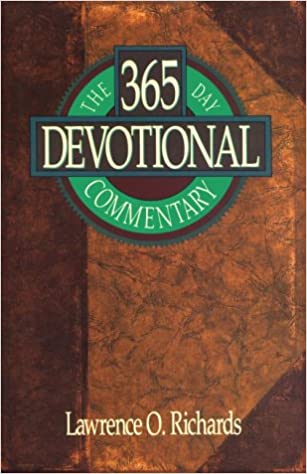
The 365 Day Devotional Commentary

MAY 24

Reading 144

COMFORT Isaiah 40–48

“Announce this with shouts of joy and proclaim it. Send it out to the ends of the earth; say, ’The Lord has redeemed His servant Jacob’ (Isa. 48:20).Hope for us as for ancient Israel rests entirely on the incomparable nature of our God.

Background

The historical section in Isaiah 36–39 closes with the account of Isaiah’s denunciation of Hezekiah for welcoming Babylon’s envoys. These chapters serve to illustrate Isaiah 1–35. But they also serve as a bridge introducing us to Isaiah 40–66. For suddenly Isaiah seemed catapulted a hundred years ahead in time. The Babylonian invasion was past, and the Jews were captives in a strange land. Yet Isaiah spoke words of comfort, confidently describing the destruction of Babylon and the salvation of God’s people. The nation will yet be redeemed, and God’s purposes in His people will be fulfilled. The theory that one or more different persons wrote the second half of Isaiah is rooted in the viewpoint of chapters 40–66. In the first half of Isaiah, Assyria is the main enemy, and the prophet’s message is a grim oracle of judgment. In chapters 40–66 Babylon, which has conquered Judah, is about to be judged, and Cyrus, her Persian conqueror, is named. Rather than the darkness of impending judgment, these later chapters are bright with the confident hope of restoration. Yet the idea that Isaiah wrote both sections poses no great problem for those who take a repeated message found in chapters 40–66 seriously. The God who spoke through Isaiah is fully able to “declare to us the things to come” and to “tell us what the future holds” (41:22–23; 45:21). Speaking by the Spirit of God Isaiah, like other ancient Hebrew prophets, was transported beyond his own time. His words of comfort and hope were rooted in the sure conviction of what God would do, not what He had already done. Some of the most powerful and exalted passages in the entire Bible are found in these chapters of comfort. These passages can fill us too with hope. They remind us as they reminded ancient Israel of just how wonderful and how loving our God is.

Overview

Judah’s sovereign Lord intends good for His people (40:1–31). God, not the idols worshiped by the nations, controls the future (41:1–29). Though Israel failed its national calling as God’s servant, One from the nation will fulfill God’s purpose (42:1–25) when the Creator acts to redeem His chosen people (43:1–44:25). As evidence, God will appoint one named Cyrus to restore Jerusalem (v. 26–45:25). Oppressive Babylon will be crushed, and God’s word of blessing for Israel will be fulfilled (46:1–48:22).

Understanding the Text

“Here is your God” Isa. 40:1–31.

The first time I traveled in the western America, I couldn’t believe the sky. It seemed so big. I had to keep looking to the left and right to take it all in. This is something like Isaiah’s treatment here of God. He is so big, Isaiah has us look to the left and the right to try to take Him in. Looking left, Isaiah described a God “enthroned above the circle of the earth” to whom the nations seem “like a drop in a bucket” (vv. 6–26). Looking left, we are simply overwhelmed by the awesome greatness of God’s power and mighty strength. Then Isaiah has us look right, and we see the Creator stoop down to touch the individual, and give “strength to the weary.” Because ours is a God who not only creates but who also cares, “Those who hope in the Lord will renew their strength. They will soar on wings like eagles; they will run and not grow weary, they will walk and not be faint” (vv. 27–31). “Here is My servant, whom I uphold” Isa. 42:1–25. There are two “servants” in Isaiah. One is Israel (cf. vv. 8–10), which failed to accomplish God’s purpose. The other, introduced here, is the Messiah. This Servant, who is to come from God’s failed servant, “will bring forth justice; He will not falter or be discouraged till He establishes justice on earth” (v. 4). As a “covenant for the people” this Servant will Himself be the foundation on which Israel will build its future—a future which includes salvation for the Gentiles as well as the descendants of Abraham (vv. 6–7). In context Isaiah’s message about the coming Servant of the Lord is intended for comfort and hope. But it is also a challenge. God’s Old Testament people were called to do justice, and by holy living to be “a light for the Gentiles.” In fact, every believer of every age is to be just this kind of servant of the Lord. We must do justice, live holy lives, and bring the light of a hope that releases “from the [spiritual] dungeon those who sit in darkness” (v. 7). Jesus has fulfilled God’s commission as “the” Servant of the Lord. Now you and I are called to be servants too. “Fear not, for I have redeemed you” Isa. 43:1–28. Like other chapters in this section, Isaiah 43 is rich in verses that invite memorization. Here are a few from this chapter, crafted to comfort us. Fear not, for I have redeemed you; I have called you by name; you are Mine. When you pass through the waters, I will be with you; and when you pass through the rivers, they will not sweep over you. When you walk through the fire, you will not be burned; the flames will not set you ablaze (vv. 1–2). I, even I, am He who blots out your transgressions, for My own sake, and remembers your sins no more (v. 25). “I will raise up Cyrus” Isa. 45:1–25. One of the basic sources of comfort for the believer is the conviction that God is in complete control of events. The theme is illustrated by God’s act in naming Cyrus, long before his birth, and announcing that Cyrus will be given a “title of honor, though you do not acknowledge Me” (vv. 1–7). Whether or not the great ones of our present world honor God, He alone is the source of their existence and position. The theme is demonstrated by Creation. The universe knows only one all-powerful Being, who “made the earth and created mankind upon it” (vv. 8–17). Surely the Creator has full power to mold those who are works of His hands into whatever form He chooses. The theme is confirmed by God’s unique self-existence. In a universe in which men worship idols, there is “none but Me” who is able to save, who utters a word “that will not be revoked,” and who will ultimately receive the homage of all (vv. 18–25). God is in control of world events—and of the days of our lives. Because He is, and because the Lord is “a righteous God and a Saviour” (v. 21), we face the future with confidence and hope. “I foretold the former things long ago” Isa. 48:3–8. Some people will always try to drain religion of the supernatural. It was true in Isaiah’s day, and it’s true in our day as well. We can almost hear frustration in the prophet’s voice as God spoke to Judah through him: “I foretold the former things long ago, My mouth announced them and I made them known; then suddenly I acted, and they came to pass. . . . You have heard these things; look at them all. Will you not admit them?” There is no more compelling evidence for the supernatural origin and authority of the Scriptures than fulfilled prophecy. Time and time again the Bible records the prediction of some prophet—and hundreds or thousands of years later what is predicted is fulfilled in detail. Yet, time and time again, some struggle to find excuses not to admit what God has said and done. The skeptic finds no comfort in Scripture because he or she will not believe in an all-powerful God who acts in the world of men. The believer rejoices and finds a firm foundation of his or her hope. “Your peace would have been like a river” Isa. 48:17–22. The person who fails to trust God’s Word completely forfeits more than comfort. He or she forfeits peace. God said through Isaiah, “I am the Lord your God, who teaches you what is best for you, who directs you in the way you should go.” He added, “If only you had paid attention” then “your peace would have been like a river.” The person who abandons confidence in the Word of God will soon abandon God’s commands as well. When that happens, he or she will discover that “there is no peace,” says the Lord, “for the wicked.” Trust in God’s Word is not simply an intellectual issue. It is one of the pivotal issues of faith and life.

DEVOTIONAL

Bigger Than Me(Isa. 44)

This chapter contains the Bible’s classic exposé of idolatry. It pictures a workman forging an idol of metal or carving it from wood. And it ridicules the idol-maker, who sees no contradiction in burning half the wood of a tree he cut down to cook his food, and then praying to the remaining block of wood, “Save me; you are my god.” But the idol-maker is ridiculous. He wants someone or something to save him. But he chooses something he himself has made to serve as a god. “Give me a god,” the idol-maker seems to say. “But don’t give me a god bigger than me. Give me a god I can control: one I can make out of a tree I cut down; one I can shape to suit myself.” In biblical times evidence of idolatry lay all around. You could see and touch the metal or wooden figures of the gods. Today we like to think man has progressed beyond idolatry. But in fact, the very same attitude dominates the thinking of many in this “scientific” age. No, we don’t have metal or wooden figures. But we do have computers. We do have spaceships. We do have hydrogen bombs and rockets. We have many such works of our own hands, and all too often humanity says to these things man himself has created, “Save me. Save me. I’m counting on you to deliver me.” And then God’s Word comes to our generation. He reminds us that our craftsmen too “are nothing but men.” To have confidence in things that we have made is the essence of idolatry. It is to exchange hope in the living God for hope in dumb, silent works of our own hands. Mankind does want gods. But gods that are under human control. When we meet the God of Scripture, we meet a God who is bigger than we. Then we abandon our attempts to control Him—and joyfully submit to the loving-kindness and the guidance of a living God.

Personal Application

An idol is anything less than God that you expect to save you.

Quotable

“The calves of Jeroboam still remain in the world, and will remain to the last day; not that any man now makes calves like Jeroboam’s, but upon whatsoever a man depends or trusts—God set aside—this is the calves of Jeroboam, that is, other and strange gods, honored and worshiped instead of the only, true, living, and eternal God, who only can and will help and comfort in time of need. In like manner also, all such as rely and depend upon their art, wisdom, strength, sanctity, riches, honor, power, or anything else, under what title or name soever, on which the world builds, make and worship the calves of Jeroboam.”—Martin Luther

Stephen Boyd Blog

Belfast-born Hollywood and International Star from 1950-1970's Fan Tribute Page

Abundant Joy

Digging Deep Into The Word

Not My Life

The Bible as clear as possible

Seek Grow Love

Growing Throughout the Year

Smoodock's Blog

Question Authority

PleaseGrace

A bit on daily needs and provisions

Three Strands Lutheran Parish

"A cord of three strands is not easily broken." Ecclesiastes 4:12

1love1god.com

Romans 5:8

The Rev. Jimmy Abbott

read, watch, listen

BEARING CHRIST CRUCIFIED AND RISEN

To know Christ and Him crucified

Considering the Bible

Scripture Musings

rolliwrites.wordpress.com/

The Official Home of Rolli - Author, Cartoonist and Songwriter

Pure Glory

The heavens are telling the glory of God; and the firmament proclaims His handiwork. Psalms 19:1

The daily addict

The daily life of an addict in recovery

The Christian Tech-Nerd

-Reviews, Advice & News For All Things Tech and Gadget Related-

Thinking Through Scripture

to help you walk with Jesus in faith, hope, and love.

A disciple's study

This is my personal collection of thoughts and writings, mainly from much smarter people than I, which challenge me in my discipleship walk. Don't rush by these thoughts, but ponder them.

Author Scott Austin Tirrell

Maker of fine handcrafted novels!

In Pursuit of My First Love

Returning to the First Love