
Henry Ward Beecher

Henry Ward Beecher, (born June 24, 1813, Litchfield, Conn., U.S.—died March 8, 1887, Brooklyn, N.Y.), liberal U.S. Congregational minister whose oratorical skill and social concern made him one of the most influential Protestant spokesmen of his time.

He was the eighth of the Rev. Lyman Beecher’s 13 children and showed little promise at various schools until he went to Amherst College in 1830. Though never distinguished as a scholar, he became a superior speaker and popular leader.

After three postgraduate years in Cincinnati, Ohio, at Lane Theological Seminary, of which his father became president in 1832, Beecher in 1837 became minister to a small Presbyterian congregation at Lawrenceburg, Ind. He gradually cultivated his pulpit technique, there and in a pastorate at Indianapolis, Ind. (1839–47), and came to believe that a sermon succeeds by focusing on the single objective of effecting a moral change in the hearer. A highly successful preacher and lecturer, Beecher furthered his reputation through Seven Lectures to Young Men (1844), vivid exhortations on the vices and dangers in a frontier community.

Beecher, Henry Ward
Beecher, Henry WardHenry Ward Beecher.Brady-Handy Collection, Library of Congress, Washington, D.C.

Henry Ward Beecher Facts

Henry Ward Beecher (1813-1887), American Congregational clergyman, was an outstanding preacher and lecturer. He was probably the best known and most influential Protestant minister in the United States between 1850 and 1887.

Henry Ward Beecher, the fourth son of Lyman Beecher (whose mantle, reputation, and personality he inherited), was born on June 24, 1813, at Litchfield, Conn. Though an undisciplined student with a greater gift for speaking than studying, he graduated from Amherst College in 1834 and Lane Theological Seminary in 1837. He was ordained by the Presbyterian Church (New School) in 1838, serving first a small parish at Lawrenceburg, Ind., and then the larger Second Presbyterian Church in Indianapolis after 1839. Here he developed the oratorical style—a singleness of aim which sought to achieve a moral response and change in his hearers—that enabled him to become the most conspicuous preacher in the nation for several decades.

In 1847 Beecher moved to Brooklyn, N.Y., to become pastor of the newly formed Plymouth Church. He remained there the rest of his life and made it one of the most renowned and influential American pulpits, attracting crowds of 2, 500 regularly every Sunday. His striking appearance, dynamic delivery, and ability to speak directly on topics of popular interest gained him a national audience. A stenographer recorded his sermons, which were regularly published and widely read.

With Beecher’s uncanny sensitivity to the mood of the nation and the inherent egotism of a showman, his ministry exerted great power. From various platforms he spoke about political as well as religious issues. He was as well known for his Republican party affiliation and advocacy of political issues as for his liberalizing theological views. Frequently he took up the pen and as both author and editor gave his ideas broad circulation. When he became editor of The Christian Union in 1870, he created the first nondenominational religious journal.

Beecher left a legacy of over 40 published volumes, but only a few deserve note. The Life of Jesus the Christ (1871, expanded 1891) revealed his unorthodox views and led to charges of heresy that were intensified after he espoused evolution in Evolution and Religion (1885). His ideas generated some hostility but showed little originality or lasting significance. In contrast, his Yale Lectures on Preaching (3 vols., 1872-1874) revealed him at his best as lecturer and preacher.

Charges of adultery involved Beecher in church investigations and civil trials from 1870 to 1875, but he was never proved guilty and the publicity seemed to have little impact on his popularity. Increasing criticism of his liberalizing theological ideas led him to withdraw from his Congregational Association in 1882 to protect his colleagues. He served Plymouth Church until his death, on March 8, 1887, after a cerebral hemorrhage.

On the outbreak of the Civil War his church raised and equipped a volunteer regiment. He edited the religious publications The Independent and The Christian Union during the 1860s and 1870s, and among his many books is Evolution and Religion. In 1874, he was acquitted on an adultery charge after a sensational trial.

Beecher-Tilton Scandal

In the highly publicized scandal known as the Beecher-Tilton Affair he was tried on charges that he had committed adultery with a friend’s wife, Elizabeth Tilton. In 1870, Tilton had confessed to her husband, Theodore Tilton, that she had had a relationship with Henry Ward Beecher. Both men pressured Tilton to recant her story, which she did, in writing. She subsequently retracted her recantation.

Woodhull published a story in her paper, Woodhull and Claflin’s Weekly, exposing the affair of America’s most renowned clergyman. The story created a national sensation. As a result, Woodhull was arrested in New York City and imprisoned for sending obscene material through the mail. The Plymouth Church held a board of inquiry and exonerated Beecher, but excommunicated Mr. Tilton in 1873.

Tilton then sued Beecher: the trial began in January, 1875, and ended in July when the jurors deliberated for six days but were unable to reach a verdict. His wife loyally supported him throughout the ordeal.

A second board of inquiry was held at Plymouth Church and this body also exonerated Beecher. Two years later, Elizabeth Tilton once again confessed to the affair and the church excommunicated her. Despite this Beecher continued to be a popular national figure. However, the debacle split his family. While most of his siblings supported him, one of his sisters, the nationally known women’s rights leader Isabella Beecher Hooker, openly supported one of his accusers.

Death and Legacy

Grave at Green-Wood Cemetery, Brooklyn, New York.

Henry Ward Beecher died of a cerebral hemorrhage in March, 1887. The city of Brooklyn where he lived declared a day of mourning upon, and the New York State Legislature went into recess to honor him. He was buried on March 11, 1887 in Brooklyn’s Green-Wood Cemetery.

An advocate of women’s suffrage, temperance and Darwin’s theory of evolution, and a foe of slavery, Beecher held that Christianity should adapt itself to the changing culture of the times. He was also passionately anti-Catholic and was contemptuous towards Irish-Americans in an age that was anti-Irish Catholic due to the waves of Irish immigrants coming to America because of the potato famine.

He raised funds to buy weapons for those willing to oppose slavery in Kansas and Nebraska, and the rifles bought with this money became known as “Beecher’s Bibles.” Politically active, he supported first the Free Soil Party and later the Republican Party.

During the American Civil War, his church raised and equipped a volunteer infantry regiment. Early in the war, Beecher pressed Lincoln to emancipate the slaves through a proclamation. The preacher later went on a speaking tour in England to undermine support for the South by explaining the North’s war aims. Near the end of the war, when the Stars and Stripes were again raised at Fort Sumter in South Carolina, Beecher was the main speaker.

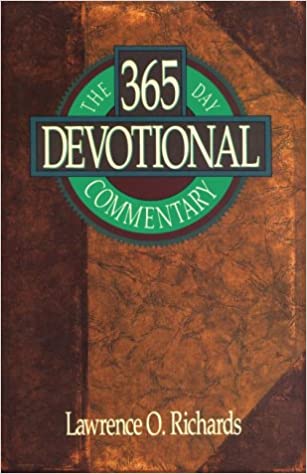
The 365 Day Devotional Commentary

MARCH 11

Reading 70

EVENTS OF DAVID’S REIGN 2 Samuel 21–24

“The Lord lives! Praise be my Rock! Exalted be God, the Rock, my Saviour!” (2 Sam. 22:47)When you tell someone the story of your life, there are some things that just won’t fit in a chronological report. Here in an appendix the writer of 2 Samuel relates more about David.

Overview

David permitted the Gibeonites to exact revenge for Saul’s violation of an ancient treaty (21:1–14). The Philistine wars are summarized (vv. 15–22). David’s song of praise for deliverance is recorded (22:1–51). After a report of David’s last words (23:1–7) and a list of war heros (vv. 8–39), the book closes with an account of David’s sin in taking a census of fighting men (24:1–25).

Understanding the Text

“It is because he put the Gibeonites to death” 2 Sam. 21:1–14. At the time of the Conquest, nearly 400 years before Saul’s time, Israel had sworn in God’s name not to harm the Gibeonites. Saul broke this treaty and ferociously attacked the Gibeonites, who still held land in Israel. When David learned that a famine which had struck Israel was God’s punishment for breaking the oath sworn in His name, he asked the Gibeonites about reparations. The Gibeonites demanded the death of seven of Saul’s male descendants. David ordered they be executed and their bodies left unburied. Exposure of the dead body was considered a great disgrace in Israel. Old Testament Law prohibits punishing any person for a parent’s sins (Deut. 24:16). Because of this, and because 2 Samuel 21:1 fixes the blame on Saul and “his blood-stained house,” it seems likely that the seven David executed had leading roles in the attempt to exterminate the Gibeonites. Unpunished crime is a rebuke to any nation. It was especially abhorrent to God, who used the famine to bring this terrible crime to David’s attention. “David sang to the Lord” 2 Sam. 22:1–51. The psalm traces David’s rise from a fugitive to a conquering monarch, and praises God as the source of David’s deliverance and his achievements. God protected David when he was in deadly danger (vv. 1–7), and David was in awe of His mighty power (vv. 8–16). God rescued righteous David from his enemies (vv. 17–25), and David acknowledged God’s faithfulness to those who trust in Him (vv. 26–37). God raised David to power and international prominence (vv. 38–46), and David sang praises to the Lord for His unfailing kindness (vv. 47–51). This song of praise, very similar to Psalm 18, reflects David’s awareness that all he was and had become was a gracious gift of God. It was true, when the psalm was penned, that God’s reward was “according to my righteousness.” But this thought is no boast. David simply reflected on the fact that God is faithful in keeping his promise to bless those who keep “the ways of the Lord.” When I was a child I stood in the yard of my uncle’s farm home and watched rain pour down on a field just across the road, while I remained perfectly dry. What David is saying is that by obedience we cross the road and find showers of blessing. God’s blessings are always being poured out. Obedience puts us in the place where the blessings flow. “The last words of David” 2 Sam. 23:1–7. David’s last words praised God. More importantly, they show the basis on which David felt secure. “Has He not made with me an everlasting covenant, arranged and secured in every part? Will He not bring to fruition my salvation and grant me my every desire?” Death found a confident David, resting in the promises God had made to him, certain of his own salvation and of a future after death. The Bible picture’s death as man’s enemy, and fear of death as a stranglehold Satan has on mankind. David’s confidence reminds us that for the believer death is not the end of existence, but the doorway to a glorious future. “David’s mighty men” 2 Sam. 23:8–39. It’s likely that “the thirty” was an elite corps or special military unit, perhaps like our “green berets.” Others assume these war heros served as leaders of David’s legions. Whatever their role, they remind us that David did not win his victories alone. No leader can do it all himself or herself. Every leader needs talented and able persons around him or her. “Go and count Israel and Judah” 2 Sam. 24:1–17. While the chapter indicates that David committed a sin by taking a military census, the text does not indicate why David was wrong. Some suggest the census indicated self-confidence and a failure to rely on God. Others assume God commanded David not to take the census. The first-century Jewish historian Josephus says David failed to collect the half-shekel temple tax required of Hebrew males. Whatever the real reason, even General Joab knew David was wrong and argued against the census. When David persisted, the Lord gave David a choice of punishments. David selected the most severe but shortest of the three. It’s unwise to insist on our own way against the conviction of others that what we intend is wrong. “Burnt offerings that cost me nothing” 2 Sam. 24:18–25. The purchase of Araunah’s threshing floor is theologically significant. This height near David’s city of Jerusalem would be added to the city by Solomon, and become the site of the Jerusalem temple. The same mount is fixed by tradition as the place where Abraham came to offer up his son Isaac at God’s command. Placed here, at the end of the book that records David’s accomplishments, the purchase prepares us for the introduction of Solomon, who constructed the temple that David wanted so much to build. The personal significance of the incident is found in David’s response when Araunah offered to give him the land. “I insist on paying you for it. I will not sacrifice to the Lord my God burnt offerings that cost me nothing.” God is not honored by leaving Him “tips” that we hardly miss. The God who loves us so much deserves costly offerings, whether of money or service.

DEVOTIONAL

Who Done It? (2 Sam. 24)

“The devil made me do it” is more than a saying. Sometimes Christians do blame the devil when caught up in some sin. Other times we may blame others. Or childhood trauma. Or any number of things. One of history’s worst serial killers, Ted Bundy, blamed pornographic pictures he saw as a teen for the murders he committed across the country. This chapter raises the question of blame by stating, “He [the Lord] incited David” to initiate the census (v. 1). In another account Satan is the one who incited David (1 Chron. 21:1). Yet in each of these chapters David accepts responsibility for the act and says, “I have sinned greatly in what I have done” (2 Sam. 24:10; see 1 Chron. 21:8). Part of the answer is found in the Hebrew concept of causation. God is the ultimate cause of all that happens. Satan, as an independent being, while acting under the umbrella of God’s permissive will, is an intermediate cause. But while God and Satan can be held responsible for their actions—God responsible for punishing Israel’s sin, and Satan for attempting to harm God’s people—David is ultimately responsible for his own choices as well. Neither God nor Satan made David count Israel. You and I too are subject to many influences. Influence brought to bear by our friends or family. Influences from our childhood. Influences that appeal to our emotions, our baser passions, our desire to do good, etc. Even God the Holy Spirit influences the Christian, and undoubtedly Satan attempts to influence us too. Yet in the last analysis, no one can say, “The devil made me do it.” Or, “My childhood made me do it.” Without in any way arguing for the unrestricted distribution of pornography, we can say with confidence that Ted Bundy’s early exposure to pornography did not make him commit his terrible crimes. Our own will stands between our actions and the many influences that bear on each one of us. Ultimately when we fail we must say with David, “I have sinned greatly.” The fault lies not with God, or with the devil, or with my childhood, but with me. Why is it so important to face this truth and accept responsibility for our failures? Because to admit fault is the first necessary step we take on our journey toward God. When we accept the fact of our sin, we are preparing our hearts to seek, and to find, the forgiveness offered us in God.

Personal Application

There is no one further from God than the person who refuses to accept responsibliity for his sins.

Quotable

“The confession of evil works is the first beginning of good works.”—St. Augustine

The 365 Day Devotional Commentary

MARCH 10

Reading 69

ABSALOM’S REBELLION 2 Samuel 15–20

“Say, ‘Absalom is king in Hebron’ ” (2 Sam. 15:10).In difficult times we may even wonder if God has deserted us. Particularly if our conscience is not clear. Absalom’s rebellion was just such a time for David.

Background

David ruled over Judah for seven years before the northern tribes acknowledged him as monarch. This rift between north and south was exploited by Absalom. His claim that he would support any northerner who came to Jerusalem with a complaint or legal case gradually won their support. After Absalom’s rebellion was put down, the tension between the two sections again exploded briefly before being put down by Joab. Half a century later, after the death of Solomon in 931B.C, sectional differences were still so intense that the kingdom broke into two parts. The northern splinter-kingdom, called Israel, existed until its destruction in 722B.C The southern splinter-kingdom, Judah, survived until 586B.C

Overview

Absalom gradually won allegiance of Israel’s northern tribes and was proclaimed king (15:1–12). David fled Jerusalem with a few companions (v. 13–16:14). In Jerusalem one of David’s secret supporters gave Absalom advice, enabling David to escape south (16:15–17:29). David raised troops there, and in the ensuing battle Absalom was killed (18:1–18). David set aside grief to honor his army (19:1–8), and returned to Jerusalem (vv. 9–43). Joab put down another brief northern rebellion and David’s throne was secured (20:1–26).

Understanding the Text

“Absalom . . . stole the hearts of the men of Israel” 2 Sam. 15:1–12. Some commentators blame David’s refusal to see Absalom for two years after his return from exile for making this handsome son bitter. But Absalom’s plot follows a pattern established long before. Absalom had waited patiently to kill his brother Amnon (13:23). Now he labored patiently for four years to lay a foundation for his rebellion. Absalom’s revolt was well-planned and premeditated. Absalom was not so much bitter as determined to have his father’s throne. It’s popular these days to excuse a person’s actions by blaming someone else for treating him or her unfairly. Yet in fact each of us is responsible for his own choices and actions. “There will your servant be” 2 Sam. 15:13–23. David had served his country well. Yet most of his own people now rejected him. Their unfaithfulness is underlined by a mercenary captain who entered David’s service only the day before, and yet was prepared to keep his oath of allegiance even if it should mean death. There is nothing as painful as betrayal by a person we have every right to expect will be loyal. “If He says, ‘I am not pleased with you’ ” 2 Sam. 15:24–37. When the priests and Levites prepared to leave Jerusalem carrying God’s ark, David sent them back. David’s remarks reveal his own uncertainty. God might no longer be pleased with David, and the rebellion might be God’s way of removing him from the throne. If so, David wanted the ark to remain a symbol of faith. And if God remained pleased with David, the king would surely return to the ark. David may have been uncertain. But his priorities remained clear. God was to be worshiped, not used in political campaigns. David also remained a wise politician. He left behind several faithful men who would have gone with him, to provide him with information and to try to disrupt Absalom’s plans. “You man of blood, you scoundrel!” 2 Sam. 16:5–14 When Shimei reviled David he may have expressed David’s own inmost doubts. David had not mistreated Saul’s family, but he had indirectly caused many deaths. He surely had acted like a scoundrel in his affair with Bathsheba. The sins of his sons must also have weighed heavily on his heart. This may be reflected in David’s refusal to let one of his supporters silence Shimei. After all, David suggested, he may be doing God’s work (cf. v. 10). David preferred to leave it all up to the Lord. God might very well transform those curses into blessing. What others say about us matters very little. They may wish us ill. But if God is for us, what we will receive will be good. “So I advise you” 2 Sam. 16:15–17:29. David’s friend Hushai was able to disrupt Absalom’s plans. The advice he gave permitted David to escape, while following the advice of Ahithophel would have guaranteed David’s death. Christians often receive conflicting advice from friends, relatives, or counselors. Often what we need is not more advice, but the wisdom from God to know what advice is best. How good to have the promise, “If any of you lacks wisdom, he should ask God, who gives generously to all without finding fault, and it will be given to him” (James 1:5). “O my son Absalom” 2 Sam. 18:1–19:8. In the battle that followed Absalom was killed—against the king’s express orders. Rather than rejoice in the triumph, David was brokenhearted with grief. Joab’s rebuke reminded David of his duty, and the king went to receive the congratulations of those who had fought for him so loyally. David’s sorrow for Absalom’s death was undoubtedly misplaced, but understandable. It’s hard to acknowledge when our children’s actions merit punishment. But like David we must at times put aside personal feelings and serve the public good. “Amasa was not on his guard against the dagger in Joab’s hand” 2 Sam. 20:1–13. Joab was a harsh man, but completely loyal to David. Like many loyal men, this commander of David’s army acted at times without orders, or ignored orders if he thought his action was in the king’s best interest. Earlier Joab had assassinated Abner, the Israelite military leader who was negotiating with David. In this battle Joab personally killed Absalom despite David’s command that he be spared. Now Joab murdered Amasa, who had commanded Absalom’s forces. While Joab might be commended for his loyalty, he merits no praise for his actions. Many Christians seem to take Joab’s course. They proclaim their loyalty to God, and they do try to serve Him. But they want to serve God their way, without submitting to His Word.

DEVOTIONAL

In Flight (2 Sam. 15–16)

We can sense David’s mood as he fled Jerusalem with just a few retainers. Absalom, with a large army, was in pursuit. The situation seemed hopeless. And to top it all off, Shimei cursed David, shouting that God was just paying David what David deserved for his bloody past. Everything had gone wrong. Besides, David’s conscience wasn’t clear. There were grounds to think that Shimei might be right. No wonder David seemed despondent and depressed as he gathered his cloak around him, and hurried over the Brook Kidron in the late evening shadows. How did David really feel? And what can we do when we find ourselves feeling as he must have? The answer is in Psalm 3, which David penned “when he fled from his son Absalom.” First David looked around. O Lord, how many are my foes! How many rise up against me! Many are saying of me, “God will not deliver him” (Ps. 3:1–2). Then David looked back. But You are a shield around me, O Lord, my Glorious One, who lifts up my head. To the Lord I cry aloud, and He answers me from His holy hill (vv. 3–4). Then David looked up. I lie down and sleep; I wake again, because the Lord sustains me. I will not fear the tens of thousands drawn up against me on every side. Arise, O Lord! Deliver me, O my God! For You have struck all my enemies on the jaw; You have broken the teeth of the wicked (vv. 5–7). Then David looked ahead. From the Lord comes deliverance. May Your blessing be upon Your people (v. 8). Looking around, you and I see our difficulties realistically. But looking back, we remember that God has helped us in the past. Looking up, we find peace as we commit ourselves and our needs to the Lord. And looking ahead, we know we can expect good things from God.

Personal Application

When we face difficulties, we need to follow the simple pattern of looking—around, back, up, and ahead—with faith.

Quotable

“Be not miserable about what may happen tomorrow. The same everlasting Father, who cares for you today, will care for you tomorrow and every day. Either He will shield you from suffering, or He will give you unfailing strength to bear it.”—Francis De Sales

The 365 Day Devotional Commentary

MARCH 9

Reading 68

DAVID’S PERSONAL FAILINGS 2 Samuel 11–14

“I have sinned against the Lord” (2 Sam. 12:13).The biblical text reports David’s triumphs. But it just as honestly relates his troubles. There is no attempt here, as in other ancient documents, to disguise the human failings of one who was admittedly Israel’s greatest king.

Definition of Key Terms

Sin.

Hebrew words distinguish between types of sin. Each implies existence of a standard that God has revealed. One Hebrew word pictures sin as falling short of the standard, another as twisting the standard, and a third as willful and rebellious refusal to live by the standard. Psalm 51, which records David’s confession after his sin with Bathsheba, uses each of these Hebrew terms. David’s passion, and his later failures with his family, remind us that all human beings are weak. These very personal stories of David also remind us that sin has tragic consequences. But most important, they teach us that God will provide the forgiveness each of us so often needs.

Biography: Bathsheba

A study of the text shows that Bathsheba was a victim not a seductress. What is even more terrible, she was the helpless victim of a man whom all Israel had come to know and trust as a godly leader. Yet as we trace the relationship of these two we see that Bathsheba was able to work through the anger she must have felt at being used, to forgive David, and to build a lasting and loving relationship. David’s honest confession of his sin had freed Bathsheba as well as God to forgive. As David was about to die he transferred his kingdom to Solomon, the fourth son Bathsheba bore him, in part to protect her and her children from harm (1 Kings 1:11–31). A Jewish tradition suggests that Solomon wrote Proverbs 31, his praise of the noble wife, in honor of his mother, Bathsheba.

Overview

David committed adultery with Bathsheba (11:1–13), and then arranged for the death in battle of her husband (vv. 14–27). When confronted by Nathan the prophet David confessed his sin (12:1–14), but despite David’s prayers the child conceived in adultery died (vv. 15–31). David’s weakness was reflected in his son Amnon, who raped a half sister (13:1–22). The girl’s brother Absalom then killed Amnon (vv. 23–39). Absalom fled, but later this favorite son of David’s was allowed to return to Jerusalem (14:1–33).

Understanding the Text

“David sent messengers to get her” 2 Sam. 11:1–5. The text carefully guards against the impression that Bathsheba intended to seduce David. Note that (1) David should have been at war, (2) he saw her bathing at an hour when everyone should have been asleep, (3) she was seen from the roof. This suggests her home was down the hill from David’s palace, and she was probably bathing in an inner court. (4) She could hardly resist the royal messengers “sent to get her,” and (5) the text says “he” slept with her. Nothing is said in the text to shift any blame from David to Bathsheba. There is no attempt to disguise David’s guilt. It is a tragedy when anyone sins. But if we should sin, we need to be completely honest about what happened. Excuses are no excuse. “Uriah the Hittite” 2 Sam. 11:6–27. Uriah was most likely a mercenary soldier who had joined David, and taken a name which means “Yahweh is my light.” He appears in the text to have been an honorable and dedicated man. When he refused to join Bathsheba at their home (where David intended him to have sex with his wife to mask the fact that Bathsheba was already pregnant), David sent orders to General Joab to see that Uriah was killed in battle. David’s first sin had led to one even worse-cover-up! When Uriah was killed in battle, David openly married Bathsheba. “One sin leads to another” may seem to be a trite saying. But it is true. To be protected from ourselves, we need to guard our hearts against taking that first step away from God’s standards. “Why did you despise the word of the Lord by doing what is evil in His eyes?” 2 Sam. 12:1–13 David was confronted by the Prophet Nathan. In later years, prophets who spoke boldly to Israel’s kings risked death. But David, despite his terrible sins, did love God. Rather than strike out at his accuser, David admitted that he had sinned. Psalm 32 graphically portrays David’s emotions after this great sin. When we are troubled by our misdeeds, only confession can provide relief. Listen to David’s words, and see if they reflect experiences of your own. When I kept silent, my bones wasted away through my groaning all day long. For day and night Your hand was heavy upon me; my strength was sapped as in the heat of summer. Then I acknowledged my sin to You and did not cover up my iniquity. I said, “I will confess my transgressions to the Lord”— and You forgave the guilt of my sin. Psalm 32:3–5 David did more than confess his sin to Nathan and to God. David wrote Psalm 51, which was used in public worship. The superscription says “A psalm of David. When the Prophet Nathan came to him after David had committed adultery with Bathsheba.” We can confess private sins only to God. But public sins must be confessed to God and before God’s people. “The son born to you will die” 2 Sam. 12:14–31. David was forgiven, but the child born of the adulterous union was to die. That death actually illustrates the grace of God. Growing up, the child would have been a constant reminder to David and Bathsheba of their sin. Even worse, the child himself would have borne publicly the stigma of his parents’ action. David put death itself in perspective when he said, “I will go to him, but he will not return to me” (v. 23). Death is not the end, even for a stillborn child. Life after death is a reality, and there are many situations in which to die is truly gain. The death of any loved one hurts. But what comfort it is for believers to realize that death is not life’s end, but entry into a full experience of that eternal life promised to us in the Lord. “She . . . went away, weeping” 2 Sam. 13:1–19. Amnon’s passion for Tamar changed to hatred after he deceived and raped her. People are more likely to hate someone they have wronged than someone who has wronged them. No one likes to be reminded of his or her faults, and the sight of someone we have wronged keeps our own failures before our eyes. “A desolate woman” 2 Sam. 13:20–22. Note the contrast between this story of Amnon and Tamar and that of David and Bathsheba. In each case the woman was victimized. But David ultimately confessed his sin, while Amnon refused to confess and instead hated (perhaps blamed?) the innocent Tamar. Because David accepted responsibility for his sin, Bathsheba too found inner healing. Because Amnon would not accept responsibility, he was murdered and Tamar was unable to find peace. There is only one healthy way to deal with sin. We must acknowlege our sins, accept responsibility for them, and trust God to forgive us and to undo the harm we have done to others. “Strike Amnon down” 2 Sam. 13:23–39. Tamar’s brother, Absalom, insisted Tamar not mention the rape. For two years he pretended friendship with Amnon, whom he had come to hate. Then he conspired to have Amnon killed. Afterward, fearing the penalty the law established for murder, Absalom fled the country. “Bring back the young man Absalom” 2 Sam. 14:1–33. General Joab devised a fable intended to give David a basis for restoring Absalom. The problem the fable set was a conflict of legal principles: murder deserved the death penalty, yet each family line in Israel must be preserved. When the case was presented to David, he reluctantly decided to protect the killer to preserve the family line. The woman who presented the case then argued that David should permit Absalom to return, suggesting it is godly to devise “ways so that a banished person may not remain estranged from him.” David did bring Absalom back to Israel, but could not bring himself to see his son for two more years. The argument that Joab designed was specious in that David had other sons besides Absalom. The two cases were not parallel. David’s delay in seeing Absalom suggests he was not comfortable with his decision. Yet God does devise ways to restore the banished: the way of forgiveness. By failing to forgive fully when Absalom was returned, David himself created a bitterness which found expression in rebellion and civil war.

DEVOTIONAL

Furious Parenting (2 Sam. 13–14)

Ken Schaeffer is a success as a parent. His son, also Ken, was valedictorian at a local high school and a National Merit scholar last year. His daughter, Cindy, was valedictorian of her class this year and also a National Merit scholar. Both Ken and Cindy are fine Christian young people. But while Ken is a success as a parent, he doesn’t feel terribly successful otherwise. A fellow graduate of Dallas Seminary, Ken hasn’t lasted in the pastorate, and he’s never been able to make much money. It may be surprising, but often the most successful people when judged by the world’s standards have been terrible parents. And some of the “least successful” have raised children of whom anyone would be proud. David, despite his achieving gold stars as Israel’s greatest king, was a terrible parent. Some of his failures are highlighted in these chapters, and stand as examples you and I are to follow—if we want to ruin the lives of our offspring! What are David’s prescriptions for parental failure? Get mad, but don’t discipline. When David heard what Amnon did to his half sister Tamar, the text says David was “furious” (13:21). But there’s no hint that he even spoke to Amnon, much less disciplined him. Parents who fail to correct their children can expect greater troubles down the line. Love your children too much. After Absalom fled, David “mourned for his son every day.” David seems to have missed his son so much that he lost sight of what his son had done. Boys and girls who are loved so much that “anything goes” are heading for trouble. Forgive, but not completely. David finally permitted Absalom to return to Jerusalem, but would not see him for two full years. If forgiveness is to be granted, it must be complete. Incomplete forgiveness, replete with little reminders of the past sins, creates bitterness and antagonism. When God forgives, He forgets. If we are to forgive a fault, we must do so completely. David, a success in his career, was a failure as a parent. He was upset by what his children did, but did not discipline. He loved his children so much that he lost perspective. And he forgave incompletely. In his family life Israel’s greatest king was one of history’s greatest failures. While my friend Ken Schaeffer, in many ways a failure in his own eyes, is one of history’s great success stories.

Personal Application

We need to give as much or more thought to our parenting as we do to our careers.

Quotable

“I think that what children in the United States desperately need is a moral purpose, and a lot of our children aren’t getting that. They’re getting parents who are very concerned about getting them into the right colleges, buying the best clothing for them, giving them an opportunity to live in neighborhoods where they’ll lead fine and affluent lives and where they can be given the best toys, go on interesting vacations, and all sorts of things. . . . Parents work very hard these days; and they’re acquiring things that they feel are important for their children. And yet vastly more important things are not happening. They’re not spending time with their children, at least not very much.”—Robert Coles

The 365 Day Devotional Commentary

MARCH 8

Reading 67

DAVID UNITES HIS KINGDOM 2 Samuel 6–10“David went down and brought up the ark of God . . . to the City of David with rejoicing” (2 Sam. 6:12).David’s next actions indicate careful planning and political sensitivity. They also reveal another trait appropriate to exceptional people: a firm and joyous faith in God.

Background

Jerusalem.

Moses predicted that God would choose a place in Canaan “for His name” (Deut. 16:2). That choice was made through David. From David’s time on, Jerusalem was the very heart of the nation and of the Jewish faith. It remained the capital of Judah after Solomon’s kingdom was divided. It was Jerusalem to which Jewish settlers returned after the Babylonian Captivity. Jerusalem was the focus of much of Christ’s earthly ministry, and the city where He was condemned. Prophecy identifies Jerusalem as the place to which Jesus will return, and as the capital of the earthly kingdom which He will establish. There is no other site on earth as theologically significant as the City of David, Jerusalem.

Overview

David made Jerusalem the religious as well as political capital of Israel by bringing up the ark (6:1–23). God did not allow David to erect a temple (7:1–7). But God did promise David a permanent dynasty (vv. 8–17), moving David to praise the Lord (vv. 18–29). David defeated nearby enemies (8:1–14), created a national government (vv. 15–18), and showed kindness to Jonathan’s only surviving son (9:1–13). In time David crushed all his enemies and extended Israel’s domination from the Gulf of Aqaba in the south to the Euphrates River in the north (10:1–19).

Understanding the Text

“He and all his men set out . . . to bring up from there the ark of God” 2 Sam. 6:1–8. David’s first attempt to bring the ark to Jerusalem ended in failure, caused by two violations of ritual law. The ark was Israel’s most holy relic, a symbol of the living presence of God. Old Testament Law required that it be carried by members of a particular Levite family (Num. 3:27–32), and that it never be touched (4:15). When the cart on which the ark was placed tipped, and Uzzah reached out his hand to steady it, God struck Uzzah dead. David was both frightened and angry. Why had the God he so desired to honor acted in such a way? This story has troubled many who read the Bible. God’s action does seem unfair. Uzzah surely had intended no harm. Perhaps the answer lies in the casual way Saul had treated God for some four decades. He had never shown an interest in the ark, or even in obeying God. The sudden outburst against Uzzah reminded David and all of Israel that God truly is holy. And the Holy One of Israel is not to be treated casually! “David . . . danced before the Lord with all his might” 2 Sam. 6:9–15. Before David attempted to move the ark again, he apparently consulted Scripture (cf. v. 13). This time David’s joy was unrestrained, and he exchanged his royal robes for the kind of linen ephod worn by priests who served before the Lord. This clothing symbolized the fact that the king found his greatest fulfillment as a simple servant of God. When you and I come before God, all our worldly accomplishments are meaningless. All that counts is a heart committed to love and serve the Lord. “She despised him in her heart” 2 Sam. 6:16–23. Michal had been used by both her father and David (cf. 1 Sam. 18:20–25; 2 Sam. 3:13–16). It’s no wonder she had become bitter. But Michal had permitted bitterness to gain such a grip on her life that she found no joy in the Lord. Instead of focusing on the ark and on the Lord, Michal focused on David’s “disgraceful” refusal to maintain his royal dignity. What a warning to us. Yes, others may misuse us. But if we permit ourselves to become so bitter that we cannot sense the presence of God, we will lose all perspective on life. Michal may have had a right to be bitter. But surely David, persecuted so long by her father, had a right to be bitter too. David triumphed over bitterness by keeping his focus on the Lord. Michal lost sight of God, and ended her life lonely and alone. “The Lord Himself will establish a house for you” 2 Sam. 7:1–17. This significant Old Testament passage introduces the Davidic Covenant. This is the name given to promises which God made to David, which David recognized as an unbreakable divine commitment. The heart of the covenant was God’s announcement that He would “establish a house” for David. Here “house” is used in the sense of descendants. In the immediate future David’s own son would erect a temple (v. 13). But as is common in biblical prophecy, the immediate future mirrors God’s eschatological [end time] intent. Through David’s line God would establish a kingdom that would “endure forever before Me.” The New Testament carefully traces the genealogy of Jesus Christ back to King David. Matthew especially shows how Jesus’ birth fulfills Old Testament predictions about a coming King destined to rule eternally (cf. Matt. 1–2). David did not understand all the implications of the divine commitment. But he realized that God was giving him a great gift when the Lord announced, “My love will never be taken away from him [David’s descendants], as I took it away from Saul, whom I removed from before you” (2 Sam. 7:15). David’s throne was secure, through his own lifetime, and beyond! “David fought” 2 Sam. 8:1–14. David’s next years were spent in battle with enemies to the north and east. God gave him success in every battle, and he was able to gain control of vital trade routes that passed through Damascus, establishing garrisons in Syria and across the Jordan in Edom. David’s wars multiplied the territory Israel controlled many times over that held in the Judges era! “I will surely show you kindness for the sake of your father Jonathan” 2 Sam. 8:15–9:13. The writer of 2 Samuel passes over David’s vital work in setting up a national government (8:15–18), but gives extensive space to the story of David’s kindness to Mephibosheth. The crippled son of David’s old friend Jonathan is given his grandfather’s extensive lands and a place in David’s court at Jerusalem. In most cases in which dynasties were replaced in ancient kingdoms, surviving members of the old king’s family were slaughtered. David’s unusual treatment of Mephibosheth is a better display of those strengths which won him the throne than his genius for bureaucratic invention. Success does demand ability and hard work. But the secret of true greatness is found in godly character. “I will show kindness” 2 Sam. 10:1–19. It would be wrong to portray David as a despotic aggressor. The story detailing the start of David’s war with the Ammonites illustrates that many conflicts were actually forced on Israel. David’s unbroken string of military successes established Israel’s dominance of the area during his lifetime.

DEVOTIONAL

Precious Promises (2 Sam. 7)

David had been eager to do something for God. When God turned down his offering, David must have been momentarily shaken. But then God went on. Rather than accept a gift from David, the Lord intended to give a gift to him! How like God’s dealings with us. We love Him, and want to give Him our very best. But whatever we do, we soon learn that God is the greatest Giver. When David realized what great and precious promises God had made to him, he was stunned. “What more can David say to you?” the grateful king exclaimed. And then David found something to say. David repeated God’s promises, fixing them in his mind and heart. And then David simply praised God. What a model for us. What can we say to God? What can we do for Him? Simply repeat His many promises to us, fixing them in our hearts and minds. And then lift our voices to praise the Lord.

Personal Application

The most appropriate thing we can give the God who gives us so much is praise.

Quotable

Thou that hast given so much to me, Give one more thing—a grateful heart; Not thankful when it pleaseth me, As if Thy blessings had spare days; But such a heart, whose pulse may be Thy praise.—George Herbert

Stephen Boyd Blog

Belfast-born Hollywood and International Star from 1950-1970's Fan Tribute Page

Abundant Joy

Digging Deep Into The Word

Not My Life

The Bible as clear as possible

Seek Grow Love

Growing Throughout the Year

Smoodock's Blog

Question Authority

PleaseGrace

A bit on daily needs and provisions

Three Strands Lutheran Parish

"A cord of three strands is not easily broken." Ecclesiastes 4:12

1love1god.com

Romans 5:8

The Rev. Jimmy Abbott

read, watch, listen

BEARING CHRIST CRUCIFIED AND RISEN

To know Christ and Him crucified

Considering the Bible

Scripture Musings

rolliwrites.wordpress.com/

The Official Home of Rolli - Author, Cartoonist and Songwriter

Pure Glory

The heavens are telling the glory of God; and the firmament proclaims His handiwork. Psalms 19:1

The daily addict

The daily life of an addict in recovery

The Christian Tech-Nerd

-Reviews, Advice & News For All Things Tech and Gadget Related-

Thinking Through Scripture

to help you walk with Jesus in faith, hope, and love.

A disciple's study

This is my personal collection of thoughts and writings, mainly from much smarter people than I, which challenge me in my discipleship walk. Don't rush by these thoughts, but ponder them.

Author Scott Austin Tirrell

Maker of fine handcrafted novels!

In Pursuit of My First Love

Returning to the First Love