
Amazing Grace: 366 Hymn Stories
January 1
ANOTHER YEAR IS DAWNING
Frances Ridley Havergal, 1836–1879
Teach us to number our days aright, that we may gain a heart of wisdom. (Psalm 90:12)
It is always challenging to approach a new year and to realize anew that our days upon this earth are so rapidly passing. How important it is that we pause with the psalmist and pray for a “heart of wisdom” that will enable us this year to live each new day in a way that brings all glory to our God. I with Thee would begin, O my Savior so dear, on the way that I still must pursue; I with Thee would begin every day granted here, as my earnest resolve I renew—To be and remain Thine forever. —From the Swedish
In January of 1874, the many friends of Frances Ridley Havergal received a New Year’s greeting with the heading, “A Happy New Year! Ever Such May it Be!” Following this greeting appeared her text, still considered to be one of the finest New Year’s prayers of consecration ever written:
Another year is dawning, Dear Father, let it be, in working or in waiting another year with Thee; another year of progress, another year of praise, another year of proving Thy presence all the days. Another year of mercies, of faithfulness and grace; another year of gladness in the shining of Thy face; another year of leaning upon Thy loving breast; another year of trusting, of quiet, happy rest. Another year of service, of witness for Thy love; another year of training for holier work above. Another year of dawning, Dear Father, let it be, on earth, or else in heaven, another year for Thee. Amen.
One can well imagine that those who received this greeting card from Miss Havergal that year read her words thoughtfully. They were written by one who had already become widely known throughout England as “the consecration poet.” It was said of her that she always lived her words before she wrote them. Her life was one of constant and complete commitment to God. Her many talents—an accomplished pianist and vocalist, proficiency in seven languages, a keen mind (memorization of the entire New Testament, Psalms, Isaiah, and the Minor Prophets)—were all dedicated to serving God and others during the new year.
May that be our challenge for this new year as well!
For Today:
Deuteronomy 1:30, 31; Joshua 3:4; Psalm 39:4; Isaiah 58:11
Amazing Grace: 366 Hymn Stories
Preface
Even a casual visit to a bookstore will impress a viewer with the many “how-to” or self-improvement books that are available today.
How to be happy, be healthy, be successful, be a good parent … and the list goes on.
But what are the “how-to’s” for an effective spiritual life? Are there daily practices that Christians should pursue? First and foremost, there needs to be an appreciative awareness of God’s amazing grace in our lives: grace that adopted us as sinners and made us members of the heavenly kingdom; grace that sustains and directs our daily steps; and the grace that will ultimately usher us to our eternal home.
Secondly, let me suggest these key words that also need to be a vital part of every believer’s daily experience: Praise—Prayer—Love A daily life of praise, thanksgiving, and the adoration of God. A daily life of prayer, fellowship, and a communion with God. A daily life of love, a delight in the personal assurance of God’s love and a desire to share His love with others. Two basic resource books are available to help us in this spiritual well-being: the Bible, and the church hymnal.
Regular study of the Bible, God’s infallible rule of faith and practice, is an absolute essential for Christian living. Nothing ever replaces our daily need for His trustworthy Word.
Through the ages, however, devout believers from every Christian community have responded to God and His inspired revelation with their own expressions. The church hymnal, a most important heritage of the Christian church, is one of the finest collections of man’s thoughts and feelings about God. When these choice responses are further enhanced with appropriate melodies, harmonies, and rhythms, there exists a reservoir of unusual spiritual strength and encouragement. Spend time each day with the two resource books now blended together into these daily devotionals.
Allow God to speak directly to you through the Scriptures. Also, consider thoughtfully how other sincere believers have related to God with their “psalms, hymns, and spiritual songs.” Then respond to Him with your own expressions of praise,prayer, and love. Carry a musical truth with you throughout each day. Let the non-Christian world observe a living demonstration of a joyful faith. And as you do, you will become increasingly aware of God’s amazing grace and His power that enables you to live an effective and victorious Christian life. Perhaps these words, written more than two centuries ago, will begin to have new meaning for you:
Amazing grace—how sweet the sound—that saved a wretch like me! I once was lost but now am found, was blind but now I see. ’Twas grace that taught my heart to fear, and grace my fears relieved; How precious did that grace appear the hour I first believed. The Lord has promised good to me, His word my hope secures; He will my shield and portion be as long as life endures. Thru many dangers, toils and snares, I have already come; ’Tis grace hath brought me safe thus far, and grace will lead me home. —John Newton, 1725–1807
“I am in myself, incapable of standing a single hour without continual fresh supplies of strength and grace from the fountain-head.” —John Newton
Billy Strachan

Small update from original writer blog page … https://geoffbaron.wordpress.com/2007/08/28/a-year-in-austria/#respond
A year in Austria
Posted: August 28, 2007 | Author: geoffbaron |
My year in Austria could arguably considered the best of my life…
but some other highlights included:
Becoming friends with my mentor Billy Strachan
Billy Strachan
Posted: November 10, 2006 | Author:geoffbaron
I wish I could introduce everyone to my friend Billy Strachan… unfortunately, he is busy pranking people in heaven.
Billy was the first person to show me Jesus Christ.. not tell me about him… but actually show me.
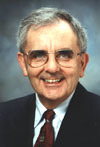
Billy went to play pranks on Jesus. He touched thousands of lives for Christ. Well, I suppose it helps that this blog post has the top spot on Google when searching for him. So.. I’ve decided to spruce the page up a bit. I will add his picture. Voila. Also.. I will put a few links to some of his sermons/lectures: Via Capernwray Store (a little expensive for digital downloads if you ask me.. but Capernwray is a good cause.. and his lectures are worth it). Ahh.. here are a few free ones. https://www.sermon-online.com/search.pl?d1=Billy+Strachan&lang=en&author=262
Please.. if you have any great Billy stories to share.. please leave them in the comments below. They are encouraging to me and to others who loved Billy.
Here’s more of my story with Billy. I was in Austria working at Tauernhof. I had had Billy as a lecturer in Germany and in England a few years before and I was immediately drawn to Billy and his lectures. His lectures made me want to stand up and scream “FRREEEEDDOOMMM!!!” after every lecture. He was the embodiment of freedom in Christ and I loved it. His stories set Christ free in my life. I was drawn to Billy then but I wasn’t one of this chosen ones.. those few people he discipled. I tried to strike up conversations with him but they didn’t go anywhere. It wasn’t till I met him in Austria that we hit it off. We were watching Fawlty Towers in the staff lounge.. having a good laugh (he was laughing more then I was). At one point he stopped.. turned it off and spoke directly into my life. He nailed 3 things I was struggling with in my life without knowing a thing about me. He looked, and spoke into my soul through the Holy Spirit (later I came to find out this was fairly common for him to do). I got all weepy. We went on to have a long chat about all sorts of things and he told me to email him regularly. I didn’t.. I didn’t feel I had anything to say and I knew how busy he was. I met up with him again that summer at a friend’s wedding. It was an honor to stand in a kilt next to him. He locked eyes with me and said, “You need to email me more”. Dang. So, I did. We had long email conversations. I was amazed at how much he wrote.. pages. Amazing. Then I didn’t get an email back.. odd. I got a phone call from a friend in Austria.. Billy had died as all good Scots die.. of heart disease. Man, I miss that guy. It was like having God himself stop what we was doing while creating the Universe to reach down and say “Hello”.. in a nice Scottish accent.
The 365 Day Devotional Commentary
FEBRUARY 14
Reading 45
MOSES’ FAREWELL
Deuteronomy 31–34
“I am now a hundred and twenty years old and I am no longer able to lead you” (Deut. 31:2).Each of us leaves a heritage behind when we reach the end of our lives. Moses left a glorious heritage: a generation prepared for victory, a Law for Israel to live by, and the memory of the God who keeps His promises.
Overview
God would be with Israel’s new leader, Joshua (31:1–8). The Law was to be read to all Israel every seventh year (vv. 9–13), but God predicted future rebellion (vv. 14–30). Moses taught them a unique song, in the form of a judicial indictment, to encourage obedience (32:1–47). Just before his death (vv. 48–52), Moses blessed the tribes of Israel (33:1–29). An unknown author later added Moses’ epitaph (34:1–12).
Understanding the Text
“I am now a hundred and twenty years old” Deut. 31:2. In Egypt, 110 was the symbolic age of wise men. Like Moses, those who base their lives on relationship with God are wiser than this world’s wisest. It’s fascinating to remember that Moses was 80 when he was first called to serve God. The last third of Moses’ life was the most productive spiritually. Old age isn’t the end for any of us, though persons who found great satisfaction in their jobs often feel this way. The time we once devoted to work can now be devoted to serving God and others. “The Lord your God goes with you” Deut. 31:3–8. Moses presented Joshua as Israel’s new leader and reminded the people that it was the Lord who had won past victories and who “goes before you.” It’s only natural for us to depend on human leaders. But such dependence is misplaced. God, not Moses, was the key to past triumphs. Let’s respect our leaders, but let’s depend only on the Lord. “Moses wrote down this Law and gave it to the priests” Deut. 31:9–13. It seems likely that what Moses delivered to the priests was the bulk of the Book of Deuteronomy. This book was to be read to the whole nation—“men, women and children, and the aliens living in your towns.” The reading was to be done at the Feast of Tabernacles every seventh year, “as long as you live in the land.” All have a right to know and to understand what God says to us in the Scriptures. “I know what they are disposed to do” Deut. 31:14–29. Despite commanding that the Law be faithfully and regularly taught to Israel, God told Moses that dark days were ahead. Israel would “soon” turn to idolatry and “break the covenant I made with them.” God knew “what they are disposed to do, even before I bring them into the land” (v. 21). The Hebrew word, yeser, (“purpose”) here means a tendency, impulse, or disposition. The revelation of this tendency may come as a surprise, for under Joshua the Israelites obeyed God. In fact, their behavior was exemplary. But God, who knows the heart, saw the inner tendency toward sin despite outward obedience. You and I need to be sensitive to our hearts. That tendency toward sin still exists within us. We can be in great danger even when there is no sign of faltering in our outward behavior. Jesus once explained His criticism of certain Pharisees who were extremely strict in their approach to God’s Law: “These people honor Me with their lips,” He said, “but their hearts are far from Me” (Mark 7:6). Only wholehearted love for God can guard us against our tendency toward sin. “Moses recited the words of this song” Deut. 31:30–32:47. The Israelites were expected to memorize this lengthy “song,” or poem. In cultures where reading and writing are less common, memorization of extremely long poems, legends, treaties, etc., is quite common. This fascinating poem follows what is known today as the “RIB pattern.” The Hebrew word, rib, means a controversy or a legal suit. The song was in effect God’s indictment of Israel for breaking the covenant with Him as Sovereign. What is striking is that the poem then went on to add material that is not found in ancient secular indictments! God assured Israel that though “they are a nation without sense” He would indeed have compassion on them (vv. 26–38). God would deliver Israel once again and free them from their enemies (vv. 39–43). The rib pattern of the poem shows its ancient origin, for it fits comfortably into the culture existing in Moses’ day. But the variation from that pattern is most important to us. Those who angered secular rulers perished. The statement which expressed the punishment due to covenant-breakers ended the indictment. But even when we sin and deserve judgment, punishment is not God’s last word. His last word to us as to Israel is one of grace. We too can be restored. We too can come back, and once again worship our God as a forgiven people. “This is the blessing that Moses . . . pronounced” Deut. 33:1–29. The final blessing pronounced by a dying father was viewed as a will in the ancient Near East, and was legally binding. The blessing of Moses, Israel’s spiritual father, contained elements of prophecy. The poetic blessings in these chapters are sometimes obscure but are based on traits of the tribal patriarchs and on God’s revelation concerning their future. The blessings contain prayers, predictions, praise, and commands. The emphasis of each blessing is shown below.
| Reuben | A prayer for survival. |
| Judah | A prediction of victory. |
| Levi | A prayer for blessing, a call to faithfulness. |
| Benjamin | A promise of safety. |
| Ephraim | A promise of preeminence. |
| Manasseh | A prediction of strength. |
| Zebulun | A prediction of wealth. |
| Issachar | A prediction of wealth. |
| Gad | A promise of land. |
| Dan | A prediction of energy. |
| Napthali | A promise of blessing. |
| Asher | A prayer for strength and security. |
The range of blessings predicted again shows that God desires the very best for His people. Yet, as this magnificent psalm of blessing concludes, we need to remember that the most important gift God can give is already ours—Himself. As Moses said, “the Eternal God is your refuge, and underneath are the everlasting arms.” GOD’S INDICTMENT OF ISRAEL
| A statement of God’s character | (vv. 1–4) |
| Implied accusation of Israel | (vv. 5–6) |
| Recalling God’s acts for Israel | (vv. 7–14) |
| Specific charges against Israel | (vv. 15–18) |
| The sentence | (vv. 19–25) |
DEVOTIONAL
Moses’ Epitaph (Deut. 34)
One of the unusual privileges I’ve had is to serve as chaplain to my family. Though ordained, I’ve not pastored a church. So most of the weddings I’ve performed, and all of the funerals, have been for family. To date I’ve buried my mother, my dad, a stepmother, an uncle, and an aunt. Each time I’ve thought back over their lives, I’ve found something that made that person special. Each one of my relatives was very different from the others. But in each life God had done something beautiful. Something to remember that honored Him, and made the memory of our loved one more precious. Then, after Moses’ death, an unknown editor added an epitaph. He described the words God spoke to Moses (vv. 1–4), and the grief felt by Israel (vv. 5–8). He added a word about Joshua to show that life goes on (v. 9). And then he concluded with an epitaph intended to show what was special about Moses. “Since then, no prophet has risen in Israel like Moses, whom the Lord knew face to face, who did all those miraculous signs and wonders the Lord sent him to do in Egypt” (vv. 10–11). Moses was special. And he deserved this epitaph as well as our awed respect. But what moves me most has been to realize, as one by one the members of my own family die, that every one of us is special. When God enters a life, He takes at least one trait of ours and makes us beautiful.
Personal Application
What trait of yours will your family members remember with greatest joy?
Quotable

