
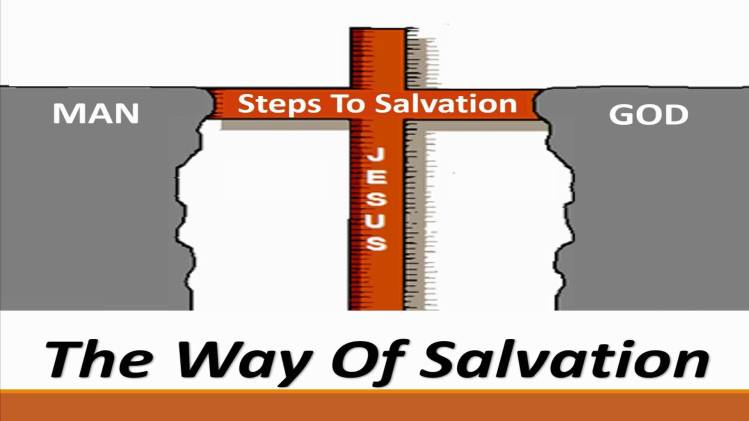
Question: What is the greatest Text in the Bible?
Answer: by Dr. Harry A. Ironside
John 3:16 “For God so loved the world, that he gave his only begotten Son, that whosoever believeth in him should not perish, but have everlasting life”
Why do so many people think this is the greatest text in the Bible?
There are other wonderful texts that dwell on the love of God, that show how men are delivered from judgment, that tell us how we may obtain everlasting life, but no other one verse, as far as I can see, gives us all these precious truths so clearly and so distinctly. So true is this that when the gospel is carried into heathen lands, and missionaries want to give a synopsis of the gospel to a pagan people, all they find it necessary to do, if they are going to a people that have a written language, is to translate and print this verse, and it tells out the story that they are so anxious for the people to hear. If they do not have a written language, invariably one of the first scriptures that they are taught to memorize is John 3:16.
I have a slip of paper sent to me by my friend, Allan Cameron of China. In those odd characters this same message is written, and that message put into the hands of the Chinese has often been used to lead a soul to Christ. Not immediately, of course, for he does not understand it all at once, but it has led him to ask upon what authority is this statement based, and so eventually he is led to the Lord Jesus Christ.
Many Truths in One Verse
How many truths are wrapped up in that one verse! In the first place, there is the personality of God–“God so loved.” A God who can love is a person. We had a woman in the United States who invented a religion a few years ago, and she said it was all love, and yet she said that God is impersonal. But that is not possible. Just imagine falling in love with a cloud, or thinking that a cloud is loving you! It is something utterly impossible; you cannot do it. Behind love there must be a person with a warm, loving heart. “God so loved.”
This Chinese translation which my friend Cameron sent me, says, “God so passionately loved the world, that he gave.” It was a divine passion, a heart in heaven throbbing in loving sympathy with men in all their trials and difficulties here on earth. What a wonderful revelation that is, and it is all wrapped up in this one verse.
Then there is the truth of the divine Fatherhood. This God so loved men “that he gave his only begotten Son.” There cannot be a son without a father. If God gave His Son, God Himself is a Father, and that is a revelation the pagan world never dreamed of.
Then again, there is the lost condition of mankind. God gave His well beloved Son, “that whosoever believeth in him should not perish, but have everlasting life.” An unsaved man is in grave danger. You, dear unsaved one, are in grave danger of being so utterly lost that you may be banished from the presence of this God of love forever, and yet He it is who has provided a means whereby His banished ones may return to Him. God gave Him up to a sacrificial death on Calvary’s cross for all men, “that whosoever believeth in him should not perish, but have everlasting life.” The universality of the offer of mercy is also here. It is a “whosoever” message, and what does “whosoever” mean ? A gentleman came one time to my former home city and took an entire week for a series of lectures on John 3:16. During that time he labored every night to prove that the world that God loved was the world of the elect, and that “whosoever” was simply the “whosoever” that God had chosen from the foundation of the world. No wonder it took him a week to try to make out that kind of a thing. Any child can see the difference between a doctrine like that and that which is revealed in this text. Any one of school age knows the meaning of “whosoever.”
You may have heard the story of the old Scotchman who had been brought up with the idea that God had predetermined just so many people to be saved, and all the rest were created to be damned. He felt that he ought to be willing to say, “O God, if it is Thy will to damn me, I do not want to be saved”; but he did want to be saved, and was in the deepest agony of soul about it. But still they all said, “If you are not one of the elect, you cannot be saved.”
One day he was out in the field plowing, when he found a piece of paper with a large text on it. He tried to spell it out, but he was not very good at reading, and so he read s 1 o w 1 y: “For–God–so–loved–the–world–that–he–gave— his—only—be-got-ten—Son–that–who-so-ever.
“He wondered what that meant, but as he did not know, he passed on to the next part. “That–who-so-ever–be-liev-eth–in–him—should–not–perish—but– have—ever-lasting–life.”
“Man!” he said, “here’s good news for somebody. God so loved the world, that he gave his only begotten Son, that who-so-ever! I wonder who is meant by that word. Here is somebody who can have everlasting life, elect or not elect.” And while he was pondering the question, he saw a lad going by with a bunch of books under his arm. He called to him, “Here, laddie, can ye read?”
“Aye, that I can,” he replied.
“Well, will you read this?
Wanting to impress the old man with his great ability, the boy read like a race horse; “For God so loved the world that he gave his only begotten Son, that whosoever believeth in him should not perish, but have everlasting life.”
“O laddie, laddie, don’t read it so fast; read it again, and read it slowly so I can get every word, and be careful with that long word,” said the old man. And so the boy read it again.
“Does it really say there that somebody can be saved by just believing?” the old man asked. “What does that long word mean?”
“Oh,” said the boy, “whosoever means you, or me, or any other body; but there goes the bell, I have to run,” and away he went.
The old man stood there, and read it again, “For God loved the world, that he gave his only begotten Son, that you, or me, or any other body believeth in him, should not perish, but have everlasting life.”
“Man !” he said, “that’s good news for a sinner like me; I don’t need to find out whether I am elect or not,” and he dropped down between the plough handles, and there confessed himself a sinner for whom Jesus died. He took God at His word and his soul was saved.
One Text a Whole Week
One of the earliest stories I ever heard about D. L. Moody was one with which some of you are familiar. When he was in Great Britain, he met a young Englishman by the name of Henry Moorhouse. One day Moorhouse said to Moody “I am thinking of going to America.”
“Well,” said Moody, “if you should ever be in Chicago come down to my place, and I will give you a chance to preach.”
Now although Mr. Moody was not two-faced, he was merely trying to be polite, for mentally he was saying, “I hope he won’t come.” There are so many people, you know, who want to preach, although God never meant them to, and Mr. Moody was not quite sure of Mr. Moorhouse. He was rather taken back one day when, just before leaving for a series of meetings, he received a telegram, “Have just arrived in New York. Will be in Chicago on Sunday.”
“And now,” thought Moody, “I am going away, and I told him he could preach here.” So he said to his wife and to his committee, “Here’s this young Englishman coming; let him preach once, and then if the people enjoy him, put him on again.”
When Moody returned, he said to his wife, “Well, what about that young preacher?”
“Oh,” she said, “he is a better preacher than you are Why, he is telling sinners that God loves them.”
“He is wrong!” said Moody, “God doesn’t love sinners.” “Well,” she said, “you go and hear him.” “Why, is he still preaching?’ asked Mr. Moody.
“Yes, he has been preaching all week and has taken only one text, John 3:16,” was her reply.
When Mr. Moody went to the meeting, Moorhouse got up, and said, “I have been hunting and hunting all through the Bible, looking for a text, and I think we will just talk about John 3:16 once more.” Mr. Moody always testified that it was on that night that he got his first clear understanding of the gospel and the love of God. Think what it meant in Moody’s life, and in the lives of tens of thousands who were reached through his ministry, to know that God loves sinners. Are you one of those who has been saying, “If I were only a little better, I could believe that God loves me?”
O dear friend, hear it again:
“Sinners Jesus will receive; Sound this word of grace to all Who the heavenly pathway leave, All who linger, all who fall.”
1 Timothy 1:15 “This is a faithful saying, and worthy of all acceptation, that Christ Jesus came into the world to save sinners; of Whom I am chief”
Just Like African Boys
I remember when I was a boy, going to a missionary meeting. A missionary was there from Africa, and was showing us a whole lot of curious things, and then he said, “Now boys, I want to tell you the kind of gospel we preach to the people in Africa. How many good boys have we here? A lot of us thought we
were good, but our mothers were there, and so not one of us dared hold up his hand. “Well,” said he, “not one good boy here; then I have the same message for you that we have for the heathen in Africa; God loves naughty boys!”
“My,” I thought, “he is getting all mixed up,” for you see I had heard people say, “If you are good, God will love you.” But, dear friends, that is not true. God is not waiting for you to be good so He can love you; God loves sinners, and has proven His love for them by the gift of His Son, the Lord Jesus Christ. “Herein is love, not that we loved God, but that he loved us, and sent his Son to be the propitiation for our sins” (1 John 4:10). Instead of waiting for people to be good, “God commendeth his love toward us, in that, while we were yet sinners, Christ died for us” (Romans 5:8).
Do you believe it, dear friend?
The difficulty is that men have this wrong idea about God, and are always trying to make out that they are better than they are. “Most men will proclaim every one his own goodness: but a faithful man who can find?” (Proverbs 20:6). You will find people down in the depths of sin, but they are always ready to compare themselves with other folk, saying, “I am as good as they are.” But God has no message and no blessing for men who are trying to justify themselves.
As long as you try to make a good name for yourself, God can only condemn you; but when you come into His presence and confess yourself a lost, guilty sinner, God has a message and a blessing for you. “God so loved the world”– a wicked, corrupt, and ungodly world, and you and I belong to it. “As in water face answereth to face, so the heart of man to man” (Proverbs 27:19). God’s Word declares that “The heart is deceitful above all things, and desperately wicked: who can know it?
I the Lord search the heart, I try the reins, even to give every man according to his ways, and according to the fruit of his doings” (Jeremiah 17:9, 10). Yet, knowing all the wickedness of which my heart and your heart is capable, God loves us and gave His Son to die for us.
My! What a gospel this is; what a message to bring to poor, needy sinners! We do not come to men, and say, “Turn over a new leaf; quit your meanness; give up this, and give up that.” We do not ask any one to give up; we ask you to receive the gift of God, and when you receive that gift, “the things of the world will grow strangely dim in the light of Christ’s glory and grace.”
A lad tried to preach on John 3:16 one day. He was asked to give his testimony, but thought he had better get up a sermon. He divided his text into four heads:
God loved.
God gave.
I believe.
I have.
Could you make a better division than that?
A Girl’s Horror of God
A little girl who lived in Luther’s day had been brought up with a perfect horror of God. She thought of Him as always watching her, taking note of every wrong thing she did, and just waiting to visit judgment upon her. Her parents could not get that fear out of her mind. Her father was a printer, and was working on Luther’s first German Bible. One day she was in his shop, when just a corner of one of the
sheets of the Bible caught her eye. She looked at it, and as she read it, her whole attitude toward God changed, and she said, “Mother, I am, not afraid of God any more.”
“Well, my dear,” said the mother, “I am glad of that, but why are you not afraid of God?”
“Oh,” she replied, “look what I found, a piece of the Bible, and it says, ‘God so loved, that he gave.’” It was just a part of two lines.
“Well,” her mother said, “how does that take away your fear of God ? It doesn’t say what He gave.”
“Oh, but if He loved us enough to give anything, I am not afraid,” said the child. And then her mother sat down and opened up the whole truth to her.
People are stumbling over the simplest things. Take, for instance, that word believeth. You would think that was plain enough for anybody, but all my life I have heard people say, “I have always believed, and yet I am not saved.” It does not say, “Whosoever believeth the Bible, or creeds, or even the gospel story,” but it does say, “Whosoever believeth in him.”
What is it to believe in Him? It means to put your soul’s confidence in Him, to trust in Him, God’s blessed Son. When in Toronto, I picked up a copy of a broad Scotch translation of the New Testament, and the first thing I noticed was that this word believeth is not found there at all. Instead of believeth there is the Scotch word, lippen, and it means to throw your whole weight upon. This is the way it reads, “Whosoever lippens to Jesus should not perish, but have the life of the ages”–the life that runs on through all the ages.
Just Lippen to Jesus
One day Dr. Chalmers spent hours with a poor, anxious soul, trying to lead her into peace, but she could not understand what it was to believe, and finally he had to leave her. On the way home he had to cross a creek with a shaky old bridge over it, and as he was feeling his way across in a very careful manner, one of his parishioners who saw him, called out, “Can you nae lippen the bridge?” Immediately he said, “That’s the word for the old lady I have just left,” and he went back to her, and said, “I have got the word for you, can you nae lippen to Jesus ?” Lippen ?” she said, “is it just to lippen ? Aye, I can lippen to Him. He will never let me down, will He?”
“Yes, that is it,” he replied, “He will never let you down.” Have you been struggling, trying, working; have you been promising and trying to give up this
and to do this, that, and the other thing? O dear friend, hear it, “Whosoever lippens to Jesus shall not perish, but have everlasting life.”
Another “Whosoever”
But now notice the alternative. They who trust in Jesus will not perish, but what about those who do not trust in Him ? There is another whosoever. In Revelation 20, where we have that solemn picture of the last judgment, we read,
“I saw a great white throne, and him that sat on it, from whose face the earth and the heaven fled away; and there was found no place for them. And I saw the dead, small and great, stand before God; and the books were opened: and another book was opened, which is the book of life: and the dead were judged out of those things which were written in the books, according to their works. And the sea gave up, the dead which were in it; and death and hell delivered up the dead which were in them: and they were judged every man according to their works. And death and hell were cast into the lake of fire. This is the second death. And whosoever was not found written in the book of life was cast into the lake of fire” (Revelation 20:11-15).
Listen to it, sinner, whosoever in the day of judgment “was not found written in the book of life was cast into the lake of fire.” Who are found written in the book of life? “Whosoever believeth in him should not perish, but have everlasting life.” There they are, those who believed, and those that did not believe; those who received the gift of God, and those who spurned the gospel, trampling under foot the grace of God. They stand in the judgment as poor, lost, trembling souls to hear their dreadful sentence. You may be saved now without money and without price.
“There is life for a look at the Crucified One, There is life at this moment for thee;
Then look, sinner, look unto Him and be saved, Unto Him who was nailed to the tree.”
Look, sinner, look to Jesus just now and be saved.
 Milo
Milo 