Scriptures to read – John 3:7, Mark 13:10, Heb. 11:6, John 3:14, 2 Sam. 14: 14. There are five great imperatives in these verses. The word “must” places beyond doubt the imperative nature of the subject presented. Our meditation upon these five portions is both simple and solemn for those who are not saved.
Ye MUST Be Born Again, John 3:7
These words of our Lord clearly show that, in order to enter the kingdom of God, one must be born again. He was addressing the “ruler of the Jews” and His words were, “Except a man be born again he cannot see the kingdom of God.” Nicodemus, in his natural condition, and likewise all others, are outside of God’s kingdom. This is the first solemn lesson all must learn who would be saved. Nicodemus then asked the question, “How can a man be born when he is old?” This reveals that he was thinking in terms of another natural birth. But the Lord showed him that this new birth is spiritual and is brought about only by the Holy Spirit and the Word of God. “Marvel not”, said the Saviour, “Ye must be born again”. Many marvel still at this second birth, but these plain words of Christ place beyond doubt, the absolute need of the new birth. Let me pause and ask our readers, Have you experienced this new birth? If not, may you solemnly be awakened to see that you are outside not only of the Kingdom, but are in danger of being outside of heaven for all eternity, for Jesus said, “Ye must be born again”. Now let me point out three things that “must be” if any are to be born again.
The Son of Man MUST be Lifted Up, John 3:14
Before you could be born again, this event must take place. The new birth is the impartation of spiritual life, the possession of eternal life, a “passing from death unto life”, John 5:24. If any are to possess this eternal life, it is abundantly clear from John 3:14, it can only be on the grounds of the death of Christ. Entrance can only be possible through the lifting up of Christ upon the Cross. This was the great purpose of His advent into the world, to give life by the laying down of His own life. Thank God, He died for our sins, and, God’s claims having been met, He is risen, and thus the basis of the impartation of eternal life is laid at Calvary.
The Gospel MUST Be Preached, Mark 13:10
The reference here has primarily to do with God’s message in a future day, but the words are equally true of God’s message today. If one is to be born again, he must hear the glad news of the Gospel, for, “How shall they hear without a preacher?” In order that all may hear, God has raised up, fitted and sent His servants to preach the Gospel to every creature and to all the world. There is no other way to be saved except through the Tidings which the Gospel declares. The Lord’s servants have no other message for the world. The Gospel of God’s rich grace points to the finished work of Christ as the ground of salvation, the written Word of God as the assurance of salvation, the living and exalted Lord Jesus as the joy of salvation and, finally, the coming again of Christ as the Hope of salvation. What a glorious message the Gospel is, and, thank God, we are able to write it and tell it to you today. It is our prayer that it may reach some reader’s soul and that you will ponder over your need and of God’s provision to meet it.
The Sinner MUST Believe, Heb. 11:6
Here we have man’s responsibility. Those who desire to be born again must believe the good and reliable news of the Gospel. God has provided salvation, Christ has purchased it by His blood, the Gospel proclaims it far and near, but all is of no avail if the hearer fails to believe it. Note and read the following verses which underline this truth: John, chapter 3, verses 14, 15, 16, 18 and 36, and also chapter 5 and verse 24. The apostolic answer to the anxious soul’s question, “What must I do to be saved?” is “Believe on the Lord Jesus Christ and thou shalt be saved.”
Thus we see that a man must be born again to enter heaven, it must only be by the death of Christ made known in the preaching of the Gospel and the sinner who hears it must believe.
“The sinner who believes is free Can say, “the Saviour died for me”, Can point to the atoning blood And say, “This made my peace with God.”
Have you, my dear unsaved reader, owned your need and simply accepted God’s provision in Christ to meet your need? If not, why not today, as there is another solemn imperative to consider.
We MUST Die, 2 Sam. 14:14
This is true of us all, unless the Lord comes, in which case, those who have been born again will be “caught up” to meet the Lord, without dying.
Should death claim those who are believers before that day, all, without exception, will go to be with Christ in heaven. If not born again, if, for any reason, my reader should miss Christ and die an unbeliever, he will be damned (Mark 16:16), lift up the eyes in Hell in torments and finally and eternally perish in the awful lake which burneth with fire and brimstone (Rev. 21:8)
Should this paper fall from your hand and life be terminated, where would your soul be? It is heaven or hell, it is “turn or burn”, it is Christ or the world. Which will it be for you?
1. Jesus Christ came into the world to save sinners. 1 Timothy 1:15, “This is a faithful saying, and worthy of all acceptation, that Christ Jesus came into the world to save sinners; of whom I am chief.”
2. Jesus Christ came into the world to call sinners to repentance. Mark 2:17, “When Jesus heard it, he saith unto them, They that are whole have no need of the physician, but they that are sick: I came not to call the righteous, but sinners to repentance.”
3. Jesus Christ came into the world to seek and save the lost. Luke 19:10, “For the Son of man is come to seek and to save that which was lost.”
4. Jesus came into the world to demonstrate the true purpose of life and give Himself a ransom. Matthew 20:28, “Even as the Son of man came not to be ministered unto, but to minister, and to give his life a ransom for many.”
5. Jesus Christ came into the world to be a King and bear witness to the truth. John 18:37, “Pilate therefore said unto him, Art thou a king then? Jesus answered, Thou sayest that I am a king. To this end was I born, and for this cause came I into the world, that I should bear witness unto the truth. Every one that is of the truth heareth my voice.”
6. Jesus Christ came into the world to do the Will of His Father. John 6:38, “For I came down from heaven, not to do mine own will, but the will of him that sent me.
7. Jesus Christ came into the world to be a Light in the world. John 12:46, “I am come a light into the world, that whosoever believeth on me should not abide in darkness.”
8. Jesus Christ came into the world that men might have the Abundant Life. John 10:10, “I am come that they might have life, and that they might have it more abundantly.”
9. Jesus Christ came into the world to Judge the world. John 9:39, “And Jesus said, For judgment I am come into this world, that they which see not might see; and that they which see might be made blind.”
10. Jesus Christ came into the world to Proclaim or preach the Good News about the Kingdom of God. Mark 1:38, “And he said unto them, Let us go into the next towns, that I may preach there also: for therefore came I forth.”
11. Jesus Christ came into the world to die on the cross. John 12:27, “Now is my soul troubled; and what shall I say? Father, save me from this hour: but for this cause came I unto this hour.”
12. Jesus Christ came into the world to fulfil the law. Matthew 5:17, “Think not that I am come to destroy the law, or the prophets: I am not come to destroy, but to fulfil.”
13. Jesus Christ came into the world to be a Divider of men. Matthew 10:34, 35, “Think not that I am come to send peace on earth: I came not to send peace, but a sword. For I am come to set a man at variance against his father, and the daughter against her mother, and the daughter in law against her mother-in-law”. (Christ makes it necessary to choose between relatives and the truth. This choice often causes division.)
14. Jesus Christ came into the world because the Father sent Him. John 20:21, “Then said Jesus to them again, Peace be unto you: as my Father hath sent me, even so send I you.”
• The Father SENT Jesus to be the Propitiation (atonement) for our sins. 1 John 4:10, “Herein is love, not that we loved God, but that he loved us, and sent his Son to be the propitiation for our sins.”
• The Father SENT Jesus and gave Jesus as the Saviour of the world. John 3:16-18, “For God so loved the world, that he gave his only begotten Son, that whosoever believeth in him should not perish, but have everlasting life. For God sent not his Son into the world to condemn the world; but that the world through him might be saved. He that believeth on him is not condemned: but he that believeth not is condemned already, because he hath not believed in the name of the only begotten Son of God.”
• The Father SENT Jesus to bless us by turning us from our iniquities. Acts 3:26, “Unto you first God, having raised up his Son Jesus, sent him to bless you, in turning away every one of you from his iniquities”.
• The Father SENT His Son to redeem us from the curse of the law. Galatians 4:4-5, “But when the fulness of the time was come, God sent forth his Son, made of a woman, made under the law, To redeem them that were under the law, that we might receive the adoption of sons.”
• God SENT His Son to make possible a new power in the hearts of men, a power to enable him to fulfil the righteousness of the law. Romans 8:3,4, “For what the law could not do, in that it was weak through the flesh, God sending his own Son in the likeness of sinful flesh, and for sin, condemned sin in the flesh: That the righteousness of the law might be fulfilled in us, who walk not after the flesh, but after the Spirit.”
15. Jesus Christ came into the world as a demonstration of God’s Love. 1 John 4:10, “Herein is love, not that we loved God, but that he loved us, and sent his Son to be the propitiation for our sins.”
“Make me to know my transgression and my sin.”—Job 13. 22.
“Cleanse me from my sin.”—Psalm 51. 2.
“The blood of Jesus Christ, His Son, cleanseth us from all sin.”—1 John 1. 7.
“Christ Jesus, whom God hath set forth to be a propitiation, through faith in His blood.”—Rom. 3. 25.
The question which forms the title of this tract ought to stir up many thoughts in your heart. It concerns every man and woman born into the world. You ought never to rest till you can give it a satisfactory answer.
—“WHERE ARE YOUR SINS?”
I ask you this day to look this question in the face. I ask you to give me your attention for a few minutes, while I try to enforce it on your conscience. A time draws nigh when the question must be answered. The hour cometh when all other questions shall seem like a drop of water in comparison with this. We shall not say, “Where is my money?”—or, “Where are my lands?”—or, “Where is my property?” Our only thought will be, “My sins! my sins!—Where are my sins?”
Reader, I am going to offer you a few remarks, which may help to throw light on the mighty question which is before your eyes. My heart’s desire and prayer to God is this, that this tract may be greatly useful to your soul. I entreat you to give it fair reading. Do not put it in the fire; do not tear it in pieces. Read it: read it! Read it to the end! Who can tell but the Holy Ghost may employ this tract for the saving of your soul
My first remark is this. You have many sins. I say this boldly, and without the least hesitation.
I know not who you are, or how the time past of your life has been spent. But I know, from the Word of God, that every son and daughter of Adam is a great sinner in the sight of God. There is no exception: it is the common disease of the whole family of Adam, in every quarter of the globe. From the king on his throne, to the beggar by the roadside,—from the landlord in his hall, to the labourer in his cottage,—from the fine lady in her drawing-room, to the humblest maid-servant in the kitchen,—from the clergyman in the pulpit, to the little child in the Sunday-school,—we are all by nature guilty, guilty: guilty in the sight of God. “In many things we offend all.”—“There is none righteous: no, not one.”—“All have sinned,” “If we say that we have no sin, we deceive ourselves, and the truth is not in us.” (James iii. 2; Rom.10; v. 12; 1 John i. 8.) It is useless to deny it. We have all sinned many sins!
Reader, do you doubt the truth of these words? Then go and examine the law of God, as expounded by the Son of God Himself. Read with attention the fifth chapter of St. Matthew’s Gospel. See how the commandments of God apply to our words as well as to our actions, and to our thoughts and motives, as well as to our words. Know that “the Lord seeth not as man seeth: man looketh at the outward appearance, but the Lord looketh at the heart.” In His sight the very “thought of foolishness is sin.” (1 Sam. xvi. 7; Prov. xxiv. 9.)
And now turn to the history of your own life, and try it by the standard of’ this holy law. Think of the days of your childhood, and all your waywardness, and selfishness, and evil tempers, and perversity, and backwardness to that which is good.—Remember the days of your youth,—your self-will, your pride, your worldly inclinations, your impatience of control, your longing after forbidden things.—Call to mind your conduct since you came to man’s estate, and the many departures from the right way, of which you have been guilty every year.—Surely, in the face of your life’s history, you will not stand up and say, “I have not sinned!”
And then turn to the history of your own heart. Consider how many evil things have gone through it, of which the world knows nothing at all.—Remember the thousands of sinful imaginations, and corrupt ideas, which your heart has entertained, even while your outward conduct has been correct, moral, and respectable.—Think of the vile thoughts, and deceitful intentions, and false motives, and malicious, envious, spiteful feelings, which have walked up and down in your inward man, while those nearest to you never dreamed or guessed what was going on.—Surely, in the face of your heart’s history, you will not stand up and say, “I have not sinned!”
Reader, once more I ask you, Do you doubt what I am saying? Do you doubt whether you have sinned many sins?—Then go and examine the twenty-fifth chapter of St. Matthew’s Gospel. Read the concluding portion of that chapter, which describes the proceedings of the judgment day. Note carefully the grounds on which the wicked, at the left hand, are condemned to everlasting fire. No mention is made of great open acts of wickedness which they have committed. They are not charged with having murdered, or stolen, or borne false witness, or committed adultery. They are condemned for sins of omission! The mere fact that they have left undone things which they ought to have done, is sufficient to ruin their souls for ever. In short, a man’s sins of emission alone are enough to sink him into hell!
And now look at yourself by the light of this wonderful passage of Scripture. Try to remember the countless things you have left undone, which you might have done, and have left unsaid, that you might have said. The acts of self-denying kindness, which you might have performed, but have neglected,—how many they are! The good you might have done, and the happiness you might have caused, at very little trouble to yourself,—how vast is the amount of it! Surely, in the face of our Lord’s teaching about sins of omission, you will not stand up and say, “I have not sinned!”
Reader, once more I ask, Do you doubt the truth of what I am saying? I think it quite possible that you do. I know something of man’s exceeding blindness to his own natural state. Listen to me once more, whilst I ply your conscience with another argument. Oh, that God may open your eyes, and show you what you are!
Sit down, and take pen and paper, and count up the sins that you have probably sinned since you first knew good from evil. Sit down, I say, and make a sum. Grant for a moment that there have been, on an average, fifteen hours in every twenty-four during which you have been awake, and an active and accountable being.—Grant for a moment that in each one of these fifteen hours you have sinned only two sins. Surely you will not say that this is an unfair supposition. Remember, we may sin against God in thought, word, or deed. I repeat, it cannot be thought an extreme thing to suppose that in each waking hour you have, in thought, or word, or deed, sinned two sins. And now add up the sins of your life, and see to what sum they will amount.
At the rate of fifteen waking hours in a day, you have sinned every day thirty sins!—At the rate of seven days in a week, you have sinned two hundred and ten sins every week!—At the rate of four weeks in every month, you have sinned eight hundred and forty sins every month!—At the rate of twelve months in every year, you have sinned ten thousand and eighty sins every year!—And, in short, not to go further with the calculation, every ten years of your life you have sinned, at the lowest computation, more than ONE HUNDRED THOUSAND SINS!
Reader, I do beseech you to look calmly at this sum. I defy you to disprove its correctness. I ask you, on the contrary, whether I have not entirely understated your case? I appeal to you, as an honest person, whether it be not true, that many an hour, and many a day in your life, you have sinned incessantly? I ask you confidently, whether the sum would not be far more correct if the total number of your sins was multiplied ten-fold?—Oh, cease from your self-righteousness! Lay aside this proud affectation of “not being so very bad,” in which you are trying to wrap yourself up. Be bold enough to confess the truth. Listen not to that old liar, the devil. Surely in the face of that damning sum which I have just cast up, you will not dare to deny that “you have many sins.”
I leave this part of my subject here, and pass on. I sadly fear that many a reader will run his eye over what I have been saying, and remain unconvinced and unmoved. I have learned by mournful experience that the last thing a man finds out and understands, is his own state in the sight of God. Well saith the Holy Ghost, that we are all by nature “blind,” and “deaf,” and “dumb,” and “asleep,” and “beside ourselves,” and “dead!” Nothing, nothing, nothing will ever convince man of sin but the power of the Holy Ghost. Show him hell, and he will not flee from it; show him heaven, and he will not seek it; silence him with warnings, and yet he will not stir; prick his conscience, and yet he will remain hard. Power from on high must come down and do the work. To show man what he really is, needs the Holy Spirit of God.
Reader, if you have any feeling of your own sinfulness, you ought to thank God for it. That very sense of weakness, wickedness, and corruption, which perhaps makes you uncomfortable, is in reality a token for good, and a cause for praise. The first step towards being really good, is to feel bad. The first preparation for heaven, is to know that we deserve nothing but hell. Before we can be counted righteous we must know ourselves to be miserable sinners. Before we can have inward happiness and peace with God, we must learn to be ashamed and confounded because of our manifold transgressions. Before we can rejoice in a well-grounded hope, we must be taught to say, “Unclean! unclean! God, be merciful to me a sinner!”
Reader, if you love your soul, beware of checking and stifling this inward feeling of your own sinfulness. I beseech you, by the mercies of God, do not trample on it, do not crush it, do not take it by the throat and refuse to give it your attention. Beware of taking the advice of worldly men about it. Treat it not as a case of low-spirits, disordered health, or anything of the kind. Beware of listening to the devil’s counsel about it. Do not try to drown it in drink and revelling; do not try to drive over it with horses, and dogs, and carriages, and field-sports; do not try to purge it away by a course of card-parties, and balls, and concerts. Oh, reader, if you love your soul, do not, do not treat the first sense of sin in this miserable fashion. Do not commit spiritual suicide,—do not murder your soul!
Go rather and pray God to show you what this feeling of sin means. Ask Him to send the Holy Spirit to teach you what you are, and what He would have you to do. Go and read your Bible, and see whether there is not just cause for your being uncomfortable, and whether this sense of being “wicked and bad” is not just what you have a right to expect. Who can tell but it is a seed from heaven which is one day to bear fruit in Paradise in your complete salvation? Who can tell but it is a spark from heaven which God means to blow up into a steady and shining light? Who can tell but it is a stone from above before which the devil’s kingdom in your heart is to go down, and a stone which shall prove the first foundation of a glorious temple of the Holy Ghost?—Happy indeed is that man or woman who can go along with my first remark, and say, “IT IS TRUE: I HAVE MANY SINS.”
My second remark is this. It is of the utmost importance to have our sins cleansed away.
I say this boldly and confidently. I am aware of the multitude of things which are thought “important” in the world, and receive the first and best of men’s attentions. But I know well what I am saying. I am bold to say that my Master’s business deserves to be placed before all other business; and I learn from my Master’s book that there is nothing of such importance to a man as to have his sins forgiven and cleansed away.
Remember, reader, there is a God above you. You see Him not in the city. Hurry and bustle, trade and commerce, appear to swallow up men’s minds. You see Him not in the country. Farming and labouring go on in regular course, and seed time and harvest never fail. But all this time there is an eternal Eye looking down from heaven and seeing all that man do: an eye that never slumbers, and never sleeps. Yes! there is not only a Queen, and a government, and a landlord, and a master, to be remembered: there is One higher, far higher than all these, who expects His dues to be paid. That One is the most high God.
This God is a God of infinite holiness. He is of purer eyes than to look upon iniquity, and cannot bear that which is evil. He sees defects and infirmities where you see none. In His sight the very heavens are not clean.—He is a God of infinite knowledge. He knows every thought, and word, and action of every son of Adam’s children: there are no secrets hid from Him. All that we think, and say, and do, is noted down and recorded in the book of His remembrance.—He is a God of infinite power. He made all things at the beginning. He orders all things according to His will. He casts down the Kings of this world in a moment. None can stand against Him when He is angry.—Above all, He is a God in whose hands are our lives and all our concerns. He first gave us being. He has kept us alive since we were born. He will remove us when He sees fit, and reckon with us according to our ways. Such is the God with whom we have to do.
Reader, think of these things. Surely when you consider you will be afraid. Surely you will see it is of the utmost importance to have your sins cleansed away. Surely you will inquire, “How do matters stand between me and God?”
Remember, furthermore, that death is before you. You cannot live always. There must be an end, one day, of all your scheming and planning, and buying and selling, and working and toiling. A visitor will come to your house who will take no denial. The king of terrors will demand admission, and serve you with notice to quit. Where are the rulers and kings who governed millions a hundred years ago? Where are the rich men who made fortunes and founded houses? Where are the landlords who received rents, and added field to field? Where are the labourers who ploughed the land and reaped the corn? Where are the clergymen who read services and preached sermons? Where are the children who played in the sunshine as if they would never be old? Where are the old men who leaned on their sticks and gossiped about the days when they were young? There is but one answer. They are all dead: dead, dead! Strong, and beautiful, and active as they once were, they are all dust and ashes now. Mighty and important as they all thought their business, it all came to an end. And we are travelling in the same way! A few more years, and we also shall be lying in our graves!
Reader, think of these things. Surely when you consider your latter end you will not think the cleansing away of sin a light matter. Surely you will see something in the question, “Where are your sins?” Surely you will consider, “How am I going to die?”
Remember, furthermore, that resurrection and judgment await you. All is not over when the last breath is drawn and your body becomes a lump of cold clay. No: all is not over! The realities of existence then begin. The shadows will have passed away for ever. The trumpet shall one day sound, and call you forth from your narrow bed; the graves shall be rent asunder, and their tenants shall be summoned forth to meet God; the ears that would not obey the church going bell shall be obliged to obey that summons; the proud wills that would not submit to listen to sermons shall be compelled to listen to the judgment of God. The great white throne shall be set: the books shall be opened. Every man, woman, and child, shall be arraigned at that great assize. Every one shall be judged according to his works. The sins of every one shall be answered for. And every one shall receive his eternal portion either in heaven or in hell!
Reader, think of these things. Surely in remembrance of that day you must allow that the subject I am upon deserves attention. Surely you must confess that it is of the utmost importance to have your sins cleansed away. Surely you will consider, “How am I going to be judged?”
I must speak out what is upon my mind. I feel great sorrow and trouble of heart about many men and women in the world. I fear for many who live in this so called Christian land; I fear for many who profess and call themselves Christians; I fear for many who go to church or chapel every Sunday and have a decent form of religion; I fear that they do not see the immense importance of having their sins cleansed away. I can see plainly that there are many other things which they think far more important. Money, and land, and farms, and horses, and carriages, and dogs, and meat, and drink, and clothes, and houses, and marriages, and families, and business, and pleasure,—these, these are the sort of things which many evidently think the “first things.” And as for the forgiveness and cleansing away of their sins, it is a matter which has only the second place in their thoughts.
See the man of business, as he pores over his ledger and account books, and runs his eye over the columns of figures. See the man of pleasure, as he tears over the country with his horses and dogs, or rushes after excitement at the races, the theatre, the card party, or the ball. See the poor thoughtless labourer, as he carries off his hard-earned wages to the public house, and wastes them in ruining both body and soul. See them all, how thoroughly they are in earnest! See them all, how they throw their hearts into what they are doing!—And then mark them all at church next Sunday: listless, careless, yawning, sleepy, and indifferent, as if there were no God, and no devil, and no Christ, and no heaven, and no hell! Mark how evident it is that they have left their hearts outside the church! Mark how plain it is that they have no real interest in religion! And then say whether it be not true that many know nothing of the importance of having their sins cleansed away. Oh, reader, take heed lest this be the case with you!
Reader, do you feel anything of the importance of being forgiven? Then, in the name of God, I call upon you to encourage that feeling more and more This is the point to which we desire to bring all people’s souls. We want you to understand that religion does not consist in professing certain outward duties, and going through certain outward forms. It consists in being reconciled to God, and enjoying peace with Him. It consists in having our sins cleansed away, and knowing that they are cleansed. It consists in being brought back into friendship with the King of kings, and living in the sunshine of that friendship.—Listen not to those who would fain persuade you that if you only “go to church” regularly you will of course go to heaven. Settle it rather in your mind, that true saving religion, such as the Bible teaches, is another kind of thing altogether. The very foundation of real Christianity is to know that you have many sins, and deserve hell,—and to feel the importance of having these sins cleansed away, in order that you may go to heaven.
Happy, says the world, are they who have plenty of property and fine houses! Happy are they who have carriages, and horses, and servants, and large balances at their bankers, and great troops of friends! Happy are they who are clothed in purple and fine linen, and fare sumptuously every day, who have nothing to do but to spend their money and enjoy themselves!—Yet what is the real value of such happiness? It gives no solid, real satisfaction, even at the time of enjoyment. It endures but for a few years. It only lasts till death comes in, like the hand at Belshazzar’s feast, and breaks up all. And then, in too many cases, this so-called happiness is exchanged for ETERNAL MISERY IN HELL.
“Blessed,” says the Word of God, “are those whose iniquities are forgiven, and whose sins are covered! Blessed is the man unto whom the Lord imputeth not iniquity!—Blessed are the poor in spirit, for theirs is the kingdom of heaven! Blessed are they that mourn, for they shall be comforted! Blessed are they that hunger and thirst after righteousness, for they shall be filled!” (Psalm xxxii. 1, 2; Matt. v. 2, &e.)—Their blessedness shall never come to an end: their happiness is no summer-dried fountain, just failing when need is the sorest; their friends are no summer swallows, forsaking them, like Adonijah’s guests, the first moment that the trumpet sounds. Their sun shall never go down. Their joy shall bud in time, and bloom in eternity. Theirs, in a word, is true happiness, for it is for evermore.
Reader, do you believe what I am saying? It is all true. You will see one day whose words shall stand, the words of man or the Word of God. Be wise in time. Settle it in your heart this very hour, that the most important thing that man can attend to is the cleansing and forgiveness of his sins.
My third remark is this. You cannot cleanse away your own sins.
I make this statement boldly and confidently. Startling as it sounds to the natural heart, I lay it down as a piece of undeniable Scriptural truth. In spite of all the Pharisees, and Roman Catholics, and Socinians, and Deists, and idolaters of human reason and human power, I unhesitatingly repeat my assertions.—Man’s sins are many and great. It is of the utmost importance that these sins should be cleansed away. Man’s guilt in the sight of God, is enormous. Man’s danger of hell, after he dies, is imminent and tremendous. And yet man cannot cleanse away his own sins. It is written, and it is true, “By deeds of the law shall no flesh be justified.” (Rom. iii. 20.)
It will not cleanse away your sins to be sorry for them. You may mourn over your past wickedness, and humble yourself in sackcloth and ashes. You may shed floods of tears, and acknowledge your own guilt and danger. You may,—you must,—you ought to do this. But you will not by so doing wipe out your transgressions from the book of God. SORROW CANNOT MAKE ATONEMENT FOR SIN.
The convicted criminal in a court of justice is often sorry for his offences. He sees the misery and ruin they have brought upon him. He mourns over his folly in not listening to advice and in giving way to temptation. But the judge does not let him off because he is sorry. The deed has been done: the law has been broken; the penalty has been incurred. The punishment must be inflicted, notwithstanding the criminal’s tears.—Reader, this is precisely your position in the sight of God. Your sorrow is right, and good, and proper. But your sorrow has no power whatever to cleanse away your sins. It needs something more than penitence to take the burden off your heart.
It will not cleanse away your sins to mend your life. You may reform your conduct, and turn over a new leaf: you may break off many evil habits, and take up many good ones; you may become, in short, an altered man in all your outward behaviour. You may,—you must,—you ought, to do so. Without such change no soul ever was saved. But you will not, by so doing, wipe away one particle of your guilt in God’s sight. REFORMATION MAKES NO ATONEMENT FOR SIN.
The bankrupt tradesman, who owes ten thousand pounds and has not ten shillings to pay, may resolve to become a reformed character. After wasting his whole substance in riotous living, he may become steady, temperate, and respectable. It is all right and proper that he should be so: but this will not satisfy the claims of those to whom he owes money. Once more I say, this is precisely your case by nature in the sight of God. You owe him ten thousand talents, and have nothing to pay. To-day’s amendments are all very well, but they do not wipe away yesterday’s debts.—It requires something more than amendment and reformation to give you a light heart and to set your conscience free.
It will not cleanse away your sins to become diligent in the use of the forms and ordinances of religion. You may alter your habits about Sunday, and attend services from morning to night: you may take pains to hear preaching on week-days, as well as on Sundays; you may receive the Lord’s Supper on every possible occasion, and give alms, and keep fasts. It is all very well as far as it goes. It is a right and proper thing to attend to your religious duties. But all the means of grace in the world will never do you any good so long as you trust in them as saviours. They will not bind up the wounds of your heart, and give you inward peace. FORMALITY CANNOT MAKE ATONEMENT FOR SIN.
A lantern on a dark night is a very useful thing. It can help the traveller to find his way home; it can preserve him from losing his path, and keep him from falling into danger. But the lantern itself is not the traveller’s fireside. The man who is content to sit down in the road by the side of his lantern, must never be surprised if he dies of cold. Reader, if you try to satisfy your conscience with a formal attendance on means of grace, you are no wiser than this traveller. It needs something more than formality to take the burden from your conscience, and to give you peace with God.
It will not cleanse away your sins to look to man for help. It is not in the power of any child of Adam to save another’s soul. No bishop, no priest, no ordained man of any Church or denomination has power to forgive sins: no human absolution, however solemnly conferred, can purge that conscience which is not purged by God. It is well to ask the counsel of the ministers of the Gospel when the conscience is perplexed. It is their office to help the labouring and heavy-laden, and to show them the way of peace. But it is not in the power of any minister to deliver any man from his guilt. We can only show the path that must be followed: we can only point out the door at which every one must knock. It requires a hand far stronger than that of man to take the chains off conscience, and set the prisoner free.
The bankrupt who asks a bankrupt to set him up in business again is only losing time; the pauper who travels off to a neighbour pauper, and begs him to help him out of difficulties, is only troubling himself in vain. The prisoner does not beg his fellow-prisoner to set him free; the shipwrecked sailor does not call on his shipwrecked comrade to place him safe ashore. Help in all these cases must come from some other quarter: relief in all these cases must be sought from some other hand. Reader, it is just the same in the matter of cleansing away your sins. So long as you seek it from man, whether man ordained or man not ordained, you seek it where it cannot be found. You must go further: you must look higher. You must turn elsewhere for comfort. It is not in the power of any man on earth or in heaven to take the burden of sin from off a brother’s soul. “None can by any means redeem his brother, nor give a ransom for him.” (Psalm xlix. 7.)
Reader, thousands in every age have tried to cleanse themselves from their sins in the ways I have now described, and have tried in vain. Thousands, I doubt not, are trying at this very moment, and find themselves “nothing bettered, but rather worse.” They are climbing up a steep precipice of ice, toiling hard and yet slipping backwards as fast as they climb.—They are pouring water into a cask full of holes, labouring busily, and yet no nearer the end of their work than when they began.—They are rowing a boat against a rapid stream, plying the oar diligently, and yet in reality losing ground every minute.—They are trying to build up a wall of loose sand, wearing themselves out with fatigue, and yet seeing their work roll down on them as fast as they throw it up.—They are striving to pump dry a sinking ship: the water gains on them and they will soon be drowned.—Such is the experience, in every part of the world, of all who think to cleanse themselves from their sins. Reader, be warned to-day. Do not be one of them.
Beware, I do entreat you, of quack medicines in religion. Beware of supposing that penitence, and reformation, and formality, and priest-craft, can ever give you peace with God. They cannot do it. It is not in them. The man who says they can must be ignorant of two things. He cannot know the length and breadth of human sinfulness: he cannot understand the height and depth of the holiness of God. There never breathed the man or woman on earth who tried to cleanse himself from his sins, and in so doing obtained relief.
Reader, if you have found out this truth by experience, be diligent to impart it to others. Show them as plainly as you can their guilt and danger by nature. Tell them, with no less plainness, the immense importance of having their sins forgiven and cleansed away. But then warn them not to waste time in seeking to be cleansed in unlawful fashions. Warn them against the specious advice of “Mr. Legality” and his companions, so vividly described in “Pilgrim’s Progress.” Warn them against false remedies and sham medicines for the soul. Send them to the old wicket-gate, described in Scripture, however hard and rough the way may seem. Tell them it is “the old path and the good way,” and that, whatever men may say, it is the only way to obtain cleansing of our sins.
The fourth remark I have to make is this. The blood of Jesus Christ can cleanse away all your sins.
Reader, I enter on this part of my tract with a thankful heart. I bless God that after setting before you the awful nature of your spiritual disease, I am able to set before you an almighty remedy. But I feel it needful to dwell upon this remedy for a few minutes. A thing of such wondrous efficacy as this blood ought to be clearly understood: there should be no vagueness or mystery in your ideas about it. When you hear of the “blood of Christ” you ought thoroughly to comprehend what the expression means
The blood of Christ is that life-blood which Jesus shed when He died for sinners upon the cross. It is the blood which flowed so freely from His head pierced with thorns, and His hands and feet pierced with nails, and His side pierced with a spear, in the day when He was crucified and slain. The quantity of that blood may very likely have been small; the appearance of that blood was doubtless like that of our own: but never since the day when Adam was first formed out of the dust of the ground, has any blood been shed of such deep importance to the whole family of mankind.
It was blood that had been long covenanted and promised. In the day when sin came into the world, God mercifully engaged that “the Seed of the woman should bruise the serpent’s head.” One born of woman should appear one day, and deliver the children of Adam from Satan’s power. That Seed of the woman was our Lord Jesus Christ. In the day that He suffered on the cross, He triumphed over Satan and accomplished redemption for mankind. When Jesus shed His life-blood on the cross, the head of the serpent was bruised, and the ancient promise was fulfilled.
It was blood that had been long typified and prefigured. Every sacrifice that was offered up by patriarchs, was a testimony of their faith in a greater sacrifice yet to come; every shedding of the blood of lambs and goats under the Mosaic law was meant to foreshadow the dying of the true Lamb of God for the sin of the world. When Christ was crucified, these sacrifices and types received their full accomplishment. The true sacrifice for sin was at length offered; the real atoning blood was at length shed. From that day the offerings of the Mosaic law were no longer needed. Their work was done. They might be laid aside.
It was blood which was of infinite merit and value in the sight of God. It was not the blood of one who was nothing more than a singularly holy man, but of one who was God’s own fellow, very God of very God. It was not the blood of one who died involuntarily, as a martyr to truth, but of one who voluntarily undertook to be the Substitute and Proxy for mankind, to bear their sins and carry their iniquities. It made atonement for man’s transgressions; it paid man’s enormous debt to God; it provided a way of righteous reconciliation between sinful man and his holy Maker; it made a road from heaven to earth, by which God could come down to man, and show mercy; it made a road from earth to heaven, by which man could draw near to God, and yet not feel afraid. Without it there could have been no remission of sin. Through it God can be just and yet the justifier of the ungodly. From it a fountain has been formed, wherein sinners can wash and be clean to all eternity.
Reader, this wondrous blood of Christ, applied to your conscience, can cleanse you from all sin. It matters nothing what your sins may have been, “Though they be as scarlet they may be made like snow. Though they be red like crimson they can be made like wool.” (Isaiah i. 18.) From sins of youth and sins of age,—from sins of ignorance and sins of knowledge,—from sins of open profligacy and sins of secret vice,—from sins against law and sins against Gospel,—from sins of head, and heart, and tongue, and thought, and imagination,—from sins against each and all of the ten commandments,—from all these the blood of Christ can set us free. To this end was it appointed; for this cause was it shed; for this purpose it is still a fountain open to all mankind. That thing which you cannot do for yourself can be done in a moment by this precious fountain. YOU CAN HAVE ALL YOUR SINS CLEANSED AWAY.
In this blood all the dead saints have been cleansed hitherto, who are now waiting the resurrection of the just. From Abel, the first of whom we read, down to the last who has fallen asleep to-day, they have all “washed their robes, and made them white in the blood of the Lamb.” (Rev. vii. 14.) Not one has entered into rest by his own works and deservings; not one has made himself clean before God by his own goodness and his own strength. They have all “overcome by the blood of the Lamb.” (Rev. xii. 11.) And their testimony in Paradise is clear and distinct: “Thou wast slain, and hast redeemed us to God by Thy blood, out of every kindred, and tongue, and people, and nation.” (Rev. v. 9)
By this blood all the living saints of God have peace and hope now; by it they have boldness to enter into the holiest; by it they are justified and made nigh to God; by it their consciences are daily purged and filled with holy confidence. About it all believers are agreed, however much they may differ on other matters. Episcopalians and Presbyterians, Baptists and Methodists,—all are agreed that the blood of Christ is that only thing that can cleanse the soul.—All are agreed that in ourselves we are “wretched and miserable, and poor, and blind, and naked.” But all are agreed that in the blood of Christ the chief of sinners can be made clean.
Reader, would you like to know what we ministers of the Gospel are ordained to do? We are not set apart for no other end than to read services, and administer sacraments, and marry people, and bury the dead. We are not meant to do nothing more than show you the church, or ourselves, or our party. We are set for the work of showing men the blood of Christ; and except we are continually showing it, we are no true ministers of the Gospel.
Reader, would you like to know what is our heart’s desire and prayer for the souls to whom we minister? We want to bring them to the blood of Christ. We are not content to see our churches filled, and our ordinances well attended, our congregations numerous, and our cause outwardly flourishing. We want to see men and women coming to the great Fountain for sin and uncleanness, and washing their souls in it that they may be clean. Here only is rest for the conscience. Here only is peace for the inward man. Here only is a cure for spiritual diseases Here only is the secret of a light and happy heart. No doubt we have within us a fountain of evil and corruption; but, blessed be God, there is another Fountain of greater power still,—even the precious blood of the Lamb: and, washing daily in that other Fountain, we are clean from all sin.
The fifth, and last remark I have to make, is this. Faith is absolutely necessary, and the only thing necessary, in order to give you an interest in the cleansing blood of Christ.
Reader, I ask your special attention to this point. A mistake here is often ruinous to a man’s soul. It is a great tear at the root of your Christianity if you do not clearly see the true way of union between Christ and the soul.—That way is faith.
Church-membership and reception of the sacraments are no proof that you are washed in Christ’s blood. Thousands attend a Christian place of worship, and receive the Lord’s Supper from the hands of Christian ministers, and yet show plainly that they are not cleansed from their sins. Beware of despising means of grace, if you have any desire to be saved. But never, never forget that Church-membership is not faith.
Faith is the one thing needful in order to give you the benefit of Christ’s cleansing blood. He is called a “propitiation through faith in His blood.” “He that believeth on Him hath everlasting life.” “By Him all that believe are justified from all things.” “Being justified by faith we have peace with God, through our Lord Jesus Christ.” The wisdom of the whole world will never provide a better answer to an anxious inquirer than that which Paul gave to the Philippian jailer: “Believe on the Lord Jesus Christ, and thou shalt be saved.”—“Art thou convinced of sin?” says the Gospel. “Dost thou really see that thou hast many sins, and art deserving of hell? Dost thou renounce all hope of cleansing thyself from thy sins by thine own power? Then thou art just the man for whom the Gospel provides comfort. Behold the atoning blood of Christ! Only trust in it, and this day thou shalt be freely pardoned. Only believe, and this very moment thy sins shall be cleansed away.”—It is only “Believe and have.” It is only “Believe and be clean.” Let those who will call such doctrine rant and enthusiasm. I am bold to call it by another name. It is the “glorious Gospel” of the grace of God.
Reader, I ask you not to misunderstand my meaning in thus speaking of faith. I do not tell you that faith is the only mark of the man whose sins are cleansed away. I do not say that the faith which gives a man an interest in Christ’s atoning blood, is ever found alone. Saving faith is no barren, solitary grace. It is always accompanied by repentance and personal holiness.—But this I say confidently, that in the matter of giving the soul an interest in Christ, faith is the only thing required. In the matter of justification before God, faith, I repeat emphatically, stands entirely alone. Faith is the hand that lays hold on Christ. Faith begins, faith carries on, faith keeps up the claim which the sinner makes on the Saviour. By faith we are justified. By faith we bathe our souls in the great Fountain for sin. By faith we go on obtaining fresh supplies of pardoning mercy all through our journey. By faith we live, and by faith we stand.
Reader, nothing whatever besides this faith is required, in order to your complete justification and cleansing from all sin. Let this sink deeply into your mind. Where is the man that desires to enjoy real comfort from the Gospel? Seek, I do entreat you, to have clear and simple views of the nature of saving faith. Beware of those dark, and confused, and muddy notions of faith, by which so many distress their souls. Dismiss from your mind the idea that faith is a mere act of the intellect. It is not assent to doctrines or articles; it is not belief of “Paley’s Evidences” or “Pearson on the Creed.” It is simply the grasp of a contrite heart on the outstretched hand of an Almighty Saviour,—the repose of a weary head on the bosom of an Almighty Friend.—Cast away all idea of work, or merit, or doing, or performing, or paying, or giving, or buying, or labouring, in the act of believing on Christ. Understand that faith is not giving, but taking,—not paying, but receiving,—not buying, but being enriched. It is the eye that looks to the brazen serpent, and looking obtains life and health; it is the mouth that drinks down the reviving medicine, and drinking receives strength and vigour for the whole body; it is the hand of the drowning man which lays hold on the rope thrown to him, and laying hold enables him to be drawn up from the deep water safe and sound. This, and nothing more than this, is the true idea of saving faith. This, and this only, is the faith that is required to give you an interest in the blood of Christ. Believe in this way, and your sins are at once cleansed away!
Reader, nothing whatever except this faith will ever give you an interest in Christ’s atoning blood. You may go daily to Christ’s church; you may often use Christ’s name; you may bow the head at the name of Jesus; you may eat of the bread and wine which Christ commanded to be received. But all this time, without faith, you have neither part nor lot in Christ: without faith, so far as you are concerned, Christ’s blood has been shed in vain.
I desire to enter my solemn protest against the modern notions which prevail on this solemn subject. I protest against the opinion which many now maintain, that any are saved by Christ excepting those who believe. There is much vague talk in some quarters about the Fatherhood of God and the love of God, as if we who are called “Evangelical” denied these glorious truths. We do not deny them at all: we hold them as strongly as any. We give place to no man in this matter. But we utterly deny that God is the spiritual Father of any excepting those who are His children by faith in Christ Jesus. We utterly deny that men have a right to take comfort in God’s love, except they believe on Him through whom that love has been manifested, even His dear Son. The atoning blood of the Son of God is the grand exhibition of God’s love towards sinners. The sinner who desires to be saved, must have personal dealings with Him who shed that blood. By personal faith he must wash in it; by personal faith he must drink of it; by personal faith he must put in his own claim to all its blessings: without this faith there can be no salvation.
Reader, would you know the main objects that we ministers have in view in our preaching? We preach that you may believe. Faith is the thing that we desire to see produced in your souls; faith is the thing that, once produced, we desire to see growing. We rejoice to see you coming regularly to hear the Gospel; we rejoice to see an orderly, well-behaved congregation of worshippers: but faith, faith, faith,—is the grand result which we long to see in your souls. Without faith we cannot feel comfortable about you; without faith you are in imminent danger of hell. According to your faith will be the strength of your Christianity; according to the degree of your faith will be the increase of your peace and hope, and the closeness of your walk with God. Reader, you will not wonder that there is nothing we care for so much as your believing.
I hasten to bring my remarks to a conclusion. I have tried to show you five things, and have endeavoured to set them before you in plain language
(1) I have told you that you have many sins. (2) I have told you that it is of the utmost importance to have these sins cleansed away. (3). I have told you that you cannot cleanse away your own sins. (4) I have told you that the blood of Christ cleanseth from all sin. (5) I have told you that faith only is needful, but absolutely needful, to give you any interest in Christ’s blood; I have told you what I am firmly persuaded is God’s own truth,—the truth on which I desire myself to live and die. I pray God that the Holy Ghost may apply this truth with mighty power to many souls.
Reader, I will wind up all this subject by three words of parting application. Our years are passing quickly away. The night cometh, when no man can work. Yet a little time and our place in another world will be settled to all eternity. A few more years, and we shall be either in heaven or in hell. Surely this fact alone ought to set us thinking. Bear with me while I try to turn your thoughts in a profitable direction; bear with me while, as a friend and brother, I try to talk to you about your soul.
My first word of application shall be a question.
I address it to all into whose hands this tract may fall, without distinction or exception. It is a question which concerns deeply every man, woman, and child in the world, whatever be their rank or station; it is the question which forms the title of this tract
“Where are your sins?”
Reader, remember, I do not ask you what you call yourself in religion; I do not ask you where you go,—or whom you hear,—or to what party you belong,—or what are your peculiar opinions about Church or Dissent. I leave such matters alone. I am weary to see the enormous waste of time of which multitudes are yearly guilty in respect to these matters: I am for the realities and substance of Christianity; I want to fix your attention on the things which will look important in the hour of death and at the last day. And I say boldly, that one of the first questions which demand your notice, is the question of my tract:—“Where are your sins?”
I am not asking what you intend, or mean, or hope, or resolve to aim at, at some future time; I leave all that to children and fools. To-morrow is the devil’s day, but today is God’s. And here, as in God’s sight, this very day, while you are reading my tract, I ask you to find an answer to my question: “Where are your sins?”
Reader, I ask you to mark what I am going to say. I say it calmly, deliberately, advisedly, and with consideration: I tell you that at this moment there are only two places in which your sins can be, and I defy the wisdom of the world to find out a third. Either your sins are UPON YOURSELF, unpardoned, unforgiven, uncleansed, unwashed away,—sinking you daily nearer to hell! Or else your sins are UPON CHRIST, taken away, forgiven, pardoned, blotted out and cleansed away by Christ’s precious blood! I am utterly unable to see any third place in which a man’s sins can possibly be; I am utterly unable to discover any third alternative. Forgiven or unforgiven,—pardoned or not pardoned,—cleansed away or not cleansed,—this, according to the Bible, is the exact position of every one’s sins. Reader, how is it with you? “Where are your sins?”
I do pray you to lay this question to heart, and never to rest till you can give it an answer; I do entreat you to examine your own state,—to prove your own spiritual condition,—and to find out how matters stand between you and God. Let the time past suffice for trifling and indecision about your soul.
Give it up,—give it up,—give it up for ever. Let the time past suffice for a mere formal, aimless, meaningless, comfortless religion. Lay it aside,—lay it aside,—lay it aside for ever. Be real; be thorough; be in earnest. Deal with your soul as a reasonable being; deal with it as one who feels that eternal interests are at stake; deal with it as one who has made up his mind, and is determined to live in suspense no longer. Oh, resolve this very day to find an answer to my question: “Where are your sins?” Are they on yourself, or are they on Christ?
My second word of application shall be an invitation. I address it to all who feel unable to give a satisfactory answer to the question of my tract; I address it to all who feel sinful, and lost, and condemned, and unfit to die. It is that invitation which is the glory of the Gospel. I say to you, “Come to Christ, and be cleansed in His blood without delay.”
I know not what you may have been in your past life: it matters nothing. You may have broken every commandment under heaven; you may have sinned with a high hand against light and knowledge; you may have despised a father’s warnings and a mother’s tears; you may have run greedily into every excess of riot, and plunged into every kind of abominable profligacy; you may have turned your back entirely on God, His day, His house, His ministers, His word, I say again, it matters nothing. Do you feel your sins? Are you sick of them? Are you ashamed of them? Are you weary of them? Then come to Christ just as you are, and Christ’s blood shall make you clean.
I see you lingering, and doubting, and fancying the news too good to be true; I hear the devil whispering in your ear, “You are too bad; you are too wicked to be saved.” I charge you, in God’s name, not to give way to such doubts. I remind you that Satan always was a liar. One time he told you it was “too soon” for religion: and now he tells you it is “too late.” I tell you confidently, that Jesus Christ is able to save to the uttermost all who come to God by Him; I tell you confidently, that He has received, cleansed, and pardoned thousands as bad as you: He never changes. Only come to Him, and His blood shall cleanse you from all sin.
I can well fancy that you feel at a loss, and know not what to do; I can well believe that you do not see which way to turn, or what step to take, or in what manner to follow out my counsel. I bid you go and say so to the Lord Jesus Christ! I bid you seek some quiet solitary place, and pour out your heart before Him: tell Him that you are a poor miserable sinner; tell Him that you know not how to pray, or what to say, or what to do. But tell Him that you have heard something about His blood cleansing a man from all sin, and entreat Him to think on you, and cleanse your soul. Oh, reader, take this advice,—and who can tell but you may say one day, “The blood of Christ does indeed cleanse a man from all sin.”
Reader, for the last time I offer my invitation. I stand in the life-boat alongside the wreck to which you are clinging, and I entreat you to come in. The day is far spent; the night is coming on; the clouds are gathering; the waves are rising. Yet a little time and the old wreck of this world will go to pieces. Come into the life-boat; come in and be safe: come to the blood of Christ; wash, and be clean: come with all your sins to Christ, and cast them on Him He will bear them away; He will cleanse then; He will pardon them. Only believe and be saved.
My last word shall be an exhortation. I address it to all who have been taught by the Spirit to feel their sins, and have fled to the hope set before them in the Gospel; I address it to all who have discovered the grand truth that they are guilty sinners, and have washed in the blood of Christ in order to have their sins cleansed away. That exhortation shall be short and simple. I bid them “cling to Christ.”
Cling to Christ, I say: and never forget your debt to Him. Sinners you were, when you were first called by the Holy Ghost, and fled to Jesus. Sinners you have been, even at your bed, from the day of your conversion. Sinners you will find yourselves to your dying hour, having nothing to boast of in yourselves. Then cling to Christ.
Cling to Christ, I say: and make use of His atoning blood every day. Go to Him every morning as your morning sacrifice, and confess your need of His salvation. Go to Him every night, after the bustle of the day, and plead for fresh absolution. Wash in the great Fountain every evening, after all the defilement of contact with the world. “He that is washed, needeth not save to wash his feet.” But his feet he needs to wash. (John xiii. 10.)
Cling to Christ, I say: and show the world how you love Him. Show it by obedience to His commandments. Show it by conformity to His image. Show it by following His example. Make your Master’s cause lovely and beautiful before men, by your own holiness of temper and conversation. Let all the world see, that he who is much forgiven is the man who loves much, and that he who loves most is the man who does most for Christ. (Luke vii. 47.)
Cling to Christ, I say: and have high thoughts of the atonement made by His blood upon the cross. Think highly of His incarnation and His example,—think highly of His miracles and His words,—think highly of His resurrection, and intercession, and coming again. But think highest of all of Christ’s sacrifice and the propitiation made by His death. Contend earnestly for the old faith concerning His atonement. See, in the old doctrine that He died as a substitute for sinners, the only solution of a thousand passages in the Old Testament, and a hundred passages in the New. Never, never be ashamed to let men know that you derive all your comfort from the atoning blood of Christ, and from His substitution for you on the cross.
Cling to Christ, I say lastly: and make much of the old foundation truths concerning salvation by His blood. These are the old friends to which our souls will turn at last in the hour of our departure. These are the ancient doctrines on which we shall lean back our aching heads, when life is ebbing away and death is in sight. We shall not ask ourselves then whether we have been Episcopalians or Presbyterians, Churchmen or Dissenters. We shall not find comfort then in new-fangled notions and human inventions,—in baptism and church membership,—in sects and parties,—in ceremonies and forms. Nothing will do us good then but the blood of Christ. Nothing will support us then but the witness of the Spirit, that in the blood of Jesus we have washed, and by that blood have been made clean.
Reader, I commend these things to your notice. If you never knew these things before, may you soon become acquainted with them! If you have known them in time past, may you know them better for time to come! We can never know too well the right answer to the mighty question,—“Where are your sins?”
What the Bible says about salvation by faith alone. By former Catholic Mike Gendron
If I were to insult you, you’d feel the sting immediately. If I were to embarrass you, you’d be the first to know. But if I were to deceive you…you might never know it!
As painful as being insulted or embarrassed can be, at least you’re aware of what’s taking place. But deception can be deadly because you don’t realize you are being betrayed, misled, seduced or ensnared. It’s much more than a clever slight of hand.
Deceived people are not even aware they are being misled unless they are confronted with the truth. Tragically, many go to their graves deceived about their relationship with God.
The Importance Of Your Source For Truth
What is your source for truth? Is it trustworthy? Will it protect you from the schemes and lies of the master deceiver, Satan?
The biblical prophet Jeremiah gave wise counsel for choosing who to trust. He said if you put your trust in man you will be cursed like a withered bush in a barren desert. However, if your ultimate trust is in God, Jeremiah said you will flourish like a tree planted by the water (Jeremiah 17:5-8).
Still many people today disregard Jeremiah’s advice and in their search for truth put their trust in man–religious leaders–instead of God.
Who Will You Trust?
Catholics, for example, believe that the pope and the Roman Catholic Church teach exactly what Jesus and the Bible teach. But how do we know if the popes’ teachings or the dogmas of the Roman Catholic Church are true?
The only way we can be 100% sure is to do what the church of Berea did in New Testament times. They examined the Scriptures to see if what the Apostle Paul taught them was true (Acts 17:11).
We must use the same scriptural standard for the teachings of all religious leaders. Disregarding the objective truth of God’s Word in favor of the subjective teachings of men can be a tragic mistake.
The Danger Of Deception
Would it surprise you to learn that many religious teachings go against the Bible? Shouldn’t that concern you, since your eternal destiny may depend on such teachings?
Here is how Catholic doctrine misleads people about God’s plan of salvation:
• All graces needed to attain eternal life can be merited (Catechism of the Catholic Church, 2027). • Catholics are reborn as sons of God and freed from sin through water baptism (1213). • Purgatory is a cleansing fire that achieves the holiness necessary for heaven (1030-31). • Jesus is offered daily as a sacrificial victim on Catholic altars (1367). • Venial sins are not deserving of hell (1863). • By performing acts of penance, Catholics can expiate their own sins (1459,1477). • The Bible says man is saved by believing God’s truth (Ephesians 1:13-14). God can never deceive anyone (Titus 1:1-2).
But man remains condemned if he continues in deception.
False religious systems hold people in bondage to deception by perverting God’s truth and grace. Any religion that teaches its followers that salvation is obtained through human effort and merit is nullifying the grace of God. Yet grace is the only means by which God saves sinners! The Bible says “if by grace, it is no longer because of works; otherwise grace would no longer be grace” (Romans 11:6).
Misplaced Faith
Some people blindly put their faith in religious leaders, assuming that their leaders would never seduce anyone with a false plan of salvation. Yet the Apostle Paul warned that “from you own group, men will come forward perverting the truth to draw the disciples away after them” (Acts 20:30).
Other people simply choose not to respond or conform their lives to truth. Instead they turn away to listen to teachers who say what they want to hear (2 Timothy 4:2-4).
Then there are people who have a zeal for God, but not in line with the truth. Many people have been indoctrinated with false teaching and have difficulty believing the truth. They fail because they refuse to let go of unbiblical beliefs. It was disobedience to God, a lack of faith in His purpose, plan, and word that separated Adam and Eve from Him. Instead they chose to put their faith in the deceiver, which brought spiritual and physical death to us all.
God uses the very instrument that separated us from Him–faith–to restore us back to Him. By repenting of our dead works and turning to God in faith, we receive spiritual and eternal life: “For by grace you have been saved through faith, and this is not from you; it is the gift of God; it is not from works, so no one may boast” (Ephesians 2:8-9).
God’s Truth Determines Destiny
The Bible makes it clear that: • We are either children of the devil (John 8:43-45) or children of God (John 1:12), • We live as slaves to sin or as slaves to righteousness (Romans 6:16-18), and • We will spend eternity under the wrath of God or in His loving presence. “Whoever believes in Him [Jesus Christ] will not be condemned, but whoever does not believe has already been condemned, because he has not believed in the name of the only Son of God” (John 3:18).
God has revealed that trusting in anything other than Christ and His Word is evidence of deception. Those who choose to follow the traditions, opinions, and philosophies of men will be condemned. Jesus said “Whoever rejects Me and does not accept My words has something to judge him: the word that I spoke, it will condemn him on the last day” (John 12:48).
By contrast, how wonderful are the words, “to those who did accept Him He gave power to become children of God to those who believe in His name” (John 1:12).
Are you basing your life and eternal destiny on the eternal truths of God’s Word or on the Catholic traditions added to God’s truth? How will you respond to God’s truth? Compare these essential teachings of the Bible to the teachings of the Roman Catholic Church:
GOD AND HIS WORD TEACHES YOU ARE SAVED BY FAITH AND NOT BY WORKS
For by grace are ye saved through faith; and that not of yourselves: it is the gift of God. Not of works lest any man should boast. (Ephesians 2:8-9).
THE CATHOLIC CHURCH TEACHES… You are saved by faith plus works (1815,1821,2010,2027).
GOD AND HIS WORD TEACHES ALL WHO RELY ON OBSERVING THE LAW–COMMANDMENTS–FOR SALVATION ARE UNDER A CURSE
For as many as are of the works of the law are under the curse: for it is written, Cursed is everyone that continueth not in all things which are written in the book of the law to do them. (Galatians 3:10).
THE CATHOLIC CHURCH TEACHES… Obedience to the commandments is necessary for salvation (2068).
GOD AND HIS WORD TEACHES SALVATION OCCURS AT THE MOMENT YOU REPENT AND BELIEVE THE GOSPEL.
Testifying both to the Jews, and also to the Greeks, repentance toward God, and faith toward our Lord Jesus Christ. (Acts 20:21).
In whom ye also trusted, after that ye heard the word of truth, the gospel of your salvation: in whom also after that ye believed, ye were sealed with that Holy Spirit of promise. (Ephesians 1:13).
THE CATHOLIC CHURCH TEACHES… Salvation is a process from baptism through purgatory (161, 162, 1254, 1255).
GOD AND HIS WORD TEACHES ONLY JESUS PURIFIES SIN
Who being the brightness of his glory, and the express image of his person, and upholding all things by the word of his power, when he had by himself purged our sins, sat down on the right hand of the Majesty on high. (Hebrews 1:3).
‘…yet now hath he reconciled in the body of his flesh through death, to present you holy and unblameable and unreproveable in his sight. (Colossians 1:22).
THE CATHOLIC CHURCH TEACHES… Purgatory purifies sin (1030,1031).
GOD AND HIS WORD TEACHES YOU CAN KNOW THAT YOU HAVE ETERNAL LIFE
My sheep hear my voice, and I know them, and they follow me. And I give unto them eternal life and they shall never perish, neither shall any man pluck them out of my hand. My Father, which gave them me, is greater than all and no man is able to pluck them out of my Father’s hand. I and my Father are one. (John 10:27-30).
These things have I written unto you that believe on the name of the Son of God that ye may know that ye have eternal life, and that ye may believe on the name of the Son of God. (1 John 5:13).
THE CATHOLIC CHURCH TEACHES.. You sin if you presume to be saved without merit (2090-2092).
GOD AND HIS WORD TEACHES. THE SACRIFICE OF JESUS IS FINISHED
When Jesus therefore had received the vinegar, he said, It is finished and he bowed his head, and gave up the ghost. (John 19:30).
THE CATHOLIC CHURCH TEACHES… The sacrifice of Jesus continues in daily Mass (611, 1405).
As you can see, these teachings directly oppose each other. One is truth that will set you free. One is deception that will hold you in bondage.
Which teachings will you choose? Choose carefully. In this life you can be wrong about a lot of things and still survive. But when this life is over, if you were wrong about God’s only provision for your sins, you will perish in the lake of fire for all eternity.
Mike Gendron Bible quotes: The New American Bible for Catholics, (c) Confraternity of Christian Doctrine. Catechism references: Catechism of the Catholic Church, (c) 1994 by the United States Catholic Conference–Libreria Editrice Vaticana.
Christ is more than a system, tradition, or belief. He is a Person who knows our needs, feels our pain, and sympathizes with our weakness. In exchange for our trust, He offers to forgive our sins, to intercede for us, and to bring us to His Father. He cried for us, died for us, and rose from the dead to show that He was all He claimed to be. Conquering death, He showed us that He can save us from our sins, live His life through us on earth, and then bring us safely to heaven. He offers Himself as a gift to anyone who will trust Him ( John 20:24-31).
2. Religion Is Something To Believe And Do
Religion is believing in God, attending religious services, taking catechism, being baptized, and receiving communion. Religion is tradition, ritual, ceremony, and learning the difference between right and wrong. Religion is reading and memorizing Scripture, offering prayers, giving to the poor, and celebrating religious holy days. Religion is singing in the choir, helping the poor, and making amends for past wrongs. Religion is something that was practiced by the Pharisees, those Scripture-loving, conservative, separatistic, spiritual leaders who hated Christ enough to call for His death. They hated Him not only because He broke their traditions in order to help people (Matthew 15:1-9 ) but because He saw through their religion to their hearts.
3. Religion Doesn’t Change Hearts
Jesus likened the religious Pharisees to a group of dishwashers who clean the outside of a cup while leaving the inside dirty. He said, “Now you Pharisees make the outside of the cup and dish clean, but your inward part is full of greed and wickedness. Foolish ones! Did not He who made the outside make the inside also?” (Luke 11:39-40). Jesus knew that a person can change his image without changing his act ( Matthew 23:1-3). He knew that religious credentials and ceremony cannot change the heart. He told one of the most religious men of His day that unless a person is “born again” by the Spirit, he cannot see the kingdom of God (John 3:3). Yet from that day until now, many of the most religious people in the world continue to forget that while religion can give attention to outward appearance, only Christ can change the heart.
4. Religion Makes Much Of Little
Jesus spoke to religionists who had a passion for detail when He said, “Woe to you Pharisees, because you give God a tenth of your mint, rue, and all other kinds of garden herbs, but you neglect justice and the love of God. You should have practiced the latter without leaving the former undone” ( Luke 11:42). Jesus saw our tendency to make rules and to focus on “morally correct” behavior instead of keeping our eyes on the bigger issue of why we are trying to be so right. While the Pharisees were big on knowledge carried out to its logical conclusions, they forgot that God doesn’t care how much we know until He knows how much we care. It was this greater “why” that the apostle Paul had in mind when he wrote, “If I speak in the tongues of men and of angels, but have not love, I am only a resounding gong or a clanging cymbal. . . . If I give all I possess to the poor and surrender my body to the flames, but have not love, I gain nothing” ( 1 Corinthians 13:1,3).
5. Religion Offers The Approval Of Men Rather Than God
Jesus reserved His strongest criticism for religious people who used their spiritual reputation to get social attention and honors. To such religionists Jesus said, “Woe to you Pharisees! For you love the best seats in the synagogues and greetings in the marketplaces” ( Luke 11:43). Then, speaking to His disciples, He said of the Pharisees, “All their works they do to be seen by men” ( Matthew 23:5). Jesus saw clearly into the practice of religion, which holds the opinions and attention of man to be more important and desirable than the approval of God.
6. Religion Makes Hypocrites Of Us
Jesus said, “Woe to you, scribes and Pharisees, hypocrites! For you are like graves which are not seen, and the men who walk over them are not aware of them” ( Luke 11:44). What looks better than being dressed right, attending religious services, and doing things that mark us as decent, God-fearing people? Yet how many religious scholars, ministers, and faithful followers withhold honor and encouragement from their wives, attention from their children, and love from their doctrinal enemies? Jesus knew what we often forget: What looks good may have a heart of evil.
7. Religion Makes A Hard Life Harder
Because religion cannot change a heart, it tries to control people with laws and expectations that are not even kept by the religionists who interpret and apply the rules. With this “burden factor” in mind, Jesus said, “Woe to you also, lawyers [experts in religious law]! For you load men with burdens hard to bear, and you yourselves do not touch the burdens with one of your fingers” (Luke 11:46). Religion is good at describing high standards of right behavior and relationships, but poor at giving real and merciful help to those who realize they have not lived up to those expectations.
8. Religion Makes It Easy To Deceive Ourselves
It’s been jokingly said, “I love humanity. It’s people I can’t stand.” The Pharisees acted out a similar idea, but it wasn’t funny. According to Jesus, the Pharisees prided themselves in honoring and building memorials to the prophets. The irony is that when they met a real prophet they wanted to kill Him. Barclay says, “The only prophets they admired were dead prophets; when they met a living one, they tried to kill Him. They honored the dead prophets with tombs and memorials, but they dishonored the living ones with persecution and death.” This is the point Jesus made in Luke 11:47-51 and in a parallel passage in Matthew 23:29-32. The Pharisees had fooled themselves. They didn’t think of themselves as prophet-killers. Religionists don’t see themselves as the God-rejecting people they are.
9. Religion Hides The Key Of Knowledge
One of the greatest dangers of religion is that it causes us to be a danger not only to ourselves but also to others. To the very religious biblical experts of His day Jesus said, “Woe to you lawyers! For you have taken away the key of knowledge. You did not enter in yourselves, and those who were entering in you hindered” ( Luke 11:52). Religionists take away “the key of knowledge” by distracting people from the Word of God and from a “right attention of heart” by the unnecessary additions of denominationally correct traditions and expectations. Rather than leading people to God, religionists shift the focus to themselves and their own rules. Religionists are those who trust the beliefs and actions of their religion to do what only Christ can do.
10. Religion Leads Its Converts Astray
In Matthew 23:15 Jesus said, “Woe to you, scribes and Pharisees, hypocrites! For you travel land and sea to win one proselyte, and when he is won, you make him twice as much a son of hell as yourselves.” Converts of religion are in double jeopardy. They bring a double enthusiasm to their new way of life, and with zeal they blindly defend their blind teachers. They put themselves in the trust of people who have exchanged a system of rules and traditions for the life, forgiveness, and relationship of an infinite Savior. Religion is important in its place (James 1:26-27), but only when it points us to the Christ who died for our sins and who now offers to live His life through those who trust Him (Galatians 2:20; Titus 3:5).
You’re Not Alone
You’re not alone if you are unconvinced that Christ is all He claimed to be. But keep in mind that He promised God’s help to those who have good reasons for their questions. He said, “If anyone chooses to do God’s will, he will find out whether My teaching comes from God or whether I speak on My own” (John 7:17 NIV). Here Jesus reminds us that we see things not only as they are, but as we are.
If you do see the reasonableness of faith in Christ, keep in mind that the Bible says to the family of God, “For by grace you have been saved through faith, and that not of yourselves; it is the gift of God, not of works [religious efforts and accomplishments], lest anyone should boast” Ephesians 2:8-9. The salvation Christ offers is not a reward for religious effort but a gift to all who put their trust in Him.
This is my personal collection of thoughts and writings, mainly from much smarter people than I, which challenge me in my discipleship walk. Don't rush by these thoughts, but ponder them.

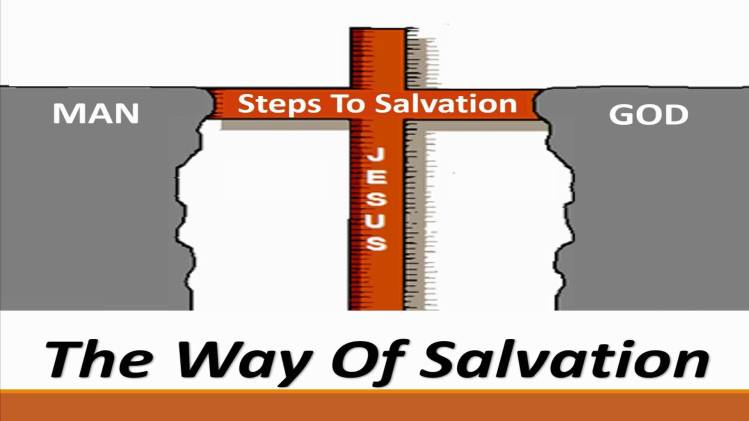
 Milo
Milo 