Dr. Lyman Beecher said of the great revival in Rochester, N.Y., conducted by Mr. Finney, that it was the greatest revival in the Christian era. During Mr. Finney’s evangelistic ministry, hundreds of thousands were converted to God through his labors, joined to those of the church.
His Lectures on Revivals ” have been most wonderfully blessed in the conversion of sinners, directly and indirectly, not only in this country, but in foreign countries. When they were published in this country, 12,000 of them were sold as fast as they could be printed. They were reprinted in England and France.
They were translated into Welsh, French and German. One publisher in London put out 80,000 volumes of them. Great revivals followed wherever they circulated. But why did such revivals follow Mr. Finney’s preaching, and the reading of his lectures?
I will let Mr. Finney answer this question himself. Said he, in his autobiography – “Let the reader remember that long day of agony and prayer at sea, that God would do something to forward the work of revivals, and enable me, if He desired to do it, to take such a course as to help forward the work.
I felt certain then, that my prayers would be answered, and I have regarded all that I have since been able to accomplish, as in a very important sense, an answer to the prayers of that day. The spirit of prayer came upon me as a sovereign grace, bestowed upon me without the least merit, and in despite of all my sinfulness.
He pressed my soul in prayer until I was enabled to prevail; and through infinite riches of grace in Christ Jesus, I have been many years witnessing the wonderful results of that day of wrestling with God. In answer to that day’s agony, He has continued to give me the spirit of prayer.”
Said Dr. N. Murray: “Prayer is the power of the Church; and could I speak as loud as the trumpet which is to wake the dead, I would thus call upon the Church, in all branches and in all lands: ‘Awake! awake! put on thy strength, 0 Zion! put on thy beautiful garments, O Jerusalem! Arise, shine, for thy light is come, and the glory of the Lord is risen upon thee.’ Patriarchs, prophets, apostles. martyrs, reformers, were mighty in prayer. – Prevailing Prayer, by Wigle.
Early one morning while it was yet dark, a poor man came to my door and informed me that he had an infant child very sick, which he was afraid would die. He desired me to go to his home, and, if possible, prescribe some medicine to relieve it. “For,” said he, “I want to save its life if possible.”
As he spoke thus the tears ran down his face. He then added “I am a poor man; but, doctor, I will pay you in work as much as you ask if you will go.” I said: “Yes, I will go with you as soon as I take a little refreshment.” “Oh, sir,” said he, “I was going to try to get a bushel of corn, and get it ground to carry home, and I am afraid the child will die before I get there. I wish you would not wait for me;” and then added: “We want to save the child’s life if we can.”
It being some miles to his house, I did not arrive there until the sun was two hours high in the morning, when I found the mother holding her sick child, and six or seven little boys and girls around her, with clean hands and faces, looking as their mother did, lean and poor.
On examining the sick child, I discovered that it was starving to death I said to the mother “You don’t give milk enough for this child.” She said: ” I suppose I don’t.” “Well,” said I, “you must feed it with milk.”She answered: “I would, sir, but I can’t get any to feed it with.” I then said: “It will be well then for you to make a little water gruel, and feed your child.” To this she replied; “I was thinking I would if my husband brings home some Indian meal. He has gone to try to get some, and I am in hopes he will make out.” She said this with a sad countenance.
I asked her with surprise: “Why, madam, have you not got anything to eat? She strove to suppress a tear, and answered sorrowfully, “No, sir we have had but little these some days.I said: “What are your neighbors, that you should suffer among them?” She said; “I suppose they are good people; but we are strangers in this place, and don’t wish to trouble any of them, if we can get along without.” Wishing to give the child a little manna, I asked for a spoon. The little girl went to the table drawer to get one, and her mother said to her “Get the longest handled spoon.” As she opened the drawer, I saw only two spoons, and both with handles broken off, but one handle was a little longer than the other. I thought to myself, this is a very poor family, but I will do the best I can to relieve them.
While I was preparing the medicine for the sick child, I heard the oldest boy (who was about fourteen), say: “You shall have the biggest piece now, because I had the biggest piece before.” I turned around to see who it was that manifested such a principle of justice, and saw four or five children sitting in the corner, where the oldest was dividing a roasted potato among them. And he said to one: “You shall have the biggest piece now,” etc. But the other said “Why, brother, you are the oldest, and you ought to have the biggest piece.” “No,” said the other, “I had the biggest piece.” I turned to the mother, and said ” Madam, you have potatoes to eat, I suppose?” She replied: “We have had, but that is the last one we have left; and the children have now roasted that for their breakfast.”
On hearing this, I hastened home, and informed my wife that I had taken the wrong medicine with me to the sick family. I then prescribed a gallon of milk, two loaves of bread, some butter, meat and potatoes, and sent my boy with these; and had the pleasure to hear in a few days that they were all well — Selected.
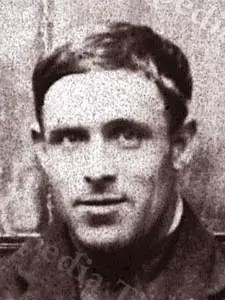
Mr George Henry Cavell was born in Southampton, Hampshire, England on 4 December 1889.
His parents were George Henry Cavell (1863-1927), a marine fireman, and Alice Florence Purkiss (1865-1945), both Hampshire natives who had married in Southampton in 1888.
One of a reported thirteen children, his only known siblings were: Ellen Jane (1884-1959, later Mrs Alfred Mainer), Rose Mathilda (1886-1907), Alice Florence (b. 1887), Lily Elizabeth (b. 1895), Alice Maud (b. 1898) and Frederick Ernest (b. 1901).
Cavell first appears on the 1891 census living with his family at 28 Chapel Street, St Mary, Southampton and by the time of the 1901 census the family were living at 25 Chantry Road, Southampton and his father was by then described as a general labourer.
The family had moved to 46 Russell Street in the same city by the time of the 1911 census although George is absent from the household and was listed elsewhere at Bermuda House.
George, who was unmarried, signed on to the Titanic on 6 April 1912, giving his address as Lower East Road, Sholing. He had previously served on Adriatic, Oceanic, and Olympic, before joining the Titanic and had worked with the White Star Line for eighteen months by that point. On the evening of 14 April Cavell was on the 8 to 12 watch, and was alone in the starboard coal bunker in boiler room 4 at the time of the collision. He felt a shock and the piles of coal around him collapsed, covering him and from which he had a job freeing himself. Hearing warning bells that the watertight doors were closing, Cavell then managed to get into the stokehold but upon arriving he was surprised by the lights suddenly extinguishing. He then left the stokehold via an escape ladder to fetch lamps and went to Scotland Road where he saw steerage passengers heading aft, many wet through and clinging to lifebelts, being told to remain calm by stewards; it was here he ascertained from a colleague that the ship had struck an iceberg.
He fetched the lamps and returned to the stokehold but by the time he had returned the lights had come back on and he received orders to start drawing the fires. Whilst doing this water started to flood through the floor plates which rose about a foot before Cavell left his station and returned to Scotland Road but found it deserted. Believing that there was no danger Cavell briefly returned to boiler room 4 but found it deserted. He again made his way up top where he went to the aft boat deck.
Upon reaching the aft starboard boat deck Cavell noted that there were still a few lifeboats remaining; one was still hanging in the davits (#15) whilst the other was being lowered (#13) and the only people on deck where a handful of firemen and the crew lowering the boat, including an unidentified officer. The officer ordered Cavell and the other firemen into lifeboat 15 and it was lowered flush with A-deck to receive passengers but only five came forward. Boat 15 was then lowered again to become flush with B-deck and calls for more passengers was met with a large crowd of third-class passengers appearing and gathering around, which Cavell estimated to be around sixty in total and what he believed to be all women and children and with a few men standing back. He also noted that the majority of the crowd seemed to be Irish women.
With lifeboat 15 heavily laden with an estimated 70 survivors aboard, fireman Frank Dymond took charge.
Cavell was called to testify at the British Inquiry on 9 May 1912 and received expenses of £11, 6s.
George returned to the sea, serving on ships including the Olympic, Braemar Castle, Carnarvon Castle, Armadale Castle, Warwick Castle and Rothesay Castle and continued to serve in the merchant service throughout the duration of WWI.
He was married in Southampton in 1919 to Kate Elizabeth Barber (b. 7 January 1885); the couple would have no children.
Cavell later left the sea and worked as a fitter’s mate; by the time of the 1939 register he and his wife were residents of 2, The Popes Buildings in Southampton.
George Henry Cavell died in Winchester, Hampshire on 21 July 1966, his wife Kate Elizabeth died 11 November 1967 and they are both buried together in Hollybrook Cemetery Southampton (section L16, plot 46, possibly an unmarked grave).
George Henry Cavell signed up to serve on the new ocean liner Titanic on her maiden voyage. On the evening of April 14, 1912, George was assigned to the coal bunker, and was alone when that great ship hit the iceberg. He worked with the crew to secure the ship as best they could, but then was ordered by an officer into a lifeboat.
One of the passengers aboard the Titanic was a man named John Harper, a Baptist pastor from Scotland who was on his way to Chicago to preach a series of revival meetings—his second trip to do so. He did not make it into a lifeboat, and he was one of the hundreds of people who drowned that night. Before he died, however, he spent his final moments urging people to come to Christ. Anytime someone drifted close to where he was, he would ask them, “Are you saved?”
George Henry Cavell replied from a lifeboat, “No,” to which Harper shouted above the noise the words of Acts 16:31, “Believe on the Lord Jesus Christ and thou shalt be saved.” Harper drifted away. Later, Harper drifted back within sight of the lifeboat. From the frigid water, once more the dying Harper shouted the question, “Are you saved?” Once again he received the answer, “No.” Harper repeated the words of Acts 16:31, “Believe on the Lord Jesus Christ and thou shalt be saved,” before he drifted away again.
The frigid water of the North Atlantic took John Harper’s life, and his body was never recovered. But George put his faith in Jesus Christ.
Later he was rescued by the lifeboats of the S.S. Carpathia. In Hamilton, Ontario, George Henry Cavell testified that he was John Harper’s last convert. With his dying breaths John Harper was urging people to come to Christ, because he knew there wasn’t much time; that was the last opportunity for many of them.
Without being too dramatic, the truth is that none of us knows when our last opportunity has arrived. So allow me to ask: “Are you saved?”
If the answer is “No,” or you do not know how to answer that question, please pay attention to the words of Acts 16:31 as if your life depended on it–because it does. “Believe on the Lord Jesus Christ and thou shalt be saved.”
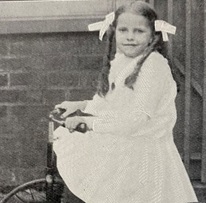
Miss Annie Jessie Harper, often known as Nana or Nina, was born on 3 January 1906 in Govan, Lanarkshire, Scotland.
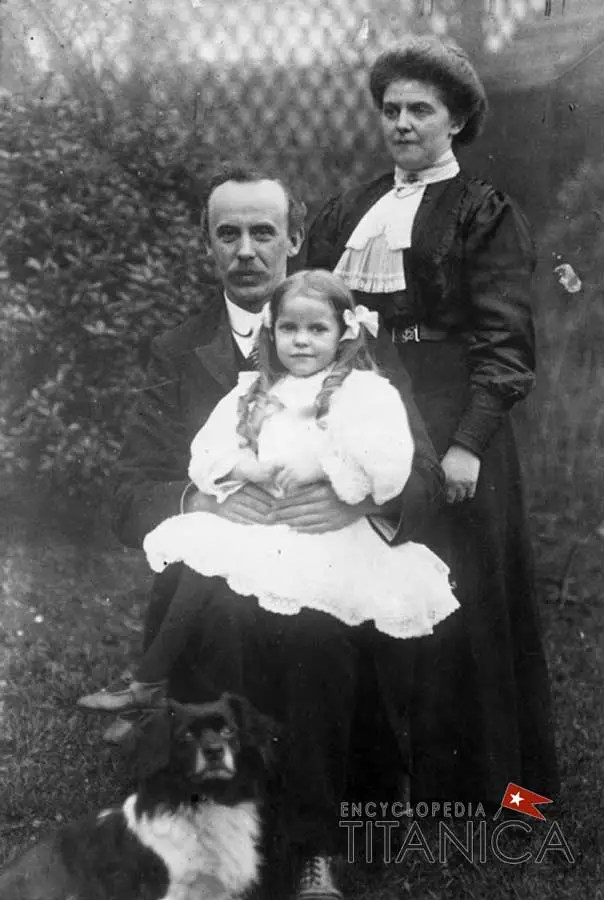
She was the daughter of John Harper (b. 1872), an evangelical pastor and a native of Renfrewshire, and the former Annie Leckie Bell (b. 1866), also a native of Govan and who had previously worked as a dressmaker. John and Annie had married in 1903 and Annie was fated to be their only child when her mother died following complications arising from childbirth on 8 January 1906. Her mother’s niece Jessie Wills Leitch, a Renfrewshire native who had lived with Annie much of her life, stepped in to help take care of baby Nana. This was imperative as John Harper worked and preached throughout Britain and Ireland, including North America.
Her father later became pastor of the Walworth Road Baptist Church in London and they moved to that city. They were listed on the 1911 census living at 3 Claude Villas, Love Walk, Camberwell.
Nana, her father and her cousin Jessie boarded the Titanic at Southampton as second class passengers (joint ticket number 248727 which cost £33) and they were travelling to the Moody Church in Chicago, Illinois. She is listed in the passenger list as Nina Harper.
Jessie Leitch later recalled the events on the night of the sinking:
“… About midnight Mr Harper came to our stateroom and told us that the vessel had struck an iceberg. While I was dressing he went to learn further particulars and returned to say that the order had been given to put on the life belts. We did so, and, picking up Nana in his arms, he took her up to the deck. There the women were ordered to the upperdeck. I had to climb a vertical iron ladder and Mr Harper brought Nana after me up the ladder and the men at the top lifted her up to me again… There was no opportunity for farewell, and, in fact, even then we did not realize the danger, as we were assured again and again that the vessel could not sink, that the Olympic would be alongside at any minute, and that the women and children were to be put into the boats first and the men to follow, and that there were boats sufficient for all. Our boat was well manned–it was the eleventh to leave the vessel… After about half an hour the Titanic went down. We were about a mile away.”
Nana’s own recollections were sparse but she later recalled sitting on her cousin Jessie’s knee as she watched the Titanic sink and she later recalled the noise of those struggling in the water.
Jessie and Nana are believed to have been rescued in lifeboat 11 but Pastor Harper was lost in the sinking. Following their rescue by Carpathia they were not given a cabin but slept in a library aboard ship. Arriving in New York, still in the clothes they wore to leave the Titanic, Jessie and Nana were met by the Reverend Ervine Wooley, the assistant pastor of Moody Church. Jessie elected not to continue to Chicago and decided instead to return to England at the earliest available opportunity and arrived aboard the Celtic on 25 April.
Nana, now an orphan, returned to England and was apparently raised by an uncle and aunt in London. In 1921 she performed the opening ceremony of the Harper Memorial Baptist Church in Glasgow, which was dedicated to her father’s memory. During her upbringing, however, discussion of Titanic was discouraged by her family.
She later worked at Riglands Bible College in London and it was there that she met Philip Roy Pont (b. 1903), an alumnus of All Saints Bible College and a native of Heathfield, Sussex, the son of a grocer. The pair were married in London in the closing months of 1934 and they had two children: Gordon and Mary (later Dr Gurling).
The family moved back to Scotland around 1936 where Philip was the pastor at a Baptist Church in Denny, Falkirk before they moved to Shetland followed by Dundee and eventually Glasgow. Philip retired in around 1984 and they settled in Burnside, Lanarkshire.
Nana, known more frequently as Nan in her later years, continued to live in Burnside but had few memories of her time on Titanic. She therefore spoke little about that experience in her life but did keep in regular contact with the Titanic community and with fellow survivor Eva Hart who remembered playing with her on Titanic as a child, past exchanges that Nan had no recollections of.
Nan Harper Pont died at her home on 10 April 1986 aged 80, 74 years to the day when Titanic had departed from Southampton. She was buried in Moffat Cemetery and left behind her husband Philip (who died in 1995) and her two children and their families.
References and Sources Glasgow Herald, 11 April 1986, Death Notice
Annie Jessie Harper was born on 3rd January 1906, her mother died just 5 days later. Her father, a Baptist Preacher, decided in 1912 to travel to Chicago to preach at a Church there. He booked 3 second class berths on RMS Titanic for himself, his sister Jessie Wills Leitch and his daughter Annie Jessie Harper (known as Nan).
When the ship struck the infamous iceberg on the night of 14th April 1912 John Harper wakened his sister & grabbed a sleeping Nan from her berth, wrapping her in a blanket before taking them up on deck. There he kissed Nan goodbye, handed her to a crewman and watched as she and her aunt were safely stowed in a lifeboat, John remained on board to give support to the distressed passengers- he went down with the ship. Many years later Nan recalled that she was sitting on her aunt’s lap when she saw the Titanic sink and she remembered watching the lights go out and hearing the screams of the drowning.
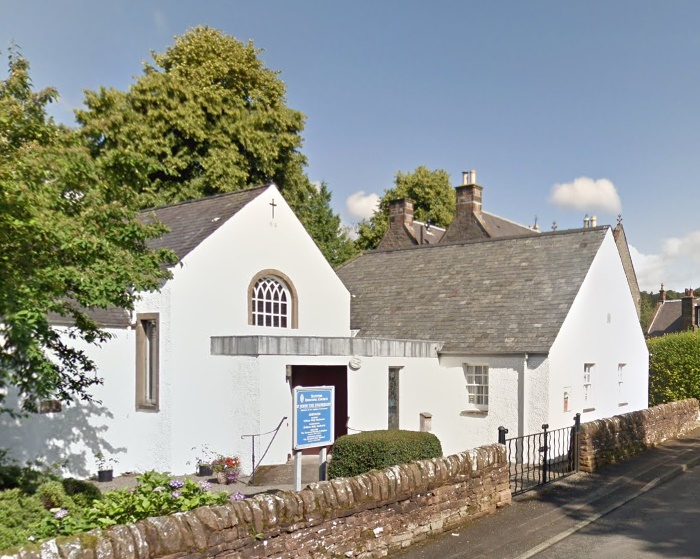
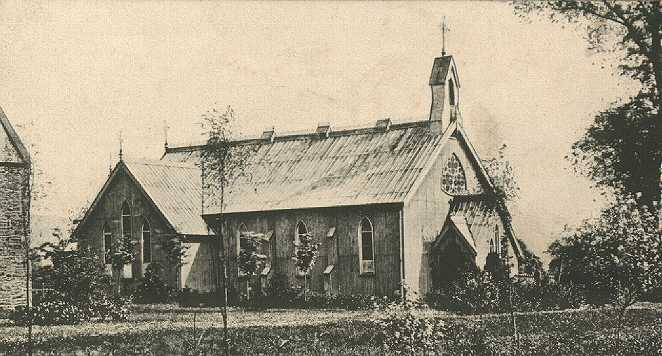
Rescued by the Carpathia and taken to New York, Nan and her aunt returned to England later that same month. Nan was brought up by her father’s brother George Harper. It was when Nan was at Riglands Bible College that she met Philip Roy Pont who she married in London in 1934. Philip Roy Pont was ordained and in 1964 the couple moved to Moffat when Reverend Pont took charge at St. John’s Episcopal Church where he preached for the next 20 years. They lived in St. John’s Vicarage at 3 Mansfield Place in Moffat.
Nan died on the 10th April 1986; 74 years to the day after the Titanic set sail from Southampton. Jim Storrar (Moffat Miscellany Volume 2, pp145-146) describes her: “Nan was a wonderfully gentle and kind person, and her voice was a soft Glasgow brogue. When she was 72, she was asked if she would like to see the Titanic raised “I don’t see much point in it after all this time,” she replied.”
Both Nan and her husband are buried in Moffat New Cemetery.
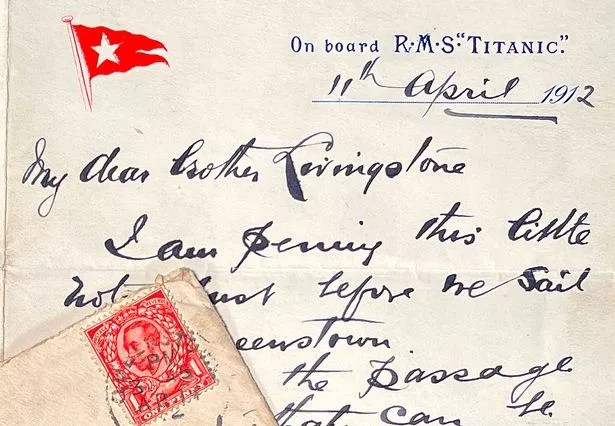
The final letter sent by an unsung hero of the Titanic disaster who sacrificed his own life for others has been unearthed almost 110 years later.
John Harper placed his six-year-old daughter Nina and niece into lifeboat 11 but gave up the chance to go with her so another woman or child could be saved.
He did so knowing the decision would likely make his daughter an orphan as her mother had previously died.
As the liner began to sink Mr Harper, a Baptist minister, ran along the flooded decks, preaching the gospel to anyone who would listen.
He also gave away his own lifejacket to another men, telling him ‘you need this more than I do’, before going down with the ship.
He is also said to have preached to those in the freezing water after the liber sank, dying in it himself. He was 39.
His niece Jessie went to be the longest-living Scottish Titanic survivor and died in 1986.
Three days before the 1912 disaster, the pastor , from Houston, Renfrewshire in Scotland, wrote a last letter home to his great-grandfather, Charles Livingstone, of 5 Porter Street, Glasgow.
The letter is written on White Star Line headed notepaper In it he told him of the ‘glorious time’ he, his daughter and niece – who also survived – had been having on the Titanic.
He wrote the note on White Star Line headed notepaper while the Titanic was en route from Cherbourg to Ireland.
The never-before-seen letter was posted at Queenstown (Cork), which was the doomed liner’s last port of call.
It remained in the family but has now been put up for sale for the first time.
It is being sold by Henry Aldridge and Son Auctioneers of Devizes, Wilts, and has a pre-sale estimate of £50,000.
Mr Harper was known to be an engaging and impressive pastor and was on his way to America to serve at the Moody Church in Chicago.
He and his daughter and niece, Jessie Leitch, boarded Titanic at Southampton on April 10 for her maiden voyage to New York.
A famous photograph showing a little girl holding her father’s hand as they walked on the second class promenade during the voyage is believed to be Mr Harper and Nina.
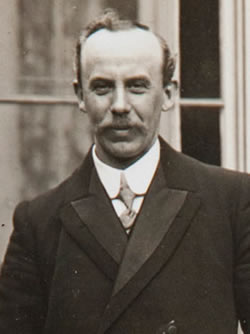
John Harper (29 May 1872 – 15 April 1912) was a Scottish Baptist pastor who died in the sinking of the RMS Titanic in the North Atlantic Ocean.
Early life
Harper was born in the village of Houston, Renfrewshire, Scotland, in 1872. He personally embraced his parents’ Christian faith at age 14 and began preaching at 18. He supported himself in early adulthood by doing manual labor in a mill until Baptist pastor E.A. Carter of Baptist Pioneer Mission in London heard of his preaching and placed him in ministry work in Govan, Scotland.
Paisley Road Baptist Church In 1897, he became the first pastor of Paisley Road Baptist Church in Glasgow, Scotland. Under his care, the church quickly grew from 25 members to over 500 and soon moved to a new location on Plantation Street. In 1923, it moved into its present building on Craigiehall Street and was renamed Harper Memorial Baptist Church in his honor.
Titanic: final preaching and death At the time of the Titanic disaster, Harper was 39, a widower with a six-year-old daughter, Annie Jessie (Nana), and pastor of Walworth Road Baptist Church in London. He was traveling with his daughter and niece Jessie W. Leitch to Chicago to preach for several weeks at the Moody Church, where he had been guest minister the previous fall, when the ship hit an iceberg on the night of 14 April 1912, and was lost. His daughter and niece were put on a lifeboat and survived, but Harper stayed behind and jumped into the water as the ship began to sink. Some who survived told that Harper preached the Gospel to the end (especially Acts 16:31), first aboard the sinking ship and then afterward to those in the freezing water before dying in it himself.
The sinking of the White Star liner RMS Titanic on 14 April 1912 was international news. Titanic on her maiden voyage to New York struck a floating iceberg off the coast of Newfoundland, Canada. The vessel was sunk by the collision, and tragically 1500 passengers and crew were drowned.
Over the days following, the disaster local newspapers carried reports of the people of Renfrewshire caught up in the tragedy. Reading the Paisley and Renfrewshire Gazette of 27 April 1912, mention is made of one native of Renfrewshire who was highlighted for his brave actions as the Titanic sank. This was Pastor John Harper.
John Harper was born at Woodside Cottage in the village of Houston on 29 May 1872 to George and Rachel Harper. John and his brothers and sisters were brought up in the Baptist faith. By the age of eighteen John was preaching at local church meetings and beginning to gather a reputation for his evangelical style of delivery. John also worked at several local factories including the Stoddard’s carpet factory in Elderslie, the very factory that would one day make carpets for the Titanic, but he knew that his future was in the preaching of his Baptist faith. In 1897, John was given the opportunity to be the Pastor to the congregation of the Baptist mission in Govan at the Paisley Road Church. John’s style of preaching and ministry saw the congregation grow from just twenty-five to over five hundred and the church moved to a larger building in Plantation Street, Glasgow.
Following on from this John moved to be the Pastor to the congregation at Walworth Road Baptist Church in London. For some months in Autumn 1911 John was the guest Pastor at the Moody Church in Chicago, USA.
In his personal life John Harper married Anne Leckie Bell on 28 April 1903. On 1 January 1906, the couple welcomed the birth of a daughter. She was named Annie Jessie. On 8 January 1906 however, John’s wife Anne passed away from complications following childbirth. Anne’s unmarried niece Jessie Leitch joined the family at this time to care for the young child.
At the beginning of 1912, the congregation of the Moody Church asked John Harper to return to Chicago and he accepted this request accompanied by his six-year-old daughter and his niece Jessie Leitch. Setting sail in second class accommodation aboard the Titanic and looking forward to seeing friends in Chicago must have been an exciting prospect for Pastor Harper cut short by the tragedy which unfolded on the night of 14 April 1912.
After being made aware of the collision with the Iceberg, John rushed his daughter and niece to the lifeboats, before running back through the ship, alerting passengers to the danger and evangelised to the unsaved. Pastor Harper’s brave actions that night after ensuring his daughter and niece were safely in a lifeboat were recorded by several survivors. These included passing his own life belt to another passenger; reassuring other passengers whilst offering prayers for them and when he eventually had to jump into the icy waters, he was seen swimming between survivors clinging to debris and wreckage offering reassurance and prayers. Pastor Harper succumbed to hypothermia before rescue could reach him. A passenger who was later rescued by a lifeboat, noted his last interaction with John as they both clung to pieces of wreckage in the Atlantic. “Are you saved?” John yelled to him. When the passenger responded “No” John made his plea; “Believe on the Lord Jesus Christ and you will be saved”. The passenger could not respond and John would repeat again; “Believe on the Lord Jesus Christ and you will be saved”. It is believed that these are the last words of the reverend.
Pastor Harper’s body was never recovered but his daughter and niece both survived the disaster. There is no doubt that the actions of Pastor John Harper that night gave not only practical support in the form of a life belt for another passenger but also solace to others in a highly distressed situation.
“The fear of death did not for one minute disturb me. I believed that sudden death would be sudden glory.”
~ Revered John Harper
Annie Jessie (Harper ‘s six-year-old daughter) and her aunt arrived safely in New York, rescued by the Carpathia, and only then learned of her father’s heroic death. She went on to be the oldest Scottish Titanic survivor.
This is my personal collection of thoughts and writings, mainly from much smarter people than I, which challenge me in my discipleship walk. Don't rush by these thoughts, but ponder them.