
What is the Day-Age Theory?

Although Moses wrote the book of Genesis approximately 3,400 years ago, it has been in just the last few centuries when serious debate over the nature and date of the original creation has developed. Consequently, there are now several creation theories, one of which is the Day-Age Theory. In short, this is a belief that the “days” spoken of in the first chapter of Genesis are sequential periods and not literal, 24-hour days. Each day, therefore, is thought to represent a much longer, albeit undefined, period of time, such as a million or more years. This is rooted in an effort to harmonize our understanding of the Bible with what appears to be overwhelming scientific evidence of an “old” earth.

Science has a habit of disproving interpretations of certain views, but it has never contradicted anything explicitly taught in the Bible. God’s Word is our supreme source of truth, but that does not mean everything it says is easy to understand or immediately clear (see 2 Peter 3:16; Colossians 1:26). It’s important to point out that Day-Age theorists are not attempting to remove God. Some alternative views, such as atheistic evolution, do just that. Rather, Day-Age Theory seeks to harmonize faithful interpretation of the Bible with a modern understanding of science.

Needless to say, any approach to interpreting the Bible should be handled with caution. One consequence of questioning the fundamental truths of the book of Genesis is the temptation to re-interpret any doctrine that does not agree with our preferences. However, preference is not a valid reason to reject the inerrancy of the Word of God. At the same time, suggesting a different interpretation is not at all the same thing as questioning the inspiration of the Bible.

Adherents of Day-Age Theory often point out that the word used for “day” in Hebrew, yom, sometimes refers to a period of time that is longer than a literal, 24-hour day. In fact, this happens in the creation account itself, in Genesis 2:4. There, the entire explanation is described as “the account of the heavens and the earth when they were created, in the day that the LORD God made earth and heaven” (NASB). This is also seen in God’s warning in Genesis 2:17, where He warns that man will die “in the day” he eats from the tree.

Each day in the first chapter of Genesis is described as having an evening and a morning. Indeed, these two words—evening and morning—are used extensively in the Old Testament, and in most circumstances they refer to normal days. Speaking from the perspective of language, opponents of Day-Age Theory note that, if Moses wanted to convey a longer period of time, he could have used clear terms such as olam or qedem in place of yom. Day-Age proponents, in response, note that this does not change the possibility of a symbolic use of yom, especially since it’s clearly used symbolically in those very passages by Moses.

Another reason given for a metaphorical “day” as postulated by the Day-Age Theory is that the sun was not created until day four. Given this, how could there have been conventional, 24-hour days (i.e., day and night) before day four? Opponents of the Day-Age Theory would contend that, technically, the sun itself is not needed for a day and night. What is needed is light and a rotating Earth. The “evening and morning” indicates a rotating Earth, and, as far as light is concerned, God’s very first command was “Let there be light,” and there was light (Genesis 1:3), prior to there being a sun. Separating the light from the darkness was the very first thing our Creator did.

A major sticking point for some Christians about Day-Age Theory is the implication that disease, suffering, and death must have existed before the fall of man. Careless application of Day-Age Theory could possibly contradict the concept of the fall of man and, by extension, the doctrine of the atonement. Scripture clearly indicates that “sin entered the world through one man [Adam], and death through sin” (Romans 5:12). Day-Age creationists would agree there was no human death prior to Adam’s sin. They note the primary effects of the fall were relational and spiritual and did not result in immediate fatality to Adam or Eve. In other words, it is entirely reasonable to suggest that some kind of death existed in the world—but not necessarily in man—prior to the fall.

As with many such issues, the Bible is not especially clear about the exact nature of creation. There are arguments and evidence for many different views, though not all of these are truly biblical. The Day-Age Theory, in and of itself, is like any other possible interpretation of the Word of God. It has strengths and weaknesses and should be treated with cautious deliberation.

What is old earth creationism?

Please note, as a ministry, GotQuestions.org officially holds to young earth creationism. We truly and fully believe that young earth creationism best fits with the biblical account of creation. However, we recognize that old earth creationism is a valid viewpoint that a Christian can hold. In no sense is old earth creationism heresy and in no sense should old earth creationists be shunned as not being brothers and sisters in Christ. We thought it would be worthwhile to have an article that positively presents old earth creationism, as it is always good for our viewpoints to be challenged, motivating us to further search the Scriptures to make sure our beliefs are biblically sound.

Old earth creationism (OEC) is an umbrella term used to describe biblical creationists who deny that the universe was created within the last 6,000 to 10,000 years over the course of six consecutive 24-hour days. Rather, old earth creationists believe that God created the universe and its inhabitants (including a literal Adam and Eve) over a much longer period of time than is allowed for by young earth creationists. The list of notable Christian leaders who are at least open to an old earth interpretation is a long one, and that list continues to grow. The list includes men such as Walter Kaiser, Norman Geisler, William Dembski, J.I. Packer, J.P. Moreland, Philip E. Johnson, and Chuck Colson, as well the late Francis Schaefer and Old Testament scholar Gleason Archer.

Old earth creationists usually agree with the mainstream scientific estimates of the age of the universe, humanity, and Earth itself while at the same time rejecting the claims of modern evolutionary theorists with respect to biological evolution. Old earth creationists and their young earth creationist brothers hold several important points in common, including:

1) The literal creation of the universe out of nothing a finite time ago (creation ex nihilo).

2) The literal creation of Adam out of the dust of the ground and Eve out of Adam’s side as well as the historicity of the Genesis account.

3) The rejection of the claim of Darwinists that random mutation and natural selection can adequately account for the complexity of life.

4) The rejection of the claim that God used the process of evolution to bring man to today (theistic evolution). Both old earth and new earth creationism categorically reject the theory of common ancestry.

However, old earth creationists differ with young earth creationists on the following:

1) The age of the universe. Young earth creationists believe that God created the universe 6,000-10,000 years ago. Old earth creationists place the creation event at approximately 13.7 billion years ago, thus being more in line with “mainstream” science, at least on this point.

2) The time of the creation of Adam and Eve. Young earth creationists place the creation of Adam no later than 10,000 years ago. Old earth creationists are varied on this point with estimates ranging somewhere between 30,000-70,000 thousand years ago.

The controversy between the two views of creationism hinges on the meaning of the Hebrew word yom, meaning “day.” Young earth creationists insist that the meaning of the word yom in the context of Genesis 1–2 is a 24-hour period of time. Old earth creationists disagree and believe that the word yom is being used to denote a much longer duration of time. Old earth creationists have used numerous biblical arguments to defend their view including the following:

1) Yom is used elsewhere in the Bible where it is referring to a long period of time, particularly Psalm 90:4, which is later cited by the apostle Peter: “A day (yom) is like a thousand years” (2 Peter 3:8).

2) The seventh “day” is thousands of years long. Genesis 2:2-3 states that God rested on the seventh “day” (yom). Scripture teaches that we are certainly still in the seventh day; therefore, the word “day” could also be referring to a long period of time with reference to days one through six.

3) The word “day” in Genesis 1–2 is longer than 24 hours. Genesis 2:4 reads, “This is the account of the heavens and the earth when they were created in the day that the LORD God made earth and heaven” (NASB). In this verse, “day” is referring to the first six days as a whole and thus has a more flexible meaning than merely a 24-hour period.

4) The sixth “day” is probably longer than 24 hours. Genesis 2:19 tells us that Adam observed and then catalogued every living animal on the earth. At face value, it does not appear that Adam could have completed such a monumental task in a mere 24-hour period.

To be sure, the issues dividing young and old earth creationists are both complex and significant. However, this issue should not be made a test for orthodoxy. There are godly men and women on both sides of this debate. In the final analysis, biblical creationists—both young and old Earth varieties—have a great deal in common and should work together to defend the historical reliability of the Genesis account.

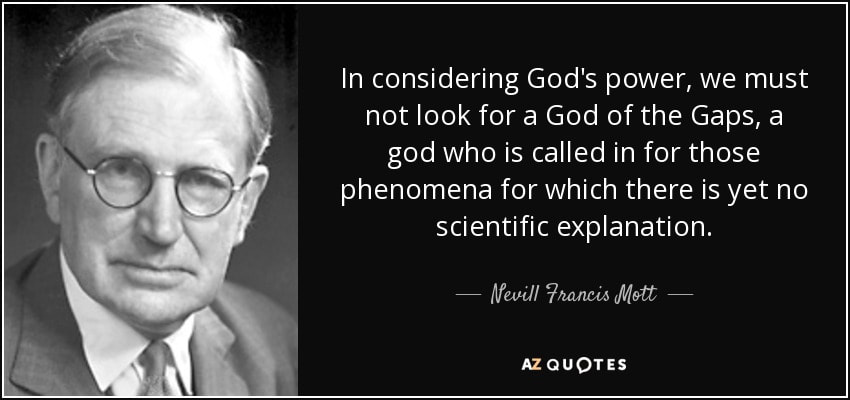
What is the God of the gaps argument?

The “God-of-the-gaps” argument refers to a perception of the universe in which anything that currently can be explained by our knowledge of natural phenomena is considered outside the realm of divine interaction, and thus the concept of “God” is invoked to explain what science is, as yet, incapable of explaining. In other words, only the “gaps” in scientific knowledge are explained by the work of God, hence the name “God of the gaps.”

The idea is that as scientific research progresses, and an increasing number of phenomena are explained naturalistically, the role of God diminishes accordingly. The major criticism commonly states that invoking supernatural explanations should decrease in plausibility over time, as the domain of knowledge previously explained by God is decreasing.

However, with modern advances in science and technology, the tables have been literally turned. With the advent of electron scanning microscopes, we have been able to observe the intricate workings of the cell for the first time. What had originally and simplistically been thought to be nothing more than a “blob” of protoplasm is now seen to be far more complex and information-packed than had ever been conceived of previously.

Much of what had once been filed away as “solved” in the early twentieth century is now found to be inadequately explained by naturalism. Twenty-first century technology is increasingly revealing gaping holes in conventional evolutionary theory. The information-rich content of the “simple” has only recently been understood at any real level and found to be anything but simple. Information can now be understood to be inherently non-material. Therefore, materialistic processes cannot qualify as sources of information.

In reality, a belief in God can be derived by means of an objective assessment, rather than the subjective conjecture that may have been the case millennia ago. But many people simply deny what is obvious to them. The Bible addresses those very people: “The wrath of God is being revealed from heaven against all the godlessness and wickedness of men who suppress the truth by their wickedness, since what may be known about God is plain to them, because God has made it plain to them. For since the creation of the world God’s invisible qualities—his eternal power and divine nature—have been clearly seen, being understood from what has been made, so that men are without excuse” (Romans 1:18-20). The God-of-the-gaps argument is an example of “suppressing the truth” because it relegates God to a “backup” explanation for those things which cannot yet be explained by natural phenomena. This leads some to the faulty conclusion that God is not the omnipotent, omnipresent, absolute Being of whom Scripture testifies.

There is much for which the natural sciences simply cannot provide an explanation, such as the origin of the time/space/matter continuum and the fine-tuning thereof; the origin and subsequent development of life itself; and the origin of the complex and specified information systems inherent in all living things, which cannot (nor ever will be) explained by natural means. Thus one cannot rationally divorce the supernatural from the observed universe, proving once again that “in the beginning God created the heavens and the earth” (Genesis 1:1).

Is the universe eternal?

The Bible makes it clear that the universe is not eternal, that it had a beginning, and that the beginning was its creation by God (Genesis 1:1). This truth has been denied by philosophers and pseudo-scientists who have come up with a variety of different theories in an effort to “prove” the eternality of the universe. Further, atheists will say that matter and energy are eternal, following the first law of thermodynamics—“Energy can be transformed (changed from one form to another), but it can neither be created nor destroyed.”

Philosophically, why do we have something rather than nothing at all? If the universe had a beginning, then it must have a cause, and therefore cannot be eternal. And every drop of evidence we have points to the universe having a beginning, but this truth is not something welcomed by naturalists and atheists. Numerous scientifically minded atheists have expressed a desire to find a loophole to the scientific fact that the present order of nature had a beginning. Unfortunately for them, such a loophole does not exist. Here are five proofs that the universe is not eternal:

(1) The universe is running down, and something that is running down must have started at some point. The second law of thermodynamics states that the universe is running out of usable energy and if you doubt this, look in the mirror (you’re aging and running down just like everything else).

(2) The universe is expanding. This was confirmed through the Hubble telescope many years ago, and it is interesting to note that the universe is expanding from a single point, meaning the entire universe could be contracted back into a single point. Also, note that the universe is not expanding into space, but space itself is expanding.

(3) The radiation echo was discovered by Bell Labs scientists in 1965. The radiation echo is thought to be the heat afterglow from the Big Bang. Its discovery dealt a death blow to any theory of the universe being in a steady state because it shows instead that the universe had a spectacularly dynamic beginning—easily associated with God’s creative act.

(4) Galaxy Seeds. Scientists believe that, if the Big Bang is true (first, there was nothing, then, BANG, something came into being), then temperature “ripples” should exist in space, and it would be these ripples that enabled matter to collect into galaxies. To discover whether these ripples exist, the Cosmic Background Explorer – COBE – was launched in 1989 to find them, with the findings being released in 1992. What COBE found was perfect/precise ripples that, sure enough, enable galaxies to form. So critical and spectacular was this finding that the NASA lead for COBE, said, “If you’re religious, it’s like looking at God.”

(5) Albert Einstein’s theory of relativity means that the universe had a beginning and was not eternal as he had previously believed (Einstein was originally a pantheist). His theory proved that the universe is not a cause, but instead one big effect—something brought it into existence. Einstein disliked his end result so much that he introduced a “fudge factor” into his theory that allowed for an eternal universe. But there was only one problem. His fudge factor required a division by zero in his calculations—a mathematical error any good math student knows not to make. When discovered by other mathematicians, Einstein admitted his error calling it “the greatest blunder of my life.” After his acknowledgment, and upon confirming further research that showed the universe expanding just as his theory of relativity predicted, Einstein bowed to the fact that the universe is not eternal and said that he wanted “to know how God created the world.”

Further, it should be understood that every effect must resemble its cause. This is because, simply put, you cannot give what you do not have, so it is impossible for an effect to possess something its originating cause did not have. That being the case, how can one believe that an impersonal, amoral, purposeless, and meaningless universe accidentally created beings that are full of personality, morals, meaning, and purpose? Only mind can create mind. In the end it is either matter before mind or mind before matter, and all scientific, philosophical, and reasonable evidence points to the latter.

In conclusion, we find that all scientific evidence points to the fact that the universe had a beginning, just as the Bible states, and that a Cause must exist that resembles all we know today. As Lord Kelvin, a British scientist once said, “If you study science deep enough and long enough, it will force you to believe in God.”

Was Noah’s flood global or local?

The biblical passages regarding the flood make it clear that it was global. Genesis 7:11 states that “all the springs of the great deep burst forth, and the floodgates of the heavens were opened.” Genesis 1:6-7 and 2:6 tell us that the pre-flood environment was much different from that which we experience today. Based on these and other biblical descriptions, it is reasonably speculated that at one time the earth was covered by some kind of water canopy. This canopy could have been a vapor canopy, or it might have consisted of rings, somewhat like Saturn’s ice rings. This, in combination with a layer of water underground, released upon the land (Genesis 2:6) would have resulted in a global flood.

The clearest verses that show the extent of the flood are Genesis 7:19-23. Regarding the waters, “They rose greatly on the earth, and all the high mountains under the entire heavens were covered. The waters rose and covered the mountains to a depth of more than twenty feet. Every living thing that moved on the earth perished—birds, livestock, wild animals, all the creatures that swarm over the earth, and all mankind. Everything on dry land that had the breath of life in its nostrils died. Every living thing on the face of the earth was wiped out; men and animals and the creatures that move along the ground and the birds of the air were wiped from the earth. Only Noah was left, and those with him in the ark.”

In the above passage, we not only find the word “all” being used repeatedly, but we also find “all the high mountains under the entire heavens were covered,” “the waters rose and covered the mountains to a depth of more than twenty feet,“ and “every living thing that moved on the earth perished.” These descriptions clearly describe a universal flood covering the whole earth. Also, if the flood was localized, why did God instruct Noah to build an ark instead of merely telling Noah to move and causing the animals to migrate? And why did He instruct Noah to build an ark large enough to house all of the different kinds of land animals found on the earth? If the flood was not global, there would have been no need for an ark.

Peter also describes the universality of the flood in 2 Peter 3:6-7, where he states, “By these waters also the world of that time was deluged and destroyed. By the same word the present heavens and earth are reserved for fire, being kept for the day of judgment and destruction of ungodly men.” In these verses Peter compares the “universal” coming judgment to the flood of Noah’s time and states that the world that existed then was flooded with water. Further, many biblical writers accepted the historicity of the worldwide flood (Isaiah 54:9; 1 Peter 3:20; 2 Peter 2:5; Hebrews 11:7). Lastly, the Lord Jesus Christ believed in the universal flood and took it as the type of the coming destruction of the world when He returns (Matthew 24:37-39; Luke 17:26-27).

There are many extra-biblical evidences that point to a worldwide catastrophe such as a global flood. There are vast fossil graveyards found on every continent and large amounts of coal deposits that would require the rapid covering of vast quantities of vegetation. Oceanic fossils are found upon mountain tops around the world. Cultures in all parts of the world have some form of flood legend. All of these facts and many others are evidence of a global flood.

Stephen Boyd Blog

Belfast-born Hollywood and International Star from 1950-1970's Fan Tribute Page

Abundant Joy

Digging Deep Into The Word

Not My Life

The Bible as clear as possible

Seek Grow Love

Growing Throughout the Year

Smoodock's Blog

Question Authority

PleaseGrace

A bit on daily needs and provisions

Three Strands Lutheran Parish

"A cord of three strands is not easily broken." Ecclesiastes 4:12

1love1god.com

Romans 5:8

The Rev. Jimmy Abbott

read, watch, listen

BEARING CHRIST CRUCIFIED AND RISEN

To know Christ and Him crucified

Considering the Bible

Scripture Musings

rolliwrites.wordpress.com/

The Official Home of Rolli - Author, Cartoonist and Songwriter

Pure Glory

The heavens are telling the glory of God; and the firmament proclaims His handiwork. Psalms 19:1

The daily addict

The daily life of an addict in recovery

The Christian Tech-Nerd

-Reviews, Advice & News For All Things Tech and Gadget Related-

Thinking Through Scripture

to help you walk with Jesus in faith, hope, and love.

A disciple's study

This is my personal collection of thoughts and writings, mainly from much smarter people than I, which challenge me in my discipleship walk. Don't rush by these thoughts, but ponder them.

Author Scott Austin Tirrell

Maker of fine handcrafted novels!

In Pursuit of My First Love

Returning to the First Love