Does Genesis chapter 1 mean literal 24-hour days?

In our opinion, examination of the Hebrew word for “day” and the context in which it appears in Genesis will lead to the conclusion that “day” means a literal, 24-hour period of time.

The Hebrew word yom translated into the English “day” can mean more than one thing. It can refer to the 24-hour period of time that it takes for the earth to rotate on its axis (e.g., “there are 24 hours in a day”). It can refer to the period of daylight between dawn and dusk (e.g., “it gets pretty hot during the day but it cools down a bit at night”). And it can refer to an unspecified period of time (e.g., “back in my grandfather’s day . . .”). It is used to refer to a 24-hour period in Genesis 7:11. It is used to refer to the period of daylight between dawn and dusk in Genesis 1:16. And it is used to refer to an unspecified period of time in Genesis 2:4. So, what does yom mean in Genesis 1:5–2:2 when used in conjunction with ordinal numbers (i.e., the first day, the second day, the third day, the fourth day, the fifth day, the sixth day, and the seventh day)? Are these 24-hour periods or something else? Could yom as it is used here mean an unspecified period of time?

We can determine how yom should be interpreted in Genesis 1:5–2:2 by comparing that context to the word’s usage elsewhere in Scripture. The Hebrew word yom is used 2,301 times in the Old Testament. Outside of Genesis 1, yom plus a number (used 410 times) almost always indicates an ordinary day, i.e., a 24-hour period. There are a few instances where yom and a number do not imply a literal, 24-hour day. The words evening and morning together (38 times) most often indicate an ordinary day. The exact construction of evening, then morning, along with yom is only seen outside of Genesis 1 in one verse. This is Daniel 8:26, which clearly implies a long period of time.

All in all, the context in which the word yom is used in Genesis 1:5–2:2, describing each day as “the evening and the morning,” seems to suggest that the author of Genesis meant 24-hour periods. This was the standard interpretation of the days of Genesis 1:5–2:2 for most of Christian history. At the same time, there were early church fathers, such as Augustine, who noted that the vague nature of the “days” of Genesis could well suggest a non-literal interpretation.

Then, in the 1800s, a paradigm shift occurred within the scientific community. This was mostly driven by hostility to religion and an effort to re-interpret observations in ways contrary to the Bible. This caused a rift in the scientific community. One side claimed that only atheism, as well as specific ideas such as an old earth and naturalistic evolution, was compatible with science. The other side, in response, attempted to denounce atheism and any possible old-earth interpretations.

The truth is that both young-earth and old-earth interpretations rely upon certain assumptions. Sincere believers debate the meaning of yom in the creation account because a case can be made on both sides. This does not diminish the importance of what Genesis teaches, regardless of whether or not a person accepts young-earth creationism.

For instance, according to Exodus 20:9–11, God used the six creation days of Genesis as a model for man’s workweek: work six days, rest one. Apparently, He had us in mind even before He made us (on the sixth day) and wanted to provide an example for us to follow. Certainly God could have used six discrete 24-hour days. And He could have created everything using a process of long time periods. Our view, based on our interpretation of the Bible, is that six literal days is the most likely interpretation of the Genesis account.

What does creation ex nihilo mean?

Ex nihilo is Latin for “from nothing.” The term creation ex nihilo refers to God creating everything from nothing. In the beginning, God created the heavens and the earth (Genesis 1:1). Prior to that moment, there was nothing. God didn’t make the universe from preexisting building blocks. He started from scratch.

The Bible never expressly states that God made everything from nothing, but it is implied. In Hebrews 11:3 we read, “By faith we understand that the worlds were framed by the word of God, so that the things which are seen were not made of things which are visible.” Scholars take this to mean that the universe came into existence by divine command and was not assembled from preexisting matter or energy. Things that are visible do not owe their existence to anything visible.

Humans can be very creative, but we cannot create ex nihilo. Strictly speaking, we cannot create; we can only synthesize. We require materials from which to build something. God is not so constrained. This is difficult for us to comprehend because of a fundamental law of physics that we are all familiar with. The “first law of science” states that matter (the stuff the universe is made of) cannot be created or destroyed. Matter can be converted from solid to liquid to gas to plasma and back again; atoms can be combined into molecules and split into their component parts; but matter cannot be created from nothing or completely destroyed. And so this idea that God created everything from nothing is not natural to us. It’s not natural at all—it’s supernatural.

The term creation ex nihilo refers to the supernatural event that was the beginning of the universe. It was the moment that God created something (everything) from nothing.

Did God use the “Big Bang” to create the universe?

Prior to the twentieth century, before the Big Bang theory had been developed, philosophers and scientists debated whether the universe had a beginning. Some argued it had always existed: that it was “infinitely old.” This agreed with the worldview of ancient philosophers and then-current atheism. On the other hand, there were logical reasons to think the universe could not be “infinitely old,” such as causality. For most of history, there was no empirical evidence proving the universe had an objective “beginning.” Atheism particularly held to the idea of an “infinitely old” universe as a reason to dismiss God as unnecessary.

This situation changed drastically in the first half of the twentieth century, as several discoveries were made leading to the formation of the Big Bang theory. Over several decades, those who preferred the idea of an eternal universe made many attempts to explain away hard evidence, but to no avail. The result was secular science lending tremendous support to the creation account of the Bible.

Einstein’s theory of general relativity, published in 1916, suggested the universe either had to be constantly expanding or constantly contracting. So, Einstein added a “cosmological constant” to his equations, for no other reason than to maintain the possibility of a static, eternal universe. Einstein later called this the “biggest blunder” of his career.

The work of Edwin Hubble in the 1920s proved the universe is expanding. This finding contradicted Einstein’s cosmological constant and left non-believing astrophysicists unhappy. Their discomfort was made even worse with the contributions of Georges Lemaître, a Roman Catholic priest and astronomer. Lemaître noted that the combination of general relativity theory and Hubble’s discoveries implies a beginning. If the universe is currently expanding, then at some time in the past, the entire universe would have been contained in some infinitesimally small point. This idea is foundational to the Big Bang theory.

Over the next several decades, physicists tried to salvage the eternality of the universe by proposing everything from the Milne model (1935) to the steady state theory (1948). In many (if not most) cases, these models were proposed explicitly because the implications of a non-eternal universe were “too religious.”

The year 1964 brought about the Nobel Prize-winning discovery of cosmic microwave background radiation—something predicted by the earliest Big Bang theorists in the 1940s. For all intents and purposes, that discovery made the “beginning” of the universe an inescapable fact of modern science. The question was no longer “did the universe have a beginning?” but “how did the universe begin?”

Apparent evidence for the Big Bang, regardless of how one interprets it, is a stunning example of science and theology intersecting. According to objective, empirical science, all space, time, and energy came into existence together in a single moment: a “beginning.” Before this event, whatever it was, there was no time. There was no space. Then, suddenly, an exceedingly dense, incredibly hot, infinitesimal ball of something—everything—appeared somewhere, somehow for reasons unknown and began to expand rapidly with our whole universe inside of it. If true, the Big Bang theory all but confirms the view espoused by Judeo-Christianity for thousands of years.

Astrophysicist Dr. Robert Jastrow phrased it this way in his book God and the Astronomers (New York: W.W. Norton, 1978, p. 116): “For the scientist who has lived by his faith in the power of reason, the story ends like a bad dream. He has scaled the mountains of ignorance; he is about to conquer the highest peak; as he pulls himself over the final rock, he is greeted by a band of theologians who have been sitting there for centuries.”

Why? Because, as Jastrow explained in a subsequent interview, “Astronomers now find they have painted themselves into a corner because they have proven, by their own methods, that the world began abruptly in an act of creation to which you can trace the seeds of every star, every planet, every living thing in this cosmos and on the earth. . . . That there are what I or anyone would call supernatural forces at work is now, I think, a scientifically proven fact” (“A Scientist Caught Between Two Faiths: Interview with Robert Jastrow,” Christianity Today, August 6, 1982, pp. 15, 18).

It is important to note that, prior to the development of the Big Bang theory, disbelief in God was tied closely to the idea of an eternal, un-caused, and un-created universe. Afterwards, however, non-believers began to claim that these advances in science actually disproved God. What had always been interpreted as clear support for a Creator—and resisted for that very reason—almost overnight turned into the claim that atheists had been right all along.

This attitude, unfortunately, led to a corresponding reaction from the creationist community. Just as many astrophysicists felt that the expanding universe theory was a ploy to inject religion into science, many Christians have come to feel that the Big Bang theory is an effort to undermine the biblical account of creation. Other Christians, however, feel that the Big Bang theory is consistent with the Bible’s account and welcome such compelling evidence for the universe having a beginning.

With that said, it is important to understand that the Big Bang theory is just that—a theory. The exact nature or cause of that “beginning” has not been explicitly proved by empirical science, nor can it be.

Did God use the “Big Bang” to create the universe? The idea itself—that the universe came into existence in an instantaneous expansion—is compatible with biblical creationism, as long as there is recognition that the ingredients and forces of the big bang were created by God “out of nothing” (see Hebrews 11:3). Scripture only says that God created the heavens and earth (Genesis 1:1), speaking the universe into existence (Psalm 33:6; Hebrews 11:3). Could some of the evidence that appears to point to a “big bang” actually be pointing to God’s initial creative act? Possibly.

At the same time, the Big Bang theory, as it is commonly presented by the scientific community, contains atheistic presuppositions and contradicts the biblical creation account. In that sense, no, God did not use the “Big Bang” to create the universe.

Old earth vs. young earth—what are the core issues in the debate?

Both old earth creationism and young earth creationism seek to solve the apparent conflict between science and the Bible in regard to the age of the earth. What is the apparent conflict? If the book of Genesis is interpreted strictly literally, it seems to indicate that the earth and the universe are around 6,000 years old. In contrast, various scientific dating methods place the age of the earth around 4.5 billion years and the age of the universe around 14.6 billion years.

The options to solve the apparent conflict are as follows: the Bible is wrong, the Bible is being interpreted incorrectly, or the scientific data is being interpreted incorrectly.

Neither old earth creationism nor young earth creationism teaches that the Bible is wrong. Generally speaking, both old earth and young earth creationists believe in the inspiration, inerrancy, and authority of God’s Word. What differs between these approaches is one’s view on what the Bible is, in fact, saying. It’s a matter of interpretation.

Old earth creationists believe a strictly literal approach is not the correct way to interpret the early chapters of Genesis. They view Genesis 1–2 as being primarily symbolic and/or poetic. Young earth creationists interpret Genesis 1–2 as a literal, historical account of how God created the universe. Young earth creationists question why, if the rest of Genesis is historical, should the first two chapters be interpreted differently? Old earth creationists question why, if the Bible uses symbolism in many other books, can’t metaphor be used in Genesis?

Young earth creationists contend that the scientific data supporting a billions-of-years-old universe is being interpreted incorrectly. They view old-earth arguments developed by naturalistic scientists as primarily being a defense for Darwinian evolution. They contend that the dating methods are flawed, at best, and are implemented by scientists with bias, presuppositions, and agendas. Old earth creationists view the scientific dating methods as being reasonably accurate and therefore accept that the earth and the universe are truly old. Also, a great number of old earth creationists reject Darwinian evolution.

So, in the old earth vs. young earth debate, who is correct? As a ministry, GotQuestions.org definitely leans toward the young earth perspective. We believe that Genesis chapters 1 and 2 are meant to be read literally, and young earth creationism is what a literal reading of those chapters presents. At the same time, we do not view old earth creationism as heresy. We are not going to question the faith or motives of our brothers and sisters in Christ who disagree with us on this issue. Ultimately, one can hold to views other than young earth creationism and still have an accurate understanding of the core doctrines of the Christian faith.

As we interpret it, the Bible indicates that the earth is relatively young. According to secular scientists and those who accept an old-earth reading of Scripture, the earth is very old. Since neither viewpoint can be explicitly proved, we choose to side with a plain/literal interpretation of the Bible.

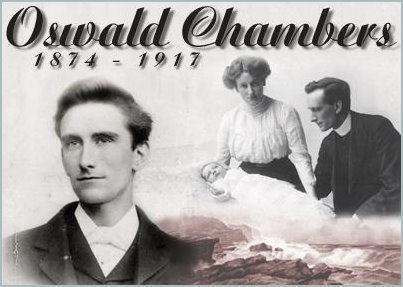
My Utmost for His Highest

June 10th

The next best thing to do

Seek if you have not Found. “Seek, and ye shall find.” Luke 11:9.

“Ye ask, and receive not, because ye ask amiss.” If you ask for things from life instead of from God, you ask amiss, that is, you ask from a desire for self-realization. The more you realize yourself the less will you seek God. “Seek, and ye shall find.” Get to work, narrow your interests to this one. Have you ever sought God with your whole heart, or have you only given a languid cry to Him after a twinge of moral neuralgia? Seek, concentrate, and you will find.
“Ho, every one that thirsteth, come ye to the waters.” Are you thirsty, or smugly indifferent—so satisfied with your experience that you want nothing more of God? Experience is a gateway, not an end. Beware of building your faith on experience, the metallic note will come in at once, the censorious note. You can never give another person that which you have found, but you can make him homesick for what you have.
“Knock, and it shall be opened unto you.” “Draw nigh to God.” Knock—the door is closed, and you suffer from palpitation as you knock. “Cleanse your hands”—knock a bit louder, you begin to find you are dirty. “Purify your heart”—this is more personal still, you are desperately in earnest now—you will do anything. “Be afflicted”—have you ever been afflicted before God at the state of your inner life? There is no strand of self-pity left, but a heartbreaking affliction of amazement to find you are the kind of person that you are. “Humble yourself”—it is a humbling business to knock at God’s door—you have to knock with the crucified thief. “To him that knocketh, it shall be opened.”

Stephen Boyd Blog

Belfast-born Hollywood and International Star from 1950-1970's Fan Tribute Page

Abundant Joy

Digging Deep Into The Word

Not My Life

The Bible as clear as possible

Seek Grow Love

Growing Throughout the Year

Smoodock's Blog

Question Authority

PleaseGrace

A bit on daily needs and provisions

Three Strands Lutheran Parish

"A cord of three strands is not easily broken." Ecclesiastes 4:12

1love1god.com

Romans 5:8

The Rev. Jimmy Abbott

read, watch, listen

BEARING CHRIST CRUCIFIED AND RISEN

To know Christ and Him crucified

Considering the Bible

Scripture Musings

rolliwrites.wordpress.com/

The Official Home of Rolli - Author, Cartoonist and Songwriter

Pure Glory

The heavens are telling the glory of God; and the firmament proclaims His handiwork. Psalms 19:1

The daily addict

The daily life of an addict in recovery

The Christian Tech-Nerd

-Reviews, Advice & News For All Things Tech and Gadget Related-

Thinking Through Scripture

to help you walk with Jesus in faith, hope, and love.

A disciple's study

This is my personal collection of thoughts and writings, mainly from much smarter people than I, which challenge me in my discipleship walk. Don't rush by these thoughts, but ponder them.

Author Scott Austin Tirrell

Maker of fine handcrafted novels!

In Pursuit of My First Love

Returning to the First Love