“Where now is the LORD, the God of Elijah?”

Context
Elijah Taken to Heaven
…Elisha also picked up the cloak that had fallen from Elijah, and he went back and stood on the bank of the Jordan. Then he took the cloak of Elijah that had fallen from him and struck the waters. “Where now is the LORD, the God of Elijah?” he asked. And when he had struck the waters, they parted to the right and to the left, and Elisha crossed over.

Benson Commentary
2 Kings 2:14. And said, Where is the Lord God of Elijah? — Who at Elijah’s request divided these waters, and is able to do it again. But according to this translation, two words are left out, namely, אŠ הוא, aph-hu. The clause literally rendered is, Where is the Lord God of Elijah, even He? which a learned foreigner interprets thus; that Elisha having asked this question, Where is? &c., answers himself in the two last words, aph-hu, yea, he is yet in being. Abarbinel expounds them, Though Elijah be not here, yet his God is. The servant is wanting, but not the Lord. The blessed God is still present, and will supply his place. And when he also had smitten the water’s, they parted hither and thither — As when Elijah smote them with the same mantle, which they both used, as Moses did his rod, not imagining that there was any inherent virtue in it, or at all trusting therein; but using it as a mere sign of the presence and power of God, in which alone they confided to work this wonder. Thus Elijah’s last miracle was Elisha’s first, and the disciple began where his master left off, taking up and carrying on the same blessed work of witnessing for God against idols and idolaters.

Matthew Henry’s Concise Commentary
2:13-18 Elijah left his mantle to Elisha; as a token of the descent of the Spirit upon him; it was more than if he had left him thousands of gold and silver. Elisha took it up, not as a sacred relic to be worshipped, but as a significant garment to be worn. Now that Elijah was taken to heaven, Elisha inquired, 1. After God; when our creature-comforts are removed, we have a God to go to, who lives for ever. 2. After the God that Elijah served, and honoured, and pleaded for. The Lord God of the holy prophets is the same yesterday, to-day, and for ever; but what will it avail us to have the mantles of those that are gone, their places, their books, if we have not their spirit, their God? See Elisha’s dividing the river; God’s people need not fear at last passing through the Jordan of death as on dry ground. The sons of the prophets made a needless search for Elijah. Wise men may yield to that, for the sake of peace, and the good opinion of others, which yet their judgment is against, as needless and fruitless. Traversing hills and valleys will never bring us to Elijah, but following the example of his holy faith and zeal will, in due time.

Gill’s Exposition of the Entire Bible
And he took the mantle of Elijah that fell from him, and smote the waters,…. He wrapped it together, as Elijah had done, and smote the waters in like manner, to make trial whether he had the same spirit and power conferred on him:
and said, where is the Lord God of Elijah? let him appear now, and show his power as he did by him; he knew the mantle would not do without the Lord, and the exertion of his might:

and when he also had smitten the waters, they parted hither and thither; as when Elijah smote them. The words “aph-hu”, rendered “he also”, is left untranslated by the Septuagint, and is interpreted by Theodoret (n) “hidden”. They stand immediately after “the God of Elijah”, and may be rendered, “yea he”, even he himself; meaning not Elijah, as if he was inquired after, or was present and smote the waters; but rather, as we and others, Elisha, even he also smote the waters; though some take it to be the name of God, as “Hu” was, and is with the Arabs to this day; see Gill on Isaiah 43:13. Athanasius (o) interprets it of God, “Appho”; and so Elisha calls him by his title and attribute, “Aph-hu”: but the words may be an answer to the prophet’s question, “where is the Lord God of Elijah?” here he is, even he himself, in the faith of which the water, being smitten, parted; and with this agrees Abarbinel’s note on the text; the meaning is, though we are deprived of Elijah, yet not of the providence of God; and though the servant is wanting, the Lord or master is not; for even he, the blessed God, is in his room, and his excellency is as it was before; which sense is approved of by Frischmuth (p).

and Elisha went over; the river Jordan, as on dry land.

Jehovah-shammah

Jehovah Shammah – The Lord Is There.
All the way around shall be eighteen thousand cubits; and the name of the city from that day shall be: THE LORD IS THERE.” Ezekiel 48:35 NKJV

Use in the Bible: In the Old Testament Jehovah Shammah occurs only once in Ezekiel 48:35.

Jehovah Shammah in the Septuagint: estai to onoma autês…the name thereof

Meaning and Derivation: Jehovah is translated as “The Existing One” or “Lord.” The chief meaning of Jehovah is derived from the Hebrew word Havah meaning “to be” or “to exist.” It also suggests “to become” or specifically “to become known” – this denotes a God who reveals Himself unceasingly. Shammah is derived from the Hebrew word sham, which can be translated as “there.” Jehovah Shammah is a symbolic name for the earthly Jerusalem. The name indicates that God has not abandoned Jerusalem, leaving it in ruins, but that there will be a restoration.

Commentary:
Jehovah Shammah–The Lord is there. This intimated, that the captives, after their return, should have manifest tokens of God’s presence with them and his residence among them, both in his ordinances and his providences. They shall have no occasion to ask, as their fathers did, Is the Lord among us, or is he not? for they shall see and say that he is with them of a truth. And then, though their troubles were many and threatening, they were like the bush which burned but was not consumed, because the Lord was there. But when God departed from their temple, when he said, Migremus hinc–Let us go hence, their house was soon left unto them desolate. Being no longer his, it was not much longer theirs.

That the gospel-church should likewise have the presence of God in it, though not in the Shechinah, as of old, yet in a token of it no less sure, that of his Spirit. Where the gospel is faithfully preached, gospel ordinances are duly administered, and God is worshipped in the name of Jesus Christ only, it may truly be said, The Lord is there for faithful is he that has said, and he will be as good as his word, Lo, I am with you always even unto the end of the world. The Lord is there in his church, to rule and govern it, to protect and defend it, and graciously to accept and own his sincere worshippers, and to be nigh unto them in all that they call upon him for. This should engage us to keep close to the communion of saints, for the Lord is there and then whither shall we go to better ourselves? Nay, it is true of every good Christian he dwells in God, and God in him whatever soul has in it a living principle of grace, it may be truly said, The Lord is There.

That the glory and happiness of heaven should consist chiefly in this, that the Lord is there. St. John’s representation of that blessed state does indeed far exceed this in many respects. That is all gold, and pearls, and precious stones it is much larger than this, and much brighter, for it needs not the light of the sun. But, in making the presence of God the principal matter of its bliss, they both agree. There the happiness of the glorified saints is made to be that God himself shall be with them (Revelation 21:3), that he who sits on the throne shall dwell among them, Revelation 7:15. And here it is made to crown the bliss of this holy city that the Lord is there. Let us therefore give all diligence to make sure to ourselves a place in that city, that we may be for ever with the Lord. – Matthew Henry

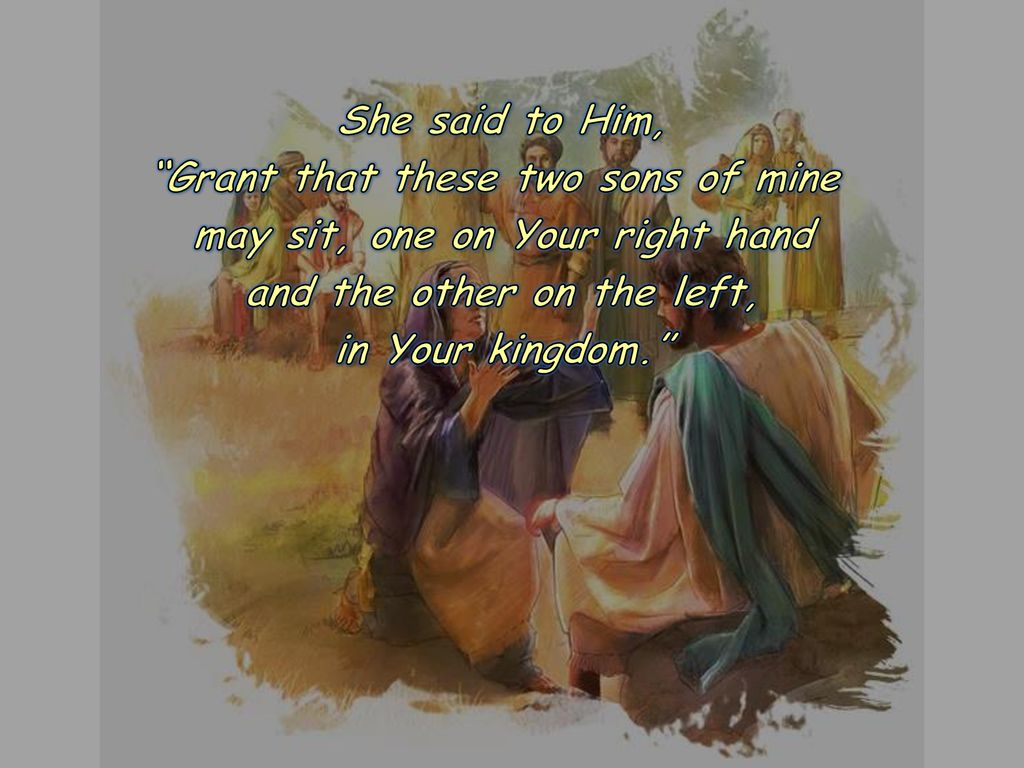
“Grant that one of these two sons of mine may sit at your right and the other at your left in your kingdom.” 

She said to Him, Grant that these two sons of mine may sit, one on Your right hand. and the other on the left, in Your kingdom.

Context
A Mother’s Request
Then the mother of Zebedee’s sons came to Jesus with her sons and knelt down to make a request of Him. “What do you want?” He inquired. She answered, “Declare that in Your kingdom one of these two sons of mine may sit at Your right hand, and the other at Your left.” “You do not know what you are asking,” Jesus replied. “Can you drink the cup I am going to drink?” “We can,” the brothers answered.…

The one on thy right hand.—The favour which had already been bestowed might, in some degree, seem to warrant the petition. John was known emphatically as “the disciple whom Jesus loved” (John 13:23; John 19:26; John 20:2), and if we may infer a general practice from that of the Last Supper (John 13:23), he sat near Him at their customary meals. James was one of the chosen three who had been witnesses of the Transfiguration (Matthew 17:1). Both had been marked out for special honour by the new name of the Sons of Thunder (Mark 3:17). The mother might well think that she was but asking for her sons a continuance of what they had hitherto enjoyed. The sternness of our Lord’s words to Peter (Matthew 16:23) might almost justify the thought that his position had been forfeited.

Matthew Henry’s Concise Commentary
20:20-28 The sons of Zebedee abused what Christ said to comfort the disciples. Some cannot have comforts but they turn them to a wrong purpose. Pride is a sin that most easily besets us; it is sinful ambition to outdo others in pomp and grandeur. To put down the vanity and ambition of their request, Christ leads them to the thoughts of their sufferings. It is a bitter cup that is to be drunk of; a cup of trembling, but not the cup of the wicked. It is but a cup, it is but a draught, bitter perhaps, but soon emptied; it is a cup in the hand of a Father, Joh 18:11. Baptism is an ordinance by which we are joined to the Lord in covenant and communion; and so is suffering for Christ, Eze 20:37; Isa 48:10. Baptism is an outward and visible sign of an inward and spiritual grace; and so is suffering for Christ, for unto us it is given, Php 1:29. But they knew not what Christ’s cup was, nor what his baptism. Those are commonly most confident, who are least acquainted with the cross. Nothing makes more mischief among brethren, than desire of greatness. And we never find Christ’s disciples quarrelling, but something of this was at the bottom of it. That man who labours most diligently, and suffers most patiently, seeking to do good to his brethren, and to promote the salvation of souls, most resembles Christ, and will be most honoured by him to all eternity. Our Lord speaks of his death in the terms applied to the sacrifices of old. It is a sacrifice for the sins of men, and is that true and substantial sacrifice, which those of the law faintly and imperfectly represented. It was a ransom for many, enough for all, working upon many; and, if for many, then the poor trembling soul may say, Why not for me?

Gill’s Exposition of the Entire Bible
And he said unto her, what wilt thou?…. Mark says, “he said unto them”; her two sons, James and John, “what would you that I should do for you?” Both is true; what is this singular favour? what business of moment and importance is it, you would have me do for you, you are so eager and pressing for, and so solicitous of? This he said, not as being ignorant of the matter; he knew the corruption of their hearts, the vanity of their minds, their carnal, worldly, and ambitious views; but to lead them on to say all they had to say upon this head; in which may be observed the goodness, humanity, and patience of Christ, in not upbraiding them with their pride and insolence, in bearing with their rashness and folly, and in giving them room to believe, that he should answer their request in every thing that was right and reasonable to be done,
She saith unto him, grant that these my two sons may sit, the one on the right hand, and the other the left in thy kingdom: or, as in Mark, “in thy glory” that is, in thy glorious kingdom; meaning a temporal one, which would outdo all the kingdoms of the world, in external glory, pomp, and splendour, as they imagined: to sit one on the right hand and the other on the left hand of Christ, when he should be seated, literally, on the throne of his father David, signifies to be nearest to his person; to be next to him in power and authority; to have the highest posts of honour, and places of trust and profit; to be his prime ministers; and, in a word, to have the greatest share next to him of worldly honour, riches, and power. To sit at the right hand, was, with the Jews, reckoned a great mark of honour and affection; see 1 Kings 2:19 and so with other nations: with the Egyptians especially, it was accounted a great honour to be placed on the right hand, but the greatest to be in the middle: which was equally observed among the Romans, and the same with the Africans and Numidians; though Xenophon relates, that Cyrus, with a singular prudence, that he might receive his guests the more honourably, used to place them at the left hand, accounting that part, as nearest the heart, to be the more worthy. (g) These two, the best and most honourable places, this woman was for engrossing for her two sons, who joined with her in the request; for Mark says, that “they said unto him, grant unto us that we may sit, &c.” and Christ’s answer here, which follows, implies as much.

Do not take the place of honor

Luke 14:12-14.

Context
The Parable of the Guests
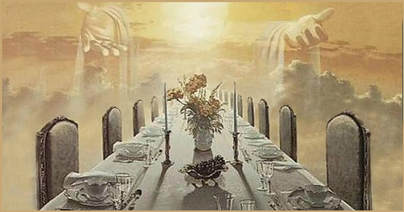
When Jesus noticed how the guests chose the places of honor, He told them a parable: “When you are invited to a wedding banquet, do not sit in the place of honor, in case someone more distinguished than you has been invited. Then the host who invited both of you will come and tell you, ‘Give this man your seat.’ And in humiliation, you will have to take the last place.…

Sit not down.—Literally, recline not.
Lest a more honourable man than thou . . .—The words imply that the common practice was for the guests to seat themselves; then, as in the parable of the wedding garment (Matthew 22:11), the host came in “to see the guests.”

a more honourable man than thou] Php 2:3, “in lowliness of mind let each esteem other better than themselves.”

Barnes’ Notes on the Bible
Art bidden – Are invited.
To a wedding – A wedding was commonly attended with a feast or banquet.

The highest room – The seat at the table nearest the head.

A more honourable man – A more aged man, or a man of higher rank. It is to be remarked that our Saviour did not consider the courtesies of life to be beneath his notice. His chief design here was, no doubt, to reprove the pride and ambition of the Pharisees; but, in doing it, he teaches us that religion does not violate the courtesies of life. It does not teach us to be rude, forward, pert, assuming, and despising the proprieties of refined social contact. It teaches humility and kindness, and a desire to make all happy, and a willingness to occupy our appropriate situation and rank in life; and this is true “politeness,” for true politeness is a desire to make all others happy, and a readiness to do whatever is necessary to make them so. They have utterly mistaken the nature of religion who suppose that because they are professed Christians, they must be rude and uncivil, and violate all the distinctions in society. The example and precepts of Jesus Christ were utterly unlike such conduct. He teaches us to be kind, and to treat people according to their rank and character. Compare Matthew 22:21; Romans 13:7; 1 Peter 2:17.

Jesus had before denounced a woe against the Pharisees for loving the uppermost seats in the synagogues, Luke 11:43, and told us, Matthew 23:6, that they loved the uppermost rooms at feasts, and possibly he might at this feast see something of it. He therefore applies his discourse by pressing upon them humility, and showing them the danger of pride, which though it be a vice seated in the heart, yet by such little things discovereth itself in the outward conversation. He tells them, that God is such an enemy to pride, that he ordinarily so ordereth it in the government of the world, that usually self-exalting people are by one means or other abused, and brought to shame and contempt, and those that are low in their own eyes are exalted; and if it doth not so fall out here, yet this will be what will at the last day befall them, in the day of God’s righteous judgment.

Stephen Boyd Blog

Belfast-born Hollywood and International Star from 1950-1970's Fan Tribute Page

Abundant Joy

Digging Deep Into The Word

Not My Life

The Bible as clear as possible

Seek Grow Love

Growing Throughout the Year

Smoodock's Blog

Question Authority

PleaseGrace

A bit on daily needs and provisions

Three Strands Lutheran Parish

"A cord of three strands is not easily broken." Ecclesiastes 4:12

1love1god.com

Romans 5:8

The Rev. Jimmy Abbott

read, watch, listen

BEARING CHRIST CRUCIFIED AND RISEN

To know Christ and Him crucified

Considering the Bible

Scripture Musings

rolliwrites.wordpress.com/

The Official Home of Rolli - Author, Cartoonist and Songwriter

Pure Glory

The heavens are telling the glory of God; and the firmament proclaims His handiwork. Psalms 19:1

The daily addict

The daily life of an addict in recovery

The Christian Tech-Nerd

-Reviews, Advice & News For All Things Tech and Gadget Related-

Thinking Through Scripture

to help you walk with Jesus in faith, hope, and love.

A disciple's study

This is my personal collection of thoughts and writings, mainly from much smarter people than I, which challenge me in my discipleship walk. Don't rush by these thoughts, but ponder them.

Author Scott Austin Tirrell

Maker of fine handcrafted novels!

In Pursuit of My First Love

Returning to the First Love