‘Blessed be the God and Father of our Lord Jesus Christ, which according to his abundant mercy hath begotten us again unto a lively hope by the resurrection of Jesus Christ from the dead.’ 1 Peter 1:3 SUGGESTED FURTHER READING: 1 Corinthians 15:1–11
Great is the difference between the notion and experience of divine truths. When they are truly known, they warm the heart and put life into our words. The Apostle was a poor and afflicted man. He wrote to a scattered and afflicted people. Yet see how he begins. They who can make these words their own may be joyful in tribulation. The way in which believers have a right to the inheritance: (i) They are begotten again. They have it as children, not by nature—Ephesians 2:3 … and were by nature the children of wrath, even as others—but by grace and adoption, born of the incorruptible seed of the word, quickened by the Spirit—an adoption accompanied with a real change: by the former a right, by the latter a suitability. (ii) The ground or cause: abundant mercy, considering the objects (sinners), the greatness of the blessings, the procuring cause (John 3:16 For God so loved the world, that he gave his only begotten Son, that whosoever believeth in him should not perish, but have everlasting life). (iii) The great means—the resurrection of Jesus Christ. This is the capital point in which all gospel truths centre. And if Christ be not risen, then is our preaching vain, and your faith is also vain. And if Christ be not raised, your faith is vain; ye are yet in your sins’ (1 Corinthians 15:14, 17). FOR MEDITATION: ‘I Am,’ saith CHRIST our glorious head, Thy power and mercy first prevailed (May we attention give) From death to set us free; ‘The resurrection of the dead, And often since our life had failed, The life of all that live. If not renewed by thee.
By faith in me, the soul receives To thee we look, to thee we bow; New life, though dead before; To thee, for help, we call; And he that in my name believes, Our life and resurrection thou, Shall live, to die no more.’ Our hope, our joy, our all.
Bible Thought: “Where can I go from your Spirit? Where can I flee from your presence?” (Psalm 139:7, NIV)
David, in speaking to God, says, “If I go up to the heavens, you are there; if I make my bed in the depths, you are there. If I rise on the wings of the dawn, if I settle on the far side of the sea, even there your hand will guide me, your right hand will hold me fast.” These statements seem to convey the message that David felt a comfort in knowing that God was always there. No matter where David was, physically or spiritually, God was there.
When we behold majestic snow-capped mountains, deep blue lakes and foamy ocean waves, or fluffy cotton clouds in motion, we feel awed–and we say to God–“You are there.” When faced with life’s daily stresses, or perhaps financial loss or moves to another city, it may not be as easy to say to God, “You are there.”
David’s words remind us that whether we are experiencing events that elate us to the heights or we are in the depths of despair, whether we are anticipating a move across the continent or making a critical decision, we can trust Him to guide us and hold us. In the brightness of day or in the shadows of night, we can say with confidence, “God, I know you are there.”
Hymn: “It Is Well With My Soul”
Lord, help us to feel Your loving arms of comfort enfolding us wherever we are and whatever we are doing. Grant us peace and comfort in knowing You are there. In Jesus’ precious name. Amen.
This is a true story of something that happened just a few years ago at USC.
There was a professor of philosophy there who was a deeply committed atheist. His primary goal for one required class was to spend the entire semester attempting to prove that God couldn’t exist. His students were always afraid to argue with him because of his impeccable logic. For twenty years, he had taught this class and no one had ever had the courage to go against him. Sure, some had argued in class at times, but no one had ever really gone against him (you’ll see what I mean later). Nobody would go against him because he had a reputation. At the end of every semester, on the last day, he would say to his class of 300 students, “If there is anyone here who still believes in Jesus, stand up!” In twenty years, no one had ever stood up. They knew what he was going to do next. He would say, because anyone who does believe in God is a fool. If God existed, he could stop this piece of chalk from hitting the ground and breaking. Such a simple task to prove that he is God, and yet he can’t do it.” And every year, he would drop the chalk onto the tile floor of the classroom and it would shatter into a hundred pieces. All of the students could do nothing but stop and stare. Most of the students were convinced that God couldn’t exist. Certainly, a number of Christians had slipped through, but for 20 years, they had been too afraid to stand up. Well, a few years ago, there was a freshman who happened to get enrolled in the class. He was a Christian, and had heard the stories about this professor. He had to take the class because it was one of the required classes for his major, and he was afraid. But for 3 months that semester, he prayed every morning that he would have the courage to stand up no matter what the professor said or what the class said. Nothing they said or did could ever shatter his faith, he hoped. Finally, the day came. The professor said, “If there is anyone here who still believes in God, stand up!” The professor and the class of 300 people looked at him, shocked, as he stood up at the back of the classroom. The professor shouted, “You FOOL!! If God existed, he could keep this piece of chalk from breaking when it hit the ground!” He proceeded to drop the chalk, but as he did, it slipped out of his fingers, off his shirt cuff, onto the pleats of his pants, down his leg, and off his shoe. As it hit the ground, it simply rolled away, unbroken. The professor’s jaw dropped as he stared at the chalk. He looked up at the young man, and then ran out of the lecture hall. The young man who had stood up proceeded to walk to the front of the room and share his faith in Jesus for the next half hour. 300 students stayed and listened as he told of God’s love for them and of his power through Jesus Christ.
“Yet to all who received HIM, to those who believed in HIS name, HE gave the right to become children of God-children born not of natural descent, nor of human decision or a husband’s will, but born of God!”
“But HE knows the way that I take. When HE has tested me, I will come forth as gold.” -Job 23:10
They think I’m some kind of cruel, heartless landlord. Someone must have told them that. But they’re wrong, just plain wrong, and it’s time to set the record straight, once and for all.
People say I’m an innkeeper. I suppose you’d call it an inn. To us it’s just a big house. My grandfather, Joshua ben-Yahoudi, built it back when his trading business was at a peak. And he built it big enough to fit all fourteen kids.
Well, a few years ago, the missus and I were just rattling around in that big house–kids grown up and all–and we were thinking, maybe we could take in a few travelers. Rachel has always been mighty good in the kitchen, so we just let out word that we’d take people in, and they started to come. Every night we’d have a person or two, sometimes more. People would always come back when they came to town again, intent on another bowl of Rachel’s lamb stew.
Then came that blankety-blank census the governor thought up. Taxation, pure and simple! People from all over the province flooded into town that week. Filled us clean up. Rachel and I slept in the main room where we always do, and we started putting guests in the other three rooms. They kept coming. Then we doubled up two or three families to a room. They kept coming. Finally, when we had filled the main room with four families plus Rachel and me, we started turning people away.
I must have gotten in and out of bed ten times that night, stumbling over bodies to get to the door. “No more room, sorry folks. No more room. Come back in the morning. We have a couple of families leaving then.” They’d mutter something and head back to their party, and sleep somewhere next to a house under the shelter of a blanket. I just couldn’t make any more room. That’s the honest truth.
But I did make room for one more couple. Joseph was a burly man with big arms and strong hands, down from Nazareth, I think he said. He wouldn’t take “no” for an answer. I would say, “No, I’m sorry,” and he’d tell my about his “little Mary.” Well, when I saw “little Mary” she wasn’t very little. She was just about as pregnant as a woman can get, and awfully pale. While Joseph was pleading, I saw her grab her tummy in pain, and I knew I couldn’t let her have that baby outside in the wind and sleet.
The barn. That would just have to do, I told myself, and led them and their donkey out back. Now it was pretty crowded, so I shooed several animals into the pen outside to make room in one dry corner. Joseph said, “We sure are grateful, sir.” Then with a serious look, he asked me, “Do you know where I can find a midwife in these parts? We might need her tomorrow or the next day.”
That man didn’t know much about having babies, it was plain enough to see. I ran to Aunt Sarah’s house and pounded on the door until her husband came. “One of the travelers is having a baby,” I told him. “I’ll wait while Aunt Sarah gets dressed.” I stopped a moment to catch my breath. “And tell her to hurry.”
By the time we got back to the barn, Joseph had “little Mary” settled on some soft, clean hay, wrapped up in a blanket, wiping the perspiration off her brow, and was speaking softly to her as she fought the waves of pain. Aunt Sarah sent me to get my Rachel, and then pushed Joseph and me out of the barn. “This ain’t no place for men,” she said.
We waited just outside in the shelter of the barn for hours, it seemed like. Well, all of a sudden, we hear a little cry. “You’ve got a baby boy,” Aunt Sarah was saying as we peeped around the corner. She hands the young-un to Rachel, and she wraps it up in those swaddling bands she had saved. Cute little thing, I tell you.
Well, Joseph goes over to Mary and gives her a big hug, and a kiss on the cheek, and Rachel hands Mary the baby, and then comes over to me and takes my hand. “Remember when our Joshua was born?” she whispers.
The lantern was blowing almost out, the cattle were lowing softly, and baby Jesus was asleep in his mother’s arms. That’s how I left them as I walked Aunt Sarah home. Chilly wind, though the sleet had stopped.
By the time I got back, Rachel was in bed, and I was about ready to put out the light, step over sleeping bodies, and get under the warm covers, when I heard some murmuring out by the barn.
I’d better check, I told myself. When I peeped in, I saw shepherds. Raggedy, smelly old shepherds were kneeling down on the filthy barn floor as if they were praying. The oldest one was saying something to Joseph about angels and the Messiah. And the rest of them just knelt there with their heads bowed, some with tears running down their faces.
I coughed out loud, and Joseph looked up. I was almost ready to run those thieving shepherds off, when Joseph motioned to me with his hand. “It’s okay,” he whispered. “They’ve come to see the Christ-baby.”
The Christ-baby? The Messiah? That was when I knelt, too. And watched, and prayed, and listened to the old shepherd recount his story of angels and heavenly glory, and the sign of a holy baby, wrapped in swaddling bands, to be found in a stable-manger.
My Lord,, it was my stable where the Christ-baby was born. My manger he rested in. My straw, my lamp, my wife Rachel assisting at his birth.
The shepherds left after a while. Some of them leaned over and kissed the sleeping Christ-child before they departed. I know I did.
I’ll always be glad I made room in the barn for that family– that holy family. You see, I’m not some mean inn-keeper. I was there. I saw him. And, you know, years later that boy came back to Bethlehem, this time telling about the Kingdom of God. Oh, I believe in him, I tell you. I was there. And, mark my words, if you’d seen what I’ve seen, you’d be a believer, to.
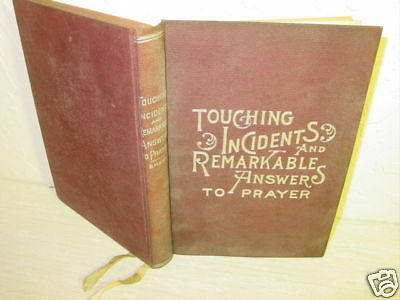
We have read a touching incident about three little children, who, last autumn, late in the season, wandered alone in a dreary region of New Brunswick. The sun had already sunk in the west, and the gloom of evening was spreading itself over the surrounding country.
The night came on fast; and feeling sure that they could not get home before daybreak, the eldest (a girl of only six years) quietly placed the two little ones in a sheltered nook on the sea-beach; and fearing the cold, chilly night for the younger children, Mary stripped off most of her own clothes to keep them warm.
She then started off to gather dry sea-weed, and whatever else she could find, to cover them with. Having tenderly in this way wrought for some time to make them a nest, she at last fell down exhausted with the cold, and half bare to the cold inclement night.
That evening the loving father and tender mother sat up wondering at their children’s long absence; the hours dragged slowly past with anxious watching, and silent listening for the well-known little pattering feet. In vain the fond parents’ eyes pierced through the darkness. At length they roused the neighbors with their anxious inquiries after their lost ones. All that night was passed in searching and in tears, till early in the morning, lying fast asleep, and same- – -what numbed with cold, were found little Johnny and Lizzie. But, oh I a touching spectacle lay near them; their young savior was stiff, cold and dead on the sea-weed which the poor little child-heroine had not strength to drag into the nook, where those she so deeply loved, and died to save, were sleeping. Thus this little New Brunswick girl died in her successful and self-sacrificing endeavor to save her brother and sister.
Does not this recall the love of the Lord Jesus Christ to you who read? Mary went to the full extent of human love in dying for her little brother and sister. “Greater love hath no man than this, that a man lay down his life for his friends.” Yet the Lord Jesus laid down his life for his enemies; for “scarcely for a righteous man will one die; yet peradventure for a good man some would even dare to die; but God commendeth His love toward us,” etc. He makes no mistakes. Yet how many listen to this story with more emotion and interest than they do to the story of the cross, where the love of Jesus, the Son of God, is told in letters of blood! – Dawn of the Morning.
This is my personal collection of thoughts and writings, mainly from much smarter people than I, which challenge me in my discipleship walk. Don't rush by these thoughts, but ponder them.