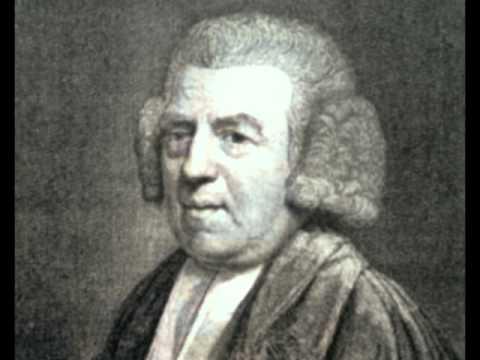
365 days with Newton

22 FEBRUARY

Hear as if your last opportunity

‘For God so loved the world, that he gave his only begotten Son, that whosoever believeth in him should not perish, but have everlasting life.’ John 3:16
SUGGESTED FURTHER READING: Luke 23:32–43

As I conceive that this discourse will afford a large scope for doctrine, for instruction in righteousness, I propose, if opportunity is afforded, to go through it all. To enlarge upon all that the verses before us contain in reference to these subjects will be a work of time. Perhaps many who are present at my entrance upon this passage may not live to see the close of it, even if I should be spared to complete it. May the Lord therefore enable me to speak and you to hear every discourse as if it were the last opportunity we should enjoy on this side of eternity. It may be summarized by four principal points:
(i) the nature and necessity of the new birth (from John 3:3–8).
(ii) concerning the certainty and evidence of divine truth and the insufficiency of man to receive the clearest and most necessary doctrines, unless he is taught from above (verses 9–13).
(iii) our Lord declares the great design of his coming into the world, to give life to those who were at the point of death (verses 14–17).
(iv) the happiness of those who should believe, and the aggravated condemnation of those who reject his gospel (verses 18–21).

FOR MEDITATION: I am willing to hope that you will be made a messenger of light and peace to his soul. The Lord’s hand is not shortened that he cannot save. He can do great things in a small time, as you know from your own experience. In a moment, in the twinkling of an eye, he can command light to shine out of darkness. If he speaks, it is done.… One glimpse of the worth of the soul, the evil of sin, and the importance of eternity, will effect that which hath been in vain attempted by repeated arguments.
John Newton to William Cowper, 22 February 1770

[re Cowper’s brother, John, converted on his deathbed a few days later]

SERMON SERIES: JOHN 3:1–2, NO. 1 [2/7]
365 days with Newton

21 FEBRUARY

He does not quench the smoking flax

‘Nicodemus saith unto him, How can a man be born when he is old? Can he enter the second time into his mother’s womb, and be born?’ John 3:4
SUGGESTED FURTHER READING: John 3:1–21

When we read our Lord’s discourse with Nicodemus, we may well say what some said who heard him speak themselves, Never man spake like this man [John 7:46]. Here we see a depth of doctrine explained and illustrated by the most familiar and condescending comparisons. We see something of that tenderness and freedom with which he received all that came unto him. He did not despise the day of small things; he did not quench the smoking flax, but cherished it into a flame. We see likewise the power and efficacy of his words, how they cause light to spring out of darkness, instruct the most ignorant and confirm the most fearful. Nicodemus, who at first came to Jesus by night, attained at length so much boldness in his cause, that when he hung upon the cross, wounded and dead, when his apostles had all forsaken him, he durst appear in the midst of his enemies as an open disciple and assist in taking down his body and preparing it for the funeral. Let this encourage those who are now seeking him in much darkness and many fears. His arm is not shortened, nor his ear heavy, nor his compassions abated to this hour.

FOR MEDITATION: The religion I then possessed my Lord, thou knowest, scarcely deserved the name. For I knew little of thee as a Saviour, and while I trusted thee in temporals, I was not aware of my greatest wants and dangers. In my spiritual concerns, I chiefly depended upon myself. I knew I had been very bad, I had a desire to be better, and thought I should in time make myself so. Surely if I had any light, it was but as the first and faintest streak of dawn. Yet if this glimmering had not been from thee, it could not have advanced. Thou who wilt not forsake the work of thine own hands, nor break the bruised reed, nor quench the smoking flax, wast pleased to pardon, accept and bring me forward. May the remembrance of thy patience and gentleness towards me, teach me forbearance and candour to others, in whom I observe the smallest indications of a desire to seek and serve thee!
Annotated Letters to a Wife, 21 February 1795

SERMON SERIES: JOHN 3:1–2, NO. 1 [1/7]

Streams in the Desert

February 21

“Rest in the Lord, and wait patiently for him.”
(Psalm 37:7.)

HAVE you prayed and prayed and waited and waited, and still there is no manifestation?
Are you tired of seeing nothing move? Are you just at the point of giving it all up? Perhaps you have not waited in the right way? This would take you out of the right place—the place where He can meet you.
“With patience wait” (Rom. 8:25). Patience takes away worry. He said He would come, and His promise is equal to His presence. Patience takes away your weeping. Why feel sad and despondent? He knows your need better than you do, and His purpose in waiting is to bring more glory out-of it all. Patience takes away self-works. The work He desires is that you “believe” (John 6:29), and when you believe, you may then know that all is well. Patience takes away all want. Your desire for the thing you wish is perhaps stronger than your desire for the will of God to be fulfilled in its arrival.
Patience takes away all weakening. Instead of having the delaying time, a time of letting go, know that God is getting a larger supply ready and must get you ready too. Patience takes away all wobbling. “Make me stand upon my standing” (Daniel 8:18, margin). God’s foundations are steady; and when His patience is within, we are steady while we wait. Patience gives worship. A praiseful patience sometimes “long-suffering with joyfulness” (Col. 1:11) is the best part of it all. “Let (all these phases of) patience have her perfect work” (James 1:4), while you wait, and you will find great enrichment.—C. H. P.

Hold steady when the fires burn,
When inner lessons come to learn,
And from this path there seems no turn—
“Let patience have her perfect work.”

—L. S. P

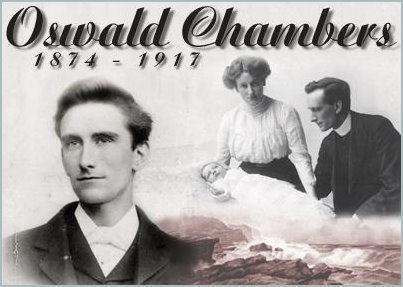
My Utmost for His Highest

February 21st

Have you ever been carried away for Him?

She hath wrought a good work on Me. Mark 14:6.

If human love does not carry a man beyond himself, it is not love. If love is always discreet, always wise, always sensible and calculating, never carried beyond itself, it is not love at all. It may be affection, it may be warmth of feeling, but it has not the true nature of love in it.
Have I ever been carried away to do something for God not because it was my duty, nor because it was useful, nor because there was anything in it at all beyond the fact that I love Him? Have I ever realized that I can bring to God things which are of value to Him, or am I mooning round the magnitude of His Redemption whilst there are any number of things I might be doing? Not Divine, colossal things which could be recorded as marvellous, but ordinary, simple human things which will give evidence to God that I am abandoned to Him? Have I ever produced in the heart of the Lord Jesus what Mary of Bethany produced?
There are times when it seems as if God watches to see if we will give Him the abandoned tokens of how genuinely we do love Him. Abandon to God is of more value than personal holiness. Personal holiness focuses the eye on our own whiteness; we are greatly concerned about the way we walk and talk and look, fearful lest we offend Him. Perfect love casts out all that when once we are abandoned to God. We have to get rid of this notion—‘Am I of any use?’ and make up our minds that we are not, and we may be near the truth. It is never a question of being of use, but of being of value to God Himself. When we are abandoned to God, He works through us all the time.

My Utmost for His Highest

February 20th

The initiative against dreaming

Arise, let us go hence. John 14:31.

Dreaming about a thing in order to do it properly is right; but dreaming about it when we should be doing it is wrong. After Our Lord had said those wonderful things to His disciples, we might have expected that He would tell them to go away and meditate over them all; but Our Lord never allowed ‘mooning.’ When we are getting into contact with God in order to find out what He wants, dreaming is right; but when we are inclined to spend our time in dreaming over what we have been told to do, it is a bad thing and God’s blessing is never on it. God’s initiative is always in the nature of a stab against this kind of dreaming, the stab that bids us “neither sit nor stand but go.”
If we are quietly waiting before God and He has said—“Come ye yourselves apart,” then that is meditation before God in order to get at the line He wants; but always beware of giving over to mere dreaming when once God has spoken. Leave Him to be the source of all your dreams and joys and delights, and go out and obey what He has said. If you are in love, you do not sit down and dream about the one you love all the time, you go and do something for him; and that is what Jesus Christ expects us to do. Dreaming after God has spoken is an indication that we do not trust Him.

Stephen Boyd Blog

Belfast-born Hollywood and International Star from 1950-1970's Fan Tribute Page

Abundant Joy

Digging Deep Into The Word

Not My Life

The Bible as clear as possible

Seek Grow Love

Growing Throughout the Year

Smoodock's Blog

Question Authority

PleaseGrace

A bit on daily needs and provisions

Three Strands Lutheran Parish

"A cord of three strands is not easily broken." Ecclesiastes 4:12

1love1god.com

Romans 5:8

The Rev. Jimmy Abbott

read, watch, listen

BEARING CHRIST CRUCIFIED AND RISEN

To know Christ and Him crucified

Considering the Bible

Scripture Musings

rolliwrites.wordpress.com/

The Official Home of Rolli - Author, Cartoonist and Songwriter

Pure Glory

The heavens are telling the glory of God; and the firmament proclaims His handiwork. Psalms 19:1

The daily addict

The daily life of an addict in recovery

The Christian Tech-Nerd

-Reviews, Advice & News For All Things Tech and Gadget Related-

Thinking Through Scripture

to help you walk with Jesus in faith, hope, and love.

A disciple's study

This is my personal collection of thoughts and writings, mainly from much smarter people than I, which challenge me in my discipleship walk. Don't rush by these thoughts, but ponder them.

Author Scott Austin Tirrell

Maker of fine handcrafted novels!

In Pursuit of My First Love

Returning to the First Love