
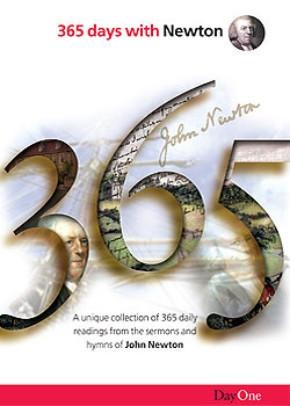
365 days with Newton

13 JANUARY (PREACHED 31 DECEMBER 1769)

The seeds of eternity are sown in time

‘For all our days are passed away in thy wrath: we spend our years as a tale that is told.’ Psalm 90:9
SUGGESTED FURTHER READING: Ecclesiastes 12:1–14

As a tale that is told. Let us consider the comparison. As a tale: the margin reads ‘a meditation’, whether silent or expressed—a thought, or a word, or a discourse. I judge our translation to be exceeding proper, suited to the scope of the passage and the nature of our life. The chief pleasure of a tale or relation lies in the hearing or telling it while it is new. When well known or often told, it ceases to please. A worn-out tale is a proverb for what is tedious. Such is our life—every year is in the main a repetition of the same poor story. Youth, when just entering upon it, are all attention—but O if old people were to speak, how insipid and tasteless is the tale of life to those who know not the pleasures of communion with God. Few and evil, says Jacob, have the days of my life been [Genesis 47:9]. Of the good, nothing remains but the remembrance—and this was mixed with so much evil that few people would have the courage to live a year over again, if they were to choose—and yet, alas, afraid to die. O the vanity of man! When the tale is told, or the word spoken, it is gone beyond recall. Many consequences often follow from one improper speech, but that which was said cannot be unsaid. In the former view, life appeared quite insignificant, but in this it appears of the greatest consequences. I have somewhere met a sentence which much struck me. I wish it may affect all who hear it: ‘The seeds of eternity are sown in time.’ According to our pursuits and conduct in this momentary life, such will be our condition for ever. So the Apostle reminds us in Galatians 6:7–8, Be not deceived; God is not mocked: for whatsoever a man soweth, that shall he also reap.

FOR MEDITATION: Time is short—and the nature of our employment while it lasts is well suited to raise our thoughts above the little concerns of such a life as this.… The love of Christ, the worth of souls, the honour of being instrumental in their recovery, a glorious endless state of happiness and holiness—how light must our present sufferings appear when weighed in the scales of the sanctuary against these things. Let us not be weary in well-doing, for in due time we shall reap if we faint not.

SERMON: PSALM 90:9 [2/3] [ALSO PREACHED 28 DECEMBER 1783]

365 days with Newton

12 JANUARY (PREACHED 31 DECEMBER 1769)

Mortal, transitory creatures

‘For all our days are passed away in thy wrath: we spend our years as a tale that is told.’ Psalm 90:9
SUGGESTED FURTHER READING: Psalm 90:1–17

In the works of creation we may observe not only a display of divine wisdom in themselves, but a particular wisdom in dispositioning them and making them subservient to the special use and occasions of mankind. Thus the sun and moon give evidence of their Maker’s glory and would have done so if placed at such a distance from us that we had never seen them. But how are his wisdom and goodness confirmed to us by the benefits we receive from these heavenly bodies! Omitting other uses, I shall mention one which is expressly mentioned in Genesis 1:14. The Lord had appointed that man, after the fall, should be a mortal, transitory creature, and he knew that he would be a depraved and foolish creature, prone to bury himself in the things of this world and to forget eternity. Therefore when he fixed the sun and moon to give light to the earth he suited their various changes and revolutions to admonish man of the unceasing speed of time. Thus all things are in motion: day and night swiftly succeed each other, the moon appears, increases, declines and is again renewed and the changing seasons, in a constant succession, bring round the year. Thus day after day uttereth speech. The psalm before us is a prayer of Moses. The subject is the present state of human life: its uncertainty—compared to the grass which falls suddenly before the scythe (see Psalm 103:16) in verse 6—its brevity—seventy years or less for the most part, and all beyond that term pain and infirmity (verse 10)—its general vanity in itself—we spend or bring our years to end as a tale that is told.
FOR MEDITATION: [for New Year 1774]
While with ceaseless course the sun
Thanks for mercies past receive,
Hasted through the former year,
Pardon of our sins renew;
Many souls their race have run,
Teach us, henceforth, how to live
Never more to meet us here.
With eternity in view:
Fixed in an eternal fate,
Bless thy word to young and old,
They have done with all below;
Fill us with a Saviour’s love;
We a little longer wait,
And when life’s short tale is told,
But how little—none can know.
May we dwell with thee above.

SERMON: PSALM 90:9 [1/3] [ALSO PREACHED 28 DECEMBER 1783]

365 days with Newton

11 JANUARY

The wonder-working God

‘And the Spirit of God moved upon the face of the waters. And God said, Let there be light: and there was light.’ Genesis 1:2–3
SUGGESTED FURTHER READING: John 1:1–5

Now this account of the creation, the Scripture teaches us to use to advantage chiefly for three purposes:
(i) to help our conceptions of the wonder-working God: his wisdom (Psalm 104:24), power (Amos 4:12–13; Isaiah 40:26), goodness (Psalm 104:13–15).
(ii) to instruct us in his readiness and willingness to help his people in their greatest troubles and in the darkest times. When our hearts faint we should remember the right hand of the Most High (Isaiah 51:13; Psalm 146:5).
(iii) as a type or emblem of the new creation. The sinner has faculties and powers originally suited for the service of God—but all is in disorder. His mind is without form and void. Darkness, gross darkness, sin, ignorance and misery covers his heart, but (2 Corinthians 4:6) [God, who commanded the light to shine out of darkness, hath shined in our hearts, to give the light of the knowledge of the glory of God in the face of Christ Jesus], then life and fruitfulness take place and the wilderness becomes the garden of the Lord.
This God was in Christ reconciling the world to himself by the Cross—and in the Man Christ he still reigns upon a throne of grace mighty to save. Believe in his name.
FOR MEDITATION: The old and new creation
That was a wonder-working word
The new creation of the soul
Which could the vast creation raise!
Does now no less his power display;
Angels, attendant on their LORD,
Than when he formed the mighty whole,
Admired the plan, and sung his praise.
And kindled darkness into day.

From what a dark and shapeless mass,
Though self-destroyed, O LORD, are we,
All nature sprang at his command!
Yet let us feel what thou canst do;
Let there be light, and light there was,
Thy word the ruin can repair,
And sun and stars, and sea and land.
And all our hearts create anew.

SERMON SERIES: GENESIS, NO. 2 [3/3], GENESIS 1:2–3

Streams in the Desert

January 12

“Reckon it nothing but joy … whenever you find yourself hedged in by the various trials, be assured that the testing of your faith leads to power of endurance.” (James 1:2, 3.) (Weymouth.)

GOD hedges in His own that He may preserve them, but oftentimes they only see the wrong side of the hedge, and so misunderstand His dealings. It was so with Job (Job 3:23). Ah, but Satan knew the value of that hedge! See his testimony in chapter 1:10. Through the leaves of every trial there are chinks of light to shine through. Thorns do not prick you unless you lean against them, and not one touches without His knowledge. The words that hurt you, the letter which gave you pain, the cruel wound of your dearest friend, shortness of money—are all known to Him, who sympathizes as none else can and watches to see, if, through all, you will dare to trust Him wholly.

“The hawthorn hedge that keeps us from intruding,
Looks very fierce and bare
When stripped by winter, every branch protruding
Its thorns that would wound and tear.

“But spring-time comes; and like the rod that budded,
Each twig breaks out in green;
And cushions soft of tender leaves are studded,
Where spines alone were seen.

“The sorrows, that to us seem so perplexing,
Are mercies kindly sent
To guard our wayward souls from sadder vexing,
And greater ills prevent.

“To save us from the pit, no screen of roses
Would serve for our defense,
The hindrance that completely interposes
Stings back like thorny fence.

“At first when smarting from the shock, complaining
Of wounds that freely bleed,
God’s hedges of severity us paining,
May seem severe indeed.

“But afterwards, God’s blessed spring-time cometh,
And bitter murmurs cease;
The sharp severity that pierced us bloometh,
And yields the fruits of peace.

“Then let us sing, our guarded way thus wending
Life’s hidden snares among,
Of mercy and of judgment sweetly blending;
Earth’s sad, but lovely song”

Streams in the Desert

January 11

“Comfort ye, comfort ye my people, saith your God.” (Isa. 40:1.)

STORE up comfort. This was the prophet’s mission. The world is full of comfortless hearts, and ere thou art sufficient for this lofty ministry, thou must be trained. And thy training is costly in the extreme; for, to render it perfect, thou too must pass through the same afflictions as are wringing countless hearts of tears and blood. Thus thy own life becomes the hospital ward where thou art taught the Divine art of comfort. Thou art wounded, that in the binding up of thy wounds by the Great Physician, thou mayest learn how to render first aid to the wounded everywhere. Dost thou wonder why thou art passing through some special sorrow? Wait till ten years are passed, and thou wilt find many others afflicted as thou art. Thou wilt tell them how thou hast suffered and hast been comforted; then as the tale is unfolded, and the anodynes applied which once thy God wrapped around thee, in the eager look and the gleam of hope that shall chase the shadow of despair across the soul, thou shalt know why thou wast afflicted, and bless God for the discipline that stored thy life with such a fund of experience and helpfulness.—Selected.

God does not comfort us to make us comfortable, but to make us comforters.—Dr. Jowett.

“They tell me I must bruise
  The rose’s leaf,
Ere I can keep and use
  Its fragrance brief.

“They tell me I must break
  The skylark’s heart,
Ere her cage song will make
  The silence start.

“They tell me love must bleed,
  And friendship weep,
Ere in my deepest need
  I touch that deep.

“Must it be always so
  With precious things?
Must they be bruised and go
  With beaten wings?

“Ah, yes! by crushing days,
  By caging nights, by scar
Of thorn and stony ways,
  These blessings are!”

Stephen Boyd Blog

Belfast-born Hollywood and International Star from 1950-1970's Fan Tribute Page

Abundant Joy

Digging Deep Into The Word

Not My Life

The Bible as clear as possible

Seek Grow Love

Growing Throughout the Year

Smoodock's Blog

Question Authority

PleaseGrace

A bit on daily needs and provisions

Three Strands Lutheran Parish

"A cord of three strands is not easily broken." Ecclesiastes 4:12

1love1god.com

Romans 5:8

The Rev. Jimmy Abbott

read, watch, listen

BEARING CHRIST CRUCIFIED AND RISEN

To know Christ and Him crucified

Considering the Bible

Scripture Musings

rolliwrites.wordpress.com/

The Official Home of Rolli - Author, Cartoonist and Songwriter

Pure Glory

The heavens are telling the glory of God; and the firmament proclaims His handiwork. Psalms 19:1

The daily addict

The daily life of an addict in recovery

The Christian Tech-Nerd

-Reviews, Advice & News For All Things Tech and Gadget Related-

Thinking Through Scripture

to help you walk with Jesus in faith, hope, and love.

A disciple's study

This is my personal collection of thoughts and writings, mainly from much smarter people than I, which challenge me in my discipleship walk. Don't rush by these thoughts, but ponder them.

Author Scott Austin Tirrell

Maker of fine handcrafted novels!

In Pursuit of My First Love

Returning to the First Love