
Who divided the Bible into chapters and verses?

Answer: When the books of the Bible were originally written, they did not contain chapter or verse references. The Bible was divided into chapters and verses to help us find Scriptures more quickly and easily. It is much easier to find “John chapter 3, verse 16” than it is to find “for God so loved the world…” In a few places, chapter breaks are poorly placed and as a result divide content that should flow together. Overall, though, the chapter and verse divisions are very helpful.

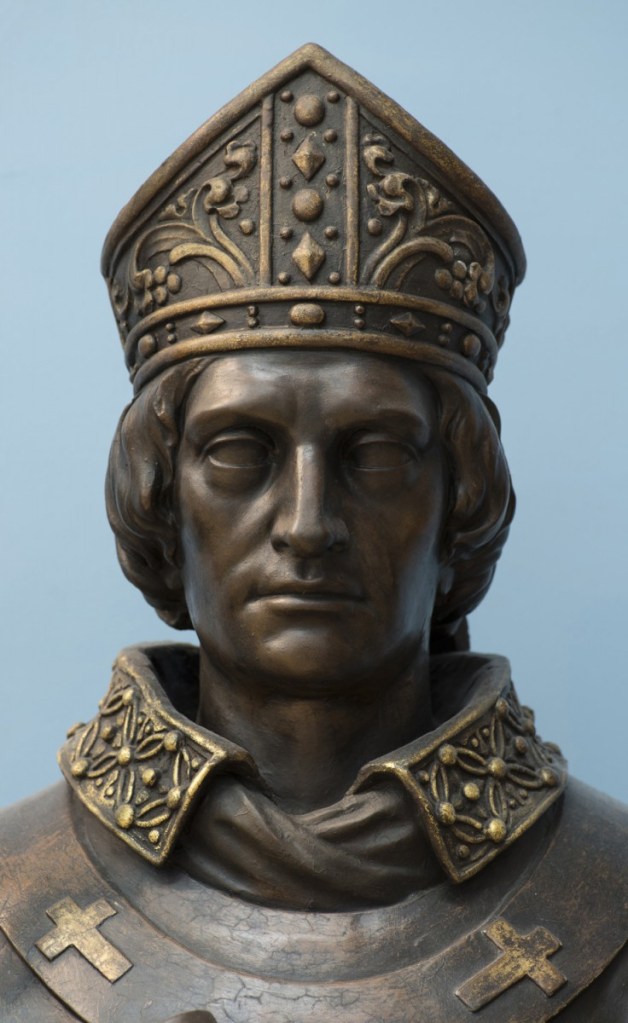
The chapter divisions commonly used today were developed by Stephen Langton, an Archbishop of Canterbury. Langton put the modern chapter divisions into place in around A.D. 1227. The Wycliffe English Bible of 1382 was the first Bible to use this chapter pattern. Since the Wycliffe Bible, nearly all Bible translations have followed Langton’s chapter divisions.

The Hebrew Old Testament was divided into verses by a Jewish rabbi by the name of Nathan in A.D. 1448. Robert Estienne, who was also known as Stephanus, was the first to divide the New Testament into standard numbered verses, in 1555. Stephanus essentially used Nathan’s verse divisions for the Old Testament. Since that time, beginning with the Geneva Bible, the chapter and verse divisions employed by Stephanus have been accepted into nearly all the Bible versions.

ESV Reader’s Bible

The ESV Reader’s Bible was created for those who want to read the books of Scripture precisely as they were originally written. Verse numbers, section headings, and translation footnotes are helpful navigational and interpretive tools, but they are also relatively recent conventions. In the Reader’s Bible they have been removed from the Bible text, and the result is a new kind of Bible-reading experience in a volume that presents Scripture as one extended storyline.

On the top of each page a verse range is included for navigation. Other features include a single-column text setting, readable type, and a book-like format. The Reader’s Bible is a simple but elegant edition, and is perfect for devotional reading or extended Bible reading that focuses on the overarching narrative of the Bible.

Features:
– No verse numbers or footnotes
– Illustrated maps
– Two ribbon markers
– Smyth-sewn binding
– Packaging: clamshell box (TruTone), permanent slipcase (cloth over board)

https://www.thegoodbook.co.uk/esv-readers-bible

Amazing Grace: 366 Hymn Stories

September 2

I LOVE THY KINGDOM, LORD!
Timothy Dwight, 1752–1817
And let us consider how we may spur one another on toward love and good deeds. Let us not give up meeting together, as some are in the habit of doing, but let us encourage one another—and all the more as you see the Day approaching. (Hebrews 10:24, 25)
God honored the tears, prayers, and work of the distinguished president of Yale University, Timothy Dwight, to bring to that campus in 1795 a startling spiritual revival. It soon spread to other nearby universities as well. Prior to his administration, most of the students at Yale and other eastern schools had been infected with the “free thought” of Thomas Paine, Rousseau, and the French Revolution.
Timothy Dwight, grandson of the brilliant and powerful American preacher, Jonathan Edwards, was an unusually successful and distinguished person in many areas. A graduate of Yale University at 17, he was a chaplain in the American Revolution, a Congregational minister, a prosperous farmer, a member of the Connecticut state legislature, a faculty member at Yale and eventually president of the university. Timothy Dwight also wrote a number of scholarly books, authored thirty-three hymn texts, and revised the hymnbook used by New England Congregational and Presbyterian churches for 30 years.
In Dwight’s text, the term kingdom suggests three different levels of Christ’s church:
• The Church Personal— “The kingdom of God is within you.” (Luke 17:21)
• The Church Local— individual congregations (Matthew 11:28, 29)
• The Church Universal— believers of every age, race and culture (Revelation 7:9)
The kingdom of God is a living body, not merely an organization. Its purpose is to extend Christ’s influence, build up the members of His body, and glorify His name. The promise of Christ is that nothing, not even the gates of hell, will ever triumph over His Church (Matthew 16:18).
I love Thy kingdom, Lord! The house of Thine abode—The Church our blest Redeemer saved with His own precious blood.
I love Thy Church, O God! Her walls before Thee stand, dear as the apple of Thine eye and graven on Thy hand.
Beyond my highest joy I prize her heav’nly ways—Her sweet communion, solemn vows, her hymns of love and praise.
Sure as Thy truth shall last, to Zion shall be giv’n the brightest glories earth can yield, and brighter bliss of heav’n.

    For Today: Matthew 16:15–18; Ephesians 2:19, 21, 22; 5:23–27

Ask yourself if you are as joyful and enthusiastic about Christ’s kingdom and its mission on earth as you should be. Allow this hymn to renew your vision—

Amazing Grace: 366 Hymn Stories

September 1

THE CHURCH’S ONE FOUNDATION
Samuel J. Stone, 1839–1900
… Christ is the head of the church, His body, of which He is the Savior. (Ephesians 5:23)
During an especially heated period of theological controversy in England in 1866 when liberalism threatened to destroy the great cardinal doctrines of the Anglican church, this hymn was written by Pastor Samuel Stone. He was a strong supporter of the conservative faith and refused to compromise in any way the critical attacks on doctrinal orthodoxy.
It was Stone’s desire to write a hymn that would reaffirm the Lordship of Christ as the foundation of the church. To combat the skeptical liberal scholarship, Samuel Stone wrote twelve hymn texts based on the Apostles’ Creed. This particular text refers to the ninth article: “The Holy Catholic (Universal) Church, the communion of saints: He is the Head of this body.”
Described as the poor man’s pastor, Samuel Stone demonstrated his firm belief in the church as the instrument of Christ for meeting the needs of people. He spent much time ministering to the poor and underprivileged people in London’s East End. It was said that “he created a beautiful place of worship for the humble folk and made it a center of light in dark places.”
This is what the local church was meant to be—a spiritual hospital for hurting humanity, never an exclusive private club for self-righteous Christians. Called out from the world by God for Himself, the church consists of people who meet regularly for worship, inspiration, instruction, and fellowship. After that, Christ our Head sends His own back into the world to represent Him and to model His love for all mankind.
The Church’s one foundation is Jesus Christ her Lord; She is His new creation by water and the Word: from heav’n He came and sought her to be His holy bride; with His own blood He bought her, and for her life He died.
Elect from ev’ry nation, yet one o’er all the earth, her charter of salvation One Lord, one faith, one birth; one holy name she blesses, partakes one holy food, and to one hope she presses, with ev’ry grace endued.
Yet she on earth hath union with God the Three in One, and mystic sweet communion with those whose rest is won: O happy ones and holy! Lord, give us grace that we, like them, the meek and lowly, on high may dwell with Thee.

    For Today: Matthew 16:15–18; 1 Corinthians 3:11; Colossians 1:18

Give thanks to God for your local church as well as for fellow-believers of the church universal everywhere. Affirm your conviction in Christ as the head of the church as you carry this musical truth—

Amazing Grace: 366 Hymn Stories

September

• The Church • The Worship of God • Adoration of Christ • The Holy Bible

1.
The Church’s One Foundation
2.
I Love Thy Kingdom, Lord!
3.
Glorious Things of Thee Are Spoken
4.
O Breath of Life
5.
O Day of Rest and Gladness
6.
Brethren, We Have Met to Worship
7.
Great God of Wonders
8.
Holy, Holy, Holy
9.
Immortal, Invisible
10.
Majesty
11.
O for a Thousand Tongues
12.
O Worship the King
13.
All Hail the Power
14.
Our Great Savior
15.
How Sweet the Name of Jesus Sounds
16.
His Matchless Worth
17.
Hallelujah, What a Savior!
18.
Near to the Heart of God
19.
Ask Ye What Great Thing I Know
20.
Jesus, the Very Thought of Thee
21.
My Faith Looks Up to Thee
22.
Majestic Sweetness Sits Enthroned
23.
Sun of My Soul
24.
Jesus, I Am Resting, Resting
25.
Fade, Fade, Each Earthly Joy
26.
When All Thy Mercies, O My God
27.
The Sands of Time Are Sinking
28.
O Word of God Incarnate
29.
Holy Bible, Book Divine
30.
The Spirit Breathes Upon the Word

Stephen Boyd Blog

Belfast-born Hollywood and International Star from 1950-1970's Fan Tribute Page

Abundant Joy

Digging Deep Into The Word

Not My Life

The Bible as clear as possible

Seek Grow Love

Growing Throughout the Year

Smoodock's Blog

Question Authority

PleaseGrace

A bit on daily needs and provisions

Three Strands Lutheran Parish

"A cord of three strands is not easily broken." Ecclesiastes 4:12

1love1god.com

Romans 5:8

The Rev. Jimmy Abbott

read, watch, listen

BEARING CHRIST CRUCIFIED AND RISEN

To know Christ and Him crucified

Considering the Bible

Scripture Musings

rolliwrites.wordpress.com/

The Official Home of Rolli - Author, Cartoonist and Songwriter

Pure Glory

The heavens are telling the glory of God; and the firmament proclaims His handiwork. Psalms 19:1

The daily addict

The daily life of an addict in recovery

The Christian Tech-Nerd

-Reviews, Advice & News For All Things Tech and Gadget Related-

Thinking Through Scripture

to help you walk with Jesus in faith, hope, and love.

A disciple's study

This is my personal collection of thoughts and writings, mainly from much smarter people than I, which challenge me in my discipleship walk. Don't rush by these thoughts, but ponder them.

Author Scott Austin Tirrell

Maker of fine handcrafted novels!

In Pursuit of My First Love

Returning to the First Love