“The land whither ye go to possess it is a land of hills and valleys and drinketh water of the rain of heaven: a land which the Lord thy God careth for: the eyes of the Lord are always upon it, from the beginning of the year even unto the end of the year.” (Deut. 11:11, 12.)
TODAY, dear friends, we stand upon the verge of the unknown. There lies before us the new year and we are going forth to possess it. Who can tell what we shall find? What new experiences, what changes shall come, what new needs shall arise? But here is the cheering, comforting, gladdening message from our Heavenly Father, “The Lord thy God careth for it.” “His eyes are upon it away to the ending of the year.” All our supply is to come from the Lord. Here are springs that shall never dry; here are fountains and streams that shall never be cut off. Here, anxious one, is the gracious pledge of the Heavenly Father. If He be the Source of our mercies they can never fail us. No heat, no drought can parch that river, “the streams whereof make glad the city of God.” The land is a land of hills and valleys. It is not all smooth nor all down hill. If life were all one dead level the dull sameness would oppress us; we want the hills and the valleys. The hills collect the rain for a hundred fruitful valleys. Ah, so it is with us! It is the hill difficulty that drives us to the throne of grace and brings down the shower of blessing; the hills, the bleak hills of life that we wonder at and perhaps grumble at, bring down the showers. How many have perished in the wilderness, buried under its golden sands, who would have lived and thriven in the hill-country; how many would have been killed by the frost, blighted with winds, swept desolate of tree and fruit but for the hill—stern, hard, rugged, so steep to climb. God’s hills are a gracious protection for His people against their foes! We cannot tell what loss and sorrow and trial are doing. Trust only. The Father comes near to take our hand and lead us on our way today. It shall be a good, a blessed new year!
He leads us on by paths we did not know; Upward He leads us, though our steps be slow, Though oft we faint and falter on the way, Though storms and darkness oft obscure the day; Yet when the clouds are gone, We known He leads us on.
He leads us on through all the unquiet years; Past all our dreamland hopes, and doubts and fears, He guides our steps, through all the tangled maze Of losses, sorrows, and o’erclouded days; We know His will is done; And still He leads us on. —N. L. Zinzendorf.
It was our privilege to spend a number of years in the mission fields of the Orient—Japan and Korea, but the trying climate and overstrain of heavy work caused my dear husband’s health to fail, and we were compelled to return to the homeland, where for six years a battle was waged between life and death. “Then cometh Satan,” tempting us to faint under the pressure, but each time when the testings had reached their utmost limit, God would illumine some old and familiar text, or a helpful book or tract would providentially fall into our hands, which contained just the message needed at the moment. One day, while walking along the seashore, wondering almost if “God had forgotten to be gracious,” a little leaflet lay at our feet. We picked it up and read, “God smiles on His child in the eye of the storm,” and we caught anew a glimpse of His loving face. “His choicest cordials were kept for our deepest faintings,” and we have been held in His strong, loving arms these trying years till we have learned to love our desert, because of His wonderful presence with us. Our own trouble has drawn to us hundreds of troubled hearts and we have tried to “comfort them with the same comfort wherewith we have been comforted of God.” For a period of three years we have passed on these daily messages to the readers of God’s Revivalist, and the numbers of requests that have come for them in book form have led to the publication of Streams in the Desert. The book is sent forth with a prayer that many a weary, way-worn traveler may drink therefrom and be refreshed.
1 JANUARY (PREACHED NEW YEAR’S MORNING 1773 [& 1783])
Amazing Grace
‘And David the king came and sat before the LORD, and said, Who am I, O LORD God, and what is mine house, that thou hast brought me hitherto? And yet this was a small thing in thine eyes, O God; for thou hast also spoken of thy servant’s house for a great while to come, and hast regarded me according to the estate of a man of high degree, O LORD God.’ 1 Chronicles 17:16–17 SUGGESTED FURTHER READING: 1 Chronicles 17:1–17
The Lord bestows many blessings upon his people, but unless he likewise gives them a thankful heart, they lose much of the comfort they might have in them. And this is not only a blessing in itself but an earnest of more. When David was peacefully settled in the kingdom, he purposed to express his gratitude by building a place for the Ark. This honour the Lord had appointed for his son Solomon, but he graciously accepted David’s intention, for he not only notices the poor services of his people, but even their desires to serve him when they spring from a principle of simple love, though opportunity should be wanting. He sent him a message by Nathan assuring him that his son should build the house and that he himself would build David’s house and establish his kingdom. This filled his heart with praise. My text is part of his acknowledgement. Omitting David’s personal concerns, I would accommodate them to our own use as a proper subject for our meditations on the entrance of a new year. They lead us to a consideration of past mercies and future hopes and intimate the frame of mind which becomes us when we contemplate what the Lord has done for us.
FOR MEDITATION: [almost certainly written for this sermon] Amazing grace! (how sweet the sound) That saved a wretch like me! I once was lost, but now am found, Was blind, but now I see.
This lovely book is not a version of the game, ‘Who would you most like to meet from the past?’ That is always a slightly meaningless matter for a Christian—for the great ones of the past whom we would most like to meet are in fact waiting to meet us in heaven! No, the purpose of this book is not ‘to meet John Newton’ (lovely as that thought is) but to sit under his ministry, to enjoy today what many enjoyed yesterday, to enter into his benefit. I have had the privilege of ‘getting there first’, for I have had the use of much of the material in this book ahead of publication, and have made it my daily companion. I write, therefore, not, so to speak, in a spirit of hope, but by way of testimony. Not ‘Would you like to meet John Newton?’ but ‘Here is John Newton to meet you, to speak, teach and minister.’ Come, enjoy and profit! Newton’s whole ministry bore the marks so evident in his lovely hymns: it was consistently biblical (to share the Word of God), spiritual (to promote walking with God), simple (to make biblical truth and principles plain), and practical (to inculcate personal holiness and sound relationships in church and society). In this collection every day bears these marks, so useful to every believer, so instructive for those called to minister. Newton was a rich and princely teacher, a sensitive and caring pastor, and a straight, outspoken guide. Not only all this, but in Marylynn Rouse Newton has found a true disciple, and a skilled publicist. By enormous diligence, and self-sacrificing application, she has made herself a leading ‘Newton expert’, and in this sensitive compilation all that expertise is put at our disposal. Please God, he has determined to bless this work, just as surely as he will use it to bless every individual reader!
Alec Motyer Poynton, Cheshire April 2006 AD
INTRODUCTION
In 1758 John Newton was working as Surveyor of Tides in Liverpool docks, from an office close to the site of this World Heritage City’s Albert Docks. At the prompting of friends he began to pray about entering the ministry to ‘honestly and plainly declare the truths of the gospel’. He determined to preach Christ crucified, ‘the great essential points of the glories of his person and offices, his wonderful love and condescension, his power, faithfulness and readiness to save, the grandeur of his works, the perfection of his example, his life, passion, death and resurrection’, which he considered, ‘undoubtedly the most pleasant set of topics, so the most useful and effectual, to rouse a hatred against sin, to feed the springs of grace into the heart, to animate and to furnish every believer for his spiritual warfare’. Like Jonah, Newton had previously run away from the Lord and it had taken a tremendous storm at sea in 1748 to humble him, convict him of his defiance and stir him up to cry out to God for mercy. He would later write, ‘How precious did that grace appear the hour I first believed’. For the rest of his life he set aside the anniversary of that day of his conversion, 21 March, for thanksgiving and prayer (see this date in these readings). When Newton finally entered the ministry in 1764 through the kindness of Lord Dartmouth (later Britain’s Colonial Secretary), it was as curate-in-charge of the parish church of St Peter and St Paul, Olney. For sixteen years he lived amongst the lace-making and farming cottagers, learning from their simple lifestyle, applying scriptural truths in everyday terms and gaining valuable pastoral experience. He began preparing his sermons in a series of notebooks. Hannah Wilberforce, the aunt of William Wilberforce, MP, was one of Newton’s many friends who begged to borrow his notebooks. Fortunately for us, many of these notebooks are still in existence. None of them has ever been published before, so after a gap of more than 200 years, we may now join this privileged group of friends and ‘borrow’ his sermon notebooks. However, we have an advantage over his contemporaries, for we can draw on his unpublished diaries and correspondence to gain a little extra insight into some of the circumstances surrounding these sermons. From his diary, for instance, we learn that Amazing Grace was almost certainly written for New Year’s Day 1773 (see 1 January) and Glorious things of thee are spoken, Zion city of our God, for Easter Day 1775 (the series he was preaching from 2 Samuel 23:5 at the time certainly reflects similar thoughts—see 1 May). Sometimes we gain more background information than mere dates. For instance, eager to learn from his Creator’s handiwork, Newton loved to glean what he could of the signature of God in it. Observing an eclipse of the moon at Olney on 30 July 1776, he recorded in his diary: ‘I thought my Lord, of thine eclipse. The horrible darkness which overwhelmed thy mind when thou saidst, Why hast thou forsaken me? Ah, sin was the cause—my sin.’ He expressed these thoughts in a hymn, preached from it at the Great House (Lord Dartmouth’s property) on Sunday evening, and sent a copy to his friend and sponsor John Thornton.
While many with unmeaning eye Fain would my thankful heart and lips Gaze on thy works in vain; Unite in praise to thee; Assist me, LORD, that I may try And meditate on thy eclipse, Instruction to obtain. In sad Gethsemane.
Newton’s diaries, journals, hymns and correspondence are the source of meditations to accompany the sermon extracts, along with some Scripture verses. The meditations include 124 of his own hymns from Olney Hymns, published in 1779 during his last year at Olney. Extracts from his journal of children’s meetings illustrate sermon points, together with portions of his correspondence with William Wilberforce, John Thornton (Wilberforce’s uncle and a Director of the Bank of England), John Ryland (later President of Bristol Baptist College) and the Coffin family in Linkenhorne, Cornwall. The sermon extracts in this book draw on Newton’s previously unpublished notes for 105 sermons. Some of his original notes from which he later published fifty sermons based on the texts in Handel’s Messiah are in the main sections (see for example 8 June). So too we find the sermon notes for How sweet the name of Jesus sounds (see 8 April), for an address to the Bible Society (now the Naval, Military and Air Force Bible Society—see 22 September) and for the funeral service of his ‘right hand’, Betty Abraham, an Olney watchmaker’s wife, together with a hymn based on the last words she spoke, from Lamentations 3:24, The Lord is my portion (see 13 February). Most of the sermons were preached in Olney between 1764 and 1780 and come from sermon notebooks owned by the Cowper & Newton Museum. Occasionally the sermons or hymns are dated (forty-one sermons and twenty-three hymns have been identified). A few of the sermons were preached in London, for Newton went on to become the rector of St Mary Woolnoth in the heart of the city’s ‘square mile’. His congregations were drawn from all denominations, including Methodists, Presbyterians, Congregationalists, Baptists, Moravians and Quakers. One sermon in these daily readings was written to be preached as the annual sermon before his parishioner, the Lord Mayor of London (see 25 March). While the events surrounding the sermons and meditations add interest, by far the greatest advantage of these readings comes from the deeply biblical approach which Newton maintained from that resolution formed in 1758 on the banks of the Mersey to ‘honestly and plainly declare the truths of the gospel’. We may consider ourselves feasting alongside Newton’s breakfast party companions in London or at his Tuesday evening open-house sessions for ‘Parsons, Parsonets, and Parsonettas’—the down-and-outs, like the penniless Claudius Buchanan (who became Newton’s curate and subsequently Vice-Provost of Fort William in Bengal), the MPs and city bankers, such as William Wilberforce and Henry Thornton, female authors such as Hannah More (converted through reading Newton’s letters, published as Cardiphonia), pioneer missionaries such as William Carey (en route to India), Richard Johnson (chaplain of the first fleet to Australia), and many more. Although each page is ‘self-contained’, a special feature of these daily readings is the facility to follow through Newton’s thinking in a series, for instance the selections from his series on the Transfiguration, where he comes at a passage from different angles with new insights at each attempt. Finally, in the words of John Newton, which seem to apply suitably to this selection of his readings,
And with these views, I would attempt to assist your meditations on it. I may say as the woman of Samaria, the well is deep [John 4:11].… Here, I think, if anywhere, we have cause to pray with the psalmist, Open thou my eyes, that I may see the great things of thy law [Psalm 119:18]. May this be the desire of all our hearts, and may the Lord afford a gracious answer.
Marylynn Rouse The John Newton Project Stratford on Avon April 2006
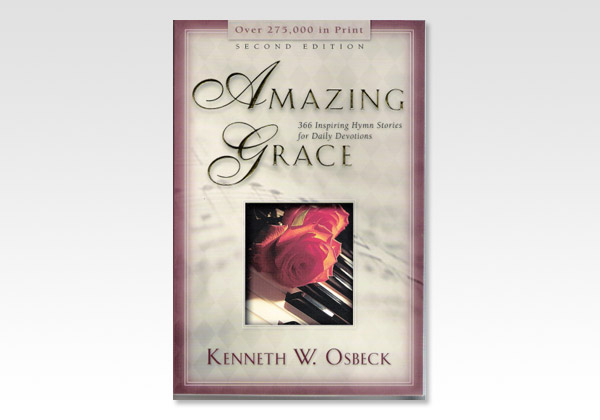
NEARER, MY GOD, TO THEE Sarah R. Adams, 1805–1848 Draw nigh to God, and He will draw nigh to you. (James 4:8 KJV) This well-loved hymn was written by a talented and charming English woman who lived only 43 years. In spite of her delicate health, Sarah Flower Adams had an active and productive life. After a successful career on the London stage as Shakespeare’s Lady MacBeth, she began to write and became widely known for her literary accomplishments. The cross mentioned in the first stanza of her hymn text may have been the physical handicaps that limited her many ambitions. Sarah’s sister Eliza was gifted musically and often composed melodies for her sister’s poems. Together they contributed 13 texts and 62 new tunes for a hymnal that was being compiled by their pastor. One day the Rev. William J. Fox asked for a new hymn to accompany his sermon on the story of Jacob and Esau. Sarah spent much time studying Genesis 28:10–22 and within a short time completed all of the stanzas of “Nearer, My God, to Thee.” Since that day in 1840, this hymn has had an unusual history of ministering spiritual comfort to hurting people everywhere. These lines picturing Jacob sleeping on a stone, dreaming of angels, and naming the place Bethel, meaning “the house of God,” seem to reflect the common yearning—especially in times of deep need—to experience God’s nearness and presence in a very real way. Nearer, my God, to Thee, nearer to Thee! E’en tho it be a cross that raiseth me; still all my song shall be, nearer, my God, to Thee, nearer, my God, to Thee, nearer to Thee! Tho like the wanderer, the sun gone down, darkness be over me, my rest a stone, yet in my dreams I’d be nearer, my God, to Thee, nearer, my God, to Thee, nearer to Thee! Then with my waking thoughts, bright with Thy praise, out of my stony griefs. Bethel I raise; so by my woes to be nearer, my God, to Thee, nearer my God, to Thee, nearer to Thee! Or if on joyful wing, cleaving the sky, sun, moon, and stars forgot, upward I fly, till all my song shall be, nearer, my God, to Thee, nearer, my God, to Thee, nearer to Thee!
When I seek God, He has promised to draw very close to me. What a joyful experience to know His intimate presence throughout every hour of this day. It causes me to sing—
This is my personal collection of thoughts and writings, mainly from much smarter people than I, which challenge me in my discipleship walk. Don't rush by these thoughts, but ponder them.