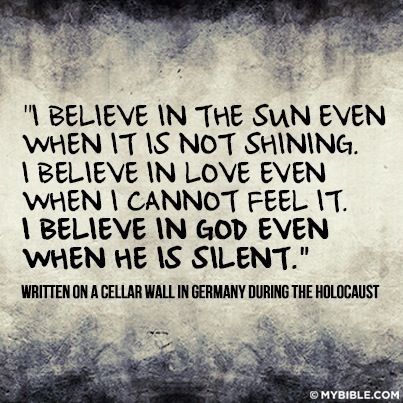
Faith after the Holocaust

by Jews for Jesus |April 24 2018

The Holocaust and Christian faith

People often describe the Holocaust as the climax of 2,000 years of Christian mistreatment of Jews. Some invoke the Shoah as the ultimate reason for Jews not to believe in Jesus. Jewish believer Moishe Rosen challenges that view: The phrase ‘2,000 years of history leading up to the Holocaust’ is more than a reference to past prejudice and persecution. It is an indictment against Christianity that misrepresents Christ’s message and intent. Anyone who gives credence to such an accusation bestows upon Hitler the power to change theology.”1

The foundation for the Holocaust

Neither Jesus nor Christian ideals produced the Holocaust. Those murders were generated by the same perversion of human nature that the holy Scriptures depict, beginning in the Book of Genesis. Cain turned on his own brother and became the first murderer. And while the Jewish people have been singled out more often for genocide than any other people, we are by no means the only group of people to be methodically murdered. Consider the “ethnic cleansing,” the systematic rape and murder of the Bosnian people perpetrated in the 1990s. No, genocide neither began nor ended with Hitler and the Jewish people.

Some see the Holocaust not merely as an indictment against Christianity but against God. Many who suffered through the concentration camps either blame God or refuse to believe that he exists.

Grappling with God

Such people find themselves in a quandary, ever restless until they know in what or in whom they can place their faith. Will they dismiss God on the grounds that the Holocaust proves him cruel, incapable or non-existent and instead put their faith in humanity? If God is not to be trusted because he permits humans to be cruel, does it make more sense to trust humans when it is human beings-not God-who have proved to be inescapably, or at least repeatedly, corrupt?

Often those who say they don’t believe in God because of the terrible acts that have been committed actually try to punish God for what they see as his failure to prevent suffering. What can a person do to show his or her displeasure with God, other than refuse to acknowledge his existence? Yet it is we, not God, who suffer when we deny that he exists and that he cares.

The need for faith

Deep down, most of us realize that we need to have faith in someone or something more worthy of trust than ourselves. If God is “dead,” then so, too, is humanity. If we had only each other or ourselves to depend upon, we would soon be reduced to cynical misanthropes. How much better it is to have faith in the God of the Scriptures, who will see that ultimate justice prevails. Evil people who acted out their own hatred–not God, not Jesus–are to blame for the atrocities of the Holocaust.

Could it be that those who blame God or Jesus or Christianity simply can’t bear the awful reality that since history began, human beings from all walks of life have demonstrated the potential to commit any horror imaginable? Could it be that each person is capable of hatred and that we don’t want to face that truth about ourselves?

In Jesus’ name

Jesus called upon all he met, from every walk of life, to face their flawed nature and corrupt inclinations and repent of pride, prejudice and every other evil that can bear the fruit of violence. It is horrendous that of all names, his has been used to accomplish the exact opposite of everything he instructed. How can we allow this obvious perversion to color our response to his teachings and his claims? Could it be that blaming Jesus for the evils of the centuries is less painful than admitting the dark shadows that exist in every human heart?
You decide

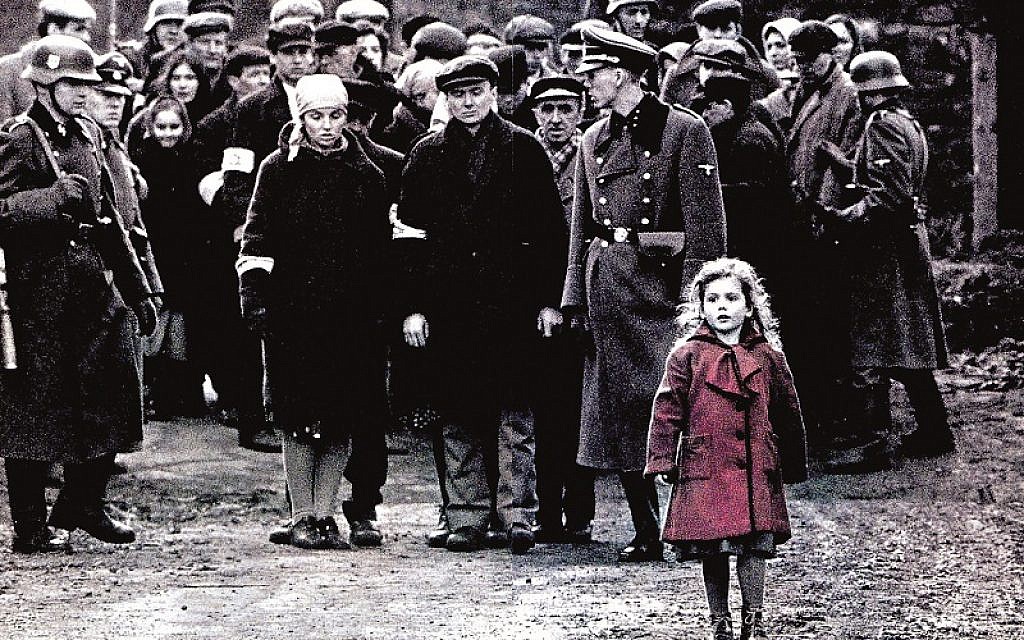
There is no way we can undo the tragedy of the Holocaust. We have no control over what has already happened. We do, however, have the ability to prevent Hitler from continuing to reach us from beyond the grave.

WHY DID GOD ALLOW THE HOLOCAUST?

Many of us find the horror and scope of the Holocaust inconceivable, even though we know it happened. Humanity’s capacity for cruelty is hard to grasp—harder still to imagine being subjected to it. Where was God? How could God allow this? Does God even exist? These are very difficult and agonizing questions. But let’s attempt to shine a light of clarity on this issue. If someone told you every day, “I love you,” but they were forced to do this, would that be real love? No. True expressions of love come from an active choice to love. However, because we have this freedom to love, we also have the freedom and opportunity to hate and do evil, often with horrible results.

The Holocaust is a prime example of the evil humanity is capable of perpetrating. We may not know the reasons why God allowed this. Yet God shared the suffering of His chosen people. He was not distant.

We believe that the God of Israel entered this world and experienced the most painful death imaginable, by crucifixion. Yet He also rose from the dead. Consequently, as philosopher John Lennox said, “God has not remained distant from our human suffering but has become part of it.” We can trust God not only because He has experienced human anguish, but also because He gives us hope of eternal life through His resurrection.

One cannot equate the cross where Yeshua suffered for our sins with the death camps like Auschwitz. Yet the Messiah, destined to die and fulfill the prophecy of Isaiah chapter 53, understood the anguish of human suffering at a level very few of us, other than Holocaust victims, could imagine. His suffering does not make the Holocaust more palatable, but it helps us to see that God might understand our anguish a little more than we thought.

By Jonathan Mann and Bruce Kleinberg


Where was the Messiah Yeshua during the Holocaust? If He was indeed the Messiah then why did evil run rampant and why didn’t He save His chosen people? These are questions that are difficult to answer, but there is one verse in the New Testament that helps us understand the relationship between Yeshua and His people. The verse is one of the shortest in the entire Bible and is as follows: “Jesus wept.” (John 11:35)

He wept because of the death of His friend Lazarus and because He loved His fellow Jewish people! But, this is not the only occasion where Jesus wept for the Jewish people.

In the Gospel of Luke, we read the following passage, “When He approached Jerusalem, He saw the city and wept over it.” (Luke 19:41)

This time He wept because He knew that in the near future, the Romans would destroy the city of Jerusalem. The One whom so many of us believe is the promised Messiah of Israel loves His people. According to the New Testament, He will one day return to reign as King of Israel, destroy the enemies of the Jewish people, and judge those who tried to destroy the Jewish people throughout the centuries (Revelation 19:15, Zechariah 14:1-5).

This might not answer the entire question as to why He allowed the suffering of the Holocaust. Jewish people have tried for decades to figure out where God was during the Holocaust. Again, we do not fully understand the reasons why the Lord allowed His chosen people to suffer, but we do know that He loves His people and those who persecuted the Jewish people will one day be held accountable before our Jewish Messianic judge.

By Dr. Mitch Glaser, A Messianic Jew from Brooklyn, New York

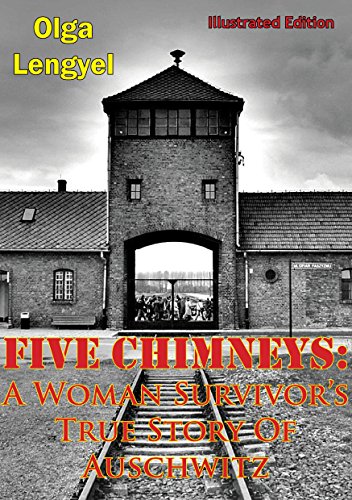
5 Chimneys

Having lost her husband, her parents, and her two young sons to the Nazi exterminators, Olga Lengyel had little to live for during her seven-month internment in Auschwitz. Only Lengyel’s work in the prisoners’ underground resistance and the need to tell this story kept her fighting for survival. She survived by her wit and incredible strength. Despite her horrifying closeness to the subject, FIVE CHIMNEYS does not retreat into self-pity or sensationalism. When first published (two years after World War 2 ended), Albert Einstein was so moved by her story that he wrote a personal letter to Lengyel, thanking her for her “”very frank, very well written book””. Today, with ‘ethnic cleansing’ in Bosnia, and neo-Nazism on the rise in western Europe, we cannot afford to forget the grisly lessons of the Holocaust. FIVE CHIMNEYS is a stark reminder that the unspeakable can happen wherever and whenever ethnic hatreds, religious bigotries, and racial discriminations are permitted to exist.

 See all formats and editions

After the Holocaust, how can we say God cares for us?

Rabbi, I have a problem ?

Question: If God was unwilling or unable to intervene during the Holocaust, why would we imagine that He cares for us individually, as we say He does, over the High Holy Days?

God’s apparent absence during the Holocaust is just one, albeit overwhelmingly powerful, example of what philosophers call the problem of theodicy. Theodicy is the result of our inability to square three traditional assertions about God; that God is omnipotent (all-powerful), omniscient (all-seeing) and omnipresent (all-present).

If God was all-powerful but not always aware of what was going on in our world, He could not be implicated when tragedy strikes. Likewise, if He was all-knowing but not all powerful, He would be beyond reproach, as it would not be in His power to intervene.

Some theologians (process theologians in particular) are comfortable with a God that is not all-powerful and for them the problem of theodicy is less acute. Those who hold to the more traditional Jewish belief in a God who possesses the three “omnis” are left with a serious theological problem when He does not intervene to save the innocent from impending disaster.

A crude solution to the problem of theodicy is to say that the suffering innocent are really not innocent. That their suffering is a punishment from God as justified retribution for sins committed. If ever an event in history proved the fallacy of this argument, it is the Holocaust. It is simply not possible to assert that the six million (among whom were a million and a half children) were sinners.

There are numerous other attempts at trying to explain away the theological problems posed by the Holocaust and they are too numerous to cite here. Suffice it to say they all fall short and many are outright offensive.

What we are left with is a burning question for which there is no satisfactory answer.

Does this mean that God does not care about us? I hardly think so. The miraculous birth of the state of Israel a few short years after the Holocaust indicates otherwise. I am not suggesting for a moment that the foundation of the state of Israel justifies the Holocaust. It most certainly does not.

But it does throw into question the easy assertion that God does not care about us. Life is a mystery. It contains blessing and tragedy, joy and pain, light and darkness. Just because we are unable to sense God’s manifestation in the darkness should not lead us to dismiss His presence in times of illumination.

You are right; some people find it problematic reading passages that declare God answers prayer, when we know that many have prayed for help without response, be it in the Holocaust or in recent tragedies, ranging from terrorist attacks to local earthquakes.

Equally difficult are prayers praising God’s care for those who, on the contrary, have had a terrible year, with cancer or bereavements blighting their lives.

But such prayers still have a role, and although you personally may not find satisfactory all of the following very different reasons, perhaps one will appeal to you. The first is that the prayerbook is for everyone: believers, doubters, the hurt, the content, the angry and many more.

Thus prayers which grate with some people will resonate with others and the liturgy has to have a wide range of passages, reflecting the different Jews who read them. Some will indeed feel they have been cared for or rescued, be it in recent times or during the Holocaust, and will gladly utter such words.

Second, the liturgy can be seen as aspirational; it is Godly or goodly (as in the ata gibor in the Amidah) to support the falling, heal the sick and free prisoners. The prayers remind us what we should be doing and act as a moral checklist for our own lives.

Third, talk of God’s care can be in pastoral terms rather than practical ones. People may endure hardships, but still feel loved by God and that sense of relationship helps them carry on, rather than give up in despair.

Fourth, by contrast, some view God as not having a personal role or intervening in individual lives, but being the power behind Creation. This may entail letting go of a long-held image, but is seen as more realistic. It means we pray to God to help us develop our own inner qualities, such as patience or courage, rather than changing external events in our favour.

Your point is also a good argument for updating the liturgy, so that it speaks to those with religious question marks. Thus the new Reform machzor has passages referring to the difficulty of understanding God or our place in the world and admitting that some issues can be hard to resolve.

Coming to High Holy Day services does not mean having all the answers, but reckoning that the search is worthwhile.

Jewish Views of the Holocaust: Theology nach Auschwitz

“Strange–people come to me sad and leave happy; whereas I . . .  I stay with my sadness, which  is like black fire . . Woe to the generation whose leader I am. . . I prefer a simple Jew who prays with joy to a sage who studies with sadness.”
–The Holy Sage of Lublin

“Nach Auschwitz noch ein Gedicht zu schreiben ist barbarisch.” (“Writing poetry after Auschwitz is barbaric.”)
–Theodore Adorno 

“Perennial suffering has as much right to expression as the tortured have to scream . . . hence it may have been wrong to say that no poem could be written after Auschwitz.”
–Theodore Adorno 

Jewish responses to the Shaoh, to the Holocaust, have been understandably multi-faceted: 

  1. “God is dead.” If there were a God, he would surely have prevented the Holocaust. Since God did not prevent it, then God as traditionally understood either does not exist or has changed in some way. For some this means that God has abandoned them, while for others it means God never did exist. Jews must be in the world for themselves.  This may mean a turn to atheism or perhaps a turn to some more like pantheism. Sherman Wine holds that no God can possibly exist, while Richard Rubenstein has come to suggest a kind of neo-paganism as the best alternative. 
  2. “The Eclipse of God.” There are times when God is inexplicably absent from history. Martin Buber made this phrase famous, suggesting that the 20th century was passing through a period where God, for reasons unknowable to us, refused to reveal himself.
  3. A Distant God. The experience of the Holocaust calls for Jews to reinterpret their belief in God. God is obviously not a being who actually interferes with human existence in any tangible, measurable way. Arthur A. Cohen holds that God is so transcendent that he cannot be held responsible for the Holocaust.
  4. A Limited God. God is not omnipotent. He does not have the power to bring to a halt such things as the Holocaust. Harold Kushner made this view popular in his book, When Bad Things Happen to Good People.
  5. Free Will & God. Terrible events such as the Holocaust are the price we have to pay for having free will. God will not and cannot interfere with history, otherwise our free will would effectively cease to exist. Eliezer Berkovits, for example, stresses that God is all-powerful but that he curtails his own freedom to respect human freedom, even with such horrific consequences.
  6. A Suffering God. Borrowing from Christian reflection on Christ and the passibility of God, Hans Jonas has suggested that God is limited in power but able to suffer with the pain of the Jewish people. Others stress the compassion and love of God, even if not understood in the Holocaust.
  7. Jewish Survival.  The event issues a call for Jewish affirmation for survival. The rise of the nation of Israel is one way of reading this revelation. Emil Fackenheim speaks of the 614th commandment– “”Jews are forbidden to give Hitler posthumous victories.” He further states this as Jews are “commanded to survive as Jews, lest the Jewish people perish;” “to remember the victims of Auschwitz, lest their memory perish;” and they are “forbidden to despair of Man, lest they co-operate in delivering the world to the forces of Auschwitz;” nor “to despair of the God of Israel, lest Judaism perish.”
  8. Incomprehensible Silence. The Shoah exceeds human comprehension. It is a so horrific as to strip away any attempts at explanation. André Neher believes that there can only be silence after the Holocaust–God’s silence and our own.
  9. A Theodicy of Protest. If the Holocaust is a mystery, it is nonetheless on the surface a clearly unjust and wicked horror that God should have prevented. What does this then reveal about the character of God? Perhaps God is capable of evil. David Blumenthal has argued that an analogy can be drawn between child abuse and the Holocaust. Children of abusing parents can learn to eventually make their peace with such a parent but should never be required to abstain from challenging the parent’s misuse of authority.
  10. A Broken Covenant. The Holocaust is proof that God has broken his covenant with the Jewish people. One need not conclude, Irving Greenberg holds, that Jews can still not choose to hold to Jewish law, but it is now only on a voluntary basis. 
  11. Providential History. Some have suggested the Shoah had the providential outcome of overturning old medieval Jewish structures and replacing them with modern Jewish life, and that this is what needed to happen. 
  12. Vicarious Suffering. In the Holocaust, the Jewish people become the “suffering servant” of Isaiah, collectively suffering for the sins of the world. Ignaz Maybaum explored this shocking claim, holding that perhaps in the Holocaust Jews even atoned for humanity’s wickedness.
  13. Coming Messiah. Sha’ar Yashuv Cohen has argued that the Shoah represents the birth pangs of the Messiah, that the Jewish people are in the final days before the Jewish savior finally comes.
  14. “Because of our sins we were punished.” (mi-penei hataeinu)  Some  in the Orthodox community have taught that European Jews were punished for their sins, either for the heresy of liberal Judaism or for an unfaithful rejection of the Holy Land. In these views, the Shoah is God’s just retribution. 
  15. One More Tragedy. Some would suggest that the Holocaust is not a singular event, but only represents one more horror in human history. From this viewpoint, Jews make too much of the Holocaust as a crisis event that changes everything. David Weiss has taken something like this position.
  16. Jewish Reconstruction. The Holocaust is better understood as a historical tragedy, singular or otherwise, that must now be answered with Jewish commitment to the restoration of cultural and ethnic life. Those who survive must rebuild what has been violated and lost. 
  17. Christian Responsibility. Christians need to face up to the their history of anti-Semitism and the role it played in the Holocaust. Ben Zion Bokser has suggested that Christianity’s exclusive view of itself rendered the German people numb to the moral repugnance of Nazi racial theories. Others argue that this culpability should put an end to any exclusive claims on Christianity’s part or to any assigning of “second-class” status to Jewish faith. Supersessionism is no longer a credible theology.
  18. Jewish Responsibility. Marc Ellis argues that national Israel now uses the rhetoric of the Holocaust to justify the oppression of the Palestinian people. The Holocaust should become a reminder to care for the disadvantaged state of all colonized groups. In a broader way, the Shoah is a reminder that to be a Jew is to be a chosen people, one that must carry out the covenant and bring salvation to others in daily life.
  19. Jewish Witness. Jews must not allow despair to shut their testimonies forever. Memory and writing is at the heart of what it means to be Jewish, and the Holocaust is a temptation to hopelessness and to the secular Enlightenment, a project wholly discredited by the Shoah. It is better to keep one’s Jewish identity and belief in the face of this. Even God cannot rob Jews of this loyalty.
  20. God’s Female Face. God was not absent in the Holocaust, rather present in the face of female Jewish sufferers, who by covering themselves and holding to their dignity were bringing the Jewish God into Auschwitz. Melissa Raphael has made this position part of the current Jewish discussion.
  21. No Theology nach Auschwitz. Any attempt at theology totalizes the ultimate horror, and by doing so, it lessens the suffering of what happened, as well as opening up humanity to ultimately excusing it and letting it happen again. For some this is a radical negation of any attempt to explain, while for others it is a simple dismissal of religious attempts at an answer. Any talk of God’s justice or love makes a mockery of what happened in the Shoah.
Stephen Boyd Blog

Belfast-born Hollywood and International Star from 1950-1970's Fan Tribute Page

Abundant Joy

Digging Deep Into The Word

Not My Life

The Bible as clear as possible

Seek Grow Love

Growing Throughout the Year

Smoodock's Blog

Question Authority

PleaseGrace

A bit on daily needs and provisions

Three Strands Lutheran Parish

"A cord of three strands is not easily broken." Ecclesiastes 4:12

1love1god.com

Romans 5:8

The Rev. Jimmy Abbott

read, watch, listen

BEARING CHRIST CRUCIFIED AND RISEN

To know Christ and Him crucified

Considering the Bible

Scripture Musings

rolliwrites.wordpress.com/

The Official Home of Rolli - Author, Cartoonist and Songwriter

Pure Glory

The heavens are telling the glory of God; and the firmament proclaims His handiwork. Psalms 19:1

The daily addict

The daily life of an addict in recovery

The Christian Tech-Nerd

-Reviews, Advice & News For All Things Tech and Gadget Related-

Thinking Through Scripture

to help you walk with Jesus in faith, hope, and love.

A disciple's study

This is my personal collection of thoughts and writings, mainly from much smarter people than I, which challenge me in my discipleship walk. Don't rush by these thoughts, but ponder them.

Author Scott Austin Tirrell

Maker of fine handcrafted novels!

In Pursuit of My First Love

Returning to the First Love