What is Augustinianism?

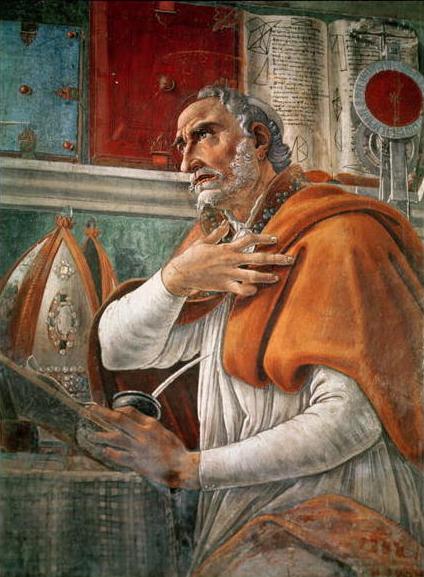
Augustinianism is the system of theology based on the teachings of Augustine (AD 354–430), also known as St. Augustine or Augustine of Hippo (in northern Africa), one of the Nicene church fathers. He is revered as the “Doctor of the Church” according to Roman Catholicism. Augustine is also considered by evangelical Protestants to have correctly understood and taught the biblical doctrines of the depravity of man and the sovereignty of God’s grace in salvation. It is those two doctrines—total depravity and divine sovereignty—that people usually have in mind when they refer to “Augustinianism.” Sometimes, the term Augustinianism is used as a synonym for Calvinism.

Protestant Reformers such as Martin Luther, Ulrich Zwingli, and John Calvin found much to their liking in Augustinianism, because they found it to be biblical. Like Calvinism, Augustinianism holds that, due to the Fall, mankind is unable to avoid sinning. His nature has been overrun by sin to the extent that man does not truly have freedom of the will; rather, he is in bondage to sin. Only an act of God can release him. This corresponds to the Calvinist doctrine of total depravity and accords with Jesus’ words in John 6:44, “No one can come to Me unless the Father who sent Me draws him; and I will raise him up at the last day.”

Augustinianism also teaches that no one can be saved apart from God’s grace. In fact, grace is necessary for the performance of any righteous act, including the exercise of faith. Without that saving grace, no sinner can ever make a decision for Christ. In agreement with the I of Calvinism’s TULIP, Augustinianism teaches that grace is irresistible and effectual. That is, every recipient of God’s grace will come to faith in Christ. As Jesus said, “This is the will of him who sent me, that I shall lose none of all those he has given me” (John 6:39).

Furthermore, according to Augustinianism, saving grace is given to those whom God has predestined before “the foundation of the world” (Ephesians 1:4–5). This predestination, again in sync with Calvinism, is not rooted in God’s foreknowledge or omniscience. In other words, God did not “look down through history” to see the choice a sinner will make and elect him based on that knowledge. In Augustinianism, the choice is completely God’s.

Augustinianism was at odds with Pelagianism, which denied original sin and taught that man was completely free to choose either good or evil for himself, apart from grace. Pelagius was a British monk who lived at the same time as Augustine, and his doctrines were condemned as heretical at the Councils of Carthage in AD 407 and 416 and by the Third Ecumenical Council of Ephesus in AD 431. Augustinianism was then recognized as an expression of Christian orthodoxy in the Western church and much later became a major influence in the doctrine of the Reformers.

What is Reformed Arminianism?

The differences between Arminian theology and Reformed theology are well-known and oft-discussed. One “middle ground” system of doctrine that’s been proposed is Amyraldism, also called four-point Calvinism. Another compromise between Arminianism and Calvinism is Reformed Arminianism.

Reformed Arminianism seems like a contradiction in terms, given the historic dispute between Reformed theology and Arminianism. The “contradiction” is actually a compromise that traces its roots to the General Baptist movement of the seventeenth century in England. More recently, Reformed Arminianism has been promoted by the Free Will Baptists. Reformed Arminianism modifies current forms of Wesleyanism to take an approach that some consider to be closer to what Jacobus Arminius actually taught.

Reformed Arminians disagree with the teaching of perfectionism or entire sanctification found in some Arminian circles. In addition, Reformed Arminianism accepts the Reformed teachings of original sin and total depravity, believing it is only the grace of God and the power of the Holy Spirit that can overcome human depravity. At the same time, Reformed Arminianism retains the Arminian view of predestination (God elected those He knew would believe) and the freedom of the will (one is able to resist the grace of God needed to save him).

Akin to Amyraldism, Reformed Arminianism teaches an unlimited atonement, as opposed to Calvinism’s limited atonement. But Reformed Arminianism agrees with Calvinism that Christ’s atonement was a penal satisfaction that satisfied God’s requirement for justice and that Christ’s righteousness is imputed to the believer in justification.

Reformed Arminianism also holds to the perseverance of the saints through faith alone—another tenet of Calvinism—with a caveat. Reformed Arminians believe that Christians can lose their salvation, but only by renouncing their faith. Reformed Arminians reject the idea, found in traditional Wesleyanism, that falling into sin will cause one to fall from grace until repentance restores the sinner back to a state of grace. In other words, according to Reformed Arminianism, a believer cannot fall out of salvation, but he can willingly forfeit it, and once he apostatizes, he is lost forever.

Reformed Arminianism could be seen as “moderate Arminianism,” just as Amyraldism could be seen as “moderate Calvinism.” Those who disagree with some but not all of the teachings of Arminianism, and those seeking a compromise between Calvinism and Arminianism, may find Reformed Arminianism an agreeable option.

Who are the New Calvinists, and what are the beliefs of New Calvinism?

New Calvinism is not a new branch of theology or a denomination. Rather, it is a “revival” of sorts—a revival of traditional, “old” Calvinism. The movement is sweeping through American evangelical churches of all denominations, attracting young people from Free Church, Episcopal, Independent, Presbyterian, and Baptist churches alike. The Gospel Coalition, started in 2007, is the national network for the New Calvinist movement.

Calvinism promotes the authority of Scripture and the doctrines of God’s sovereignty, the total depravity of man, and predestination. These biblical doctrines are proving attractive to many in the younger generation today, and churches in the Reformed tradition are seeing a general increase in numbers. Thus, the influence of “New Calvinism.”

The resurgence of Calvinism might seem surprising, given the popularity of the feel-good, bubbly theology of health-and-wealth preachers and books such as Your Best Life Now. However, the New Calvinism could also be seen as a theological corrective to errant doctrine—the pendulum is swinging back to a more biblical approach. Young people who have grown up in an increasingly secular culture are looking for churches teaching the “meat” of the Word (Hebrews 5:14) instead of seeking to entertain them. In the process, they are rediscovering many biblical truths about God, salvation, and grace.

Contributing to the “newness” of New Calvinism are “seeker-friendly” styles of worship, an openness to dialogue with other Christian traditions, and an embrace of continuationism. Given the diversity of the various churches embracing New Calvinism, it comes as no surprise to discover the emphasis is less on the finer points of theology and more on engaging contemporary society. Mark Driscoll, a pastor identified with the movement, says, “New Calvinism is missional and seeks to create and redeem culture.” Driscoll is somewhat vague on some theological issues. In a recent interview, he suggests that some issues need not be fought over “because bigger things are at stake, such as the evangelizing of lost people and the planting of missional churches.” Flexibility, he says, should be allowed in “spiritual gifts, baptism, communion, worship styles, Bible translations and sense of humor.”

Some see two factions emerging from within New Calvinism: the New Puritans and the New Calvinists. The New Puritans focus on the sovereignty of God in salvation and are identified with Driscoll and John Piper. The New Calvinists focus on the sovereignty of God over creation and are identified with Tim Keller and Gabe Lyons.

One criticism of New Calvinism—usually coming from traditional Calvinists—is that it’s not really Calvinism. There is more to being a Calvinist than accepting the five points of Calvinism. It is suggested that some New Calvinist teachings on infant baptism, covenant theology, and the continuation of the miraculous gifts of the Spirit are out of step with the Reformed tradition.

There are many good aspects of the New Calvinism, including its emphasis on the fundamentals of the faith and its ability to attract young people into the church. It remains to be seen whether this new movement will prosper and flourish and have a major impact on postmodern society.

What is hyper-Calvinism and is it biblical?

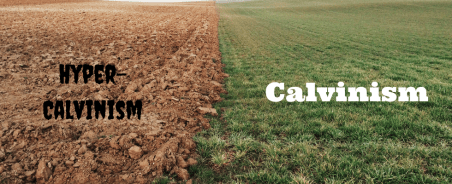
A simple definition is this: hyper-Calvinism is the belief that God saves the elect through His sovereign will with little or no use of the methods of bringing about salvation (such as evangelism, preaching, and prayer for the lost). To an unbiblical fault, the hyper-Calvinist over-emphasizes God’s sovereignty and under-emphasizes man’s responsibility in the work of salvation.

An obvious ramification of hyper-Calvinism is that it suppresses any desire to evangelize the lost. Most churches or denominations that hold to hyper-Calvinistic theology are marked by fatalism, coldness, and a lack of assurance of faith. There is little emphasis upon God’s love for the lost and His own people but rather an unbiblical preoccupation with God’s sovereignty, His election of the saved, and His wrath for the lost. The gospel of the hyper-Calvinist is a declaration of God’s salvation of the elect and His damnation of the lost.

The Bible clearly teaches that God is sovereign over the entire universe (Daniel 4:34-35), including the salvation of men (Ephesians 1:3-12). But with God’s sovereignty, the Bible also teaches that His motivation for saving the lost is love (Ephesians 1:4-5; John 3:16; 1 John 4:9-10) and that God’s means of saving the lost is the proclamation of His Word (Romans 10:14-15). The Bible also declares that the Christian is to be passionate and determined in his/her sharing with unbelievers; as ambassadors for Christ, we are to “beg” people to be reconciled to God (2 Corinthians 5:20-21).

Hyper-Calvinism takes a biblical doctrine, God’s sovereignty, and pushes it to an unbiblical extreme. In doing so, the hyper-Calvinist downplays the love of God and the necessity of evangelism.

Could Calvinism be a stumbling block to the spread of the gospel of Christ?

Calvinism is the term applied to a belief in a high view of the sovereignty of God, especially as it relates to salvation. Calvinists are convinced the Bible teaches that man is sinfully corrupt throughout his entire being and cannot make himself acceptable to God through any amount of effort of his own. Calvinists hold that in eternity past God chose out some among mankind for His own. In the course of time, God grants repentance and faith to His elect so that they might be awakened to their sinful state and need for grace. Those He saves will be preserved for eternity by the Lord and will persevere in following Him; i.e., if they truly belong to Him, they cannot and will not ever fall away because He keeps them secure.

The point which causes some to believe that evangelism isn’t important is that of “limited atonement.” This point of Calvinism teaches that Christ died only for the elect. The theological argument offered is, if Christ in fact died for every single human in world history, then no one would go to hell since their sins are already paid for. Since we know Scripture teaches many spend an eternity separated from God, it must be that their sins were not covered in the atonement. Either that or there are people in hell for whom Christ died, a scripturally insupportable conclusion.

Some may say, “Christ paid for the sins of everyone, but it’s up to each person to decide for and accept Him.” That’s the whole issue between Calvinism (monergism) and Arminianism (synergism). For if man casts the deciding vote, then how is God sovereign? Furthermore, if Christ’s sacrifice needs man’s acceptance of it to validate it, then it can’t be the all-sufficient sacrifice the Bible says it is. (See Romans 5, Ephesians 1:3-14). The Bible tells us that we love Him because He first loved us (1 John 4:19), not the other way around.

But Calvinism, and most anything else if out of balance, could hinder evangelism. The hypothetical argument raised against Calvinism is this: “Since God chose His own in eternity past; and, since He grants repentance and faith needed in order to come to Him; and, since all He has chosen will, in fact, come to Him (John 6:37); and all who come to Him are eternally secure; then, it follows that man isn’t involved in salvation.” But this is a wrong conclusion. Man is very much involved. God ordains the end—the salvation of lost man. But God also ordains the MEANS to the end— evangelism. God could have ordained any number of ways to communicate salvation. He has given a revelation of Himself in creation and conscience (Romans 1 – 2). But He has specifically chosen to communicate the Gospel message through believers sharing the message of salvation (Romans 10:9-17). So, whether one is a Calvinist or not, evangelism is the responsibility of all believers. Historically, Calvinism not only didn’t diminish the Calvinists’ burden for souls, it purified it! The Calvinists were among the greatest evangelists in the history of the church, motivated by love for their Lord and Savior who chose them and saved them “before the foundation of the world” (Ephesians 1:4).

Before we truly understand the sovereignty of God in salvation, we often think the burden is on us to “produce” decisions for Christ. We act as if a person’s salvation is dependent on us. So when we share the Gospel and it is rejected, we somehow think we failed to talk that person into believing and that we need a more clever or polished presentation of the plan of salvation. We may be tempted to water down the Gospel next time in order to get the desired response. But once we understand the Doctrines of Grace, the pressure to force a “decision” is removed. Now, we witness because we want to be faithful to our dear Lord. Evangelism among Calvinists is driven by the familiar phrase “By His grace, and for His glory!” No, Calvinism shouldn’t hinder evangelism. If anything, it should give our witnessing great boldness with pure motives.

Stephen Boyd Blog

Belfast-born Hollywood and International Star from 1950-1970's Fan Tribute Page

Abundant Joy

Digging Deep Into The Word

Not My Life

The Bible as clear as possible

Seek Grow Love

Growing Throughout the Year

Smoodock's Blog

Question Authority

PleaseGrace

A bit on daily needs and provisions

Three Strands Lutheran Parish

"A cord of three strands is not easily broken." Ecclesiastes 4:12

1love1god.com

Romans 5:8

The Rev. Jimmy Abbott

read, watch, listen

BEARING CHRIST CRUCIFIED AND RISEN

To know Christ and Him crucified

Considering the Bible

Scripture Musings

rolliwrites.wordpress.com/

The Official Home of Rolli - Author, Cartoonist and Songwriter

Pure Glory

The heavens are telling the glory of God; and the firmament proclaims His handiwork. Psalms 19:1

The daily addict

The daily life of an addict in recovery

The Christian Tech-Nerd

-Reviews, Advice & News For All Things Tech and Gadget Related-

Thinking Through Scripture

to help you walk with Jesus in faith, hope, and love.

A disciple's study

This is my personal collection of thoughts and writings, mainly from much smarter people than I, which challenge me in my discipleship walk. Don't rush by these thoughts, but ponder them.

Author Scott Austin Tirrell

Maker of fine handcrafted novels!

In Pursuit of My First Love

Returning to the First Love