Who is he that comes from Bozrah?

MIGHTY TO SAVE

Isaiah 63:1.

We have here a singularly vivid and dramatic prophecy, thrown into the form of a dialogue between the prophet and a stranger whom he sees from afar striding along from the mountains of Edom, with elastic step, and dyed garments. The prophet does not recognise him, and asks who he is. The Unknown answers, ‘I that speak in righteousness, mighty to save.’ Another question follows, seeking explanation of the splashed crimson garments of the stranger, and its answer tells of a tremendous act of retributive destruction which he has recently launched at the nations hostile to ‘My redeemed.’

Now we note that this prophecy follows, both in the order of the book and in the evolution of events, on those in Isaiah 61:1 – Isaiah 61:11, which referred to our Lord’s work on earth, and inIsaiah 62:1 – Isaiah 62:12, which has for part of its theme His intercession in heaven. And we are entitled to take the view that the place as well as the substance of this prophecy referred to the solemn act of final Judgment in which the returning Lord will manifest Himself. Very significant is it that the prophet does not recognise in this Conqueror, with blood-bespattered robes, the meek sufferer of Isaiah 53:1 – Isaiah 53:12, or Him who in Isaiah 62:1 – Isaiah 62:12 came to bind up the broken-hearted. And very instructive is it that the title in our text comes from the stranger’s own lips, as relevant to the tremendous act of judgment from which He is seen returning. The title might seem rather to look back to the former manifestation of Him as bearing our griefs and carrying our sorrows. It does indeed, thank God, look back to that never-to-be-forgotten miracle of mercy and power, but it also brings within the sweep of His saving might the judgment still to come.

I. The mighty Saviour as made known in the past and present.

We think much of the meek and gentle side of Christ’s character. Perhaps we do not think enough of the strength of it. We trace His great sacrifice to His love, and we can never sufficiently adore that incomparable manifestation of a love deeper than our plummets can fathom. But probably we do not sufficiently realise what gigantic strength went to the completion of that sacrifice. We know the solemn imagining of a great artist who has painted a colossal Death overbearing the weak resistance of a puny Love; but here love is the giant, and his sovereign command brings Death obedient to it, to do his work. Yes, that weak man hanging on the Cross is therein revealed as ‘the power of God.’ Strange clothing of weakness which yet cannot hide the mighty limbs that wear it!

And if we think of our Lord’s life we see the same combination of gentleness and power. His very name rings with memories of the captain whose one commanded duty was to ‘be strong and of a good courage.’

In Him was all strength of manhood-inflexible, iron will, unchanging purpose, strength from consecration, strength from righteousness. In Him was the heroism of prophets and martyrs in supreme degree.

In Him was the strength of indwelling Divinity. He fought and conquered all man’s enemies, routed sin, and triumphed over Death.

In the Cross we see divine power in operation in its noblest form, in its intensest energy, in its widest sweep, in its most magnificent result. He is able to save, to save all, to save any.

He is mighty to save, and is able to save unto the uttermost, because He lives for ever, and His power is eternal as Himself.

II. The mighty Saviour as to be manifested in the future.

Clearly the imagery of the context describes a tremendous act of judgment. And as clearly the Apocalyptic Seer understood this prophecy as not only pointing to Christ, but as to be fulfilled in the final act of judgment. He quotes its words when he paints his magnificent vision of the Conqueror riding forth on his white horse, with garments sprinkled with blood and treading the ‘winepress of the fierceness and wrath of Almighty God.’ And the vision is interpreted unmistakably when we read that, though this Conqueror had a name unknown to any but Himself, ‘His name is called the Word of God.’ So the unity of person in the Word made flesh who dwelt among us, full of grace and of this Mighty One girt for battle, is taught.

Keeping fast hold of this clue, the contrast between the characteristics of the historical Jesus and of the rider on the white horse becomes solemn and full of warning. And the contrast between the errand of the historical Jesus and that of the Conqueror bids us ponder on the possibilities that may sleep in perfect love. We have to widen our conceptions, if we have thought of our Jesus only as love, and have thought of love as shallow, as most men do. We are sometimes told that these two pictures, that of the Christ of the Gospels and that of the Christ of the Apocalypse, are incapable of being fused together in one original. But they can be stereoscoped, if we may say so. And they must be, if we are ever to understand the greatness of His love or the terribleness of His judgments. ‘The wrath of the Lamb’ sounds an impossibility, but if we ponder it, we shall find depths of graciousness as well as of awe in it.

Let us learn that the righteous Judge is logically and chronologically the completion of the picture of the merciful Saviour. In this age there is a tendency to treat sin with too much pity and too little condemnation. And there is not a sufficiently firm grasp of the truth that divine love must be in irreconcilable antagonism with human sin, and can do nothing but chastise and smite it.

III. The saving purpose of even that destructive might.

Through the whole Old Testament runs the longing that God would ‘awake’ to smite evil.

The tragedy of the drowned hosts in the Red Sea, and Miriam and her maidens standing with their timbrels and shrill song of triumph on the bank, is a prophecy of what shall be. ‘Ye shall have a song as in the night a holy feast is kept, and gladness of heart as when one goeth with a pipe to come unto the mountain of the Lord.’ And at the thought of that solemn act of judgment they who love the Judge, and have long known Him, ‘may lift up their heads’ in the confidence that ‘their redemption draweth nigh.’ That is the last, and in some sense the mightiest, greatest act by which He shows Himself ‘mighty to save His redeemed.’

So we may, like the prophet, see that swift form striding nearer and nearer, but, unlike the prophet, we need not to ask, ‘Who is this that cometh?’ for we have known Him from of old, and we remember the voice that said, ‘This same Jesus shall so come in like manner as ye have seen Him go into heaven.’ ‘Herein is our love made perfect, that we may have boldness before Him in the day of judgment.’

The Coming Day of the Lord

[ i always thought one of the verses was a picture of the effects of a nuclear bomb but i’m convinced it will most likeley be a supernatural act of God] Zechariah 14

The Coming Day of the Lord

Behold, a day is coming for the Lord, when the spoil taken from you will be divided in your midst. For I will gather all the nations against Jerusalem to battle, and the city shall be taken and the houses plundered and the women raped. Half of the city shall go out into exile, but the rest of the people shall not be cut off from the city. Then the Lord will go out and fight against those nations as when he fights on a day of battle. On that day his feet shall stand on the Mount of Olives that lies before Jerusalem on the east, and the Mount of Olives shall be split in two from east to west by a very wide valley, so that one half of the Mount shall move northward, and the other half southward. And you shall flee to the valley of my mountains, for the valley of the mountains shall reach to Azal. And you shall flee as you fled from the earthquake in the days of Uzziah king of Judah. Then the Lord my God will come, and all the holy ones with him.

On that day there shall be no light, cold, or frost. And there shall be a unique day, which is known to the Lord, neither day nor night, but at evening time there shall be light.

On that day living waters shall flow out from Jerusalem, half of them to the eastern sea and half of them to the western sea. It shall continue in summer as in winter.

And the Lord will be king over all the earth. On that day the Lord will be one and his name one.

The whole land shall be turned into a plain from Geba to Rimmon south of Jerusalem. But Jerusalem shall remain aloft on its site from the Gate of Benjamin to the place of the former gate, to the Corner Gate, and from the Tower of Hananel to the king’s winepresses. And it shall be inhabited, for there shall never again be a decree of utter destruction. Jerusalem shall dwell in security.

And this shall be the plague with which the Lord will strike all the peoples that wage war against Jerusalem: their flesh will rot while they are still standing on their feet, their eyes will rot in their sockets, and their tongues will rot in their mouths.

And on that day a great panic from the Lord shall fall on them, so that each will seize the hand of another, and the hand of the one will be raised against the hand of the other. Even Judah will fight at Jerusalem. And the wealth of all the surrounding nations shall be collected, gold, silver, and garments in great abundance. And a plague like this plague shall fall on the horses, the mules, the camels, the donkeys, and whatever beasts may be in those camps.

Then everyone who survives of all the nations that have come against Jerusalem shall go up year after year to worship the King, the Lord of hosts, and to keep the Feast of Booths. And if any of the families of the earth do not go up to Jerusalem to worship the King, the Lord of hosts, there will be no rain on them. And if the family of Egypt does not go up and present themselves, then on them there shall be no rain; there shall be the plague with which the Lord afflicts the nations that do not go up to keep the Feast of Booths. This shall be the punishment to Egypt and the punishment to all the nations that do not go up to keep the Feast of Booths.

And on that day there shall be inscribed on the bells of the horses, “Holy to the Lord.” And the pots in the house of the Lord shall be as the bowls before the altar. And every pot in Jerusalem and Judah shall be holy to the Lord of hosts, so that all who sacrifice may come and take of them and boil the meat of the sacrifice in them. And there shall no longer be a trader in the house of the Lord of hosts on that day.

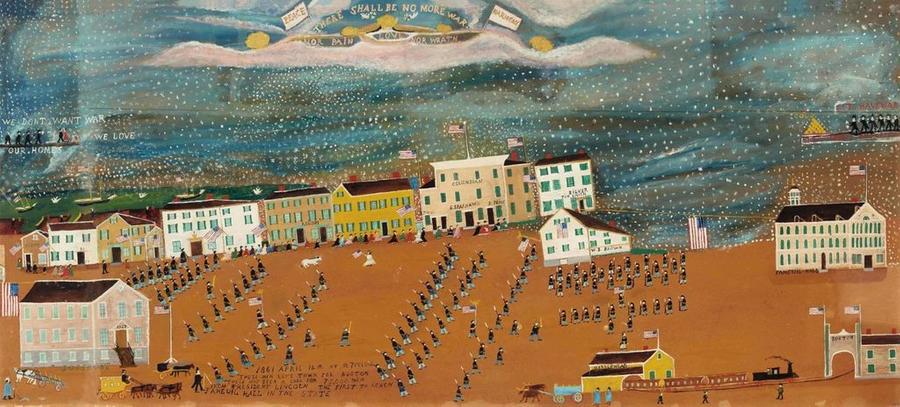
There Shall Be No More War

And he shall judge – Or he shall exercise the office of a judge, or umpire. This “literally” refers to the God of Jacob Isaiah 2:3, though it is clear that the meaning is, that he will do it by the Messiah, or under his reign. One office of a judge is to decide controversies; to put an end to litigations, and thus to promote peace. The connection shows that this is the meaning here. Nations that are contending shall be brought to peace by the influence of the reign of the Messiah, and shall beat their swords into plowshares. In other words, the influence of the reign of the Messiah shall put a period to wars, and reduce contending nations to peace.
And shall rebuke – Shall “reprove” them for their contentions and strifes.

Lowth: ‘Shall work conviction in many peoples.’

Noyes: ‘He shall be a judge of the nations,

And an umpire of many kingdoms.’

He shall show them the evil of war; and by reproving them for those wicked passions which cause wars, shall promote universal peace. This the gospel everywhere does; and the tendency of it, if obeyed, would be to produce universal peace. In accordance with predictions like these, the Messiah is called the Prince of Peace Isaiah 9:6; and it is said that of his peace there shall be no end; Isaiah 9:7.

And they shall beat … – They shall change the arts of war to those of peace; or they shall abandon the pursuits of war for the mild and useful arts of husbandry; compare Psalm 46:9; Hosea 2:20. A similar prophecy is found in Zechariah 9:10. The following extracts may serve to illustrate this passage: ‘The Syrian plow, which was probably used in all the regions around, is a very simple frame, and commonly so light, that a man of moderate strength might carry it in one hand. Volney states that in Syria it is often nothing else than the branch of a tree, cut below a bifurcation, and used without wheels. The plowshare is a piece of iron, broad but not large, which tips the end of the shaft. So much does it resemble the short sword used by the ancient warriors, that it may, with very little trouble, be converted into that deadly weapon; and when the work of destruction is over, reduced again to its former shape, and applied to the purposes of agriculture.’

Their spears – Spears were much used in war. They were made of wood, with a sharpened piece of iron or other metal attached to the end. The pruning-hook, made for cutting the limbs of vines or trees, is, in like manner, a long piece of wood with a crooked knife attached to it. Hence, it was easy to convert the one into the other.

Pruning-hooks – Hooks or long knives for trimming vines. The word here, however, means anything employed in “reaping or mowing,” a sickle, or a scythe, or any instrument to “cut with,” as well as a pruning-hook. These figures, as images of peace, are often used by the prophets. Micah M1 Corinthians 4:4 has added to this description of peace in Isaiah, the following:

But they shall sit

Every man under his vine,

And under his fig-tree;

And none shall make them afraid:

For the mouth of Jehovah hath spoken it.

My Utmost for His Highest

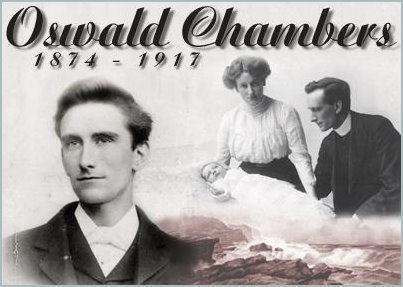
April 20th

Can a saint slander God?

For all the promises of God in Him are yea, and in Him Amen. 2 Cor. 1:20.

Jesus told the parable of the talents recorded in Matthew 25 as a warning that it is possible for us to misjudge our capacity. This parable has not to do with natural gifts, but with the Pentecostal gift of the Holy Ghost. We must not measure our spiritual capacity by education or by intellect; our capacity in spiritual things is measured by the promises of God. If we get less than God wants us to have, before long we will slander Him as the servant slandered his master: ‘You expect more than You give me power to do; You demand too much of me, I cannot stand true to You where I am placed.’ When it is a question of God’s Almighty Spirit, never say ‘I can’t.’ Never let the limitation of natural ability come in. If we have received the Holy Spirit, God expects the work of the Holy Spirit to be manifested in us.
The servant justified himself in everything he did and condemned his lord on every point—‘Your demand is out of all proportion to what you give.’ Have we been slandering God by daring to worry when He has said: “Seek ye first the Kingdom of God, and His righteousness; and all these things shall be added unto you”? Worrying means exactly what this servant implied—‘I know You mean to leave me in the lurch.’ The person who is lazy naturally is always captious—‘I haven’t had a decent chance,’ and the one who is lazy spiritually is captious with God. Lazy people always strike out on an independent line.
Never forget that our capacity in spiritual matters is measured by the promises of God. Is God able to fulfil His promises? Our answer depends on whether we have received the Holy Spirit.

Streams in the Desert

April 20

“Not by might, nor by power, but by my spirit, saith Jehovah of hosts.” (Zech. 4:6)

MY way led up a hill, and right at the foot I saw a boy on a bicycle. He was pedalling up hill against the wind, and evidently found it a tremendously hard work. Just as he was working most strenuously and doing his best painfully, there came a trolley car going in the same direction—up the hill.

It was not going too fast for the boy to get behind it, and with one hand to lay hold of the bar at the back. Then you know what happened. He went up that hill like a bird. Then it flashed upon me:

“Why, I am like that boy on the bicycle in my weariness and weakness. I am pedalling up hill against all kinds of opposition, and am almost worn out with the task. But here at hand is a great available power, the strength of the Lord Jesus.

“I have only to get in touch with Him and to maintain communication with Him, though it may be only one little finger of faith, and that will be enough to make His power mine for the doing of this bit of service that just now seems too much for me.” And I was helped to dismiss my weariness and to realize this truth.—The Life of Fuller Purpose.

ABANDONED

Utterly abandoned to the Holy Ghost!
Seeking all His fulness at whatever cost;
Cutting all the shore-lines, launching in the deep
Of His mighty power—strong to save and keep.

Utterly abandoned to the Holy Ghost!
Oh! the sinking, sinking, until self is lost!
Until the emptied vessel lies broken at His feet;
Waiting till His filling shall make the work complete.

Utterly abandoned to the will of God;
Seeking for no other path than my Master trod;
Leaving ease and pleasure, making Him my choice,
Waiting for His guidance, listening for His voice.

Utterly abandoned! no will of my own;
For time and for eternity, His, and His alone;
All my plans and purposes lost in His sweet will,
Having nothing, yet in Him all things possessing still.

Utterly abandoned! ’tis so sweet to be
Captive in His bonds of love, yet so wondrous free;
Free from sin’s entanglements, free from doubt and fear,
Free from every worry, burden, grief or care.

Utterly abandoned! oh, the rest is sweet,
As I tarry, waiting, at His blessed feet;
Waiting for the coming of the Guest divine,
Who my inmost being shall perfectly refine.

Lo! He comes and fills me, Holy Spirit sweet!
I, in Him, am satisfied! I, in Him, complete!
And the light within my soul shall nevermore grow dim
While I keep my covenant—abandoned unto Him!
—Author Unknown.

Stephen Boyd Blog

Belfast-born Hollywood and International Star from 1950-1970's Fan Tribute Page

Abundant Joy

Digging Deep Into The Word

Not My Life

The Bible as clear as possible

Seek Grow Love

Growing Throughout the Year

Smoodock's Blog

Question Authority

PleaseGrace

A bit on daily needs and provisions

Three Strands Lutheran Parish

"A cord of three strands is not easily broken." Ecclesiastes 4:12

1love1god.com

Romans 5:8

The Rev. Jimmy Abbott

read, watch, listen

BEARING CHRIST CRUCIFIED AND RISEN

To know Christ and Him crucified

Considering the Bible

Scripture Musings

rolliwrites.wordpress.com/

The Official Home of Rolli - Author, Cartoonist and Songwriter

Pure Glory

The heavens are telling the glory of God; and the firmament proclaims His handiwork. Psalms 19:1

The daily addict

The daily life of an addict in recovery

The Christian Tech-Nerd

-Reviews, Advice & News For All Things Tech and Gadget Related-

Thinking Through Scripture

to help you walk with Jesus in faith, hope, and love.

A disciple's study

This is my personal collection of thoughts and writings, mainly from much smarter people than I, which challenge me in my discipleship walk. Don't rush by these thoughts, but ponder them.

Author Scott Austin Tirrell

Maker of fine handcrafted novels!

In Pursuit of My First Love

Returning to the First Love