
Where Are Your Sins?

“Make me to know my transgression and my sin.”—Job 13. 22.

“Cleanse me from my sin.”—Psalm 51.  2.

“The blood of Jesus Christ, His Son, cleanseth us from all sin.”—1 John 1. 7.

“Christ Jesus, whom God hath set forth to be a propitiation, through faith in His blood.”—Rom. 3. 25.

The question which forms the title of this tract ought to stir up many thoughts in your heart.  It concerns every man and woman born into the world.  You ought never to rest till you can give it a satisfactory answer.

—“WHERE ARE YOUR SINS?”

I ask you this day to look this question in the face.  I ask you to give me your attention for a few minutes, while I try to enforce it on your conscience.  A time draws nigh when the question must be answered.  The hour cometh when all other questions shall seem like a drop of water in comparison with this.  We shall not say, “Where is my money?”—or, “Where are my lands?”—or, “Where is my property?” Our only thought will be, “My sins!  my sins!—Where are my sins?”

Reader, I am going to offer you a few remarks, which may help to throw light on the mighty question which is before your eyes.  My heart’s desire and prayer to God is this, that this tract may be greatly useful to your soul.  I entreat you to give it fair reading.  Do not put it in the fire; do not tear it in pieces.  Read it: read it!  Read it to the end!  Who can tell but the Holy Ghost may employ this tract for the saving of your soul 

  1. My first remark is this.  You have many sins.  I say this boldly, and without the least hesitation.

I know not who you are, or how the time past of your life has been spent.  But I know, from the Word of God, that every son and daughter of Adam is a great sinner in the sight of God.  There is no exception: it is the common disease of the whole family of Adam, in every quarter of the globe.  From the king on his throne, to the beggar by the roadside,—from the landlord in his hall, to the labourer in his cottage,—from the fine lady in her drawing-room, to the humblest maid-servant in the kitchen,—from the clergyman in the pulpit, to the little child in the Sunday-school,—we are all by nature guilty, guilty: guilty in the sight of God.  “In many things we offend all.”—“There is none righteous: no, not one.”—“All have sinned,” “If we say that we have no sin, we deceive ourselves, and the truth is not in us.” (James iii. 2; Rom.10; v. 12; 1 John i. 8.) It is useless to deny it.  We have all sinned many sins!

Reader, do you doubt the truth of these words?  Then go and examine the law of God, as expounded by the Son of God Himself.  Read with attention the fifth chapter of St. Matthew’s Gospel.  See how the commandments of God apply to our words as well as to our actions, and to our thoughts and motives, as well as to our words.  Know that “the Lord seeth not as man seeth: man looketh at the outward appearance, but the Lord looketh at the heart.” In His sight the very “thought of foolishness is sin.” (1 Sam. xvi. 7; Prov. xxiv. 9.)

And now turn to the history of your own life, and try it by the standard of’ this holy law.  Think of the days of your childhood, and all your waywardness, and selfishness, and evil tempers, and perversity, and backwardness to that which is good.—Remember the days of your youth,—your self-will, your pride, your worldly inclinations, your impatience of control, your longing after forbidden things.—Call to mind your conduct since you came to man’s estate, and the many departures from the right way, of which you have been guilty every year.—Surely, in the face of your life’s history, you will not stand up and say, “I have not sinned!”

And then turn to the history of your own heart.  Consider how many evil things have gone through it, of which the world knows nothing at all.—Remember the thousands of sinful imaginations, and corrupt ideas, which your heart has entertained, even while your outward conduct has been correct, moral, and respectable.—Think of the vile thoughts, and deceitful intentions, and false motives, and malicious, envious, spiteful feelings, which have walked up and down in your inward man, while those nearest to you never dreamed or guessed what was going on.—Surely, in the face of your heart’s history, you will not stand up and say, “I have not sinned!”

Reader, once more I ask you, Do you doubt what I am saying?  Do you doubt whether you have sinned many sins?—Then go and examine the twenty-fifth chapter of St. Matthew’s Gospel.  Read the concluding portion of that chapter, which describes the proceedings of the judgment day.  Note carefully the grounds on which the wicked, at the left hand, are condemned to everlasting fire.  No mention is made of great open acts of wickedness which they have committed.  They are not charged with having murdered, or stolen, or borne false witness, or committed adultery.  They are condemned for sins of omission!  The mere fact that they have left undone things which they ought to have done, is sufficient to ruin their souls for ever.  In short, a man’s sins of emission alone are enough to sink him into hell!

And now look at yourself by the light of this wonderful passage of Scripture.  Try to remember the countless things you have left undone, which you might have done, and have left unsaid, that you might have said.  The acts of self-denying kindness, which you might have performed, but have neglected,—how many they are!  The good you might have done, and the happiness you might have caused, at very little trouble to yourself,—how vast is the amount of it!  Surely, in the face of our Lord’s teaching about sins of omission, you will not stand up and say, “I have not sinned!”

Reader, once more I ask, Do you doubt the truth of what I am saying?  I think it quite possible that you do.  I know something of man’s exceeding blindness to his own natural state.  Listen to me once more, whilst I ply your conscience with another argument.  Oh, that God may open your eyes, and show you what you are!

Sit down, and take pen and paper, and count up the sins that you have probably sinned since you first knew good from evil.  Sit down, I say, and make a sum.  Grant for a moment that there have been, on an average, fifteen hours in every twenty-four during which you have been awake, and an active and accountable being.—Grant for a moment that in each one of these fifteen hours you have sinned only two sins.  Surely you will not say that this is an unfair supposition.  Remember, we may sin against God in thought, word, or deed.  I repeat, it cannot be thought an extreme thing to suppose that in each waking hour you have, in thought, or word, or deed, sinned two sins.  And now add up the sins of your life, and see to what sum they will amount.

At the rate of fifteen waking hours in a day, you have sinned every day thirty sins!—At the rate of seven days in a week, you have sinned two hundred and ten sins every week!—At the rate of four weeks in every month, you have sinned eight hundred and forty sins every month!—At the rate of twelve months in every year, you have sinned ten thousand and eighty sins every year!—And, in short, not to go further with the calculation, every ten years of your life you have sinned, at the lowest computation, more than ONE HUNDRED THOUSAND SINS!

Reader, I do beseech you to look calmly at this sum.  I defy you to disprove its correctness.  I ask you, on the contrary, whether I have not entirely understated your case?  I appeal to you, as an honest person, whether it be not true, that many an hour, and many a day in your life, you have sinned incessantly?  I ask you confidently, whether the sum would not be far more correct if the total number of your sins was multiplied ten-fold?—Oh, cease from your self-righteousness!  Lay aside this proud affectation of “not being so very bad,” in which you are trying to wrap yourself up.  Be bold enough to confess the truth.  Listen not to that old liar, the devil.  Surely in the face of that damning sum which I have just cast up, you will not dare to deny that “you have many sins.”

I leave this part of my subject here, and pass on.  I sadly fear that many a reader will run his eye over what I have been saying, and remain unconvinced and unmoved.  I have learned by mournful experience that the last thing a man finds out and understands, is his own state in the sight of God.  Well saith the Holy Ghost, that we are all by nature “blind,” and “deaf,” and “dumb,” and “asleep,” and “beside ourselves,” and “dead!” Nothing, nothing, nothing will ever convince man of sin but the power of the Holy Ghost.  Show him hell, and he will not flee from it; show him heaven, and he will not seek it; silence him with warnings, and yet he will not stir; prick his conscience, and yet he will remain hard.  Power from on high must come down and do the work.  To show man what he really is, needs the Holy Spirit of God.

Reader, if you have any feeling of your own sinfulness, you ought to thank God for it.  That very sense of weakness, wickedness, and corruption, which perhaps makes you uncomfortable, is in reality a token for good, and a cause for praise.  The first step towards being really good, is to feel bad.  The first preparation for heaven, is to know that we deserve nothing but hell.  Before we can be counted righteous we must know ourselves to be miserable sinners.  Before we can have inward happiness and peace with God, we must learn to be ashamed and confounded because of our manifold transgressions.  Before we can rejoice in a well-grounded hope, we must be taught to say, “Unclean!  unclean!  God, be merciful to me a sinner!”

Reader, if you love your soul, beware of checking and stifling this inward feeling of your own sinfulness.  I beseech you, by the mercies of God, do not trample on it, do not crush it, do not take it by the throat and refuse to give it your attention.  Beware of taking the advice of worldly men about it.  Treat it not as a case of low-spirits, disordered health, or anything of the kind.  Beware of listening to the devil’s counsel about it.  Do not try to drown it in drink and revelling; do not try to drive over it with horses, and dogs, and carriages, and field-sports; do not try to purge it away by a course of card-parties, and balls, and concerts.  Oh, reader, if you love your soul, do not, do not treat the first sense of sin in this miserable fashion.  Do not commit spiritual suicide,—do not murder your soul!

Go rather and pray God to show you what this feeling of sin means.  Ask Him to send the Holy Spirit to teach you what you are, and what He would have you to do.  Go and read your Bible, and see whether there is not just cause for your being uncomfortable, and whether this sense of being “wicked and bad” is not just what you have a right to expect.  Who can tell but it is a seed from heaven which is one day to bear fruit in Paradise in your complete salvation?  Who can tell but it is a spark from heaven which God means to blow up into a steady and shining light?  Who can tell but it is a stone from above before which the devil’s kingdom in your heart is to go down, and a stone which shall prove the first foundation of a glorious temple of the Holy Ghost?—Happy indeed is that man or woman who can go along with my first remark, and say, “IT IS TRUE: I HAVE MANY SINS.”

  1. My second remark is this.  It is of the utmost importance to have our sins cleansed away.

I say this boldly and confidently.  I am aware of the multitude of things which are thought “important” in the world, and receive the first and best of men’s attentions.  But I know well what I am saying.  I am bold to say that my Master’s business deserves to be placed before all other business; and I learn from my Master’s book that there is nothing of such importance to a man as to have his sins forgiven and cleansed away.

Remember, reader, there is a God above you.  You see Him not in the city.  Hurry and bustle, trade and commerce, appear to swallow up men’s minds.  You see Him not in the country.  Farming and labouring go on in regular course, and seed time and harvest never fail.  But all this time there is an eternal Eye looking down from heaven and seeing all that man do: an eye that never slumbers, and never sleeps.  Yes!  there is not only a Queen, and a government, and a landlord, and a master, to be remembered: there is One higher, far higher than all these, who expects His dues to be paid.  That One is the most high God.

This God is a God of infinite holiness.  He is of purer eyes than to look upon iniquity, and cannot bear that which is evil.  He sees defects and infirmities where you see none.  In His sight the very heavens are not clean.—He is a God of infinite knowledge.  He knows every thought, and word, and action of every son of Adam’s children: there are no secrets hid from Him.  All that we think, and say, and do, is noted down and recorded in the book of His remembrance.—He is a God of infinite power.  He made all things at the beginning.  He orders all things according to His will.  He casts down the Kings of this world in a moment.  None can stand against Him when He is angry.—Above all, He is a God in whose hands are our lives and all our concerns.  He first gave us being.  He has kept us alive since we were born.  He will remove us when He sees fit, and reckon with us according to our ways.  Such is the God with whom we have to do.

Reader, think of these things.  Surely when you consider you will be afraid.  Surely you will see it is of the utmost importance to have your sins cleansed away.  Surely you will inquire, “How do matters stand between me and God?”

Remember, furthermore, that death is before you.  You cannot live always.  There must be an end, one day, of all your scheming and planning, and buying and selling, and working and toiling.  A visitor will come to your house who will take no denial.  The king of terrors will demand admission, and serve you with notice to quit.  Where are the rulers and kings who governed millions a hundred years ago?  Where are the rich men who made fortunes and founded houses?  Where are the landlords who received rents, and added field to field?  Where are the labourers who ploughed the land and reaped the corn?  Where are the clergymen who read services and preached sermons?  Where are the children who played in the sunshine as if they would never be old?  Where are the old men who leaned on their sticks and gossiped about the days when they were young?  There is but one answer.  They are all dead: dead, dead!  Strong, and beautiful, and active as they once were, they are all dust and ashes now.  Mighty and important as they all thought their business, it all came to an end.  And we are travelling in the same way!  A few more years, and we also shall be lying in our graves!

Reader, think of these things.  Surely when you consider your latter end you will not think the cleansing away of sin a light matter.  Surely you will see something in the question, “Where are your sins?” Surely you will consider, “How am I going to die?”

Remember, furthermore, that resurrection and judgment await you.  All is not over when the last breath is drawn and your body becomes a lump of cold clay.  No: all is not over!  The realities of existence then begin.  The shadows will have passed away for ever.  The trumpet shall one day sound, and call you forth from your narrow bed; the graves shall be rent asunder, and their tenants shall be summoned forth to meet God; the ears that would not obey the church going bell shall be obliged to obey that summons; the proud wills that would not submit to listen to sermons shall be compelled to listen to the judgment of God.  The great white throne shall be set: the books shall be opened.  Every man, woman, and child, shall be arraigned at that great assize.  Every one shall be judged according to his works.  The sins of every one shall be answered for.  And every one shall receive his eternal portion either in heaven or in hell!

Reader, think of these things.  Surely in remembrance of that day you must allow that the subject I am upon deserves attention.  Surely you must confess that it is of the utmost importance to have your sins cleansed away.  Surely you will consider, “How am I going to be judged?”

I must speak out what is upon my mind.  I feel great sorrow and trouble of heart about many men and women in the world.  I fear for many who live in this so called Christian land; I fear for many who profess and call themselves Christians; I fear for many who go to church or chapel every Sunday and have a decent form of religion; I fear that they do not see the immense importance of having their sins cleansed away.  I can see plainly that there are many other things which they think far more important.  Money, and land, and farms, and horses, and carriages, and dogs, and meat, and drink, and clothes, and houses, and marriages, and families, and business, and pleasure,—these, these are the sort of things which many evidently think the “first things.” And as for the forgiveness and cleansing away of their sins, it is a mat­ter which has only the second place in their thoughts.

See the man of business, as he pores over his ledger and account books, and runs his eye over the columns of figures.  See the man of pleasure, as he tears over the country with his horses and dogs, or rushes after excitement at the races, the theatre, the card party, or the ball.  See the poor thoughtless labourer, as he carries off his hard-earned wages to the public house, and wastes them in ruining both body and soul.  See them all, how thoroughly they are in earnest!  See them all, how they throw their hearts into what they are doing!—And then mark them all at church next Sunday: listless, careless, yawning, sleepy, and indifferent, as if there were no God, and no devil, and no Christ, and no heaven, and no hell!  Mark how evident it is that they have left their hearts outside the church!  Mark how plain it is that they have no real interest in religion!  And then say whether it be not true that many know nothing of the importance of having their sins cleansed away.  Oh, reader, take heed lest this be the case with you!

Reader, do you feel anything of the importance of being forgiven?  Then, in the name of God, I call upon you to encourage that feeling more and more This is the point to which we desire to bring all people’s souls.  We want you to understand that religion does not consist in professing certain outward duties, and going through certain outward forms.  It consists in being reconciled to God, and enjoying peace with Him.  It consists in having our sins cleansed away, and knowing that they are cleansed.  It consists in being brought back into friendship with the King of kings, and living in the sunshine of that friendship.—Listen not to those who would fain persuade you that if you only “go to church” regularly you will of course go to heaven.  Settle it rather in your mind, that true saving religion, such as the Bible teaches, is another kind of thing altogether.  The very foundation of real Christianity is to know that you have many sins, and deserve hell,—and to feel the importance of having these sins cleansed away, in order that you may go to heaven.

Happy, says the world, are they who have plenty of property and fine houses!  Happy are they who have carriages, and horses, and servants, and large balances at their bankers, and great troops of friends!  Happy are they who are clothed in purple and fine linen, and fare sumptuously every day, who have nothing to do but to spend their money and enjoy themselves!—Yet what is the real value of such happiness?  It gives no solid, real satisfaction, even at the time of enjoyment.  It endures but for a few years.  It only lasts till death comes in, like the hand at Belshazzar’s feast, and breaks up all.  And then, in too many cases, this so-called happiness is exchanged for ETERNAL MISERY IN HELL.

“Blessed,” says the Word of God, “are those whose iniquities are forgiven, and whose sins are covered!  Blessed is the man unto whom the Lord imputeth not iniquity!—Blessed are the poor in spirit, for theirs is the kingdom of heaven!  Blessed are they that mourn, for they shall be comforted!  Blessed are they that hunger and thirst after righteousness, for they shall be filled!” (Psalm xxxii. 1, 2; Matt. v. 2, &e.)—Their blessedness shall never come to an end: their happiness is no summer-dried fountain, just failing when need is the sorest; their friends are no summer swallows, forsaking them, like Adonijah’s guests, the first moment that the trumpet sounds.  Their sun shall never go down.  Their joy shall bud in time, and bloom in eternity.  Theirs, in a word, is true happiness, for it is for evermore.

Reader, do you believe what I am saying?  It is all true.  You will see one day whose words shall stand, the words of man or the Word of God.  Be wise in time.  Settle it in your heart this very hour, that the most important thing that man can attend to is the cleansing and forgiveness of his sins.

  1. My third remark is this.  You cannot cleanse away your own sins.

I make this statement boldly and confidently.  Startling as it sounds to the natural heart, I lay it down as a piece of undeniable Scriptural truth.  In spite of all the Pharisees, and Roman Catholics, and Socinians, and Deists, and idolaters of human reason and human power, I unhesitatingly repeat my assertions.—Man’s sins are many and great.  It is of the utmost importance that these sins should be cleansed away.  Man’s guilt in the sight of God, is enormous.  Man’s danger of hell, after he dies, is imminent and tremendous.  And yet man cannot cleanse away his own sins.  It is written, and it is true, “By deeds of the law shall no flesh be justified.” (Rom. iii. 20.)

It will not cleanse away your sins to be sorry for them.  You may mourn over your past wickedness, and humble yourself in sackcloth and ashes.  You may shed floods of tears, and acknowledge your own guilt and danger.  You may,—you must,—you ought to do this.  But you will not by so doing wipe out your transgressions from the book of God.  SORROW CANNOT MAKE ATONEMENT FOR SIN.

The convicted criminal in a court of justice is often sorry for his offences.  He sees the misery and ruin they have brought upon him.  He mourns over his folly in not listening to advice and in giving way to temptation.  But the judge does not let him off because he is sorry.  The deed has been done: the law has been broken; the penalty has been incurred.  The punishment must be inflicted, notwithstanding the criminal’s tears.—Reader, this is precisely your position in the sight of God.  Your sorrow is right, and good, and proper.  But your sorrow has no power whatever to cleanse away your sins.  It needs something more than penitence to take the burden off your heart.

It will not cleanse away your sins to mend your life.  You may reform your conduct, and turn over a new leaf: you may break off many evil habits, and take up many good ones; you may become, in short, an altered man in all your outward behaviour.  You may,—you must,—you ought, to do so.  Without such change no soul ever was saved.  But you will not, by so doing, wipe away one particle of your guilt in God’s sight.  REFORMATION MAKES NO ATONEMENT FOR SIN.

The bankrupt tradesman, who owes ten thousand pounds and has not ten shillings to pay, may resolve to become a reformed character.  After wasting his whole substance in riotous living, he may become steady, temperate, and respectable.  It is all right and proper that he should be so: but this will not satisfy the claims of those to whom he owes money.  Once more I say, this is precisely your case by nature in the sight of God.  You owe him ten thousand talents, and have nothing to pay.  To-day’s amendments are all very well, but they do not wipe away yesterday’s debts.—It requires something more than amendment and reformation to give you a light heart and to set your conscience free.

It will not cleanse away your sins to become diligent in the use of the forms and ordinances of religion.  You may alter your habits about Sunday, and attend services from morning to night: you may take pains to hear preaching on week-days, as well as on Sundays; you may receive the Lord’s Supper on every possible occasion, and give alms, and keep fasts.  It is all very well as far as it goes.  It is a right and proper thing to attend to your religious duties.  But all the means of grace in the world will never do you any good so long as you trust in them as saviours.  They will not bind up the wounds of your heart, and give you inward peace.  FORMALITY CANNOT MAKE ATONEMENT FOR SIN.

A lantern on a dark night is a very useful thing.  It can help the traveller to find his way home; it can preserve him from losing his path, and keep him from falling into danger.  But the lantern itself is not the traveller’s fireside.  The man who is content to sit down in the road by the side of his lantern, must never be surprised if he dies of cold.  Reader, if you try to satisfy your conscience with a formal attendance on means of grace, you are no wiser than this traveller.  It needs something more than formality to take the burden from your conscience, and to give you peace with God.

It will not cleanse away your sins to look to man for help.  It is not in the power of any child of Adam to save another’s soul.  No bishop, no priest, no ordained man of any Church or denomination has power to forgive sins: no human absolution, however solemnly conferred, can purge that conscience which is not purged by God.  It is well to ask the counsel of the ministers of the Gospel when the conscience is perplexed.  It is their office to help the labouring and heavy-laden, and to show them the way of peace.  But it is not in the power of any minister to deliver any man from his guilt.  We can only show the path that must be followed: we can only point out the door at which every one must knock.  It requires a hand far stronger than that of man to take the chains off conscience, and set the prisoner free.

The bankrupt who asks a bankrupt to set him up in business again is only losing time; the pauper who travels off to a neighbour pauper, and begs him to help him out of difficulties, is only troubling himself in vain.  The prisoner does not beg his fellow-prisoner to set him free; the shipwrecked sailor does not call on his shipwrecked comrade to place him safe ashore.  Help in all these cases must come from some other quarter: relief in all these cases must be sought from some other hand.  Reader, it is just the same in the matter of cleansing away your sins.  So long as you seek it from man, whether man ordained or man not ordained, you seek it where it cannot be found.  You must go further: you must look higher.  You must turn elsewhere for comfort.  It is not in the power of any man on earth or in heaven to take the burden of sin from off a brother’s soul.  “None can by any means redeem his brother, nor give a ransom for him.” (Psalm xlix. 7.)

Reader, thousands in every age have tried to cleanse themselves from their sins in the ways I have now described, and have tried in vain.  Thousands, I doubt not, are trying at this very moment, and find themselves “nothing bettered, but rather worse.” They are climbing up a steep precipice of ice, toiling hard and yet slipping backwards as fast as they climb.—They are pouring water into a cask full of holes, labouring busily, and yet no nearer the end of their work than when they began.—They are rowing a boat against a rapid stream, plying the oar diligently, and yet in reality losing ground every minute.—They are trying to build up a wall of loose sand, wearing themselves out with fatigue, and yet seeing their work roll down on them as fast as they throw it up.—They are striving to pump dry a sinking ship: the water gains on them and they will soon be drowned.—Such is the experience, in every part of the world, of all who think to cleanse themselves from their sins.  Reader, be warned to-day.  Do not be one of them.

Beware, I do entreat you, of quack medicines in religion.  Beware of supposing that penitence, and reformation, and formality, and priest-craft, can ever give you peace with God.  They cannot do it.  It is not in them.  The man who says they can must be ignorant of two things.  He cannot know the length and breadth of human sinfulness: he cannot understand the height and depth of the holiness of God.  There never breathed the man or woman on earth who tried to cleanse himself from his sins, and in so doing obtained relief.

Reader, if you have found out this truth by experience, be diligent to impart it to others.  Show them as plainly as you can their guilt and danger by nature.  Tell them, with no less plainness, the immense importance of having their sins forgiven and cleansed away.  But then warn them not to waste time in seeking to be cleansed in unlawful fashions.  Warn them against the specious advice of “Mr. Legality” and his companions, so vividly described in “Pilgrim’s Progress.” Warn them against false remedies and sham medicines for the soul.  Send them to the old wicket-gate, described in Scripture, however hard and rough the way may seem.  Tell them it is “the old path and the good way,” and that, whatever men may say, it is the only way to obtain cleansing of our sins.

  1. The fourth remark I have to make is this.  The blood of Jesus Christ can cleanse away all your sins.

Reader, I enter on this part of my tract with a thankful heart.  I bless God that after setting before you the awful nature of your spiritual disease, I am able to set before you an almighty remedy.  But I feel it needful to dwell upon this remedy for a few minutes.  A thing of such wondrous efficacy as this blood ought to be clearly understood: there should be no vagueness or mystery in your ideas about it.  When you hear of the “blood of Christ” you ought thoroughly to comprehend what the expression means

The blood of Christ is that life-blood which Jesus shed when He died for sinners upon the cross.  It is the blood which flowed so freely from His head pierced with thorns, and His hands and feet pierced with nails, and His side pierced with a spear, in the day when He was crucified and slain.  The quantity of that blood may very likely have been small; the appearance of that blood was doubtless like that of our own: but never since the day when Adam was first formed out of the dust of the ground, has any blood been shed of such deep importance to the whole family of mankind.

It was blood that had been long covenanted and promised.  In the day when sin came into the world, God mercifully engaged that “the Seed of the woman should bruise the serpent’s head.” One born of woman should appear one day, and deliver the children of Adam from Satan’s power.  That Seed of the woman was our Lord Jesus Christ.  In the day that He suffered on the cross, He triumphed over Satan and accomplished redemption for mankind.  When Jesus shed His life-blood on the cross, the head of the serpent was bruised, and the ancient promise was fulfilled.

It was blood that had been long typified and prefigured.  Every sacrifice that was offered up by patriarchs, was a testimony of their faith in a greater sacrifice yet to come; every shedding of the blood of lambs and goats under the Mosaic law was meant to foreshadow the dying of the true Lamb of God for the sin of the world.  When Christ was crucified, these sacrifices and types received their full accomplishment.  The true sacrifice for sin was at length offered; the real atoning blood was at length shed.  From that day the offerings of the Mosaic law were no longer needed.  Their work was done.  They might be laid aside.

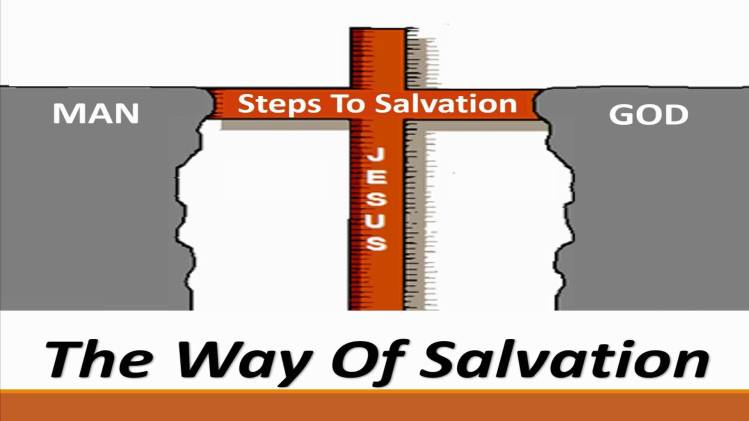
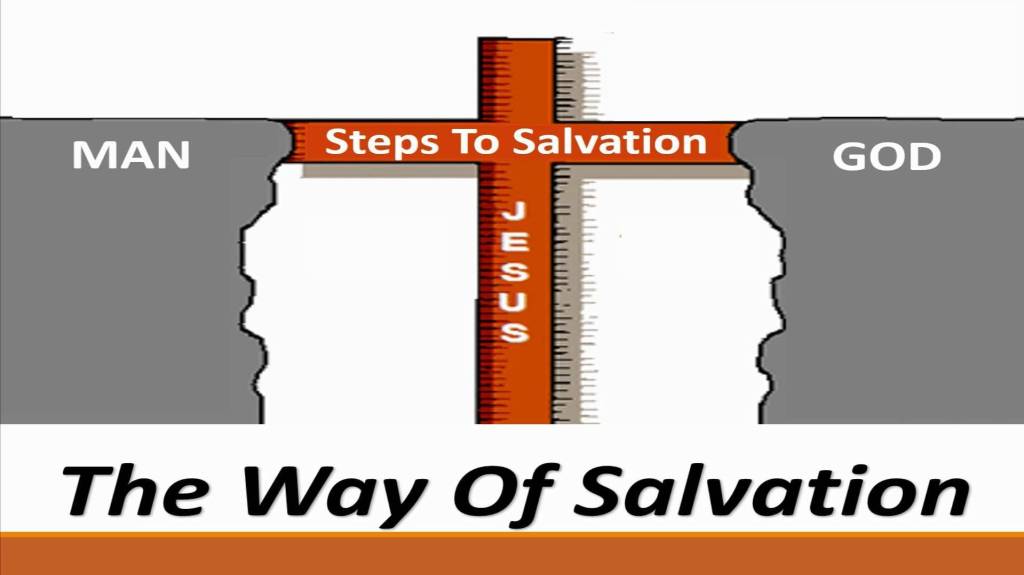
It was blood which was of infinite merit and value in the sight of God.  It was not the blood of one who was nothing more than a singularly holy man, but of one who was God’s own fellow, very God of very God.  It was not the blood of one who died involuntarily, as a martyr to truth, but of one who voluntarily undertook to be the Substitute and Proxy for mankind, to bear their sins and carry their iniquities.  It made atonement for man’s transgressions; it paid man’s enormous debt to God; it provided a way of righteous reconciliation between sinful man and his holy Maker; it made a road from heaven to earth, by which God could come down to man, and show mercy; it made a road from earth to heaven, by which man could draw near to God, and yet not feel afraid.  Without it there could have been no remission of sin.  Through it God can be just and yet the justifier of the ungodly.  From it a fountain has been formed, wherein sinners can wash and be clean to all eternity.

Reader, this wondrous blood of Christ, applied to your conscience, can cleanse you from all sin.  It matters nothing what your sins may have been, “Though they be as scarlet they may be made like snow.  Though they be red like crimson they can be made like wool.” (Isaiah i. 18.) From sins of youth and sins of age,—from sins of ignorance and sins of knowledge,—from sins of open profligacy and sins of secret vice,—from sins against law and sins against Gospel,—from sins of head, and heart, and tongue, and thought, and imagination,—from sins against each and all of the ten commandments,—from all these the blood of Christ can set us free.  To this end was it appointed; for this cause was it shed; for this purpose it is still a fountain open to all mankind.  That thing which you cannot do for yourself can be done in a moment by this precious fountain.  YOU CAN HAVE ALL YOUR SINS CLEANSED AWAY.

In this blood all the dead saints have been cleansed hitherto, who are now waiting the resurrection of the just. From Abel, the first of whom we read, down to the last who has fallen asleep to-day, they have all “washed their robes, and made them white in the blood of the Lamb.” (Rev. vii. 14.) Not one has entered into rest by his own works and deservings; not one has made himself clean before God by his own goodness and his own strength.  They have all “overcome by the blood of the Lamb.” (Rev. xii. 11.) And their testimony in Paradise is clear and distinct: “Thou wast slain, and hast redeemed us to God by Thy blood, out of every kindred, and tongue, and people, and nation.” (Rev. v. 9)

By this blood all the living saints of God have peace and hope now; by it they have boldness to enter into the holiest; by it they are justified and made nigh to God; by it their consciences are daily purged and filled with holy confidence.  About it all believers are agreed, however much they may differ on other matters.  Episcopalians and Presbyterians, Baptists and Methodists,—all are agreed that the blood of Christ is that only thing that can cleanse the soul.—All are agreed that in ourselves we are “wretched and miserable, and poor, and blind, and naked.” But all are agreed that in the blood of Christ the chief of sinners can be made clean.

Reader, would you like to know what we ministers of the Gospel are ordained to do?  We are not set apart for no other end than to read services, and administer sacraments, and marry people, and bury the dead.  We are not meant to do nothing more than show you the church, or ourselves, or our party.  We are set for the work of showing men the blood of Christ; and except we are continually showing it, we are no true ministers of the Gospel.

Reader, would you like to know what is our heart’s desire and prayer for the souls to whom we minister?  We want to bring them to the blood of Christ. We are not content to see our churches filled, and our ordinances well attended, our congregations numerous, and our cause outwardly flourishing.  We want to see men and women coming to the great Fountain for sin and uncleanness, and washing their souls in it that they may be clean.  Here only is rest for the conscience.  Here only is peace for the inward man.  Here only is a cure for spiritual diseases Here only is the secret of a light and happy heart.  No doubt we have within us a fountain of evil and corruption; but, blessed be God, there is another Fountain of greater power still,—even the precious blood of the Lamb: and, washing daily in that other Fountain, we are clean from all sin.

  1. The fifth, and last remark I have to make, is this.  Faith is absolutely necessary, and the only thing necessary, in order to give you an interest in the cleansing blood of Christ.

Reader, I ask your special attention to this point.  A mistake here is often ruinous to a man’s soul.  It is a great tear at the root of your Christianity if you do not clearly see the true way of union between Christ and the soul.—That way is faith.

Church-membership and reception of the sacraments are no proof that you are washed in Christ’s blood.  Thousands attend a Christian place of worship, and receive the Lord’s Supper from the hands of Christian ministers, and yet show plainly that they are not cleansed from their sins.  Beware of despising means of grace, if you have any desire to be saved.  But never, never forget that Church-membership is not faith.

Faith is the one thing needful in order to give you the benefit of Christ’s cleansing blood.  He is called a “propitiation through faith in His blood.” “He that believeth on Him hath everlasting life.” “By Him all that believe are justified from all things.” “Being justified by faith we have peace with God, through our Lord Jesus Christ.” The wisdom of the whole world will never provide a better answer to an anxious inquirer than that which Paul gave to the Philippian jailer: “Believe on the Lord Jesus Christ, and thou shalt be saved.”—“Art thou convinced of sin?” says the Gospel.  “Dost thou really see that thou hast many sins, and art deserving of hell?  Dost thou renounce all hope of cleansing thyself from thy sins by thine own power?  Then thou art just the man for whom the Gospel provides comfort.  Behold the atoning blood of Christ!  Only trust in it, and this day thou shalt be freely pardoned.  Only believe, and this very moment thy sins shall be cleansed away.”—It is only “Believe and have.” It is only “Believe and be clean.” Let those who will call such doctrine rant and enthusiasm.  I am bold to call it by another name.  It is the “glorious Gospel” of the grace of God.

Reader, I ask you not to misunderstand my meaning in thus speaking of faith.  I do not tell you that faith is the only mark of the man whose sins are cleansed away.  I do not say that the faith which gives a man an interest in Christ’s atoning blood, is ever found alone.  Saving faith is no barren, solitary grace.  It is always accompanied by repentance and personal holiness.—But this I say confidently, that in the matter of giving the soul an interest in Christ, faith is the only thing required.  In the matter of justification before God, faith, I repeat emphatically, stands entirely alone.  Faith is the hand that lays hold on Christ.  Faith begins, faith carries on, faith keeps up the claim which the sinner makes on the Saviour.  By faith we are justified.  By faith we bathe our souls in the great Fountain for sin.  By faith we go on obtaining fresh supplies of pardoning mercy all through our journey.  By faith we live, and by faith we stand.

Reader, nothing whatever besides this faith is required, in order to your complete justification and cleansing from all sin.  Let this sink deeply into your mind.  Where is the man that desires to enjoy real comfort from the Gospel?  Seek, I do entreat you, to have clear and simple views of the nature of saving faith.  Beware of those dark, and confused, and muddy notions of faith, by which so many distress their souls.  Dismiss from your mind the idea that faith is a mere act of the intellect.  It is not assent to doctrines or articles; it is not belief of “Paley’s Evidences” or “Pearson on the Creed.” It is simply the grasp of a contrite heart on the outstretched hand of an Almighty Saviour,—the repose of a weary head on the bosom of an Almighty Friend.—Cast away all idea of work, or merit, or doing, or performing, or paying, or giving, or buying, or labouring, in the act of believing on Christ. Understand that faith is not giving, but taking,—not paying, but receiving,—not buying, but being enriched.  It is the eye that looks to the brazen serpent, and looking obtains life and health; it is the mouth that drinks down the reviving medicine, and drinking receives strength and vigour for the whole body; it is the hand of the drowning man which lays hold on the rope thrown to him, and laying hold enables him to be drawn up from the deep water safe and sound.  This, and nothing more than this, is the true idea of saving faith.  This, and this only, is the faith that is required to give you an interest in the blood of Christ.  Believe in this way, and your sins are at once cleansed away!

Reader, nothing whatever except this faith will ever give you an interest in Christ’s atoning blood.  You may go daily to Christ’s church; you may often use Christ’s name; you may bow the head at the name of Jesus; you may eat of the bread and wine which Christ commanded to be received.  But all this time, without faith, you have neither part nor lot in Christ: without faith, so far as you are concerned, Christ’s blood has been shed in vain.

I desire to enter my solemn protest against the modern notions which prevail on this solemn subject.  I protest against the opinion which many now maintain, that any are saved by Christ excepting those who believe.  There is much vague talk in some quarters about the Fatherhood of God and the love of God, as if we who are called “Evangelical” denied these glorious truths.  We do not deny them at all: we hold them as strongly as any.  We give place to no man in this matter.  But we utterly deny that God is the spiritual Father of any excepting those who are His children by faith in Christ Jesus.  We utterly deny that men have a right to take comfort in God’s love, except they believe on Him through whom that love has been manifested, even His dear Son.  The atoning blood of the Son of God is the grand exhibition of God’s love towards sinners.  The sinner who desires to be saved, must have personal dealings with Him who shed that blood.  By personal faith he must wash in it; by personal faith he must drink of it; by personal faith he must put in his own claim to all its blessings: without this faith there can be no salvation.

Reader, would you know the main objects that we ministers have in view in our preaching?  We preach that you may believe.  Faith is the thing that we desire to see produced in your souls; faith is the thing that, once produced, we desire to see growing.  We rejoice to see you coming regularly to hear the Gospel; we rejoice to see an orderly, well-behaved congregation of worshippers: but faith, faith, faith,—is the grand result which we long to see in your souls.  Without faith we cannot feel comfortable about you; without faith you are in imminent danger of hell.  According to your faith will be the strength of your Christianity; according to the degree of your faith will be the increase of your peace and hope, and the closeness of your walk with God.  Reader, you will not wonder that there is nothing we care for so much as your believing.

I hasten to bring my remarks to a conclusion.  I have tried to show you five things, and have endeavoured to set them before you in plain language

(1) I have told you that you have many sins.  (2) I have told you that it is of the utmost importance to have these sins cleansed away.  (3).  I have told you that you cannot cleanse away your own sins.  (4) I have told you that the blood of Christ cleanseth from all sin.  (5) I have told you that faith only is needful, but absolutely needful, to give you any interest in Christ’s blood; I have told you what I am firmly persuaded is God’s own truth,—the truth on which I desire myself to live and die.  I pray God that the Holy Ghost may apply this truth with mighty power to many souls.

Reader, I will wind up all this subject by three words of parting application.  Our years are passing quickly away.  The night cometh, when no man can work.  Yet a little time and our place in another world will be settled to all eternity.  A few more years, and we shall be either in heaven or in hell.  Surely this fact alone ought to set us thinking.  Bear with me while I try to turn your thoughts in a profitable direction; bear with me while, as a friend and brother, I try to talk to you about your soul.

  1. My first word of application shall be a question.  

I address it to all into whose hands this tract may fall, without distinction or exception.  It is a question which concerns deeply every man, woman, and child in the world, whatever be their rank or station; it is the question which forms the title of this tract

“Where are your sins?”

Reader, remember, I do not ask you what you call yourself in religion; I do not ask you where you go,—or whom you hear,—or to what party you belong,—or what are your peculiar opinions about Church or Dissent.  I leave such matters alone.  I am weary to see the enormous waste of time of which multitudes are yearly guilty in respect to these matters: I am for the realities and substance of Christianity; I want to fix your attention on the things which will look important in the hour of death and at the last day.  And I say boldly, that one of the first questions which demand your notice, is the question of my tract:—“Where are your sins?”

I am not asking what you intend, or mean, or hope, or resolve to aim at, at some future time; I leave all that to children and fools.  To-morrow is the devil’s day, but today is God’s.  And here, as in God’s sight, this very day, while you are reading my tract, I ask you to find an answer to my question: “Where are your sins?”

Reader, I ask you to mark what I am going to say.  I say it calmly, deliberately, advisedly, and with consideration: I tell you that at this moment there are only two places in which your sins can be, and I defy the wisdom of the world to find out a third.  Either your sins are UPON YOURSELF, unpardoned, unforgiven, uncleansed, unwashed away,—sinking you daily nearer to hell!  Or else your sins are UPON CHRIST, taken away, forgiven, pardoned, blotted out and cleansed away by Christ’s precious blood!  I am utterly unable to see any third place in which a man’s sins can possibly be; I am utterly unable to discover any third alternative.  Forgiven or unforgiven,—pardoned or not pardoned,—cleansed away or not cleansed,—this, according to the Bible, is the exact position of every one’s sins.  Reader, how is it with you?  “Where are your sins?”

I do pray you to lay this question to heart, and never to rest till you can give it an answer; I do entreat you to examine your own state,—to prove your own spiritual condition,—and to find out how matters stand between you and God.  Let the time past suffice for trifling and indecision about your soul.

Give it up,—give it up,—give it up for ever.  Let the time past suffice for a mere formal, aimless, meaningless, comfortless religion.  Lay it aside,—lay it aside,—lay it aside for ever.  Be real; be thorough; be in earnest. Deal with your soul as a reasonable being; deal with it as one who feels that eternal interests are at stake; deal with it as one who has made up his mind, and is determined to live in suspense no longer.  Oh, resolve this very day to find an answer to my question: “Where are your sins?” Are they on yourself, or are they on Christ?

  1. My second word of application shall be an invitation.  I address it to all who feel unable to give a satisfactory answer to the question of my tract; I address it to all who feel sinful, and lost, and condemned, and unfit to die.  It is that invitation which is the glory of the Gospel.  I say to you, “Come to Christ, and be cleansed in His blood without delay.”

I know not what you may have been in your past life: it matters nothing.  You may have broken every commandment under heaven; you may have sinned with a high hand against light and knowledge; you may have despised a father’s warnings and a mother’s tears; you may have run greedily into every excess of riot, and plunged into every kind of abominable profligacy; you may have turned your back entirely on God, His day, His house, His ministers, His word, I say again, it matters nothing.  Do you feel your sins?  Are you sick of them?  Are you ashamed of them?  Are you weary of them?  Then come to Christ just as you are, and Christ’s blood shall make you clean.

I see you lingering, and doubting, and fancying the news too good to be true; I hear the devil whispering in your ear, “You are too bad; you are too wicked to be saved.” I charge you, in God’s name, not to give way to such doubts.  I remind you that Satan always was a liar.  One time he told you it was “too soon” for religion: and now he tells you it is “too late.” I tell you confidently, that Jesus Christ is able to save to the uttermost all who come to God by Him; I tell you confidently, that He has received, cleansed, and pardoned thousands as bad as you: He never changes.  Only come to Him, and His blood shall cleanse you from all sin.

I can well fancy that you feel at a loss, and know not what to do; I can well believe that you do not see which way to turn, or what step to take, or in what manner to follow out my counsel.  I bid you go and say so to the Lord Jesus Christ!  I bid you seek some quiet solitary place, and pour out your heart before Him: tell Him that you are a poor miserable sinner; tell Him that you know not how to pray, or what to say, or what to do.  But tell Him that you have heard something about His blood cleansing a man from all sin, and entreat Him to think on you, and cleanse your soul.  Oh, reader, take this advice,—and who can tell but you may say one day, “The blood of Christ does indeed cleanse a man from all sin.”

Reader, for the last time I offer my invitation.  I stand in the life-boat alongside the wreck to which you are clinging, and I entreat you to come in.  The day is far spent; the night is coming on; the clouds are gathering; the waves are rising.  Yet a little time and the old wreck of this world will go to pieces.  Come into the life-boat; come in and be safe: come to the blood of Christ; wash, and be clean: come with all your sins to Christ, and cast them on Him He will bear them away; He will cleanse then; He will pardon them.  Only believe and be saved.

  1. My last word shall be an exhortation.  I address it to all who have been taught by the Spirit to feel their sins, and have fled to the hope set before them in the Gospel; I address it to all who have discovered the grand truth that they are guilty sinners, and have washed in the blood of Christ in order to have their sins cleansed away.  That exhortation shall be short and simple.  I bid them “cling to Christ.”

Cling to Christ, I say: and never forget your debt to Him.  Sinners you were, when you were first called by the Holy Ghost, and fled to Jesus.  Sinners you have been, even at your bed, from the day of your conversion.  Sinners you will find yourselves to your dying hour, having nothing to boast of in yourselves.  Then cling to Christ.

Cling to Christ, I say: and make use of His atoning blood every day.  Go to Him every morning as your morning sacrifice, and confess your need of His salvation.  Go to Him every night, after the bustle of the day, and plead for fresh absolution.  Wash in the great Fountain every evening, after all the defilement of contact with the world.  “He that is washed, needeth not save to wash his feet.” But his feet he needs to wash.  (John xiii. 10.)

Cling to Christ, I say: and show the world how you love Him.  Show it by obedience to His commandments.  Show it by conformity to His image.  Show it by following His example.  Make your Master’s cause lovely and beautiful before men, by your own holiness of temper and conversation.  Let all the world see, that he who is much forgiven is the man who loves much, and that he who loves most is the man who does most for Christ. (Luke vii. 47.)

Cling to Christ, I say: and have high thoughts of the atonement made by His blood upon the cross.  Think highly of His incarnation and His example,—think highly of His miracles and His words,—think highly of His resurrection, and intercession, and coming again.  But think highest of all of Christ’s sacrifice and the propitiation made by His death.  Contend earnestly for the old faith concerning His atonement.  See, in the old doctrine that He died as a substitute for sinners, the only solution of a thousand passages in the Old Testament, and a hundred passages in the New.  Never, never be ashamed to let men know that you derive all your comfort from the atoning blood of Christ, and from His substitution for you on the cross.

Cling to Christ, I say lastly: and make much of the old foundation truths concerning salvation by His blood.  These are the old friends to which our souls will turn at last in the hour of our departure.  These are the ancient doctrines on which we shall lean back our aching heads, when life is ebbing away and death is in sight.  We shall not ask ourselves then whether we have been Episcopalians or Presbyterians, Churchmen or Dissenters.  We shall not find comfort then in new-fangled notions and human inventions,—in baptism and church membership,—in sects and parties,—in ceremonies and forms.  Nothing will do us good then but the blood of Christ. Nothing will support us then but the witness of the Spirit, that in the blood of Jesus we have washed, and by that blood have been made clean.

Reader, I commend these things to your notice.  If you never knew these things before, may you soon become acquainted with them!  If you have known them in time past, may you know them better for time to come!  We can never know too well the right answer to the mighty question,—“Where are your sins?”

Hymn

I thought upon my sins and I was sad,—

My soul was troubled sore and fill’d with pain

But then I thought on Jesus, and was glad,—

My heavy grief was turned to joy again.

I thought upon the law, the fiery law,

Holy, and just, and good in its decree:

I look’d to Jesus, and in Him I saw

That law fulfilled,.—its curse endured for me.

I thought I saw an angry, frowning God,

Sitting as Judge upon the great white throne:

My so was overwhelm’d,—then Jesus showed

His gracious face, and all my dread was gone.

I saw my sad estate,—condemned to die:

Then terror seized my heart, and dark despair;

But when, to Calvary I turned my eye,

I saw the cross, and read forgiveness there.

I saw that I was lost,—far gone astray,—.

No hope of safe return there seemed to be;

But then I heard that Jesus was the way,

A new and living way prepared for me.

Then in that way, so free, so safe, so sure,

Sprinkled all o’er with reconciling blood,

Will I abide; and never wander more,—

Walking along in fellowship with God.

H. BONAR
Deception – Have You Ever Been Deceived?

What the Bible says about salvation by faith alone.
By former Catholic Mike Gendron

If I were to insult you, you’d feel the sting immediately. If I were to embarrass you, you’d be the first to know. But if I were to deceive you…you might never know it!

As painful as being insulted or embarrassed can be, at least you’re aware of what’s taking place. But deception can be deadly because you don’t realize you are being betrayed, misled, seduced or ensnared. It’s much more than a clever slight of hand.

Deceived people are not even aware they are being misled unless they are confronted with the truth. Tragically, many go to their graves deceived about their relationship with God.

The Importance Of Your Source For Truth

What is your source for truth? Is it trustworthy? Will it protect you from the schemes and lies of the master deceiver, Satan?

The biblical prophet Jeremiah gave wise counsel for choosing who to trust. He said if you put your trust in man you will be cursed like a withered bush in a barren desert. However, if your ultimate trust is in God, Jeremiah said you will flourish like a tree planted by the water (Jeremiah 17:5-8).

Still many people today disregard Jeremiah’s advice and in their search for truth put their trust in man–religious leaders–instead of God.

Who Will You Trust?

Catholics, for example, believe that the pope and the Roman Catholic Church teach exactly what Jesus and the Bible teach. But how do we know if the popes’ teachings or the dogmas of the Roman Catholic Church are true?

The only way we can be 100% sure is to do what the church of Berea did in New Testament times. They examined the Scriptures to see if what the Apostle Paul taught them was true (Acts 17:11).

We must use the same scriptural standard for the teachings of all religious leaders. Disregarding the objective truth of God’s Word in favor of the subjective teachings of men can be a tragic mistake.

The Danger Of Deception

Would it surprise you to learn that many religious teachings go against the Bible? Shouldn’t that concern you, since your eternal destiny may depend on such teachings?

Here is how Catholic doctrine misleads people about God’s plan of salvation:

• All graces needed to attain eternal life can be merited (Catechism of the Catholic Church, 2027).
• Catholics are reborn as sons of God and freed from sin through water baptism (1213).
• Purgatory is a cleansing fire that achieves the holiness necessary for heaven (1030-31).
• Jesus is offered daily as a sacrificial victim on Catholic altars (1367).
• Venial sins are not deserving of hell (1863).
• By performing acts of penance, Catholics can expiate their own sins (1459,1477).
• The Bible says man is saved by believing God’s truth (Ephesians 1:13-14). God can never deceive anyone (Titus 1:1-2).

But man remains condemned if he continues in deception.

False religious systems hold people in bondage to deception by perverting God’s truth and grace. Any religion that teaches its followers that salvation is obtained through human effort and merit is nullifying the grace of God. Yet grace is the only means by which God saves sinners! The Bible says “if by grace, it is no longer because of works; otherwise grace would no longer be grace” (Romans 11:6).

Misplaced Faith

Some people blindly put their faith in religious leaders, assuming that their leaders would never seduce anyone with a false plan of salvation. Yet the Apostle Paul warned that “from you own group, men will come forward perverting the truth to draw the disciples away after them” (Acts 20:30).

Other people simply choose not to respond or conform their lives to truth. Instead they turn away to listen to teachers who say what they want to hear (2 Timothy 4:2-4).

Then there are people who have a zeal for God, but not in line with the truth. Many people have been indoctrinated with false teaching and have difficulty believing the truth. They fail because they refuse to let go of unbiblical beliefs.
It was disobedience to God, a lack of faith in His purpose, plan, and word that separated Adam and Eve from Him. Instead they chose to put their faith in the deceiver, which brought spiritual and physical death to us all.

God uses the very instrument that separated us from Him–faith–to restore us back to Him. By repenting of our dead works and turning to God in faith, we receive spiritual and eternal life: “For by grace you have been saved through faith, and this is not from you; it is the gift of God; it is not from works, so no one may boast” (Ephesians 2:8-9).

God’s Truth Determines Destiny

The Bible makes it clear that:
• We are either children of the devil (John 8:43-45) or children of God (John 1:12),
• We live as slaves to sin or as slaves to righteousness (Romans 6:16-18), and
• We will spend eternity under the wrath of God or in His loving presence.
“Whoever believes in Him [Jesus Christ] will not be condemned, but whoever does not believe has already been condemned, because he has not believed in the name of the only Son of God” (John 3:18).

God has revealed that trusting in anything other than Christ and His Word is evidence of deception. Those who choose to follow the traditions, opinions, and philosophies of men will be condemned. Jesus said “Whoever rejects Me and does not accept My words has something to judge him: the word that I spoke, it will condemn him on the last day” (John 12:48).

By contrast, how wonderful are the words, “to those who did accept Him He gave power to become children of God to those who believe in His name” (John 1:12).

Are you basing your life and eternal destiny on the eternal truths of God’s Word or on the Catholic traditions added to God’s truth? How will you respond to God’s truth? Compare these essential teachings of the Bible to the teachings of the Roman Catholic Church:

GOD AND HIS WORD TEACHES
YOU ARE SAVED BY FAITH AND NOT BY WORKS 


For by grace are ye saved through faith; and that not of yourselves: it is the gift of God. Not of works lest any man should boast. (Ephesians 2:8-9).

THE CATHOLIC CHURCH TEACHES… You are saved by faith plus works (1815,1821,2010,2027).

GOD AND HIS WORD TEACHES
ALL WHO RELY ON OBSERVING THE LAW–COMMANDMENTS–FOR SALVATION ARE UNDER A CURSE

For as many as are of the works of the law are under the curse: for it is written, Cursed is everyone that continueth not in all things which are written in the book of the law to do them. (Galatians 3:10).

THE CATHOLIC CHURCH TEACHES… Obedience to the commandments is necessary for salvation (2068).

GOD AND HIS WORD TEACHES
SALVATION OCCURS AT THE MOMENT YOU REPENT AND BELIEVE THE GOSPEL.

Testifying both to the Jews, and also to the Greeks, repentance toward God, and 
faith toward our Lord Jesus Christ. (Acts 20:21).

In whom ye also trusted, after that ye heard the word of truth, the gospel of your salvation: in whom also after that ye believed, ye were sealed with that Holy Spirit of promise. (Ephesians 1:13).

THE CATHOLIC CHURCH TEACHES… Salvation is a process from baptism through purgatory (161, 162, 1254, 1255).

GOD AND HIS WORD TEACHES
ONLY JESUS PURIFIES SIN

Who being the brightness of his glory, and the express image of his person, and upholding all things by the word of his power, when he had by himself purged our sins, sat down on the right hand of the Majesty on high. (Hebrews 1:3).

‘…yet now hath he reconciled in the body of his flesh through death, to present you holy and unblameable and unreproveable in his sight. (Colossians 1:22).

THE CATHOLIC CHURCH TEACHES… Purgatory purifies sin (1030,1031).

GOD AND HIS WORD TEACHES
YOU CAN KNOW THAT YOU HAVE ETERNAL LIFE

My sheep hear my voice, and I know them, and they follow me. And I give unto them eternal life and they shall never perish, neither shall any man pluck them out of my hand. My Father, which gave them me, is greater than all and no man is able to pluck them out of my Father’s hand. I and my Father are one. (John 10:27-30).

These things have I written unto you that believe on the name of the Son of God that ye may know that ye have eternal life, and that ye may believe on the name of the Son of God. (1 John 5:13).

THE CATHOLIC CHURCH TEACHES.. You sin if you presume to be saved without merit (2090-2092).

GOD AND HIS WORD TEACHES.
THE SACRIFICE OF JESUS IS FINISHED

When Jesus therefore had received the vinegar, he said, It is finished and he bowed his head, and gave up the ghost. (John 19:30).

THE CATHOLIC CHURCH TEACHES… The sacrifice of Jesus continues in daily Mass (611, 1405).

As you can see, these teachings directly oppose each other. One is truth that will set you free. One is deception that will hold you in bondage.

Which teachings will you choose? Choose carefully. In this life you can be wrong about a lot of things and still survive. But when this life is over, if you were wrong about God’s only provision for your sins, you will perish in the lake of fire for all eternity.

Mike Gendron
Bible quotes: The New American Bible for Catholics, (c) Confraternity of Christian Doctrine. Catechism references: Catechism of the Catholic Church, (c) 1994 by the United States Catholic Conference–Libreria Editrice Vaticana.

10 Reasons To Believe In Christ

1. Christ Is Someone To Know And Trust

Christ is more than a system, tradition, or belief. He is a Person who knows our needs, feels our pain, and sympathizes with our weakness. In exchange for our trust, He offers to forgive our sins, to intercede for us, and to bring us to His Father. He cried for us, died for us, and rose from the dead to show that He was all He claimed to be. Conquering death, He showed us that He can save us from our sins, live His life through us on earth, and then bring us safely to heaven. He offers Himself as a gift to anyone who will trust Him ( John 20:24-31).

2. Religion Is Something To Believe And Do

Religion is believing in God, attending religious services, taking catechism, being baptized, and receiving communion. Religion is tradition, ritual, ceremony, and learning the difference between right and wrong. Religion is reading and memorizing Scripture, offering prayers, giving to the poor, and celebrating religious holy days. Religion is singing in the choir, helping the poor, and making amends for past wrongs. Religion is something that was practiced by the Pharisees, those Scripture-loving, conservative, separatistic, spiritual leaders who hated Christ enough to call for His death. They hated Him not only because He broke their traditions in order to help people (Matthew 15:1-9 ) but because He saw through their religion to their hearts.

3. Religion Doesn’t Change Hearts

Jesus likened the religious Pharisees to a group of dishwashers who clean the outside of a cup while leaving the inside dirty. He said, “Now you Pharisees make the outside of the cup and dish clean, but your inward part is full of greed and wickedness. Foolish ones! Did not He who made the outside make the inside also?” (Luke 11:39-40). Jesus knew that a person can change his image without changing his act ( Matthew 23:1-3). He knew that religious credentials and ceremony cannot change the heart. He told one of the most religious men of His day that unless a person is “born again” by the Spirit, he cannot see the kingdom of God (John 3:3). Yet from that day until now, many of the most religious people in the world continue to forget that while religion can give attention to outward appearance, only Christ can change the heart.

4. Religion Makes Much Of Little

Jesus spoke to religionists who had a passion for detail when He said, “Woe to you Pharisees, because you give God a tenth of your mint, rue, and all other kinds of garden herbs, but you neglect justice and the love of God. You should have practiced the latter without leaving the former undone” ( Luke 11:42). Jesus saw our tendency to make rules and to focus on “morally correct” behavior instead of keeping our eyes on the bigger issue of why we are trying to be so right. While the Pharisees were big on knowledge carried out to its logical conclusions, they forgot that God doesn’t care how much we know until He knows how much we care. It was this greater “why” that the apostle Paul had in mind when he wrote, “If I speak in the tongues of men and of angels, but have not love, I am only a resounding gong or a clanging cymbal. . . . If I give all I possess to the poor and surrender my body to the flames, but have not love, I gain nothing” ( 1 Corinthians 13:1,3).

5. Religion Offers The Approval Of Men Rather Than God

Jesus reserved His strongest criticism for religious people who used their spiritual reputation to get social attention and honors. To such religionists Jesus said, “Woe to you Pharisees! For you love the best seats in the synagogues and greetings in the marketplaces” ( Luke 11:43). Then, speaking to His disciples, He said of the Pharisees, “All their works they do to be seen by men” ( Matthew 23:5). Jesus saw clearly into the practice of religion, which holds the opinions and attention of man to be more important and desirable than the approval of God.

6. Religion Makes Hypocrites Of Us

Jesus said, “Woe to you, scribes and Pharisees, hypocrites! For you are like graves which are not seen, and the men who walk over them are not aware of them” ( Luke 11:44). What looks better than being dressed right, attending religious services, and doing things that mark us as decent, God-fearing people? Yet how many religious scholars, ministers, and faithful followers withhold honor and encouragement from their wives, attention from their children, and love from their doctrinal enemies? Jesus knew what we often forget: What looks good may have a heart of evil.

7. Religion Makes A Hard Life Harder

Because religion cannot change a heart, it tries to control people with laws and expectations that are not even kept by the religionists who interpret and apply the rules. With this “burden factor” in mind, Jesus said, “Woe to you also, lawyers [experts in religious law]! For you load men with burdens hard to bear, and you yourselves do not touch the burdens with one of your fingers” (Luke 11:46). Religion is good at describing high standards of right behavior and relationships, but poor at giving real and merciful help to those who realize they have not lived up to those expectations.

8. Religion Makes It Easy To Deceive Ourselves

It’s been jokingly said, “I love humanity. It’s people I can’t stand.” The Pharisees acted out a similar idea, but it wasn’t funny. According to Jesus, the Pharisees prided themselves in honoring and building memorials to the prophets. The irony is that when they met a real prophet they wanted to kill Him. Barclay says, “The only prophets they admired were dead prophets; when they met a living one, they tried to kill Him. They honored the dead prophets with tombs and memorials, but they dishonored the living ones with persecution and death.” This is the point Jesus made in Luke 11:47-51 and in a parallel passage in Matthew 23:29-32. The Pharisees had fooled themselves. They didn’t think of themselves as prophet-killers. Religionists don’t see themselves as the God-rejecting people they are.

9. Religion Hides The Key Of Knowledge

One of the greatest dangers of religion is that it causes us to be a danger not only to ourselves but also to others. To the very religious biblical experts of His day Jesus said, “Woe to you lawyers! For you have taken away the key of knowledge. You did not enter in yourselves, and those who were entering in you hindered” ( Luke 11:52). Religionists take away “the key of knowledge” by distracting people from the Word of God and from a “right attention of heart” by the unnecessary additions of denominationally correct traditions and expectations. Rather than leading people to God, religionists shift the focus to themselves and their own rules. Religionists are those who trust the beliefs and actions of their religion to do what only Christ can do.

10. Religion Leads Its Converts Astray

In Matthew 23:15 Jesus said, “Woe to you, scribes and Pharisees, hypocrites! For you travel land and sea to win one proselyte, and when he is won, you make him twice as much a son of hell as yourselves.” Converts of religion are in double jeopardy. They bring a double enthusiasm to their new way of life, and with zeal they blindly defend their blind teachers. They put themselves in the trust of people who have exchanged a system of rules and traditions for the life, forgiveness, and relationship of an infinite Savior. Religion is important in its place (James 1:26-27), but only when it points us to the Christ who died for our sins and who now offers to live His life through those who trust Him (Galatians 2:20; Titus 3:5).

You’re Not Alone

You’re not alone if you are unconvinced that Christ is all He claimed to be. But keep in mind that He promised God’s help to those who have good reasons for their questions. He said, “If anyone chooses to do God’s will, he will find out whether My teaching comes from God or whether I speak on My own” (John 7:17 NIV). Here Jesus reminds us that we see things not only as they are, but as we are.

If you do see the reasonableness of faith in Christ, keep in mind that the Bible says to the family of God, “For by grace you have been saved through faith, and that not of yourselves; it is the gift of God, not of works [religious efforts and accomplishments], lest anyone should boast” Ephesians 2:8-9. The salvation Christ offers is not a reward for religious effort but a gift to all who put their trust in Him.

The Reason Why

Suppose that a young man sent his fiancée a diamond ring costing him $10 000, placing it in a little case which the jeweller threw in for nothing. How disappointed he would be, if upon meeting her a few days later, she would say, “Sweetheart, that was a lovely little box you sent me. To take special care of it, I promise to keep it wrapped up in a safe place so that no harm shall come to it.”

Rather ridiculous, isn’t it? Yet it is just as foolish for men and women to be spending all their time and thought on their bodies, which are only cases containing the real self, the soul, which, the Bible tells us, will persist long after our bodies have crumbled to dust. The soul is of infinite value. Longfellow expressed it this way:

Tell me not in mournful numbers,
Life is but an empty dream,
For the soul is dead that slumbers,
And things are not what they seem.
Life is real, life is earnest,
And the grave is not its goal.
Dust thou art, to dust returneth,
Was not spoken of the soul.

Indeed that statement was not made of the soul, for in Mark 8:36 our Lord Himself asks, “For what shall it profit a man, if he shall gain the whole world, and lose his own soul?” So, in Christ’s estimate, man’s soul is something incomparably more valuable than the whole world.

Some Basic Questions

I would like to discuss with you some of the basic questions that relate to your most valuable possession, your soul. For instance:

Is there a God?
Is the Bible true?
Is man accountable?
Is there divine forgiveness?

These are some of the problems which most perplex those who think seriously about the future.

How may I know there is a God?

I have an innate conviction that God exists. No matter how my intellect had tried, in the past, to produce reasons proving He was not, or how much I had wanted to believe that there was no God, that “still, small voice” came to me again and again, just as it comes to you, in the quiet of life’s more sober moments. Yes, I knew that at least for me there was a God. And as I looked at others I realized many were looking for God, seeking in “religion” to silence that same voice that spoke within me.

True, there are some men who don’t believe in God. But to me the problems of unbelief in God are greater than the problems of belief. To believe that unaided dead matter produced mind, that mind produced conscience, and that the chaos of chance produced the cosmos of order as we see it in nature, seems to call not for faith but for credulity.

Proving God

The president of the New York Scientific Society once gave eight reasons why he believed there was a God. The first was this: Take 10 identical coins and mark them 1 to 10. Place them in your pocket. Now take one out. There is 1 chance in 10 that you will get number one. Now replace it, and the overall chance that number two follows number one is not 1 in 10, but 1 in 100. With each new coin taken out, the risk will be multiplied by 10, so that the chance of ten following nine, is 1 in 10 000 000 000 or 10 billion. It seemed so unbelievable to me that I immediately took pencil and paper and very quickly discovered he was right. Try it yourself.

That is why George Gallup, the American statistician, says, “I could prove God statistically. Take the human body alone – the chance that all its functions would just happen is a statistical monstrosity.”

Surely no thoughtful person would wish to base their eternal future on a “statistical monstrosity”? Perhaps that is why the Bible says in Psalm 14:1 “The fool hath said in his heart, ‘There is no God.’”

The First Cause

Suppose we are standing at an airport, watching a big jet coming in for a landing. I say to you, “A lot of people think that plane is the result of someone’s carefully designed plans, but I know better. There was really no intelligence at work on it at all. In some strange way the metal just came out of the ground, and fashioned itself into flat sheets. And then these metal sheets slowly began to grow together and formed the body and wings and tail. Then after a long while the engines slowly grew in place, and one day some people came along and discovered the plane, all finished and ready to fly.”
You would probably consider me a lunatic and move farther into the crowd to escape my senseless chatter. Why? You know that where there is a design there must be a designer, and having seen other products of the human mind just like the plane in question, you are positive that it was planned by human intelligence and built by human skill.

Yet there are highly-educated, professional men who tell us that the entire universe came into being by chance, that there was really no higher intelligence at work in it. They claim to know no God but nature.

On the other hand there are many thoughtful men who believe that God is transcendent, namely, that while He reveals Himself in nature (in that its laws and principles are expressions of His power and wisdom), He Himself is greater than the universe. But all that atheists can offer us is the riddle of design without a designer, of creation without a Creator, of effect without cause.

Every thoughtful person believes in a series of causes and effects in nature, each effect becoming the cause of some other effect. The acceptance of this as fact logically compels one to admit that there must be a beginning to any series. There could never have been a first effect if there had not been a First Cause. This First Cause to me is Deity.

Believing is Seeing!

Although man has discovered many of the laws that govern electricity, even the greatest scientists cannot really define it. Then why do we believe it exists? Because we see the manifestations of its existence in our homes and industries and streets. Though I do not know where God came from, I must believe He exists, because I see the manifestations of Him everywhere around me.
Dr Wernher von Braun, director of NASA research, and developer of the rocket which put America’s first space satellite into orbit, says,

“In our modern world, many people seem to feel that our rapid advances in the field of science render such things as religious belief untimely or old-fashioned. They wonder why we should be satisfied in ‘believing’ something when science tells us that we ‘know’ so many things. The simple answer to this contention is that we are confronted with many more mysteries of nature today than when the age of scientific enlightenment began. With every new answer unfolded, science had consistently discovered at least 3 new questions.

The answers indicate that everything as well-ordered and perfectly created as are our earth and universe must have a Maker, a Master Designer. Anything so orderly, so perfect, so precisely balanced, so majestic as this creation can only be the product of a Divine idea.”

The late professor Edwin Conklin, a noted biologist, very aptly said, “The problem of life originating from accident is comparable to the probability of Chamber’s Dictionary resulting from an explosion in a printing shop.”

The Revelation of God

God exists whether or not men choose to believe in Him. The reason why many people do not believe in God is not that it is intellectually impossible to believe in God, but rather because belief in God forces the thoughtful person to face the fact that he is accountable to such a God. Many people are unwilling to do this. Most of those who take refuge in atheism or agnosticism do so because it is a convenient escape from the stern reality that man is accountable to his Creator. It is usually not so much a case of “I cannot believe” as it is a case of “I do not want to believe.”
I know only 2 ways by which God’s purpose and God’s person may be known. First there is the process of reason. As a good detective can, for example, tell you many things about my skills, habits and character just by examining something I may have made or handled, so much can be learned about God by a careful examination of the universe, the work of His hands.

But the detective who examines only what I make can never say he knows me. He may know some things about me, but before he can say that he knows me, there must be a process of revelation: I must communicate with him. I must tell him what I think, how I feel and what I want to do. This self-revelation may be made in conversation, in writing, or in some other way. Only then does it become possible for him to know me. Just so, if God is ever to be known and His thoughts, desires and purposes perceived, He must take the initiative and make at least a partial revelation of Himself to men.

The Book of Books

Of all the many books in this world, there is only one that claims to be a direct revelation from God, telling us of Himself and His purpose for us. That book is the Bible. The Bible is a book of such importance that it is surely worthy of thoughtful investigation. So, with the advice of Francis Bacon neither to accept nor reject, but to weigh and consider, let us approach this book with its unusual claims.

To be fair to ourselves and to the Bible, we should read it through. As a judge must not make his decision when the case is half heard, neither must we. Rather, like the judge, we should compare the evidence of the witnesses, and weigh and consider every work, seeking its deepest significance rather than accepting its surface meaning. Surely, the importance of the Bible’s claims justifies spending the necessary time on the study of its 66 books, which were written by at least 40 different writers over a period of 1600 years, in places as far apart as Babylon in Asia and Rome in Europe. With such authorship one would expect to find a miscellaneous collection of contradictory statements. Its unity is therefore especially striking, for each contribution is the complement of the others.

In my consideration of this whole matter, slowly the truth of 2 Peter 1:21 became certain to me. There was no other reasonable explanation. “Holy men of God spake as they were moved by the Holy Ghost.” This belief was confirmed as I read prophesy after prophesy in the Old Testament, which found their fulfilment, down to the letter, hundreds of years later. For instance, Isaiah in chapter 53 foretold the death of Christ with minute accuracy, 700 years before His crucifixion! Yes, the difficulties in the way of doubting the Book seemed to me greater than those in the way of believing it. The problems were all on the side of unbelief!

God’s Standard

Accepting the Bible brought me face to face with a serious difficulty, however, for the Bible set a standard of righteousness I had not attained. It pronounced that anything short of its standard was sin. Remembering that God knows your every secret thought, just measure yourself alongside the standard in Matthew 22:37-38 : “Thou shalt love the Lord thy God with all thy heart, and with all thy soul, and with all thy mind. This is the first and greatest commandment.”
Confronted with such a statement, can you claim to have lived up to that standard throughout your life? Have you put God first in everything? No man can honestly claim such perfection. Every honest heart echoes Romans 3:10 and 3:23 : “There is none righteous, no, not one… For all have sinned and come short of the glory of God.” All have failed to reach God’s standard.

A young man once asked me, “Do you think it is fair of God to set the standard of holiness so high that we cannot reach it, and then judge us for falling short?”

I replied, “God has not set an arbitrary standard of holiness as an official sets an arbitrary standard of height for his bodyguards. In such a case, a man may have all the other qualifications, but if he is an inch too short he is disqualified.

God has not really set a standard at all: He is the standard. He is absolute holiness, and to preserve His own character He must remain absolutely holy in all of His dealings with man, maintaining that standard irrespective of the tremendous implications which it may hold for both Him and us.”

All Have Sinned

My conscience and my common sense compelled me to admit that I had fallen short of God’s standard of absolute holiness and that, therefore, I was a sinner in His sight.

On my admission of having sinned came God’s condemnation in Ezekiel 18:4 : “The soul that sinneth, it shall die.”

It appealed to me like this: the law in Great Britain says that all drivers must keep to the left side of the street, while in New York the rule of the road demands that a driver keeps to the right side. Now, suppose I go driving in London and keep to the right side. On being brought before the judge, I say, “This is ridiculous, in the United States we are allowed to drive on the right side.”

“You are not being judged by the laws of America,” he replies. “It does not matter what the laws of other lands may be, you should have concerned yourself only with the laws which judge you here, where you are.”

In the same way as far as God’s standard was concerned, I was lost, because God’s standard was the only one by which I was to be judged in eternity. I was hopelessly lost. I began to see that it didn’t matter at all what I thought or what my friends told me. The judgement would be based on what God has said, not what my friends say. Moreover, because in God’s judgement we have all sinned, there was no use in looking to other men for help, for they were under the same condemnation as I.

Jesus Christ : Son of God?

But this same Bible, which told me of my sin, told me also of Jesus Christ, who claimed to be the Son of God.
If Jesus Christ is the Son of God, then we may indeed be sure of salvation; but the difficulty faces us: Is Jesus Christ really the Son of God? He could only be one of three – the Son of God, or a deceiver, or an honest man Himself under a delusion. But we find Him meeting some of the cleverest men of His day, who were purposely sent to catch Him in His words, and He so silenced then that they did not dare ask Him any more questions (Matthew 22:46). And when we ourselves consider the wisdom of His statements from an intellectual standpoint, we see plainly that He was under no delusion as to Himself.

Then was His wisdom so great that He was using it to deceive the people? Have you ever heard of a young man associating with swindlers and rogues and, because of that association, becoming ennobled, pure and honest? No! You admit you have not heard of such a case; but I know a young man who by the reception of Christ into his life has been lifted from the basest desires to the noblest manhood. I simply cannot believe that the reception of a deceiver into one’s life could transform it for the good.

The other day I heard a man say, “I owe it to Jesus Christ that I can walk down the street with my head held erect and my shoulders squared to the world. I owe it to Him that I can look a pure woman in the face and grip an honest man by the hand.”

In Christ A New Creation

I call to witness the opinion of the whole civilised world that Jesus Christ was at least a good man. If so then an honest man, and if honest He must have been what He claimed to be, the Son of God, sent to lay down His sinless life in place of your sinful life and mine.
Leaders from several professions have this to say about Jesus Christ:

United States Senator Mark O Hatfield testifies, “I saw that for 31 years I had lived for self and decided I wanted to live the rest of my life only for Jesus Christ. I asked God to forgive my self-centred life and to make my life His own. Following Jesus Christ has been an experience of increasing challenge, adventure and happiness. Living a committed Christian life is truly satisfying because it has given me true purpose and direction by my serving not myself but Jesus Christ.”

Robert E (Bob) Richards, former Olympic track star, said, “My only reason for being in sports is to give my testimony to the youth of all the world that Jesus Christ can save from sin, and that one can be a Christian and still excel in good, creative things. Young people need to realize that God unleashed a power when Jesus Christ died on Calvary.”

Lt Gen (Ret) William K Harrison, former Senior Delegate of the United Nations Command Truce Team in Korea, and later Commander-in-Chief of the Caribbean Command, wrote, “It is wonderful to believe in the Lord Jesus Christ and I am exceedingly thankful that God has graciously led me to saving faith in Christ. God gives us who believe in Christ a daily, personal experience which is convincing evidence of the reality of the new life in Christ.”

Sincerity Is Not Enough

But I do not ask you to accept Him as yours, for you may have an objection: although it is plausible that the Bible is true, are not alternative views also plausible? Why not be reasonable and submit them to a fair test as well?
On telling my conviction to a friend, he replied, “You are all right, but so am I, although I don’t see things as you do. It seems to me that it doesn’t matter so much what a man believes, so long as he is sincere in his belief.”

Let us test that statement. One fine Sunday morning a neighbour of mine said to his wife and family, “Let us take the car and go for a picnic.” Travelling north, he came to a railway crossing and, sincerely believing that there would be no trains on a Sunday morning, attempted to drive across. He was killed on the spot, one son had an arm broken and his little daughter was in a cast for months. Did his sincere belief save him? No, it did not.

I know a nurse who, while she was on night duty, administered what she has sincerely believed was the right medicine. But she was wrong, and in twenty minutes her patient was dead in spite of frantic efforts to save him.

Of course we need sincerity, but we must sincerely believe truth, not error. In fact, having sincere belief in error can be the very means of deceiving and finally destroying us.

Many Ways to God?

The Bible leaves no room for doubt. In John 14:6 Christ says, “I am the Way, the Truth and the Life: no man cometh unto the Father, but by Me.” Acts 4:12 states: “There is none other name under heaven given among men, whereby we must be saved. “If you can get to heaven any other way you will be witness throughout eternity to the fact that Jesus Christ spoke falsely, as He has already said there was no other way. But since He gives full evidence of being the Son of God, is it not folly to try and come to God by any other way than through Christ Himself, who claims to be God’s appointed way?
The real reason we want some other way is because the way of the cross is a humbling way, and we are proud at heart. But let us remember the way of the cross was a humbling way for Christ also, as we read in Philippians 2:5-8:

“Let this mind be in you, which was also in Christ Jesus: Who, being in the form of God, thought it not robbery to be equal with God: But made Himself of no reputation, and took upon Him the form of a servant, and was made in the likeness of men: And being found in fashion as a man, He humbled Himself, and became obedient unto death, even the death of the cross.”

All the argument over the “many ways to God” will not be necessary if it is accepted that Jesus is God, which Scripture affirms over and over. Jesus said in John 14:9-10, “He that hath seen Me hath seen the Father … I am in the Father, and the Father in Me.”

We Have A Debt To Pay

Some people have suggested that all a person needs to do is sincerely reform, do better in the future, and thus live down past shortcomings. This is supposed to make one fit for heaven. But will this work?
Let us assume that the manager of a business goes to his accountant and finds that his company owed $50 000 to the manufacturers and other merchants. He says, “Write letters to all those people and tell then that we are not going to trouble about the past, that we have turned over new pages in our ledger, but we promise to pay 100 cents on the dollar in all future businesses, and from now on to live up to the highest standard of business integrity.”

The accountant would think his employer had gone mad, and would refuse to put such a proposition to the creditors. Yet thousands of otherwise sensible people are trying to get to heaven by just such a proposal, offering to meet their obligations towards God for the future, but refusing to worry about the past at all. Yet in Ecclesiastes 3:15 , we read, “God requireth that which is past”. Even if we assume that we can somehow begin to live an absolutely perfect life – which is no better than what we ought to do, but which is certainly impossible for us – we are still sinners.

Jesus Paid It All

God’s righteousness demands that no past account be considered settled until it has been paid to the last penny and every claim of justice met. The murderer may cover his son and live the life of a model citizen for 10 years after his crime, but when he is discovered, man’s law condemns him to death. Though he has murdered no one for 10 long years – it judges him still a murderer.
To hide past sin, either thoughts, words or deeds, by what seems to be an absolutely perfect life, still leaves us sinners in the sight of Him to whom the past and the future are as open as the present. According to God’s standard of holiness, we all have sinned, and we must bring that sin out in the open and have it dealt with righteously.

We each need someone who can clear the books. The Bible declares that Jesus Christ is the only One who could pay his penalty. “We were reconciled to God by the death of His Son” (Romans 5:10). Yes, the Lord Jesus Christ gave up His life in place of ours that we might go free. Our past sin is paid for, and God, against whom we have sinned, has given us His receipt showing His satisfaction with the completed work of Christ on the cross in that He raised Him from the dead. Christ once crucified is now our living Saviour. He died to save us form the penalty of sin and now He lives to deliver us form the power of sin.

A Perfect Sacrifice

But why did Christ need to die? Could He not have saved us without that? Man had broken God’s law and the penalty was death. How could Christ righteously deliver us without meeting our full penalty? Do you not see that if He paid anything less than the full price there would still be judgement for us to meet? But it is evident that because He died, the law we had broken can judge us no more.
The Bible says in Romans 8:1, “There is therefore now no condemnation to them which are in Christ Jesus.”

On one occasion an unfinished court case extended to a second day and, as is the usual practice, so that no outside influence could be brought to bear, the jurymen were kept in custody overnight. On entering the court the next morning, the judge, addressing the jury, said, “Gentlemen, the case is dismissed: the prisoner has been called to a higher court.” The accused had died in his cell during the night and there was no use going on with the case, since the law cannot judge a dead man.

Again, if a man murdered one person he is put to death, but if he murdered 6 people he is still just put to death, because this is the utmost penalty of the law. No matter what a man’s sins may be, the law knows no greater penalty than to take his life.

Therefore it matters not that there are sins in my life I have long since forgotten. I fear none of them, for I have this confidence that the Lord Jesus Christ, my Substitute, suffered the utmost penalty of the law on my account, freeing me absolutely form all its claims against me, both great and small.

But Not All Are Saved

On the basis of the greatness of Jesus Christ’s sacrifice, some have suggested that if Christ died for all, we must all be saved. But God does not say so. He says there is salvation for all, not that all are saved.
Here is an illustration. It is a bitterly cold winter and unemployment is rife in one of our great cities, with many in dire need. The municipal authorities provide free meals. You meet a poor fellow on the street who says he is starving. Naturally you ask if he does not believe the notices that are up all over the city, that there is enough food for all provided free.

“Yes,” he replies. “I believe that is true in a general sort of way, but I am still hungry.”

You tell him that he is likely to remain hungry in spite of the provisions unless he eats and drinks personally of what is provided for all.

Just so, although the death of Christ provides salvation for whosoever will, only those are saved who personally accept Christ and believe that He died in their place. I must take Christ as my Saviour, or His death will avail me nothing – just as a man could die of thirst beside a spring of water, if he refused to make its life-giving stream his own by drinking of it himself.

The Mystery of Cancelled Sin

There are some people who still pose the question: How could the Lord Jesus Christ’s one life be considered the substitute for the lives of so many, that God offers salvation to whosoever places their faith in Christ?
That seems a fair question – a problem in arithmetic that can be demonstrated on paper. Christ was God manifest in the flesh – Divinity in humanity – so that the life He gave was an infinite life, which can meet the needs of any number of finite lives. Get a sheet of paper and write down all the big figures you can think of – millions or more – and add them up. Now that you have a big number, multiply it by 10 or 100 – a million if you like. Fill up sheets of paper with repeated multiplication, and after that you still have a finite number, a number that has bounds set about it – a beginning and an end, however far it may extend. No, by adding finite things together no man has ever been able to make that which is infinite. The infinite life of Christ given for sinners is more than sufficient to save all who accept Him as the One who died for them.

But how could Christ suffer for my sins when they were not committed till more than 1 900 years after He died? At first this seems a problem to a thoughtful person, but the more thoughtful you are, the more readily you will see the solution. God is omniscient, that is, He knows all things, and God is eternal. In Exodus 3:14 , God calls Himself “I AM” (present tense), and Christ says in John 8:58 “Before Abraham was, I AM” (present tense). In other words, to one who knows all things and is eternal, there is, as it were, neither past nor future, but one eternal present. Events to take place 2 000 years ahead must be as clear to Him as events which happened 2 000 years ago, and both must of necessity be as clear to God as events happening now.

People, not Puppets

But why did not God make man incapable of disobeying His will and therefore incapable of sinning? Such a question is like asking why God does not draw a crooked straight line or a square round, or make an object black all over and white all over at the same time. Man is a creature with power of intelligent choice, so that the question really is : Why didn’t God make a creature with the power of intelligent choice and yet without the power of intelligent choice at the same time?

If I had the power of hypnotism, I would be able to put my 2 sons into a hypnotic state, thus robbing them of the power of intelligent choice. I could then say, “Sit on those chairs till I return” – “Get up and eat” – “Stop eating” – “Kiss me goodnight” – and unfeeling arms would go around my neck, and unresponsive lips would be pressed to mine. I would have prompt and perfect obedience to my every command, but would I find satisfaction in it? No!

I want boys with free wills, who are capable of disobeying me, but who willingly choose to carry out my instructions, which are the outcome of my love for them and are given for their own good. I cannot conceive of God, who put these desires in my heart and yours, being satisfied with anything less than Himself.

God does not want puppets who jump in a given direction according to the wire that is pulled, not does He want robots in the form of men who mechanically and absolutely obey His will as do the planets whirling through space. God can find satisfaction in nothing less than the spontaneous love of our hearts and our free-will decisions to act in ways that please and honour Him. But it is obvious that this same power of free action enables us to defy and dishonour Him if we so choose.

Object of God’s Love

Man is truly a magnificent creature, far above the animal creations around him. There is no “missing link”. But a great gulf is fixed between the highest beast and man, for God has given man the awesome power of being able to say no to God as well as an effective yes. In your own interests, may I ask which you are saying to God now as you read this booklet?
What does God care about this little world of ours compared with the vastness of the mighty universe?

Think of our own solar system, with the planet Neptune 30 times as far away from the sun as Earth, so that it takes 164 Earth years to make 1 Neptune year, and beyond this, suns with planets revolving around them as our solar system revolves around the sun! Of what importance can Earth be to God, and of how much less importance can man be?

So said the astronomer as the faith of his youth fled – this is what the telescope had done for him. The vastness of the heavens had robbed him of faith in his mother’s God, for how long could God trouble Himself with man, who is smaller than a grain of sand in comparison?

But his thirst for knowledge would not let him rest. The heavens were available for study only at night; how should the free hours of the day be spent? Why not a microscope? And lo! Worlds were opened at his feet – worlds as wonderful as those above, and slowly his faith came back. Yes, the God who could attend to such minute details as to make a drop of ditch water throb with miniature life, was sure to be interested in man, the highest form of His creation. The man found balance instead of bias, and balance brought him back to God. John 3:16 was true after all.

Faith’s Firm Foundation

But is faith logical? Yes, it is logical. It is a mistake to think that faith is opposed to reason. Faith and reason go hand in hand, but faith goes on when reason can go no further. Also reason, to a great extent, is dependent on faith, for without knowledge it is impossible to reason, and knowledge is very largely a matter of faith in human testimony. For instance, I believe strychnine administered in a large enough dose will poison a human being, but I have never seen the experiment performed. Yet I have such faith in the written testimony of men that I would not take a larger dose of strychnine for anything.

If you check up carefully, you will find that most of the things you know are a matter of faith in human testimony, written or spoken, for you have not verified them for yourself. Then, having accepted the testimony of men on other matters, will you not accept the testimony of thousands of Christians when they affirm that they have verified the things written in God’s Word and have proved them to be true?

Men will not believe, not for lack of convincing evidence of God’s power, but because of the hardness of their hearts. Recall the stubbornness of Pharaoh in Exodus. The mighty acts of God wrought by the hand of Moses merely hardened his resistance in unbelief. More astonishing and lamentable was the unbelief of the children of Israel in the wilderness. Not even the parting of the Red Sea and the destruction of Pharaoh’s army – still fresh in their minds – could stop their rebellion against God and Moses.

Our faith is not founded in supposition or speculation, but on the words and works of the ever living Christ, who reigns on high and will soon return to judge the unbelieving world. Hold fast, therefore, the profession of your faith without wavering, till He comes!

The Wages of Sin is Death

But why should God judge my sins as worthy of death? I cannot answer that, but I would suggest that because of His infinite holiness, no sin could exist in His presence. In some primitive cultures, a native chief may club his wife to death on slight provocation, without falling in the smallest degree in the estimation of his people. The same act in our land would have to be paid for by the life of the murderer. The act is the same in both lands, but in one instance there is no judgement; in the other, quick retribution. The difference is simply the result of our enlightenment. If a sin, which in a primitive culture is considered nothing, would cause a man to lose his life in our land, think, if you can, what some other sin, which appears to us as nothing, must look like to an infinitely holy God – “God is light, and in Him is no darkness at all” (1 John 1:5).

It may be just, but is it merciful of God to refuse to take us all to heaven, even if we reject Christ as our sin-bearer? Yes, both just and merciful. Would it be kindness to transfer a poor ragged beggar into the glare of a beautiful ballroom? Would he not do his best to escape to the darkness of the street? He would be infinitely happier there. Would it be kindness and mercy on God’s part to bring a man in his sins into the holy light of Heaven if that man had rejected God’s offer of the only cleansing power there is? If you and I would not wish our friends to see inside our minds now and read all the thoughts that had ever been there (and our friends’ standards are perhaps not any higher than our own), what would it be like to stand before God, whose absolute holiness would reveal our sin in all its awfulness?

Hell Has No Exit

Revelation 6:16 tells us of the feelings of those who refuse to accept Jesus Christ as their Saviour and persist in going to eternity in their sins. They would call to the mountains and the rocks to fall on them, and hide them “from the face of Him that sitteth on the throne”. Yet, it is the presence of this same Christ that will make Heaven for those who have accepted Him as Saviour and Lord.

You see the absurdity of talking about God taking us all to heaven – heaven is a condition as well as a place. The presence of the Lord Jesus Christ will constitute heaven to those who are cleansed from their sins, while that same presence would make a hell of remorse in the hearts of any who, still in their sins, should stand in the infinite light of His holiness. Let us be quite reasonable – could you really be happy in the presence of One whose love you had rejected, and whose great sacrifice you had not counted worthy of your acceptance?

Christ our Substitute

We have considered reasonable evidence that God does exist and that He has revealed in the Bible His holy claims on men and women. We have shown that “all have sinned and fall short of the glory of God”( Romans 3:23 ). We have been faced with Jesus Christ, God’s Son, who came to this earth to die for the sin of man. We have also considered numerous objections raised by people who have other ideas about God’s plan of salvation. Now we are going to think through the wisdom and the wonder of God’s plan of salvation for sinful people. In a word, it is salvation by substitution.

God’s love would have forgiven the sinner, but God’s righteousness prevented the forgiveness. God’s righteousness would have judged the sinner, but God’s love restrained the judgement. How to reconcile His inherent righteousness with His character of essential love was a problem that no human philosopher could have solved, but divine wisdom and mercy find their highest expression in the solution – the vicarious suffering and death of God the Son.

“But”, one may object, “does not Christianity fail at its very foundation by basing everything on substitution?” Substitution will not stand thoughtful investigation. It makes Christ, the Innocent, bear the penalty for the guilty and thus lets the guilty go free. It is diametrically opposed to our every idea of justice, for we believe that justice should protect the innocent and bring the full penalty upon the guilty.

The Cross Our Glory

But see God’s perfect justice and perfect mercy revealed at the cross. There He does not take the innocent and compel him to bear the penalty of the guilty. God acts like the judge in this story: It is on record that of two young men who studied law together, one rose to a seat on the bench, while the other took to drink and wasted his life. On one occasion this poor fellow was brought before his old companion, charged with a crime, and the lawyers present wondered what kind of justice would be administered by the judge under such trying circumstances. To their surprise, he sentenced his one-time companion to the heaviest penalty the law allowed, then paid the fine himself and set his old friend free.

God, against whom we have sinned, in justice sat upon His judgement throne and passed the heaviest penalty He could – the sentence of death upon the sinner. Then, in mercy, He stepped from His throne and in the person of His Son took the sinner’s place, bearing the full penalty Himself, for 2 Corinthians 5:19 tells us that “God was in Christ” – not through Christ but in Christ – “reconciling the world unto Himself”.

No Fairer Offer

God the Father, God the Son, and God the Holy Spirit are one God. The same God against whom we had sinned passed the judgement, paid the penalty, and now offers us full and free pardon, based upon absolute righteousness. That is why the apostle, Paul, writes in Romans 1:16-17 :”I am not ashamed of the gospel of Christ : for it is the power of God unto salvation to every one that believeth … For therein is the righteousness of God revealed.” I, too, can say I am not ashamed of the Gospel of Christ, for no man can honestly find a flaw in the righteousness offered by God to man. That is the righteousness you may possess now, at his very moment, if you will accept it.

But is the acceptance of Christ as my Saviour all that is necessary to save me for all eternity? Yes. I admit the very simplicity of it seems to make it hard to grasp. But if I owe $500 and have nothing with which to pay, and a friend pays the debt for me and gives me the receipt, I don’t worry about it any more. I can look my creditor straight in the face, for I hold his signed receipt. As Jesus Christ gave His life in place of mine, He said, “It is finished ,”meaning that the work of atonement was completed, and God gave me His receipt. The assurance that He was satisfied with Christ’s finished work is that He (God) raised Christ from the dead on the third day.

It Is Finished !

When you receive from Christ His righteousness, like a wedding garment, it is perfect and complete. You cannot add to it your own righteousness which is as filthy rags.
“But I can’t see it,” said a certain cabinetmaker, as a friend tried to explain this to him. At last, an idea came to his friend, who, lifting a plane, made as though he would plane the top of a beautifully polished table that stood near.

“Stop!” cried the cabinetmaker. “Don’t you see that’s finished? You’ll simply ruin it if you use that plane on it!”

“Why,” replied his friend ,”that’s just what I have been trying to show you about Christ’s work of redemption. It was finished when He gave His life for you, and if you try to add to that finished work you can only spoil it. Just accept it as it stands – His life for yours, and you go free. “Like a flash the cabinetmaker saw it and received Jesus Christ into his life as his Saviour.

The Real Difference

“But,” says someone, “there is one more problem that puzzles me. I know a polished gentleman who is not a Christian and states so quite definitely, and I know a rather crude and uncultured man who is a Christian and who shows his genuine belief in many ways. Do you mean to tell me God prefers the uncultured man simply because he had accepted and acknowledged Christ as his Saviour?”

This question arises from a confusion of ideas. A Christian is not different in degree from a non-Christian; he is different in kind, just as the difference between a diamond and a cabbage is not one of degree, but of kind. The one is polished, and the other is crude, but the one is dead while the other is alive, therefore the one has not what the other has – life – in any degree whatsoever, and such is the difference God sees between a Christian and non-Christian.

Here is one of the many such statements He makes in His Word. 1 John 5:11-12 :”And this is the record, that God hath given to us eternal life, and this life is in His Son. He that hath the Son hath life; and he that hath not the Son of God hath not life. “So the vital and all-important question for everyone of us becomes not, am I cultured or uncouth, but, am I alive or dead towards God? Have I received God’s risen Son who brings me life from above, the life of God, called in the Bible eternal life? Or have I not received Him and am I therefore classed by God as among those who” hath not life”?

Matters Of The Heart

But how may I receive the Lord Jesus Christ as my Saviour? If I know that, according to Ephesians 2:1 , I am “dead in trespasses and sins”; if I believe Jesus Christ gave His life in place of mine, and that now by the receiving of Him as my Saviour I may have eternal salvation, will perceiving these facts in a cold mechanical way give me everlasting life? Most certainly not!

A wealthy man loses all his money, and rather than sacrifice his social position, he agrees to give the hand of his daughter to a rich man whom she despises. At first she refuses point-blank, but when her father shows her the expediency of the marriage, that it is his only hope of being saved from utter want, she consents, and goes through the marriage ceremony, and becomes, according to the law of the land, the rich man’s wife. But is her heart really his? Surely not!

You see it now, don’t you? When a man and a woman would truly be one, they must love with such a love as to receive each other into the innermost recesses of their hearts, in such a deep way that they cannot fully express in words all that they feel.

We all have the innermost recesses of our beings, which is sacred to us, where emotions stir that no one else could possibly understand. Jesus Christ, God’s Son, because of His love for us, claims the right to enter there. He will take no other place in our lives. The love He had shown for us entitles Him to that place. Will I withhold it?

When I think that Christ’s love for me was so great that He left His Father’s glory and came to earth to die in my place and give me eternal life, my heart softens towards Him.

If I were to lie sick and helpless in a burning building, and a friend rushes in to save me, and is himself critically scarred and burned on the face and arms, would not my heart go out to him? God knows it would!

Amazing Love

And now I am face to face with my Saviour. I see Him suffering in the Garden of Gethsemane in anticipation of His death on the cross for me. I see Him in Pilate’s Judgement Hall; the soldiers are torturing Him, ridiculing Him by crying out, “Hail, King of the Jews!” I see them crowning Him with a crown of thorns. They take Him bleeding and bruised from judgement to Calvary, where they drive spikes through His hands and His feet. As He is then lifted up to die between two thieves, the people gather around to mock and revile Him, though He is pouring out His life to redeem them. Then I begin to understand what self-sacrificing love really means as I hear Him cry, “Father, forgive them; for they know not what they do.”

But even if we could enter sympathetically into the physical sufferings of Christ until tears streamed down our cheeks, and that was all, we would still have failed miserably to comprehend the true significance of the cross. We read in 2 Corinthians 5:21 that “He (God) hath made Him (Christ) to be sin for us, who knew no sin.” Come with me, I plead with you, with bowed head and humbled heart, and let us, if we may, enter into the soul-sufferings of Christ the Son, and of God the Father, as that Holy One, who loathed sin as we would loathe leprosy, is “made to be sin for us.”

Ponder in your heart God’s amazing love outpoured for rebels such as you and me. Recall the words of Isaac Watts –

See, from His head, His hands, His feet,
Sorrow and love flow mingled down!
Did ever such love and sorrow meet,
Or thorns compose so rich a crown?

Made Sin For Us

If the higher the development of the physical organism, the greater the capacity for pain, then the higher the development of the moral character, the greater the capacity for soul-suffering.

Have you ever heard of a venerable old gentleman, justly proud of his honoured name – a man who would sooner lose his right hand than use it to do a dishonourable deed? His son and heir go astray from the paths of virtue and in a drunken brawl murders someone. And the old man walks no more erect, his head is bowed in shame, and soon his soul-suffering brings his grey hairs in sorrow to the grave. If that were possible (and it is possible even for us to feel the disgrace of a greater sin than we are used to), think what sin must be like in all its awfulness to an absolutely holy God! Now we understand why, in the Garden of Gethsemane, Christ turns in loathing from sin and cries in agony of soul, “O my Father, if it be possible, let this cup pass from me: nevertheless not as I will, but as thou will” (Matthew 26:39). Yet in spite of that agonised plea from Gethsemane, “God so loved the world that He gave His only begotten Son” – “made Him to be sin for us” – “that whosoever believeth in Him should not perish, but have everlasting life” (John 3:16 ; 2 Corinthians 5:21).

Receiving Christ the Lord

Prayer: “O God, I cannot understand the mystery of it all. I cannot understand why Thou care enough for me to send Jesus Christ to bear the penalty of my sins. But with all my lack of understanding, I am willing and I do yield to Thee, absolutely. I trust in the fact of His death for me and the promise Thou have made in John 3:16 that ‘whosoever believeth in Him should not perish, but have everlasting life’. “

Just as you leave the mystery of the electric current with the engineer and take the benefits of the light for yourself, so leave the mystery of salvation with God and take the infinite benefits of a personal Saviour to yourself. Yield to Him now – He wants to come into your life. Say and mean it:

“I am Thine, Lord Jesus; yielded to Thee, body, soul and spirit, and Thou are mine. Before God, who knows the innermost secrets of my heart, I accept Jesus Christ into my life as my Saviour and Lord. I yield absolutely to Him, and Him alone. I know, on the authority of His own written Word in John 5:24, that I have everlasting life, for there He says, ‘Verily, verily, I say unto you, He that heareth My word, and believeth on Him that sent Me, hath everlasting life, and shall not come into condemnation; but is passed from death unto life’. In coming into God’s family, I shall endeavour my utmost, as a filial child, to read and meditate on God’s Word daily, and to speak to my Heavenly Father in daily communion. This is my sincere desire, so help me God”.

A Soldier Led to the Lord

I was seeking to lead a young soldier to accept the Lord Jesus Christ, but, like most men, he tried to evade the essential issue with the promise “I’ll think it over.”

“Harry,” I said, “let me illustrate. You are out with the boys some night scouting an enemy post. And on the way back you get hit hard. Another soldier stops long enough to pick you up and carry you back to your own lines, and for his trouble gets 2 bullets in the back. You are both taken to the hospital and by tender care are won back from the very jaws of death.

Two months later the doctor brings in a poor fellow who limps badly and moves with evident pain. They stop at your bedside, and the doctor says, `Harry, I want to introduce you to Bill Smith, the man who risked his life to save you.’ You fold your arms and say, ` I’m not sure I want to meet him. I’ll think it over.’ Now, you wouldn’t say that, would you? You would grasp him by the hand and try to tell him something of the gratitude you feel.

I want to introduce you to the Lord Jesus Christ, the Man who not only risked His life, but sacrificed it, to save you. And you propose to turn your back on Him and say you’ll think it over?”

“No,” he said, “I’ll accept Him.”

Together we knelt while he told the Lord that he, at that moment, accepted Him as his personal Saviour.

Go and Tell

Now for the last point, a most important point. If you open your Bible at Romans 10:9-11 you will read : “That if thou shalt confess with thy mouth the Lord Jesus, and shalt believe in thine heart that God hath raised Him from the dead, thou shalt be saved. For with the heart man believeth unto righteousness; and with the mouth confession in made unto salvation. For the scripture saith, Whosoever believeth on Him shall not be ashamed.”

You say you have accepted Christ; go and tell someone, do not be ashamed to confess Him. Why should you be? Suppose I had fallen off a wharf, injuring myself so that I could not swim, and a labourer working on a coal barge had plunged in and saved me. If a month later you saw me walking down Main Street and the same labourer, all begrimed with coal dust, coming up from the opposite direction; and you saw that I noticed him first but deliberately turned to look into a store window, so that I would not have to stop and greet him, what would you think of me?

You have declared that you believe the Lord Jesus Christ had given His life to save you. Occasions will arise when you will meet Him face to face in the presence of those who despise Him. Will you be ashamed and look the other way, or will you honour Him in both word and deed as your Lord and Saviour? Having really accepted Him, you must and you will acknowledge Him.

The ABC of the Gospel

One of the first things we learn as children are the A-B-C’s. These basic building blocks may seem simple, but they are very important, since they form the foundation for our future learning and understanding.

God’s message of love and salvation found in the Bible has its A-B-C’s too. Much like the importance of the alphabet, the simple truth they share is not only essential for spiritual life, it also is the basis for our spiritual freedom and growth.

A

  • All have sinned  and come short of the glory of God. As it is written, There is none righteous. (Romans 3:10,23)
  • “For there is not a just man upon earth, that doeth good an inneth not” (Ecclesiastes 7:20).
  • “The soul that sinneth, it shall die” (Ezekiel 18:4).
  • “All we like sheep have gone astray; we have turned every one to his own way” (Isaiah 53:6).

B

  • Behold the Lamb of God, which taketh away the sin of the world. This is the Son of God. (John 1:29,34)
  • “For God so loved the world, that He gave His only begotten Son, that whosoever believeth in Him should not perish, but have everlasting life” (John 3:16).
  • “Neither is there salvation in any other: for there is none other name under heaven given among men, whereby we must be saved” (Acts 4:12).

C

  • Come unto me, all ye that labour and are heavy laden, and I will give you rest.(Matthew 11:28)
  • “Jesus said … I am the resurrection, and the life: he that believeth in Me, though he were dead, yet shall he live: And whosoever liveth and believeth in Me shall never die. Believest thou this?” (John 11:25,26).
  • “What must I do to be saved? … Believe on the Lord Jesus Christ, and thou shalt be saved” (Acts 16:30,31).
  • “I am the Way, the Truth, and the Life: no man cometh unto the Father, but by Me” (John 14:6).
  • “Verily, verily, I say unto you, He that heareth My word, and believeth on Him that sent Me, hath everlasting life, and shall not come into condemnation; but is passed from death unto life” (John 5:24).
  • “If thou shalt confess with thy mouth the Lord Jesus, and shalt believe in thine heart that God hath raised Him from the dead, thou shalt be saved. For with the heart man believeth unto righteousness; and with the mouth confession is made unto salvation”(Romans 10:9,10).
  • “Seek ye the Lord while He may be found, call ye upon Him while He is near: Let the wicked forsake his way, and the unrighteous man his thoughts: and let him return unto the Lord; and He will have mercy upon him; and to our God, for He will abundantly pardon” (Isaiah 55:6,7).
  • “Him that cometh to Me, I will in no wise cast out” (John 6:37).
Stephen Boyd Blog

Belfast-born Hollywood and International Star from 1950-1970's Fan Tribute Page

Abundant Joy

Digging Deep Into The Word

Not My Life

The Bible as clear as possible

Seek Grow Love

Growing Throughout the Year

Smoodock's Blog

Question Authority

PleaseGrace

A bit on daily needs and provisions

Three Strands Lutheran Parish

"A cord of three strands is not easily broken." Ecclesiastes 4:12

1love1god.com

Romans 5:8

The Rev. Jimmy Abbott

read, watch, listen

BEARING CHRIST CRUCIFIED AND RISEN

To know Christ and Him crucified

Considering the Bible

Scripture Musings

rolliwrites.wordpress.com/

The Official Home of Rolli - Author, Cartoonist and Songwriter

Pure Glory

The heavens are telling the glory of God; and the firmament proclaims His handiwork. Psalms 19:1

The daily addict

The daily life of an addict in recovery

The Christian Tech-Nerd

-Reviews, Advice & News For All Things Tech and Gadget Related-

Thinking Through Scripture

to help you walk with Jesus in faith, hope, and love.

A disciple's study

This is my personal collection of thoughts and writings, mainly from much smarter people than I, which challenge me in my discipleship walk. Don't rush by these thoughts, but ponder them.

Author Scott Austin Tirrell

Maker of fine handcrafted novels!

In Pursuit of My First Love

Returning to the First Love