“… that you may know that you have eternal life.” 1 John 5:13
THE SECRET OF CHRISTIAN LIVING This is life eternal, that they might know Thee the only true God, and Jesus Christ, whom Thou hast sent. (John 17:3)
THE PROBLEM STATED
On four occasions the Bible declares, “The just shall live by faith”. (Hab. 2:4; Rom. 1:17; Gal. 3:11; Heb. 10:38) The life God gives is only for the just – but who are the just? The Bible leaves us in no doubt as to the answer:
“For there is not a just man upon earth, that doeth good, and sinneth not.” (Ecc. l7:20) “For all have sinned, and come short of the glory of God”. (Rom. 3:23)
GOD’S LAW DEMANDS!
“Thou shalt love the Lord thy God with all thy heart, and with all thy soul, and with all thy strength, and with all thy mind; and thy neighbour as thyself”. (Luke10:27) By that standard we have all broken God’s law repeatedly and are condemned.
Nor is there any way that we, as sinners, could become just. Living a perfect life in the future (even if that were possible) could never merit the forgiveness for sins already committed or deliver from the judgment which God’s justice righteously demands.
Only God could declare a sinner to be “just” – but how could He, when His irrevocable law condemns us? For God simply to forgive the sinner by ‘sweeping his sin under the carpet’ so-to-speak would violate His own righteous law and character. God could be charged with being unjust.
THE PROBLEM SOLVED
Paul, inspired of the Holy Spirit, explains how God can justly justify sinners: “Being justified freely by his [God’s] grace through the redemption that is in Christ Jesus: whom God hath set forth to be a propitiation (mercy seat) through faith in his blood…for the remission of sins…that he [God] might be just, and the justifier of him which believeth in Jesus” (Rom3:24-26).
Forgiving the sinner and declaring him just comes only on the basis of Christ having paid the full penalty demanded by God’s justice against sin, and the sinner having accepted that payment on his behalf.
It cannot be bought through:
– good deeds – baptism – tears – religious imagery – Church attendance – scapulars – promises – religious festivals – sacraments – prayers – charitable gifts – or anything else
Only the infinite God himself, coming as a sinless man through the virgin birth, could bear, in our place, the infinite penalty we deserved. We cannot even begin to “live by faith” while “dead in trespasses and sins” (Eph.2:1), which is mankind’s natural condition. We must be made “alive from the dead” (Rom.6:13) by receiving God’s forgiveness in Christ.
The Christian life of faith is only for those who are “in the faith” (2Cor.13:5). Living ‘a good Christian life’ is not the way to become a Christian. Only those who already are Christians can live that life. Nor is it lived in order to earn heaven. Such a thing is impossible! The Christian life is lived out of gratitude to Christ for having paid the penalty for our sin.
A Christian has been “born again” of the Spirit of God (John 3:3-8) through “the Word of God” (1Pet.1:23) by believing the gospel (Rom. 1:16) and is a “new creature” (2Cor.5:17) in Christ, having been “created in Christ Jesus unto good works, which God hath before ordained that we should walk in them” (Eph.2:10). If we trust Him to do so, surely God will open the right doors, guide each step of every Christian’s life, and provide the means of fulfilling the “good works” which He has ordained for each of us.
LIFE BY FAITH – LIVE BY FAITH – WALK BY FAITH
Clearly, one must first enter upon the Christian life by faith in Christ in order to begin to “live by faith”. Paul exhorts us, “As ye have therefore received Christ Jesus the Lord, so walk ye in him” (Col.2:6). And how did we receive Christ? As helpless, hopeless sinners who could do nothing for our own salvation but had to look entirely to Christ to save us. In that same attitude of unworthiness and complete dependence upon God for His grace and upon Christ to live His life through us, we live by faith the Christian life.
STRENGTH MAKE PERFECT IN WEAKNESS
Christ told Paul that His strength was perfected in Paul’s weakness (2 Cor. 12:9). We must stop trying to be strong in ourselves, and “be strong in the Lord, and in the power of his might” (Eph. 6:10). The battle with the forces of evil, God assures us, will be won “Not by might, nor by power, but by my Spirit…” (Zec.4:6). There is great joy, even in great trials, in trusting Christ and seeing what He can do. That the Christian life is to be lived by faith tells us that it comes supernaturally, not naturally, as we trust God and know and obey His Word. It cannot be by our own direction and strength but only under the leading and by the power of God, who alone is the proper object of faith.
EVIDENCE OF GOD WORKING IN YOUR LIFE – FRUIT BEARING
Yes, the Christian life is miraculous. Expect it to be! Beware, however, of the widespread unbiblical emphasis upon, and insatiable desire for, the miraculous, which foster delusion. The most powerful evidence of God’s supernatural work in our lives is found in the transformation of our character to Christlikeness.
The Lord Jesus told his disciples,
“Abide in me, and I in you. As the branch cannot bear fruit of itself, except it abide in the Vine; no more can ye except ye abide in me. I am the Vine ye are the branches: He that abideth in me, and I in him, the same bringeth forth much fruit: for without me ye can do nothing”. (John 15:4-5).
Just as the Vine wants to reproduce its life in the branches so God wants to reproduce the life of the Lord Jesus in us. The single most important thing in the life of the believer is an intimate abiding love relationship with the Lord Jesus. The fruit that God is looking for in your life is the moral likeness to His Son. The Apostle Paul says, the “fruit of the Spirit,” is “love, joy, peace, longsuffering, gentleness, goodness, faith, meekness, temperance” (Gal. 5:22-23).
The “works of the flesh” (Gal. 5:19-21), no matter how exemplary, are not acceptable to God (Rom.8:8). To live the Christian life, we must learn to “live in the Spirit” and “walk in the Spirit” (Gal.5:25).
This is not to deny the benefit of education, diligence, hard work, prudent investment, experience and sound practice in earning our “daily bread” (Mt.6:11). Earthly success, however, though legitimate, is not the Christian’s goal in life. Christ declared, “…a man’s life consisteth not in the abundance of the things which he possesseth” (Luke12:15);“Lay not up for yourselves treasures upon earth…but lay up for yourselves treasures in heaven,… for where your treasure is, there will your heart be also”. (Mt.6:19-21).
THE TESTING OF FAITH
The fact that the Christian life is supernatural does not guarantee “financial success” nor that we will be free of trouble, sorrow or pain. When Paul was in prison he was able to write, “I can do all things through Christ which strengtheneth me” (Phil.4:13); and in the same context he declared, “I have learned, in whatsoever state I am, therewith to be content” (v 11). The Christian life is too glorious to be easy. It must involve trials and testings. This was true of Christ himself as well as of the apostles and early church. Jesus said, “In the world ye shall have tribulation (John 16:33)….The servant is not greater than his lord. If they have persecuted me, they will also persecute you…” (John15:19-20).
THE PURPOSE OF TESTING
The faith by which the Christian life is to be lived and which is described as “more precious than gold” must be tested by trials and difficulties. Why? So that when the faith by which the just live comes through the fire of adversity it will “be found unto praise and honour and glory at the appearing of Jesus Christ” (1Peter1:7). Of Christ, who “[left] us an example, that ye should follow his steps” (1Peter2:21), it was said, “who for the joy that was set before him endured the cross…” (Heb.12:2). We are able to endure earthly trials because our hope lies beyond this brief life: “Our light affliction, which is but for a moment, worketh for us a far more exceeding and eternal weight of glory” (2Cor.4:17).
Those who have trusted God through deep trial testify that their faith has been strengthened and their joy increased. Having to depend totally on Christ draws us closer to Him and increases our love for Him.
Any counsel, help or support we offer to those in distress should bring them through the trial of faith with their roots deepened in Christ (Isa.43:2), rather than enable them to escape the very challenges God intends and the work He desires to effect in their hearts. By putting us in seemingly hopeless situations, God intends to move us from mere intellectual belief to practical trust in His provision.
THE TRIALS OF LIFE ARE MEANT TO MAKE US BETTER NOT BITTER!
William Law writes, “Whenever a man allows himself to have anxieties, fears, or complaints, he must consider his behaviour as either a denial of the wisdom of God or as a confession that he is out of His will”. Many who call them-selves Christians say they have trusted Christ with their eternal destiny, but seem unable to trust Him in this life – a fact which casts doubt on their relationship to Him. God wants to test our faith now – and for good reason.
Moses told the Israelites, “The Lord thy God led thee these forty years in the wilderness, to humble thee, and to prove thee, to know what was in thine heart, whether thou wouldest keep his commandments, or no” (Deut.8:2-3). Oswald Chambers said, “God wants you to understand that it is a life of faith, not a life of sentimental enjoyment of His blessings…. Faith by its very nature must be tried…. “Though he slay me, yet will I trust him” (Job 13:15). This is the most sublime utterance of faith in the whole of the Bible.
“Yea, though I walk through the valley of the shadow of death, I will fear no evil: for thou art with me,” wrote David (Psalm23:4). He did not expect, much less plead, to be given another path that would bypass that terrible valley, but only that God would be with him through his trial. Living by faith involves confronting the difficulties of life, which indeed may have been allowed of God to test and correct. The Christian life includes learning where we have gone astray and being willing to be corrected and brought back into obedience to God and His Word. It is often in times of distress alone that God can break the hold of that which has drawn our affection away from Him, perhaps without our even knowing it.
PRAISE & WORSHIP
As we walk by faith and experience God’s faithfulness in trials, praise and worship well up within us. However, praise and worship is not merely singing repetitive words in an emotionally charged atmosphere. It is far more deeper than that. “Speaking to yourselves in psalms and hymns and spiritual songs and making melody in your heart to the Lord”. (Eph.5:19).
SOUND DOCTRINE
Sound doctrine, too, plays a vital role in the Christian life of faith. Paul’s life sets the example for us all. In describing his life to Timothy, he put doctrine first: “But thou hast fully known my doctrine, manner of life, purpose, faith, longsuffering, charity, patience, persecutions, afflictions….
Yea, and all that will live godly in Christ Jesus shall suffer persecution” (2Tim.3:10-12). He also warned that “the time will come when they will not endure sound doctrine” (4:3). We live in a day when doctrine is despised and entertainment is demanded in its place.
JESUS IS COMING AGAIN !
In the meanwhile, our confident trust in our Lord through the trials of this life of faith demonstrate the reality of our trust in Him for eternity. Let us remember that He is coming back again to rapture every true believer out of this evil world – “and so shall we ever be with the Lord”. (1Thes.4:16-18).
May He give us grace to live by faith as true Christians; and may earth’s trials strengthen our faith, deepen our love for God, increase our fellowship with and joy in Him, and bring honour and glory to Him for eternity!
Several years ago a pastor in Pennsylvania, concerned for the salvation of the many Roman Catholics in his community, invited me to come up and teach a seminar. First he asked me to send some of our publications so he could become more familiar with our ministry. After reviewing our Gospel tracts, he called me to cancel the seminar because he discovered that I teach the assurance of salvation. I explained to him that assurance is what makes God’s plan of salvation “good news.” God promises to save forever those who come to Him through Jesus (Heb. 7:25).
I asked him what good news do you have to share with Catholics if you preach eternal life is not everlasting but can be lost? Catholics already adhere to a “maybe” salvation that depends on what they do rather than what God has done through Jesus Christ. After many exchanges, this pastor was unwilling to believe God’s promise, that everyone who has been saved by grace through faith in Jesus shall be brought to glory.
Those who reject the doctrine of eternal security tend to place more emphasis on the subjective experiences of “professing” Christians than the objective truth of Scripture. They may know someone who was baptized, repeated a prayer or responded to an altar call, then later rejected the faith or turned to a life of habitual sin. These experiences become their proof that salvation has no assurance. But is there any way to know if these people were born again?
Judging someone’s spiritual condition is risky because no one can see a person’s heart. Opponents of assurance focus on man’s failures rather than on God’s divine power. Such misunderstandings can be overcome by discarding human reason and accepting divine revelation. Faith should not rest on the wisdom of man but on the power of God (1 Cor. 2:5).
CONSIDER THE WORD “ETERNAL”
The “eternal” Gospel (Rev. 14:6) of our “eternal” God (Rom. 16:26) promises every believer “eternal” life (1 John 5:13) and “eternal” glory (1 Pet. 5:10) in His “eternal” kingdom (2 Pet. 1:11). The “eternal” King (1 Tim. 1:16) called salvation “eternal” (Mark 16:20) because He has given believers “eternal” comfort (2 Thes. 2:16) by obtaining “eternal” redemption through the “eternal” Spirit who guarantees an “eternal” inheritance (Heb. 9:12-15; Eph. 1:14). According to God’s “eternal” purpose (Eph. 3:11), every believer has been saved from “eternal” judgment (Heb. 6:2), “eternal” destruction (2 Thes. 1:9) and “eternal” punishment in the “eternal” fire (Mat. 25:41, 46).
Eternal life is not only an infinite quantity of time (people in hell will live forever), but an eternal quality of life. It is an intimate relationship with Jesus whereby His life and divine nature is placed in every believer and every believer is in Him (2 Pet. 1:4; 1 John 5:20).
This life begins at the second birth when those who were dead in their sins are made alive in Christ (Eph. 2:4). Eternal life is everlasting because the very life of Christ (who can never die again) has been imparted to believers (Rom. 6:9).
But this leads to a provocative question. Knowing that sin is what brings spiritual death to the soul, what keeps Christians from dying again when they sin after their conversion? The apostle Paul gives the answer. It is because God no longer counts sins against those who have trusted Jesus as their substitute (Rom. 4:8; 2 Cor. 5:21).
God laid all their sins, past and future, on Jesus (Isaiah 53:6).
Our kinsman redeemer “bore our sins in His body on the cross, that we might die to sin and live to righteousness”(1 Pet. 2:24).
“With His own blood He entered the Most Holy Place once for all, having obtained eternal redemption” (Heb. 9:12).
Everyone redeemed has been bought with the precious blood of Jesus and now belongs to Him. Eternal redemption and eternal security are thus one and the same.
Those who reject eternal security must explain why they do not also reject everything else described as eternal, such as the eternal triune God and His punishment for unbelievers. They must also be able to answer—with Scripture—some other relevant questions.
IMPORTANT QUESTIONS
Can those who have been redeemed from under the curse of the law be placed back under it (Gal. 3:13; 4:5)?
Can one, who has been born again of incorruptible seed, die again (1 Pet. 1:23)?
Can a new creation return to what has passed away (2 Cor. 5:17)?
Can one who has been perfected forever be found imperfect (Heb. 10:14)?
Can those whom God delivered from the power of darkness be sent back (Col. 1:13)?
Can those who have been made complete in Christ become incomplete (Col. 2:10)?
Can those who were saved without merit or human effort be lost because of demerits or human failure (Eph. 2:8-9)?
Does any man have the ability to undo a sovereign act of Almighty God (Rom. 8:28-39)?
CONSIDER THE PROMISES OF JESUS
“Truly, truly, I say to you, he who hears My word, and believes Him who sent Me, has eternal life, and does not come into judgment, but has passed out of death into life (John 5:24). “My sheep hear My voice, and I know them, and they follow Me; and I give eternal life to them, and they shall never perish; and no one shall snatch them out of My hand” (John 10:27-28). Jesus also promises never to cast out or lose anyone that His Father gives Him (John 6:37, 39). The promises of Jesus to all believers are clear and are guaranteed by His divine power and attributes. Having received eternal life, the sheep will follow the Shepherd who will keep them and protect them. Jesus promises they will never be judged for their sins, will not experience spiritual death, shall not perish and will never be cast out or lost. How can Christians say they trust Jesus and not believe His promises?
CONSIDER THE FATHER’S ROLE WITH THE SPIRIT
God the Father has caused His children to be born again to a living hope. They are now protected by His power and will obtain an inheritance which is imperishable and reserved for them in heaven (1 Pet. 1:3-5). This inheritance has been securely guaranteed by the sealing of the Holy Spirit (Eph. 1:11-14). The Father, who calls believers into fellowship with His Son, is faithful and will confirm them until the end (1 Cor. 1:8,9). He promises to glorify those He justifies (Rom 8:30). God’s children have this assurance: “He who began a good work in you will perfect it until the day of Christ Jesus” (Phil. 1:6). On that spectacular day, all believers will be revealed with Him in glory (Col. 3:4). Everyone who has trusted Christ can have the same confidence as Paul who wrote: “I know whom I have believed and am persuaded that he is able to keep that which I have committed unto him against that day” (2 Tim. 1:12).
CONSIDER THE NATURE OF GOD’S GIFTS
Believers also have the assurance that God’s gifts and calling are irrevocable (Rom. 11:29). The amazing gifts God gives to repentant sinners include eternal life (Rom. 6:23), the Holy Spirit (Acts 10:45) and the righteousness of Jesus (Rom. 5:17). Those who have received these gifts will never again be separated from God and never come into judgment for their sins. Opponents of assurance will say that people can give back the gifts or throw them away. But where is the Scriptural support for this? God has credited the gift of righteousness to the believer’s account. Does man have access to God’s books to change His accounting?
CONSIDER GOD’S CHASTENING OF HIS SONS
The Lord knows those who are His and everyone who names the name of Christ must depart from iniquity (2 Tim. 2:19). But what does God do with any of His children who persist in sinning? He chastens them, as a loving Father, so they will not be condemned along with the world (1 Cor. 11:32). God’s chastening has a purifying effect on those who do not judge themselves. His discipline will continue until there is repentance or until He calls them home. Those who fall away or fall into habitual sin without God’s chastening were never His children (Heb. 12:6-9).
The Roman Catholic Catechism (CCC) teaches that Catholics lose their salvation when mortal sins are committed (CCC, para. 1035). Catholics must do works of penance and merit enough grace to regain their salvation (CCC, para. 1456, 2027). Needless to say, Catholics can never be sure about their eternal destiny because, whenever man is involved in attaining and/or preserving his salvation, there can never be assurance. However, when man forsakes all efforts to save himself and believes the objective truth of the Gospel, he will be more certain of living eternally in heaven than one more day on earth.
There is no way a mortal man can do maintenance on an eternal gift from God. Paul wrote, “For this reason it is by faith, that it might be in accordance with grace, in order that the promise may be certain to all” (Rom. 4:16).
John wrote his first epistle to those “who believe on the name of the Son of God, in order that you may know [Gk. oida] you have eternal life (1 John 5:13).
The Greek word “oida” refers to a positive, absolute knowledge. True believers can rejoice in their salvation with absolute certainty and peace. The question for professing Christians is not “Will God will keep His promises?” but “Have I been saved by grace through faith in Jesus Christ alone?” This means forsaking all other attempts at salvation through sacraments, good works, indulgences, purgatory, the sacrifice of the Mass, obeying the Law and the intercession of Mary.
THERE IS ASSURANCE WHEN SALVATION IS OF GOD
The Father calls and draws men according to His purpose and grace (John 6:44; 2 Tim. 1:9)
The Spirit convicts the world of sin, judgment and righteousness (Jn. 16:8-11)
The Son is proclaimed as the only Savior of the world (Acts 4:12). His Word of truth set captives free (John 8:32)
God grants sinners repentance and gives them the gift of faith unto salvation (2 Tim. 2:25; Eph. 2:8)
The Son exchanges the believer’s sin for His righteousness (2 Cor. 5:21). His blood cleanses all the believer’s sins (1 John 1:7). If the believer sins, He is their advocate (1 John 2:1)
The Spirit regenerates, seals, indwells, intercedes, teaches and empowers the believer (Titus 3:5; Eph. 1:13; Rom. 8:26; 1 John 2:27)
The Father protects, justifies, and glorifies the believer (1 Pet. 1:5; Rom. 8:30)
THERE IS NO ASSURANCE WHEN SALVATION IS OF MAN
¨ The priest baptizes with water which is said to wash away original sin and regenerate Catholics as children of God (1213)
¨ The priest is said to have the power to impart the Holy Spirit through the sacrament of Confirmation (1302).
¨ The priest is said to have the power to forgive sins through the sacrament of penance (986)
¨ The sinner can perform acts of charity (1394) or earn indulgences (1471) to have sins forgiven
¨ The priest is said to have the power to call the Lord Jesus down from heaven to re-present Him as a sacrificial victim for the sins of the living and the dead (1367)
¨ The priest is said to offer the Lord Jesus Christ to Catholics in the Eucharistic wafer (1374)
¨ The priest performs last rites for Catholics for the forgiveness of their sins and to prepare them for eternity (1532)
DO YOU HAVE THE ASSURANCE OF SALVATION ? IF NOT – NOW YOU KNOW THE REASON
“Is not man an absolutely free moral agent?” as one objector insists. He says, “We can quote no Scripture on unconditional eternal security, because there is none.”
I do not know what he means, but of course there is no eternal security that is not based on personal faith in the Lord Jesus Christ. But this writer goes on to say, “When a man is saved, he is on God’s altar to live or die, for service or sacrifice, and neither the devil nor demons can pull him off so long as he chooses by God’s grace to keep himself in that place.”
The fact of the matter is that man is not an “absolutely free moral agent.” In his unsaved state he is the slave of sin “led by the devil captive at his will.” When regenerated he is the servant of Christ, delighting in holiness and indwelt by the Spirit of the loving God. I was not saved by placing my all on the altar. I was saved when I trusted Christ who gave Himself as the offering for my sin. I am not keeping saved by my surrendered life. I am “kept by the power of God.” The same grace that saved is the grace that keeps.
I do not simply “choose” to keep myself in the place where I am secure. God has chosen me, and I say amen to His choice. But if it were possible for me to choose to abandon Christ, would I not perish? Yet the Word tells me that Christ’s sheep shall never perish. Let us look again at the words of the Lord Jesus in John 10:27-29: “My sheep hear My voice, and I know them, and they follow Me: and I give unto them eternal life; and they shall never perish, neither shall any man pluck them out of My Father’s hand.”
I wish you would look at verse 27. Who is a sheep of Christ? He is one who hears His voice and follows Him. If a man says, “I am a Christian,” but does not hear the voice of the Good Shepherd and does not follow Him, that man is a hypocrite; he is not a Christian. Jesus says, “My sheep hear My voice, and I know them, and they follow Me.” Notice the expression, “I know them.” I pointed out in my former address that in Matthew 7:22-23, the Lord Jesus says, “Many will say to Me in that day, Lord, Lord, have we not prophesied in Thy name? And in Thy name have cast out devils? And in Thy name done many wonderful works? And then will I profess unto them, I never knew you: depart from Me, ye that work iniquity.” Observe that according to Scripture He never says to any soul in the day of judgment, “I used to know you, but I do not know you now.” He says, “I never knew you.” That ought to clear up the whole question. He says of His sheep, “My sheep hear My voice, and I know them.” Therefore, if one has ever been a sheep of Christ, the Lord Jesus knows him. Now if by some strange metamorphosis that sheep of Christ were changed into a goat, one of the devil’s goats, and appeared at the day of judgment among the goats, Jesus could not say to that goat, “I never knew you.” He would have to say, “I used to know you but I do not know you now.” But He says, “I never knew you,” because He gives His sheep eternal life. What is eternal life? One asks, “If the spiritual life of Adam were conditional, how could the life of a believer be secure? Adam must have been eternal in nature.” This shows how little well-meaning people distinguish between the life that God gave to Adam by creation and the life that He gives to us by regeneration. Adam’s life was simply natural life and he forfeited that when he sinned, but God gives to believers eternal life, and that can never be forfeited. It would not be eternal life if it could. So He says, “I give unto them eternal life, and they shall never perish.” He puts no conditions around that promise, “They shall never perish.” The word “perish” is in the middle voice, so that if rendered literally in English, you would have to make two words of it, because we do not have a middle voice. The words “perish” and “destroy” are the same in Greek. “I give unto them eternal life, and they shall never destroy themselves.”
Sheep so easily destroy themselves. I was going over the desert when out among the Indians, and as we passed a bridge over a deep chasm, we heard the pitiable bleating of a lamb. We went to the edge of the bridge and saw the lamb about fifty feet down on a little ledge. It was a sheer descent of nearly two hundred feet to the creek below that. We looked to see whether there was any possible way to get down there, and we could not find any. That lamb had been eating and had come to the edge and had looked down. There was that little ledge all green, and so down he went and ate all the green that was there before he found that he could not get back. We tried to lasso him, but were not expert enough to do that. We looked up, and already there were three great buzzards flying around, just waiting for the time when the little animal would give up. That lamb was destroying himself. Jesus says, “My sheep will never destroy themselves. I give unto them eternal life and they shall never perish” (in the middle voice, “never perish themselves”). Why not? Because they have the Holy Spirit dwelling in them.
The Word of God says, “Being confident of this very thing, that He who hath begun a good work in you will perform it until the day of Jesus Christ.” Jesus first says, “I give unto them eternal life,” and then, “They shall never perish, neither shall any man pluck them out of My hand.” Some may say, “Well, I know a devil cannot pluck me out, no angel would want to, and man could not, but I might pluck myself out.” Then you would perish, would you not? And He says “They shall never perish,” before He tells you, “neither shall any pluck them out of My hand.” Is man an absolutely free moral agent? He was when God created him, but is he now? Is the sinner a free moral agent? What does Scripture say? “Ye are led by the devil captive at his will.” What? A man led by the devil captive at his will is a free agent? “Know ye not, that he to whom ye yield yourselves servants to obey, his slaves ye are?” (Romans 6:16). Man is a slave to sin and Satan; he is not free. But now the gospel comes to the man, and he does have the power of decision, and when he decides for Christ he gets eternal life with all that that implies, and that life is the same life that is in the blessed Son of God. It is communicated to him, and now he is led captive in the chains of love to the Savior’s feet, and he does not want to be a free agent. He is glad to be a bondman, as Paul puts it, of Jesus Christ.
Question 2 – Matthew 24:13
What about Matthew 24:13? “But he that shall endure unto the end, the same shall be saved.” Weymouth says, “He who stands firm unto the end.”
The writer of this question recognizes that primarily this refers to the great tribulation, but it is a principle that I believe every preacher of the Word should insist on. There is no use in people professing conversion, going forward, raising their hands, going to an inquiry room, joining the church, getting baptized, taking communion, teaching a Sunday school class, doing missionary work, giving their money for Christ’s work, and going on like this for years, and then by-and-by drifting away, turning from it all, denying the Lord that bought them, refusing absolutely the authority of Jesus Christ, and yet professing to be saved. It is endurance that proves the reality of a work of grace within the soul. That is the difference between one who is merely reformed by the teaching of Christianity and one who has been born again. You see this very clearly when you contrast Peter and Judas.
Peter slipped and sinned grievously, but in spite of it all he endured to the end. Jesus said, “I have prayed for thee that thy faith fail not,” and though his outward life for a brief period was not what it should be, his faith remained, and Jesus restored him, and he went on to the end of his life until crucified for his Savior. Judas was one of the chosen, he was with the apostolic band but never was regenerated, and so when he sinned and sold his Lord, he turned away an apostate and died a suicidal death. Jesus said of him long before, “Have not I chosen you twelve, and one of you is a devil?” Not, “One of you is in danger of becoming a devil,” but “One of you is a devil.” And we are told: “Judas by transgression fell, that he might go to his own place” (Acts 1:25). Peter was a backslider, Judas was an apostate, and there is a great difference between the two. If a man says, “I am saved,” let him prove it by going on. That is why I say we should not be afraid of the doctrine of the eternal security of the believer. Some say, “But I knew a man who was a wonderful Christian, and now he has given it all up and says he is still saved.” He is only deceiving himself. The next time you see him you tell him that the Bible says, “He that shall endure unto the end, the same shall be saved.” There is no use your carrying on a profession if your life does not prove it to be real. Men can misuse any doctrine.
Question 3 – John 8:31
What about the Scripture found in John 8:31? “Then said Jesus to those Jews which believed on Him, If ye continue in My word, then are ye My disciples indeed.” Is not the condition for permanent discipleship “if ye continue in My word?”
Certainly. Every man who knows the truth of eternal security believes it. There is no use for a person to profess to be a disciple of Jesus if he does not continue. It is this that proves there is a genuine work of the Spirit of God in his soul.
Question 4 – John 6:66
What about John 6:66? “From that time many of His disciples went back, and walked no more with Him.”
That has happened down through the centuries. Jesus distinguishes between a disciple and “a disciple indeed,” or between one who is only a disciple and one who is a true believer. The Greek word translated “disciple” means “a pupil” or “a learner.” There were many who up to a certain point learned of Jesus, and they were learning more and more every day as they listened to Him. But when He declared, “Whoso eateth My flesh, and drinketh My blood, hath eternal life” (John 6:54), they said, “That is too much for us; we are not going on with this man,” and they went back. It was not a question there of whether people were born again and lost, but whether they who had been numbered among the learners would go on learning and let Him be their teacher, or whether they would refuse further instruction and turn back. We are not told that even those who turned back ever again returned.
Question 5 – John 6:67
John 6:67, “Will ye also go away?” What about this question?
The question and the answer bring out the very thing I am speaking of. He turned now to the apostles, that little group who had accompanied Him so long, and said, “Will ye also go away?” and Peter said what every truly converted soul always says, “Lord to whom shall we go? Thou hast the words of eternal life” (John 6:68). If you are really born again, that is always the answer. I remember reasoning on this subject with a dear good brother for something like two hours one day, and he was insisting that a man could take himself out of the Lord’s hand. I said, “Why do you keep insisting on this? Are you sure that you are saved?” He said, “Absolutely.” “How long?” I asked him. “Forty years,” he replied. “And you have been kept for forty years? Do you want to take yourself out of the Lord’s hand that you are talking like that?” “Certainly not,” he answered. “Well,” I said, “you are better than your creed.”
That is just the point. If a man is born again, he never wants to take himself out of Christ’s hand even if he could. Christ alone is the one who satisfies the soul.
Question 6 – 2 Thessalonians 2:3
How about 2 Thessalonians 2:3? “Let no man deceive you by any means: for that day shall not come, except there come a falling away first, and that man of sin be revealed, the son of perdition.”
The word translated “falling away” is “apostasy” in the original. That has nothing to do with the question of individual salvation. It does not touch this doctrine. Can you not see that it is a prophecy of what is happening all about us at the present time? Recently, we were told that seventy-five per cent of the ministers in the church federation in the city of Chicago signed a questionnaire saying that they did not believe in some of the great fundamental truths of the Bible. There you have apostasy. Does that mean that these ministers were all Christians once and now are not saved? My dear friends, I am afraid the whole trouble is that most of them have never been born again at all. They do not know anything of regenerating grace and therefore are quite ready to apostatize from the doctrines held sacred by the great evangelical denominations. I remember when a certain preacher came out with a blatant attack on the doctrine of blood atonement. It shocked a lot of people who had been reading his books, and they said, “Isn’t it strange that a man who was once such a fine Christian now denies the blood of Christ?” I sat down and read every one of his books and found that he never mentioned in any of them the blood of Christ or Christ’s death on the cross, except in one when he spoke of the example of humiliation Jesus set by going to the cross. But there was never one other reference to the death, the blood, or the atonement. Later he stated: “They charge me with giving up the doctrine of blood atonement; I never believed it.” He showed that he was simply an apostate. These things had no place in his heart or life. The apostasy is coming; it is coming fast. The great professing church is going into it, but not one born again person will ever bow to the Antichrist.
Question 7 – Hebrews 12:14
What about Hebrews 12:14? “Follow peace with all men, and holiness, without which no man shall see the Lord.”
That is exactly what we stand for. Anyone who says “I am a Christian” and does not follow peace and holiness will never see the Lord. But I remember how that used to trouble me. When a young Christian, I was taught that when I was converted all my sins up to that moment were put away, and then it was as though God said, “I have wiped off the past and have put you back where Adam was before he fell: if you can keep the record clear from now to the end, you will be saved and you will get to heaven.” I started out and soon began to fail, and then they said to me, “The trouble with you is you have not gotten holiness yet. If you get that you will be able to live the right kind of a life.” I asked, “What is this blessing of holiness?” and was told, “When God saved you, He only justified you.” Only justified you? “He forgave your past sin, but now you have to get sanctified, and that means you must have all your inbred sin rooted out, and you will get true holiness.” I thought, “But it didn’t work very well with Adam,” and it rather bothered me. Yet they assured me that was the thing, and so I went in for it and for six years I struggled. (For a more thorough treatment of this subject, see Holiness: The False and the True, Loizeaux Brothers.)
I was working on a text that is not in the Bible: “Without holiness no man shall see the Lord.” I heard many sermons preached on it, and sometimes I preached on it myself. I had a large red banner with that text in white letters, and I tried to get holiness. Sometimes I thought I had it, and then something would go wrong and I would have to try to get it all over again. I shall never forget the first time I read, “Follow peace with all men, and holiness, without which no man shall see the Lord.” I thought it said, “Without holiness it is impossible to see God.” I thought I had to get perfect holiness in this life, but what it says there is, if you do not follow holiness you will not see the Lord. Every Christian follows holiness. A man who says “I am a Christian” and does not follow holiness is either self-deceived or a hypocrite. I maintain this with all my heart.
Question 8 – Romans 6:16
What about Romans 6:16? “Know ye not, that to whom ye yield yourselves servants to obey, his servants ye are to whom ye obey; whether of sin unto death, or of obedience unto righteousness?”
I have already spoken of that. Romans 6 is like the book of Exodus. When the children of Israel were in Egypt they obeyed Pharaoh because they had to; when they were brought to God in the wilderness, Pharaoh’s power was broken and they became the servants of God. We, in our unsaved days, were servants to sin; now, as Christians, we are servants of God and we are to walk before God in holiness and righteousness.
Question 9 – Ezekiel 18:24
Ezekiel 18:24: “But when the righteous turneth away from his righteousness, and committeth iniquity, and doth according to all the abominations that the wicked man doeth, shall he live?”
Is it not strange for anyone in this dispensation of grace to quote a passage like that, as though it had anything to do with the question of the soul’s salvation? Go back and read Ezekiel 18. Of what is it treating? We read in verse 21: “If the wicked will turn from all his sins that he hath committed, and keep all My statutes, and do that which is lawful and right, he shall surely live, he shall not die.” Is that grace? No, that is law. That is just the quintessence of law. Do you believe that if a wicked man turns from his wickedness he will live? If this is true, why did Jesus die? Would you preach that to sinners? Would you have me stand up and say, “You wicked people, you have been doing wickedness; you start in tonight to do righteousness and you will live”? Would you have me preach that? I would be deliberately deceiving people if I told them that. But you see, here God was testing people under law and said, ”The man that doeth these things shall live. . . .But when the righteous turneth away from his righteousness, and committeth iniquity, and doeth according to all the abominations that the wicked man doeth, shall he live? All his righteousness that he hath done shall not be mentioned in his trespass that he hath trespassed, and in his sin that he hath sinned, in them shall he die” And what has happened? Not one man ever continued in all the things that are written in the book of the law to do them. Therefore, they were all under sentence of death. How then were they to be saved? By turning over a new leaf? Oh, no–but by confessing that they had no righteousness. If they had, it would only be filthy rags. But now they find all their righteousness in the Lord Jesus Christ, “who of God is made unto us wisdom, righteousness, sanctification, and redemption.” Do not ever quote Ezekiel 18 as though it were gospel; it is law. And remember the “life” spoken of in Ezekiel is not eternal life in Christ. It is life here on earth prolonged under the divine government, because of obedience, or cut short because of sin.
Question 10 – 2 Peter 2:20-22
What about 2 Peter 2:20-22? “For if after they have escaped the pollutions of the world through the knowledge of the Lord and Savior Jesus Christ, they are again entangled therein, and overcome, the latter end is worse with them than the beginning. For it had been better for them not to have known the way of righteousness, than, after they have known it, to turn from the holy commandment delivered unto them. But it is happened unto them according to the true proverb, The dog is turned to his own vomit again; and the sow that was washed to her wallowing in the mire.”
Does it say, “But it is happened unto them according to the true proverb, The sheep is turned to its own vomit again”? No, it does not. It says, “The dog is turned to his own vomit again.” How many of these dogs there are! They escape the pollution of the world temporarily by the knowledge that comes through the Lord Jesus Christ. If you were brought up in a Christian home and taught the knowledge of the Lord Jesus Christ from your youth, you escaped a great deal of the pollution of the world. But after you have known all these things, you can turn aside; you can take your own way into the world and live in its filth and pollutions. What does that prove? That you used to be a Christian and are not now? That you used to be one of Christ’s sheep but are no longer? Oh, no. What then? It proves that “the dog has gone back to his own vomit again, and the sow that was washed to her wallowing in the mire.” The remarkable thing about this doctrine of the eternal security of the believer is that many of the greatest men of God who have ever lived have believed in it. C. H. Spurgeon, D. L. Moody, Dr. R. A. Torrey, Dr. A. C. Dixon, and scores of others whom we revere believed in it. C. H. Spurgeon said very beautifully, “If this dog had ever been born again and gotten a sheep’s nature, it never would have gone back to its own vomit; and if this sow had ever been regenerated and had the heart of a lamb put in it, it never would have gone back to its wallowing in the mire.” It is not a question of a sheep of Christ perishing. The devil has a lot of washed sows, but they are not, and never have been, Christ’s sheep.
Question 11 – Hebrews 6:4-6
Now we come to the crucial text, Hebrews 6:4-6. “For it is impossible for those who were once enlightened, and have tasted of the heavenly gift, and were made partakers of the Holy Ghost, And have tasted the good word of God, and the powers of the world to come, if they shall fall away, to renew them again unto repentance; seeing they crucify to themselves the Son of God afresh, and put him to an open shame.”
Watch this carefully. See if I read it correctly. “For it is quite possible for those who were once enlightened, and have tasted of the heavenly gift, and were made partakers of the Holy Ghost, and have tasted the good word of God, and the powers of the world to come, if they shall fall away, to renew them again unto repentance; seeing they crucify to themselves the Son of God afresh, and put Him to an open shame.” Is that what it says? You believe that a man can be once enlightened, made a partaker of the Holy Ghost, can taste the good Word of God and the powers of the world to come, but fall away and then repent–don’t you? That is what all the folk believe who do not believe in the eternal security of the believer. What are you going to do with your backslider? If backsliding and apostasy are the same, don’t you see this passage is the worst possible passage in all the Bible for their favorite doctrine?
If those who hold that a man can be saved over and over again will ponder this passage, I am sure they will see how fatally it knifes their theory.
This is the way it reads: “For it is impossible for those who were once enlightened, and have tasted of the heavenly gift, and were made partakers of the Holy Ghost, and have tasted of the good Word of God, and the powers of the world to come, if they shall fall away to renew them again unto repentance; seeing they crucify to themselves the Son of God afresh, and put Him to an open shame.” If this passage teaches that a man once saved can be lost again, then it also teaches that if that man is lost again, he can never repent and be saved. In other words, if that passage teaches that a man once saved can be lost again, it teaches that if you have ever been saved and you are now lost, you have a one-way ticket for hell, and there is no turning back. But what is the real question here? It is almost impossible to explain it in a minute or two, for you need to study the entire fifth and sixth chapters of Hebrews together.
The apostle is speaking to people who have the Old Testament and have been intellectually convinced that Jesus is the Messiah but who are exposed to persecution if they confess His name. Even if not genuine, they know that Jesus is the Messiah, and they must have felt the power and seen the evidence of His authority in the miracles wrought. Yet they can turn their backs upon it all and go back to Judaism, and go into the synagogue again and say, “We do not believe Jesus Christ is the Messiah, the Son of God; we refuse the authority of this man. He should be crucified.” “They crucify to themselves the Son of God afresh, and put Him to an open shame.” The apostle says, “Do not try to do anything there; you cannot, for they have gone too far. They are apostate.” It proves that they are not real Christians. In verse 9 we read, “But, beloved, we are persuaded better things of you, and things that accompany salvation, though we thus speak.” That is, you could have all these things and not have salvation. You say, “I don’t think so.” But look at it: “It is impossible for those who were once enlightened.” What does that mean? Born again? No one could listen to a gospel address without being enlightened. “The entrance of Thy words giveth light, it giveth understanding unto the simple” (Psalm 119:130).
“. . .and have tasted of the heavenly gift.” It is one thing to taste; it is another thing to eat. Many a person has gone that far and never been saved. The angel said to Ezekiel, “Son of man, eat this roll.” But the angel saw that Ezekiel had only tasted it, so he commanded, “Son of man, cause thy belly to eat it.” It was in his mouth, and if his head had been cut off all the truth would be gone, but “God desires truth in the inward parts.”
“. . .and were made partakers of the Holy Ghost.” They were neither sealed, nor indwelt, nor baptized, nor filled with the Spirit. He does not use one of the terms that refer to the Spirit’s great offices, but says, “and were made partakers of the Holy Ghost.” Did you ever see a man in a meeting where the Spirit of God was working in power, and have you ever gone over and talked to him and said, “Don’t you want to come to Christ?” And he has answered, “I know I ought to come, I can feel the power of the Spirit of God in this meeting. I know this thing is right and I ought to yield, but I don’t want to, and I won’t.” And he goes away resisting the Spirit although he was a partaker. So these people described in Hebrews 6 had been in this way outwardly acquainted with Christianity, but they now denied it all. For such there could be no repentance.
Now in order to prove that this is the correct interpretation of the passage, let me draw your attention to Hebrews 6:7-9: “For the earth which drinketh in the rain that cometh oft upon it, and bringeth forth herbs meet for them by whom it is dressed, receiveth blessing from God: but that which beareth thorns and briers is rejected, and is nigh unto cursing; whose end is to be burned. But, beloved, we are persuaded better things of you; you have gone farther than these apostates ever did, you have been saved; and so do not think we are confounding you with people like these.” He uses this little parable to make clear what he means. Here are two pieces of grass growing side by side, we will say, just separated by a fence. The earth is the same, the same sun shines on them both, the same kind of rainfall waters them both. When the time of harvest comes, one of these plots brings forth herbs, but the other only thorns and briers. What is he teaching here? This is a message to the Jews, trying to make them see the reality of Christ’s messiahship and His fulfillment of all the types of old. These two plots of ground are two men, they are the hearts of two men. We may think of them in this way to make it all more graphic. They grow up side by side; they both are taught the Bible; they both go to the same synagogue; both wait for the Messiah; both go down and listen to John the Baptist preach; perhaps both were baptized by John the Baptist, confessing their sins. John’s baptism was not salvation; it was just looking forward to the coming of a Savior. Both of them hear the Lord Jesus; both of them see Him do His works of power; both are in that crowd watching when He dies; both are there when the throngs go out to see the open tomb; both are near when He ascends to heaven; both see the mighty work of the Spirit on the day of Pentecost; both of them move in and out among the apostles; and outwardly you could not see any difference between them. But by-and-by persecution breaks out. One of them is arrested, and they say to him, “Deny Jesus Christ, or you will die.” He says, “I cannot deny Him; He is my Savior.” “Then you will die,” the first one declares. “I am ready to die, but I cannot deny Him,” the second man replies. The other one is arrested and they say, “You must deny Christ or die.” He says, “I will deny Him rather than die. I will go back and be a good Jew again rather than die.” “Come out here, then,” they command him.
They had a terrible way of taking him back. I remember reading how in such a case, they took him to an unclean place where a man slew a sow, and this one going back to Judaism, in order to prove his denial, spits on the blood of the sow and says, “So count I the blood of Jesus the Nazarene.” And then they purify him and take him back. Could any real believer in Jesus do that? What made the difference between the two?
Those plots of ground had the same rain, the same sunshine, but there were different crops. What was the difference? One of them had the good seed and brought forth good fruit; the other did not have the good seed and brought forth thorns and briers. These two men were both familiar with the truth, but one received the incorruptible seed, the Word of life, and brought forth fruit unto God. The other has never received the good seed, and the day comes when he is an apostate.
If you will keep in mind the difference between an apostate and a backslider, it will save you a lot of trouble over many Scriptures. The apostate knows all about Christianity but never has been a real Christian. The backslider is a person who has known Christ, who did love Him, but became cold in his soul, lost out in his spiritual life. There is not a Christian who has not often been guilty of backsliding. That is why we need the Lord as our advocate to restore our souls. When backslidden, it is not our union with Him that is destroyed, but it is our communion. You may say, “Why are you so sure that a real Christian does not apostatize?” Because God says so in His Word. 1 John 2:18: “Little children, it is the last time: and as ye have heard that antichrist shall come, even now are there many antichrists; whereby we know that it is the last time.” Antichrist means “opposed to Christ.” The apostate is always a man opposed to Christ. A man says, “I have tried it all, and there is nothing in it,” and so denounces Christ. “They went out from us, but they were not of us; for if they had been of us they would no doubt have continued with us: but they went out, that they might be made manifest that they were not all of us.” The words “no doubt” are in italics and really cast a doubt. Leave those words out for they do not belong in the Greek text, and read it, “They went out from us, but they were not of us: for if they had been of us, they would have continued with us.” And then he adds, “They went out, that they might be made manifest that they were not altogether (that is the literal rendering) of us” (1 John 2:19). In other words, they were with us in profession, in outward fellowship, but not altogether of us, because they had never really been born of God. This also explains Hebrews 10 which is the next passage brought up here as an objection.
Question 12 – Hebrews 10:28-29
Explain Hebrews 10:28-29: “He that despised Moses’ law died without mercy under two or three witnesses: of how much sorer punishment, suppose ye, shall he be thought worthy, who hath trodden under foot the Son of God, and hath counted the blood of the covenant, wherewith he was sanctified, an unholy thing, and hath done despite unto the Spirit of grace?” People are troubled here, for they say, “Well, this man was surely a Christian, because it says that he was sanctified.”
That does not necessarily prove that he was a Christian. The whole nation of Israel was sanctified by the blood of the covenant; in a certain sense the whole world has been sanctified by the blood of the cross. If it were not for that blood shed on Calvary’s cross the whole world would be doomed to eternal judgment, but because Jesus died for the entire world God says, “Now, I can deal with all men on the ground of the blood of the cross,” and, as we often put it, the great question between God and man today is not primarily the sin question. Why? Because the blood of Christ answers for sin. What is the great question? It is the Son question: How are you treating God’s Son who died to save you? Christ has died for all men, His blood is shed for the salvation of all men, and it will avail for every sinner in all the world if they trust Him. (See John 3:18-19.)
Here is this Hebrew who has followed along to a certain point, and now the question comes, “Will you confess this Christ as your one great sin offering no matter what it means?” And he answers, “No, I cannot do that. I am going back to the temple. There is a sin offering there, and I will not have to suffer as I may if I confess Jesus Christ.” But he cannot do that. God does not accept any more that “there remaineth no more sacrifice for sins.” “If we sin willfully after that we have received the knowledge of the truth, there remaineth no more sacrifice for sins.” “There remaineth no other sacrifice for sins: is the true meaning. This sacrifice at the altar was commanded by God. He said, “If you sin, you must bring a sacrifice, and I will accept you.” “The life of the flesh is in the blood: and I have given it to you upon the altar to make an atonement for your souls: for it is the blood that maketh an atonement for the soul” (Leviticus 17:11). “All right,” this Jew says, “I have a sin offering.” But he has met Jesus Christ or heard of Him as the great sin offering; he knows that God accepted Him and raise Him from the dead; he has all this knowledge, but having it all he is afraid to come out definitely and confess Christ as his Savior. He says, “I do not need this sin offering; I will go back and be content with the sin offering of the temple.” Before Jesus came, that was acceptable because it pointed to Him, but now He has come. If you reject Him, there remains no other offering. This passage, you see, has nothing to do with a real Christian turning from Christ, but with a man thoroughly instructed who refuses to accept Him. And how many people there are, not only among the Jews but in Christendom, who are refusing this sin offering.
Question 13 – Luke 9:61-62
The next passage brought up is Luke 9:61-62: “And another also said, Lord, I will follow Thee; but let me first go bid them farewell, which are at home at my house. And Jesus said unto him, No man, having put his hand to the plough, and looking back, is fit for the kingdom of God.”
What a terrible thing it would be if this were the way into heaven! How many thousands of earnest Christian people there are who have allowed what they thought was their responsibility to their friends to keep them from fully following Christ. Suppose they went to heaven only on the ground of fully following Him. You see, these Jews were looking for the kingdom, and many said, “I will follow Thee, but my friends have a claim on me.” “No, the Lord says, “I must come first. No man, having put his hand to the plough, and looking back, is fit for the kingdom of God” That is the test of discipleship. But it is necessary to distinguish between salvation by grace and reward for faithful discipleship. The rewards are connected with the kingdom. No matter how faithful I may be as a Christian, it does not give me any better place in heaven than if I were taken there the moment I was saved. Suppose the very instant you were converted you dropped dead–would you have gone to heaven? Yes, you would have gone there on the ground of God’s delight in the work of His Son. Suppose you were converted fifty years ago. There have been ups-and-downs in your life, but you have been saved all those years. Where would you go if you died suddenly? You would go to heaven. On what ground? On the ground of God’s delight in the work of His Son. There is not a bit of change in fifty years. “But,” you say, “I have been a wonderfully faithful Christian.” Have you, indeed? I am surprised that you should think so. The more we serve Him, the more most of us feel how unfaithful we have been. But you insist, “I have been a very faithful Christian.” Does that make you any more fit for heaven than you were the moment you trusted Jesus? You ask, “Does faithfulness as a disciple go for nothing?” It goes for a great deal, but it has no saving merit. You have a place in the Father’s house on the ground of pure grace, but the Father’s house is not the only thing before us. There is also the kingdom of God. “Then shall the righteous shine forth in the kingdom of their Father.” And here there are different rewards according to the measure of faithfulness in this life.
Here was one to whom the Lord said, “I want you to follow Me to Africa or India,” and he said, “O Lord, suffer me first to go and bury my father. I have an old father here and cannot bear to leave him as long as he lives. After he is dead, I am willing to follow Thee.” And the Lord says, “Let the dead bury their dead.” Of course, if he had the responsibility of providing for his father, that would be a different thing. Because that man has not the faith and courage to make that break, does he cease to be a Christian? He may stay at home, he may be of great value and great use, but when he comes to the judgment seat of Christ there is a reward he might have had that he will not have, because he did not go the whole way with the Lord Jesus Christ. If going the whole way entitled men to heaven, none of us would ever get there. But as we go the whole way, as far as we understand, He is going to reward us. If people could learn to see the difference between salvation by grace and reward for service, this question would settle itself. From this point on, most of these objections really have to do with this very fact.
Question 14 – Hebrews 3:12-14
The next passage is Hebrews 3:12-14: “Take heed, brethren, lest there be in any of you an evil heart of unbelief, in departing from the living God. But exhort one another daily, while it is called Today; lest any of you be hardened through the deceitfulness of sin. For we are made partakers of Christ if we hold the beginning of our confidence steadfast unto the end.” That is one of the “if” verses. Another one is found in I Corinthians 15:1-2: “Moreover, brethren, I declare unto you the gospel which I preached unto you, which also ye have received, and wherein ye stand; by which also ye are saved, if ye keep in memory what I preached unto you, unless ye have believed in vain.” Another one is found in Colossians 1:21-23: “And you, that were sometime alienated and enemies in your mind by wicked works, yet now hath He reconciled in the body of His flesh through death, to present you holy and unblameable and unreproveable in His sight: if ye continue in the faith grounded and settled, and be not moved away from the hope of the gospel, which ye have heard, and which was preached to every creature which is under heaven; whereof I Paul am made a minister.” I might add others to these, but here are three “ifs.”
What does the Spirit of God mean by bringing these “ifs” in? In every one of these instances He is addressing bodies of people. I stand here to address you as a body of people. If I were to ask everybody who professes to be a Christian to stand, I suppose nearly everybody would rise. Would that prove that you are all Christians? It would show that you profess to be Christians. What would prove that you really are? “If ye continue in the faith grounded and settled, and be not moved away from the hope of the gospel.” You profess to have received the gospel; you are saved if you keep in memory what has been preached unto you. If you do not, it just shows that there is no reality.
The faith here is not the faith by which you are saved, it is not the faith by which you believe; but it is that which you believe. Jude says, “Earnestly contend for the faith which was once delivered unto the saints” (Jude 3). That is the body of Christian doctrine, and, if a real Christian, you will stand for that Christian doctrine to the end; but if not, you may become a Mormon, or a Christian Scientist, or a theosophist, or something like that. Then you simply show there is no reality. It is a very easy thing to say, “I am saved”; it is another thing to prove it.
Question 15 – 2 Peter 3:17
What of 2 Peter 3:17? “Ye therefore, beloved, seeing ye how these things before, beware lest ye also, being led away with the error of the wicked, fall from your own steadfastness.”
We come back to what we were speaking of a few minutes ago. There is always a possibility of a real Christian falling, and we need to be warned again and again. How many we have known who at one time had a bright Christian testimony but fell? They were not watchful, they were not prayerful, and they stumbled and fell. Does that mean they are lost? No, not if really born again. If born again, they have received eternal life; and if people thus fall, that is where the restoring work of the Spirit of God comes in. David fell in a most terrible way but he says, “He restoreth my soul”; and sometimes in restoring His people’s souls, God has to put them through very bitter experiences. He loves them too much to let them be happy when away from Him.
Question 16 – 2 Timothy 2:18
Explain this passage. “Who concerning the truth have erred, saying that the resurrection is past already; and overthrow the faith of some” (2 Timothy 2:18). A writer says, “We see here the possibility of having our faith overthrown.”
That’s not what Paul is talking about. He is speaking of the faith. Again you must make the distinction. Our faith is that by which we believe. We believe God; that is faith. But we believe the truth that God has revealed to us, and that truth is the faith, and that is what has been overthrown in the mind of the professed believer in this instance. That is the same thing that you get in 1 Timothy 5:15: “For some are already turned aside after Satan.” Some real Christians do that, but what a blessed thing to know the Lord goes after them and never gives them up.
Question 17 – Hebrews 2:1
May we not let the things of God slip away from us? “Therefore we ought to give the more earnest heed to the things which we have heard, lest at any time we should let them slip” (Hebrews 2:1), or, in other words, “Lest at any time we should drift away from them.”
This is the same warning again. You have listened to precious ministry from men of God who have preached the Word to you. You have had such instruction as many never have had. You will be terribly guilty if you drift away from it. You need to “continue in the things which you have learned.” But if we were all to lose our salvation every time we drifted into some erroneous thing, how serious it would be! Is there anyone here who has never done a little bit of drifting?
If sin will separate me from Christ, how much sin? How can I ever be sure how much sin? Is there a Christian here who has not sinned today? Is it not a fact that every one of us sins in thought, or word, or in deed, probably every day of our lives? Is there ever a night that you can kneel before God and say, “Lord, I thank You that I have not sinned in thought or word or deed today?” I am sure no honest Christian can say that. How far do you have to sin in order to break the link that binds you to Christ? You never could be sure that you are saved from one day to another and you would not leave any room for the restoring work of God if your salvation depended upon your personal faithfulness.
Question 18 – Revelation 2:10
What about such a Scripture as this? “Be thou faithful unto death and I, will give thee a crown of life?” (Revelation 2:10). How can you say that a man is saved for eternity when the Lord says you must be faithful to the end?
A crown of life is not salvation; it is reward. There are five crowns: the incorruptible crown for faithfully running the course; the crown of rejoicing for winning souls; the crown of righteousness for those who love His appearing; the crown of life for those who suffer for Christ; the crown of glory for those who feed the sheep and lambs of Christ’s flock. I might lose all of those crowns and yet not lose my salvation. The Word says, “If any man’s work shall be burned. . . .he himself shall be saved; yet so as by fire” (1 Corinthians 3:15) But I do not want to be saved that way. I want to win the crown of life. “Be thou faithful unto death, and I will give thee a crown of life.”
Question 19 – Hebrews 10:37-39
Explain Hebrews 10:37-39: “For yet a little while, and He that shall come will come, and will not tarry. . . .If any man draw back, My soul shall have no pleasure in him.”
Look at the next verse, “But we (who? real Christians) are not of them who draw back unto perdition; but of them that believe to the saving of the soul.” If a person has believed to the saving of the soul, there is no danger of his “drawing back unto perdition.” It is a terrible thing to be intellectually convinced and stop there.
Question 20 – Revelation 3:15-16
Now I am referred to Revelation 3:15-16, where the Lord, speaking to the church at Laodicea, says, “I know thy works, that thou art neither cold nor hot: I would thou wert cold or hot. So then because thou art lukewarm, and neither cold nor hot, I will spue thee out of My mouth.”
Is this an individual who has once been saved and is so no longer? The Lord is talking to a church. Did you ever see a church like the one at Laodicea, a church neither hot nor cold, one where you could not tell whether it was for Christ or against Him? And then the Lord says to that church, “Because you are just lukewarm–there is profession–but you are neither hot or cold, I will spit you out of My mouth. I won’t own you as a church at all.” That does not say that there may not be individuals in the church who are children of God, just as in the church at Ephesus. He said to them, “If you do not repent, I will remove your candlestick.” A candle, you know, is to give light.
Every time I go downtown I pass a church that D. L. Moody used to belong to. It was an evangelistic center in the city in his day, but today it is a very center of modernism and the gospel is never preached there. Every time I look at it I think of the time Moody was there and it stood firmly for the truth, and I say, “Their candlestick is removed.” There may be some true Christians in that church, some of the dear old people who were in it years ago, and maybe their membership is still there. It does not say that they are not Christians because the church as such has lost its witness for Christ.
Question 21 – 1 Peter 4:18
Here is a verse I am surprised to find used to prove the “falling away” doctrine. “If the righteous scarcely be saved where shall the ungodly and the sinner appear?” (1 Peter 4:18).
What has that to do with the question? What is Peter saying? “The time is come that judgment must begin at the house of God: and if it first begin at us, what shall the end be of them that obey not the gospel of God?” (1 Peter 4:17). I suppose that God’s children have faults. I know they have to be judged for their faults by the Father in correction, and God will deal very solemnly and seriously with them about their failures. There would be no need of judgment if they were all perfect Christians, but if God heals with His own people in this way and if the righteous be saved through difficulty, “Where shall the ungodly and the sinner appear?” That has nothing to do with the question of whether the Christian is saved for eternity or not.
Question 22 – John 15:1-6
John 15:1-6 is the next passage questioned. “I am the true vine, and my Father is the husbandman. Every branch in me that beareth not fruit he taketh away: and every branch that beareth fruit, he purgeth it, that it may bring forth more fruit. Now ye are clean through the word which I have spoken unto you. Abide in me, and I in you. As the branch cannot bear fruit of itself, except it abide in the vine; no more can ye, except ye abide in me. I am the vine, ye are the branches: He that abideth in me, and I in him, the same bringeth forth much fruit: for without me ye can do nothing. If a man abide not in me, he is cast forth as a branch, and is withered; and men gather them, and cast them into the fire, and they are burned.”
This chapter is not discussing the question of eternal life but of fruit bearing. There are a great many believers who bear very little fruit for God, but all bear some fruit for Him. There are many people in the vine (and the vine speaks of profession here on earth) who bear no fruit for Him and will eventually be cut out altogether when Jesus comes. There will be no place with Him because there is no union with Him. There are no natural branches in the living vine. We are grafted in by faith. I do not know much about grafting, but I do know that it is one thing to put a graft in, and it is another thing for a graft to strike. It is one thing for a person to be outwardly linked with Him and quite another for that person to have life in Christ. What is the test that proves whether he is really in the vine? The test is if he bears fruit. All who have life bear some fruit for God. If there is no fruit, you can be sure there is no life, no real union with Christ.
Question 23 – Unconfessed Sin
Will any Christian who passes away with unconfessed sin have an opportunity to make things right after death? Is the judgment seat of Christ the time when all misunderstandings and discords among Christians will be made right?
It is questionable if any Christian ever died who did not have some unconfessed sin to his record. While sin might be confessed in a general way, who of us has ever definitely confessed all his sins? But the precious blood of Christ answers for every sin a believer has ever committed. At the judgment seat of Christ, the Lord will go over the entire life since regeneration, giving His mind about every thing, and the believer will then for the first time see each detail in the light of God’s infinite holiness. Everything there will be dealt with so that the believer’s failures will never be referred to again for all eternity.
Question 24 – The Book of Life
Is there any difference between the book of life and the Lamb’s book of life?
Yes, the book of life is the book of the living. It is the record too, of profession. From this book names may be blotted out. The Lamb’s book of life is the record of the eternal purpose of God. Names inscribed there are written from the foundation of the world. In other words, one book speaks of responsibility, the other of pure grace.
No Christian will ever have his name blotted out of the Lamb’s book of life, for all such have eternal life–which is unforfeitable and everlasting.
Question: What is the greatest Text in the Bible? Answer: by Dr. Harry A. Ironside
John 3:16 “For God so loved the world, that he gave his only begotten Son, that whosoever believeth in him should not perish, but have everlasting life”
Why do so many people think this is the greatest text in the Bible?
There are other wonderful texts that dwell on the love of God, that show how men are delivered from judgment, that tell us how we may obtain everlasting life, but no other one verse, as far as I can see, gives us all these precious truths so clearly and so distinctly. So true is this that when the gospel is carried into heathen lands, and missionaries want to give a synopsis of the gospel to a pagan people, all they find it necessary to do, if they are going to a people that have a written language, is to translate and print this verse, and it tells out the story that they are so anxious for the people to hear. If they do not have a written language, invariably one of the first scriptures that they are taught to memorize is John 3:16.
I have a slip of paper sent to me by my friend, Allan Cameron of China. In those odd characters this same message is written, and that message put into the hands of the Chinese has often been used to lead a soul to Christ. Not immediately, of course, for he does not understand it all at once, but it has led him to ask upon what authority is this statement based, and so eventually he is led to the Lord Jesus Christ.
Many Truths in One Verse How many truths are wrapped up in that one verse! In the first place, there is the personality of God–“God so loved.” A God who can love is a person. We had a woman in the United States who invented a religion a few years ago, and she said it was all love, and yet she said that God is impersonal. But that is not possible. Just imagine falling in love with a cloud, or thinking that a cloud is loving you! It is something utterly impossible; you cannot do it. Behind love there must be a person with a warm, loving heart. “God so loved.”
This Chinese translation which my friend Cameron sent me, says, “God so passionately loved the world, that he gave.” It was a divine passion, a heart in heaven throbbing in loving sympathy with men in all their trials and difficulties here on earth. What a wonderful revelation that is, and it is all wrapped up in this one verse.
Then there is the truth of the divine Fatherhood. This God so loved men “that he gave his only begotten Son.” There cannot be a son without a father. If God gave His Son, God Himself is a Father, and that is a revelation the pagan world never dreamed of.
Then again, there is the lost condition of mankind. God gave His well beloved Son, “that whosoever believeth in him should not perish, but have everlasting life.” An unsaved man is in grave danger. You, dear unsaved one, are in grave danger of being so utterly lost that you may be banished from the presence of this God of love forever, and yet He it is who has provided a means whereby His banished ones may return to Him. God gave Him up to a sacrificial death on Calvary’s cross for all men, “that whosoever believeth in him should not perish, but have everlasting life.” The universality of the offer of mercy is also here. It is a “whosoever” message, and what does “whosoever” mean ? A gentleman came one time to my former home city and took an entire week for a series of lectures on John 3:16. During that time he labored every night to prove that the world that God loved was the world of the elect, and that “whosoever” was simply the “whosoever” that God had chosen from the foundation of the world. No wonder it took him a week to try to make out that kind of a thing. Any child can see the difference between a doctrine like that and that which is revealed in this text. Any one of school age knows the meaning of “whosoever.”
You may have heard the story of the old Scotchman who had been brought up with the idea that God had predetermined just so many people to be saved, and all the rest were created to be damned. He felt that he ought to be willing to say, “O God, if it is Thy will to damn me, I do not want to be saved”; but he did want to be saved, and was in the deepest agony of soul about it. But still they all said, “If you are not one of the elect, you cannot be saved.”
One day he was out in the field plowing, when he found a piece of paper with a large text on it. He tried to spell it out, but he was not very good at reading, and so he read s 1 o w 1 y: “For–God–so–loved–the–world–that–he–gave— his—only—be-got-ten—Son–that–who-so-ever.
“He wondered what that meant, but as he did not know, he passed on to the next part. “That–who-so-ever–be-liev-eth–in–him—should–not–perish—but– have—ever-lasting–life.” “Man!” he said, “here’s good news for somebody. God so loved the world, that he gave his only begotten Son, that who-so-ever! I wonder who is meant by that word. Here is somebody who can have everlasting life, elect or not elect.” And while he was pondering the question, he saw a lad going by with a bunch of books under his arm. He called to him, “Here, laddie, can ye read?”
“Aye, that I can,” he replied. “Well, will you read this?
Wanting to impress the old man with his great ability, the boy read like a race horse; “For God so loved the world that he gave his only begotten Son, that whosoever believeth in him should not perish, but have everlasting life.” “O laddie, laddie, don’t read it so fast; read it again, and read it slowly so I can get every word, and be careful with that long word,” said the old man. And so the boy read it again.
“Does it really say there that somebody can be saved by just believing?” the old man asked. “What does that long word mean?”
“Oh,” said the boy, “whosoever means you, or me, or any other body; but there goes the bell, I have to run,” and away he went.
The old man stood there, and read it again, “For God loved the world, that he gave his only begotten Son, that you, or me, or any other body believeth in him, should not perish, but have everlasting life.” “Man !” he said, “that’s good news for a sinner like me; I don’t need to find out whether I am elect or not,” and he dropped down between the plough handles, and there confessed himself a sinner for whom Jesus died. He took God at His word and his soul was saved.
One Text a Whole Week One of the earliest stories I ever heard about D. L. Moody was one with which some of you are familiar. When he was in Great Britain, he met a young Englishman by the name of Henry Moorhouse. One day Moorhouse said to Moody “I am thinking of going to America.”
“Well,” said Moody, “if you should ever be in Chicago come down to my place, and I will give you a chance to preach.”
Now although Mr. Moody was not two-faced, he was merely trying to be polite, for mentally he was saying, “I hope he won’t come.” There are so many people, you know, who want to preach, although God never meant them to, and Mr. Moody was not quite sure of Mr. Moorhouse. He was rather taken back one day when, just before leaving for a series of meetings, he received a telegram, “Have just arrived in New York. Will be in Chicago on Sunday.” “And now,” thought Moody, “I am going away, and I told him he could preach here.” So he said to his wife and to his committee, “Here’s this young Englishman coming; let him preach once, and then if the people enjoy him, put him on again.”
When Moody returned, he said to his wife, “Well, what about that young preacher?” “Oh,” she said, “he is a better preacher than you are Why, he is telling sinners that God loves them.” “He is wrong!” said Moody, “God doesn’t love sinners.” “Well,” she said, “you go and hear him.” “Why, is he still preaching?’ asked Mr. Moody.
“Yes, he has been preaching all week and has taken only one text, John 3:16,” was her reply. When Mr. Moody went to the meeting, Moorhouse got up, and said, “I have been hunting and hunting all through the Bible, looking for a text, and I think we will just talk about John 3:16 once more.” Mr. Moody always testified that it was on that night that he got his first clear understanding of the gospel and the love of God. Think what it meant in Moody’s life, and in the lives of tens of thousands who were reached through his ministry, to know that God loves sinners. Are you one of those who has been saying, “If I were only a little better, I could believe that God loves me?”
O dear friend, hear it again: “Sinners Jesus will receive; Sound this word of grace to all Who the heavenly pathway leave, All who linger, all who fall.”
1 Timothy 1:15 “This is a faithful saying, and worthy of all acceptation, that Christ Jesus came into the world to save sinners; of Whom I am chief”
Just Like African Boys I remember when I was a boy, going to a missionary meeting. A missionary was there from Africa, and was showing us a whole lot of curious things, and then he said, “Now boys, I want to tell you the kind of gospel we preach to the people in Africa. How many good boys have we here? A lot of us thought we
were good, but our mothers were there, and so not one of us dared hold up his hand. “Well,” said he, “not one good boy here; then I have the same message for you that we have for the heathen in Africa; God loves naughty boys!” “My,” I thought, “he is getting all mixed up,” for you see I had heard people say, “If you are good, God will love you.” But, dear friends, that is not true. God is not waiting for you to be good so He can love you; God loves sinners, and has proven His love for them by the gift of His Son, the Lord Jesus Christ. “Herein is love, not that we loved God, but that he loved us, and sent his Son to be the propitiation for our sins” (1 John 4:10). Instead of waiting for people to be good, “God commendeth his love toward us, in that, while we were yet sinners, Christ died for us” (Romans 5:8).
Do you believe it, dear friend? The difficulty is that men have this wrong idea about God, and are always trying to make out that they are better than they are. “Most men will proclaim every one his own goodness: but a faithful man who can find?” (Proverbs 20:6). You will find people down in the depths of sin, but they are always ready to compare themselves with other folk, saying, “I am as good as they are.” But God has no message and no blessing for men who are trying to justify themselves.
As long as you try to make a good name for yourself, God can only condemn you; but when you come into His presence and confess yourself a lost, guilty sinner, God has a message and a blessing for you. “God so loved the world”– a wicked, corrupt, and ungodly world, and you and I belong to it. “As in water face answereth to face, so the heart of man to man” (Proverbs 27:19). God’s Word declares that “The heart is deceitful above all things, and desperately wicked: who can know it?
I the Lord search the heart, I try the reins, even to give every man according to his ways, and according to the fruit of his doings” (Jeremiah 17:9, 10). Yet, knowing all the wickedness of which my heart and your heart is capable, God loves us and gave His Son to die for us.
My! What a gospel this is; what a message to bring to poor, needy sinners! We do not come to men, and say, “Turn over a new leaf; quit your meanness; give up this, and give up that.” We do not ask any one to give up; we ask you to receive the gift of God, and when you receive that gift, “the things of the world will grow strangely dim in the light of Christ’s glory and grace.” A lad tried to preach on John 3:16 one day. He was asked to give his testimony, but thought he had better get up a sermon. He divided his text into four heads: God loved. God gave. I believe. I have.
Could you make a better division than that?
A Girl’s Horror of God A little girl who lived in Luther’s day had been brought up with a perfect horror of God. She thought of Him as always watching her, taking note of every wrong thing she did, and just waiting to visit judgment upon her. Her parents could not get that fear out of her mind. Her father was a printer, and was working on Luther’s first German Bible. One day she was in his shop, when just a corner of one of the sheets of the Bible caught her eye. She looked at it, and as she read it, her whole attitude toward God changed, and she said, “Mother, I am, not afraid of God any more.”
“Well, my dear,” said the mother, “I am glad of that, but why are you not afraid of God?” “Oh,” she replied, “look what I found, a piece of the Bible, and it says, ‘God so loved, that he gave.’” It was just a part of two lines.
“Well,” her mother said, “how does that take away your fear of God ? It doesn’t say what He gave.” “Oh, but if He loved us enough to give anything, I am not afraid,” said the child. And then her mother sat down and opened up the whole truth to her.
People are stumbling over the simplest things. Take, for instance, that word believeth. You would think that was plain enough for anybody, but all my life I have heard people say, “I have always believed, and yet I am not saved.” It does not say, “Whosoever believeth the Bible, or creeds, or even the gospel story,” but it does say, “Whosoever believeth in him.”
What is it to believe in Him? It means to put your soul’s confidence in Him, to trust in Him, God’s blessed Son. When in Toronto, I picked up a copy of a broad Scotch translation of the New Testament, and the first thing I noticed was that this word believeth is not found there at all. Instead of believeth there is the Scotch word, lippen, and it means to throw your whole weight upon. This is the way it reads, “Whosoever lippens to Jesus should not perish, but have the life of the ages”–the life that runs on through all the ages.
Just Lippen to Jesus One day Dr. Chalmers spent hours with a poor, anxious soul, trying to lead her into peace, but she could not understand what it was to believe, and finally he had to leave her. On the way home he had to cross a creek with a shaky old bridge over it, and as he was feeling his way across in a very careful manner, one of his parishioners who saw him, called out, “Can you nae lippen the bridge?” Immediately he said, “That’s the word for the old lady I have just left,” and he went back to her, and said, “I have got the word for you, can you nae lippen to Jesus ?” Lippen ?” she said, “is it just to lippen ? Aye, I can lippen to Him. He will never let me down, will He?” “Yes, that is it,” he replied, “He will never let you down.” Have you been struggling, trying, working; have you been promising and trying to give up this
and to do this, that, and the other thing? O dear friend, hear it, “Whosoever lippens to Jesus shall not perish, but have everlasting life.” Another “Whosoever”
But now notice the alternative. They who trust in Jesus will not perish, but what about those who do not trust in Him ? There is another whosoever. In Revelation 20, where we have that solemn picture of the last judgment, we read,
“I saw a great white throne, and him that sat on it, from whose face the earth and the heaven fled away; and there was found no place for them. And I saw the dead, small and great, stand before God; and the books were opened: and another book was opened, which is the book of life: and the dead were judged out of those things which were written in the books, according to their works. And the sea gave up, the dead which were in it; and death and hell delivered up the dead which were in them: and they were judged every man according to their works. And death and hell were cast into the lake of fire. This is the second death. And whosoever was not found written in the book of life was cast into the lake of fire” (Revelation 20:11-15).
Listen to it, sinner, whosoever in the day of judgment “was not found written in the book of life was cast into the lake of fire.” Who are found written in the book of life? “Whosoever believeth in him should not perish, but have everlasting life.” There they are, those who believed, and those that did not believe; those who received the gift of God, and those who spurned the gospel, trampling under foot the grace of God. They stand in the judgment as poor, lost, trembling souls to hear their dreadful sentence. You may be saved now without money and without price.
“There is life for a look at the Crucified One, There is life at this moment for thee; Then look, sinner, look unto Him and be saved, Unto Him who was nailed to the tree.”
Look, sinner, look to Jesus just now and be saved.
1. MAN’S STATE BY NATURE God saw that the wickedness of man was great in the earth, and that every imagination of the thoughts of his heart was only evil continually. Genesis 6:5 The heart is deceitful above all things, and desperately wicked: who can know it? Jer. 17:9 The carnal mind is enmity against God: for it is not subject to the law of God, neither indeed can be. Romans 8:7
2. MAN’S STATE BY PRACTICE There is not a just man upon earth, that doeth good, and sinneth not. Eccl. 7:20 We are all as an unclean thing, and all our righteousnesses are as filthy rags. Isaiah 64:6 All have sinned, and come short of the glory of God. Romans 3:23 If we say that we have no sin, we deceive ourselves, and the truth is not in us. 1 Jn. 1:8
3. THERE MUST BE A CHANGE Except ye be converted, and become as little children, ye shall not enter into the kingdom of heaven. Matthew 18:3 Except ye repent, ye shall all likewise perish. Luke 13:3 Except a man be born again, he cannot see the kingdom of God. John 3:3
4. GOD’S THOUGHTS OF MAN As I live, saith the Lord God, I have no pleasure in the death of the wicked; but that the wicked turn from his way and live. Ezekiel 33:11 For God so loved the world, that He gave His only begotten Son, that whosoever believeth in Him should not perish, but have everlasting life. John 3:16 The Lord . . . is long-suffering to us-ward, not willing that any should perish, but that all should come to repentance. 2 Peter 3:9
5. CHRIST’S WORK FOR MAN He was wounded for our transgressions, He was bruised for our iniquities: the chastisement of our peace was upon Him; and with His stripes we are healed. Isaiah 53:5 The Son of Man came not to be ministered unto, but to minister, and to give His life a ransom for many. Matthew 20:28 Christ died for our sins according to the Scriptures. 1 Corinthians 15:3
6. THE VALUE OF CHRIST’S BLOOD In whom we have redemption through His blood. Ephesians 1:7 The blood of Jesus Christ His Son cleanseth us from all sin. 1 John 1:7 Thou wast slain, and hast redeemed us to God by Thy blood. Revelation 5:9
7. CHRIST’S INVITATION TO SINNERS Come unto Me, all ye that labor and are heavy laden, and I will give you rest. Matthew 11:28 Him that cometh to Me I will in no wise cast out. John 6:37 I am the door:-by Me if any man enter in, he shall be saved. John 10:9 Whosoever will, let him take of the water of life freely. Revelation 22:17
8. WHAT CHRIST IS ABLE TO DO Wherefore He is able to save them to the uttermost that come unto God by Him. Heb. 7:25 He is able to do exceeding abundantly above all that we ask or think. Ephesians 3:20 He is able to keep you from failing, and to present you faultless before the presence of His glory with exceeding joy. Jude 24
9. HOW TO BE SAVED Whosoever believeth in Him shall receive remission of sins. Acts 10:43 To him that worketh not, but believeth on Him that justifieth the ungodly, his faith is counted for righteousness. Romans 4:5 If thou shalt confess with thy mouth the Lord Jesus, and shalt believe in thine heart that God hath raised Him from the dead, thou shalt be saved. Romans 10:9
10. HOW TO BE LOST FOREVER He that believeth not is condemned already, because he hath not believed in the name of the only begotten Son of God. John 3:18 If ye believe not that I am He, ye shall die in your sin. John 8:24 In flaming fire taking vengeance on them that know not God, and that obey not the Gospel of our Lord Jesus Christ. 2 Thess. 1:8
11. HOW WE MAY KNOW WE ARE SAVED Hereby we know that He abideth in us, by the Spirit which He hath given us. 1 John 3:24 I give unto them eternal life; and they shall never perish, neither shall any man pluck them out of My hand. John 10:28 These things have I written unto you that believe on the name of the Son of God; that ye may know that ye have eternal life. 1 John 5::13
12. NO TIME TO BE LOST Behold, now is the accepted time; behold, now is the day of salvation. 2 Corinthians 6:2 Today if ye will hear His voice, harden not your hearts. Hebrews 3: 17, 8
This is my personal collection of thoughts and writings, mainly from much smarter people than I, which challenge me in my discipleship walk. Don't rush by these thoughts, but ponder them.


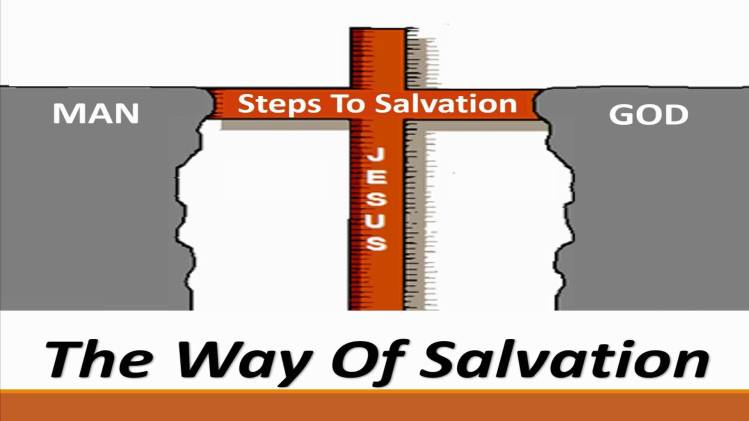
 Milo
Milo 