
What Are The Dangers Of Post-Modernism?

Answer: Simply put, Postmodernism is a philosophy that affirms no objective or absolute truth, especially in matters of religion and spirituality. When confronted with a truth claim regarding the reality of God and religious practice, Postmodernism’s viewpoint is exemplified in the statement “That may be true for you, but not for me.” While such a response may be completely appropriate when discussing favorite foods or preferences toward art, such a mindset is dangerous when it is applied to reality because it confuses matters of taste and opinion with truth.

The term “Postmodernism” literally means “after Modernism” and is used to philosophically describe the current era which came after the age of Modernism. Postmodernism is a reaction (or perhaps more appropriately, a disillusioned response) to Modernism’s failed promise of using human reason alone to better mankind and make the world a better place. Because one of Modernism’s beliefs was that absolutes did indeed exist, Postmodernism seeks to ‘correct’ things by first eliminating absolute truth and making everything (including the empirical sciences as well as religion) relative to an individual’s beliefs and desires.

The dangers of Postmodernism can be viewed as a downward spiral that begin with the rejection of absolute truth, which then leads to a loss of distinctions in matters of religion and faith, and finally culminates in a philosophy of religious pluralism that says no faith or religion is objectively true and therefore no one can claim their religion is true and another is false.

Dangers of Postmodernism – #1 – Relative Truth

Postmodernism’s stance of relative truth is the outworking of many generations of philosophical thought. From Augustine to the Reformation, the intellectual aspects of Western civilization and the concept of truth were dominated by theologians. But, beginning with the Renaissance periods of the 14th – 17th centuries, thinkers began to elevate humankind to the center of reality. If one were to look at human periods of history like a family tree, the Renaissance would be Modernism’s grandmother and the Enlightenment would be its mother. Renee Descartes’ “I think, therefore I am” personified the beginning of this era. God was not the center of truth any longer – man now was.

The Enlightenment was in a way the complete imposition of the scientific model of rationality upon all aspects of truth and claimed that only scientific data could be objectively understood, defined, and defended. Truth as it pertained to religion was left out and discarded. The philosopher who straddled this epoch’s and Modernism’s contribution to relative truth was the Prussian Immanuel Kant and his work The Critique of Pure Reason, which appeared in 1781. Among other things, Kant argued that true knowledge about God was impossible so he created a divide of knowledge between ‘facts’ and ‘faith’. According to Kant, “Facts have nothing to do with religion”. The end result was that spiritual matters were assigned to be matters of the heart and just opinion, and only the empirical sciences were allowed to speak of truth. And while Modernism believed in absolutes at least in the area of science, God’s special revelation (the Bible) was evicted from the realm of truth and certainty.

From Modernism came Postmodernism and, whereas Kant marked the philosophical transition from the Enlightenment to Modernity, Frederick Nietzsche may symbolize the shift from Modernism to Postmodernism. As the patron saint of postmodernist philosophy, Nietzsche held to ‘perspectivism’, which says that all knowledge (including science) is a matter of perspective and interpretation. Many other philosophers have built upon Nietzsche’s work (e.g. Foucault, Rorty, Lyotard) and have shared his rejection of God and religion in general. They also rejected any hint of absolute truth, or as Lyotard put it, a rejection of a metanarrative (a truth that transcends all peoples and cultures).

This philosophical march through history against objective truth has resulted in Postmodernism having a complete aversion to any claim to absolutes, with such a mindset naturally painting a huge bull’s eye on something that declares to be inerrant truth, such as the Bible.

Dangers of Postmodernism – #2 – Loss of Discernment

The great theologian Thomas Aquinas said, “It is the task of the philosopher to make distinctions.” What Aquinas meant is that truth is dependent upon the ability to discern – the capability to distinguish ‘this’ from ‘that’ in the realm of knowledge. However, if objective and absolute truth does not exist, then everything becomes a matter of personal interpretation. To the postmodern individual, the author of a book does not possess the correct interpretation of their work; it is the reader who actually determines what the book really means – a process called Deconstruction. And given that there are multiple readers (vs. one author), there are naturally multiple interpretations, with the end result being no universally valid interpretation.

Such a chaotic situation makes it impossible to make meaningful or lasting distinctions between interpretations because there is no standard or benchmark that can be used. This especially applies to matters of faith and religion because the philosophers of the Enlightenment and Modernity had already deposed religion to the compartment of opinion. Such being the case, it naturally follows that attempting to make proper and meaningful distinctions in the area of religion (ones that dare suggest that one belief is right and another invalid) carries no more weight than one person arguing that chocolate tastes better than vanilla. In such situations, it becomes impossible to objectively adjudicate between competing truth claims.

Dangers of Postmodernism – #3 – Pluralism

If absolute truth does not exist, and if there is no way to make meaningful, right/wrong distinctions between different faiths and religions, then the natural conclusion is that all beliefs must be given equal weight and considered valid. The proper term for this practical outworking in Postmodernism is “philosophical pluralism”. With pluralism, no religion has the right to pronounce itself right or true and the other competing faiths false, or even relatively inferior. For those who espouse a philosophical religious pluralism, there is no longer any heresy, except perhaps the view that there are heresies. D. A. Carson underscores conservative evangelical’s concerns about what they see as the dangerous element of pluralism when he says: “In my most somber moods I sometimes wonder if the ugly face of what I refer to as philosophical pluralism is the most dangerous threat to the gospel since the rise of the Gnostic heresy in the second century.”

These progressive dangers of Postmodernism – relative truth, a loss of discernment, and philosophical pluralism – represent real and imposing threats to Christianity because they collectively relegate God’s Word to something that has no real authority over mankind and no ability to show itself as true in a world of competing religious voices. What is Christianity’s response to these challenges?

Response to the Dangers of Postmodernism

It should first be stated that Christianity claims to be absolutely true, claims that meaningful distinctions in matters of right/wrong (as well as spiritual truth and falsehood) exist, and claims to be correct in its claims about God with any contrary claims from competing religions being incorrect. Such a stance provokes cries of ‘arrogance’ and ‘intolerance’ from Postmodernism. However, truth is not a matter of attitude or preference, and when closely examined, the foundations and philosophies of Postmodernism quickly crumble and reveal Christianity’s claims to be both plausible and compelling.

First, Christianity claims that absolute truth exists. In fact Jesus specifically says that He was sent and born to do one thing: “to testify to the truth” (John 18:37). Postmodernism says that no truth should be affirmed, yet its position is one that is self-defeating – it affirms at least one absolute truth: that no truth should be affirmed. This means that Postmodernism does believe in absolute truth and such a fact is exemplified by its philosophers who write books stating things they expect their readers to embrace and believe as truth. Putting it simply, one professor has said, “When someone says there is no such thing as truth, they are asking you not to believe them. So don’t.”

Second, Christianity claims that meaningful distinctions exist between the Christian faith and all other beliefs. However, it should be understood that anyone claiming that meaningful distinctions do not exist between religions is actually making a distinction. They are attempting to showcase a difference in what they believe to be true and the Christian’s truth claims. Postmodernist authors expect their readers to come to the right conclusions about what they have written and will correct those who interpret their work differently than they have intended. Again, their position and philosophy proves itself to be self-defeating because they eagerly make distinctions between what they believe to be correct and what they see as being false.

Finally, Christianity claims to be universally true in what it says regarding man’s lostness before God, the sacrifice of Christ on behalf of fallen mankind, and the separation between God and anyone who chooses not to accept what God says about sin and the need for repentance. When Paul addressed the Stoic and Epicurean philosophers on Mar’s Hill, he said, “Therefore having overlooked the times of ignorance, God is now declaring to men that all people everywhere should repent” (Acts 17:30, emphasis added). Paul’s declaration was not a “this is true for me, but may not be true for you” statement, but rather an exclusive and universal (i.e. metanarrative) command from God to everyone. Any postmodernist who says this is false is committing an error against their own pluralistic philosophy that says no faith or religion is incorrect because, once again, they violate their own mandate of saying every religion is equally true.

In the same way that it is not arrogant for a math teacher to insist that 2+2=4 or for a locksmith to insist that only one key will fit a locked door, it is not arrogant for the Christian to stand against Postmodernist thinking and insist that Christianity is true and anything opposed to it is false. Absolute truth does exist, consequences do exist for being wrong, and while pluralism may be desirable in matters of food preferences, it is not so in matters of truth. The Christian is to present God’s truth in love and simply ask any postmodernist who is angered by the exclusive claims of Christianity, “So have I become your enemy by telling you the truth?” (Galatians 4:16)

What Is Israel’s Role In The End Times?

Question: Does what is happening in Israel today mean the end times are quickly approaching?”

Answer:  Every time there is an explosion of conflict in or around Israel, many see it as a sure sign of the quickly approaching end times. The problem with this is that it creates a “boy that cried wolf” syndrome. We may eventually tire of the conflict in Israel, so much so that we will not recognize when true prophetically significant events occur. Conflict in Israel is not necessarily a sign of the end times…allow me to clarify.

Conflict in Israel has been a reality whenever Israel has existed as a nation. Whether it was the Egyptians, Amalekites, Midianites, Moabites, Ammonites, Amorites, Philistines, Assyrians, Babylonians, Persians, or Romans – the nation of Israel has always been surrounded by and persecuted by its neighbors. Why is this? According to the Bible, it is because God has a special plan for the nation of Israel, and Satan wants to defeat that plan. Satanically influenced hatred of Israel is the reason that Israel’s neighbors have always wanted to see Israel destroyed. Whether it is Sennacherib, king of Assyria, Haman, official of Persia, Hitler, leader of Nazi Germany, or Ahmadinejad, President of Iran – attempts to ultimately destroy Israel will always fail. The persecutors of Israel will come and go…but the persecution will remain. As a result, conflict in Israel cannot be considered a reliable indicator of the soon arrival of the end times.

At the same time, there will be terrible conflict in Israel during the end times. That is why the time period is known as the Tribulation, the Great Tribulation, and the “time of Jacob’s trouble” (Jeremiah 30:7). Here is what the Bible does say about Israel in the end times:

There will be a mass return of Jews to the land of Israel (Deuteronomy 30:3; Isaiah 43:6; Ezekiel 34:11-13; 36:24; 37:1-14).

The antichrist will make a 7-year covenant of “peace” with Israel (Isaiah 28:18; Daniel 9:27).

The Temple will be rebuilt in Jerusalem (Daniel 9:27; Matthew 24:15; 2 Thessalonians 2:3-4; Revelation 11:1).

The antichrist will break his covenant with Israel. Worldwide persecution of Israel will result (Daniel 9:27; 12:1, 11; Zechariah 11:16; Matthew 24:15, 21; Revelation 12:13). Israel will be invaded (Ezekiel chapters 38-39).

Israel will finally recognize Jesus as the Messiah (Zechariah 12:10). Israel will be regenerated, restored, and regathered (Jeremiah 33:8; Ezekiel 11:17; Romans 11:26).

There is much turmoil in Israel today. Israel is persecuted, surrounded by enemies – the Palestinians, Syria, Lebanon, Jordan, Saudi Arabia, Iran, Hamas, Islamic Jihad, Hezbollah, etc. This hatred and persecution of Israel is only a hint of what will happen in the end times (Matthew 24:15-21). Israel has been persecuted since it was reconstituted as a nation in 1948. Many Bible prophecy scholars believed the six-day Arab-Israeli war in 1973 was the “beginning of the end.” Could what is taking place in Israel today indicate that the end is near? Yes. Does it necessarily mean the end is near? No. Jesus Himself said it best, “Watch out that no one deceives you. For many will come in my name, claiming, ‘I am the Christ,’ and will deceive many. You will hear of wars and rumours of wars, but see to it that you are not alarmed. Such things must happen, but the end is still to come” (Matthew 24:4-6).

Characteristics of the Second Coming of Christ

During the difficult days of World War II there was a well-known radio news commentator who began each evening’s news using exactly the same introductory words, “Ah, there’s good news tonight!”. Yes, regardless of how many allied ships were sunk, or how many allied planes were shot down, or how many allied tanks were destroyed, or how many allied service men were killed, wounded or missing, this newsman would find something “positive” to say as an encouragement to those concerned family and friends of our service personnel in various parts of the world.

Friends, we are living in very difficult days. I never thought that I’d ever live to see such conditions as we have in the world today. We are definitely living in days just prior to the Lord’s return and there is much to discourage the true child of God but I can say like the newsman, “Ah, there’s good news tonight!” Yes, and the good news is the fact that JESUS IS COMING AGAIN ! Let me repeat, JESUS IS COMING AGAIN !

THE SECOND COMING OF JESUS CHRIST IS, AND SHALL BE:

SURE: Vs.35 “Heaven and earth shall pass away, but My words shall not pass away.” In John 14:3 He promised, “And if I go and prepare a place for you, I will come again, and receive you unto Myself; that where I am, there ye may be also.” (Read also Acts 1:9-11; Hebrews 10:37; and the last recorded words of Jesus Christ in the Book of Revelation – 22:20 “Surely, I come quickly” and true Christians can say like John, “Amen, Even so come, Lord Jesus.”)

SUDDEN: Vs.27 “For as the lightning cometh out of the east, and shineth even unto the west; so shall also the coming of the Son of Man be.” Please read I Corinthians 15:52.

STARTLING: Perhaps some evening soon, many millions of people in the United States will be watching their TV sets and suddenly the screen program will be interrupted by an announcement that the President of the United States is about to make a special report of grave importance. He will mention that he has just talked with the Secretary General of the United Nations who confirmed the fact that thousands of people have disappeared throughout the world during the past hour. Some believe that aliens in their U.F.O.’s have kidnapped people in all parts of the world. Both the President and Secretary General plead for calm and seek to assure the populace that they will do everything possible to solve the sudden disappearance of people from off the face of the earth. Every aspect of the worldwide news media will also report cars crashing, planes falling to the ground, and even mothers nursing their babies will be startled when that baby disappears before her eyes. If a married couple are watching the TV one may disappear and the other spouse be left behind. Chaos, confusion and conflict will reign throughout the world. Some who have heard the truth of God relative to the second coming of Christ, and who have not accepted the Lord Jesus Christ as their Saviour, will know what happened. They’ll be able to tell the others who have been left behind how that they, themselves, had heard the Gospel, and the fact that the Lord Jesus Christ would return someday to take the true Christians home to Heaven, but they thought that they had plenty of time to get saved through faith in Jesus Christ, alone. Now it’s too late! They too have been left behind for divine judgment. The Holy Spirit of God, Who indwells every true believer, will have left the scene and it won’t be safe for a woman to leave her house, unless escorted by a man.

SATISFYING: For those who have been left behind when the Lord comes, because they refused to accept Him as their personal Saviour, they will be satisfied because no one will ever speak to them about their soul’s salvation. No one will give them another Gospel tract. No one will invite them to another Gospel meeting. No one will ever bear them up before the throne of God’s grace again. No saved loved one will ever shed another tear for them. They will then be able to indulge themselves in the muck and mire of gross sin and immorality. In the last chapter of the Bible, Revelation 22:11, we read concerning the unsaved, “He that is unjust, let him be unjust still: and he which is filthy, let him be filthy still.” Friend, if you’re left behind when Jesus Christ comes again you’ll wish that you had never been born. It is better never to have heard the truth than to hear it and then forsake it.

The people who will really be satisfied when the Lord comes will be the true Christians who will not only be delivered from the penalty and power of sin, but will also be delivered from the very presence of sin. In Revelation Chapter 21 we read of the place where there will be no more sin, nor tears, nor sorrow, nor pain, nor sickness, nor separation, nor death, nor night, nor curse nor need of a temple. We’ll be in the presence of the One, Whom having not seen, we love. We’ll be satisfied not only to be with Him but also to be like Him. In Psalms 17:15 we read, “As for me, I will behold Thy face in righteousness: I shall be satisfied, when I awake, with Thy likeness.” Please read Philippians 3:20,21; I John 3:2,3

The satisfaction and joy we have as true Christians is somewhat tempered here on earth by the knowledge that many of us have loved ones who are still unsaved, and therefore, would be left behind if the Lord Jesus Christ were to come back now to take us up to our home in Heaven. The language of our hearts would be like Judah back in Genesis 44:34 .. “how shall I go up to my father, and the lad be not with me?”

What Does The Bible Say About The End Of The World?

Question: How can God allow nice people to go to hell and bad people to go to heaven?

Answer: We all know people whom we value, who seem like genuinely good, kind people. But the Bible makes it clear that even these people have sinned and fallen short of God’s perfect standards.

“There is not a righteous man on earth who does what is right and never sins.” (Ecclesiastes 7:20)

“All have sinned and fall short of the glory of God.” (Romans 3:23)

God sees a person’s whole heart, sees all of their actions, and knows all of their words and thoughts. So God has a lot more information to use when judging someone. It is with this complete knowledge that God can judge us righteously. The Bible says that “God sees not as man sees, for man looks at the outward appearance, but the Lord looks at the heart” (1Samuel 16:7).

So how does this affect the whole heaven and hell question? It puts everyone on an equal playing field. People we think are good are in the same position as people we think are bad, because, from God’s perspective, no one perfectly follows his commands. There is, in every one of us, that inner drive that says, “I don’t care. I’m going to do it anyway.”

In fact, the Bible says that “All of us like sheep have gone astray, Each of us has turned to his own way” (Isaiah 53:6). In big and small ways, all of us have forsaken God and gone away from Him.

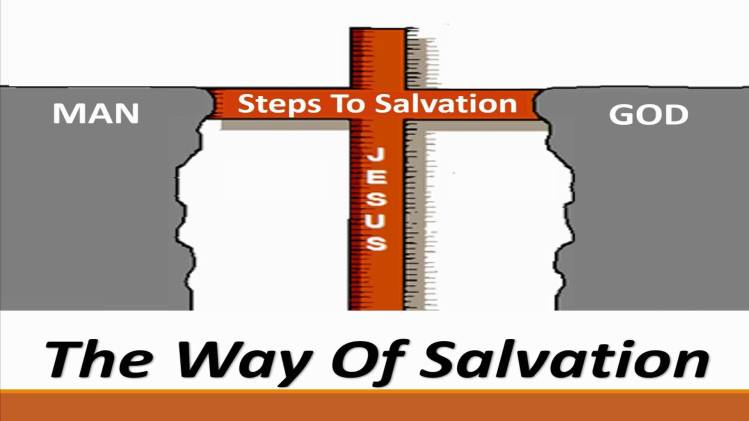
The antidote is to return to God. The Bible calls this “repentance.” When a person truly turns back to God, there is no sin that is too big for God to forgive. God provided the means to forgive sin through Jesus Christ’s death on the cross. And God offers His forgiveness and eternal life to anyone who will believe in Jesus. Heaven is a free gift offered to anyone who will ask for God’s forgiveness and ask Jesus to come into their life. Here is how the Bible describes someone who turns to God in this way: 

“As for you, you were dead in your transgressions and sins, in which you used to live when you followed the ways of this world …All of us also lived …gratifying the cravings of our sinful nature and following its desires and thoughts. Like the rest, we were by nature objects of [God’s] wrath. But because of his great love for us, God, who is rich in mercy, made us alive with Christ even when we were dead in transgressions — it is by grace you have been saved. …in order that in the coming ages he might show the incomparable riches of his grace, expressed in his kindness to us in Christ Jesus. For it is by grace you have been saved, through faith — and this not from yourselves, it is the gift of God — not by works, so that no one can boast.” (Ephesians 2:1-9)

All through the Bible God makes it clear that we gain heaven, not by our “good works” or “good life,” but that God offers it to all as a gift. Rather than pretend that we are good people, He asks us to admit that we sin against Him.

We can focus on life after death, but what about our life right now? We can interact with God and be guided by Him right now, and experience the life He created us to have. There is no relationship on earth as fulfilling and important as knowing God. If you want that after death, you have to start it now.

What Is The Difference Between The Rapture And The Second Coming?

The rapture and the second coming of Christ are often confused. Sometimes it is difficult to determine whether a scripture verse is referring to the rapture or the second coming. However, in studying end-times Bible prophecy, it is very important to differentiate between the two.

The rapture is when Jesus Christ returns to remove the church (all believers in Christ) from the earth. The rapture is described in 1 Thessalonians 4:13-18 and 1 Corinthians 15:50-54. Believers who have died will have their bodies resurrected and, along with believers who are still living, will meet the Lord in the air. This will all occur in a moment, in a twinkling of an eye. The second coming is when Jesus returns to defeat the Antichrist, destroy evil, and establish His millennial kingdom. The second coming is described in Revelation 19:11-16.

The important differences between the rapture and second coming are as follows:

1) At the rapture, believers meet the Lord in the air (1 Thessalonians 4:17). At the second coming, believers return with the Lord to the earth (Revelation 19:14).

2) The second coming occurs after the great and terrible tribulation (Revelation chapters 6–19). The rapture occurs before the tribulation (1 Thessalonians 5:9; Revelation 3:10).

3) The rapture is the removal of believers from the earth as an act of deliverance (1 Thessalonians 4:13-17, 5:9). The second coming includes the removal of unbelievers as an act of judgment (Matthew 24:40-41).

4) The rapture will be secret and instant (1 Corinthians 15:50-54). The second coming will be visible to all (Revelation 1:7; Matthew 24:29-30).

5) The second coming of Christ will not occur until after certain other end-times events take place (2 Thessalonians 2:4; Matthew 24:15-30; Revelation chapters 6–18). The rapture is imminent; it could take place at any moment (Titus 2:13; 1 Thessalonians 4:13-18; 1 Corinthians 15:50-54).

Why is it important to keep the rapture and the second coming distinct?

1) If the rapture and the second coming are the same event, believers will have to go through the tribulation (1 Thessalonians 5:9; Revelation 3:10).

2) If the rapture and the second coming are the same event, the return of Christ is not imminent—there are many things which must occur before He can return (Matthew 24:4-30).

3) In describing the tribulation period, Revelation chapters 6–19 nowhere mentions the church. During the tribulation—also called “the time of trouble for Jacob” (Jeremiah 30:7)—God will again turn His primary attention to Israel (Romans 11:17-31).

The rapture and second coming are similar but separate events. Both involve Jesus returning. Both are end-times events. However, it is crucially important to recognize the differences. In summary, the rapture is the return of Christ in the clouds to remove all believers from the earth before the time of God’s wrath. The second coming is the return of Christ to the earth to bring the tribulation to an end and to defeat the Antichrist and his evil world empire.

Stephen Boyd Blog

Belfast-born Hollywood and International Star from 1950-1970's Fan Tribute Page

Abundant Joy

Digging Deep Into The Word

Not My Life

The Bible as clear as possible

Seek Grow Love

Growing Throughout the Year

Smoodock's Blog

Question Authority

PleaseGrace

A bit on daily needs and provisions

Three Strands Lutheran Parish

"A cord of three strands is not easily broken." Ecclesiastes 4:12

1love1god.com

Romans 5:8

The Rev. Jimmy Abbott

read, watch, listen

BEARING CHRIST CRUCIFIED AND RISEN

To know Christ and Him crucified

Considering the Bible

Scripture Musings

rolliwrites.wordpress.com/

The Official Home of Rolli - Author, Cartoonist and Songwriter

Pure Glory

The heavens are telling the glory of God; and the firmament proclaims His handiwork. Psalms 19:1

The daily addict

The daily life of an addict in recovery

The Christian Tech-Nerd

-Reviews, Advice & News For All Things Tech and Gadget Related-

Thinking Through Scripture

to help you walk with Jesus in faith, hope, and love.

A disciple's study

This is my personal collection of thoughts and writings, mainly from much smarter people than I, which challenge me in my discipleship walk. Don't rush by these thoughts, but ponder them.

Author Scott Austin Tirrell

Maker of fine handcrafted novels!

In Pursuit of My First Love

Returning to the First Love